Personal
Development
DEVELOPING THE WHOLE
PERSON
Aspects of
Development
At the end of this lesson you will be able to:
1. Discuss the relationship among
physiological, cognitive, psychological,
spiritual and social aspects of
development, to understand your thoughts,
feelings and behaviors.
2. Evaluate your own thoughts,
feelings and actions, and
3. Show the connection of your
thoughts, feelings and actions to
actual life situation.
Aspects of yourself
- Physical self - Interactional self
- Intellectual self - Nutritional self
- Emotional self - Contextual self
- Sensual self - Spiritual self
Aspects of Development
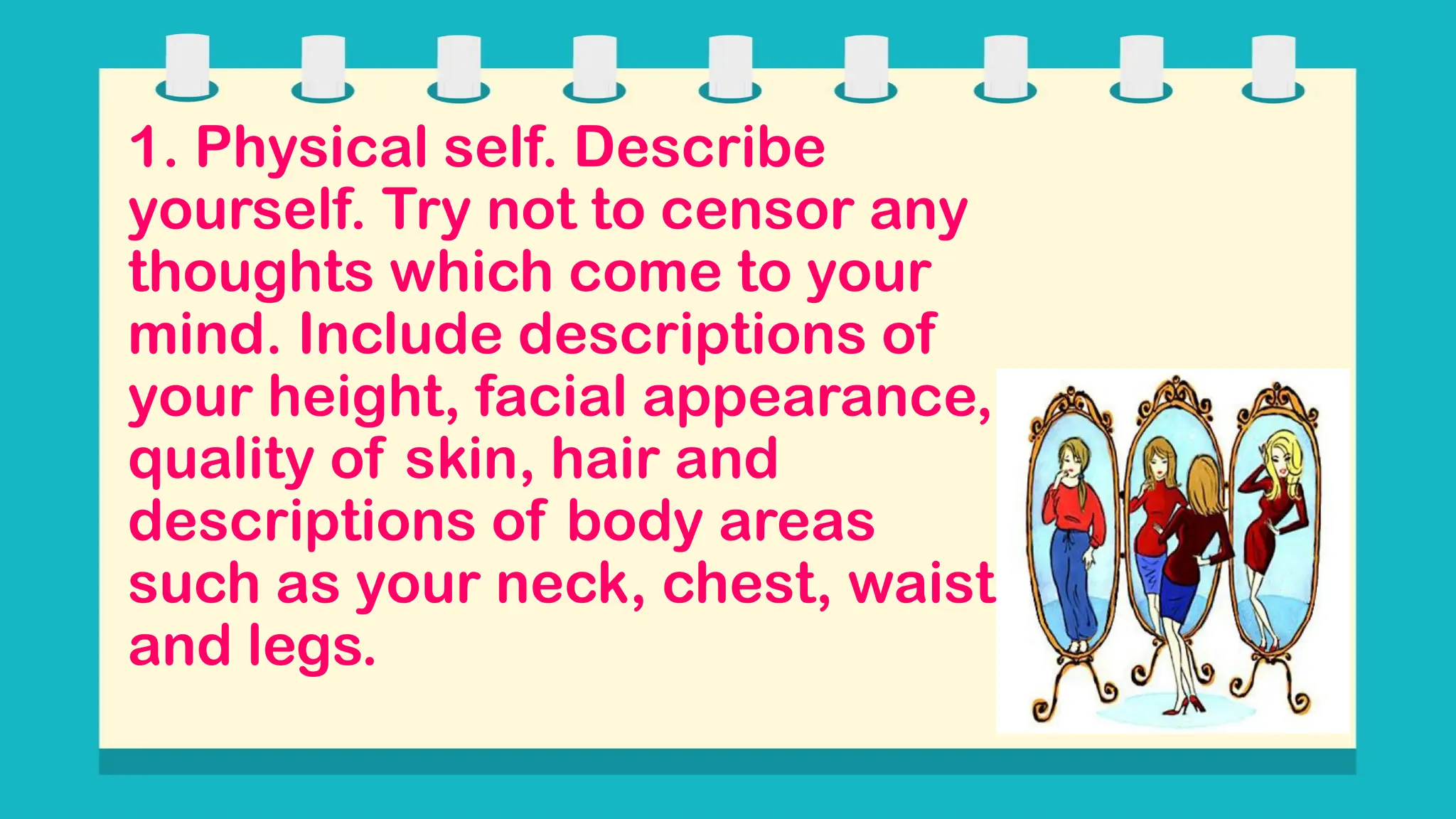
1. Physical self. Describe
yourself. Try not to censor any
thoughts which come to your
mind. Include descriptions of
your height, facial appearance,
quality of skin, hair and
descriptions of body areas
such as your neck, chest, waist
and legs.
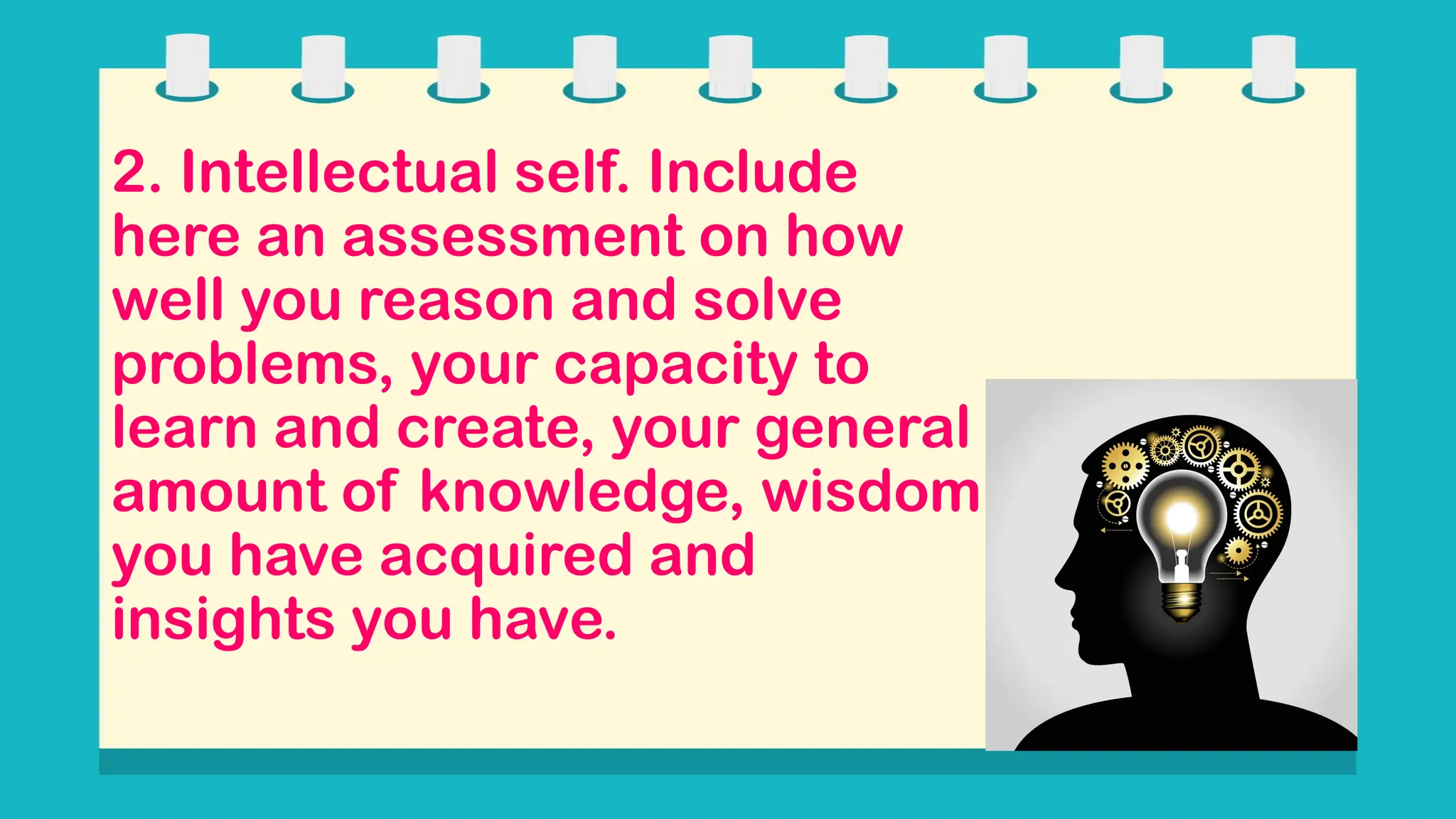
2. Intellectual self. Include
here an assessment on how
well you reason and solve
problems, your capacity to
learn and create, your general
amount of knowledge, wisdom
you have acquired and
insights you have.
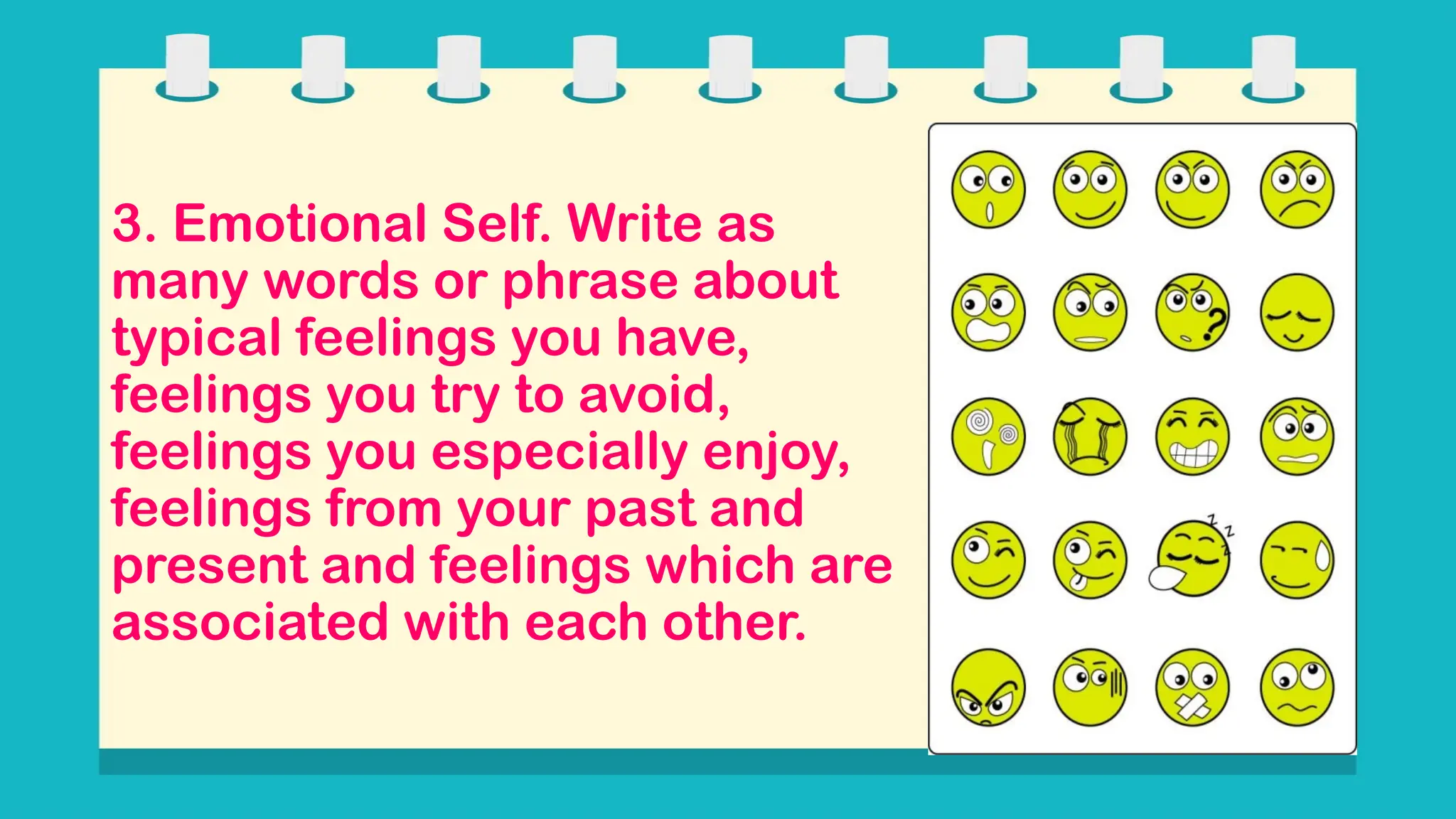
3. Emotional Self. Write as
many words or phrase about
typical feelings you have,
feelings you try to avoid,
feelings you especially enjoy,
feelings from your past and
present and feelings which are
associated with each other.
4. Sensual Self. Write how you
feel as a sensual person. What
sense do you use most – sight,
hearing, speaking, smelling or
touching? How do you feel about
the different ways you take in
information – through the eyes,
ears, mouth, nose, pores and
skin. In what ways do you let in
and out information of your
body?
5. Interactional self. Include
descriptions of your strengths
and weaknesses in intimate
relationships and
relationships to friends, family,
co-students and strangers in
social settings. Describe the
strengths and weaknesses
which your friends and family
have noticed. Describe what
kind of son or daughter, or
brother or sister you are.
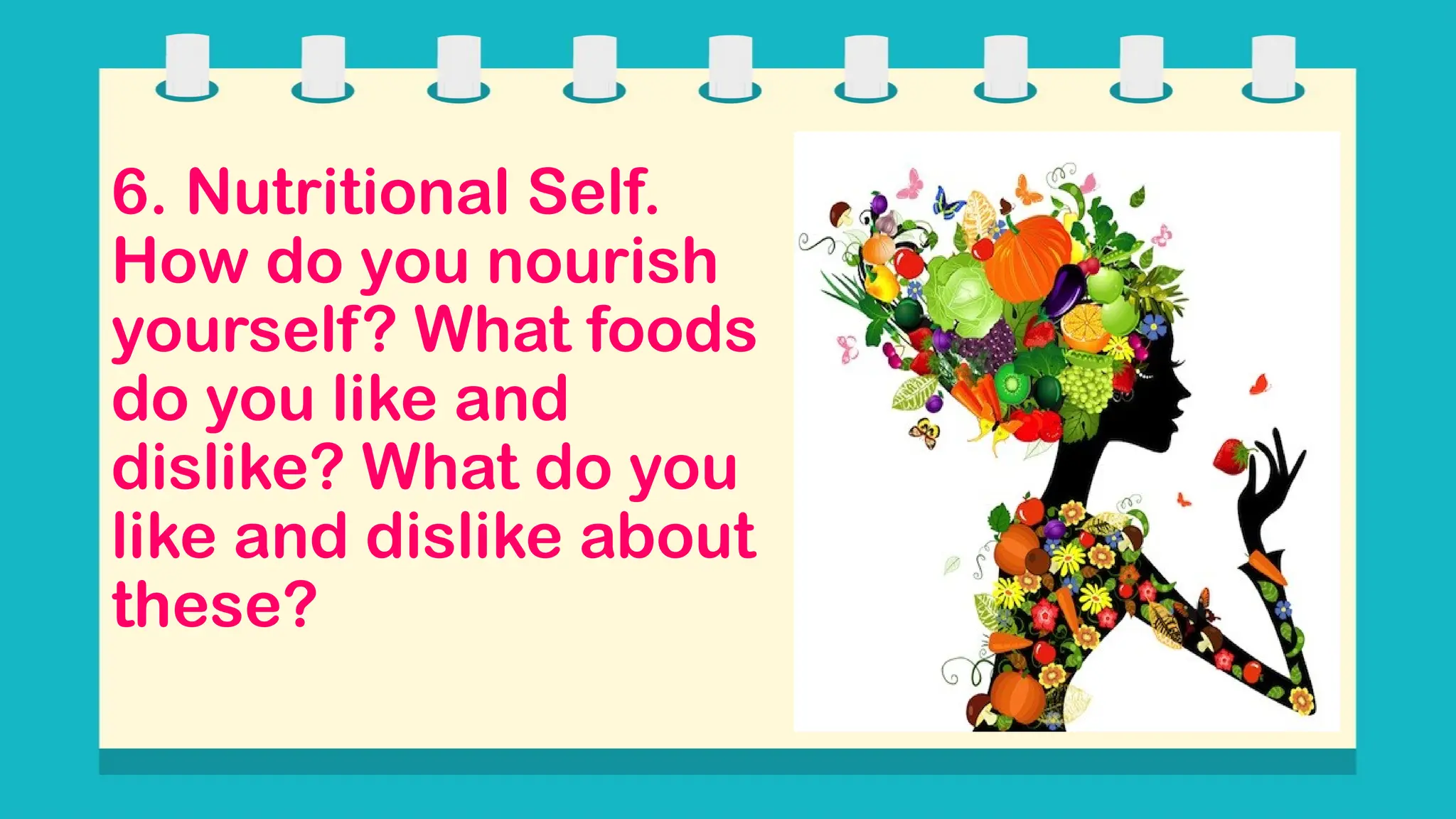
6. Nutritional Self.
How do you nourish
yourself? What foods
do you like and
dislike? What do you
like and dislike about
these?
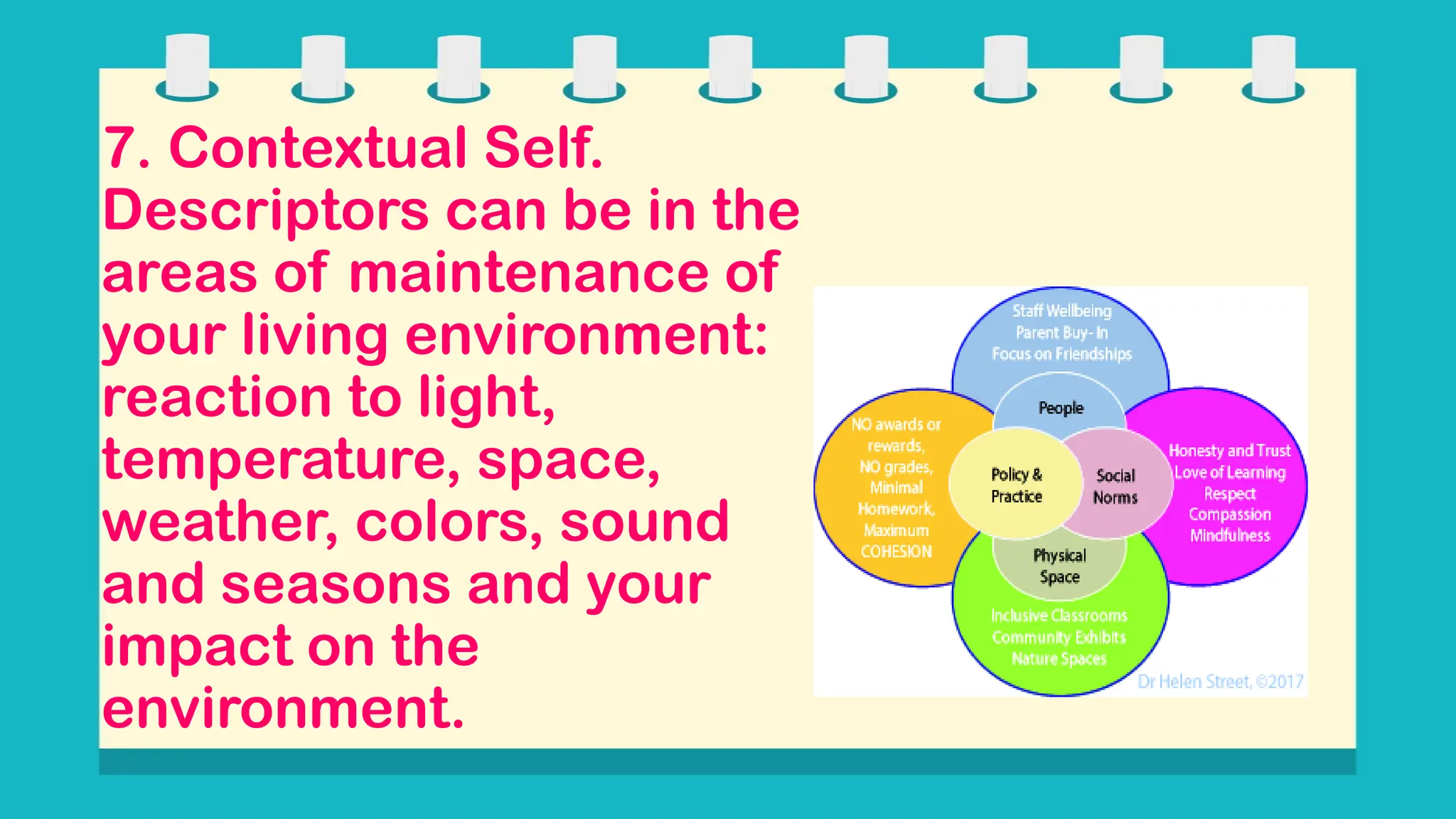
7. Contextual Self.
Descriptors can be in the
areas of maintenance of
your living environment:
reaction to light,
temperature, space,
weather, colors, sound
and seasons and your
impact on the
environment.
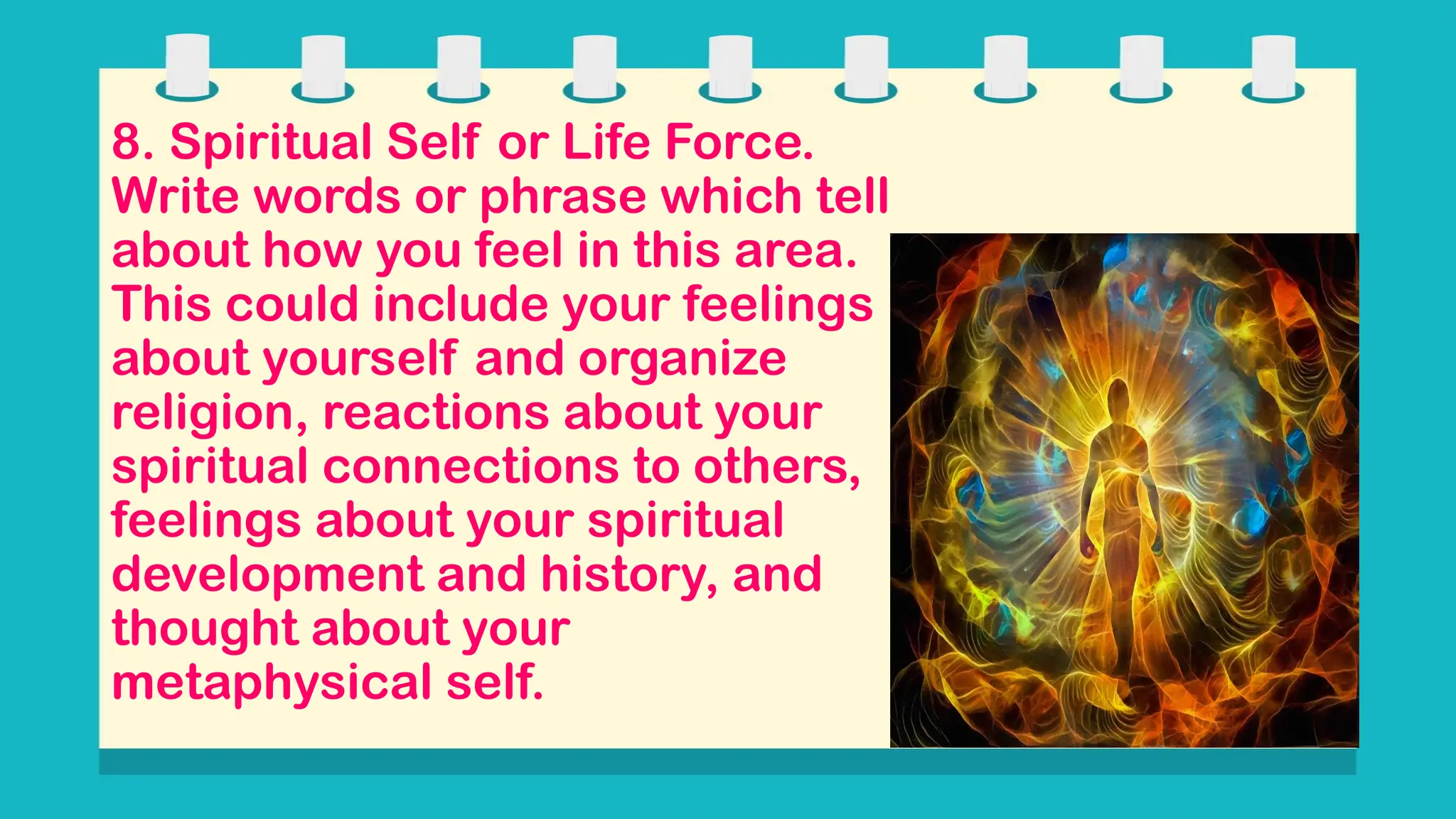
8. Spiritual Self or Life Force.
Write words or phrase which tell
about how you feel in this area.
This could include your feelings
about yourself and organize
religion, reactions about your
spiritual connections to others,
feelings about your spiritual
development and history, and
thought about your
metaphysical self.
Basic Aspects
of Self
All three aspects of the self work
together in in perfect harmony when
attention is paid to all three
simultaneously
In a nutshell, an individual is
composed of three basic but
very different aspects of self.
They are:
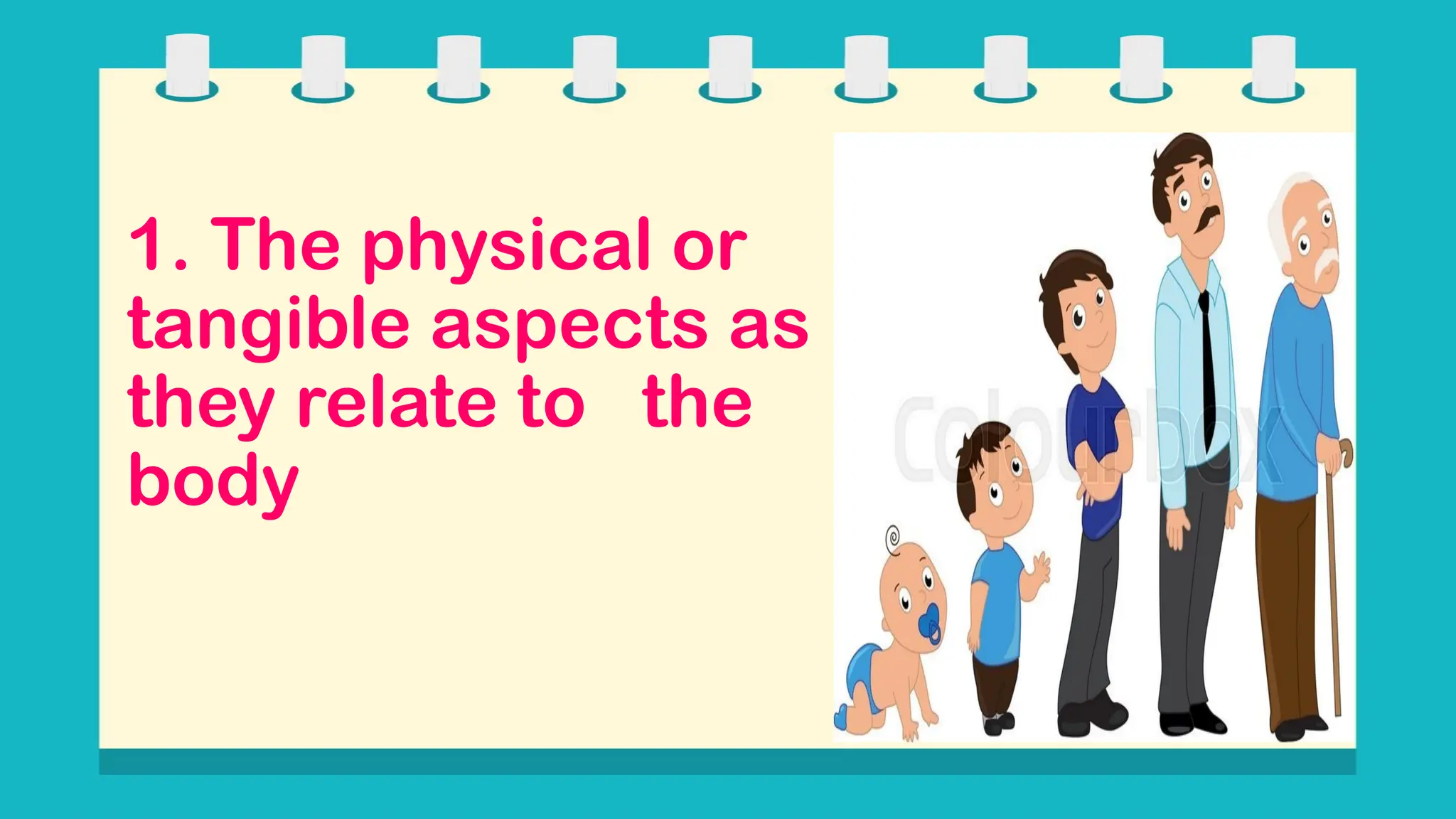
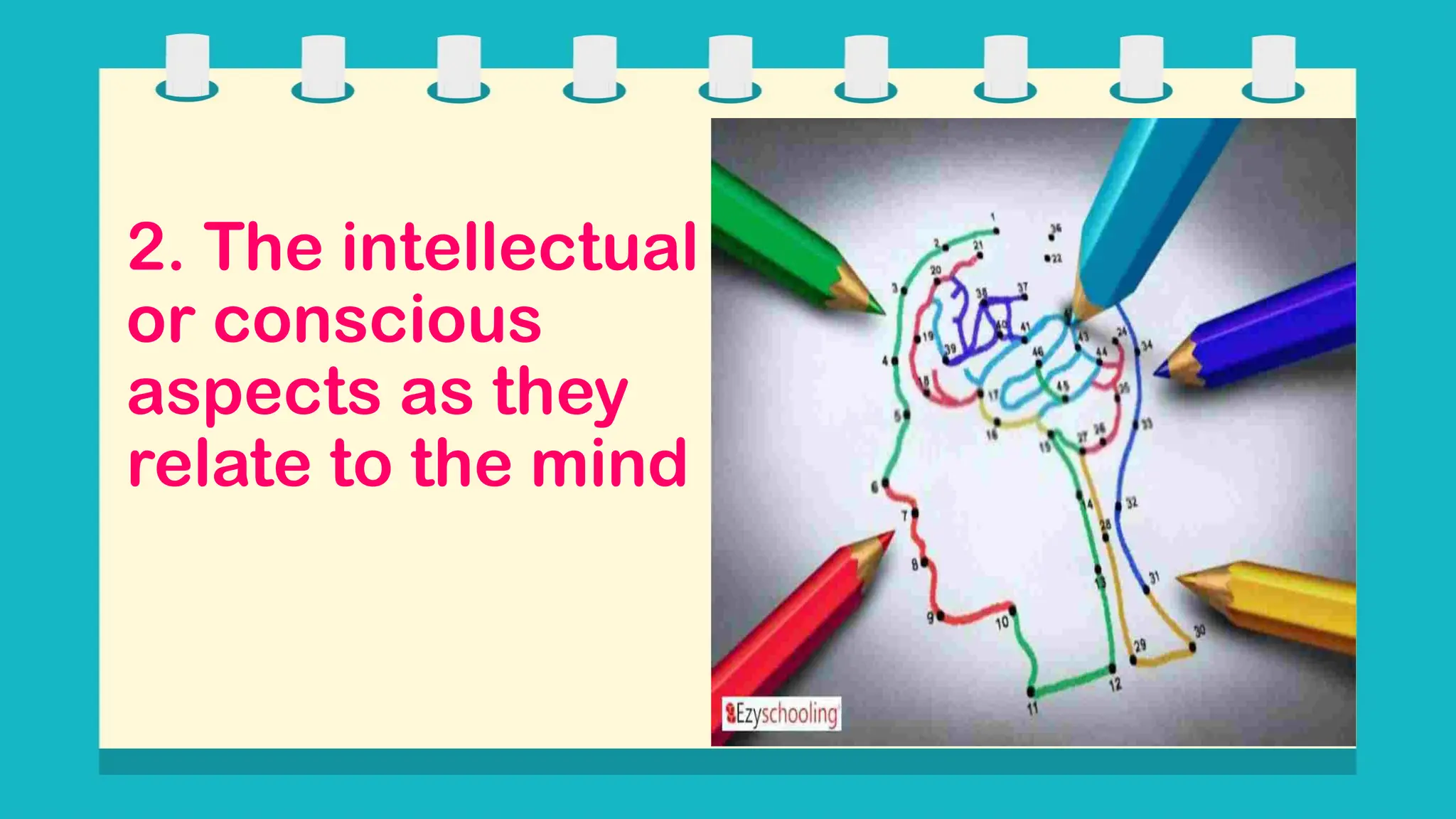
1. The physical or
tangible aspects as
they relate to the
body
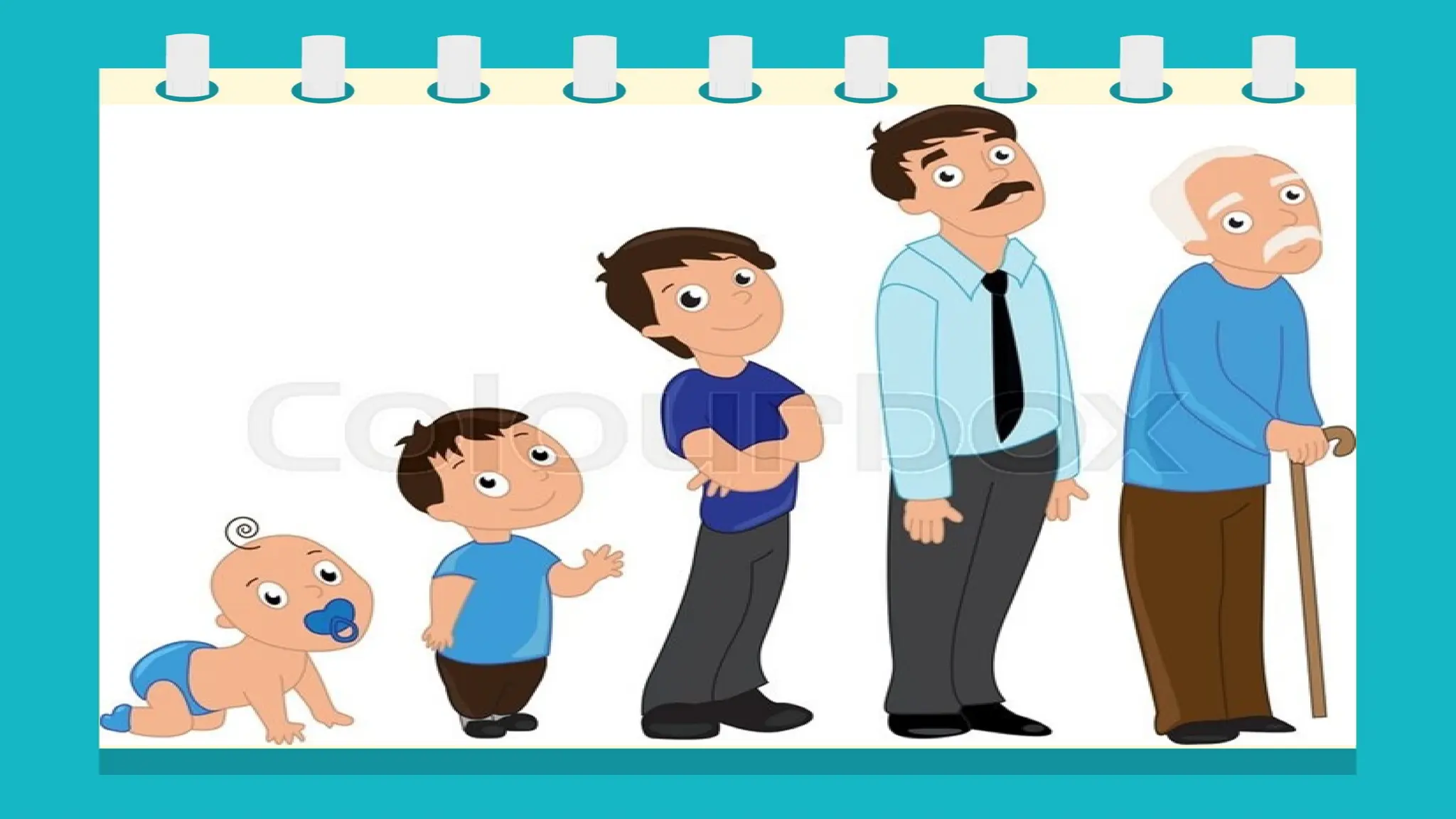
Many individuals put a strong emphasis on the
physical aspect of the self. The body is tangible,
obvious and we respond to it easily. More time and
money is spent in enhancing the physical component
than either of the two aspects. This does not mean,
however, that the body is healthy and strong. The
body provides a place to house the spirit (often
experienced as feelings) and the mind (often
experience as the thought).
2. The intellectual
or conscious
aspects as they
relate to the mind
It may be important to some that their mind be
prominent and well-educated. The mind is
important, as it is the part of the self that directs
the two other aspects. What the mind believes,
the body manifests or acts on and the emotions
feel or respond with. The mind provides
creativity and serenity which are necessary for
such processes as prayer, forgiveness,
acceptance and passion.
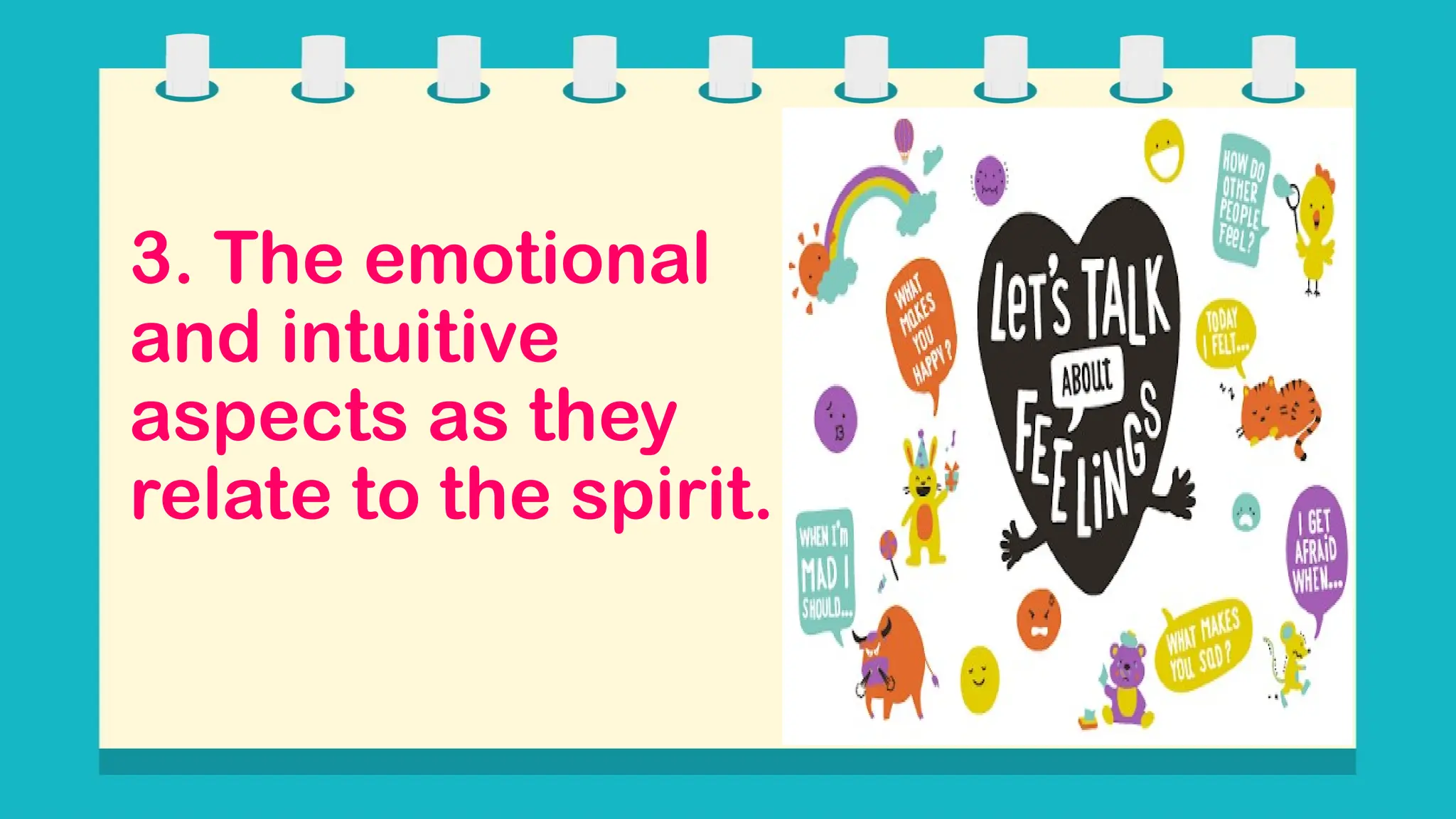
3. The emotional
and intuitive
aspects as they
relate to the spirit.
Human emotions are the feared aspect of the
self, as individuals are reluctant and unprepared
to manage them. A decision made under
emotional stress and strain usually impacts
emotions negatively. Negative emotions that are
not managed are stored and repressed.
Repression is destructive to a content self since
all feelings, not only negative ones are stored
away.
PHYSICAL ASPECT
- the body provides a place to
house the spirit (often experienced
as feelings) and the mind (often
experience as the thought).
MIND
- the mind is important, as it is the
part of the self that directs the two
other aspects. What the mind
believes, the body manifests or
acts on and the emotions feel or
respond with.
EMOTIONS
- feared aspect of the self, as
individuals are reluctant and
unprepared to manage them. A
decision made under emotional stress
and strain usually impacts emotions
negatively.
Keep and maintain that journal as it
may serve as a reminder and action
plan for your improvement.
PERSONAL DEVELOPMENT M3.ppppppppppppppptx

  • 3.
  • 5.
  • 6.
    At the endof this lesson you will be able to: 1. Discuss the relationship among physiological, cognitive, psychological, spiritual and social aspects of development, to understand your thoughts, feelings and behaviors.
  • 7.
    2. Evaluate yourown thoughts, feelings and actions, and 3. Show the connection of your thoughts, feelings and actions to actual life situation.
  • 8.
    Aspects of yourself -Physical self - Interactional self - Intellectual self - Nutritional self - Emotional self - Contextual self - Sensual self - Spiritual self
  • 9.
  • 10.
    1. Physical self.Describe yourself. Try not to censor any thoughts which come to your mind. Include descriptions of your height, facial appearance, quality of skin, hair and descriptions of body areas such as your neck, chest, waist and legs.
  • 11.
    2. Intellectual self.Include here an assessment on how well you reason and solve problems, your capacity to learn and create, your general amount of knowledge, wisdom you have acquired and insights you have.
  • 12.
    3. Emotional Self.Write as many words or phrase about typical feelings you have, feelings you try to avoid, feelings you especially enjoy, feelings from your past and present and feelings which are associated with each other.
  • 13.
    4. Sensual Self.Write how you feel as a sensual person. What sense do you use most – sight, hearing, speaking, smelling or touching? How do you feel about the different ways you take in information – through the eyes, ears, mouth, nose, pores and skin. In what ways do you let in and out information of your body?
  • 14.
    5. Interactional self.Include descriptions of your strengths and weaknesses in intimate relationships and relationships to friends, family, co-students and strangers in social settings. Describe the strengths and weaknesses which your friends and family have noticed. Describe what kind of son or daughter, or brother or sister you are.
  • 15.
    6. Nutritional Self. Howdo you nourish yourself? What foods do you like and dislike? What do you like and dislike about these?
  • 16.
    7. Contextual Self. Descriptorscan be in the areas of maintenance of your living environment: reaction to light, temperature, space, weather, colors, sound and seasons and your impact on the environment.
  • 17.
    8. Spiritual Selfor Life Force. Write words or phrase which tell about how you feel in this area. This could include your feelings about yourself and organize religion, reactions about your spiritual connections to others, feelings about your spiritual development and history, and thought about your metaphysical self.
  • 18.
    Basic Aspects of Self Allthree aspects of the self work together in in perfect harmony when attention is paid to all three simultaneously
  • 19.
    In a nutshell,an individual is composed of three basic but very different aspects of self. They are:
  • 20.
    1. The physicalor tangible aspects as they relate to the body
  • 21.
    Many individuals puta strong emphasis on the physical aspect of the self. The body is tangible, obvious and we respond to it easily. More time and money is spent in enhancing the physical component than either of the two aspects. This does not mean, however, that the body is healthy and strong. The body provides a place to house the spirit (often experienced as feelings) and the mind (often experience as the thought).
  • 22.
    2. The intellectual orconscious aspects as they relate to the mind
  • 23.
    It may beimportant to some that their mind be prominent and well-educated. The mind is important, as it is the part of the self that directs the two other aspects. What the mind believes, the body manifests or acts on and the emotions feel or respond with. The mind provides creativity and serenity which are necessary for such processes as prayer, forgiveness, acceptance and passion.
  • 24.
    3. The emotional andintuitive aspects as they relate to the spirit.
  • 25.
    Human emotions arethe feared aspect of the self, as individuals are reluctant and unprepared to manage them. A decision made under emotional stress and strain usually impacts emotions negatively. Negative emotions that are not managed are stored and repressed. Repression is destructive to a content self since all feelings, not only negative ones are stored away.
  • 26.
    PHYSICAL ASPECT - thebody provides a place to house the spirit (often experienced as feelings) and the mind (often experience as the thought).
  • 28.
    MIND - the mindis important, as it is the part of the self that directs the two other aspects. What the mind believes, the body manifests or acts on and the emotions feel or respond with.
  • 30.
    EMOTIONS - feared aspectof the self, as individuals are reluctant and unprepared to manage them. A decision made under emotional stress and strain usually impacts emotions negatively.
  • 32.
    Keep and maintainthat journal as it may serve as a reminder and action plan for your improvement.