Perinatal infection
Dr.Alia kareem
Infections during pregnancy or around
delivery can adversely affect fetus, neonate
or causing long term diseases
It can be divided into four groups:
1) Congenital Infections causing congenital
abnormalities.
2) Congenital infection associated with pregnancy
loss and preterm labor.
3) Infections acquired around the time of delivery
with serious neonatal consequences.
4) Perinatal infections causing long term disease.
Congenital Infections causing congenital
abnormalities.
— Rubella
— CMV
— chicken pox
— syphilis
— toxoplasmosis
•Rubella
— Is a togavirus spread by respiratory droplets or in-
utero transmission.
— Maternal infection:
-Asymptomatic in 20-50% of cases.
-Febrile rash with conjunctivitis & LAP.
-Typical rash is pink or red maculopapular rash
starting on forehead & spreading on trunk &limbs.
Fetal infection
— Malformations of congenital rubella can effect all organs, but the eye, ear
and heart seem to be preferentially affected.
— Congenital rubella syndrome includes one or more of the following:
- Eye defects—cataracts and congenital glaucoma.
- Heart disease—patent ductus arteriosus and pulmonary artery
stenosis.
- Sensorineural deafness—the most common single defect.
- Central nervous system defects—microcephaly, developmental delay,
mental retardation, and meningoencephalitis.
- Neonatal purpura , Hepatosplenomegaly and jaundice.
Fetal infection
— Risk of congenital rubella infection depends on gestational age:
80% in 1st trimester
25% at end of the 2nd trimester.
— the defect caused by rubella is also less severe with more advanced
gestations:
-100% of infant infected at 1st 11 weeks have a rubella defect.
-16-20 weeks have minimal risk of deafness.
-After 20 weeks ,no documented risks to fetus.
Diagnosis of rubella:
v In the mother:
Ø Diagnosis is usually clinical.
Ø acute infection can be confirmed by:
1- serological tests by presence of rubella specific IgM.
— Presence of rubella-specific IgG anti bodies indicates previous
infection or immunization.
2- by isolation of virus from urine or throat.
v In the fetus: Confirmation of fetal infection is possible in
confirmed cases of maternal rubella by detection of rubella RNA in
chorionic villi, amniotic fluid, or fetal blood.
prevention of rubella infection
— Rubella can be prevented by live attenuated vaccine.
— The vaccine is contraindicated in pregnancy due to theoretical risk of
teratogenicity.
— If women is vaccinated , it should be advised to use contraception for three
months.
— Pre-pregnancy counseling should include evidence of immunity and
vaccination should offered to susceptible mother.
— Antenatal screening test to know susceptibility for rubella infection.
— pregnant woman who are screened and antibody is not detected,
vaccination is advised after pregnancy.
Management of rubella infection
— If infection during pregnancy is confirmed
the management depends on gestational age.
— If infection occurred prior to16 weeks
gestation, termination of pregnancy should
be offered.
— If infection occurred after 16 weeks , the
women should be reassured.
cytomegalovirus
— Is a DNA herpes virus
— Is transmitted by respiratory droplet, with sexual activity, blood
transfusion &organ transplantation.
— Vertical transmission can occur during pregnancy, delivery& beast
feeding.
— is the most common perinatal infection in the developed world.
— 40% of pregnant women are susceptible.
— Incidence of infection in pregnancy is 1-2%.
— Of those, 30% will transmitted to fetus and 30% of those fetuses
are affected.
Clinical features
v In mother: asymptomatic or mild flue like illness.
v Abnormalities of congenital Infection can be seen in:
— The fetus on U/S:
( IUGR, microcephaly, ventriculomegaly, periventricular calcification,
intra-abdominal calcification, HSM, hydrops).
— The neonate: ( HSM, thrombocytopenia, jaundice, purpural rash
&anemia).
— Later on as blindness, deafness, developmental delay or mental
retardation, difficulties in learning.
diagnosis
In the mother:
— Serological diagnosis in suspected cases.
— By demonstrating the development of CMV antibodies in
seronegative women .
— Which are initially IgM & then IgG .
— viral culture may be useful, though a minimum of 21 days is
required before culture is reported as negative.
In the fetus
-U/S shows features suspected infection.
-PCR on amniotic fluid can confirmed diagnosis.
Management
— Prevention : vaccine against CMV still
under experimental trial.
— Termination of pregnancy can be offered
to women whose fetuses have evidence of
intrauterine CMV infection.
Chicken pox( varecilla-zoster virus)
— Is caused by varecilla-zoster virus, is a DS- DNA
herpesvirus.
— is transmitted by direct contact, airborn transmission
or in-utero tansmission .
— over 90% of the antenatal population are seropositive
for VZV immunoglobulin (IgG) antibody.
— it is estimated to complicate three in every 1000
pregnancies.
Clinical features
— In the mother :
— presents with a 1- to 2-day flulike prodrome, is
followed by pruritic vesicular lesions that crust over
in 3 to 7 days.
— The incubation period is 10 to 21 days,
— Infectious period is from 2 days prior to the onset of
the rash until the lesions are crusted over.
— pneumonia, hepatitis and encephalitis are more
common complication occur in adult.
— Morality rate is 5 times more in pregnant than non
pregnant.
— Following the primary infection, the virus remains
dormant in sensory nerve root ganglia
— But can be reactivated to cause a vesicular
erythematous skin rash in a dermatomal distribution
— known as herpes zoster (HZ), or simply zoster or
shingles.
In fetus
It depends on gestational age:
Ø At 1st 28 weeks, there is 1% risk of fetal varicella syndrome
(FVS),which includes one or more of following:
— skin scarring in a dermatomal distribution;
— eye defects (microphthalmia, chorioretinitis, cataracts);
— hypoplasia of the limbs;
— Neurological abnormalities (microcephaly, cortical atrophy,
mental restriction and dysfunction of bowel and bladder
sphincters).
Atrophy of the lower extremity with bony defects and scarring
Ø28- 36 weeks ,there is no affect on fetus
ØAt terms , there is significant risk of
varicella of neonate.
— Severe chickenpox is most likely to
occur if the infant is born within 7 days of
onset of the mother’s rash or if the mother
develops the rash up to 7 days after
delivery.
management
Diagnosis:
v In mother:
— Clinical manifestation is enough to make diagnosis.
— Serological test: measuring IgM& IgG.
— The virus may also be isolated by scraping the vesicle base during primary
infection and performing tissue culture, or direct fluorescent antibody
testing.
v in the fetus:
— U/S findings of FVS.
— PCR on amniontic fluid or fetal blood sampling.
vPrevention:
— Varicella vaccine is a live attenuated vaccine.
— It is contraindicated in pregnancy.
— Pregnancy should be avoided for 3 months after
vaccination.
— Advice those susceptible women ( had no
history of chicken pox ) to avoid contact with
it.
— If contact with chicken pox occurs:
Ø Asking about significant of contact(face to face or 15 min at
same room)
Ø Testing for immunity by blood test for VZVIgG.
Ø If the pregnant women is not immune ,VZIG is available.
— It is effective when given in the 1st 10 days of contact.
— It may prevent or attenuated the disease, therefore it should
be advised to notifying the doctor when a rash develops.
Managemant of pregnant women with chicken
pox:
v Mother: antepartum
— She should avoid contact with the susceptible individuals
until the lesions have crusted over.
— The pregnant woman with chickenpox should be asked to
report immediately respiratory or other new symptoms to her
doctor.
— Symptomatic treatment and hygiene is advised to prevent
secondary bacterial infection of lesions.
— Acyclovir ,800mg /5t daily, within 24hr of onset of rash & for
7 days.
— If the woman smokes cigarettes, has chronic lung disease,
is taking corticosteroids or is in the latter half of
pregnancy, a hospital assessment should be considered, even
in the absence of complications.
— Women should be referred immediately to a hospital:
1- if develop any of the following symptoms chest symptoms,
neurological symptoms, hemorrhagic rash or bleeding, a
dense rash with or without mucosal lesions.
2- women with significant immunosuppression should also
be referred.
Intrapartum:
— Delivery during the viraemic period may be
extremely hazardous:
1-The maternal risks are bleeding,
thrombocytopenia, DIC and hepatitis.
2- high risk of varicella infection of the
newborn with significant morbidity and
mortality.
— Supportive treatment and intravenous acyclovir is
therefore desirable.
— Delaying of elective delivery for 7days after rashes
decreases the maternal complications & allows
transfer of protective antibodies from the mother to
the fetus.
— However, delivery maybe required in women to
facilitate assisted ventilation in cases where varicella
pneumonia is complicated by respiratory failure.
— Fetus:
Ø Referral to a fetal medicine specialist should be
considered at 16–20 weeks or 5 weeks after
infection for discussion and detailed ultrasound
examination.
Ø Amniocentesis is not routinely advised because
the risk of FVS is so low, even when amniotic
fluid is positive for VZV DNA.
Ø It is not known whether VZIG reduces the risk of
FVS.
v Neonates:
— Elective delivery should normally be avoided until 5–7 days after the onset
of maternal rash to allow for the passive transfer of antibodies from mother
to child.
— Neonatal ophthalmic examination should be organized after birth.
— If birth occurs within the 7-day period following the onset of the maternal
rash, or if the mother develops the chickenpox rash within the 7-day period
after birth:
The neonate should be given VZIG.
The infant should be monitored for signs of infection until 28 days.
— Neonatal infection should be treated with acyclovir following discussion
with a neonatologist and virologist.
Syphilis
— The causative agent for syphilis is Treponema pallidum.
— syphilis Is STD.
— The fetus acquires syphilis by several routes:
-transplacental transmission is the most common route.
-neonatal infection may follow after contact with
spirochetes through lesions at delivery or across the
membranes.
Clinical presentation
— Maternal syphilis is staged according to clinical features and disease duration:
1. Primary syphilis may present as painless genital ulcer (chancre)
3-6 weeks after infection is acquired
2. Secondary syphilis occur 6w-6m after infection and present as:
-muculopapular rashs or mucos lesions.
-Condylomata lata are flesh-colored papules and nodules found on
the perineum and perianal area
-Most women with secondary syphilis will also express
constitutional symptoms such as fever, malaise, anorexia,
headache, myalgias, and arthralgias.
3-Latent syphilis develops when primary or secondary syphilis
is not treated.
-Early latent syphilis is latent disease acquired within the
preceding 12 months. - late latent syphilis Disease diagnosed
beyond 12 months
- latent syphilis of unknown duration.
4-Tertiary syphilis:
develops 3-10 years after initial stages.
20% of untreated patient will develop CV syphilis &5-10 % will
develop neurosyphilis.
Affects on fetus
Ø Rate of transmission of syphilis to fetus depends on the stage of
diseases.
ØIn pregnant women , early untreated syphilis ( primary and
secondary ) with highest spirochete load ,70-100% of infant will be
infected and about 25% will be stillborn.
ØBecause of fetal immunocompetence prior to approximately 18
weeks, the fetus generally does not manifest the immunological
inflammatory response characteristic of clinical disease before this
time.
Affect on fetus
Damage to fetus depends on the stage of development
at which infection has taken place and time elapsed
before treatment.
Early infection, untreated: miscarriage, stillbirth, hydrops
fetalis, neonatal death, IUGR, premature delivery.
Survivors:
§Early congenital syphilis: clinical manifestations within first
2 years of life
§Late congenital syphilis: clinical manifestations after 2yo.
Early Congenital Syphilis
— Hepatosplenomegaly- diffuse
inflammation, scarring
— Jaundice – due to hepatitis
— Generalized lymphadenopathy –
epitrochclear nodes
— Coombs – hemolytic anemia,
thromobocytopenia, leukopenia, leukocytosis
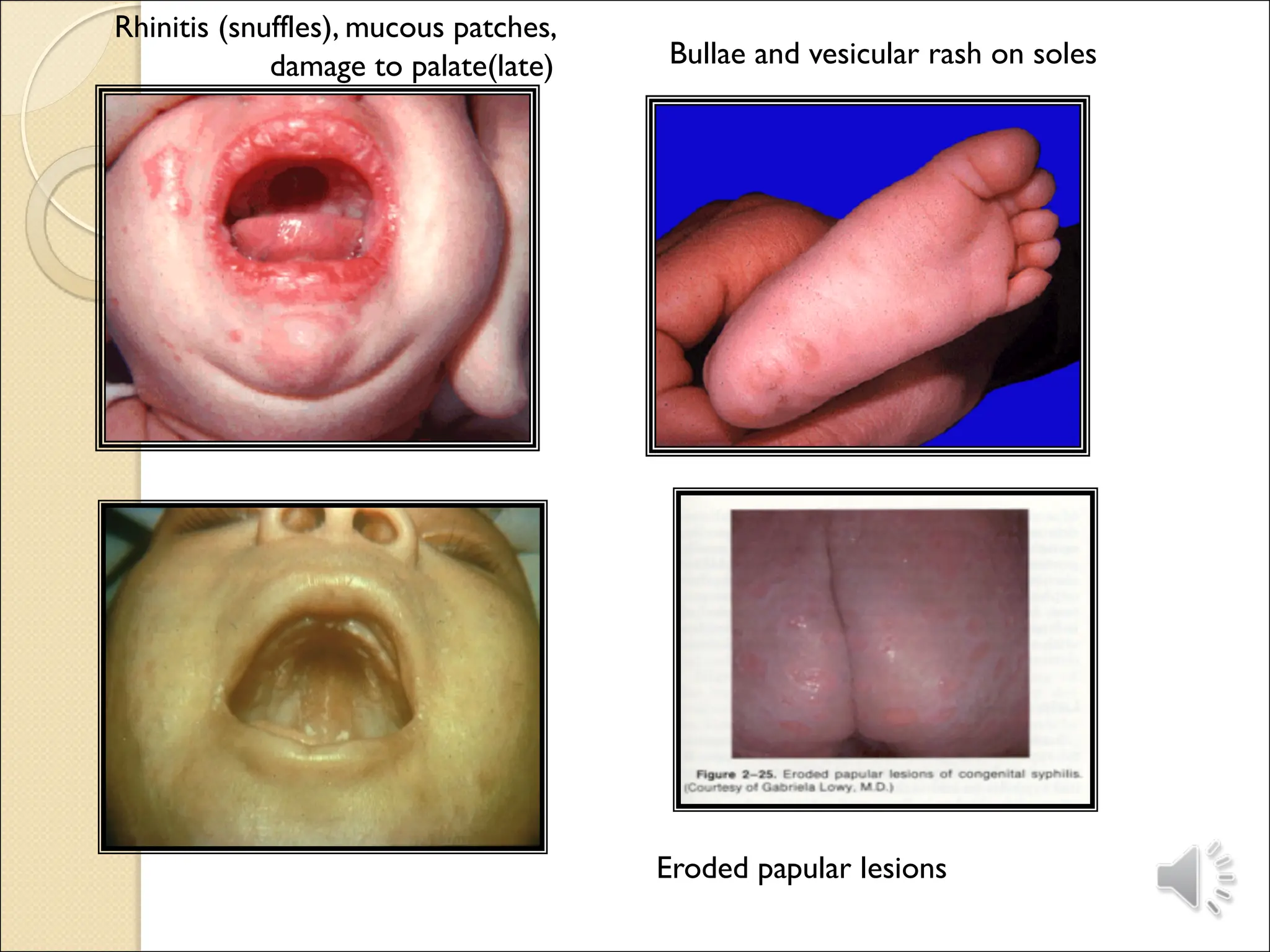
— Mucocutaneous: rhinitis (highly
infectious), “snuffles”, mucous
patches
— Macuolpapular rash
— Desquamation
— Pemphigus syphiliticus (vesicular
bullous eruptions of palms and soles)
— Petechial lesions
— Bony lesions, osteochondritis,
periostitis, pseudoparalysis
— Syphilitc leptomeningitis
— Chorioretinitis,
Early manifestations are varied, with multi-system involvement
Papulosquamous Plaques
Broken vesicles, desquamation
Infiltration, desquamation and rhinitis
Rhinitis (snuffles), mucous patches,
damage to palate(late) Bullae and vesicular rash on soles
Eroded papular lesions
Late Congenital Syphilis
— Interstitial keratitis (inflammatory)
— Nerve deafness
— Clutton’s Joints (synositis, restricted
movement)
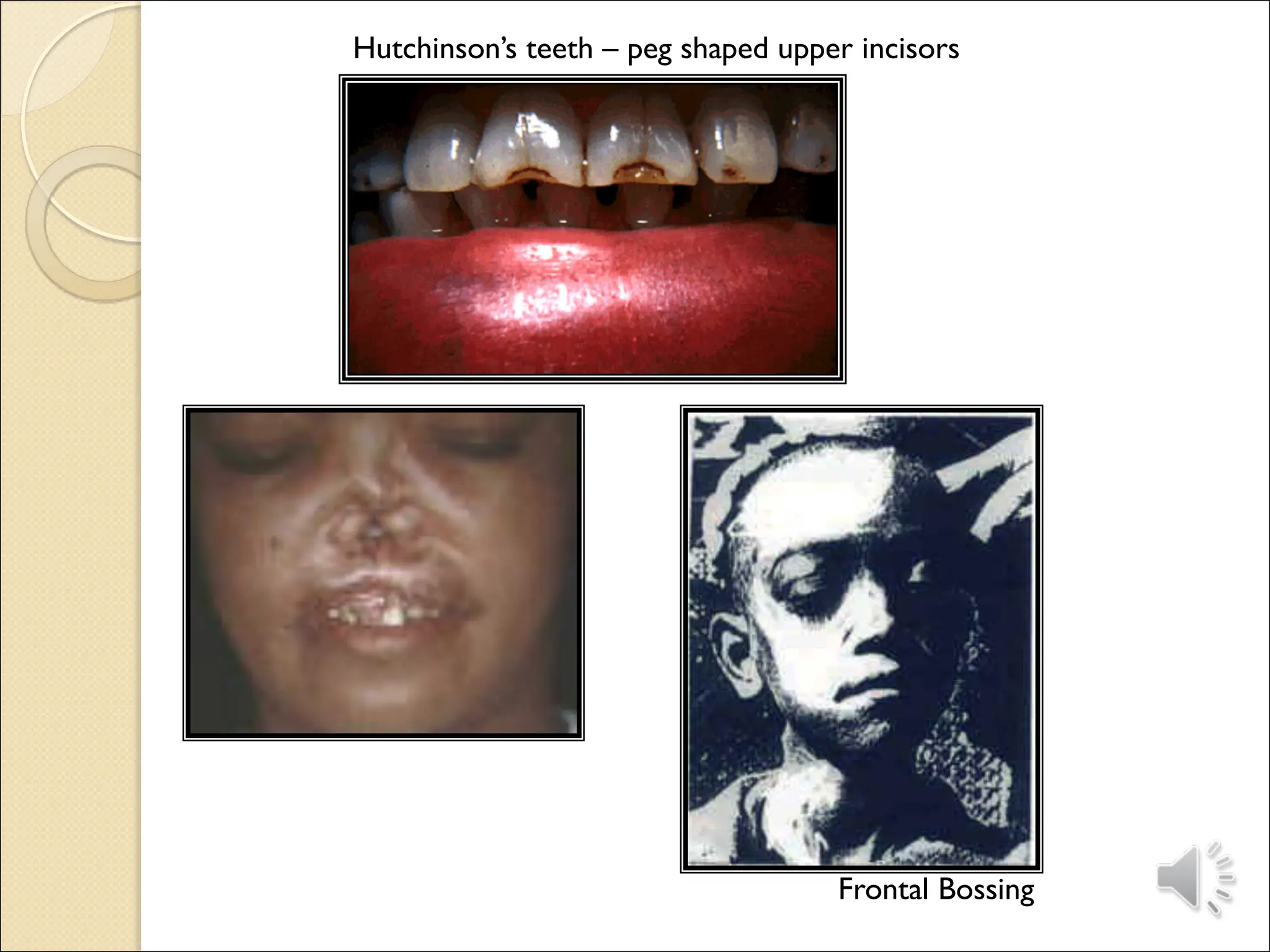
— Hutchinson’s triad (teeth,
intersitial keratitis, 8th nerve
deafness)
— Mental retardation
— Frontal bossing
— Saddle nose
— High arched palate
— Generalized paresis of insane
— Saber shine
— Gummata
Results primarily from chronic inflammation of bone, teeth,
and CNS.
Hutchinson’s teeth – peg shaped upper incisors
Frontal Bossing
Saber shins:
Anterior bowing of tibias
Gummata:
Thin atrophic scar
Diagnosis
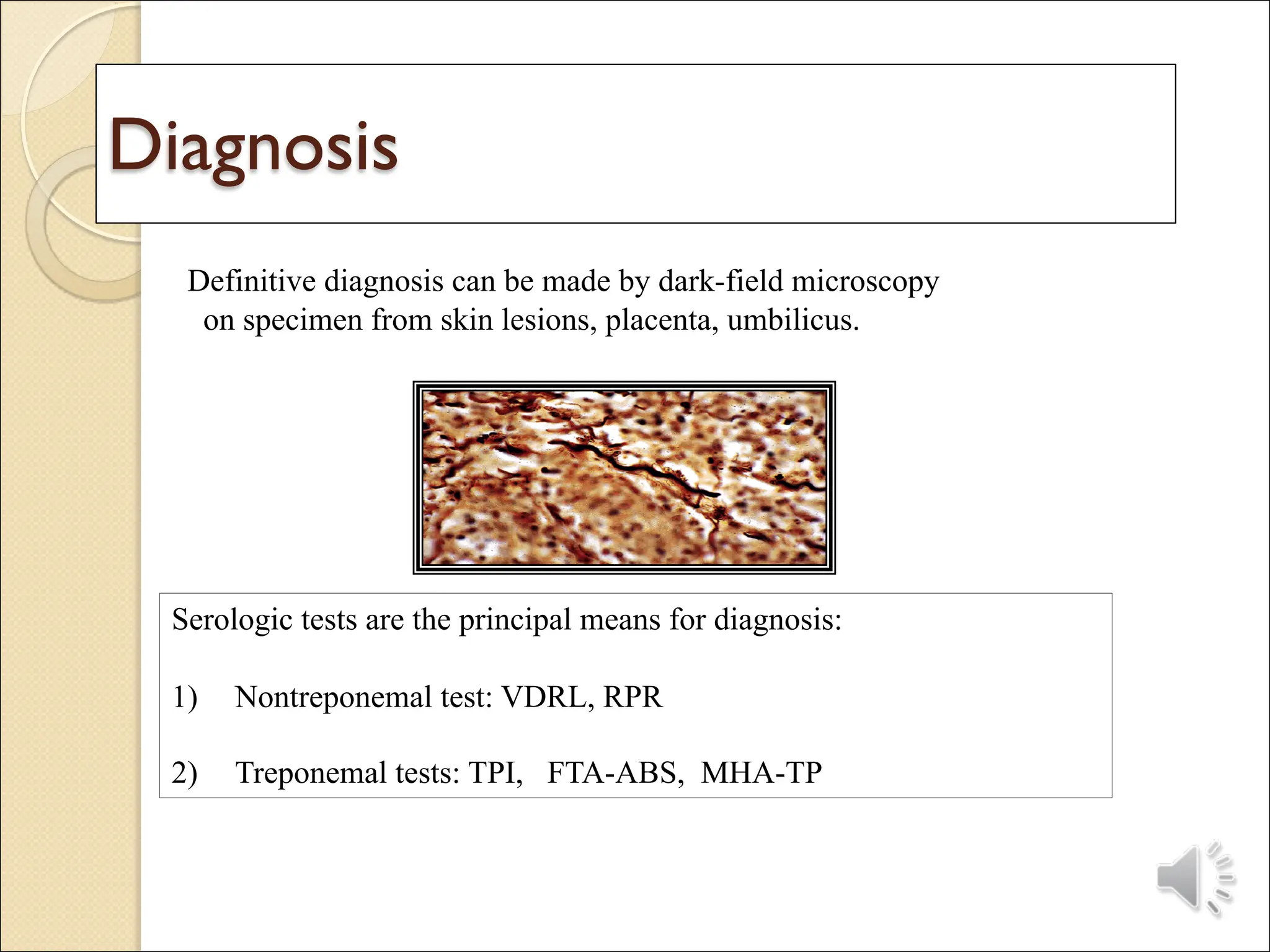
Serologic tests are the principal means for diagnosis:
1) Nontreponemal test: VDRL, RPR
2) Treponemal tests: TPI, FTA-ABS, MHA-TP
Definitive diagnosis can be made by dark-field microscopy
on specimen from skin lesions, placenta, umbilicus.
Diagnosis
Nontreponemal: VDRL, RPR
§ Quantitative results correlate with disease activity,
therefore helpful in screening.
§ Titers rise when disease is active, fall when
treatment is adequat
§ These tests become non- reactive
within a few months of adequate treatment.
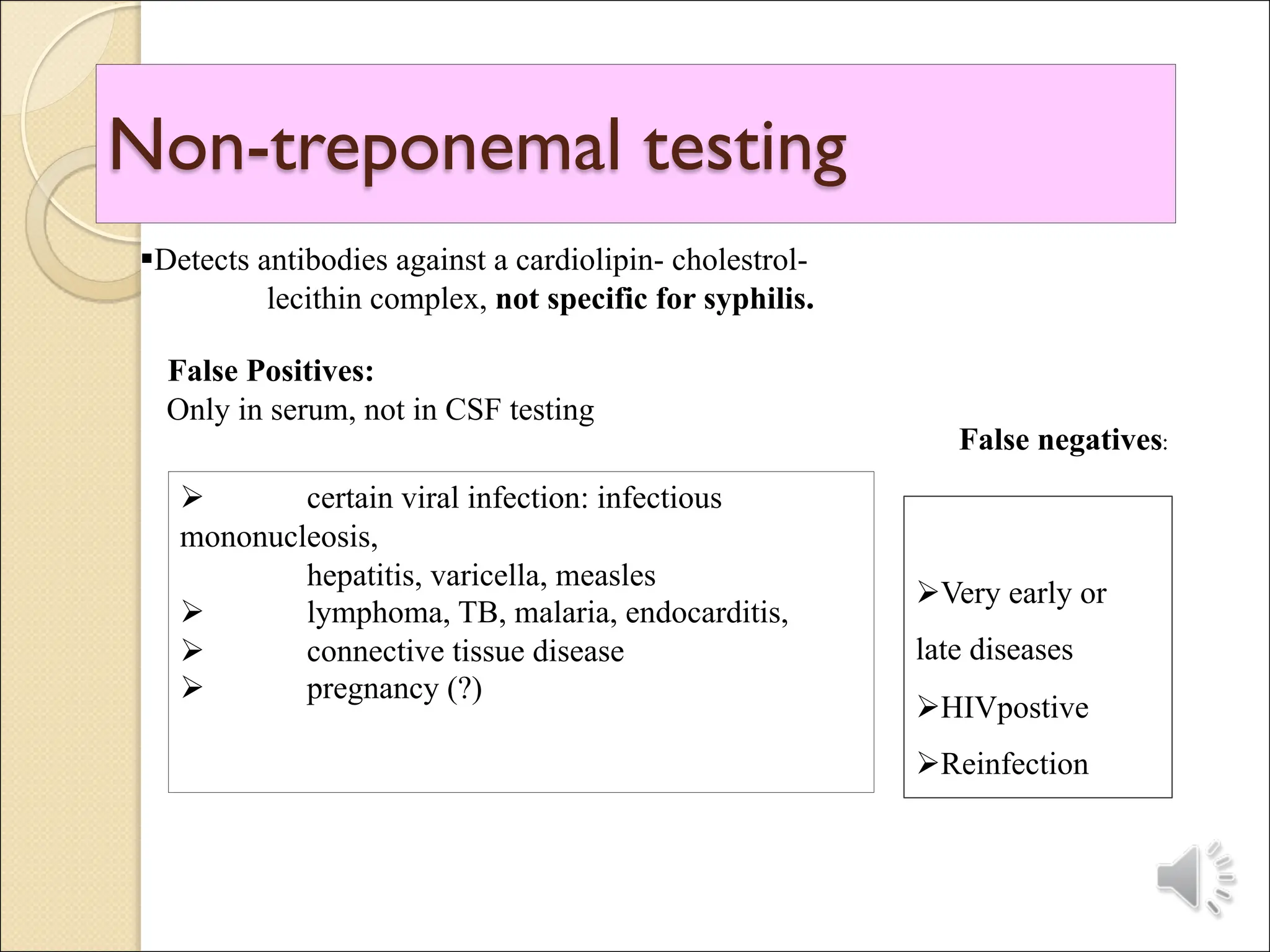
Non-treponemal testing
§Detects antibodies against a cardiolipin- cholestrol-
lecithin complex, not specific for syphilis.
False Positives:
Only in serum, not in CSF testing
Ø certain viral infection: infectious
mononucleosis,
hepatitis, varicella, measles
Ø lymphoma, TB, malaria, endocarditis,
Ø connective tissue disease
Ø pregnancy (?)
ØVery early or
late diseases
ØHIVpostive
ØReinfection
:
False negatives
Confirmatory Testing
§ Treponemal Tests: TPI, FTA-Abs,
MHA-TP
§ Detect specific treponemal antibody
§ They become positive soon after initial
infection and usually remain positive
for life, even with adequate therapy.
§ They do not correlate with disease
activity, and are not quantified.
§ Not 100% specific for syphilis: other
spirochetes.
. The prenatal diagnosis of congenital syphilis :
Ø Sonographic evaluation may be suggestive or even
diagnostic.
Ø hydrops fetalis, ascites, hepatomegaly, placental
thickening, and hydramnios all suggest infection.
Ø PCR is specific for detection of T. pallidum in
amnionic fluid, and treponemal DNA has been found
in 40 percent of pregnancies infected before 20 weeks.
management
— Confirm diagnosis
— Testing for other STD
— Contact tracing of sexual partner
— Screening for congenital syphilis in older children.
— Paranteral pencilline is effect in 98% in prevent cong.syphilis.
— In most women with primary syphilis and approximately half with
secondary infection, penicillin treatment causes a Jarisch-Herxheimer
reaction.
— Uterine contractions frequently develop with this reaction, and they may
be accompanied by late fetal heart rate decelerations.
— Women who is not treated during infection, the baby should treated after
delivery.
toxoplasmosis
— Is caused by Toxoplasma gondii, it has a complex
life cycle with three forms:
— (1) a tachyzoite, which invades and replicates
intracellularly during infection,
— (2) a bradyzoite, which forms tissue cysts during
latent infection, and
— (3) a sporozoite, which is found in oocysts that
can be environmentally resistant
Life cycle of toxoplasma gondi
Clinical picture
vIn mother :
— Asymptomatic
— Flue like illness with LAP Infection
— in immunocompromised women,
however, may be severe, with reactivation
involving encephalitis or mass lesions.
vIn the fetus:
— In acute infection, transmission and
severity of damage depend on gestational
age.
— In 1st trimester, 10% of infection is
transmitted but 85% of those have sever
damage.
— In 3rd trimester, 85% of infection is
transmitted but risk of dammage reduces
to10%.
— Congenital infection may lead to miscarriage , preterm labour.
— At neonate, anemia, HSM. jaundice
— Severly infected infant may have:
— Ventriculomegaly
— Microcephaly
— hydrocephaly
— Chorioretenites
— Cereberal calcification
— Majority of infected infants may be asymptomatic at birth but
develop sequlee later on in life.
diagnosis
— Seriological tests
— IgG appear after 2 weeks and persist for life with life long immunity.
— IgG avidity is low in acute infection and and increases over weeks and months.
— If high-avidity IgG is determined, infection within the preceding 3 to 5 months is excluded
— IgM is appear after 10 day and may persist for years.
§ panel of tests Include Sabin Feldman dye test, double-sandwich IgM ELISA, IgA and
IgG ELISA, IgG avidity test and a differential agglutination test.
§ they used to differentiate acute from chronic infection .
Prenatel dignosis
— PCR of amnionic fluid or fetal blood
— Sonographic evidence of intracranial
calcifications, hydrocephaly, liver
calcifications, ascites, placental
thickening, hyperechoic bowel.
treatment
— Spiramycin is thought to reduce the risk of transmission by
60% ,can start as soon as maternal infection is confirmed.
— If fetal infection is diagnosed by prenatal testing at or> 18
weeks, pyrimethamine, sulfonamides, and folinic acid are
used to eradicate parasites in the placenta and fetus.
— Termination of pregnancy is offer if infection occur in 1st
trimester or in U/S evidence of congenital infection.
Congenital infection associated with pregnancy
loss and preterm labor.
I. Parvovirus B19
II. Listeriosis
Human parvovirus B19(erythema
infectiosum; fifth disease)
— It is SS DNA virus,
— transmitted by respiratory droplet or in utero
transmission
— 50% of women at reproductive age are
susceptible to infection.
— It is most common in those who work with
young children like teachers.
Clinical presentation
— In adult:
— Asymptomatic
— Flue like illness with rash
In childern :
characteristics malar rash(slapped check syndrome)
Infetus:
§ Miscarriage ,stillborn
§ Hydrops fetalis may develop within10 weeks after maternal
infection.
Hydrops fetalis
Hydrops macerated baby
Algorithm for evaluation and management of
human parvovirus B19 infection in pregnancy
listeria
• Is caused by Listeria monocytogenes
• Listeria monocytogenes is aerobic and facultative anerobic
intracellular gram +ve bacillus.
• People with reduced celullar immunity is more susceptible
e. g pregnant women & elderly people .
• It is food born infection transmitted by ingestion of chilled
food like milk ,soft cheese.
• Transmission to fetus can occur by ascending route through
cervix or can occur tranceplacently.
Clinical presentation
v In mother:
— Asymptomatic
— Flu like ilness
v In fetus: result in to :
— 20% miscarriage or stillbirth.
— 50% premature delivery.
v In the neonate: RDS, sepsis, neurological symptoms.
neonatal mortality is 38%.
stillborn fetus due to listeriosis
managemant
— Diagnosis depends on clinical suspicion.
— Meconium staining of amniotic fluid in preterm
increases the clinical suspicion.
— Diagnosis is confirmed by culturing the organism
from blood, vaginal swabs or placenta.
— Treatment of infection during pregnancy is by IV
pencillin( ampicilline 2g /6hr) .
Infections acquired around the time of delivery
with serious neonatal consequences.
I. Herpes simplex
II. Group B streptococcus
III. Chlamydia& gonorrhea
herpes
— Is caused by herpes simplex virus.
— HSV is DS DNA virus.
— There are 2 viral types : HSV-1&HSV-2.
— Orolabial herpes is caused by HSV-1& transmitted by
direct contact such as kissing.
— Genital herpes is caused in most cases by HSV-2 and
is sexually transmitted.
— Neonatal herpes caused by direct contact with
infected maternal secretions during derlivery.
— It is very rarely caused by transplacental
transmission.
— Greatest risk of neonatal herpes ( 41%) when
maternal primary genital infection occurs:
at time of delivery or
within 6 weeks of delivery.
— Risk of neonatal herpes in recurrent genital herpes
is very small(1-3%).
Clinical presentation
v In mother :
— Ulcerative lesion on vulva ,vagina or cervix
— Primary infection is associated with systemic infection or
urinary retention.
v In the fetus: Primary infection may lead to:
• miscaraige ,stillbirth or
• IUGR,
• preterm labour.
vIn neonate: neonatal herpse may present in three
forms:
1. Localized: to skin , eye and mouth( mortality
rare , neurological morbidity<2%).
2. Local CNS disease:(mortality 6% ,
neurological morbidity 70%).
3. Disseminated diseases: ( mortality 30% ,
neurological morbidity 17%).
Management
Ø The diagnosis :
-Is suggested by clinical presentation.
-Is confirmed by viral culture or PCR on
lesions swab.
Ø Screening for other STD.
Ø Acyclovir(200mg/5 times daily for 5
days) .
If Primary infection is at time of delivery or within
6weeks of delivery:
1 - C/S should be recommended if elapsed time
since the rupturing of membrane is less than 4hr.
2 -in the women who opt vaginal delivery :
§ Rupturing of membrane should be avoided.
§ Invasive procedure as FSE or FBS should not
be used.
§ Neonatology should be informed .
— If recurrent genital lesion present at time of labour:
Ø CIS is not routinely recommended.
Ø The mode of delivery should be discussed with the woman
and individualized according to the clinical circumstances
and the woman’s preferences.
Ø Rupturing of membrane should be avoided.
Ø Invasive procedure as FSE or FBS should not be used.
Ø Neonatology should be informed .
Ø Suppressive daily acyclovir from 36 week may reduce the
possibility of active lesion at delivery.
Group B Streptococcus
— Is gram positive coccus.
— Is frequently found as vaginal commensal in about
25% of women.
— It can cause sepsis to neonate.
— It is most frequent cause sever early onset infection
to neonate (6% mortality at term&18% at preterm).
— Transmission to neonate can occur from the time the
membranes are rupture till delivery.
Prevention
— Intrapartum antibiotic prophylaxis to women with risk factors .
Risk factors are :
— Intrapartum fever >38 c
— Prolong rupture of membrane > 18 hr
— Prematurity <37 weeks
— Previous infants with GBS
— Incidental detection of GBS in current pregnancy
— GBS bacteruria.
— According to this approach:
— 3% of women will receive intrapartum
antibiotic.
— with 51%reduction of early onset GBS
neonatal disease.
Prophylactic antibiotic
— IV pencilline 3g immediately after the
onset of the labour &then 1.5 g/4hr until
delivery.
— Clindamycine 900mg /8hr to those who
allergic to pencilline.
Chlamydia & gonorrhea
— Are STD.
— Chlamydia trachomatis is the cause of Chlamydia.
— Neisseria gonorrhea is the cause of gonorrhea
— Are transmitted to fetus during delivery.
— Chlamydia may cause conjuctivis & pneumonia
in the neonate.
— gonorrhea may cuase ophthalmia neonatotrum.
Perinatal infections causing long term disease.
— HIV
— Hepatitis B
HIV
— Is RNA retrovirus.
— Is transmitted by sexual contact ,blood
&blood products, shared needle.
— vertical transmission which mainly occurs
in the late third trmester ,labour delivery
or breast feading.
Clinical presntation
— Infection begins asymptomatic.
— Gradual comprised immunity
— That leading to aquired immunedeficiency
syndrome (AIDS)
— Development of AIDS required few
months to as long as 17 years in
untreated pateint.
prevention
— screening for HIV had been done
routinely to all pregnant women in UK
— Because antenatal measures had been
used to decreease the risk of mother to
child transmission from 30% to < 2%.
antenatal care of women who
are HIV positive
— Management should be by a multidisciplinary
team, including an HIV physician, obstetrician,
specialist ,midwife, health advisor and
paediatrician
— Screening for other STD
— Contact tracing of sexual contact
— Screening the older childern of unknown
HIV tracing
— Advice should be given about safer-sex
practices and the use of condoms
Interventions to prevent
disease progression in the
mother
— Women who require HIV treatment for
their own health should take highly active
anti-retroviral therapy(HAART)
— continue treatment postpartum.
— They may also require prophylaxis against
Pneumocystis cariniipneumonia (PCP),
depending on their CD4 lymphocyte
count
Interventions to prevent
mother to child transmission of
HIV
— Antiretroviral therapy given antenatally (
start at 20-28 weeks)and antepartum to
mother and to neonate for the 1st 4-6
weeks
— Delivery by elective C/S
— Avoidance of breast feeding
infant management
— Cord should be clamped as soon as
possible
— Baby should be bathed immediately after
delivery
— Antiretroviral therapy shuold be given to
neonate for 1st 4-6 weeks
— Testing of neonate for infection by using
PCR at birth ,3 weeks ,6 weeks &6
months.
Hepititis B
— Is DNA virus
— Is transsmitted bysexual contact ,blood
&blood products, shared needle.
— vertical transmission which mainly occurs
during delivery8labour delivery
— 85% of infected babies will be carries.
Managemat
Mother:
— Determing of infectious state for those of
postive hepititis B antibodies on antenatal
screening.
— Screening for other STD
— Sexual and close household contacts must
screened and vaccinated.
— Advice should be given about safer-sex
practices and the use of condoms
— Baseline LFT
— Referral to hepatologist
Intervention to prevent transmission of infection to
baby
Intrapartum:
— FSE&FBSshuold be avoided
— Use of forceps rather than ventous in IVD
Postpartum
— Passive immunisation within 1st 24 hr shuold
be given to baby
— Active immunization should be given to baby
at birth , one month , six month.
— Provided babies immunised,there is no
contra indication to breast feeding.
Thank you

Perinatal infection tratment and complication

  • 1.
  • 2.
    Infections during pregnancyor around delivery can adversely affect fetus, neonate or causing long term diseases
  • 3.
    It can bedivided into four groups: 1) Congenital Infections causing congenital abnormalities. 2) Congenital infection associated with pregnancy loss and preterm labor. 3) Infections acquired around the time of delivery with serious neonatal consequences. 4) Perinatal infections causing long term disease.
  • 4.
    Congenital Infections causingcongenital abnormalities. — Rubella — CMV — chicken pox — syphilis — toxoplasmosis
  • 5.
    •Rubella — Is atogavirus spread by respiratory droplets or in- utero transmission. — Maternal infection: -Asymptomatic in 20-50% of cases. -Febrile rash with conjunctivitis & LAP. -Typical rash is pink or red maculopapular rash starting on forehead & spreading on trunk &limbs.
  • 6.
    Fetal infection — Malformationsof congenital rubella can effect all organs, but the eye, ear and heart seem to be preferentially affected. — Congenital rubella syndrome includes one or more of the following: - Eye defects—cataracts and congenital glaucoma. - Heart disease—patent ductus arteriosus and pulmonary artery stenosis. - Sensorineural deafness—the most common single defect. - Central nervous system defects—microcephaly, developmental delay, mental retardation, and meningoencephalitis. - Neonatal purpura , Hepatosplenomegaly and jaundice.
  • 7.
    Fetal infection — Riskof congenital rubella infection depends on gestational age: 80% in 1st trimester 25% at end of the 2nd trimester. — the defect caused by rubella is also less severe with more advanced gestations: -100% of infant infected at 1st 11 weeks have a rubella defect. -16-20 weeks have minimal risk of deafness. -After 20 weeks ,no documented risks to fetus.
  • 8.
    Diagnosis of rubella: vIn the mother: Ø Diagnosis is usually clinical. Ø acute infection can be confirmed by: 1- serological tests by presence of rubella specific IgM. — Presence of rubella-specific IgG anti bodies indicates previous infection or immunization. 2- by isolation of virus from urine or throat. v In the fetus: Confirmation of fetal infection is possible in confirmed cases of maternal rubella by detection of rubella RNA in chorionic villi, amniotic fluid, or fetal blood.
  • 9.
    prevention of rubellainfection — Rubella can be prevented by live attenuated vaccine. — The vaccine is contraindicated in pregnancy due to theoretical risk of teratogenicity. — If women is vaccinated , it should be advised to use contraception for three months. — Pre-pregnancy counseling should include evidence of immunity and vaccination should offered to susceptible mother. — Antenatal screening test to know susceptibility for rubella infection. — pregnant woman who are screened and antibody is not detected, vaccination is advised after pregnancy.
  • 10.
    Management of rubellainfection — If infection during pregnancy is confirmed the management depends on gestational age. — If infection occurred prior to16 weeks gestation, termination of pregnancy should be offered. — If infection occurred after 16 weeks , the women should be reassured.
  • 11.
    cytomegalovirus — Is aDNA herpes virus — Is transmitted by respiratory droplet, with sexual activity, blood transfusion &organ transplantation. — Vertical transmission can occur during pregnancy, delivery& beast feeding. — is the most common perinatal infection in the developed world. — 40% of pregnant women are susceptible. — Incidence of infection in pregnancy is 1-2%. — Of those, 30% will transmitted to fetus and 30% of those fetuses are affected.
  • 12.
    Clinical features v Inmother: asymptomatic or mild flue like illness. v Abnormalities of congenital Infection can be seen in: — The fetus on U/S: ( IUGR, microcephaly, ventriculomegaly, periventricular calcification, intra-abdominal calcification, HSM, hydrops). — The neonate: ( HSM, thrombocytopenia, jaundice, purpural rash &anemia). — Later on as blindness, deafness, developmental delay or mental retardation, difficulties in learning.
  • 13.
    diagnosis In the mother: —Serological diagnosis in suspected cases. — By demonstrating the development of CMV antibodies in seronegative women . — Which are initially IgM & then IgG . — viral culture may be useful, though a minimum of 21 days is required before culture is reported as negative. In the fetus -U/S shows features suspected infection. -PCR on amniotic fluid can confirmed diagnosis.
  • 14.
    Management — Prevention :vaccine against CMV still under experimental trial. — Termination of pregnancy can be offered to women whose fetuses have evidence of intrauterine CMV infection.
  • 15.
    Chicken pox( varecilla-zostervirus) — Is caused by varecilla-zoster virus, is a DS- DNA herpesvirus. — is transmitted by direct contact, airborn transmission or in-utero tansmission . — over 90% of the antenatal population are seropositive for VZV immunoglobulin (IgG) antibody. — it is estimated to complicate three in every 1000 pregnancies.
  • 16.
    Clinical features — Inthe mother : — presents with a 1- to 2-day flulike prodrome, is followed by pruritic vesicular lesions that crust over in 3 to 7 days. — The incubation period is 10 to 21 days, — Infectious period is from 2 days prior to the onset of the rash until the lesions are crusted over.
  • 17.
    — pneumonia, hepatitisand encephalitis are more common complication occur in adult. — Morality rate is 5 times more in pregnant than non pregnant. — Following the primary infection, the virus remains dormant in sensory nerve root ganglia — But can be reactivated to cause a vesicular erythematous skin rash in a dermatomal distribution — known as herpes zoster (HZ), or simply zoster or shingles.
  • 18.
    In fetus It dependson gestational age: Ø At 1st 28 weeks, there is 1% risk of fetal varicella syndrome (FVS),which includes one or more of following: — skin scarring in a dermatomal distribution; — eye defects (microphthalmia, chorioretinitis, cataracts); — hypoplasia of the limbs; — Neurological abnormalities (microcephaly, cortical atrophy, mental restriction and dysfunction of bowel and bladder sphincters).
  • 19.
    Atrophy of thelower extremity with bony defects and scarring
  • 20.
    Ø28- 36 weeks,there is no affect on fetus ØAt terms , there is significant risk of varicella of neonate. — Severe chickenpox is most likely to occur if the infant is born within 7 days of onset of the mother’s rash or if the mother develops the rash up to 7 days after delivery.
  • 21.
    management Diagnosis: v In mother: —Clinical manifestation is enough to make diagnosis. — Serological test: measuring IgM& IgG. — The virus may also be isolated by scraping the vesicle base during primary infection and performing tissue culture, or direct fluorescent antibody testing. v in the fetus: — U/S findings of FVS. — PCR on amniontic fluid or fetal blood sampling.
  • 22.
    vPrevention: — Varicella vaccineis a live attenuated vaccine. — It is contraindicated in pregnancy. — Pregnancy should be avoided for 3 months after vaccination. — Advice those susceptible women ( had no history of chicken pox ) to avoid contact with it.
  • 23.
    — If contactwith chicken pox occurs: Ø Asking about significant of contact(face to face or 15 min at same room) Ø Testing for immunity by blood test for VZVIgG. Ø If the pregnant women is not immune ,VZIG is available. — It is effective when given in the 1st 10 days of contact. — It may prevent or attenuated the disease, therefore it should be advised to notifying the doctor when a rash develops.
  • 24.
    Managemant of pregnantwomen with chicken pox: v Mother: antepartum — She should avoid contact with the susceptible individuals until the lesions have crusted over. — The pregnant woman with chickenpox should be asked to report immediately respiratory or other new symptoms to her doctor. — Symptomatic treatment and hygiene is advised to prevent secondary bacterial infection of lesions. — Acyclovir ,800mg /5t daily, within 24hr of onset of rash & for 7 days.
  • 25.
    — If thewoman smokes cigarettes, has chronic lung disease, is taking corticosteroids or is in the latter half of pregnancy, a hospital assessment should be considered, even in the absence of complications. — Women should be referred immediately to a hospital: 1- if develop any of the following symptoms chest symptoms, neurological symptoms, hemorrhagic rash or bleeding, a dense rash with or without mucosal lesions. 2- women with significant immunosuppression should also be referred.
  • 26.
    Intrapartum: — Delivery duringthe viraemic period may be extremely hazardous: 1-The maternal risks are bleeding, thrombocytopenia, DIC and hepatitis. 2- high risk of varicella infection of the newborn with significant morbidity and mortality.
  • 27.
    — Supportive treatmentand intravenous acyclovir is therefore desirable. — Delaying of elective delivery for 7days after rashes decreases the maternal complications & allows transfer of protective antibodies from the mother to the fetus. — However, delivery maybe required in women to facilitate assisted ventilation in cases where varicella pneumonia is complicated by respiratory failure.
  • 28.
    — Fetus: Ø Referralto a fetal medicine specialist should be considered at 16–20 weeks or 5 weeks after infection for discussion and detailed ultrasound examination. Ø Amniocentesis is not routinely advised because the risk of FVS is so low, even when amniotic fluid is positive for VZV DNA. Ø It is not known whether VZIG reduces the risk of FVS.
  • 29.
    v Neonates: — Electivedelivery should normally be avoided until 5–7 days after the onset of maternal rash to allow for the passive transfer of antibodies from mother to child. — Neonatal ophthalmic examination should be organized after birth. — If birth occurs within the 7-day period following the onset of the maternal rash, or if the mother develops the chickenpox rash within the 7-day period after birth: The neonate should be given VZIG. The infant should be monitored for signs of infection until 28 days. — Neonatal infection should be treated with acyclovir following discussion with a neonatologist and virologist.
  • 30.
    Syphilis — The causativeagent for syphilis is Treponema pallidum. — syphilis Is STD. — The fetus acquires syphilis by several routes: -transplacental transmission is the most common route. -neonatal infection may follow after contact with spirochetes through lesions at delivery or across the membranes.
  • 31.
    Clinical presentation — Maternalsyphilis is staged according to clinical features and disease duration: 1. Primary syphilis may present as painless genital ulcer (chancre) 3-6 weeks after infection is acquired 2. Secondary syphilis occur 6w-6m after infection and present as: -muculopapular rashs or mucos lesions. -Condylomata lata are flesh-colored papules and nodules found on the perineum and perianal area -Most women with secondary syphilis will also express constitutional symptoms such as fever, malaise, anorexia, headache, myalgias, and arthralgias.
  • 32.
    3-Latent syphilis developswhen primary or secondary syphilis is not treated. -Early latent syphilis is latent disease acquired within the preceding 12 months. - late latent syphilis Disease diagnosed beyond 12 months - latent syphilis of unknown duration. 4-Tertiary syphilis: develops 3-10 years after initial stages. 20% of untreated patient will develop CV syphilis &5-10 % will develop neurosyphilis.
  • 33.
    Affects on fetus ØRate of transmission of syphilis to fetus depends on the stage of diseases. ØIn pregnant women , early untreated syphilis ( primary and secondary ) with highest spirochete load ,70-100% of infant will be infected and about 25% will be stillborn. ØBecause of fetal immunocompetence prior to approximately 18 weeks, the fetus generally does not manifest the immunological inflammatory response characteristic of clinical disease before this time.
  • 34.
    Affect on fetus Damageto fetus depends on the stage of development at which infection has taken place and time elapsed before treatment. Early infection, untreated: miscarriage, stillbirth, hydrops fetalis, neonatal death, IUGR, premature delivery. Survivors: §Early congenital syphilis: clinical manifestations within first 2 years of life §Late congenital syphilis: clinical manifestations after 2yo.
  • 35.
    Early Congenital Syphilis —Hepatosplenomegaly- diffuse inflammation, scarring — Jaundice – due to hepatitis — Generalized lymphadenopathy – epitrochclear nodes — Coombs – hemolytic anemia, thromobocytopenia, leukopenia, leukocytosis — Mucocutaneous: rhinitis (highly infectious), “snuffles”, mucous patches — Macuolpapular rash — Desquamation — Pemphigus syphiliticus (vesicular bullous eruptions of palms and soles) — Petechial lesions — Bony lesions, osteochondritis, periostitis, pseudoparalysis — Syphilitc leptomeningitis — Chorioretinitis, Early manifestations are varied, with multi-system involvement
  • 36.
  • 37.
  • 38.
    Rhinitis (snuffles), mucouspatches, damage to palate(late) Bullae and vesicular rash on soles Eroded papular lesions
  • 39.
    Late Congenital Syphilis —Interstitial keratitis (inflammatory) — Nerve deafness — Clutton’s Joints (synositis, restricted movement) — Hutchinson’s triad (teeth, intersitial keratitis, 8th nerve deafness) — Mental retardation — Frontal bossing — Saddle nose — High arched palate — Generalized paresis of insane — Saber shine — Gummata Results primarily from chronic inflammation of bone, teeth, and CNS.
  • 40.
    Hutchinson’s teeth –peg shaped upper incisors Frontal Bossing
  • 41.
    Saber shins: Anterior bowingof tibias Gummata: Thin atrophic scar
  • 42.
    Diagnosis Serologic tests arethe principal means for diagnosis: 1) Nontreponemal test: VDRL, RPR 2) Treponemal tests: TPI, FTA-ABS, MHA-TP Definitive diagnosis can be made by dark-field microscopy on specimen from skin lesions, placenta, umbilicus.
  • 43.
    Diagnosis Nontreponemal: VDRL, RPR §Quantitative results correlate with disease activity, therefore helpful in screening. § Titers rise when disease is active, fall when treatment is adequat § These tests become non- reactive within a few months of adequate treatment.
  • 44.
    Non-treponemal testing §Detects antibodiesagainst a cardiolipin- cholestrol- lecithin complex, not specific for syphilis. False Positives: Only in serum, not in CSF testing Ø certain viral infection: infectious mononucleosis, hepatitis, varicella, measles Ø lymphoma, TB, malaria, endocarditis, Ø connective tissue disease Ø pregnancy (?) ØVery early or late diseases ØHIVpostive ØReinfection : False negatives
  • 45.
    Confirmatory Testing § TreponemalTests: TPI, FTA-Abs, MHA-TP § Detect specific treponemal antibody § They become positive soon after initial infection and usually remain positive for life, even with adequate therapy. § They do not correlate with disease activity, and are not quantified. § Not 100% specific for syphilis: other spirochetes.
  • 46.
    . The prenataldiagnosis of congenital syphilis : Ø Sonographic evaluation may be suggestive or even diagnostic. Ø hydrops fetalis, ascites, hepatomegaly, placental thickening, and hydramnios all suggest infection. Ø PCR is specific for detection of T. pallidum in amnionic fluid, and treponemal DNA has been found in 40 percent of pregnancies infected before 20 weeks.
  • 47.
    management — Confirm diagnosis —Testing for other STD — Contact tracing of sexual partner — Screening for congenital syphilis in older children. — Paranteral pencilline is effect in 98% in prevent cong.syphilis. — In most women with primary syphilis and approximately half with secondary infection, penicillin treatment causes a Jarisch-Herxheimer reaction. — Uterine contractions frequently develop with this reaction, and they may be accompanied by late fetal heart rate decelerations. — Women who is not treated during infection, the baby should treated after delivery.
  • 48.
    toxoplasmosis — Is causedby Toxoplasma gondii, it has a complex life cycle with three forms: — (1) a tachyzoite, which invades and replicates intracellularly during infection, — (2) a bradyzoite, which forms tissue cysts during latent infection, and — (3) a sporozoite, which is found in oocysts that can be environmentally resistant
  • 49.
    Life cycle oftoxoplasma gondi
  • 50.
    Clinical picture vIn mother: — Asymptomatic — Flue like illness with LAP Infection — in immunocompromised women, however, may be severe, with reactivation involving encephalitis or mass lesions.
  • 51.
    vIn the fetus: —In acute infection, transmission and severity of damage depend on gestational age. — In 1st trimester, 10% of infection is transmitted but 85% of those have sever damage. — In 3rd trimester, 85% of infection is transmitted but risk of dammage reduces to10%.
  • 52.
    — Congenital infectionmay lead to miscarriage , preterm labour. — At neonate, anemia, HSM. jaundice — Severly infected infant may have: — Ventriculomegaly — Microcephaly — hydrocephaly — Chorioretenites — Cereberal calcification — Majority of infected infants may be asymptomatic at birth but develop sequlee later on in life.
  • 53.
    diagnosis — Seriological tests —IgG appear after 2 weeks and persist for life with life long immunity. — IgG avidity is low in acute infection and and increases over weeks and months. — If high-avidity IgG is determined, infection within the preceding 3 to 5 months is excluded — IgM is appear after 10 day and may persist for years. § panel of tests Include Sabin Feldman dye test, double-sandwich IgM ELISA, IgA and IgG ELISA, IgG avidity test and a differential agglutination test. § they used to differentiate acute from chronic infection .
  • 54.
    Prenatel dignosis — PCRof amnionic fluid or fetal blood — Sonographic evidence of intracranial calcifications, hydrocephaly, liver calcifications, ascites, placental thickening, hyperechoic bowel.
  • 55.
    treatment — Spiramycin isthought to reduce the risk of transmission by 60% ,can start as soon as maternal infection is confirmed. — If fetal infection is diagnosed by prenatal testing at or> 18 weeks, pyrimethamine, sulfonamides, and folinic acid are used to eradicate parasites in the placenta and fetus. — Termination of pregnancy is offer if infection occur in 1st trimester or in U/S evidence of congenital infection.
  • 56.
    Congenital infection associatedwith pregnancy loss and preterm labor. I. Parvovirus B19 II. Listeriosis
  • 57.
    Human parvovirus B19(erythema infectiosum;fifth disease) — It is SS DNA virus, — transmitted by respiratory droplet or in utero transmission — 50% of women at reproductive age are susceptible to infection. — It is most common in those who work with young children like teachers.
  • 58.
    Clinical presentation — Inadult: — Asymptomatic — Flue like illness with rash In childern : characteristics malar rash(slapped check syndrome) Infetus: § Miscarriage ,stillborn § Hydrops fetalis may develop within10 weeks after maternal infection.
  • 59.
  • 60.
  • 61.
    Algorithm for evaluationand management of human parvovirus B19 infection in pregnancy
  • 62.
    listeria • Is causedby Listeria monocytogenes • Listeria monocytogenes is aerobic and facultative anerobic intracellular gram +ve bacillus. • People with reduced celullar immunity is more susceptible e. g pregnant women & elderly people . • It is food born infection transmitted by ingestion of chilled food like milk ,soft cheese. • Transmission to fetus can occur by ascending route through cervix or can occur tranceplacently.
  • 63.
    Clinical presentation v Inmother: — Asymptomatic — Flu like ilness v In fetus: result in to : — 20% miscarriage or stillbirth. — 50% premature delivery. v In the neonate: RDS, sepsis, neurological symptoms. neonatal mortality is 38%.
  • 64.
    stillborn fetus dueto listeriosis
  • 65.
    managemant — Diagnosis dependson clinical suspicion. — Meconium staining of amniotic fluid in preterm increases the clinical suspicion. — Diagnosis is confirmed by culturing the organism from blood, vaginal swabs or placenta. — Treatment of infection during pregnancy is by IV pencillin( ampicilline 2g /6hr) .
  • 66.
    Infections acquired aroundthe time of delivery with serious neonatal consequences. I. Herpes simplex II. Group B streptococcus III. Chlamydia& gonorrhea
  • 67.
    herpes — Is causedby herpes simplex virus. — HSV is DS DNA virus. — There are 2 viral types : HSV-1&HSV-2. — Orolabial herpes is caused by HSV-1& transmitted by direct contact such as kissing. — Genital herpes is caused in most cases by HSV-2 and is sexually transmitted.
  • 68.
    — Neonatal herpescaused by direct contact with infected maternal secretions during derlivery. — It is very rarely caused by transplacental transmission. — Greatest risk of neonatal herpes ( 41%) when maternal primary genital infection occurs: at time of delivery or within 6 weeks of delivery. — Risk of neonatal herpes in recurrent genital herpes is very small(1-3%).
  • 69.
    Clinical presentation v Inmother : — Ulcerative lesion on vulva ,vagina or cervix — Primary infection is associated with systemic infection or urinary retention. v In the fetus: Primary infection may lead to: • miscaraige ,stillbirth or • IUGR, • preterm labour.
  • 70.
    vIn neonate: neonatalherpse may present in three forms: 1. Localized: to skin , eye and mouth( mortality rare , neurological morbidity<2%). 2. Local CNS disease:(mortality 6% , neurological morbidity 70%). 3. Disseminated diseases: ( mortality 30% , neurological morbidity 17%).
  • 71.
    Management Ø The diagnosis: -Is suggested by clinical presentation. -Is confirmed by viral culture or PCR on lesions swab. Ø Screening for other STD. Ø Acyclovir(200mg/5 times daily for 5 days) .
  • 72.
    If Primary infectionis at time of delivery or within 6weeks of delivery: 1 - C/S should be recommended if elapsed time since the rupturing of membrane is less than 4hr. 2 -in the women who opt vaginal delivery : § Rupturing of membrane should be avoided. § Invasive procedure as FSE or FBS should not be used. § Neonatology should be informed .
  • 73.
    — If recurrentgenital lesion present at time of labour: Ø CIS is not routinely recommended. Ø The mode of delivery should be discussed with the woman and individualized according to the clinical circumstances and the woman’s preferences. Ø Rupturing of membrane should be avoided. Ø Invasive procedure as FSE or FBS should not be used. Ø Neonatology should be informed . Ø Suppressive daily acyclovir from 36 week may reduce the possibility of active lesion at delivery.
  • 74.
    Group B Streptococcus —Is gram positive coccus. — Is frequently found as vaginal commensal in about 25% of women. — It can cause sepsis to neonate. — It is most frequent cause sever early onset infection to neonate (6% mortality at term&18% at preterm). — Transmission to neonate can occur from the time the membranes are rupture till delivery.
  • 75.
    Prevention — Intrapartum antibioticprophylaxis to women with risk factors . Risk factors are : — Intrapartum fever >38 c — Prolong rupture of membrane > 18 hr — Prematurity <37 weeks — Previous infants with GBS — Incidental detection of GBS in current pregnancy — GBS bacteruria.
  • 76.
    — According tothis approach: — 3% of women will receive intrapartum antibiotic. — with 51%reduction of early onset GBS neonatal disease.
  • 77.
    Prophylactic antibiotic — IVpencilline 3g immediately after the onset of the labour &then 1.5 g/4hr until delivery. — Clindamycine 900mg /8hr to those who allergic to pencilline.
  • 78.
    Chlamydia & gonorrhea —Are STD. — Chlamydia trachomatis is the cause of Chlamydia. — Neisseria gonorrhea is the cause of gonorrhea — Are transmitted to fetus during delivery. — Chlamydia may cause conjuctivis & pneumonia in the neonate. — gonorrhea may cuase ophthalmia neonatotrum.
  • 79.
    Perinatal infections causinglong term disease. — HIV — Hepatitis B
  • 80.
    HIV — Is RNAretrovirus. — Is transmitted by sexual contact ,blood &blood products, shared needle. — vertical transmission which mainly occurs in the late third trmester ,labour delivery or breast feading.
  • 81.
    Clinical presntation — Infectionbegins asymptomatic. — Gradual comprised immunity — That leading to aquired immunedeficiency syndrome (AIDS) — Development of AIDS required few months to as long as 17 years in untreated pateint.
  • 82.
    prevention — screening forHIV had been done routinely to all pregnant women in UK — Because antenatal measures had been used to decreease the risk of mother to child transmission from 30% to < 2%.
  • 83.
    antenatal care ofwomen who are HIV positive — Management should be by a multidisciplinary team, including an HIV physician, obstetrician, specialist ,midwife, health advisor and paediatrician — Screening for other STD — Contact tracing of sexual contact — Screening the older childern of unknown HIV tracing — Advice should be given about safer-sex practices and the use of condoms
  • 84.
    Interventions to prevent diseaseprogression in the mother — Women who require HIV treatment for their own health should take highly active anti-retroviral therapy(HAART) — continue treatment postpartum. — They may also require prophylaxis against Pneumocystis cariniipneumonia (PCP), depending on their CD4 lymphocyte count
  • 85.
    Interventions to prevent motherto child transmission of HIV — Antiretroviral therapy given antenatally ( start at 20-28 weeks)and antepartum to mother and to neonate for the 1st 4-6 weeks — Delivery by elective C/S — Avoidance of breast feeding
  • 86.
    infant management — Cordshould be clamped as soon as possible — Baby should be bathed immediately after delivery — Antiretroviral therapy shuold be given to neonate for 1st 4-6 weeks — Testing of neonate for infection by using PCR at birth ,3 weeks ,6 weeks &6 months.
  • 87.
    Hepititis B — IsDNA virus — Is transsmitted bysexual contact ,blood &blood products, shared needle. — vertical transmission which mainly occurs during delivery8labour delivery — 85% of infected babies will be carries.
  • 88.
    Managemat Mother: — Determing ofinfectious state for those of postive hepititis B antibodies on antenatal screening. — Screening for other STD — Sexual and close household contacts must screened and vaccinated. — Advice should be given about safer-sex practices and the use of condoms — Baseline LFT — Referral to hepatologist
  • 89.
    Intervention to preventtransmission of infection to baby Intrapartum: — FSE&FBSshuold be avoided — Use of forceps rather than ventous in IVD Postpartum — Passive immunisation within 1st 24 hr shuold be given to baby — Active immunization should be given to baby at birth , one month , six month. — Provided babies immunised,there is no contra indication to breast feeding.
  • 90.