Wednesday, November 2, 2011
PERFORMANCE
                               Sven Brunken


             sven@sencha.com                  @svenbrunken


Wednesday, November 2, 2011
Overview
                              Why optimize an application?
                                What can you optimize?
                                  How to optimize it?
                                      Questions


Wednesday, November 2, 2011
Why Optimize An
                               Application?


Wednesday, November 2, 2011
Better User Experience


Wednesday, November 2, 2011
What Can You
                               Optimize?


Wednesday, November 2, 2011
What Can You Optimize?
       Application loading time
       Application performance
       Memory consumption


Wednesday, November 2, 2011
But, How To Do It?


Wednesday, November 2, 2011
Application Loading
       GZip your content
       Cache your content
       Remove not required files
       Obfuscate any external CSS and Javascript
       Reduce the amount of RPC calls on application startup


Wednesday, November 2, 2011
GZip Your Files
       GWT has a pre defined Linker for this
       Simply inherit the PrecompressLinker module

       By default in gzips your html, js and css files


Wednesday, November 2, 2011
How To Reduce The
                    Amount of RPC Calls?


Wednesday, November 2, 2011
How To Reduce It?
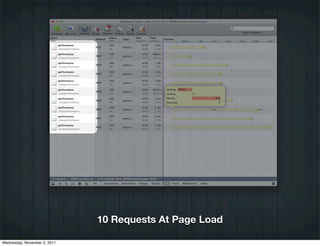
       Applications require to load multiple initial data
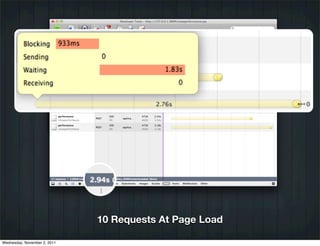
       Each load makes a new round trip to the server
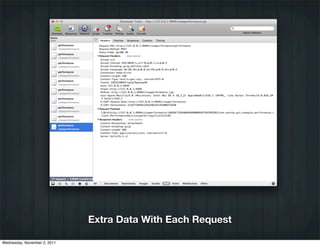
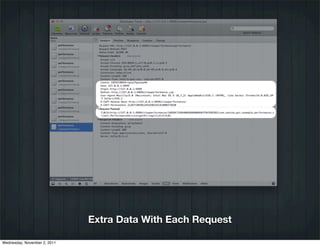
       Each request contains a huge amount of data
       And there is the HTTP protocol overhead


Wednesday, November 2, 2011
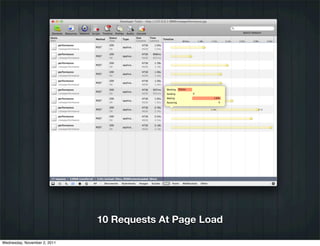
10 Requests At Page Load

Wednesday, November 2, 2011
10 Requests At Page Load

Wednesday, November 2, 2011
10 Requests At Page Load

Wednesday, November 2, 2011
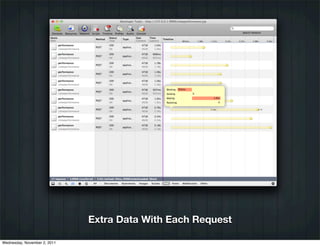
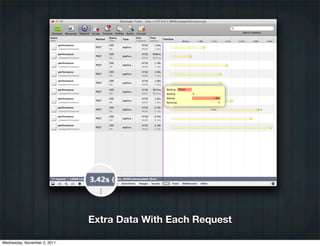
Extra Data With Each Request

Wednesday, November 2, 2011
Extra Data With Each Request

Wednesday, November 2, 2011
Why Not Sending The
                     Data With the Initial
                          Request?


Wednesday, November 2, 2011
Advantages
       No further roundtrip required
       All data on the client with the first page load
       Less waiting time for the user


Wednesday, November 2, 2011
Extra Data With Each Request

Wednesday, November 2, 2011
Extra Data With Each Request

Wednesday, November 2, 2011
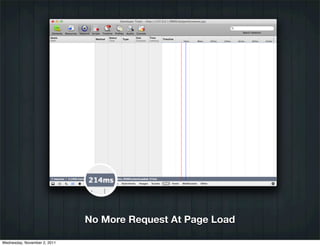
No More Request At Page Load

Wednesday, November 2, 2011
Demonstration


Wednesday, November 2, 2011
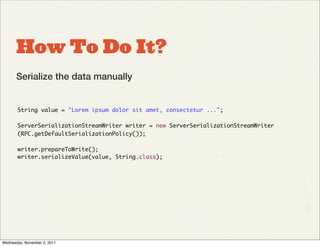
How To Do It?
       Serialize the data manually


       String value = "Lorem ipsum dolor sit amet, consectetur ...";

       ServerSerializationStreamWriter writer = new ServerSerializationStreamWriter
       (RPC.getDefaultSerializationPolicy());

       writer.prepareToWrite();
       writer.serializeValue(value, String.class);


Wednesday, November 2, 2011
Put It Into The Main Page
       We put the Data for all our calls into a Javascript Object
       <script>
       var dictionary = {
       <%
       String value = "Lorem ipsum dolor sit amet, consectetur ...";
       String[] methods = {"A","B","C","D","E","F","G","H","I","J"};

       for (int i = 0; i < methods.length; i++) {
          ServerSerializationStreamWriter writer = ...
          out.print(""call"+methods[i]+"": ""+writer.toString().replaceAll("","
       " ).replaceAll(""",""" )+""");
          if(i<methods.length-1) {
            out.print(",");
          }
       }
       %>
       };
       </script>


Wednesday, November 2, 2011
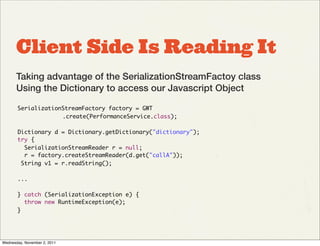
Client Side Is Reading It
       Taking advantage of the SerializationStreamFactoy class
       Using the Dictionary to access our Javascript Object

       SerializationStreamFactory factory = GWT
       	 	 	 	 .create(PerformanceService.class);

       Dictionary d = Dictionary.getDictionary("dictionary");
       try {
         SerializationStreamReader r = null;
         r = factory.createStreamReader(d.get("callA"));
        String v1 = r.readString();

       ...

       } catch (SerializationException e) {
         throw new RuntimeException(e);
       }


Wednesday, November 2, 2011
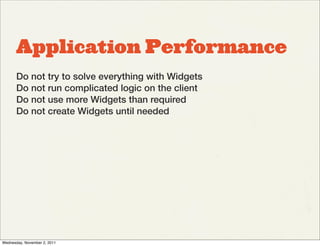
Application Performance
       Do not try to solve everything with Widgets
       Do not run complicated logic on the client
       Do not use more Widgets than required
       Do not create Widgets until needed


Wednesday, November 2, 2011
Widgets Are Expensive
       Do not use Widgets for everything
       They are expensive
       Try to use plain HTML where ever possible


Wednesday, November 2, 2011
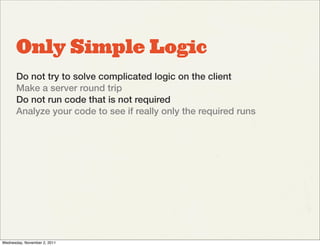
Only Simple Logic
       Do not try to solve complicated logic on the client
       Make a server round trip
       Do not run code that is not required
       Analyze your code to see if really only the required runs


Wednesday, November 2, 2011
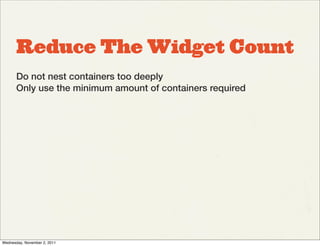
Reduce The Widget Count
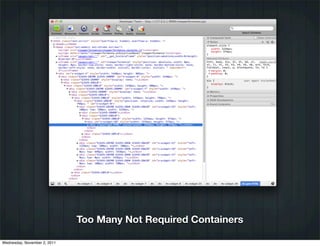
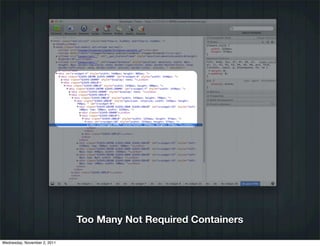
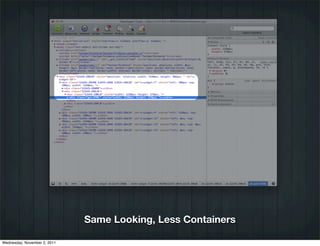
       Do not nest containers too deeply
       Only use the minimum amount of containers required


Wednesday, November 2, 2011
Too Many Not Required Containers

Wednesday, November 2, 2011
Too Many Not Required Containers

Wednesday, November 2, 2011
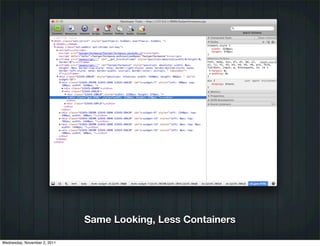
Same Looking, Less Containers

Wednesday, November 2, 2011
Same Looking, Less Containers

Wednesday, November 2, 2011
Demonstration


Wednesday, November 2, 2011
And This Has One More
                    Advantage!


Wednesday, November 2, 2011
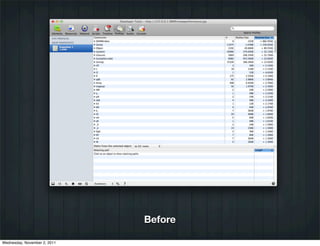
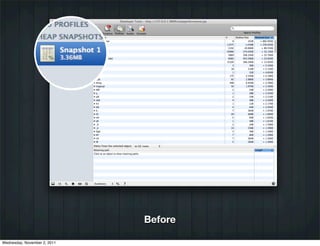
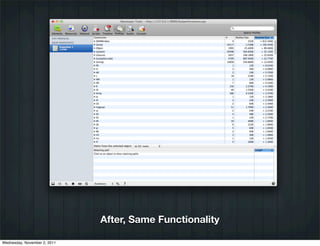
Reduced Memory
                               Consumption


Wednesday, November 2, 2011
Before

Wednesday, November 2, 2011
Before

Wednesday, November 2, 2011
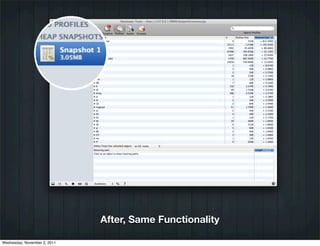
After, Same Functionality

Wednesday, November 2, 2011
After, Same Functionality

Wednesday, November 2, 2011
Questions


Wednesday, November 2, 2011
Thank You!


Wednesday, November 2, 2011

Performance Optimization for Ext GWT 3.0

  • 1.
  • 2.
    PERFORMANCE Sven Brunken sven@sencha.com @svenbrunken Wednesday, November 2, 2011
  • 3.
    Overview Why optimize an application? What can you optimize? How to optimize it? Questions Wednesday, November 2, 2011
  • 4.
    Why Optimize An Application? Wednesday, November 2, 2011
  • 5.
  • 6.
    What Can You Optimize? Wednesday, November 2, 2011
  • 7.
    What Can YouOptimize? Application loading time Application performance Memory consumption Wednesday, November 2, 2011
  • 8.
    But, How ToDo It? Wednesday, November 2, 2011
  • 9.
    Application Loading GZip your content Cache your content Remove not required files Obfuscate any external CSS and Javascript Reduce the amount of RPC calls on application startup Wednesday, November 2, 2011
  • 10.
    GZip Your Files GWT has a pre defined Linker for this Simply inherit the PrecompressLinker module By default in gzips your html, js and css files Wednesday, November 2, 2011
  • 11.
    How To ReduceThe Amount of RPC Calls? Wednesday, November 2, 2011
  • 12.
    How To ReduceIt? Applications require to load multiple initial data Each load makes a new round trip to the server Each request contains a huge amount of data And there is the HTTP protocol overhead Wednesday, November 2, 2011
  • 13.
    10 Requests AtPage Load Wednesday, November 2, 2011
  • 14.
    10 Requests AtPage Load Wednesday, November 2, 2011
  • 15.
    10 Requests AtPage Load Wednesday, November 2, 2011
  • 16.
    Extra Data WithEach Request Wednesday, November 2, 2011
  • 17.
    Extra Data WithEach Request Wednesday, November 2, 2011
  • 18.
    Why Not SendingThe Data With the Initial Request? Wednesday, November 2, 2011
  • 19.
    Advantages No further roundtrip required All data on the client with the first page load Less waiting time for the user Wednesday, November 2, 2011
  • 20.
    Extra Data WithEach Request Wednesday, November 2, 2011
  • 21.
    Extra Data WithEach Request Wednesday, November 2, 2011
  • 22.
    No More RequestAt Page Load Wednesday, November 2, 2011
  • 23.
  • 24.
    How To DoIt? Serialize the data manually String value = "Lorem ipsum dolor sit amet, consectetur ..."; ServerSerializationStreamWriter writer = new ServerSerializationStreamWriter (RPC.getDefaultSerializationPolicy()); writer.prepareToWrite(); writer.serializeValue(value, String.class); Wednesday, November 2, 2011
  • 25.
    Put It IntoThe Main Page We put the Data for all our calls into a Javascript Object <script> var dictionary = { <% String value = "Lorem ipsum dolor sit amet, consectetur ..."; String[] methods = {"A","B","C","D","E","F","G","H","I","J"}; for (int i = 0; i < methods.length; i++) { ServerSerializationStreamWriter writer = ... out.print(""call"+methods[i]+"": ""+writer.toString().replaceAll(""," " ).replaceAll(""",""" )+"""); if(i<methods.length-1) { out.print(","); } } %> }; </script> Wednesday, November 2, 2011
  • 26.
    Client Side IsReading It Taking advantage of the SerializationStreamFactoy class Using the Dictionary to access our Javascript Object SerializationStreamFactory factory = GWT .create(PerformanceService.class); Dictionary d = Dictionary.getDictionary("dictionary"); try { SerializationStreamReader r = null; r = factory.createStreamReader(d.get("callA")); String v1 = r.readString(); ... } catch (SerializationException e) { throw new RuntimeException(e); } Wednesday, November 2, 2011
  • 27.
    Application Performance Do not try to solve everything with Widgets Do not run complicated logic on the client Do not use more Widgets than required Do not create Widgets until needed Wednesday, November 2, 2011
  • 28.
    Widgets Are Expensive Do not use Widgets for everything They are expensive Try to use plain HTML where ever possible Wednesday, November 2, 2011
  • 29.
    Only Simple Logic Do not try to solve complicated logic on the client Make a server round trip Do not run code that is not required Analyze your code to see if really only the required runs Wednesday, November 2, 2011
  • 30.
    Reduce The WidgetCount Do not nest containers too deeply Only use the minimum amount of containers required Wednesday, November 2, 2011
  • 31.
    Too Many NotRequired Containers Wednesday, November 2, 2011
  • 32.
    Too Many NotRequired Containers Wednesday, November 2, 2011
  • 33.
    Same Looking, LessContainers Wednesday, November 2, 2011
  • 34.
    Same Looking, LessContainers Wednesday, November 2, 2011
  • 35.
  • 36.
    And This HasOne More Advantage! Wednesday, November 2, 2011
  • 37.
    Reduced Memory Consumption Wednesday, November 2, 2011
  • 38.
  • 39.
  • 40.
  • 41.
  • 42.
  • 43.