Enhancing
Organizational
Success through
Effective
Performance
Management
Strategies
Introduction to
Performance Management
In today's competitive landscape,
is
crucial for organizational success.
It
i
nvolves aligning employee goals
with
, fostering
a culture of accountability, and
enhancing overall productivity. This
presentation explores strategies to
implement
successful performance
manageme
nt systems.
Understanding
Performance Management
is a
continuous process that involves
planning, monitoring, and reviewing
employee performance. It is
essential for identifying strengths
and weaknesses within the
workforce, enabling organizations to
drive
and achieve
their strategic goals.
Setting Clear Objectives
Establishing is the foundation
of effective performance
management. SMART goals—
—help employees
understand expectations and align
their efforts with organizational
priorities.
Regular Feedback
Mechanisms
Implementing
mechanisms fosters open
communication between
managers and employees.
Constructive feedback helps
identify areas for improvement and
encourages continuous
development, ultimately leading to
enhanced performance and
engagement.
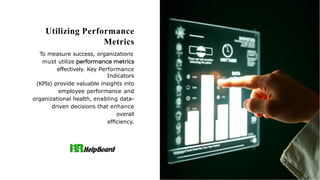
Utilizing Performance
Metrics
To measure success, organizations
must utilize
effectively. Key Performance
Indicators
(KPIs) provide valuable insights into
employee performance and
organizational health, enabling data-
driven decisions that enhance
overall
efficiency.
Employee Development
Programs
Investing in
is vital for long-term
success. These programs not only
enhance skills
but also increase employee
satisfaction and retention, creating a
more competent and committed
workforce.
Recognizing and Rewarding
Performance
Recognizing and rewarding
is essential
for motivating employees.
Implementing
recognition programs fosters a
culture of appreciation,
encouraging employees to strive
for excellence and contribute
positively to the
organization.
Conclusion: Driving Success
In conclusion,
are key to driving organizational success. By setting
clear objectives, providing regular feedback, and
investing in employee development, organizations can
enhance performance and achieve their strategic goals.
Thanks!
Do you have any
questions?
youremail@email.com
+91 620 421 838
www.yourwebsite.com
@yourusername
Thanks
!
Do you have any
questions?
youremail@email.com
+91 620 421 838
www.yourwebsite.com
@yourusername
Thanks!
Do you have any
questions?
youremail@email.com
+91 620 421 838
www.yourwebsite.co
m @yourusername
Thanks
!
Do you have any
questions?
youremail@email.com
+91 620 421 838
www.yourwebsite.co
m @yourusername
Thanks!
Do you have any
questions?
youremail@email.com
+91 620 421 838
www.yourwebsite.co
m @yourusername
Thanks!
Do you have any
questions?
youremail@email.com
+91 620 421 838
www.yourwebsite.com
@yourusername
Thanks!
Do you have any
questions? info
@hrhelpboard.com
+91 9899990261
www.hrhelpboard.com

Performance Management Meaning in Human Resource Management

  • 1.
  • 2.
    Introduction to Performance Management Intoday's competitive landscape, is crucial for organizational success. It i nvolves aligning employee goals with , fostering a culture of accountability, and enhancing overall productivity. This presentation explores strategies to implement successful performance manageme nt systems.
  • 3.
    Understanding Performance Management is a continuousprocess that involves planning, monitoring, and reviewing employee performance. It is essential for identifying strengths and weaknesses within the workforce, enabling organizations to drive and achieve their strategic goals.
  • 4.
    Setting Clear Objectives Establishingis the foundation of effective performance management. SMART goals— —help employees understand expectations and align their efforts with organizational priorities.
  • 5.
    Regular Feedback Mechanisms Implementing mechanisms fostersopen communication between managers and employees. Constructive feedback helps identify areas for improvement and encourages continuous development, ultimately leading to enhanced performance and engagement.
  • 6.
    Utilizing Performance Metrics To measuresuccess, organizations must utilize effectively. Key Performance Indicators (KPIs) provide valuable insights into employee performance and organizational health, enabling data- driven decisions that enhance overall efficiency.
  • 7.
    Employee Development Programs Investing in isvital for long-term success. These programs not only enhance skills but also increase employee satisfaction and retention, creating a more competent and committed workforce.
  • 8.
    Recognizing and Rewarding Performance Recognizingand rewarding is essential for motivating employees. Implementing recognition programs fosters a culture of appreciation, encouraging employees to strive for excellence and contribute positively to the organization.
  • 9.
    Conclusion: Driving Success Inconclusion, are key to driving organizational success. By setting clear objectives, providing regular feedback, and investing in employee development, organizations can enhance performance and achieve their strategic goals.
  • 10.
    Thanks! Do you haveany questions? youremail@email.com +91 620 421 838 www.yourwebsite.com @yourusername Thanks ! Do you have any questions? youremail@email.com +91 620 421 838 www.yourwebsite.com @yourusername Thanks! Do you have any questions? youremail@email.com +91 620 421 838 www.yourwebsite.co m @yourusername Thanks ! Do you have any questions? youremail@email.com +91 620 421 838 www.yourwebsite.co m @yourusername Thanks! Do you have any questions? youremail@email.com +91 620 421 838 www.yourwebsite.co m @yourusername Thanks! Do you have any questions? youremail@email.com +91 620 421 838 www.yourwebsite.com @yourusername Thanks! Do you have any questions? info @hrhelpboard.com +91 9899990261 www.hrhelpboard.com