



Performance Management
Analytics and
Organizational Success
Introduction
The success of an organization in this
fast-paced business world is highly
dependent on efficient performance
management of employees. An
organization faces increased
challenges when it does not have a
systematic and robust approach for
performance management. In this
blog, we talk about what
performance management analytics
is and why it is important for
organizational success.
What is Performance
Management Analytics?
Performance Management Analytics
uses credible data to analyze, measure,
understand and enhance how an
individual/team is doing their tasks. It
involves collection of information
pertaining to productivity, goals, and
employee behavior. Organizations use
it for making data-driven decisions that
help formulate strategies and plans to
increase the performance of
employees.
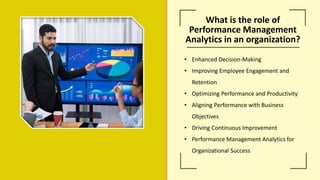
What is the role of
Performance Management
Analytics in an organization?
• Enhanced Decision-Making
• Improving Employee Engagement and
Retention
• Optimizing Performance and Productivity
• Aligning Performance with Business
Objectives
• Driving Continuous Improvement
• Performance Management Analytics for
Organizational Success
Enhanced Decision-Making
Employee performance management
analytics provides valuable data and
insights to senior professionals to make
informed decisions. The decisions
pertain to the management of
workforce, allocation of resources and
strategic planning. Analyzing Key
Performance Indicators (KPIs) such as
retention rates, employee productivity,
engagement, etc., can help identify the
areas for continuous improvement. It
enables them to identify trends and
patterns as well.
Improving Employee
Engagement and Retention
Retention and employee engagement are
vital components of an organization's success.
Organizations may evaluate and quantify
employee engagement levels and pinpoint
variables impacting job satisfaction.
They can take proactive measures to enhance
employee experience and retention with the
help of performance management analytics.
Organizations may establish a productive
workplace that encourages employee
commitment and loyalty by learning what
motivates employee engagement and
resolving any underlying problems.
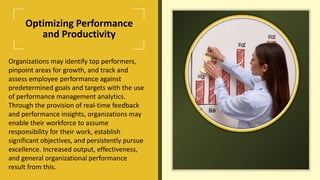
Optimizing Performance
and Productivity
Organizations may identify top performers,
pinpoint areas for growth, and track and
assess employee performance against
predetermined goals and targets with the use
of performance management analytics.
Through the provision of real-time feedback
and performance insights, organizations may
enable their workforce to assume
responsibility for their work, establish
significant objectives, and persistently pursue
excellence. Increased output, effectiveness,
and general organizational performance
result from this.
Aligning Performance with
Business Objectives
Organizations can better connect team and
individual performance with overall business
goals and strategic priorities by using
performance management analytics.
Establishing unambiguous performance
objectives and implementing them across the
entire organization can help companies make
sure that every worker's efforts are directed
toward attaining overall business success.
Organizations can use performance analytics to
monitor their progress toward strategic goals,
spot performance gaps, and make necessary
strategy adjustments to stay on course.
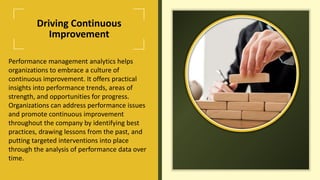
Driving Continuous
Improvement
Performance management analytics helps
organizations to embrace a culture of
continuous improvement. It offers practical
insights into performance trends, areas of
strength, and opportunities for progress.
Organizations can address performance issues
and promote continuous improvement
throughout the company by identifying best
practices, drawing lessons from the past, and
putting targeted interventions into place
through the analysis of performance data over
time.
Performance Management
Analytics for Organizational
Success
Organizations must use performance
management analytics to promote
organizational success in the cutthroat
business environment of today. They may
optimize performance and productivity, drive
continuous improvement, boost employee
engagement and retention, and align
performance with business objectives by
leveraging the power of data-driven insights. In
the digital era, these analytics will continue to
be a vital tool for enabling organizational
success as companies change and adapt to
shifting market conditions.
Want to learn more about this topic and other skills and knowledge that
are essential in the HR industry? MindCypress is an educational platform
that provides top professional courses including HR Analytics Online
Training. The training is meant to equip professionals with the latest
knowledge and skills of the industry.
Ending Slide & Resource
https://www.mindcypress.com/blogs/human-resource-management/performance-
management-analytics-and-organizational-success

Performance Management Analytics and Organizational Success.pptx

  • 1.
  • 2.
    Introduction The success ofan organization in this fast-paced business world is highly dependent on efficient performance management of employees. An organization faces increased challenges when it does not have a systematic and robust approach for performance management. In this blog, we talk about what performance management analytics is and why it is important for organizational success.
  • 3.
    What is Performance ManagementAnalytics? Performance Management Analytics uses credible data to analyze, measure, understand and enhance how an individual/team is doing their tasks. It involves collection of information pertaining to productivity, goals, and employee behavior. Organizations use it for making data-driven decisions that help formulate strategies and plans to increase the performance of employees.
  • 4.
    What is therole of Performance Management Analytics in an organization? • Enhanced Decision-Making • Improving Employee Engagement and Retention • Optimizing Performance and Productivity • Aligning Performance with Business Objectives • Driving Continuous Improvement • Performance Management Analytics for Organizational Success
  • 5.
    Enhanced Decision-Making Employee performancemanagement analytics provides valuable data and insights to senior professionals to make informed decisions. The decisions pertain to the management of workforce, allocation of resources and strategic planning. Analyzing Key Performance Indicators (KPIs) such as retention rates, employee productivity, engagement, etc., can help identify the areas for continuous improvement. It enables them to identify trends and patterns as well.
  • 6.
    Improving Employee Engagement andRetention Retention and employee engagement are vital components of an organization's success. Organizations may evaluate and quantify employee engagement levels and pinpoint variables impacting job satisfaction. They can take proactive measures to enhance employee experience and retention with the help of performance management analytics. Organizations may establish a productive workplace that encourages employee commitment and loyalty by learning what motivates employee engagement and resolving any underlying problems.
  • 7.
    Optimizing Performance and Productivity Organizationsmay identify top performers, pinpoint areas for growth, and track and assess employee performance against predetermined goals and targets with the use of performance management analytics. Through the provision of real-time feedback and performance insights, organizations may enable their workforce to assume responsibility for their work, establish significant objectives, and persistently pursue excellence. Increased output, effectiveness, and general organizational performance result from this.
  • 8.
    Aligning Performance with BusinessObjectives Organizations can better connect team and individual performance with overall business goals and strategic priorities by using performance management analytics. Establishing unambiguous performance objectives and implementing them across the entire organization can help companies make sure that every worker's efforts are directed toward attaining overall business success. Organizations can use performance analytics to monitor their progress toward strategic goals, spot performance gaps, and make necessary strategy adjustments to stay on course.
  • 9.
    Driving Continuous Improvement Performance managementanalytics helps organizations to embrace a culture of continuous improvement. It offers practical insights into performance trends, areas of strength, and opportunities for progress. Organizations can address performance issues and promote continuous improvement throughout the company by identifying best practices, drawing lessons from the past, and putting targeted interventions into place through the analysis of performance data over time.
  • 10.
    Performance Management Analytics forOrganizational Success Organizations must use performance management analytics to promote organizational success in the cutthroat business environment of today. They may optimize performance and productivity, drive continuous improvement, boost employee engagement and retention, and align performance with business objectives by leveraging the power of data-driven insights. In the digital era, these analytics will continue to be a vital tool for enabling organizational success as companies change and adapt to shifting market conditions. Want to learn more about this topic and other skills and knowledge that are essential in the HR industry? MindCypress is an educational platform that provides top professional courses including HR Analytics Online Training. The training is meant to equip professionals with the latest knowledge and skills of the industry.
  • 11.
    Ending Slide &Resource https://www.mindcypress.com/blogs/human-resource-management/performance- management-analytics-and-organizational-success