ENHANCING ORGANIZATIONAL
PERFORMANCE: A
COMPREHENSIVE GUIDE TO
PERFORMANCE MANAGEMENT
SYSTEMS
INTRODUCTION
Welcome to Enhancing
Organizational Performance:A
Comprehensive Guide to
Performance Management
Systems.This presentation will
provide an overview of the key
components and best
practices for performance
management system s .
Understanding Performance
Management
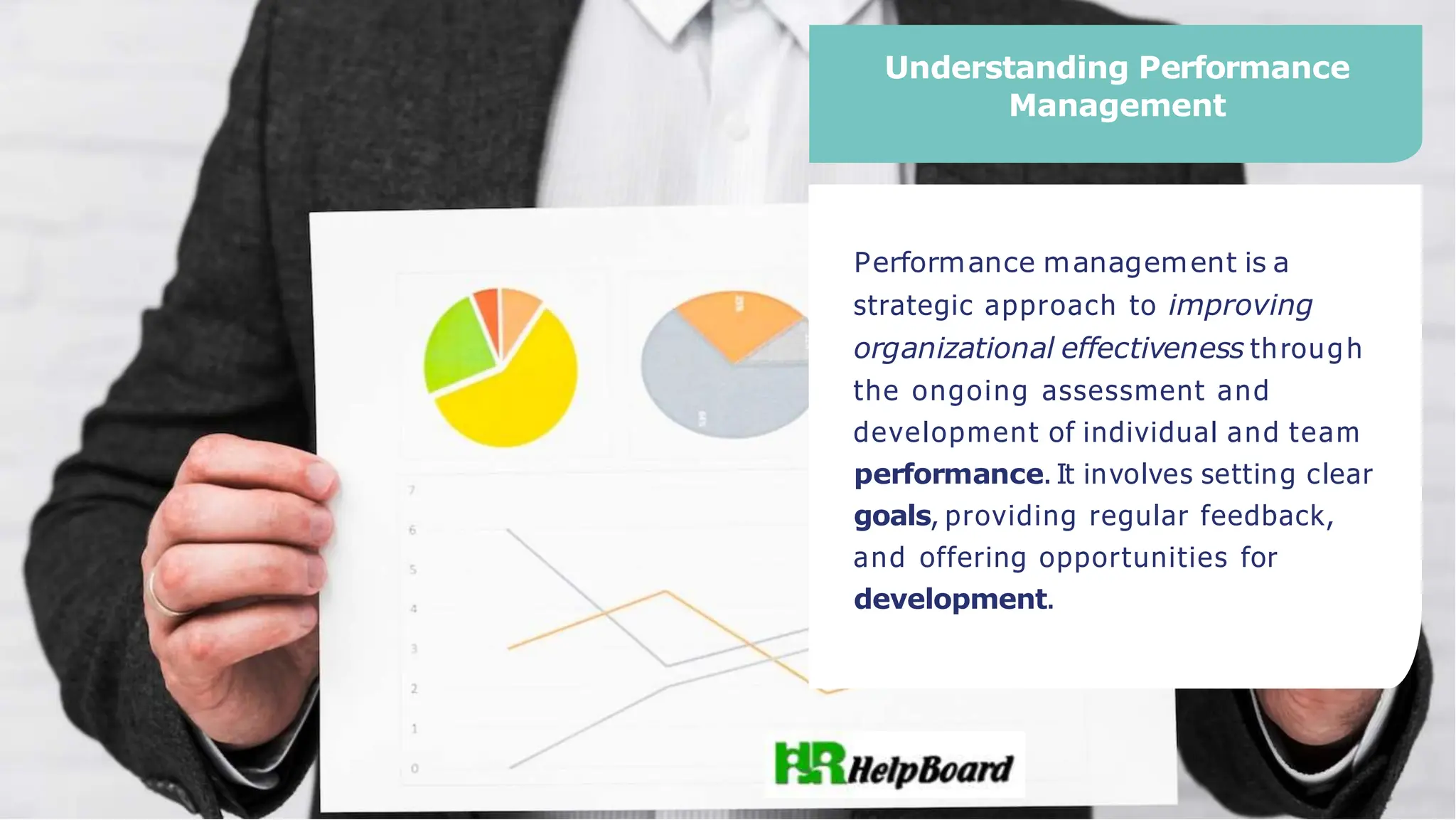
Performance management is a
strategic approach to improving
organizational effectiveness through
the ongoing assessment and
development of individual and team
performance. It involves setting clear
goals, providing regular feedback,
and offering opportunities for
development.
KEY COMPONENTS OF A
PERFORMANCE MANAGEMENT SYSTEM
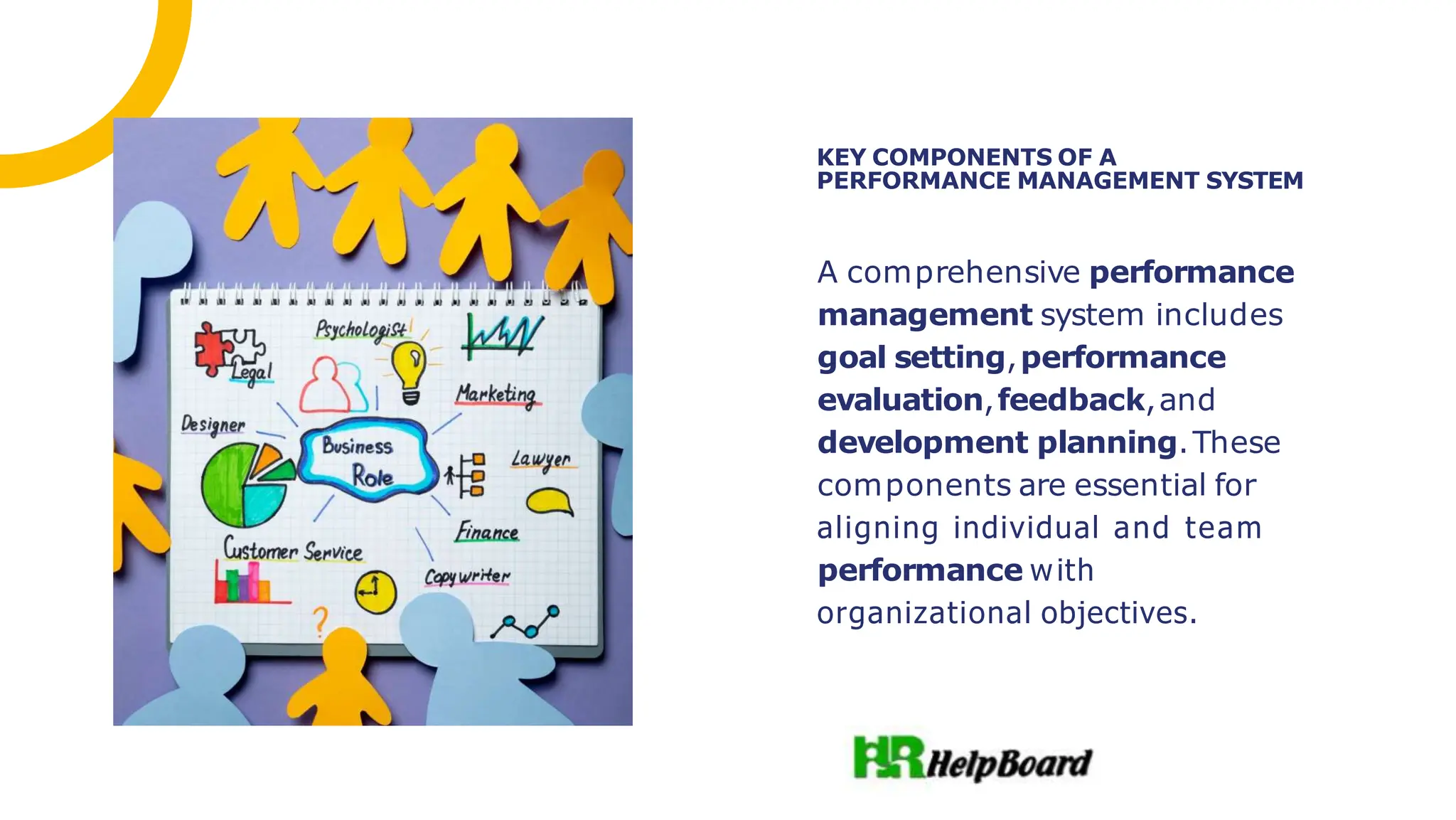
A comprehensive performance
management system includes
goal setting,performance
evaluation,feedback,and
development planning.These
components are essential for
aligning individual and team
performance with
organizational objectives.
Best Practices for Implementing
Performance Management Systems
Implementing an effective
performance management system
requires clear communication,
employee involvement, manager
training, and a focus on continuous
improvement. It is essential to
create a culture of accountability
and recognition.
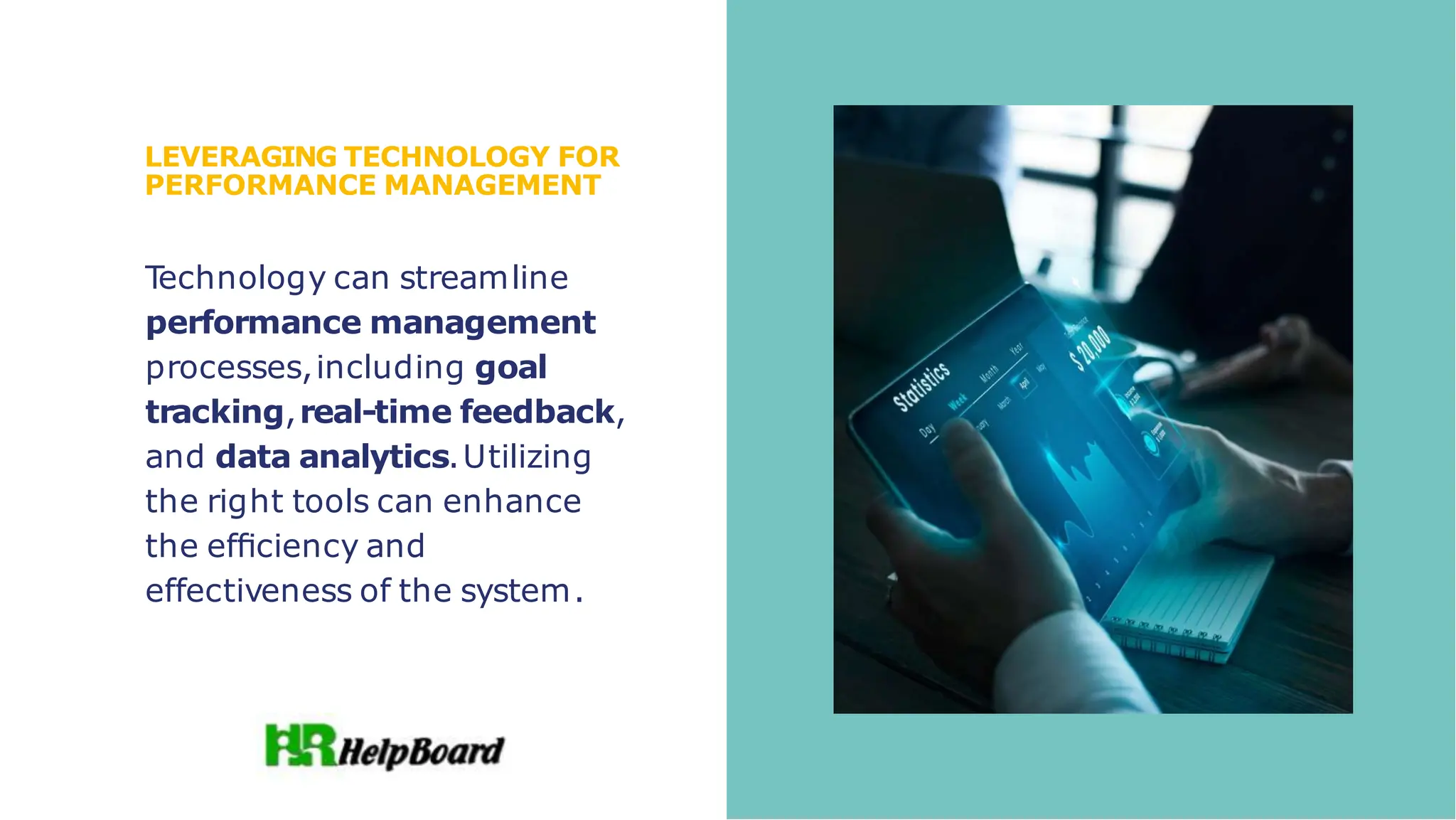
LEVERAGING TECHNOLOGY FOR
PERFORMANCE MANAGEMENT
T
echnology can streamline
performance management
processes,including goal
tracking,real-time feedback,
and data analytics.Utilizing
the right tools can enhance
the efficiency and
effectiveness of the system.
Measuring the impact of a
performance management
system involves tracking key
performance indicators,such
as employee engagement,
productivity,and retention
rates.This data provides
insights for continuous
improvement.
MEASURING THE IMPACT OF
PERFORMANCE MANAGEMENT
CHALLENGES AND SOLUTIONS
IN PERFORMANCE
MANAGEMENT
Challenges in performance
management may include
resistance to change,
inconsistent feedback,and
lack of alignment with
business goals.Solutions
involve clear communication,
training,and adapting to
evolving workforce needs.
In conclusion, a well-designed performance
management system is essential for driving
organizational success. By implementing best
practices, leveraging technology, and addressing
challenges, organizations can enhance employee
performance and achieve their strategic objectives.
CONCLUSION
Thanks!
Do you have any questions?
info@hrhelpboard.com
www.hrhelpboard.com

What is Performance Management System in HRM

  • 1.
    ENHANCING ORGANIZATIONAL PERFORMANCE: A COMPREHENSIVEGUIDE TO PERFORMANCE MANAGEMENT SYSTEMS
  • 2.
    INTRODUCTION Welcome to Enhancing OrganizationalPerformance:A Comprehensive Guide to Performance Management Systems.This presentation will provide an overview of the key components and best practices for performance management system s .
  • 3.
    Understanding Performance Management Performance managementis a strategic approach to improving organizational effectiveness through the ongoing assessment and development of individual and team performance. It involves setting clear goals, providing regular feedback, and offering opportunities for development.
  • 4.
    KEY COMPONENTS OFA PERFORMANCE MANAGEMENT SYSTEM A comprehensive performance management system includes goal setting,performance evaluation,feedback,and development planning.These components are essential for aligning individual and team performance with organizational objectives.
  • 5.
    Best Practices forImplementing Performance Management Systems Implementing an effective performance management system requires clear communication, employee involvement, manager training, and a focus on continuous improvement. It is essential to create a culture of accountability and recognition.
  • 6.
    LEVERAGING TECHNOLOGY FOR PERFORMANCEMANAGEMENT T echnology can streamline performance management processes,including goal tracking,real-time feedback, and data analytics.Utilizing the right tools can enhance the efficiency and effectiveness of the system.
  • 7.
    Measuring the impactof a performance management system involves tracking key performance indicators,such as employee engagement, productivity,and retention rates.This data provides insights for continuous improvement. MEASURING THE IMPACT OF PERFORMANCE MANAGEMENT
  • 8.
    CHALLENGES AND SOLUTIONS INPERFORMANCE MANAGEMENT Challenges in performance management may include resistance to change, inconsistent feedback,and lack of alignment with business goals.Solutions involve clear communication, training,and adapting to evolving workforce needs.
  • 9.
    In conclusion, awell-designed performance management system is essential for driving organizational success. By implementing best practices, leveraging technology, and addressing challenges, organizations can enhance employee performance and achieve their strategic objectives. CONCLUSION
  • 10.
    Thanks! Do you haveany questions? info@hrhelpboard.com www.hrhelpboard.com