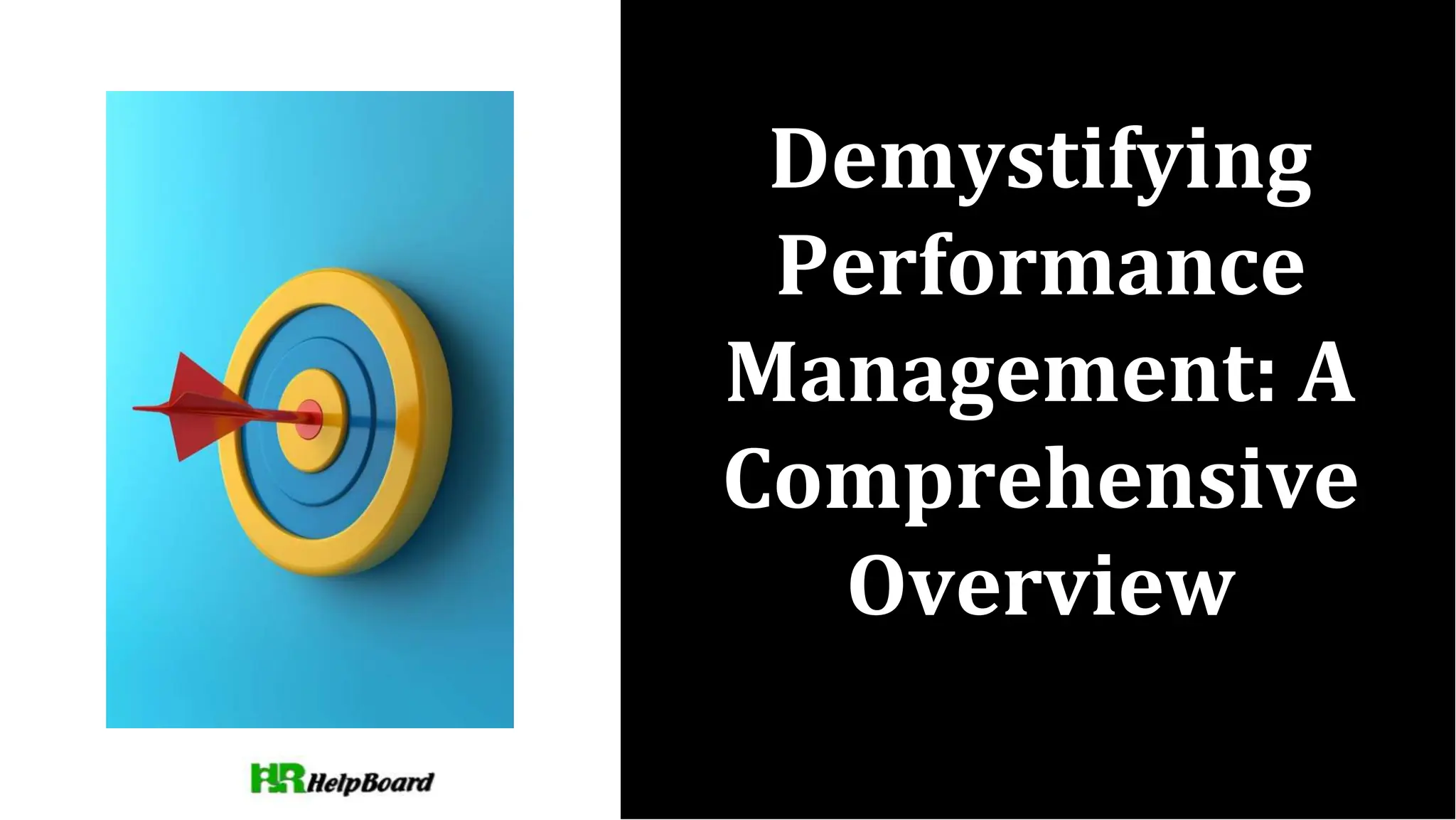
Demystifying
Performance
Management: A
Comprehensive
Overview
Introduction
In this presentation, we will demystify
the
process, providing a comprehensive
overview of its key components and
best practices. By the end, you will
have a clear understanding of how to
effectively manage and develop your
team's performance.
Understanding
Performance Management
Performance management is a
strategic approach to ensuring that
aligns with
the organization's goals. It involves
setting clear
regular
opportunities for
,providing
,and offering
.This
process is essential for driving
individual and organizational success.
Key Components of Performance
Management
Performance management comprises several
key components, including ,
, ,
and .Each component
plays a crucial role in driving employee
engagement, motivation, and continuous
improvement.
Best Practices in
Performance Management
Implementing best practices in
performance management involves
establishing a and
process, fostering a
,and leveraging
for efficient performance
tracking. Additionally, it requires
managers to effectively carry
out performance management
activities.
Challenges in Performance
Management
Performance management may face
challenges such as in evaluations,
,and
.Overcoming these
challenges requires a proactive
approach, including implementing
initiatives and
providing on fair evaluation
practices.
Measuring Performance
Management Effectiveness
Measuring the effectiveness of
performance management involves
tracking
related to employee
engagement, productivity, and
retention. By analyzing these metrics,
organizations can identify areas for
improvement and make data-driven
decisions to enhance performance
management processes.
Implementing a Performance
Improvement Plan
When an employee's performance falls
below expectations, it may be
necessary to implement a
(PIP). This plan
outlines specific , ,and
to help the employee improve
their performance and meet the
required standards.
Conclusion
In conclusion, performance management is a critical process
for aligning individual and organizational goals, driving
employee development, and fostering a culture of continuous
improvement. By implementing best practices and
addressing challenges, organizations can create a high-
performance culture that contributes to long-term success.

What is Performance Management in Human Resource Management

  • 1.
  • 2.
    Introduction In this presentation,we will demystify the process, providing a comprehensive overview of its key components and best practices. By the end, you will have a clear understanding of how to effectively manage and develop your team's performance.
  • 3.
    Understanding Performance Management Performance managementis a strategic approach to ensuring that aligns with the organization's goals. It involves setting clear regular opportunities for ,providing ,and offering .This process is essential for driving individual and organizational success.
  • 4.
    Key Components ofPerformance Management Performance management comprises several key components, including , , , and .Each component plays a crucial role in driving employee engagement, motivation, and continuous improvement.
  • 5.
    Best Practices in PerformanceManagement Implementing best practices in performance management involves establishing a and process, fostering a ,and leveraging for efficient performance tracking. Additionally, it requires managers to effectively carry out performance management activities.
  • 6.
    Challenges in Performance Management Performancemanagement may face challenges such as in evaluations, ,and .Overcoming these challenges requires a proactive approach, including implementing initiatives and providing on fair evaluation practices.
  • 7.
    Measuring Performance Management Effectiveness Measuringthe effectiveness of performance management involves tracking related to employee engagement, productivity, and retention. By analyzing these metrics, organizations can identify areas for improvement and make data-driven decisions to enhance performance management processes.
  • 8.
    Implementing a Performance ImprovementPlan When an employee's performance falls below expectations, it may be necessary to implement a (PIP). This plan outlines specific , ,and to help the employee improve their performance and meet the required standards.
  • 9.
    Conclusion In conclusion, performancemanagement is a critical process for aligning individual and organizational goals, driving employee development, and fostering a culture of continuous improvement. By implementing best practices and addressing challenges, organizations can create a high- performance culture that contributes to long-term success.