PERFORMANCE
MANAGEMENT
HUMAN RESOURCE
MANAGEMENT
CREATED BY
MS SADAF
LECTURER OF MANAGEMENT SCIENCES IN PAKISTAN
⚬ Introduction to Performance Management
⚬ Objectives of Performance Management
⚬ Key Components of Performance Management
⚬ Goal Setting
⚬ Continuous Feedback
⚬ Performance Appraisal
⚬ Benefits of Effective Performance Management
⚬ Challenges and Solutions
⚬ Conclusion
Outline:
Performance management is a continuous process in HRM that
aligns employee goals with organizational objectives. It involves
setting clear expectations, monitoring performance, providing
feedback, and facilitating employee development. By
implementing an effective performance management system,
organizations can enhance individual and team productivity,
foster a culture of accountability, and drive overall business
success.
Introduction to Performance
Management
Objectives of Performance
Management
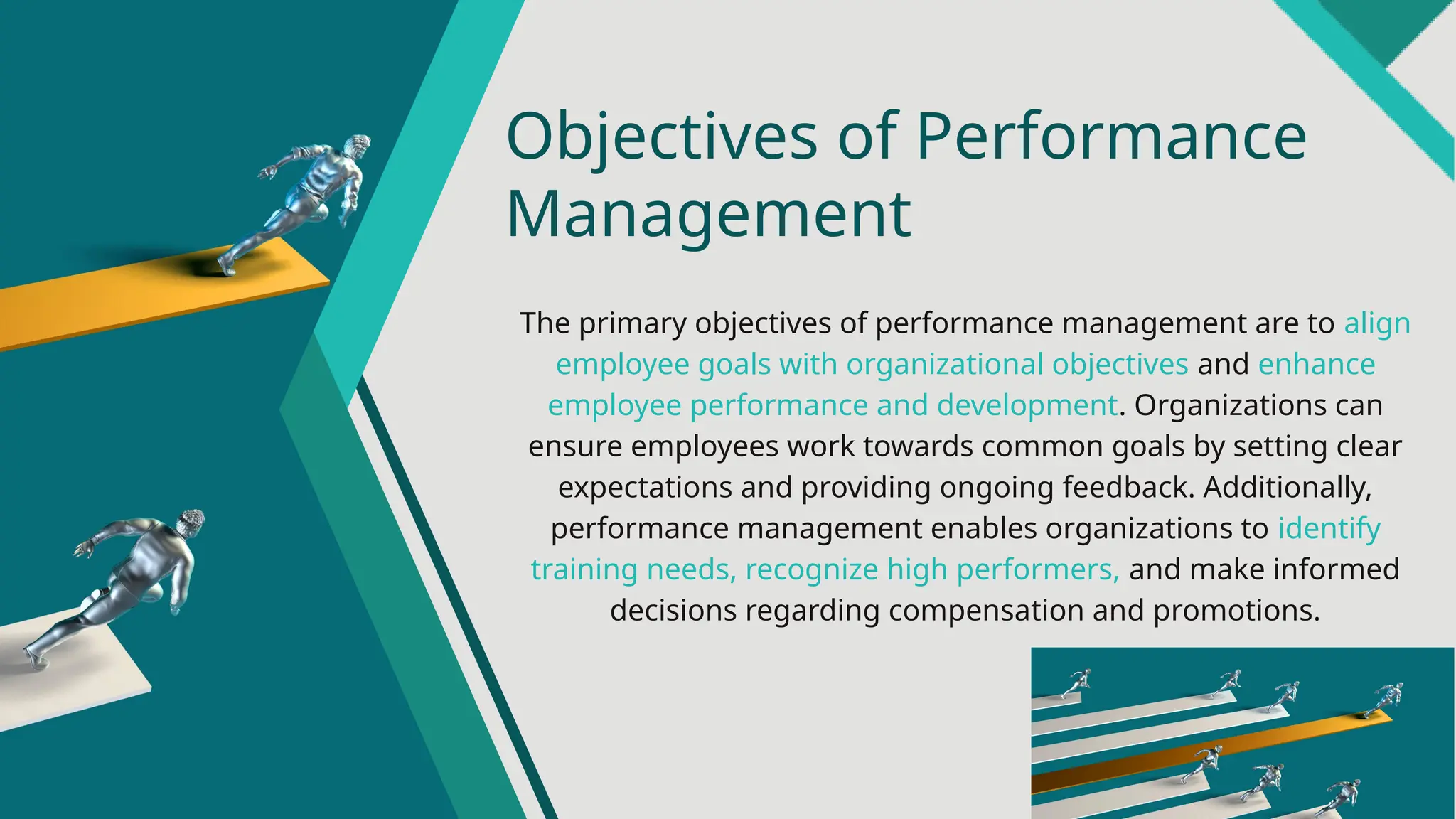
The primary objectives of performance management are to align
employee goals with organizational objectives and enhance
employee performance and development. Organizations can
ensure employees work towards common goals by setting clear
expectations and providing ongoing feedback. Additionally,
performance management enables organizations to identify
training needs, recognize high performers, and make informed
decisions regarding compensation and promotions.
It is a crucial component of PM.
Effective goals should be
SMART (Specific, Measurable,
Achievable, Relevant, and Time-
bound). By setting clear and
measurable goals, employees
understand what is expected of
them and can focus their
efforts accordingly.
Continuous feedback allows
managers to recognize
achievements, address issues
promptly, and provide
guidance for improvement.
Regular check-ins create an
open dialogue between
managers and employees,
fostering a culture of
continuous learning and
growth.
Goal Setting
Continuous
Feedback
Performance appraisal is a
formal evaluation of
employee performance using
methods like 360-degree
feedback, self-assessments,
and Management by
Objectives (MBO). Annual
appraisals are recommended
for a thorough assessment.
Performance
Appraisal
Key Components of Performance
Management
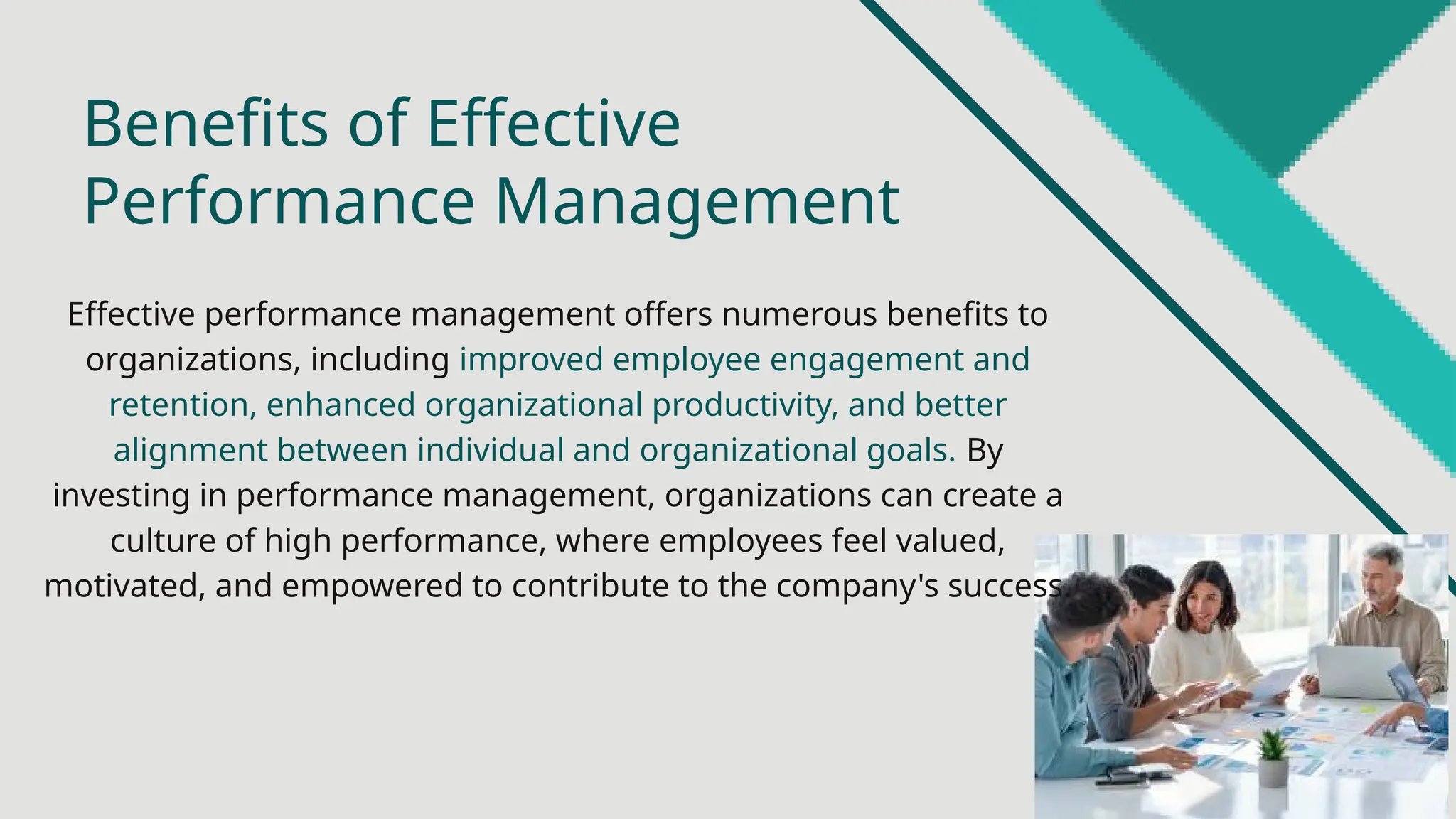
Effective performance management offers numerous benefits to
organizations, including improved employee engagement and
retention, enhanced organizational productivity, and better
alignment between individual and organizational goals. By
investing in performance management, organizations can create a
culture of high performance, where employees feel valued,
motivated, and empowered to contribute to the company's success.
Benefits of Effective
Performance Management
Implementing an effective performance management system
can present challenges, such as resistance to change, lack of
manager training, and difficulty in measuring performance. To
overcome these challenges, organizations should communicate
the benefits of performance management, provide training for
managers, and continuously evaluate and improve the system
based on feedback and data.
Challenges and Solutions
In conclusion, performance management is a critical
component of HRM that aligns employee goals with
organizational objectives and enhances employee
performance and development. By implementing an effective
performance management system.
Organizations can create a culture of high performance, drive
organizational success, and achieve their strategic goals
through practicing this.
Conclusion
THANK YOU

Performance Management in HRM and benefits of effective Performance Management.

  • 1.
    PERFORMANCE MANAGEMENT HUMAN RESOURCE MANAGEMENT CREATED BY MSSADAF LECTURER OF MANAGEMENT SCIENCES IN PAKISTAN
  • 2.
    ⚬ Introduction toPerformance Management ⚬ Objectives of Performance Management ⚬ Key Components of Performance Management ⚬ Goal Setting ⚬ Continuous Feedback ⚬ Performance Appraisal ⚬ Benefits of Effective Performance Management ⚬ Challenges and Solutions ⚬ Conclusion Outline:
  • 3.
    Performance management isa continuous process in HRM that aligns employee goals with organizational objectives. It involves setting clear expectations, monitoring performance, providing feedback, and facilitating employee development. By implementing an effective performance management system, organizations can enhance individual and team productivity, foster a culture of accountability, and drive overall business success. Introduction to Performance Management
  • 4.
    Objectives of Performance Management Theprimary objectives of performance management are to align employee goals with organizational objectives and enhance employee performance and development. Organizations can ensure employees work towards common goals by setting clear expectations and providing ongoing feedback. Additionally, performance management enables organizations to identify training needs, recognize high performers, and make informed decisions regarding compensation and promotions.
  • 5.
    It is acrucial component of PM. Effective goals should be SMART (Specific, Measurable, Achievable, Relevant, and Time- bound). By setting clear and measurable goals, employees understand what is expected of them and can focus their efforts accordingly. Continuous feedback allows managers to recognize achievements, address issues promptly, and provide guidance for improvement. Regular check-ins create an open dialogue between managers and employees, fostering a culture of continuous learning and growth. Goal Setting Continuous Feedback Performance appraisal is a formal evaluation of employee performance using methods like 360-degree feedback, self-assessments, and Management by Objectives (MBO). Annual appraisals are recommended for a thorough assessment. Performance Appraisal Key Components of Performance Management
  • 6.
    Effective performance managementoffers numerous benefits to organizations, including improved employee engagement and retention, enhanced organizational productivity, and better alignment between individual and organizational goals. By investing in performance management, organizations can create a culture of high performance, where employees feel valued, motivated, and empowered to contribute to the company's success. Benefits of Effective Performance Management
  • 7.
    Implementing an effectiveperformance management system can present challenges, such as resistance to change, lack of manager training, and difficulty in measuring performance. To overcome these challenges, organizations should communicate the benefits of performance management, provide training for managers, and continuously evaluate and improve the system based on feedback and data. Challenges and Solutions
  • 8.
    In conclusion, performancemanagement is a critical component of HRM that aligns employee goals with organizational objectives and enhances employee performance and development. By implementing an effective performance management system. Organizations can create a culture of high performance, drive organizational success, and achieve their strategic goals through practicing this. Conclusion
  • 9.