Pepsi Next Case Study
Presented by –Surbhi Biyani
Harsha Dhoot
Prachi Sopariwala
Objectives
• To provide interesting insights into PepsiCo’s new
product process
• To understand the challenges faced by the company in
launching Pepsi Next
• To analyse the consistencty of PepsiNext’s product
process with the theorectical approach towards
product development
• To critically analyse PepsiNext’s launch strategy
PepsiCo
• Second largest fast food and beverage company in
the world
• House of 22 brands
• Access over 80% of world’s population
• International(non US) market accounts for 50% of
their total revenue
• Strategic Approach –Innovative and adaptive
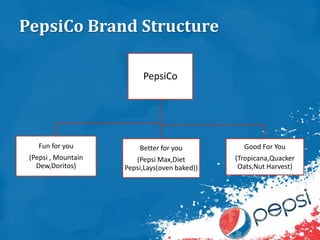
PepsiCo Brand Structure
PepsiCo
Fun for you
(Pepsi , Mountain
Dew,Doritos)
Better for you
(Pepsi Max,Diet
Pepsi,Lays(oven baked))
Good For You
(Tropicana,Quacker
Oats,Nut Harvest)
Soft Drink Market
• The US soft drink market generates over $70 billion
in sales
• Late maturity –early decline stage (since 2005)
• New Competitors – Bottled Water , Sports drinks
,Energy drinks
Impact of the emerging subsitutes
on Pepsi
• Decline in Market share to about less than 10%
• Frequent come back with “reduced sugar”drinks
• Declining carbonated drink marke by around 90
million cases a year
• Shift in demand towards bottled water,energy
drinks,soft drinks
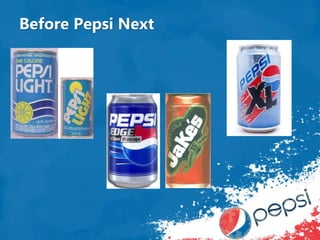
Before Pepsi Next
Pepsi Next
• Launched in US market in February 2012
• Mid calorie cold beverage – mix of sugar and artificial
sweeteners
• Delivers full cola taste with reduced calories
• Prime target market – lapsed cola drinkers
Q 1
• Outline the new product process for pepsi next.
How consistent is their approach to the process
described marketing textbooks?
What is a new product?
• Open new market
• Improvement and revision
Uses of new product
• Market share
• New segments
New product planning:
Opportunity analysis
• International expansion of Pepsi next
• New products
Threat analysis
• Intense competition
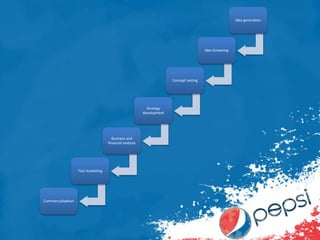
Idea generation
Idea Screening
Concept testing
Strategy
development
Business and
financial analysis
Test marketing
Commercialisation
Idea generation
• Mid calorie cola beverage having full cola taste
with reduced calories
Idea screening
• Target Market: Young generation and people
who are very much health conscious
Concept testing
• Blind taste test in 2011
Marketing strategy development
• Positioning: Healthy product
• Marketing: through TV, heavy free trials, social
media, adds on YouTube etc
• Distribution: Retailers and heavy free samples
Business and financial Analysis
• Market share=1%=$700 million per annum in US
alone
Test marketing
• Pepsi Next was test marketed in Iowa and Wisconsin
• Q2. PepsiCo has been quite persistent with
pursing mid-calories beverage products – why do
you think this ?
Do you agree with the decision to introduce Pepsi
Next ? Why/Why not?
• Decreasing market share
• Competitor’s product
• Increased substitutes in market
• Increased health consciousness
• To fill the market gap
Why new products
Decision to introduce Pepsi Next
• No, We don’t agree with the decision
• Already introduced similar product four times in
the market.
– Pepsi Light, 70 calories
– Jake’s diet Cola, 15 calories
– Pepsi XL, 70 calories
– Pepsi Edge, 70 calories
• Even if could affect its other brand product
Q3. How is the performance and
market acceptance of Pepsi Next
likely to impact the overall brand
equity of Pepsi ?
Should PepsiCo have launched this
product under a new brand instead
?
Pepsi Next impact on overall
brand equity
• If this product does not goes well in market then it
will affect/lower the sales of the other product of the
brand.
• Provide competitive barrier
Launch under new brand –
favorable or not
• No, PepsiCo should not have launched Pepsi Next
under new brand.
– Third wheel syndrome
– Enhancing brand’s image by healthy offering.
– Corporation will be positioned as Innovative
and involved with community
Q4. The launch strategy seemed to
heavily focus on generating trials.
Why was this important?
How else could the launch program
have been structured?
Why focus on trials?
• Fifth attempt at mid-calorie beverage
• To identify consumer behavior
• To identify whether Pepsi consumers are shifting or
the corporation is expanding its consumer base.
Alternative Launch program
• Needful free sample in market
• Post launch promotional campaign
• Promotion through information dissemination
Lessons from the case study
• Product not be judged on Initial Impulsive
buying
• Product can fail even after robust product
development
• Not all positive feedback is good feedback
PEPSI NEXT CASE STUDY

PEPSI NEXT CASE STUDY

  • 1.
    Pepsi Next CaseStudy Presented by –Surbhi Biyani Harsha Dhoot Prachi Sopariwala
  • 2.
    Objectives • To provideinteresting insights into PepsiCo’s new product process • To understand the challenges faced by the company in launching Pepsi Next • To analyse the consistencty of PepsiNext’s product process with the theorectical approach towards product development • To critically analyse PepsiNext’s launch strategy
  • 3.
    PepsiCo • Second largestfast food and beverage company in the world • House of 22 brands • Access over 80% of world’s population • International(non US) market accounts for 50% of their total revenue • Strategic Approach –Innovative and adaptive
  • 4.
    PepsiCo Brand Structure PepsiCo Funfor you (Pepsi , Mountain Dew,Doritos) Better for you (Pepsi Max,Diet Pepsi,Lays(oven baked)) Good For You (Tropicana,Quacker Oats,Nut Harvest)
  • 5.
    Soft Drink Market •The US soft drink market generates over $70 billion in sales • Late maturity –early decline stage (since 2005) • New Competitors – Bottled Water , Sports drinks ,Energy drinks
  • 6.
    Impact of theemerging subsitutes on Pepsi • Decline in Market share to about less than 10% • Frequent come back with “reduced sugar”drinks • Declining carbonated drink marke by around 90 million cases a year • Shift in demand towards bottled water,energy drinks,soft drinks
  • 7.
  • 8.
    Pepsi Next • Launchedin US market in February 2012 • Mid calorie cold beverage – mix of sugar and artificial sweeteners • Delivers full cola taste with reduced calories • Prime target market – lapsed cola drinkers
  • 9.
    Q 1 • Outlinethe new product process for pepsi next. How consistent is their approach to the process described marketing textbooks?
  • 10.
    What is anew product? • Open new market • Improvement and revision Uses of new product • Market share • New segments
  • 11.
    New product planning: Opportunityanalysis • International expansion of Pepsi next • New products Threat analysis • Intense competition
  • 13.
    Idea generation Idea Screening Concepttesting Strategy development Business and financial analysis Test marketing Commercialisation
  • 14.
    Idea generation • Midcalorie cola beverage having full cola taste with reduced calories Idea screening • Target Market: Young generation and people who are very much health conscious Concept testing • Blind taste test in 2011
  • 15.
    Marketing strategy development •Positioning: Healthy product • Marketing: through TV, heavy free trials, social media, adds on YouTube etc • Distribution: Retailers and heavy free samples Business and financial Analysis • Market share=1%=$700 million per annum in US alone Test marketing • Pepsi Next was test marketed in Iowa and Wisconsin
  • 16.
    • Q2. PepsiCohas been quite persistent with pursing mid-calories beverage products – why do you think this ? Do you agree with the decision to introduce Pepsi Next ? Why/Why not?
  • 17.
    • Decreasing marketshare • Competitor’s product • Increased substitutes in market • Increased health consciousness • To fill the market gap Why new products
  • 18.
    Decision to introducePepsi Next • No, We don’t agree with the decision • Already introduced similar product four times in the market. – Pepsi Light, 70 calories – Jake’s diet Cola, 15 calories – Pepsi XL, 70 calories – Pepsi Edge, 70 calories • Even if could affect its other brand product
  • 19.
    Q3. How isthe performance and market acceptance of Pepsi Next likely to impact the overall brand equity of Pepsi ? Should PepsiCo have launched this product under a new brand instead ?
  • 20.
    Pepsi Next impacton overall brand equity • If this product does not goes well in market then it will affect/lower the sales of the other product of the brand. • Provide competitive barrier
  • 21.
    Launch under newbrand – favorable or not • No, PepsiCo should not have launched Pepsi Next under new brand. – Third wheel syndrome – Enhancing brand’s image by healthy offering. – Corporation will be positioned as Innovative and involved with community
  • 22.
    Q4. The launchstrategy seemed to heavily focus on generating trials. Why was this important? How else could the launch program have been structured?
  • 23.
    Why focus ontrials? • Fifth attempt at mid-calorie beverage • To identify consumer behavior • To identify whether Pepsi consumers are shifting or the corporation is expanding its consumer base.
  • 24.
    Alternative Launch program •Needful free sample in market • Post launch promotional campaign • Promotion through information dissemination
  • 25.
    Lessons from thecase study • Product not be judged on Initial Impulsive buying • Product can fail even after robust product development • Not all positive feedback is good feedback