Download to read offline
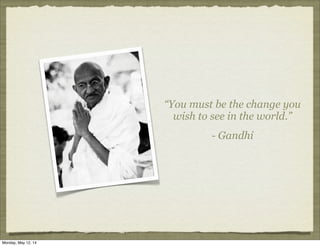
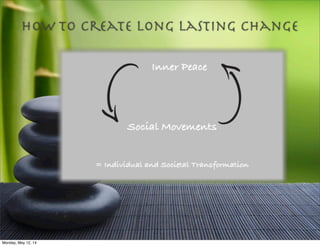
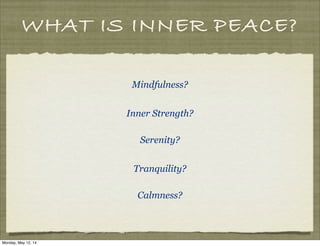

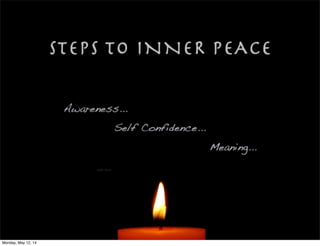


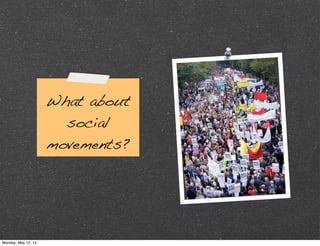
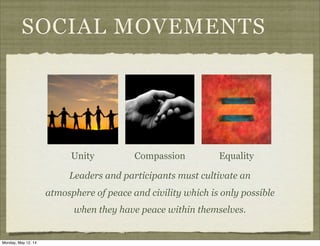

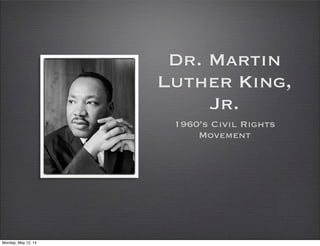
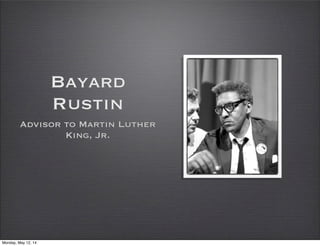
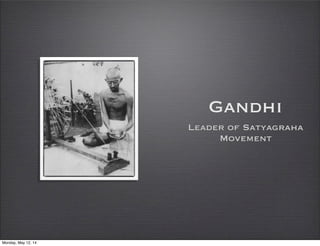

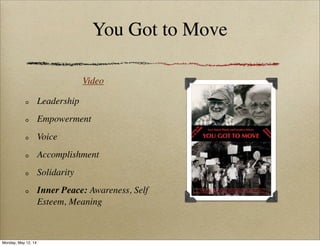

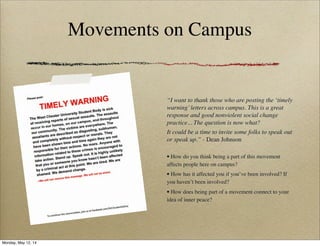


The document discusses the relationship between inner peace and social movements. It argues that leaders and participants of social movements must cultivate inner peace through mindfulness, self-confidence, and finding meaning so they can create an atmosphere of peace and civility. The document provides examples of social movement leaders like Gandhi, Martin Luther King Jr., and Bayard Rustin who drew upon inner strength and peace to lead successful nonviolent campaigns. It also suggests that participating in social movements can help develop awareness, self-esteem, and a sense of purpose, thereby promoting inner peace.


