Three Additions
to the Peace Corps
Jerome C. Glenn, CEO
Jerome.Glenn@Millennium-Project.org
When the Peace Corps was created,
there was no Internet
Now we have tele-heath, tele-education, tele-
commerce, tele-dating, why not Tele-Peace Corps?
1. Tele-PCVs
• Tele-PCVs would be volunteers in the United States who work remotely
with their host country counterparts.
• Tele-PCVs could also be former PCVs who could be part-time, but now
with additional skills to share with the country they know and love
• If we had such Tele-PCVs before the pandemic, they would have still
been engaged around the world.
• Such tele-PCVs could teach English, science, mathematics, etc. Or
advise on developing and producing export products, teach business
skills, computer coding, collaborate on construction projects.
• Special care in training would be needed for cultural sensitivity,
understanding, and human-to-human engagement for new Tele-PCVs
2. Tech Volunteers
• Just as we have health volunteers, agriculture volunteers, etc., we
could have tech volunteers who help in the leapfrogging approach to
development.
• Where will leapfrogging work and not work?
• What advanced tech would be appropriate?
• In addition to working with host country communities, Tech Volunteers
could also be available to assist PCVs in education, health, agriculture,
community economic development, environment, and youth
development.
• Technological change is rapidly accelerating, that can make the
development gap even wider – the need for leapfrogging is greater
Seawater, saltwater
agriculture
Saltwater encroachment in countries
like Bangladesh will continue to get
worse with global warming
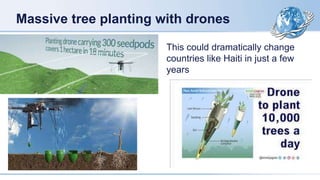
Massive tree planting with drones
This could dramatically change
countries like Haiti in just a few
years
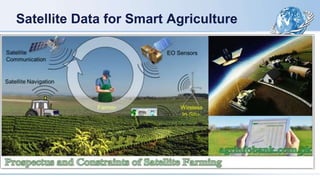
Satellite Data for Smart Agriculture
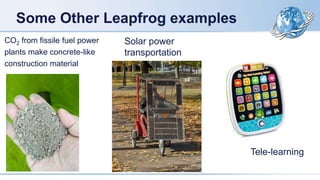
Some Other Leapfrog examples
CO2 from fissile fuel power
plants make concrete-like
construction material
Solar power
transportation
Tele-learning
3. Tele-Organizations (businesses,
universities, national research labs)
• A Tech volunteer might need advanced tech support from a
corporation and/or a university research department
• Similarly, a Tele-volunteer working with their host country
counterpart might need to know which tele-learning
programs will work best to teach algebra.
• Tele-PCVs could work with Environmental and Tech
volunteers in country, and tele-organizations to implement
climate change strategies with alternative energy, plant-
based and cell-based meat production, water management,
cap and trade opportunities, carbon capture and reuse.
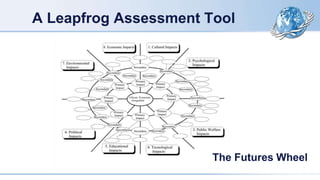
A Leapfrog Assessment Tool
The Futures Wheel

Peace corps futures

  • 1.
    Three Additions to thePeace Corps Jerome C. Glenn, CEO Jerome.Glenn@Millennium-Project.org
  • 2.
    When the PeaceCorps was created, there was no Internet Now we have tele-heath, tele-education, tele- commerce, tele-dating, why not Tele-Peace Corps?
  • 3.
    1. Tele-PCVs • Tele-PCVswould be volunteers in the United States who work remotely with their host country counterparts. • Tele-PCVs could also be former PCVs who could be part-time, but now with additional skills to share with the country they know and love • If we had such Tele-PCVs before the pandemic, they would have still been engaged around the world. • Such tele-PCVs could teach English, science, mathematics, etc. Or advise on developing and producing export products, teach business skills, computer coding, collaborate on construction projects. • Special care in training would be needed for cultural sensitivity, understanding, and human-to-human engagement for new Tele-PCVs
  • 4.
    2. Tech Volunteers •Just as we have health volunteers, agriculture volunteers, etc., we could have tech volunteers who help in the leapfrogging approach to development. • Where will leapfrogging work and not work? • What advanced tech would be appropriate? • In addition to working with host country communities, Tech Volunteers could also be available to assist PCVs in education, health, agriculture, community economic development, environment, and youth development. • Technological change is rapidly accelerating, that can make the development gap even wider – the need for leapfrogging is greater
  • 5.
    Seawater, saltwater agriculture Saltwater encroachmentin countries like Bangladesh will continue to get worse with global warming
  • 6.
    Massive tree plantingwith drones This could dramatically change countries like Haiti in just a few years
  • 7.
    Satellite Data forSmart Agriculture
  • 9.
    Some Other Leapfrogexamples CO2 from fissile fuel power plants make concrete-like construction material Solar power transportation Tele-learning
  • 10.
    3. Tele-Organizations (businesses, universities,national research labs) • A Tech volunteer might need advanced tech support from a corporation and/or a university research department • Similarly, a Tele-volunteer working with their host country counterpart might need to know which tele-learning programs will work best to teach algebra. • Tele-PCVs could work with Environmental and Tech volunteers in country, and tele-organizations to implement climate change strategies with alternative energy, plant- based and cell-based meat production, water management, cap and trade opportunities, carbon capture and reuse.
  • 11.
    A Leapfrog AssessmentTool The Futures Wheel