This Photo by Unknown Author is licensed under CC BY-NC-ND
Health- Optimizing Physical Education
( H.O.P.E)
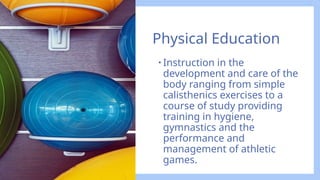
Physical Education
• Instruction in the
development and care of the
body ranging from simple
calisthenics exercises to a
course of study providing
training in hygiene,
gymnastics and the
performance and
management of athletic
games.
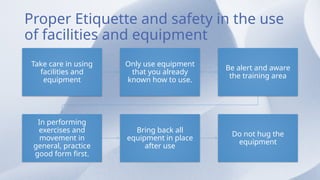
Proper Etiquette and safety in the use
of facilities and equipment
Take care in using
facilities and
equipment
Only use equipment
that you already
known how to use.
Be alert and aware
the training area
In performing
exercises and
movement in
general, practice
good form first.
Bring back all
equipment in place
after use
Do not hug the
equipment
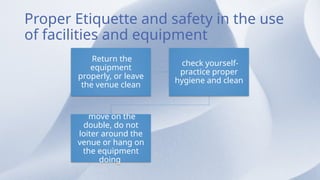
Proper Etiquette and safety in the use
of facilities and equipment
Return the
equipment
properly, or leave
the venue clean
check yourself-
practice proper
hygiene and clean
move on the
double, do not
loiter around the
venue or hang on
the equipment
doing
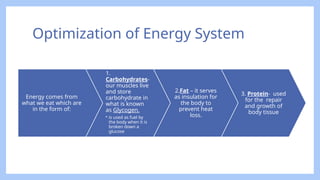
Optimization of Energy System
Energy comes from
what we eat which are
in the form of:
1.
Carbohydrates-
our muscles live
and store
carbohydrate in
what is known
as Glycogen.
• is used as fuel by
the body when it is
broken down a
glucose
2.Fat – it serves
as insulation for
the body to
prevent heat
loss.
3. Protein- used
for the repair
and growth of
body tissue
Health Behaviors, Health Risks
factors, and Physical Activity ( PA)
Health Behaviors:
• Eating Behavior- proper nutrition, choice of food
• Sleep- rest, sleep and relax
• Stress management
• Post –traumatic stress- caused by an unnaturally
traumatic experiences, leading to the disruption of a
person’s ability to cope and function effectively.
Chronic stress- occurs someone experiences
repeated and continuing demands that inhibit the
person’s function.
Health Risk factors:
1. Family history
2. cigarette smoking
3. hypertension ( high blood)
4. hypercholesterolemia ( high cholesterol count)
5. impaired fasting glucose levels (high blood sugar)
6. obesity
7. sedentary lifestyle ( Physical inactivity)
Physical Activity
Performance
- Directly related to
eating behaviors,
rest, sleep, and
relaxation, stress
management, and
health risk factors.
How to Self assess health-related
Fitness ( HRF) status?
Body composition ( Body Fat Percent)- refers to the ratio
between lean body mass and fat body mass.
Muscular endurance- measures muscular strength
Cardio-respiratory endurance- response to submaximal
workload heart rate, estimate maximal oxygen uptake,
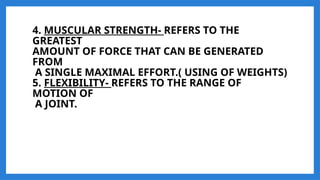
4. MUSCULAR STRENGTH- REFERS TO THE
GREATEST
AMOUNT OF FORCE THAT CAN BE GENERATED
FROM
A SINGLE MAXIMAL EFFORT.( USING OF WEIGHTS)
5. FLEXIBILITY- REFERS TO THE RANGE OF
MOTION OF
A JOINT.
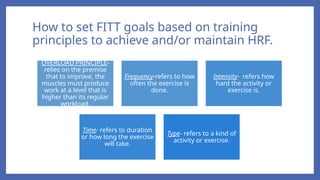
How to set FITT goals based on training
principles to achieve and/or maintain HRF.
OVERLOAD PRINCIPLE-
relies on the premise
that to improve, the
muscles must produce
work at a level that is
higher than its regular
workload.
Frequency-refers to how
often the exercise is
done.
Intensity- refers how
hard the activity or
exercise is.
Time- refers to duration
or how long the exercise
will take.
Type- refers to a kind of
activity or exercise.
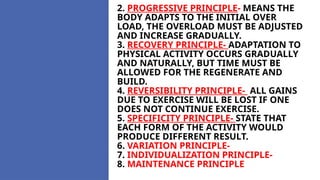
2. PROGRESSIVE PRINCIPLE- MEANS THE
BODY ADAPTS TO THE INITIAL OVER
LOAD, THE OVERLOAD MUST BE ADJUSTED
AND INCREASE GRADUALLY.
3. RECOVERY PRINCIPLE- ADAPTATION TO
PHYSICAL ACTIVITY OCCURS GRADUALLY
AND NATURALLY, BUT TIME MUST BE
ALLOWED FOR THE REGENERATE AND
BUILD.
4. REVERSIBILITY PRINCIPLE- ALL GAINS
DUE TO EXERCISE WILL BE LOST IF ONE
DOES NOT CONTINUE EXERCISE.
5. SPECIFICITY PRINCIPLE- STATE THAT
EACH FORM OF THE ACTIVITY WOULD
PRODUCE DIFFERENT RESULT.
6. VARIATION PRINCIPLE-
7. INDIVIDUALIZATION PRINCIPLE-
8. MAINTENANCE PRINCIPLE
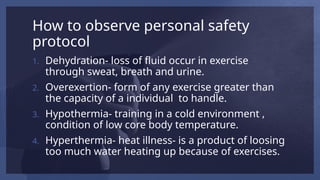
How to observe personal safety
protocol
1. Dehydration- loss of fluid occur in exercise
through sweat, breath and urine.
2. Overexertion- form of any exercise greater than
the capacity of a individual to handle.
3. Hypothermia- training in a cold environment ,
condition of low core body temperature.
4. Hyperthermia- heat illness- is a product of loosing
too much water heating up because of exercises.
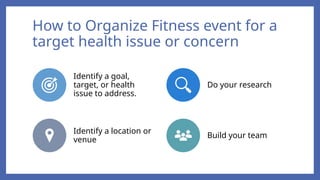
How to Organize Fitness event for a
target health issue or concern
Identify a goal,
target, or health
issue to address.
Do your research
Identify a location or
venue
Build your team
Designing a personal fitness plan
1. set a goal
2. Select activities
health-related components of fitness
a. Fun and interest
b. Your current skill and fitness level
c. Time and convenience
d. Cost
e. Special health need.
3. Set a target each of the activity ( FITT)
4. Set a system of mini Goals and rewards
5. Include lifestyle physical activity in your
program
6. Develop tools for monitoring your progress
7. Make a commitment
QUIZ TIME !

PE 11.pptxxxxxxxxxxxxxxxxxxxxxxxxxxxxxxxxxx

  • 1.
    This Photo byUnknown Author is licensed under CC BY-NC-ND Health- Optimizing Physical Education ( H.O.P.E)
  • 2.
    Physical Education • Instructionin the development and care of the body ranging from simple calisthenics exercises to a course of study providing training in hygiene, gymnastics and the performance and management of athletic games.
  • 3.
    Proper Etiquette andsafety in the use of facilities and equipment Take care in using facilities and equipment Only use equipment that you already known how to use. Be alert and aware the training area In performing exercises and movement in general, practice good form first. Bring back all equipment in place after use Do not hug the equipment
  • 4.
    Proper Etiquette andsafety in the use of facilities and equipment Return the equipment properly, or leave the venue clean check yourself- practice proper hygiene and clean move on the double, do not loiter around the venue or hang on the equipment doing
  • 5.
    Optimization of EnergySystem Energy comes from what we eat which are in the form of: 1. Carbohydrates- our muscles live and store carbohydrate in what is known as Glycogen. • is used as fuel by the body when it is broken down a glucose 2.Fat – it serves as insulation for the body to prevent heat loss. 3. Protein- used for the repair and growth of body tissue
  • 6.
    Health Behaviors, HealthRisks factors, and Physical Activity ( PA) Health Behaviors: • Eating Behavior- proper nutrition, choice of food • Sleep- rest, sleep and relax • Stress management • Post –traumatic stress- caused by an unnaturally traumatic experiences, leading to the disruption of a person’s ability to cope and function effectively.
  • 7.
    Chronic stress- occurssomeone experiences repeated and continuing demands that inhibit the person’s function. Health Risk factors: 1. Family history 2. cigarette smoking 3. hypertension ( high blood) 4. hypercholesterolemia ( high cholesterol count) 5. impaired fasting glucose levels (high blood sugar) 6. obesity 7. sedentary lifestyle ( Physical inactivity)
  • 8.
    Physical Activity Performance - Directlyrelated to eating behaviors, rest, sleep, and relaxation, stress management, and health risk factors.
  • 9.
    How to Selfassess health-related Fitness ( HRF) status? Body composition ( Body Fat Percent)- refers to the ratio between lean body mass and fat body mass. Muscular endurance- measures muscular strength Cardio-respiratory endurance- response to submaximal workload heart rate, estimate maximal oxygen uptake,
  • 10.
    4. MUSCULAR STRENGTH-REFERS TO THE GREATEST AMOUNT OF FORCE THAT CAN BE GENERATED FROM A SINGLE MAXIMAL EFFORT.( USING OF WEIGHTS) 5. FLEXIBILITY- REFERS TO THE RANGE OF MOTION OF A JOINT.
  • 11.
    How to setFITT goals based on training principles to achieve and/or maintain HRF. OVERLOAD PRINCIPLE- relies on the premise that to improve, the muscles must produce work at a level that is higher than its regular workload. Frequency-refers to how often the exercise is done. Intensity- refers how hard the activity or exercise is. Time- refers to duration or how long the exercise will take. Type- refers to a kind of activity or exercise.
  • 12.
    2. PROGRESSIVE PRINCIPLE-MEANS THE BODY ADAPTS TO THE INITIAL OVER LOAD, THE OVERLOAD MUST BE ADJUSTED AND INCREASE GRADUALLY. 3. RECOVERY PRINCIPLE- ADAPTATION TO PHYSICAL ACTIVITY OCCURS GRADUALLY AND NATURALLY, BUT TIME MUST BE ALLOWED FOR THE REGENERATE AND BUILD. 4. REVERSIBILITY PRINCIPLE- ALL GAINS DUE TO EXERCISE WILL BE LOST IF ONE DOES NOT CONTINUE EXERCISE. 5. SPECIFICITY PRINCIPLE- STATE THAT EACH FORM OF THE ACTIVITY WOULD PRODUCE DIFFERENT RESULT. 6. VARIATION PRINCIPLE- 7. INDIVIDUALIZATION PRINCIPLE- 8. MAINTENANCE PRINCIPLE
  • 13.
    How to observepersonal safety protocol 1. Dehydration- loss of fluid occur in exercise through sweat, breath and urine. 2. Overexertion- form of any exercise greater than the capacity of a individual to handle. 3. Hypothermia- training in a cold environment , condition of low core body temperature. 4. Hyperthermia- heat illness- is a product of loosing too much water heating up because of exercises.
  • 14.
    How to OrganizeFitness event for a target health issue or concern Identify a goal, target, or health issue to address. Do your research Identify a location or venue Build your team
  • 15.
    Designing a personalfitness plan 1. set a goal 2. Select activities health-related components of fitness a. Fun and interest b. Your current skill and fitness level c. Time and convenience d. Cost e. Special health need.
  • 16.
    3. Set atarget each of the activity ( FITT) 4. Set a system of mini Goals and rewards 5. Include lifestyle physical activity in your program 6. Develop tools for monitoring your progress 7. Make a commitment
  • 17.