INFLAMMATION,
INFLAMMATORY
RESPONSE, &
FEVER
Module II
Regie De Jesus, MAN
College of Health Sciences
PATHOPHYSIOLOGY
Inflammation
•An innate, automatic response to cell injury
that:
•Neutralizes harmful agents (bacteria, etc…)
•Removes damaged and dead tissues
•Generates new tissues
•Promotes healing
•Minimizes the effects of injury or infection
INFLAMMATION IS NECESSARY,
BUT IF PROLONGED CAN LEAD TO
UNWANTED EFFECTS
Inflammation
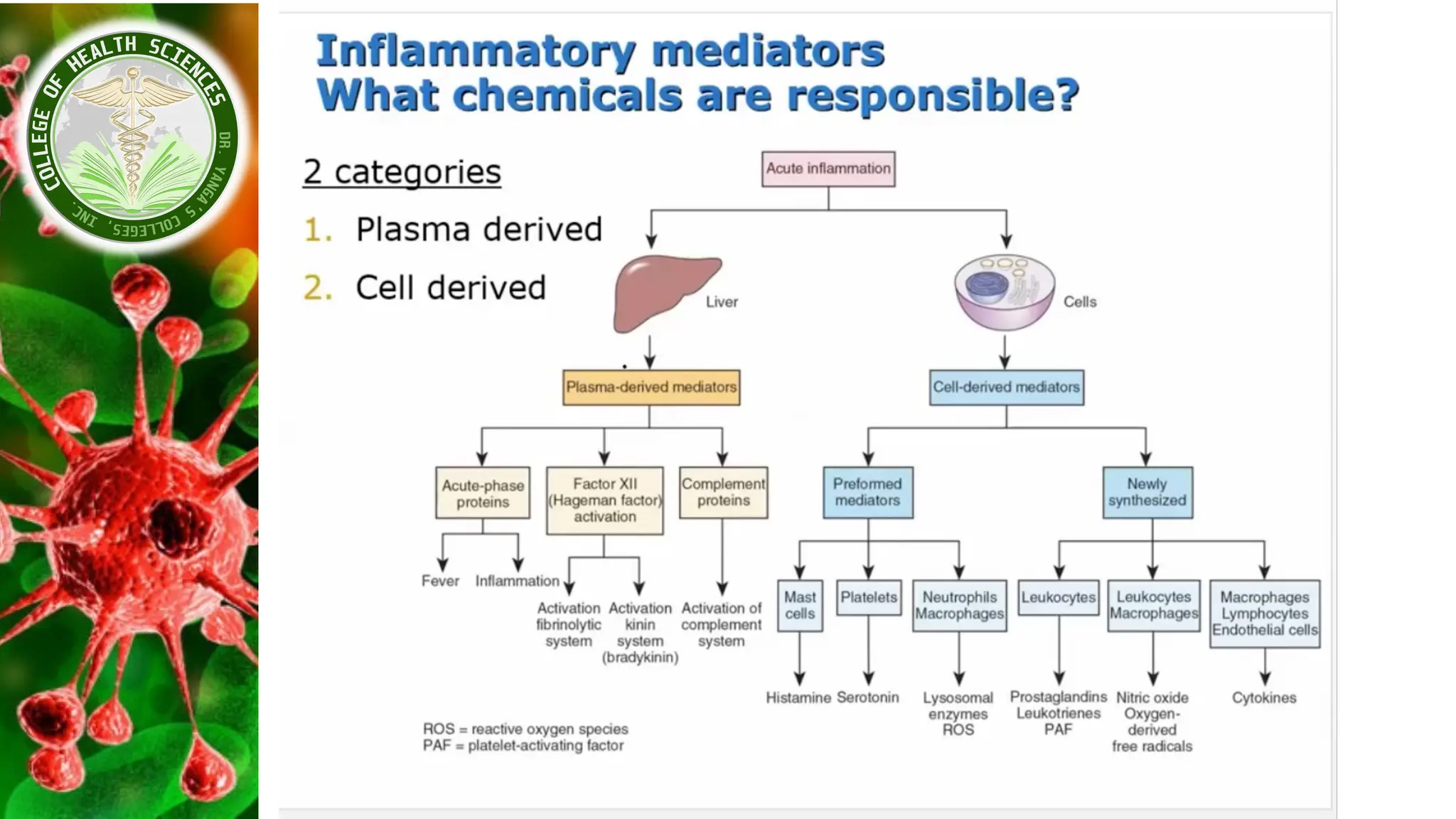
•Damaged cells release inflammatory
mediators
•Local responses
•Vascular Stage
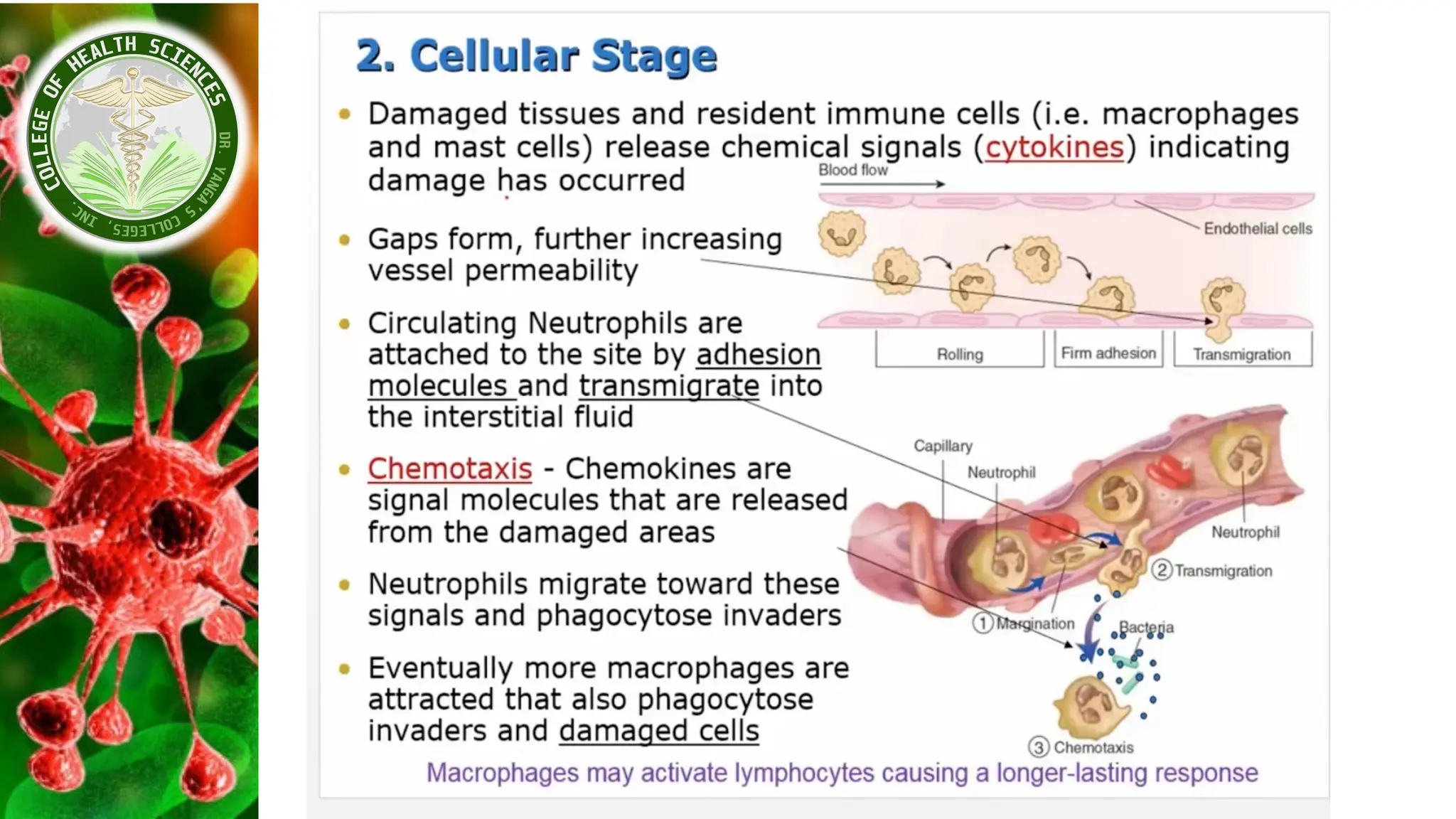
•Cellular Stage
•Systemic (whole-body) responses
•White blood cell response
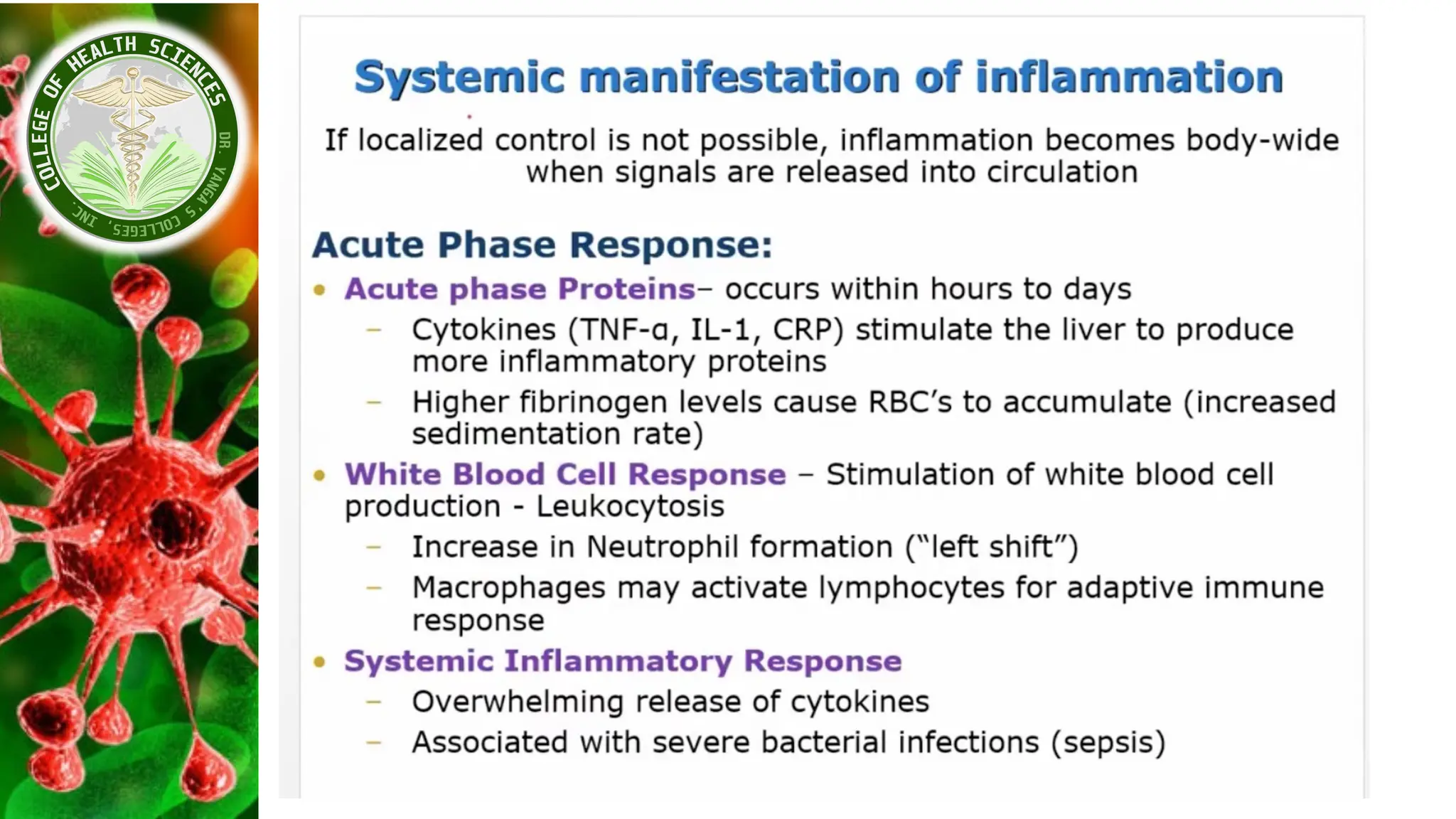
•Acute-phase response
White Blood Cells (Leukocytes
in Inflammation
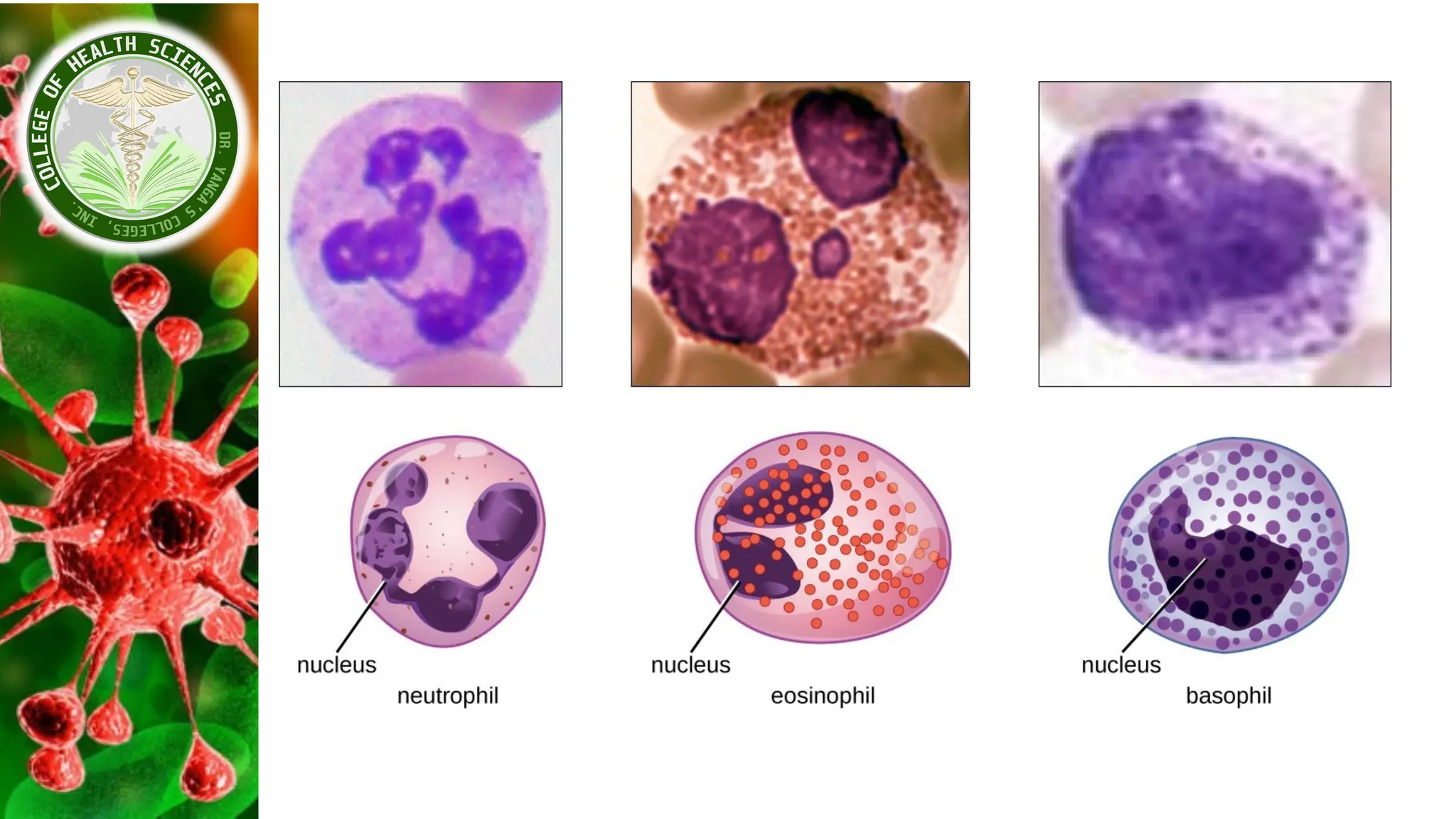
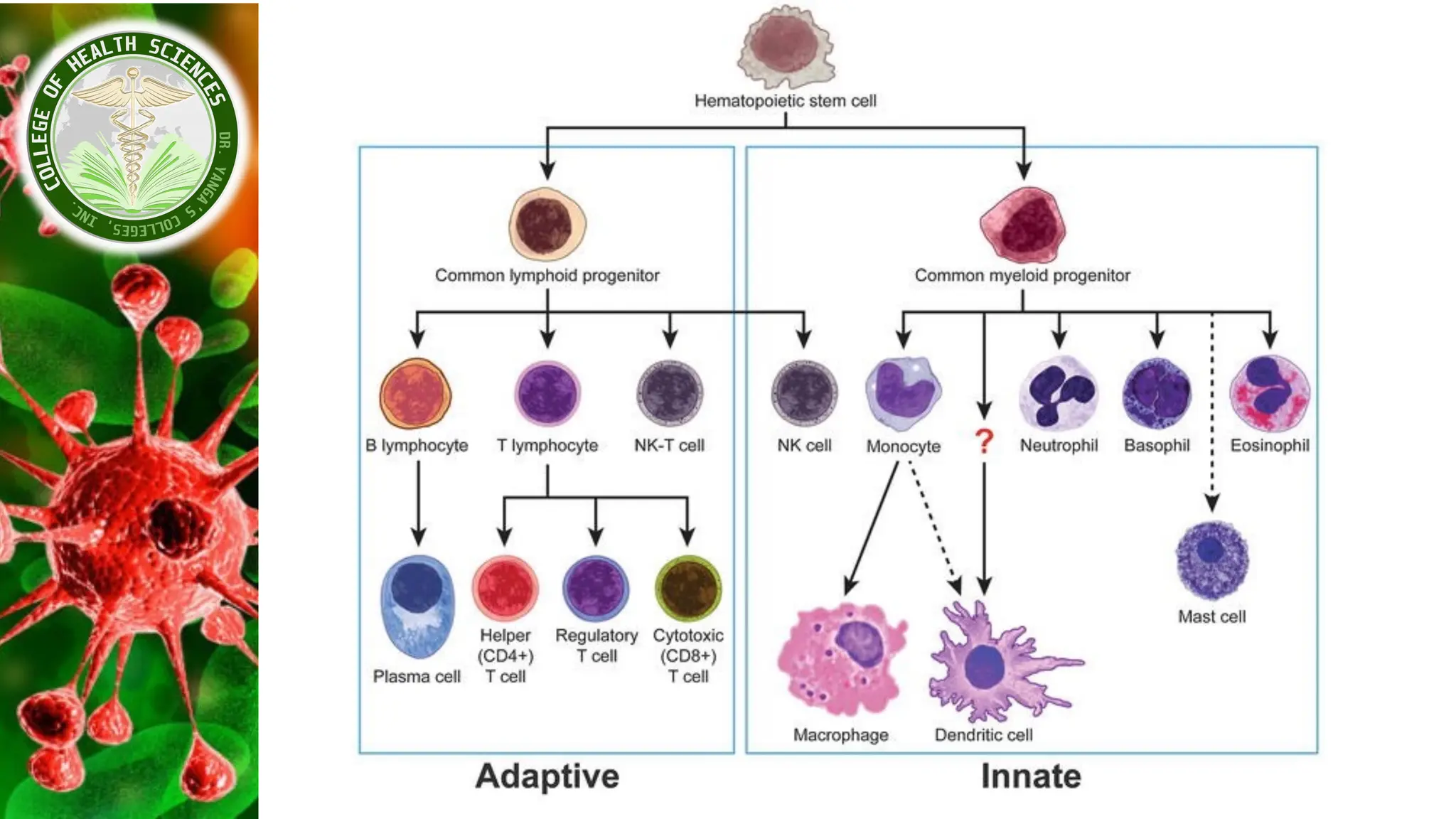
• Granulocytes
• Neutrophils – first responder – most plentiful
(60-70%) – short lived – pus
• Eosinophils – associated with parasites(worms)
involved in allergic response
• Mast cells – localized in tissue of allergic
responses – (involved in anaphylaxis)
• Basophils – amplification of allergic response
• Depending on the cell, the granules contain a
range of chemicals including
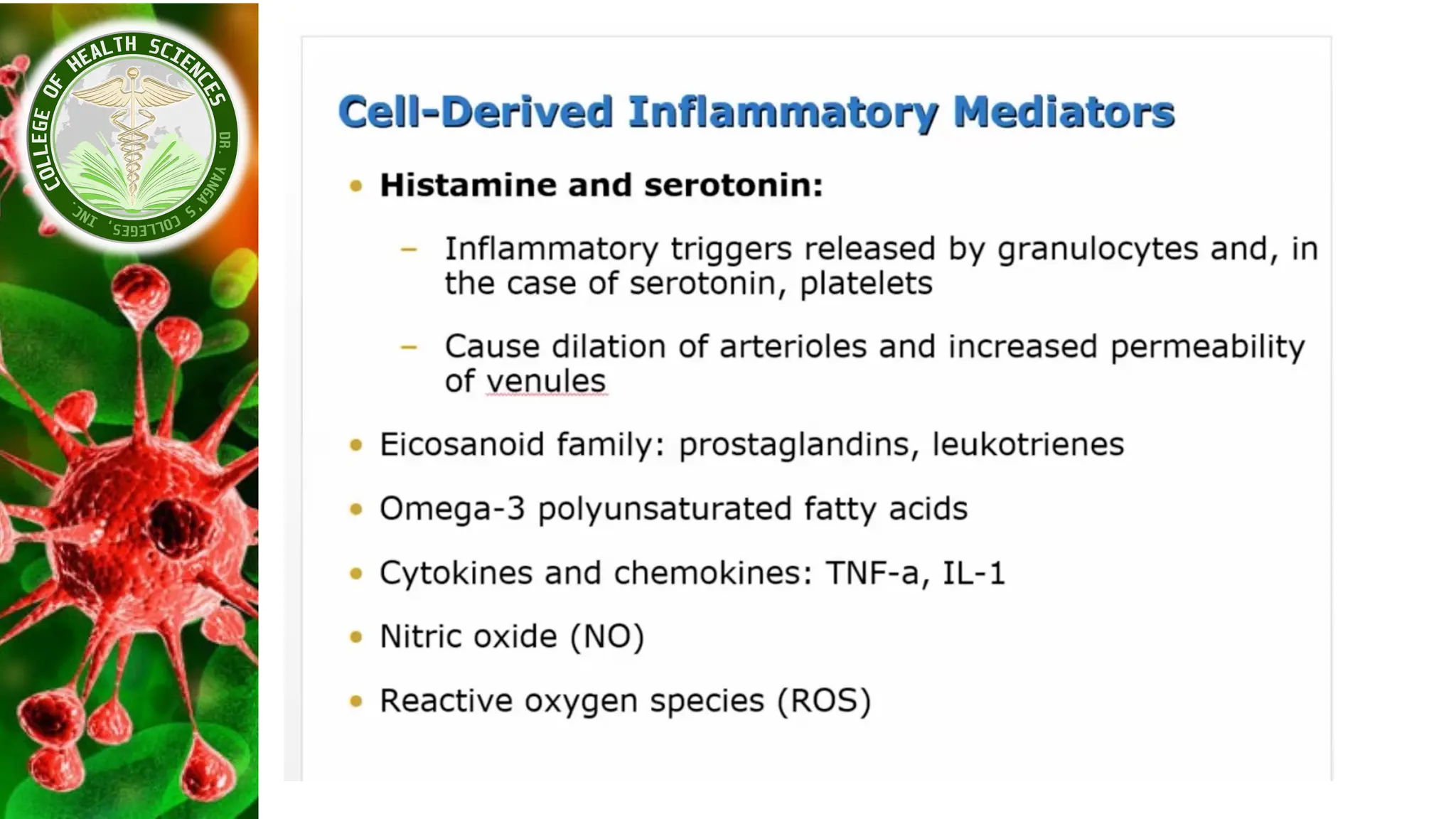
• Histamine(local inflammatory trigger)
• Heparin (prevents clotting)
• Toxins to kills invaders (like bacteria & worms)
• Proteases
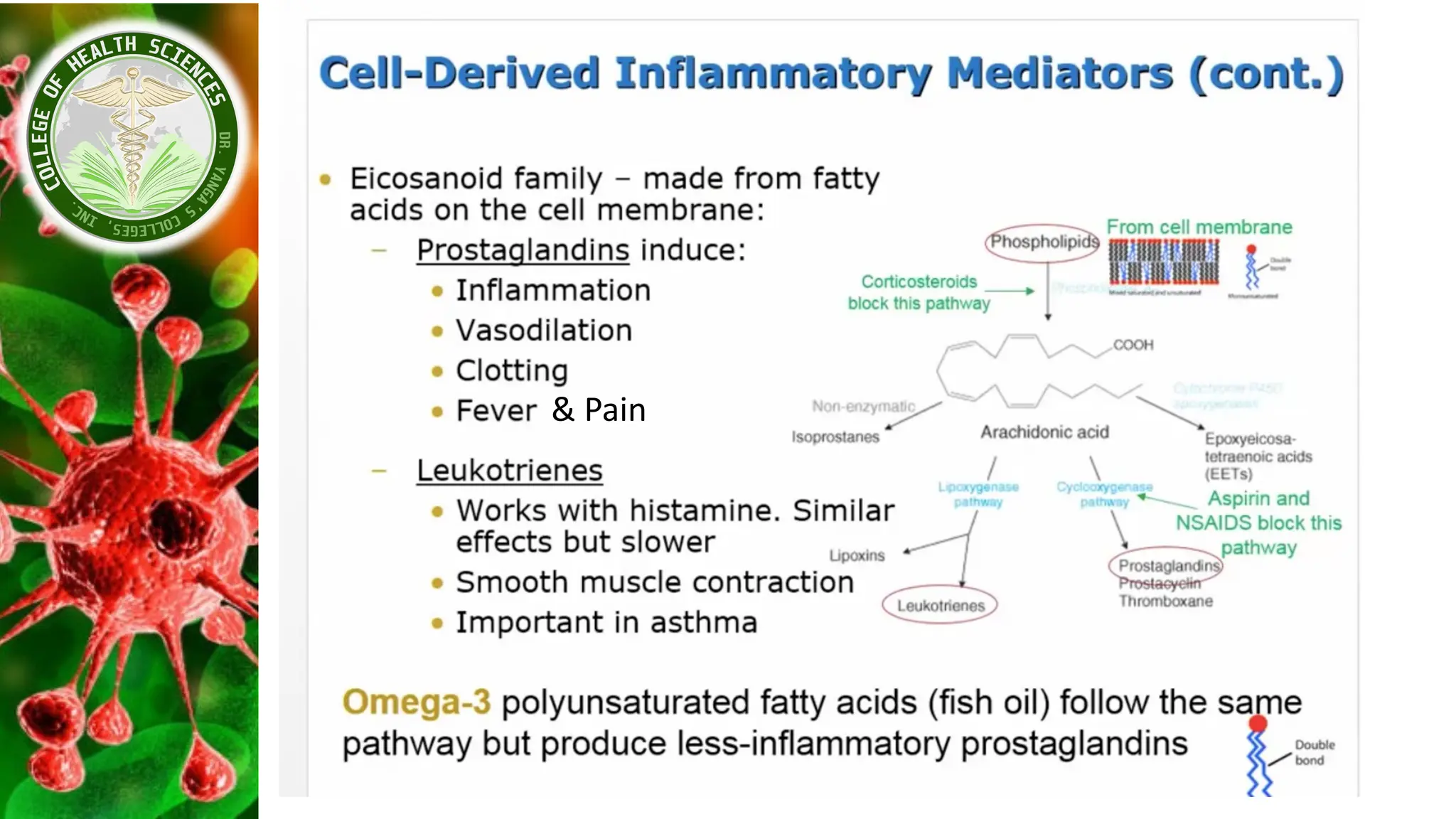
• Enzymes to synthesize Prostaglandin &
Leukotrienes
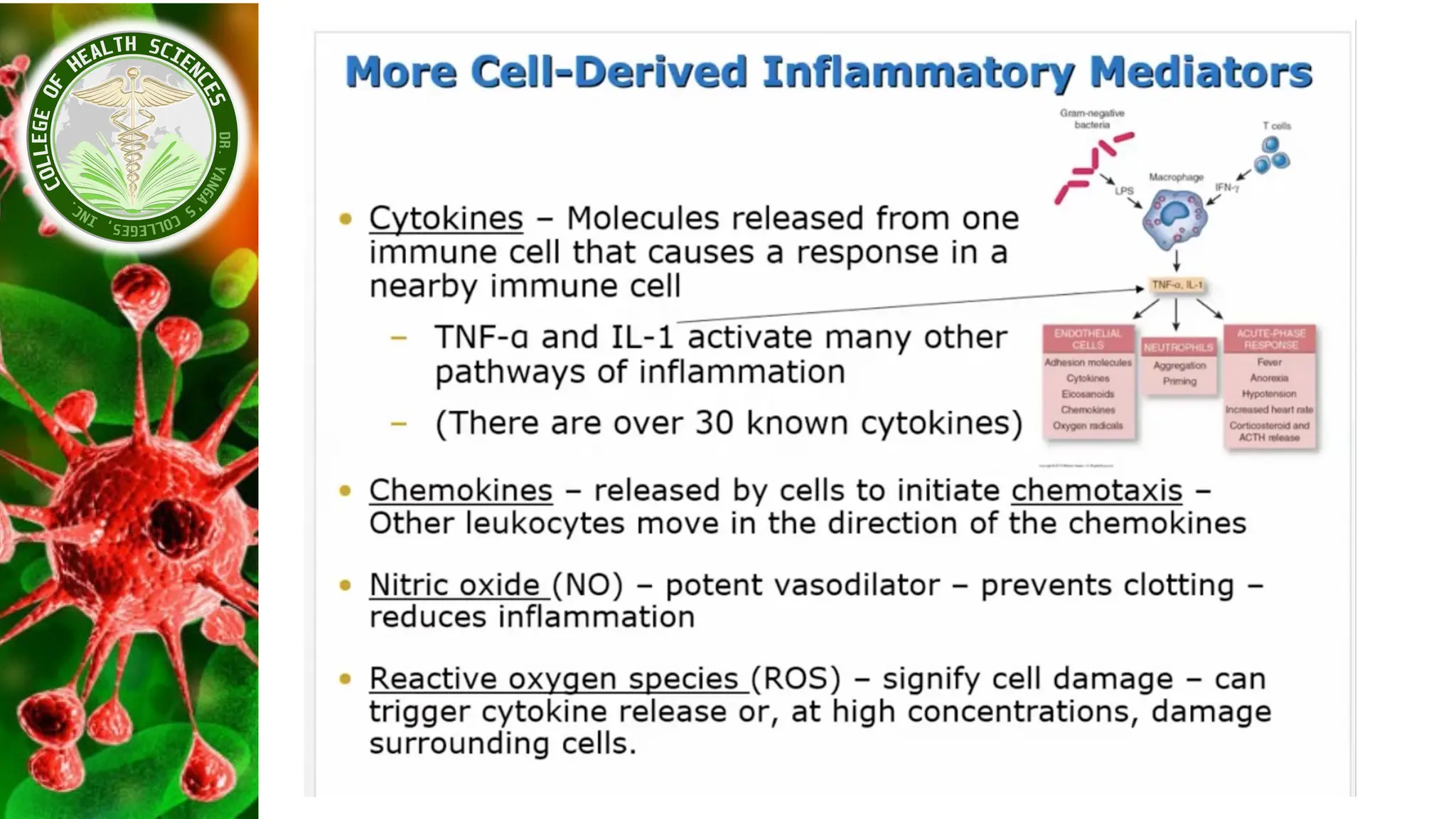
• Signal molecules – cytokines and chemokines
Agranulocytes
• Monocytes – Macrophages:
• Inactive monocytes circulate until they receive
a chemotaxic signal that something has
occurred
• Then they move into the interstitial space as
macrophages
• Macrophages phagocytose (eat) & digest
invaders rather than secreting toxins. They also
produce signal molecules to prolong the
immune response
Agranulocytes
•Lymphocytes
•T lymphocytes – kill infected or damaged
cells
•B lymphocytes – plasma cells (antibody
producers)
•Lymphocytes communicate with each other
and with other leukocytes for a prolonged
and targeted immune response
INFLAMMATION
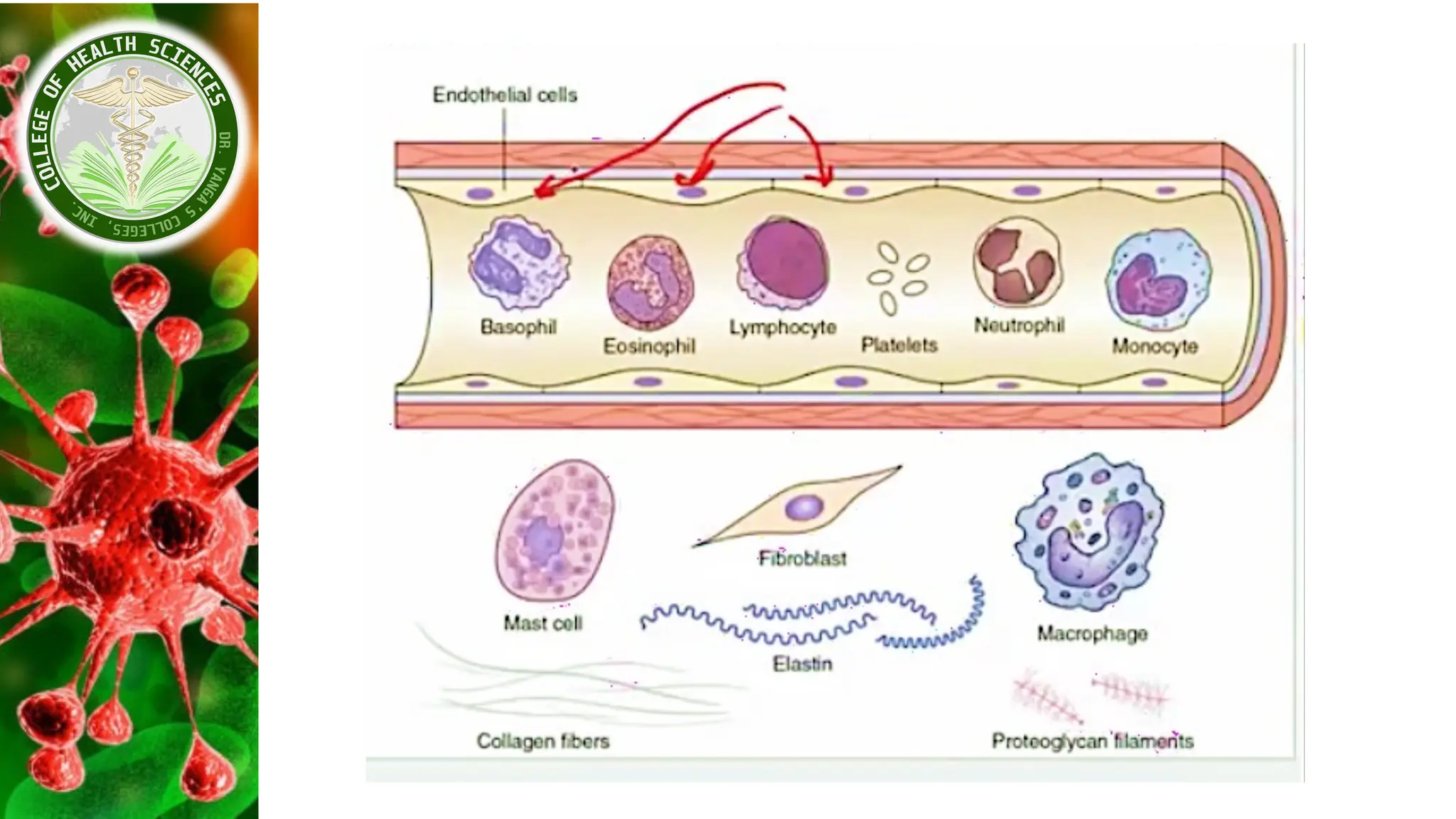
•Normally (no injury or inflammation)
•The endothelial cells form a selective
barrier that keeps most microbes out &
controls what can move into & out of the
vessels (vessel environment & insterstitial
environment)
•The endothelial cells lining the vessels
produce agents that keep them open &
unobstructed (constriction or dilation)
•The blood vessels are non-thrombogenic (do
not promote clotting)
•Platelets are unable to bind to other platelets
& cells so clotting does not occur
•Many cells & other chemical factors are
circulating but do not cause inflammation
Acute Inflammatory Response
•The early or immediate local reaction to injury
(associated with innate immune system)
•Designed to remove injurious agent and limit
tissue damage
•Triggered by:
•Infections
•Immune reactions
•Physical or chemical trauma
Cardinal signs of inflammative
(from 1st & 2nd century AD)
•Rubor – REDNESS
•Tumor – SWELLING
•Calor – HEAT (localized)
•Dolar – PAIN
•Functia laesa – Loss of function
2 stages of Acute Inflammation
•Vascular (fluid moves to tissues)
•Cellular (leukocytes move into tissues)
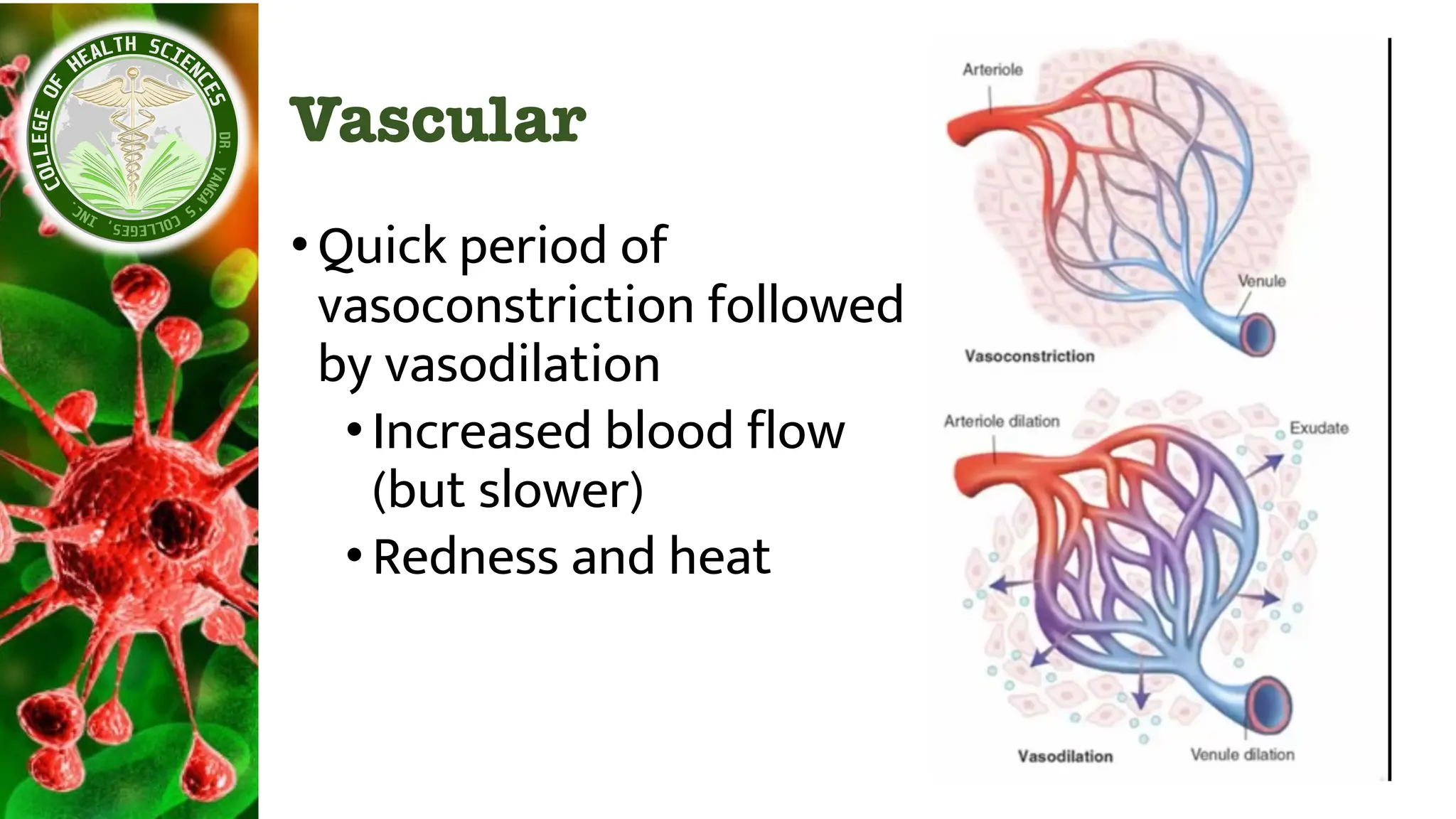
Vascular
•Quick period of
vasoconstriction followed
by vasodilation
•Increased blood flow
(but slower)
•Redness and heat
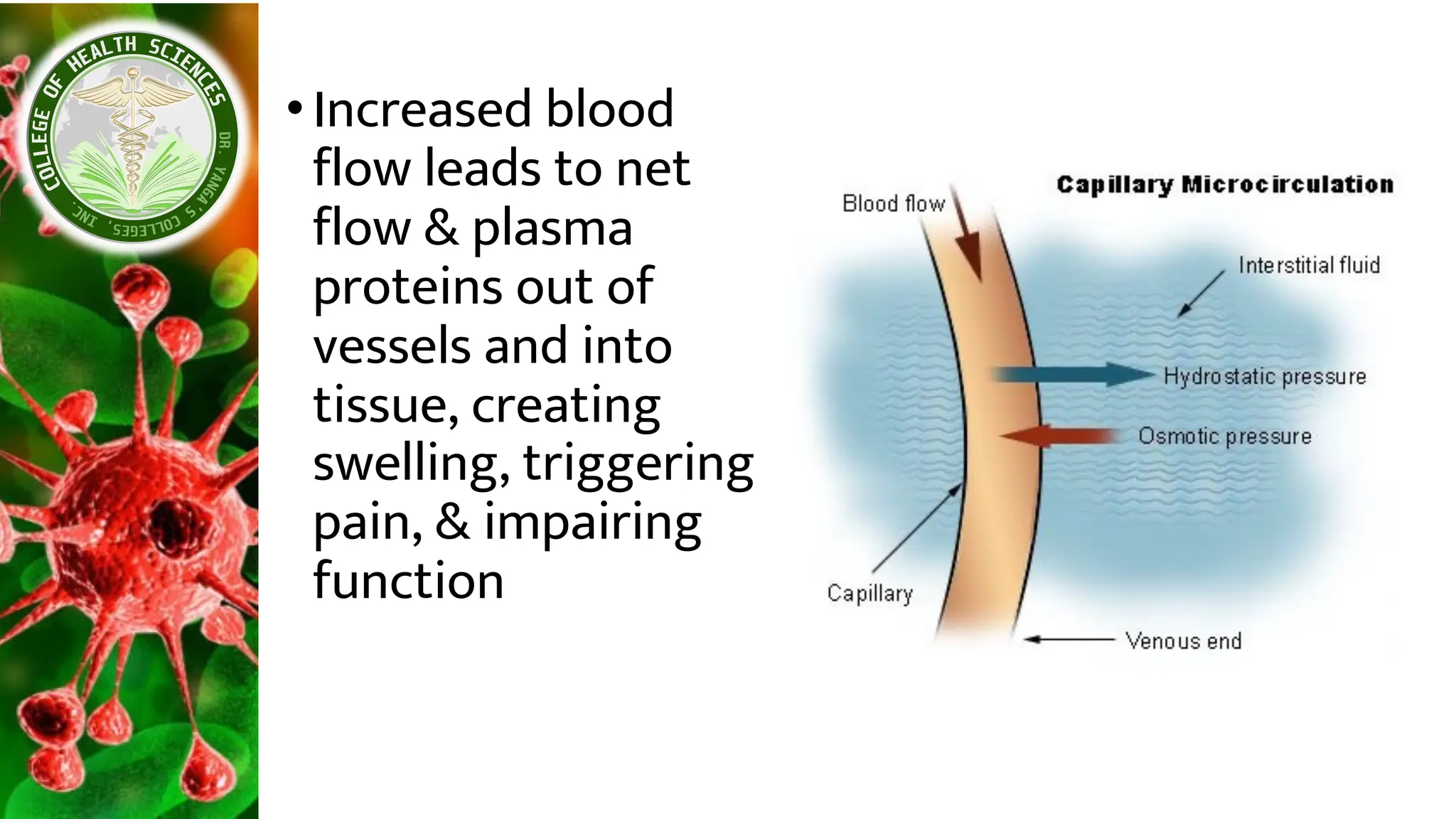
•Increased blood
flow leads to net
flow & plasma
proteins out of
vessels and into
tissue, creating
swelling, triggering
pain, & impairing
function
& Pain
Pathophysio_Module_2 - Inflammatory Response

Pathophysio_Module_2 - Inflammatory Response

  • 1.
    INFLAMMATION, INFLAMMATORY RESPONSE, & FEVER Module II RegieDe Jesus, MAN College of Health Sciences PATHOPHYSIOLOGY
  • 2.
    Inflammation •An innate, automaticresponse to cell injury that: •Neutralizes harmful agents (bacteria, etc…) •Removes damaged and dead tissues •Generates new tissues •Promotes healing •Minimizes the effects of injury or infection
  • 3.
    INFLAMMATION IS NECESSARY, BUTIF PROLONGED CAN LEAD TO UNWANTED EFFECTS
  • 4.
    Inflammation •Damaged cells releaseinflammatory mediators •Local responses •Vascular Stage •Cellular Stage •Systemic (whole-body) responses •White blood cell response •Acute-phase response
  • 5.
    White Blood Cells(Leukocytes in Inflammation • Granulocytes • Neutrophils – first responder – most plentiful (60-70%) – short lived – pus • Eosinophils – associated with parasites(worms) involved in allergic response • Mast cells – localized in tissue of allergic responses – (involved in anaphylaxis) • Basophils – amplification of allergic response
  • 7.
    • Depending onthe cell, the granules contain a range of chemicals including • Histamine(local inflammatory trigger) • Heparin (prevents clotting) • Toxins to kills invaders (like bacteria & worms) • Proteases • Enzymes to synthesize Prostaglandin & Leukotrienes • Signal molecules – cytokines and chemokines
  • 8.
    Agranulocytes • Monocytes –Macrophages: • Inactive monocytes circulate until they receive a chemotaxic signal that something has occurred • Then they move into the interstitial space as macrophages • Macrophages phagocytose (eat) & digest invaders rather than secreting toxins. They also produce signal molecules to prolong the immune response
  • 10.
    Agranulocytes •Lymphocytes •T lymphocytes –kill infected or damaged cells •B lymphocytes – plasma cells (antibody producers) •Lymphocytes communicate with each other and with other leukocytes for a prolonged and targeted immune response
  • 11.
    INFLAMMATION •Normally (no injuryor inflammation) •The endothelial cells form a selective barrier that keeps most microbes out & controls what can move into & out of the vessels (vessel environment & insterstitial environment) •The endothelial cells lining the vessels produce agents that keep them open & unobstructed (constriction or dilation)
  • 12.
    •The blood vesselsare non-thrombogenic (do not promote clotting) •Platelets are unable to bind to other platelets & cells so clotting does not occur •Many cells & other chemical factors are circulating but do not cause inflammation
  • 14.
    Acute Inflammatory Response •Theearly or immediate local reaction to injury (associated with innate immune system) •Designed to remove injurious agent and limit tissue damage •Triggered by: •Infections •Immune reactions •Physical or chemical trauma
  • 15.
    Cardinal signs ofinflammative (from 1st & 2nd century AD) •Rubor – REDNESS •Tumor – SWELLING •Calor – HEAT (localized) •Dolar – PAIN •Functia laesa – Loss of function
  • 16.
    2 stages ofAcute Inflammation •Vascular (fluid moves to tissues) •Cellular (leukocytes move into tissues)
  • 17.
    Vascular •Quick period of vasoconstrictionfollowed by vasodilation •Increased blood flow (but slower) •Redness and heat
  • 18.
    •Increased blood flow leadsto net flow & plasma proteins out of vessels and into tissue, creating swelling, triggering pain, & impairing function
  • 23.