Pathology and
How to
Understand it
FLASCO Rapid Integration
Training
May 19, 2017
Westin, FL
Shahla Masood, M.D.
Professor and Chair
Department of Pathology and Laboratory Medicine
University of Florida College of Medicine-Jacksonville
Medical Director, UF Health Breast Center
Chief of Pathology and Laboratory Medicine
UF Health Jacksonville
Pathology
The Plan
o To provide an overview of the
contributions of pathologists in patient
care, research, and education
Pathology
The Definition
o Pathology is the study of diseases and
the changes they cause
o A pathology report is the story of
human illness
Pathology
o Studies fluids, tissue, and other material from the
body
o Provides diagnostic/prognostic/predictive
information
o Assists physicians in making treatment decisions
and follow-up care
o Performs minimally invasive sampling procedures
such as fine needle aspiration biopsy
o Participates in research
o Participates in medical education
o Performs autopsies
What does a Pathologist Do?
Pathology
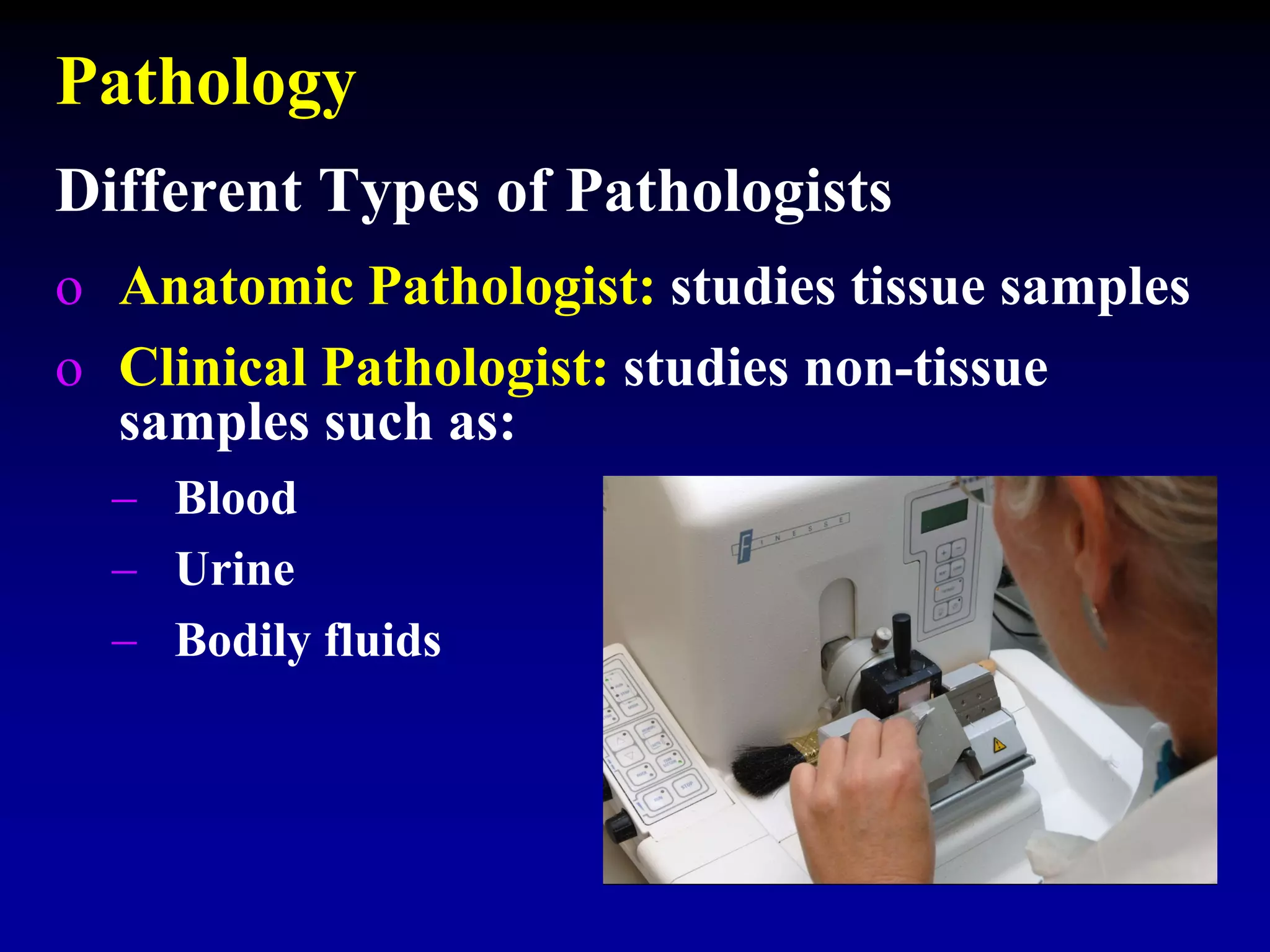
o Anatomic Pathologist: studies tissue samples
o Clinical Pathologist: studies non-tissue
samples such as:
 Blood
 Urine
 Bodily fluids
Different Types of Pathologists
Pathology
Sub-specialties in Pathology
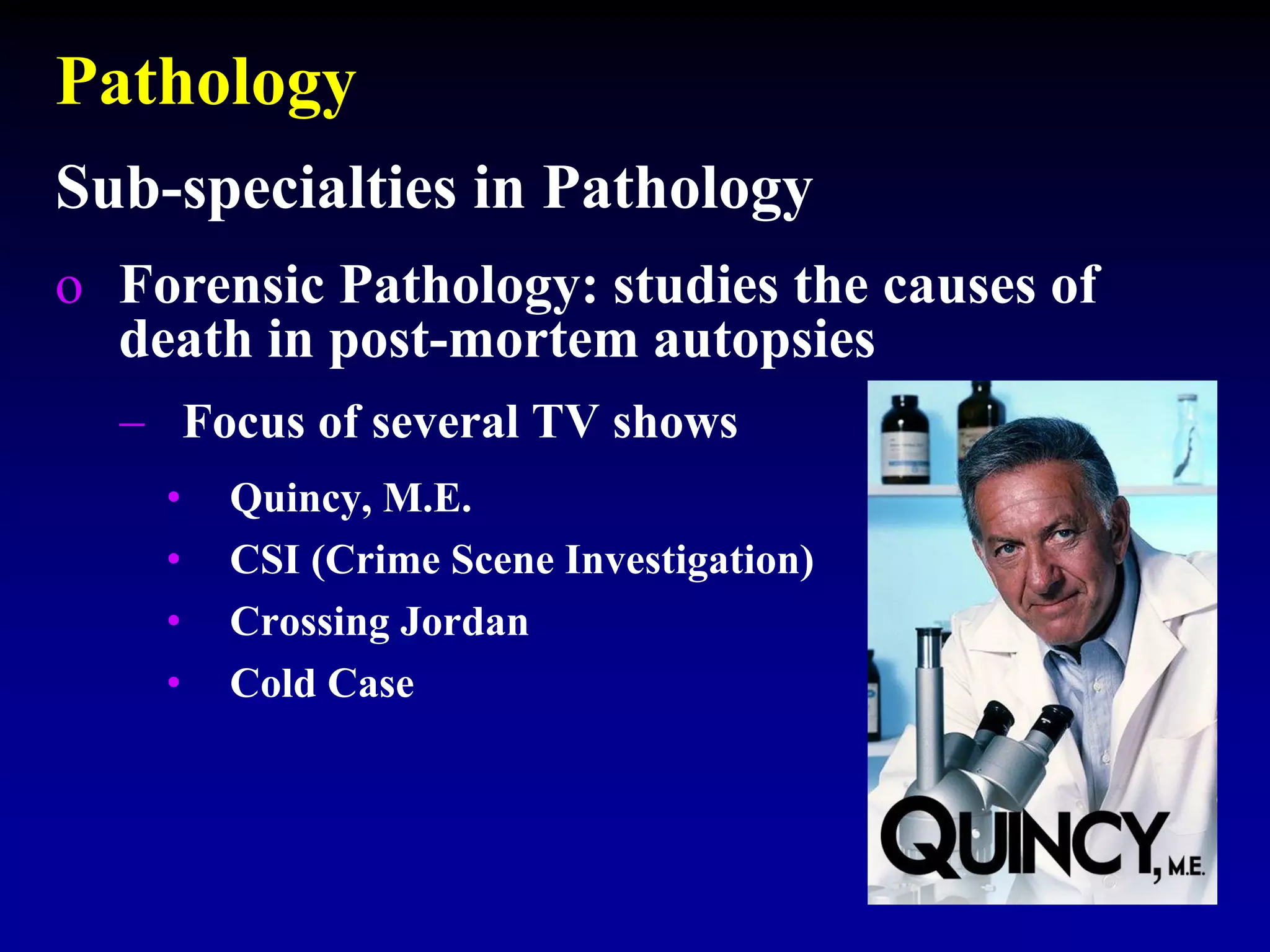
o Forensic Pathology: studies the causes of
death in post-mortem autopsies
 Focus of several TV shows
• Quincy, M.E.
• CSI (Crime Scene Investigation)
• Crossing Jordan
• Cold Case
Pathology
o Cytopathology
o Hematopathology
o Head & Neck Pathology
o Surgical Pathology
o Breast Pathology
o Gynecological Pathology
o Gastrointestinal Pathology
o Molecular Pathology
o …and many more!
Sub-Specialties in Pathology
The Changing Role of Pathologists
The Way It Was:
o Pathology diagnosis was based on:
 Gross examination
 Light microscopy
o The most common diagnosis was:
 Undifferentiated malignant neoplasm
The Changing Role of Pathologists
The Pattern
o The emergence of new technologies
o Molecular characterization of tumors
o Stratification of patients for therapy based
on tumor characteristics
o A paradigm shift in patient outcome
The Changing Role of Pathologists
The Way it is Now:
o Establish a diagnosis
o Classify a neoplasm
o Differentiate between a primary versus a
metastatic tumor
o Predict the response to therapy
o Provide the prognosis
o Compose a comprehensive pathology report
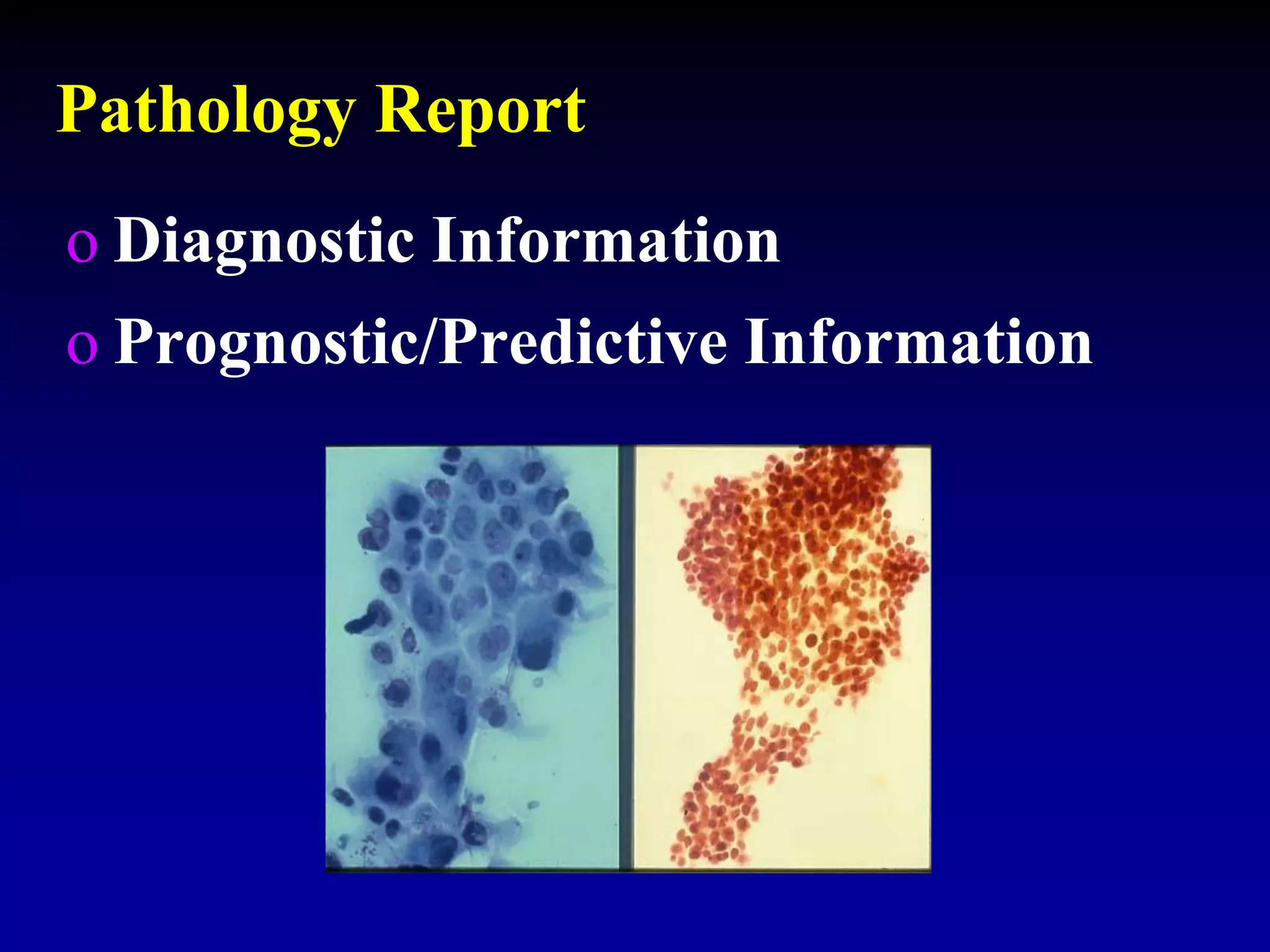
Pathology Report
o Diagnostic Information
o Prognostic/Predictive Information
Pathology
Diagnosis
o Characterization of the lesion
o Benign versus malignant
o Distinction between primary versus
metastasis
o Assessment of metastatic tumors of
unknown primary origin
Pathology
Ancillary Studies
o Special stains
o Microbiology studies
o Electron microscopy
o Flow Cytometry
o Immunocytochemistry
o Fluorescent in situ hybridization
o Molecular testing
o Tissue microarray technology
o Morphometry
o Others
Pathology Diagnosis
Microbiology Studies
Tuberculous Granulomatous Inflammation
Ancillary Studies: Flow Cytometry
B-Cell Lymphoma
Pathology Diagnosis
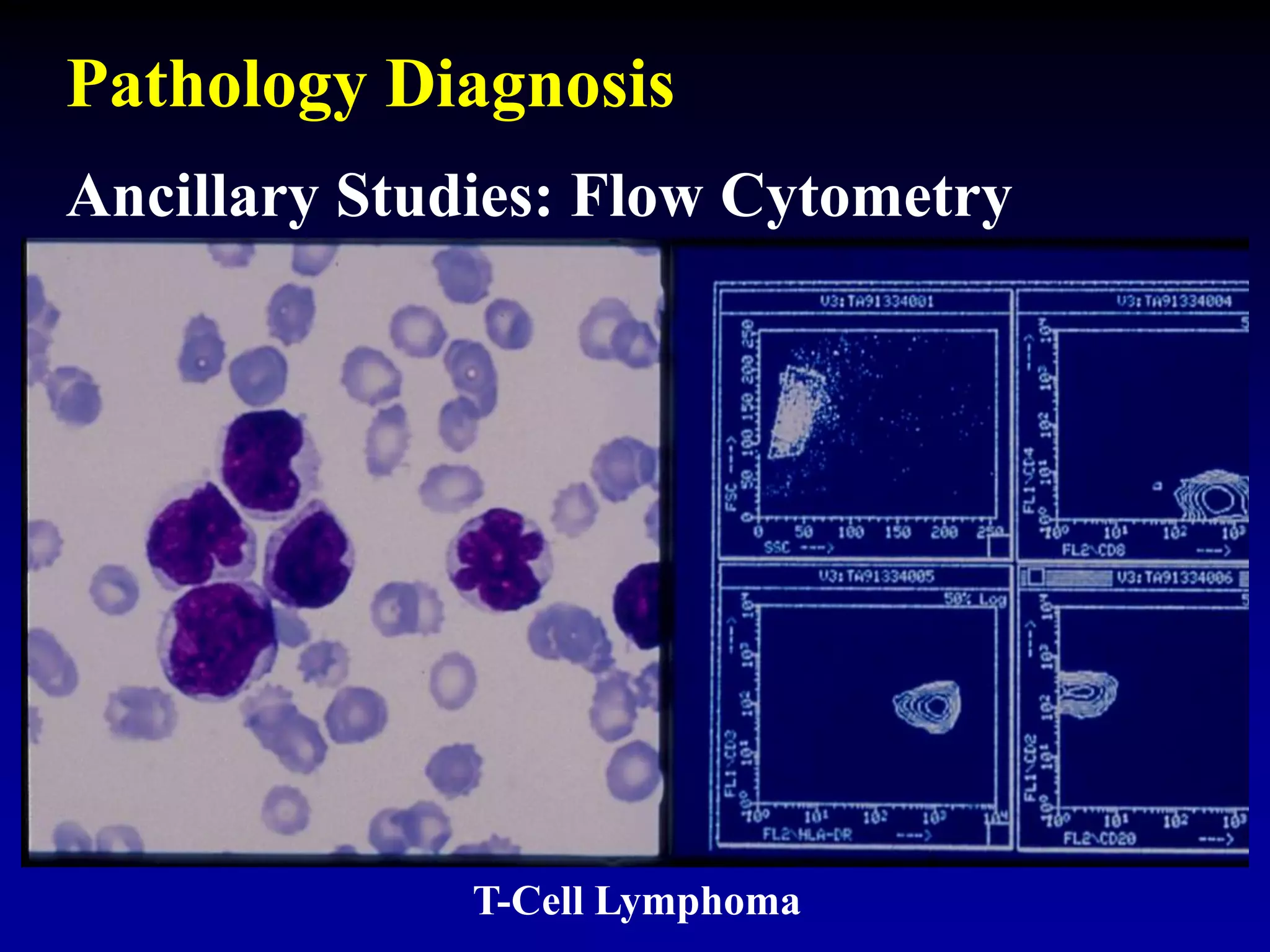
Ancillary Studies: Flow Cytometry
T-Cell Lymphoma
Pathology Diagnosis
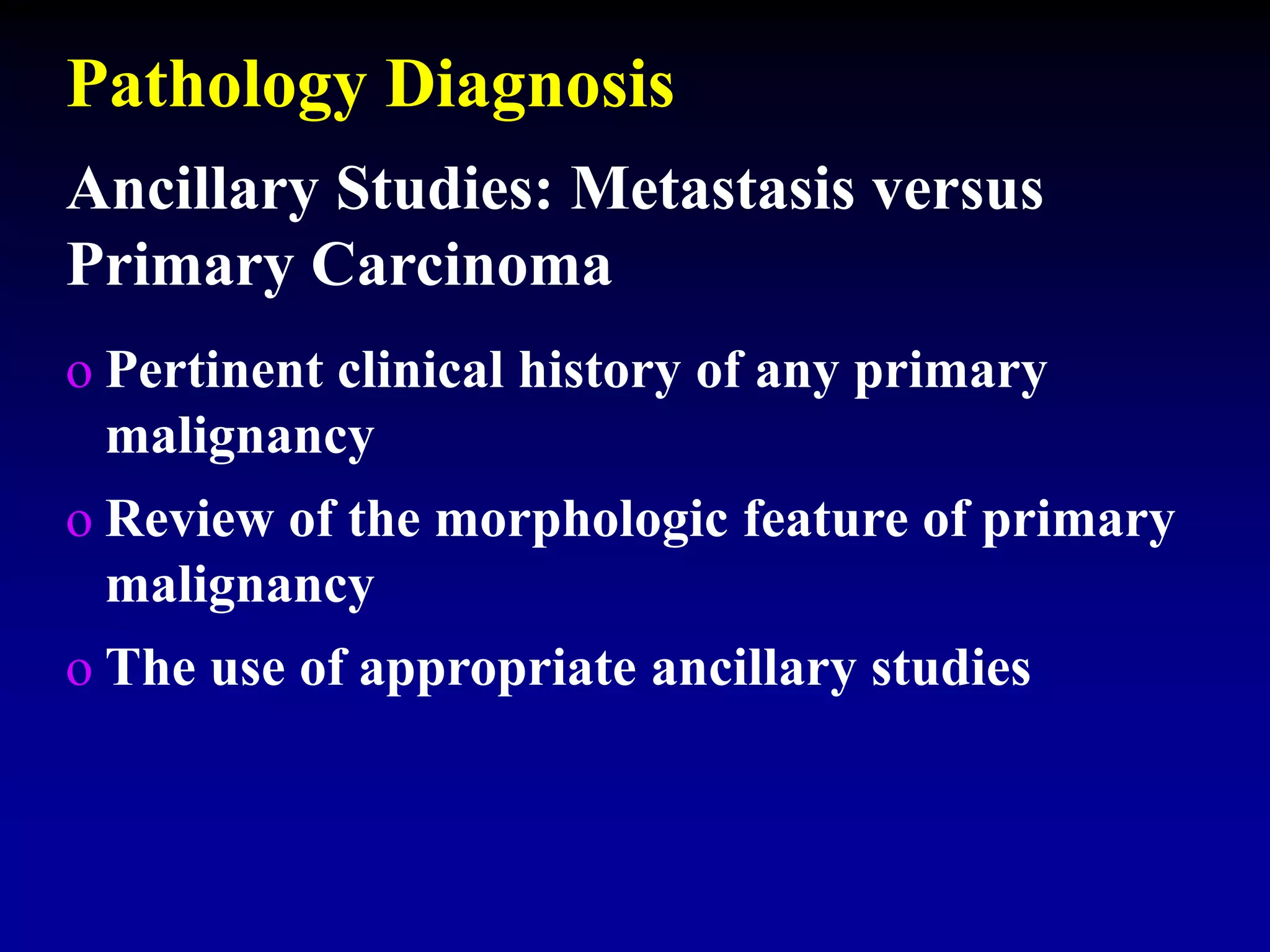
o Pertinent clinical history of any primary
malignancy
o Review of the morphologic feature of primary
malignancy
o The use of appropriate ancillary studies
Ancillary Studies: Metastasis versus
Primary Carcinoma
Pathology Diagnosis
Pathology Diagnosis
Ancillary Studies: Immunocytochemistry
High Grade Sarcoma
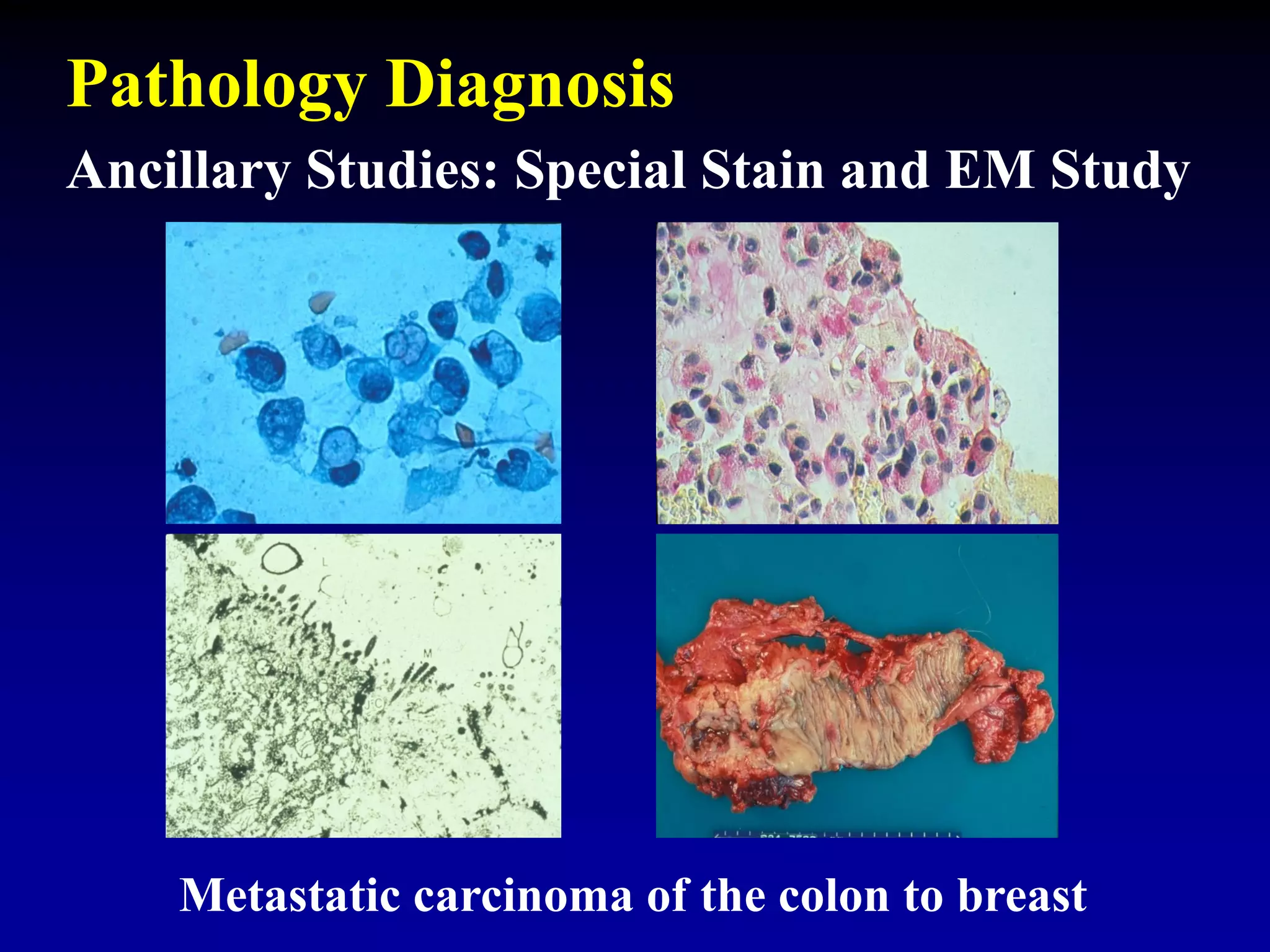
Metastatic carcinoma of the colon to breast
Pathology Diagnosis
Ancillary Studies: Special Stain and EM Study
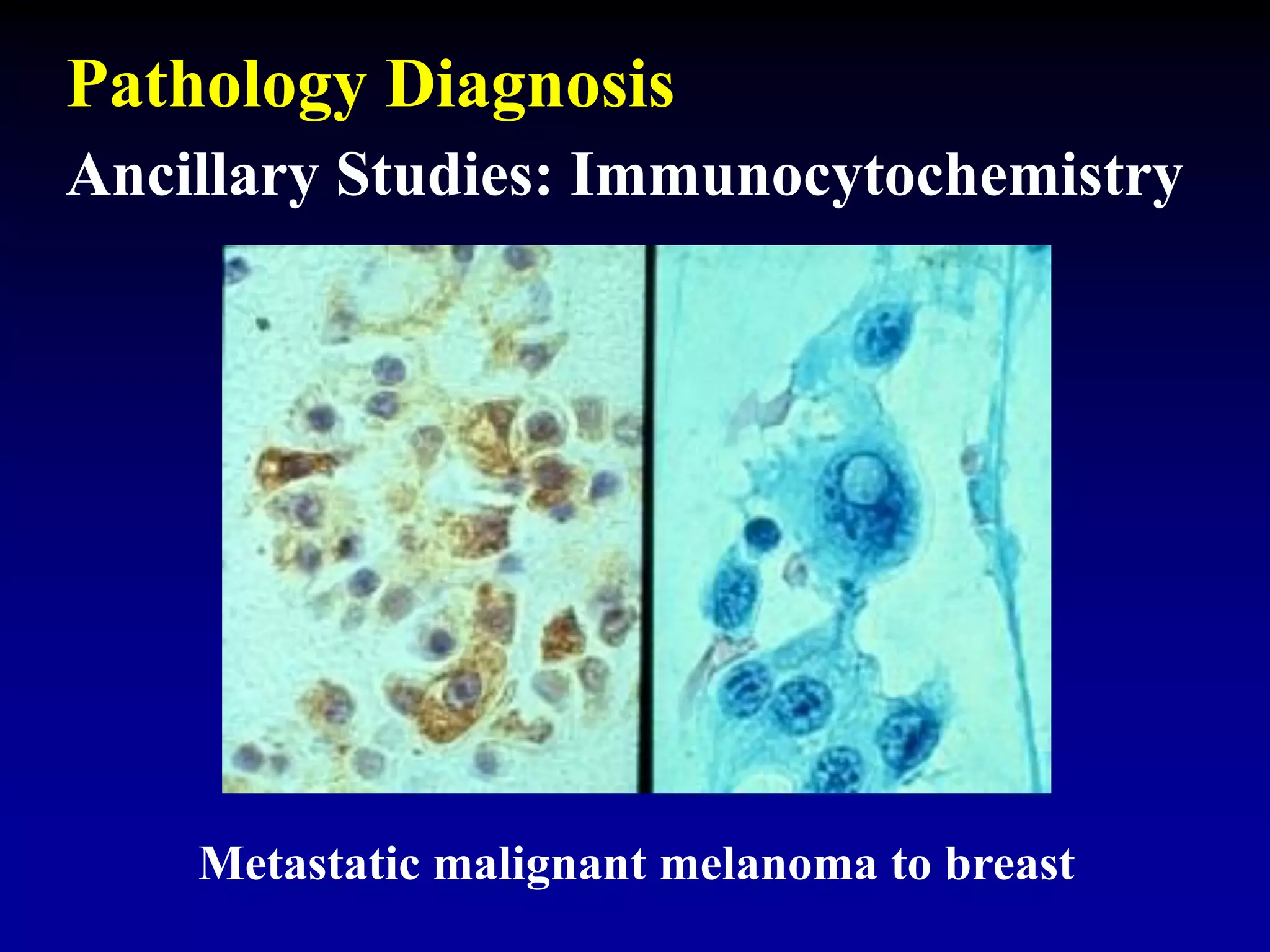
Ancillary Studies: Immunocytochemistry
Metastatic malignant melanoma to breast
Pathology Diagnosis
Prognosis: Treatment Planning
o Tumor size
o Tumor type
o Histologic grading
o Lympho-vascular invasion
o Lymph node status
o Status of surgical margins
The Role of Pathologists
Prediction of Response to Therapy
o Assessment of the status of expression of
estrogen and progesterone
 Endocrine therapy
o Assessment of the pattern of expression of
HER-2/neu oncogene
 Herceptin therapy
o Assessment of others/new genetic molecular
pathway
 Molecular/adjuvant chemotherapy
The Role of Pathologists
The Significance of Accurate
Prognostic/Predictive Testing
o Selection of those patients who will most likely
benefit from systemic therapy
o Offering personalized medicine with greater
safety and effectiveness
o Providing affordable and cost-effective care
The Role of Pathologists
Tissue Sampling:
Clinical/Research
o Fine needle aspiration biopsy
o Nipple aspiration fluid
cytology
o Ductal Lavage
Minimally Invasive Procedures
o Goals
 To eliminate the
need for open biopsy
in benign disease
 To provide a non-
surgical means to
diagnose breast
cancer
CORE
BIOPSY
FNA
BIOPSY VERSUS
The Role of Pathologists
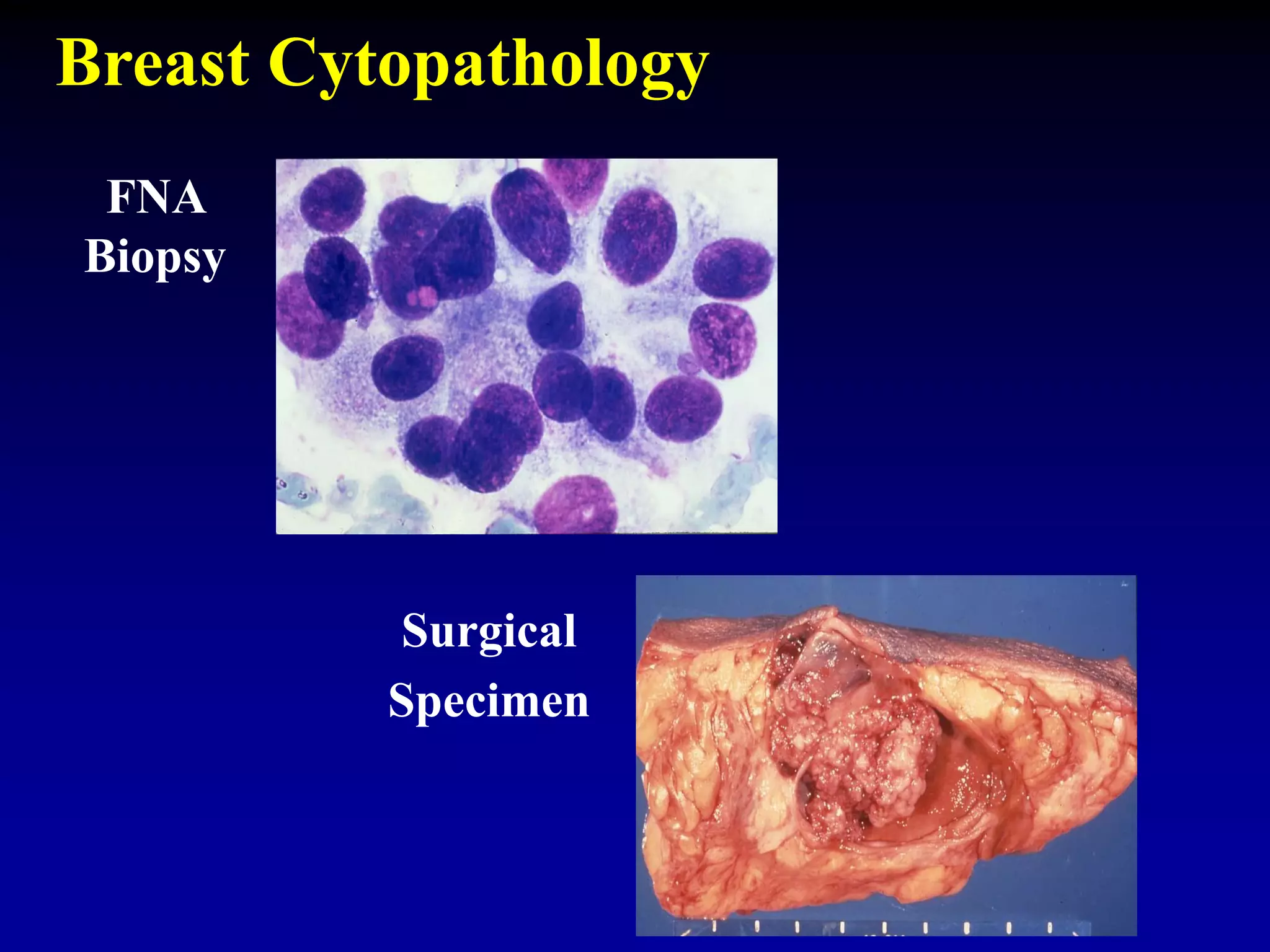
FNA
Biopsy
Surgical
Specimen
Breast Cytopathology
Masood S, et al. Comparative cost-effectiveness of fine needle aspiration biopsy versus image-guided
biopsy, and open surgical biopsy, and open surgical biopsy in the evaluation of breast cancer in the era of
Affordable Care Act: A changing landscape. Diagn Cytopathol. 2015 Aug;43(8):605-12.
o Advantages of FNA Biopsy
 Providing a diagnosis when surgical biopsy
may not be available
• High acceptability
• Cost effectiveness
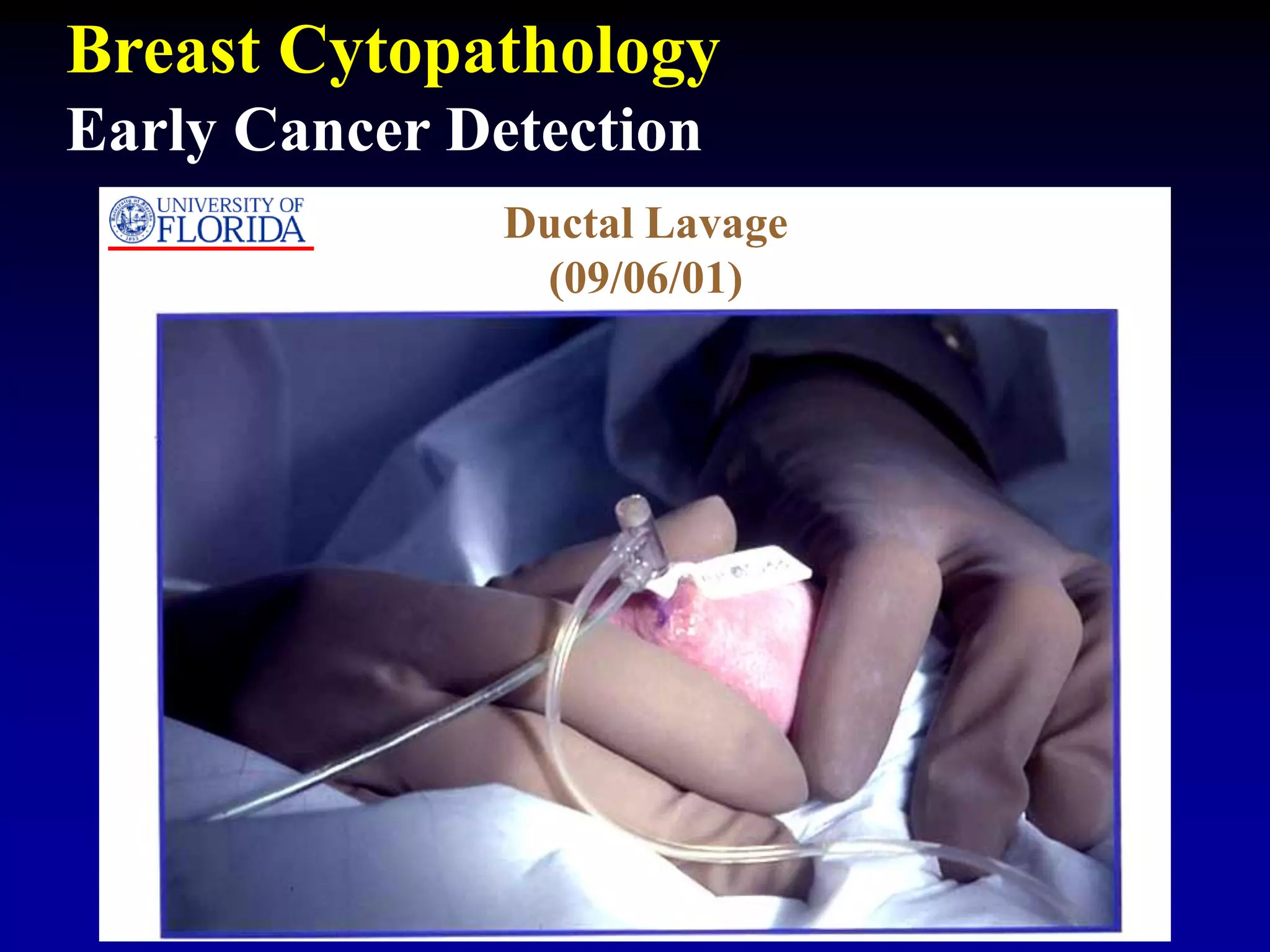
Ductal Lavage
(09/06/01)
Breast Cytopathology
Early Cancer Detection
DL: Papilloma
DL: Papilloma
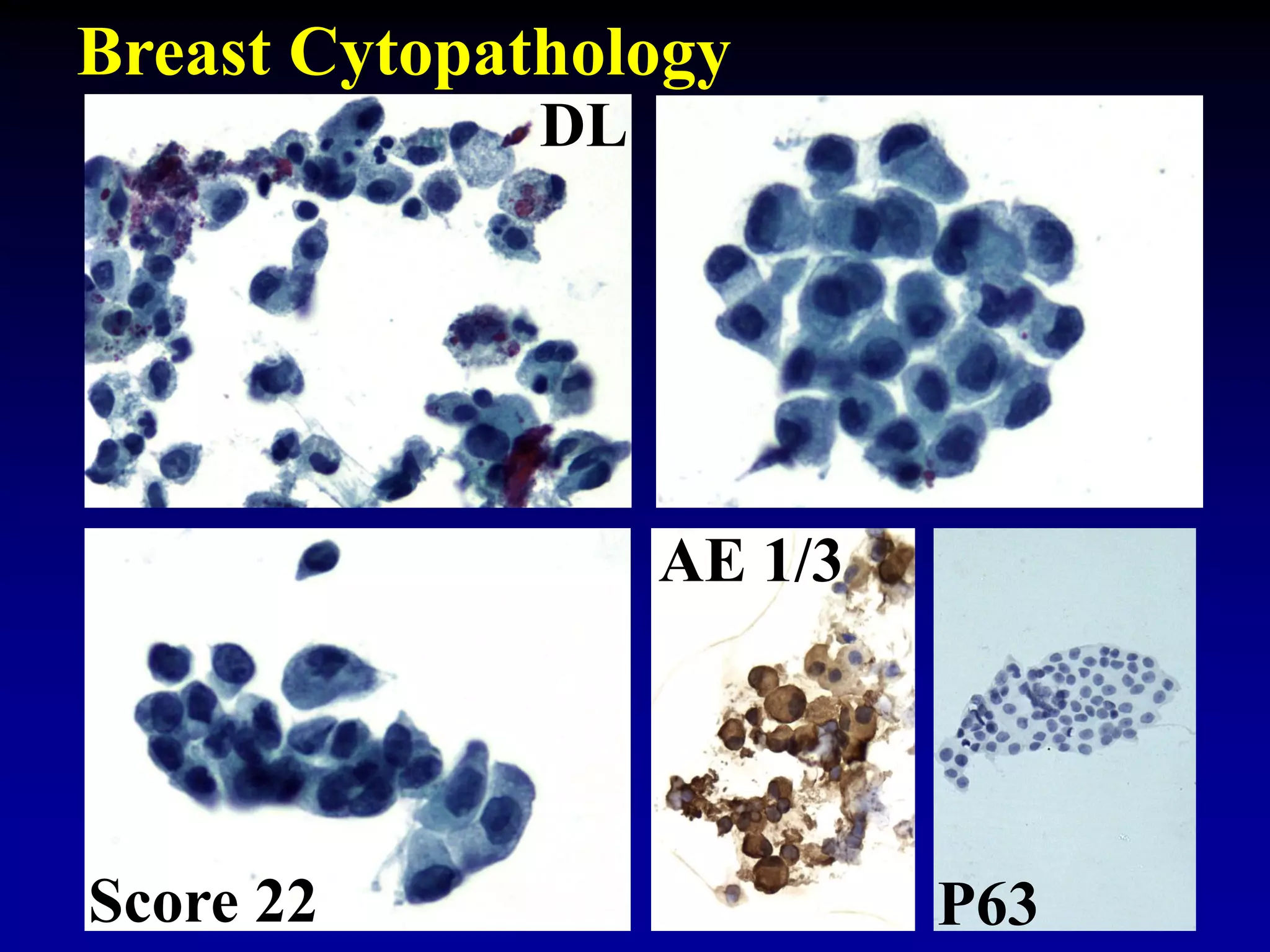
Breast Cytopathology
Score 22
DL
AE 1/3
P63
Breast Cytopathology
What Does A
Pathologist Need to
Provide in an
Accurate Pathology
Report?
Effective Communication
o Type of the procedures
o Pertinent clinical history
 Age/Risk Factors
 The site and the size
 History of other malignancies
 History of chemo/radiation therapy
o Pertinent laboratory and imaging
findings
o Appropriate tissue orientation
Minimizing Errors in Pathology
Effective Communication
o Knowledge about the biology of the tumor
and the impact of the pathology report on the
follow-up treatment intervention and patient
outcome
o Inclusion of the appropriate scientific
references at the end of the report
o Following the current established pathology
reporting guidelines
o Participation in tumor conferences
Integration of Health Services
Survivorship
Nurse Navigator/
Coordinator
Pathology
Patient and
Physician
Education
Medical Oncology
Radiation
Therapy
Plastic and
Reconstructive
Surgery
Surgery
Data
Management
Psychosocial
Support
Research
Genetic
Counseling
Radiology
The Current
Challenges Associated
with the Practice of
Pathology
Current Issues in Pathology
o Diversity in tissue handling, processing and
reporting
o Insufficient evidence-based correlation
between morphology and patient outcome
o Significant interobserver variability in
diagnosis and test results
o Communication barriers among physicians
involved in patient care
Current Issues in Pathology
o There are no uniform guidelines to measure
the rate of diagnostic errors
o Fear of disclosure and medicolegal issues
limits the reporting of diagnostic errors
o There are many look-alikes in pathology that
can mimic cancer
o There is minimal standardization in pathology
and biomarker studies
Minimizing Errors in Pathology
Suggestions
o To establish quality assurance programs
 Consensus slide conference
 Mandatory second review of cancer cases
 Mandatory adherence to established guidelines
 Involvement in external quality assurance
programs
o To review the outside pathology slides and
reports before the initiation of cancer therapy
o To seek a second opinion
Minimizing Errors in Pathology
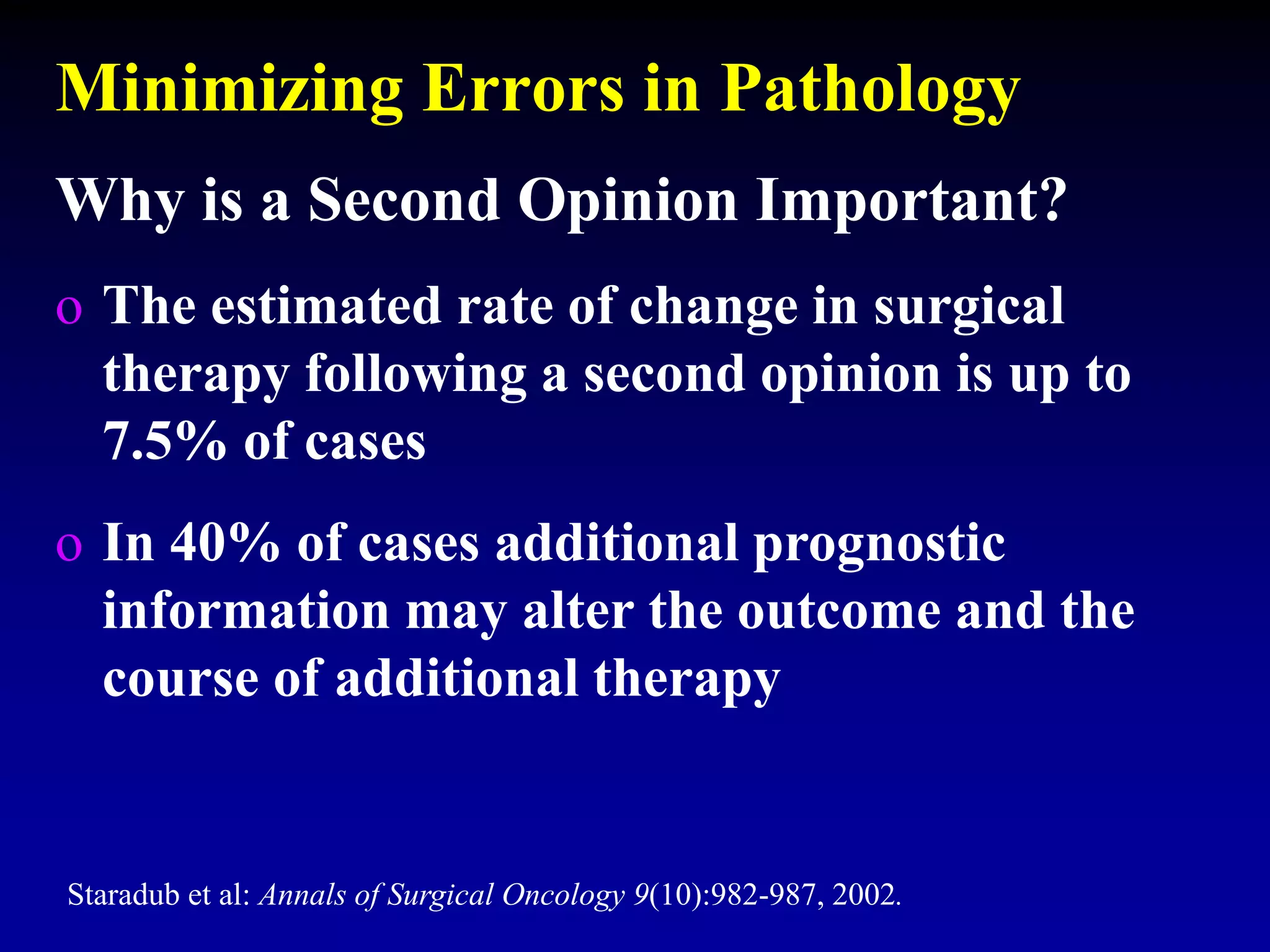
Why is a Second Opinion Important?
o The estimated rate of change in surgical
therapy following a second opinion is up to
7.5% of cases
o In 40% of cases additional prognostic
information may alter the outcome and the
course of additional therapy
Staradub et al: Annals of Surgical Oncology 9(10):982-987, 2002.
Minimizing Errors in Pathology
Multidisciplinary Case Review:
The Impact
Imaging Pathology
Interpretive
Change
45% 29%
Surgical
Management
Change
16% 9%
Newman EA, et al: Cancer 2006, 107:2346-2351.
The story of a patient
The Story
o A self-referred newly diagnosed breast cancer patient
was scheduled to undergo mastectomy and lymph node
dissection
o The patient was 32 years old with no risk factors and
discovered the mass when showering
o The breast mass was sampled by core needle biopsy
and was diagnosed as an invasive cancer
o A palpable lymph node was found and was assumed to
represent a lymph node metastasis
o The patient was advised to have mastectomy and
axillary dissection followed by chemotherapy
Biopsy Original Diagnosis
o Invasive moderately
differentiated ductal
carcinoma
o Low-grade ductal
carcinoma in Situ
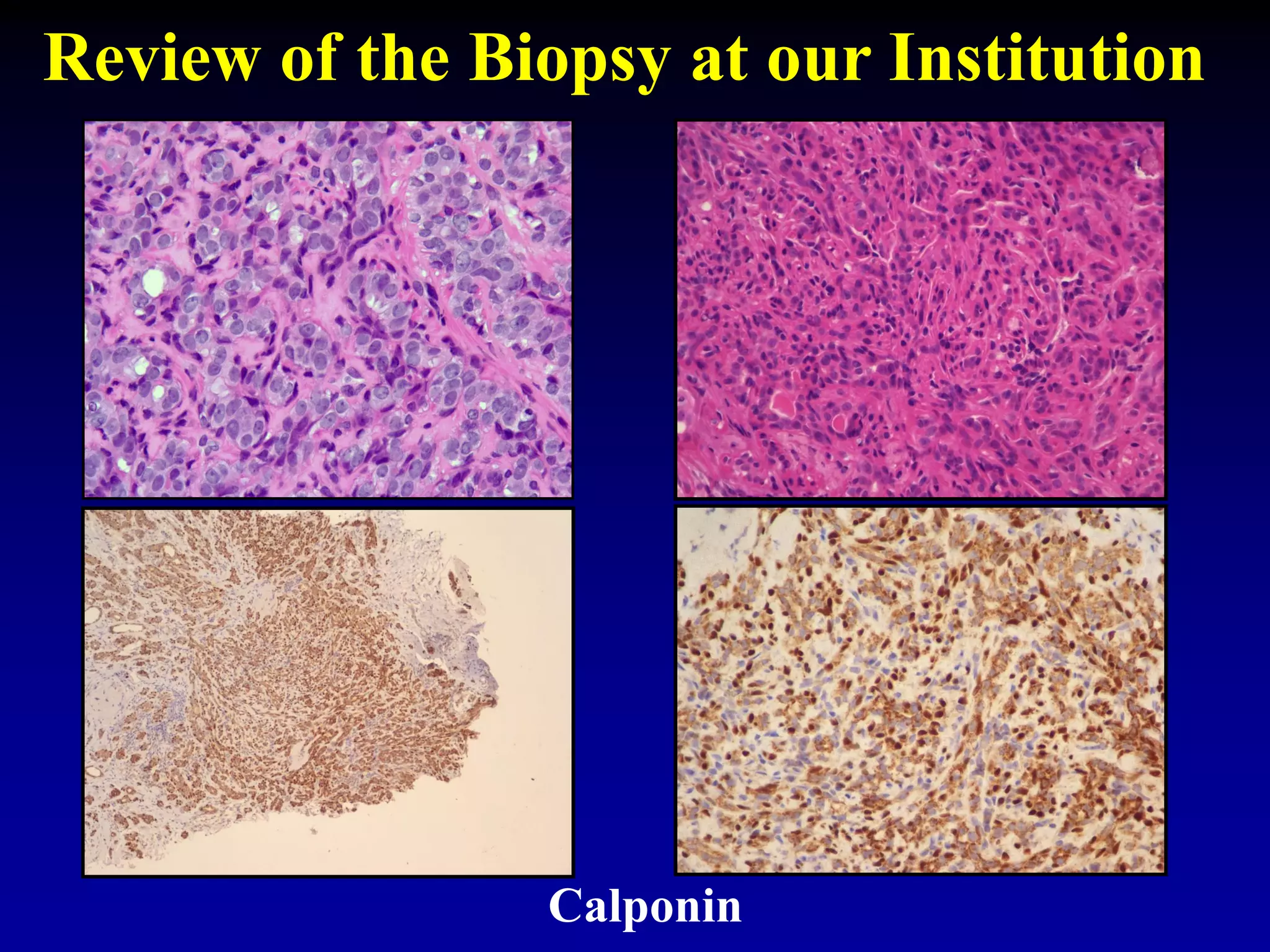
Calponin
Review of the Biopsy at our Institution
Follow-up Excisional Biopsy
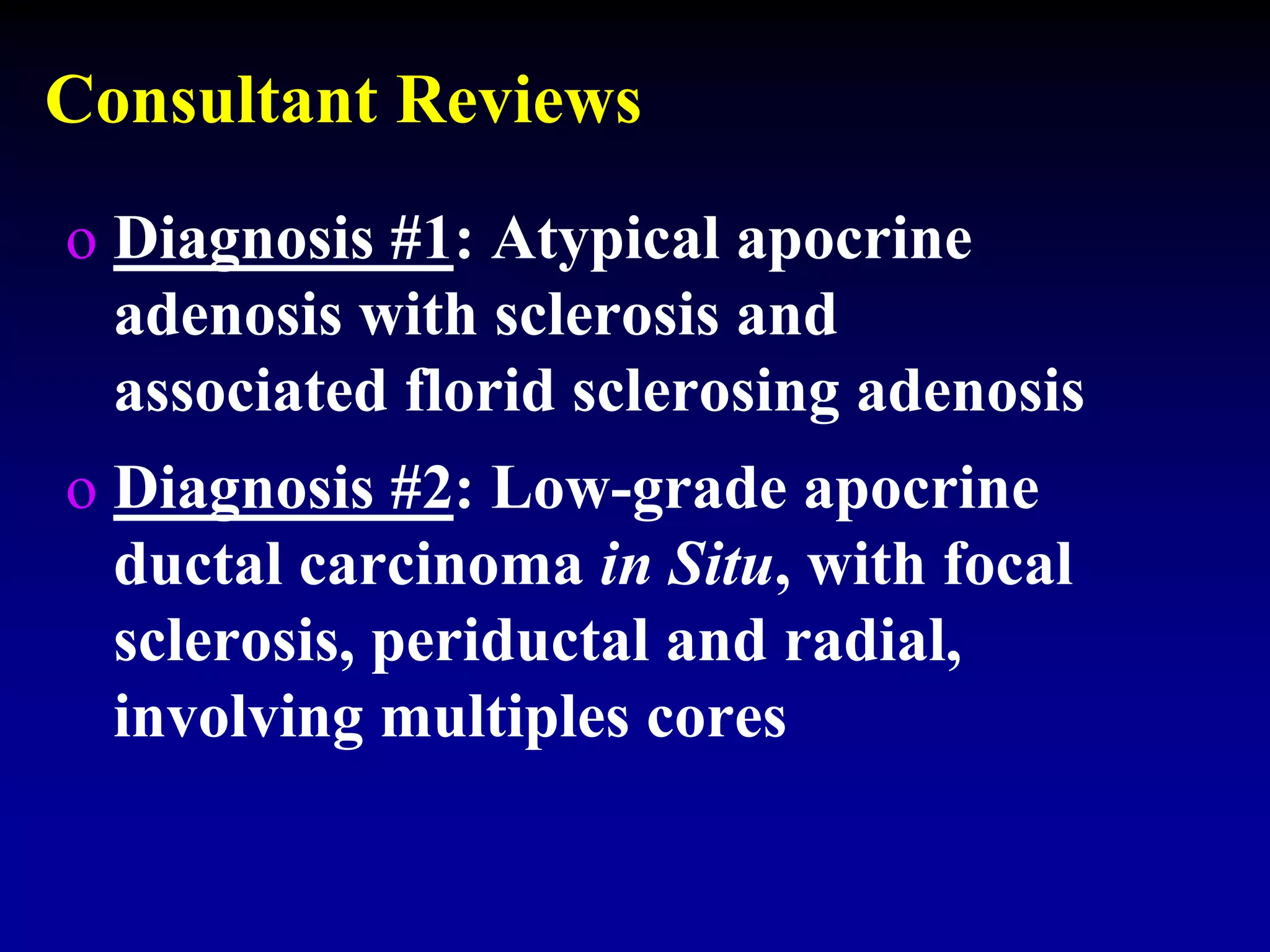
Consultant Reviews
o Diagnosis #1: Atypical apocrine
adenosis with sclerosis and
associated florid sclerosing adenosis
o Diagnosis #2: Low-grade apocrine
ductal carcinoma in Situ, with focal
sclerosis, periductal and radial,
involving multiples cores
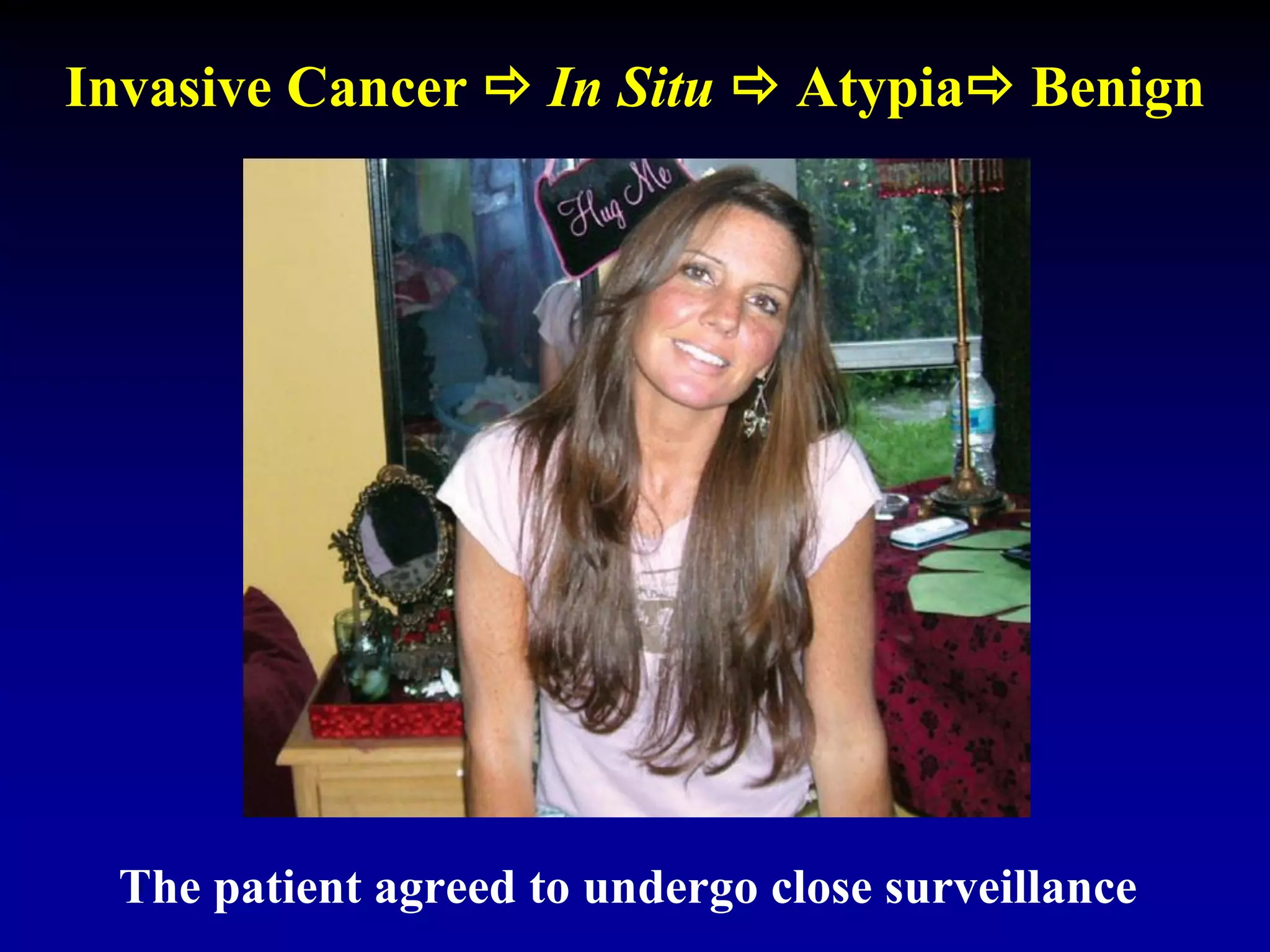
Invasive Cancer  In Situ  Atypia Benign
The patient agreed to undergo close surveillance
New York Times Article: “Prone to
Error: Earliest Steps To Find Cancer”
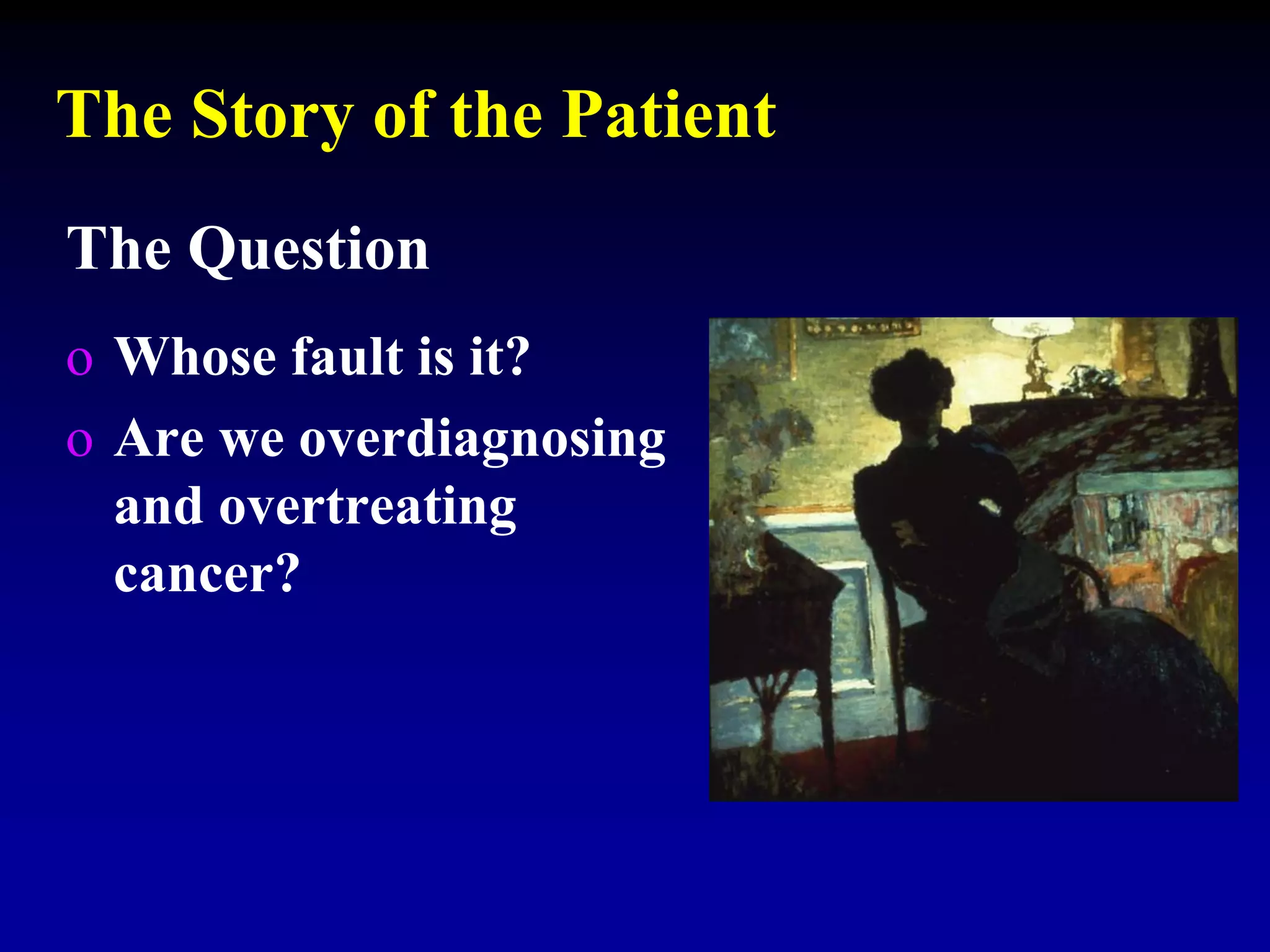
The Story of the Patient
The Question
o Whose fault is it?
o Are we overdiagnosing
and overtreating
cancer?
Pathology and How to Understand It

Pathology and How to Understand It

  • 1.
    Pathology and How to Understandit FLASCO Rapid Integration Training May 19, 2017 Westin, FL Shahla Masood, M.D. Professor and Chair Department of Pathology and Laboratory Medicine University of Florida College of Medicine-Jacksonville Medical Director, UF Health Breast Center Chief of Pathology and Laboratory Medicine UF Health Jacksonville
  • 2.
    Pathology The Plan o Toprovide an overview of the contributions of pathologists in patient care, research, and education
  • 3.
    Pathology The Definition o Pathologyis the study of diseases and the changes they cause o A pathology report is the story of human illness
  • 4.
    Pathology o Studies fluids,tissue, and other material from the body o Provides diagnostic/prognostic/predictive information o Assists physicians in making treatment decisions and follow-up care o Performs minimally invasive sampling procedures such as fine needle aspiration biopsy o Participates in research o Participates in medical education o Performs autopsies What does a Pathologist Do?
  • 5.
    Pathology o Anatomic Pathologist:studies tissue samples o Clinical Pathologist: studies non-tissue samples such as:  Blood  Urine  Bodily fluids Different Types of Pathologists
  • 6.
    Pathology Sub-specialties in Pathology oForensic Pathology: studies the causes of death in post-mortem autopsies  Focus of several TV shows • Quincy, M.E. • CSI (Crime Scene Investigation) • Crossing Jordan • Cold Case
  • 7.
    Pathology o Cytopathology o Hematopathology oHead & Neck Pathology o Surgical Pathology o Breast Pathology o Gynecological Pathology o Gastrointestinal Pathology o Molecular Pathology o …and many more! Sub-Specialties in Pathology
  • 8.
    The Changing Roleof Pathologists The Way It Was: o Pathology diagnosis was based on:  Gross examination  Light microscopy o The most common diagnosis was:  Undifferentiated malignant neoplasm
  • 9.
    The Changing Roleof Pathologists The Pattern o The emergence of new technologies o Molecular characterization of tumors o Stratification of patients for therapy based on tumor characteristics o A paradigm shift in patient outcome
  • 10.
    The Changing Roleof Pathologists The Way it is Now: o Establish a diagnosis o Classify a neoplasm o Differentiate between a primary versus a metastatic tumor o Predict the response to therapy o Provide the prognosis o Compose a comprehensive pathology report
  • 11.
    Pathology Report o DiagnosticInformation o Prognostic/Predictive Information
  • 12.
    Pathology Diagnosis o Characterization ofthe lesion o Benign versus malignant o Distinction between primary versus metastasis o Assessment of metastatic tumors of unknown primary origin
  • 13.
    Pathology Ancillary Studies o Specialstains o Microbiology studies o Electron microscopy o Flow Cytometry o Immunocytochemistry o Fluorescent in situ hybridization o Molecular testing o Tissue microarray technology o Morphometry o Others
  • 14.
  • 15.
    Ancillary Studies: FlowCytometry B-Cell Lymphoma Pathology Diagnosis
  • 16.
    Ancillary Studies: FlowCytometry T-Cell Lymphoma Pathology Diagnosis
  • 17.
    o Pertinent clinicalhistory of any primary malignancy o Review of the morphologic feature of primary malignancy o The use of appropriate ancillary studies Ancillary Studies: Metastasis versus Primary Carcinoma Pathology Diagnosis
  • 18.
    Pathology Diagnosis Ancillary Studies:Immunocytochemistry High Grade Sarcoma
  • 19.
    Metastatic carcinoma ofthe colon to breast Pathology Diagnosis Ancillary Studies: Special Stain and EM Study
  • 20.
    Ancillary Studies: Immunocytochemistry Metastaticmalignant melanoma to breast Pathology Diagnosis
  • 21.
    Prognosis: Treatment Planning oTumor size o Tumor type o Histologic grading o Lympho-vascular invasion o Lymph node status o Status of surgical margins The Role of Pathologists
  • 22.
    Prediction of Responseto Therapy o Assessment of the status of expression of estrogen and progesterone  Endocrine therapy o Assessment of the pattern of expression of HER-2/neu oncogene  Herceptin therapy o Assessment of others/new genetic molecular pathway  Molecular/adjuvant chemotherapy The Role of Pathologists
  • 23.
    The Role ofPathologists The Significance of Accurate Prognostic/Predictive Testing o Selection of those patients who will most likely benefit from systemic therapy o Offering personalized medicine with greater safety and effectiveness o Providing affordable and cost-effective care
  • 24.
    The Role ofPathologists Tissue Sampling: Clinical/Research o Fine needle aspiration biopsy o Nipple aspiration fluid cytology o Ductal Lavage
  • 25.
    Minimally Invasive Procedures oGoals  To eliminate the need for open biopsy in benign disease  To provide a non- surgical means to diagnose breast cancer CORE BIOPSY FNA BIOPSY VERSUS The Role of Pathologists
  • 26.
  • 27.
  • 28.
    Breast Cytopathology Masood S,et al. Comparative cost-effectiveness of fine needle aspiration biopsy versus image-guided biopsy, and open surgical biopsy, and open surgical biopsy in the evaluation of breast cancer in the era of Affordable Care Act: A changing landscape. Diagn Cytopathol. 2015 Aug;43(8):605-12. o Advantages of FNA Biopsy  Providing a diagnosis when surgical biopsy may not be available • High acceptability • Cost effectiveness
  • 29.
  • 30.
  • 31.
  • 32.
  • 33.
    What Does A PathologistNeed to Provide in an Accurate Pathology Report?
  • 34.
    Effective Communication o Typeof the procedures o Pertinent clinical history  Age/Risk Factors  The site and the size  History of other malignancies  History of chemo/radiation therapy o Pertinent laboratory and imaging findings o Appropriate tissue orientation
  • 35.
    Minimizing Errors inPathology Effective Communication o Knowledge about the biology of the tumor and the impact of the pathology report on the follow-up treatment intervention and patient outcome o Inclusion of the appropriate scientific references at the end of the report o Following the current established pathology reporting guidelines o Participation in tumor conferences
  • 36.
    Integration of HealthServices Survivorship Nurse Navigator/ Coordinator Pathology Patient and Physician Education Medical Oncology Radiation Therapy Plastic and Reconstructive Surgery Surgery Data Management Psychosocial Support Research Genetic Counseling Radiology
  • 37.
    The Current Challenges Associated withthe Practice of Pathology
  • 38.
    Current Issues inPathology o Diversity in tissue handling, processing and reporting o Insufficient evidence-based correlation between morphology and patient outcome o Significant interobserver variability in diagnosis and test results o Communication barriers among physicians involved in patient care
  • 39.
    Current Issues inPathology o There are no uniform guidelines to measure the rate of diagnostic errors o Fear of disclosure and medicolegal issues limits the reporting of diagnostic errors o There are many look-alikes in pathology that can mimic cancer o There is minimal standardization in pathology and biomarker studies
  • 40.
    Minimizing Errors inPathology Suggestions o To establish quality assurance programs  Consensus slide conference  Mandatory second review of cancer cases  Mandatory adherence to established guidelines  Involvement in external quality assurance programs o To review the outside pathology slides and reports before the initiation of cancer therapy o To seek a second opinion
  • 41.
    Minimizing Errors inPathology Why is a Second Opinion Important? o The estimated rate of change in surgical therapy following a second opinion is up to 7.5% of cases o In 40% of cases additional prognostic information may alter the outcome and the course of additional therapy Staradub et al: Annals of Surgical Oncology 9(10):982-987, 2002.
  • 42.
    Minimizing Errors inPathology Multidisciplinary Case Review: The Impact Imaging Pathology Interpretive Change 45% 29% Surgical Management Change 16% 9% Newman EA, et al: Cancer 2006, 107:2346-2351.
  • 43.
    The story ofa patient
  • 44.
    The Story o Aself-referred newly diagnosed breast cancer patient was scheduled to undergo mastectomy and lymph node dissection o The patient was 32 years old with no risk factors and discovered the mass when showering o The breast mass was sampled by core needle biopsy and was diagnosed as an invasive cancer o A palpable lymph node was found and was assumed to represent a lymph node metastasis o The patient was advised to have mastectomy and axillary dissection followed by chemotherapy
  • 45.
    Biopsy Original Diagnosis oInvasive moderately differentiated ductal carcinoma o Low-grade ductal carcinoma in Situ
  • 46.
    Calponin Review of theBiopsy at our Institution
  • 47.
  • 48.
    Consultant Reviews o Diagnosis#1: Atypical apocrine adenosis with sclerosis and associated florid sclerosing adenosis o Diagnosis #2: Low-grade apocrine ductal carcinoma in Situ, with focal sclerosis, periductal and radial, involving multiples cores
  • 49.
    Invasive Cancer In Situ  Atypia Benign The patient agreed to undergo close surveillance
  • 50.
    New York TimesArticle: “Prone to Error: Earliest Steps To Find Cancer”
  • 51.
    The Story ofthe Patient The Question o Whose fault is it? o Are we overdiagnosing and overtreating cancer?