SIMPLE
PAST
English Grammar Presentation
SIMPLE
PAST
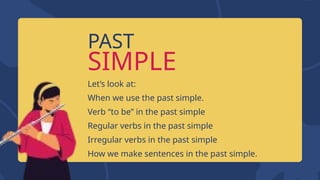
Let’s look at:
When we use the past simple.
Verb “to be” in the past simple
Regular verbs in the past simple
Irregular verbs in the past simple
How we make sentences in the past simple.
FUNCTION: WHEN DO WE USE THE
past simple?
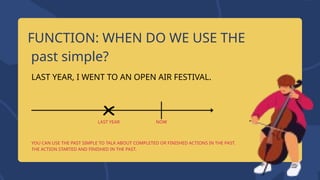
LAST YEAR, I WENT TO AN OPEN AIR FESTIVAL.
YOU CAN USE THE PAST SIMPLE TO TALK ABOUT COMPLETED OR FINISHED ACTIONS IN THE PAST.
THE ACTION STARTED AND FINISHED IN THE PAST.
NOW
LAST YEAR
FUNCTION: WHEN DO WE USE THE
past simple?
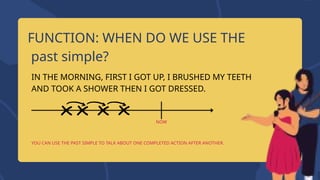
IN THE MORNING, FIRST I GOT UP, I BRUSHED MY TEETH
AND TOOK A SHOWER THEN I GOT DRESSED.
YOU CAN USE THE PAST SIMPLE TO TALK ABOUT ONE COMPLETED ACTION AFTER ANOTHER.
NOW
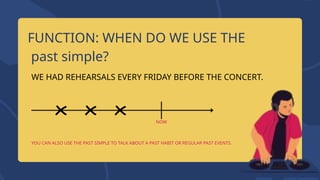
WE HAD REHEARSALS EVERY FRIDAY BEFORE THE CONCERT.
FUNCTION: WHEN DO WE USE THE
past simple?
NOW
YOU CAN ALSO USE THE PAST SIMPLE TO TALK ABOUT A PAST HABIT OR REGULAR PAST EVENTS.
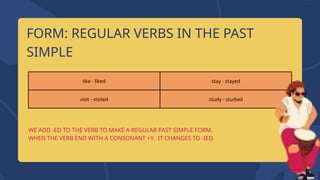
FORM: REGULAR VERBS IN THE PAST
SIMPLE
WE ADD -ED TO THE VERB TO MAKE A REGULAR PAST SIMPLE FORM.
WHEN THE VERB END WITH A CONSONANT +Y, IT CHANGES TO -IED.
like - liked stay - stayed
visit - visited study - studied
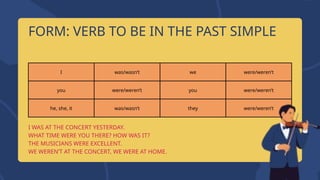
I was/wasn’t we were/weren’t
you were/weren’t you were/weren’t
he, she, it was/wasn’t they were/weren’t
I WAS AT THE CONCERT YESTERDAY.
WHAT TIME WERE YOU THERE? HOW WAS IT?
THE MUSICIANS WERE EXCELLENT.
WE WEREN’T AT THE CONCERT, WE WERE AT HOME.
FORM: VERB TO BE IN THE PAST SIMPLE
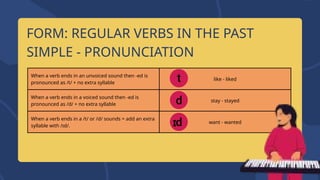
When a verb ends in an unvoiced sound then -ed is
pronounced as /t/ + no extra syllable
like - liked
When a verb ends in a voiced sound then -ed is
pronounced as /d/ + no extra syllable
stay - stayed
When a verb ends in a /t/ or /d/ sounds = add an extra
syllable with /ɪd/.
want - wanted
FORM: REGULAR VERBS IN THE PAST
SIMPLE - PRONUNCIATION
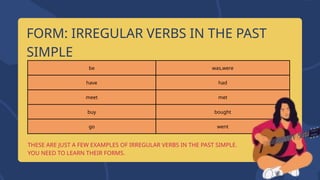
be was,were
have had
meet met
buy bought
go went
THESE ARE JUST A FEW EXAMPLES OF IRREGULAR VERBS IN THE PAST SIMPLE.
YOU NEED TO LEARN THEIR FORMS.
FORM: IRREGULAR VERBS IN THE PAST
SIMPLE
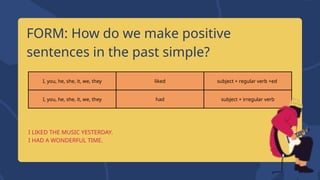
I, you, he, she, it, we, they liked subject + regular verb +ed
I, you, he, she, it, we, they had subject + irregular verb
FORM: How do we make positive
sentences in the past simple?
I LIKED THE MUSIC YESTERDAY.
I HAD A WONDERFUL TIME.
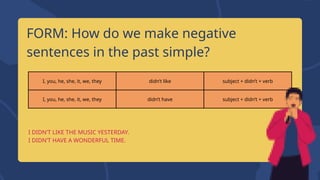
I, you, he, she, it, we, they didn’t like subject + didn’t + verb
I, you, he, she, it, we, they didn’t have subject + didn’t + verb
FORM: How do we make negative
sentences in the past simple?
I DIDN’T LIKE THE MUSIC YESTERDAY.
I DIDN’T HAVE A WONDERFUL TIME.
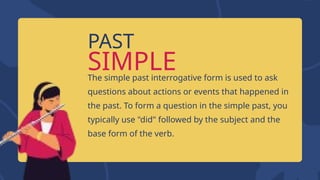
SIMPLE
PAST
The simple past interrogative form is used to ask
questions about actions or events that happened in
the past. To form a question in the simple past, you
typically use "did" followed by the subject and the
base form of the verb.
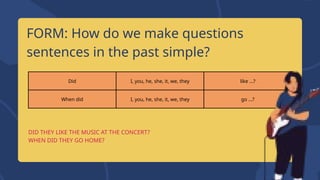
Did I, you, he, she, it, we, they like ...?
When did I, you, he, she, it, we, they go ...?
FORM: How do we make questions
sentences in the past simple?
DID THEY LIKE THE MUSIC AT THE CONCERT?
WHEN DID THEY GO HOME?
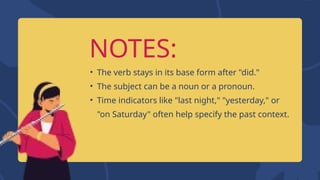
NOTES:
• The verb stays in its base form after "did."
• The subject can be a noun or a pronoun.
• Time indicators like "last night," "yesterday," or
"on Saturday" often help specify the past context.

Past Simple Interrogative Middle School.

  • 1.
  • 2.
    SIMPLE PAST Let’s look at: Whenwe use the past simple. Verb “to be” in the past simple Regular verbs in the past simple Irregular verbs in the past simple How we make sentences in the past simple.
  • 3.
    FUNCTION: WHEN DOWE USE THE past simple? LAST YEAR, I WENT TO AN OPEN AIR FESTIVAL. YOU CAN USE THE PAST SIMPLE TO TALK ABOUT COMPLETED OR FINISHED ACTIONS IN THE PAST. THE ACTION STARTED AND FINISHED IN THE PAST. NOW LAST YEAR
  • 4.
    FUNCTION: WHEN DOWE USE THE past simple? IN THE MORNING, FIRST I GOT UP, I BRUSHED MY TEETH AND TOOK A SHOWER THEN I GOT DRESSED. YOU CAN USE THE PAST SIMPLE TO TALK ABOUT ONE COMPLETED ACTION AFTER ANOTHER. NOW
  • 5.
    WE HAD REHEARSALSEVERY FRIDAY BEFORE THE CONCERT. FUNCTION: WHEN DO WE USE THE past simple? NOW YOU CAN ALSO USE THE PAST SIMPLE TO TALK ABOUT A PAST HABIT OR REGULAR PAST EVENTS.
  • 6.
    FORM: REGULAR VERBSIN THE PAST SIMPLE WE ADD -ED TO THE VERB TO MAKE A REGULAR PAST SIMPLE FORM. WHEN THE VERB END WITH A CONSONANT +Y, IT CHANGES TO -IED. like - liked stay - stayed visit - visited study - studied
  • 7.
    I was/wasn’t wewere/weren’t you were/weren’t you were/weren’t he, she, it was/wasn’t they were/weren’t I WAS AT THE CONCERT YESTERDAY. WHAT TIME WERE YOU THERE? HOW WAS IT? THE MUSICIANS WERE EXCELLENT. WE WEREN’T AT THE CONCERT, WE WERE AT HOME. FORM: VERB TO BE IN THE PAST SIMPLE
  • 8.
    When a verbends in an unvoiced sound then -ed is pronounced as /t/ + no extra syllable like - liked When a verb ends in a voiced sound then -ed is pronounced as /d/ + no extra syllable stay - stayed When a verb ends in a /t/ or /d/ sounds = add an extra syllable with /ɪd/. want - wanted FORM: REGULAR VERBS IN THE PAST SIMPLE - PRONUNCIATION
  • 9.
    be was,were have had meetmet buy bought go went THESE ARE JUST A FEW EXAMPLES OF IRREGULAR VERBS IN THE PAST SIMPLE. YOU NEED TO LEARN THEIR FORMS. FORM: IRREGULAR VERBS IN THE PAST SIMPLE
  • 10.
    I, you, he,she, it, we, they liked subject + regular verb +ed I, you, he, she, it, we, they had subject + irregular verb FORM: How do we make positive sentences in the past simple? I LIKED THE MUSIC YESTERDAY. I HAD A WONDERFUL TIME.
  • 11.
    I, you, he,she, it, we, they didn’t like subject + didn’t + verb I, you, he, she, it, we, they didn’t have subject + didn’t + verb FORM: How do we make negative sentences in the past simple? I DIDN’T LIKE THE MUSIC YESTERDAY. I DIDN’T HAVE A WONDERFUL TIME.
  • 12.
    SIMPLE PAST The simple pastinterrogative form is used to ask questions about actions or events that happened in the past. To form a question in the simple past, you typically use "did" followed by the subject and the base form of the verb.
  • 13.
    Did I, you,he, she, it, we, they like ...? When did I, you, he, she, it, we, they go ...? FORM: How do we make questions sentences in the past simple? DID THEY LIKE THE MUSIC AT THE CONCERT? WHEN DID THEY GO HOME?
  • 14.
    NOTES: • The verbstays in its base form after "did." • The subject can be a noun or a pronoun. • Time indicators like "last night," "yesterday," or "on Saturday" often help specify the past context.