Paryatak Sahayatri 
Abhibandu Kafle 
Chandan Gupta Bhagat 
Sanjeev Kumar Pandit 
Sudha Bhandari
Which places should I Visit 
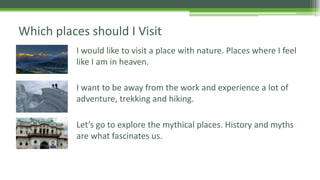
I would like to visit a place with nature. Places where I feel 
like I am in heaven. 
I want to be away from the work and experience a lot of 
adventure, trekking and hiking. 
Let’s go to explore the mythical places. History and myths 
are what fascinates us.
Solution 
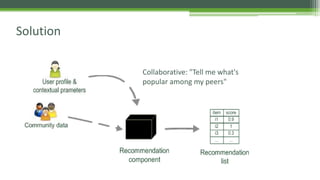
Collaborative: "Tell me what's 
popular among my peers"
Beginning 
• A recommender system 
• Suggests different places to the tourists 
• Uses the characteristics and history of the users/tourists
Purpose/Objectives 
• Self Agent 
• Information before visit 
• Explore hidden treasures/places of Nepal 
• Promote tourism
Challenges 
• List the intended outcomes for this training session. 
• Each objective should be concise, should contain a verb, and 
should have a measurable result. 
• Tip: Click and scroll in the notes pane below to see examples, 
or to add your own speaker notes.
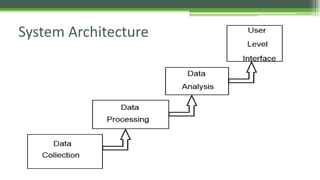
System Architecture
Methodology 
•Tools and Technologies Used 
• Algorithms
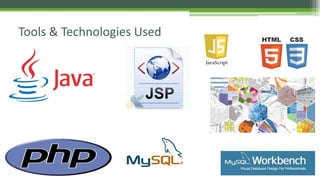
Tools & Technologies Used
Algorithm 
•Collaborative Filtering 
▫ Nearest-Neighbor 
▫ Association Rules 
▫ Matrix Factorization Model
Collaborative Filtering 
• Widely-used recommendation approach 
• Prediction the utility of items for a user 
▫ Matrix Factorization Model 
▫ Association rules 
▫ Nearest-Neighbor
Nearest-Neighbor 
• Memory-based approach 
• Utilizes the entire user-item 
• Approach includes 
▫ User-based methods 
▫ Item-based methods
Association rules 
• Each transaction for association rule mining is the set of 
items bought by a particular user. 
•We can find item association rules, e.g., 
visit_X, visit_Y -> visit_Z
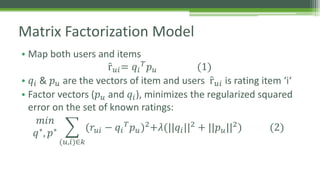
Matrix Factorization Model 
• Map both users and items 
ȓ푢푖= 푞푖 
푇푝푢 (1) 
• 푞푖 & 푝푢 are the vectors of item and users ȓ푢푖 is rating item ‘i‘ 
• Factor vectors (푝푢 and 푞푖 ), minimizes the regularized squared 
error on the set of known ratings: 
푚푖푛 
푞∗, 푝∗ 
(푢,푖)∈푘 
(푟푢푖 − 푞푖 
푇푝푢)2+휆(||푞푖 ||2 + ||푝푢||2) (2)
Implementation 
• Data Collection 
• Implementing Recommendation 
• Stakeholder Analysis 
• Market For Recommendation System
Data Collection 
• Source: 
▫ Nepal Tourism Board 
▫ Ministry of Tourism, Culture and Civil Aviation
Implementing Recommendation 
• New Users 
▫ Those who haven’t visited any place in Nepal 
▫ Based on their characteristics: Nationality, Age Group & 
Gender 
• Existing Users 
▫ Those who have already visited some places in Nepal 
▫ Based on their history of visiting places
Stakeholder Analysis 
• Identifying all the stakeholders 
• Prioritizing Stakeholders 
• Understanding Stakeholders 
• Stakeholders Involvement
Market For Recommendation System 
• Establish/Maintain the communication with the 
customers/users 
• Business Model
Limitations 
• Time to process recommendation is comparatively high 
• Focused only on foreign tourists 
• Lack of complete information about the places
Future Enhancements 
• Make the service for Nepalese 
• Faster data processing 
• Complete information about every tourist place in 
Nepal 
• Tourist service recommendation 
• Path to the destination
Future Enhancements contd.. 
• User generated content and social networking services 
•Multiple days tour planning 
• Intelligent UI
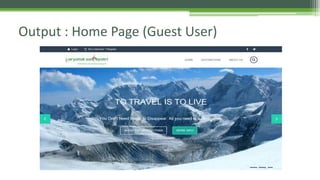
Output : Home Page (Guest User)
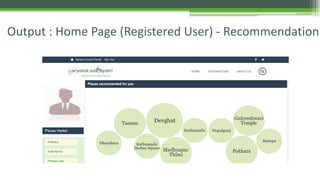
Output : Home Page (Registered User) - Recommendation
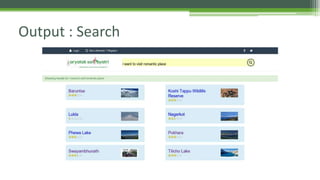
Output : Search
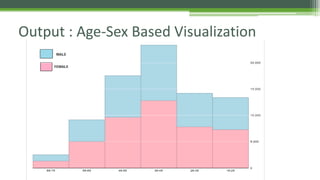
Output : Age-Sex Based Visualization
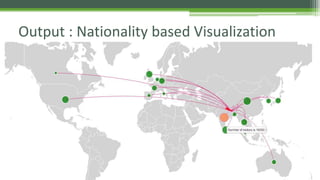
Output : Nationality based Visualization
Parytak sahayatri

Parytak sahayatri

  • 1.
    Paryatak Sahayatri AbhibanduKafle Chandan Gupta Bhagat Sanjeev Kumar Pandit Sudha Bhandari
  • 2.
    Which places shouldI Visit I would like to visit a place with nature. Places where I feel like I am in heaven. I want to be away from the work and experience a lot of adventure, trekking and hiking. Let’s go to explore the mythical places. History and myths are what fascinates us.
  • 3.
    Solution Collaborative: "Tellme what's popular among my peers"
  • 4.
    Beginning • Arecommender system • Suggests different places to the tourists • Uses the characteristics and history of the users/tourists
  • 5.
    Purpose/Objectives • SelfAgent • Information before visit • Explore hidden treasures/places of Nepal • Promote tourism
  • 6.
    Challenges • Listthe intended outcomes for this training session. • Each objective should be concise, should contain a verb, and should have a measurable result. • Tip: Click and scroll in the notes pane below to see examples, or to add your own speaker notes.
  • 7.
  • 8.
    Methodology •Tools andTechnologies Used • Algorithms
  • 9.
  • 10.
    Algorithm •Collaborative Filtering ▫ Nearest-Neighbor ▫ Association Rules ▫ Matrix Factorization Model
  • 11.
    Collaborative Filtering •Widely-used recommendation approach • Prediction the utility of items for a user ▫ Matrix Factorization Model ▫ Association rules ▫ Nearest-Neighbor
  • 12.
    Nearest-Neighbor • Memory-basedapproach • Utilizes the entire user-item • Approach includes ▫ User-based methods ▫ Item-based methods
  • 13.
    Association rules •Each transaction for association rule mining is the set of items bought by a particular user. •We can find item association rules, e.g., visit_X, visit_Y -> visit_Z
  • 14.
    Matrix Factorization Model • Map both users and items ȓ푢푖= 푞푖 푇푝푢 (1) • 푞푖 & 푝푢 are the vectors of item and users ȓ푢푖 is rating item ‘i‘ • Factor vectors (푝푢 and 푞푖 ), minimizes the regularized squared error on the set of known ratings: 푚푖푛 푞∗, 푝∗ (푢,푖)∈푘 (푟푢푖 − 푞푖 푇푝푢)2+휆(||푞푖 ||2 + ||푝푢||2) (2)
  • 15.
    Implementation • DataCollection • Implementing Recommendation • Stakeholder Analysis • Market For Recommendation System
  • 16.
    Data Collection •Source: ▫ Nepal Tourism Board ▫ Ministry of Tourism, Culture and Civil Aviation
  • 17.
    Implementing Recommendation •New Users ▫ Those who haven’t visited any place in Nepal ▫ Based on their characteristics: Nationality, Age Group & Gender • Existing Users ▫ Those who have already visited some places in Nepal ▫ Based on their history of visiting places
  • 18.
    Stakeholder Analysis •Identifying all the stakeholders • Prioritizing Stakeholders • Understanding Stakeholders • Stakeholders Involvement
  • 19.
    Market For RecommendationSystem • Establish/Maintain the communication with the customers/users • Business Model
  • 20.
    Limitations • Timeto process recommendation is comparatively high • Focused only on foreign tourists • Lack of complete information about the places
  • 21.
    Future Enhancements •Make the service for Nepalese • Faster data processing • Complete information about every tourist place in Nepal • Tourist service recommendation • Path to the destination
  • 22.
    Future Enhancements contd.. • User generated content and social networking services •Multiple days tour planning • Intelligent UI
  • 23.
    Output : HomePage (Guest User)
  • 24.
    Output : HomePage (Registered User) - Recommendation
  • 25.
  • 26.
    Output : Age-SexBased Visualization
  • 27.
    Output : Nationalitybased Visualization

Editor's Notes

  • #4 How presentation will benefit audience: Adult learners are more interested in a subject if they know how or why it is important to them. Presenter’s level of expertise in the subject: Briefly state your credentials in this area, or explain why participants should listen to you.
  • #6 Self Agent:- Help the tourist to get the information about the place by themselves Information before visit:- Tourist can find the way to plan the trip Promote Tourism:- Help to promote the tourism industry in Nepal
  • #7 Example objectives At the end of this lesson, you will be able to: Save files to the team Web server. Move files to different locations on the team Web server. Share files on the team Web server.
  • #10 JAVA for class building to make it object oriented system JSP for web page presentation PHP for visualization MySQL for database processing MySQL Workbench for database designing JavaScript for client side verification purpose CSS for designing D3 for graphical presentation
  • #11 predicts the utility of items for a user based on the items previously rated by other like-minded users.
  • #12 predicts the utility of items for a user based on the items previously rated by other like-minded users.
  • #13 utilizes the entire user-item database to generate predictions directly, i.e., there is no model building.
  • #14 Lesson descriptions should be brief.
  • #15 Lesson descriptions should be brief.
  • #20 Brokerage, Advertise, Infomediary, Manufacture, Affiliate, Community, Subscription, Utility