Course- 1.1.2-1st half (Unit 1)
Unit: Educational provision in the
Constitution of India
• The Directive Principles of State Policy of India are
the guidelines or 15 principles given to the federal
institutes governing the State of India, to be kept
in citation while framing laws and policies.
• These provisions, contained in Part IV of the
Constitution of India, are not enforceable by any
court, but the principles laid down there in are
considered in the governance of the country,
making it the duty of the State to apply these
principles in making laws to establish a just society
in the country.
• The principles have been inspired by the Directive
Principles given in the Constitution of Ireland
which are related to social justice, economic
welfare, foreign policy, and legal and
administrative matters.
Socialistic Principles
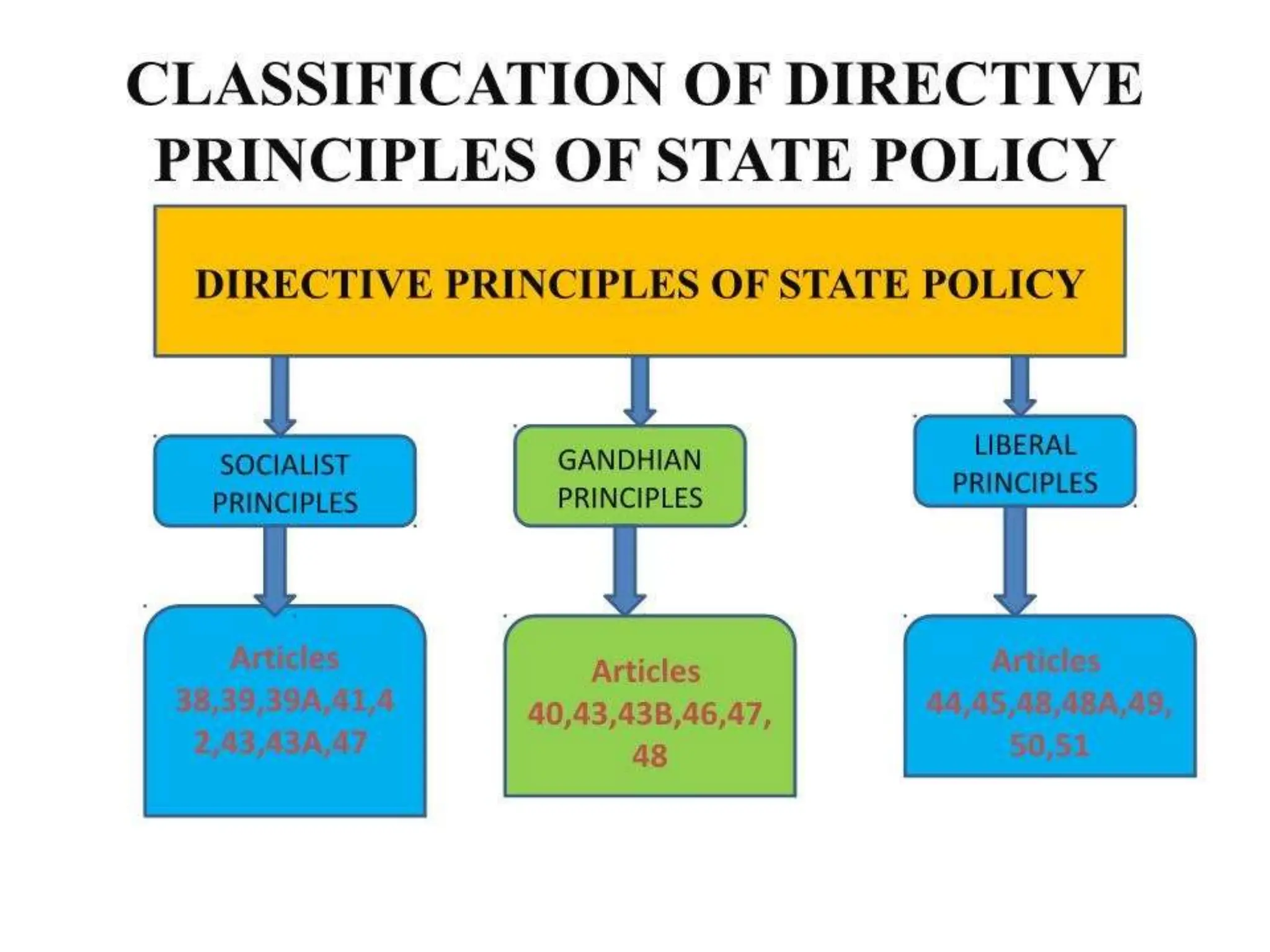
 These types of Directive principles of State Policy
reflect the ideology of socialism
 They aim at providing social and economic justice,
and set the path towards welfare state.
 Article 38 promote the welfare of the people by
i. Securing a social order by justice- social,
economic and political
ii. Minimizing inequalities in income, status, facilities
and opportunities
Socialistic Principles
 Article 39 secure
i. Adequate means of livelihood for all citizen
ii. Equitable distribution of resources for the
common good
iii. Prevention of concentration of wealth and
means of production
iv. Equal pay for equal work
v. Preservation of the health and strength of
workers and children against forcible abuse
Socialistic Principles
 Article 39A
The State shall provide free legal aid to ensure that equal
opportunities for securing justice is ensured to all, and is not denied
by reason of economic or other disabilities.
 Article 41
The State shall endeavour to provide the right to work, to
education and to public assistance in cases of unemployment, old
age, sickness and disablement, within the limits of economic
capacity.
 Article 42
The State shall provide for just and humane conditions of work
and maternity relief.
Socialistic Principles
 Article 43
The State should also ensure living wage and
proper working conditions for workers, with full
enjoyment of leisure and social and cultural activities.
Also, the promotion of cottage industries in rural areas is
one of the obligations of the State.
 Article 43A
The State shall take steps to promote their
participation in management of industrial undertakings.
Socialistic Principles
 Article 47
The directive principles commit the State to raise
the level of nutrition and the standard of living and to
improve public health, particularly by prohibiting
intoxicating drinks and drugs injurious to health except
for medicinal purposes.
Gandhian Principles
 Definition: These principles are based on Gandhian
ideology used to represent the programme of
reconstruction enunciated by Gandhi during the
national movement. Under various articles, they
direct the state to:
Gandhian Principles
 Article 40
Organise village panchayats and endow them
with necessary powers and authority to enable them to
function as units of self-government
 Article 43
Promote cottage industries on an individual or co-
operation basis in rural areas
Gandhian Principles
 Article 43B
Promote voluntary formation, autonomous
functioning, democratic control and professional
management of co-operative societies
 Article 46
Promote the educational and economic
interests of SCs, STs, and other weaker sections of the
society and to protect them from social injustice and
exploitation
Gandhian Principles
 Article 47
Prohibit the consumption of intoxicating drinks
and drugs which are injurious to health
 Article 48
Prohibit the slaughter of cows, calves and
other milch and draught cattle and to improve their
breeds
Liberal-Intellectual
Principles
 These principles reflect the ideology of liberalism.
Under various articles, they direct the state to:
 Article 44
Secure for all citizens a uniform civil
code throughout the country
Liberal-Intellectual
Principles
 Article 45
Provide early childhood care and education
for all children until they complete the age of six years.
 Article 48
Organise agriculture and animal husbandry on
modern and scientific lines
Liberal-Intellectual
Principles
 Article 48A
To protect and improve the environment and
to safeguard forests and wildlife
 Article 49
Protect monuments, places and objects of
artistic or historic interest which are declared to be of
national importance
 Article 50
Separate the judiciary from the executive in the
public services of the State
 Article 51
 Promote international peace and security and
maintain just and honourable relations between
nations
 Foster respect for international law and treaty
obligations
 Encourage settlement of international disputes by
arbitration

Part 4 of constitution - directive principles of state policy. How it is different from fundamental rights and other principles of constitution.

  • 1.
    Course- 1.1.2-1st half(Unit 1) Unit: Educational provision in the Constitution of India
  • 2.
    • The DirectivePrinciples of State Policy of India are the guidelines or 15 principles given to the federal institutes governing the State of India, to be kept in citation while framing laws and policies. • These provisions, contained in Part IV of the Constitution of India, are not enforceable by any court, but the principles laid down there in are considered in the governance of the country, making it the duty of the State to apply these principles in making laws to establish a just society in the country. • The principles have been inspired by the Directive Principles given in the Constitution of Ireland which are related to social justice, economic welfare, foreign policy, and legal and administrative matters.
  • 4.
    Socialistic Principles  Thesetypes of Directive principles of State Policy reflect the ideology of socialism  They aim at providing social and economic justice, and set the path towards welfare state.  Article 38 promote the welfare of the people by i. Securing a social order by justice- social, economic and political ii. Minimizing inequalities in income, status, facilities and opportunities
  • 5.
    Socialistic Principles  Article39 secure i. Adequate means of livelihood for all citizen ii. Equitable distribution of resources for the common good iii. Prevention of concentration of wealth and means of production iv. Equal pay for equal work v. Preservation of the health and strength of workers and children against forcible abuse
  • 6.
    Socialistic Principles  Article39A The State shall provide free legal aid to ensure that equal opportunities for securing justice is ensured to all, and is not denied by reason of economic or other disabilities.  Article 41 The State shall endeavour to provide the right to work, to education and to public assistance in cases of unemployment, old age, sickness and disablement, within the limits of economic capacity.  Article 42 The State shall provide for just and humane conditions of work and maternity relief.
  • 7.
    Socialistic Principles  Article43 The State should also ensure living wage and proper working conditions for workers, with full enjoyment of leisure and social and cultural activities. Also, the promotion of cottage industries in rural areas is one of the obligations of the State.  Article 43A The State shall take steps to promote their participation in management of industrial undertakings.
  • 8.
    Socialistic Principles  Article47 The directive principles commit the State to raise the level of nutrition and the standard of living and to improve public health, particularly by prohibiting intoxicating drinks and drugs injurious to health except for medicinal purposes.
  • 9.
    Gandhian Principles  Definition:These principles are based on Gandhian ideology used to represent the programme of reconstruction enunciated by Gandhi during the national movement. Under various articles, they direct the state to:
  • 10.
    Gandhian Principles  Article40 Organise village panchayats and endow them with necessary powers and authority to enable them to function as units of self-government  Article 43 Promote cottage industries on an individual or co- operation basis in rural areas
  • 11.
    Gandhian Principles  Article43B Promote voluntary formation, autonomous functioning, democratic control and professional management of co-operative societies  Article 46 Promote the educational and economic interests of SCs, STs, and other weaker sections of the society and to protect them from social injustice and exploitation
  • 12.
    Gandhian Principles  Article47 Prohibit the consumption of intoxicating drinks and drugs which are injurious to health  Article 48 Prohibit the slaughter of cows, calves and other milch and draught cattle and to improve their breeds
  • 13.
    Liberal-Intellectual Principles  These principlesreflect the ideology of liberalism. Under various articles, they direct the state to:  Article 44 Secure for all citizens a uniform civil code throughout the country
  • 14.
    Liberal-Intellectual Principles  Article 45 Provideearly childhood care and education for all children until they complete the age of six years.  Article 48 Organise agriculture and animal husbandry on modern and scientific lines
  • 15.
    Liberal-Intellectual Principles  Article 48A Toprotect and improve the environment and to safeguard forests and wildlife  Article 49 Protect monuments, places and objects of artistic or historic interest which are declared to be of national importance
  • 16.
     Article 50 Separatethe judiciary from the executive in the public services of the State  Article 51  Promote international peace and security and maintain just and honourable relations between nations  Foster respect for international law and treaty obligations  Encourage settlement of international disputes by arbitration