A MELTA & IATEFL BESIG

            Workshop


Copyright – What can we do?

          moderated by


       Helen Strong
            &
The BESIG Online Team (BOT)
Copyright – What can we do?


Matt Firth: A legal perspective

• Teacher of Legal English at the Universities of St. Gallen and Liechtenstein and at
  the Management Centre, Innsbruck
• EFL author
• Secretary of the European Legal English Teachers’ Association
Copyright – What can we do?


Key concepts

•   acknowledgment
•   permission
•   print distribution and digital distribution
•   fair use
•   profit and non-profit making use
•   de minimis
Copyright – What can we do?


Acknowledgement

Remember to credit your sources

Lyon-Jones, Sue, Copyright, Plagiarism, and Digital Literacy (internet) Available
from <http://www.teachingvillage.org/2012/04/10/copyright-plagiarism-and-digital-
literacy-by-sue-lyon-jones/> Accessed September 2012
Copyright – What can we do?


Permission

Extracts from: Sanderson, Paul (2000) Using Newspapers in the Classroom
Cambridge. Cambridge University Press

The importance of using newspapers in the classroom

Should I only use materials from today’s newspapers?

Although it would seem preferable to use the news of the day in newspaper-based
lessons, this is not always practical from the teacher’s point of view ...

... teachers have busy schedules, news can date quickly, and lessons take time to
prepare

NB You must ensure that you have the right to make multiple copies of the material
or seek the necessary permission from the copyright holder
Copyright – What can we do?


Fair use

1. The work that results from your use of the copyrighted materials needs to be
   transformative, i.e. substantially different from the original, and offer added value

1. The copyrighted work can’t be used in a way that is likely to deprive the original
   author of income, or any potential income they might earn from the copyrighted
   works

From: Lyon-Jones, Sue Copyright, Plagiarism, and Digital
Copyright – What can we do?


De minimis

de minimis |dā ˈminiˈmēs|
adjective

too trivial or minor to merit consideration, esp. in law

ORIGIN from Latin de minimis non curat lex ‘the law is not concerned with trivial
matters.

Oxford Dictionary of English
Copyright – What can we do?


Marjorie Rosenberg: An ELT author and teacher’s perspective

•   Author of business English materials (CUP, Pearson, Cengage Learning)
•   Author of methodology book (Delta Publishing)
•   Co-author of text book series for Austrian schools
•   Contributor to Business Spotlight, ETP, ELT Mag
Copyright – What can we do?


Cleve Miller: A digital publishing perspective

• Over 20 years’ experience in business English and ESP, as a

    •   teacher
    •   teacher trainer
    •   consultant
    •   school owner

• Founder of English360
Copyright – What can we do?


Jeremy Day: An ESP teacher’s perspective

• Series Editor of Cambridge English for ...
• Author of business English and ESP teacher's books, including International
  Legal English and Dynamic Presentations.
• Co-author of Success Upper Intermediate (Pearson) & Active Grammar 3
  (Cambridge).
• Currently English360 editorial team manager
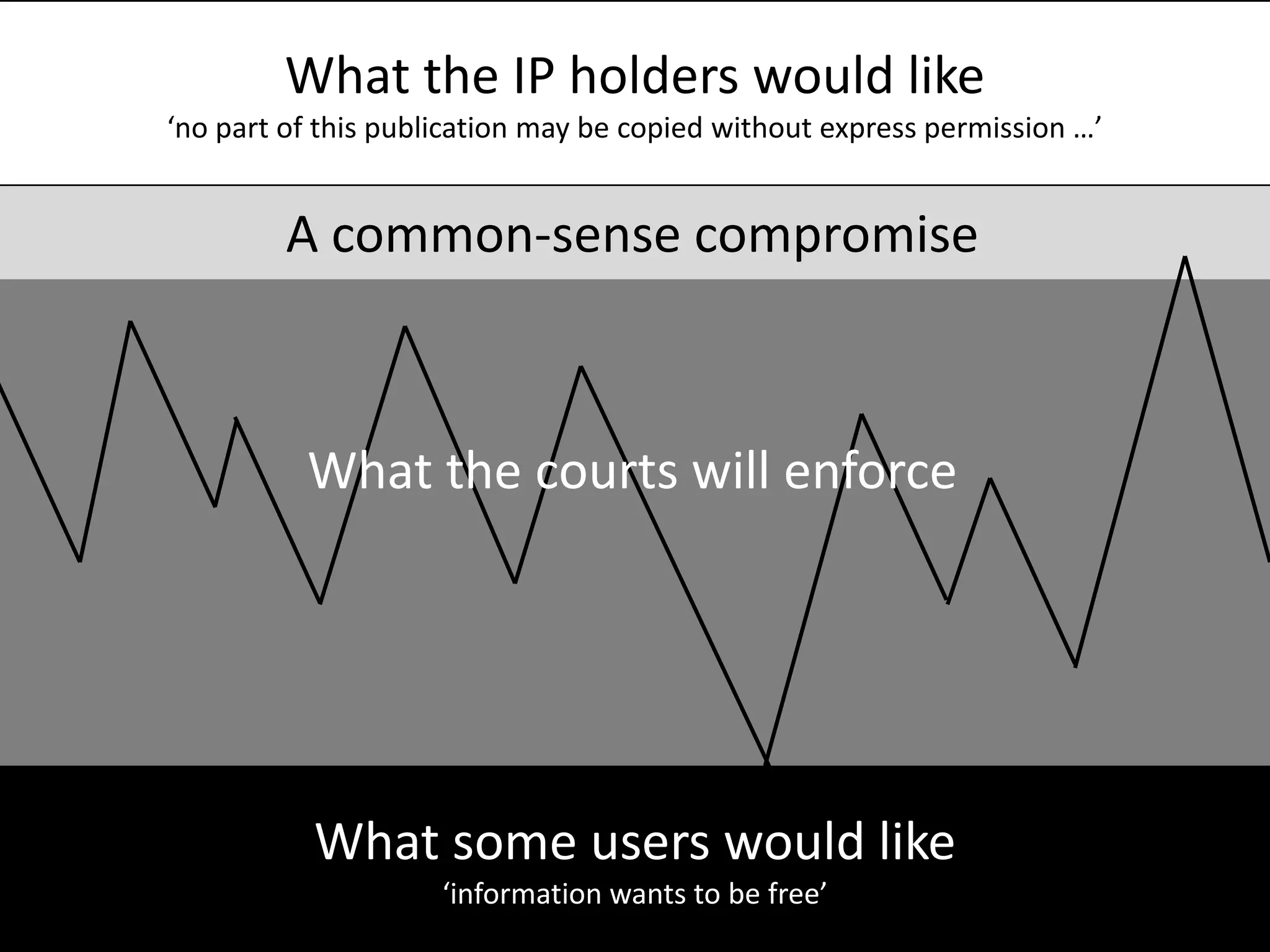
What the IP holders would like
‘no part of this publication may be copied without express permission …’


         A common-sense compromise


          What the courts will enforce


           What some users would like
                     ‘information wants to be free’
Copyright – What can we do?


     A common-sense approach
• Put yourself in the IP holder’s shoes
• Would they be delighted if they knew what
  you were doing? Would they be furious?
• Don’t undermine their income stream
• Don’t sell what’s not yours to sell
• Always acknowledge (links, etc.)
• Don’t support blatant breaches by others
• Remember the bigger picture
Copyright – What can we do?


Maja Sirola: A publisher’s perspective

• Editor at Business Spotlight
• EFL and Business English teacher in Croatia and Germany
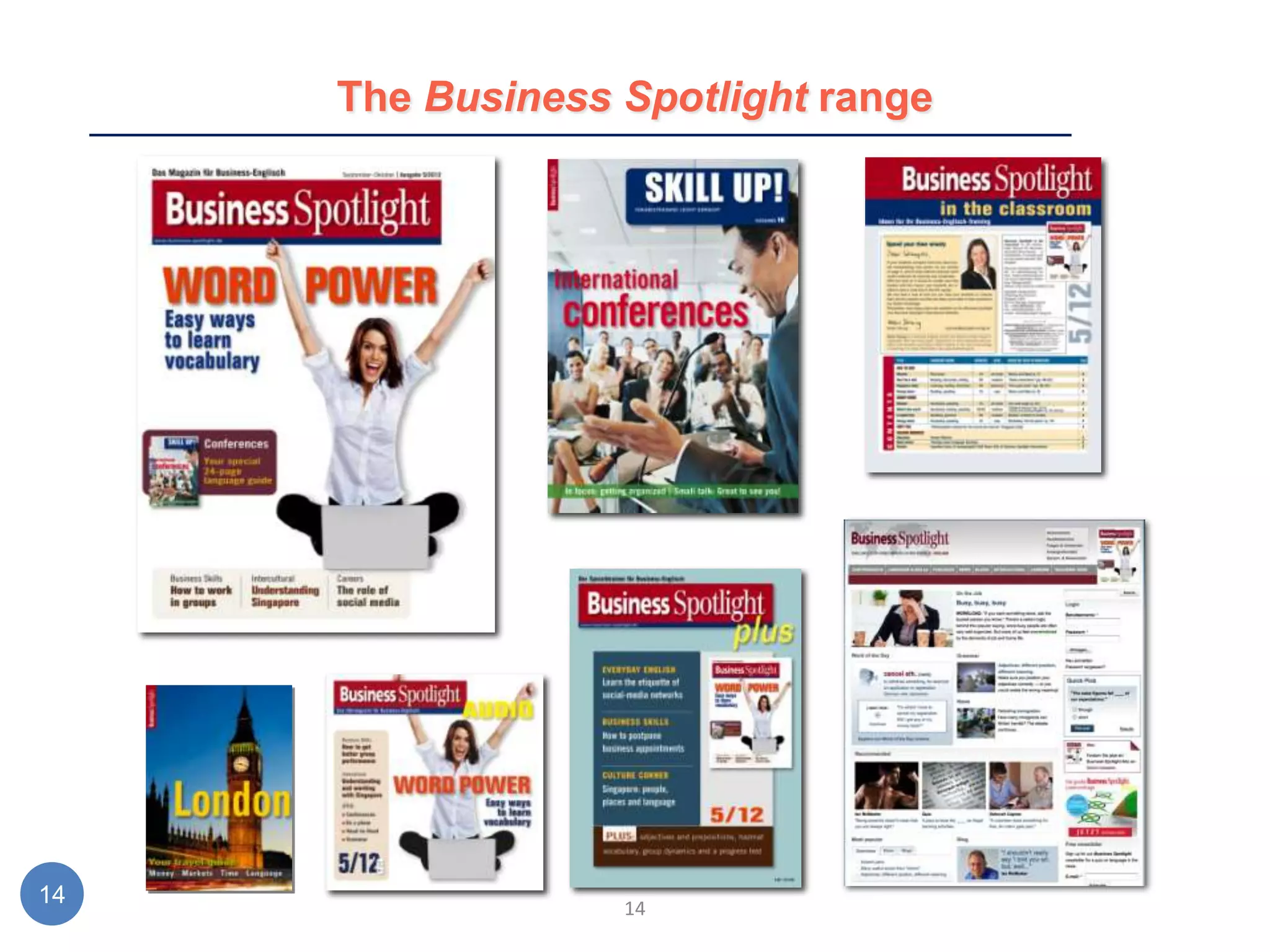
The Business Spotlight range


14                14
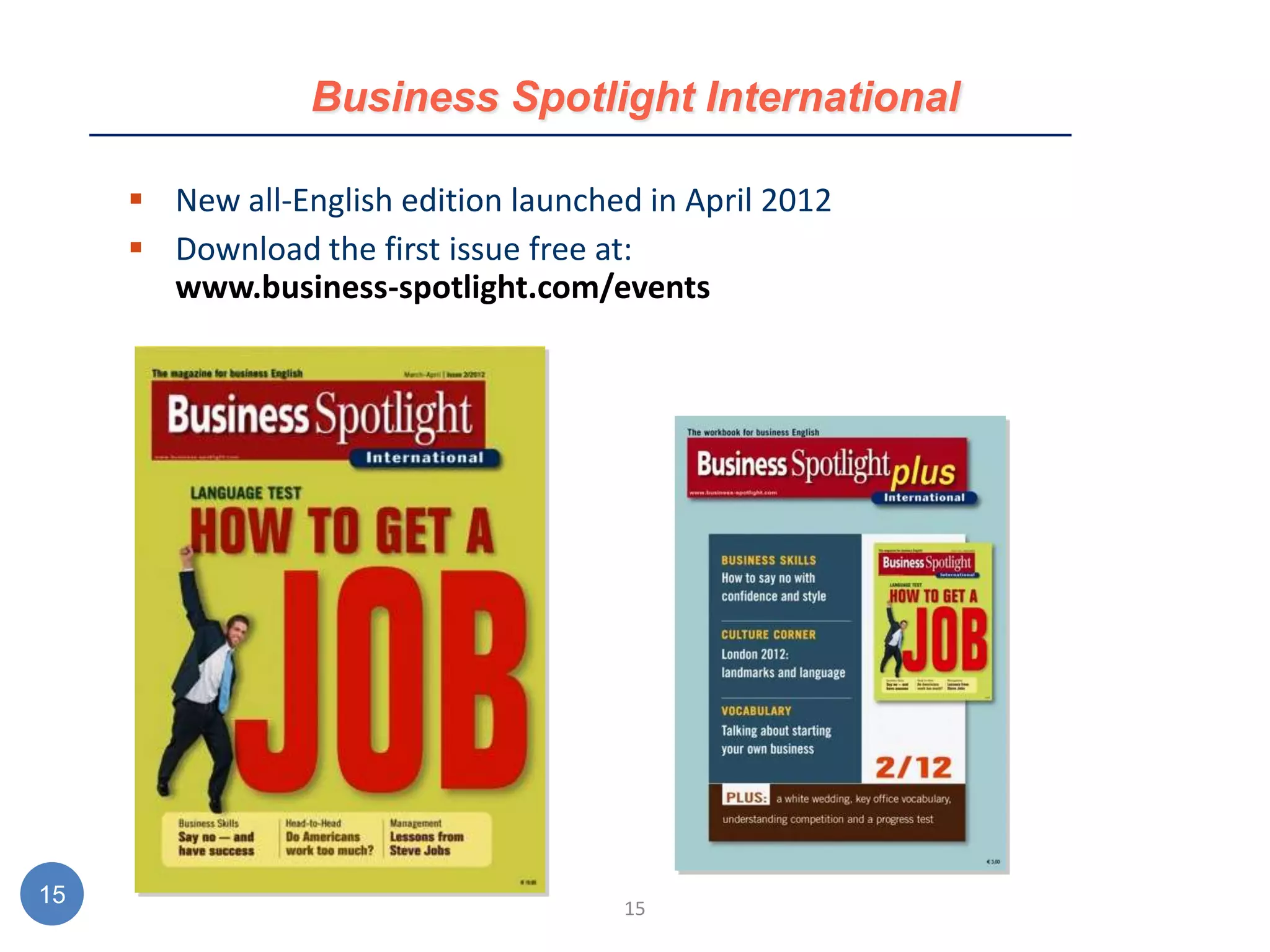
Business Spotlight International

      New all-English edition launched in April 2012
      Download the first issue free at:
       www.business-spotlight.com/events


15                                    15
Spotlight Verlag’s position on copyright


        Don’t breach it!

        Check the law: state education/schools or
         commercial institutions

        If we become aware of any breach of copyright, we
         reserve the right to take legal action

        We expect teachers to follow the law, but we also
         provide them with material


16                                16
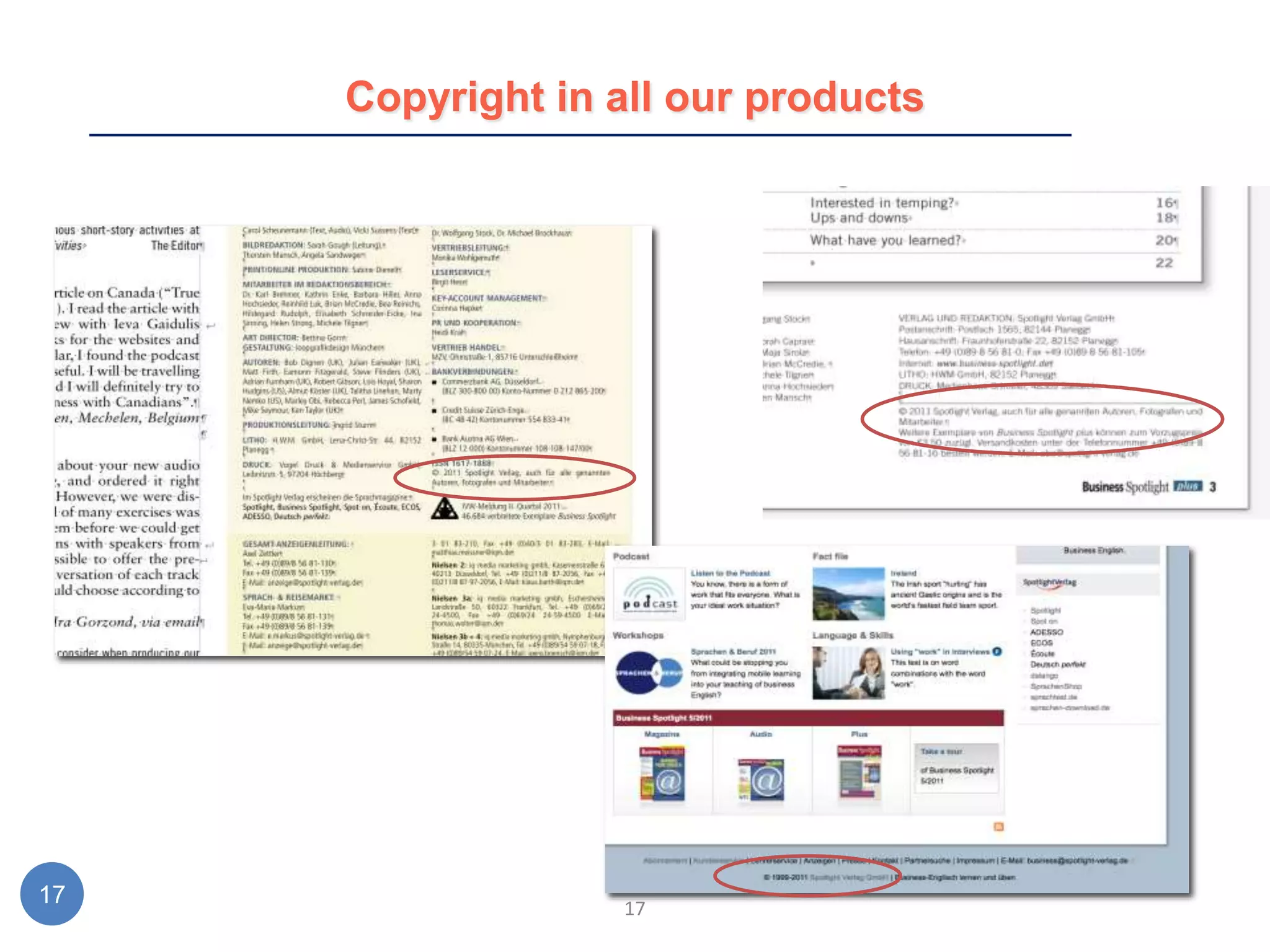
Copyright in all our products


17                17
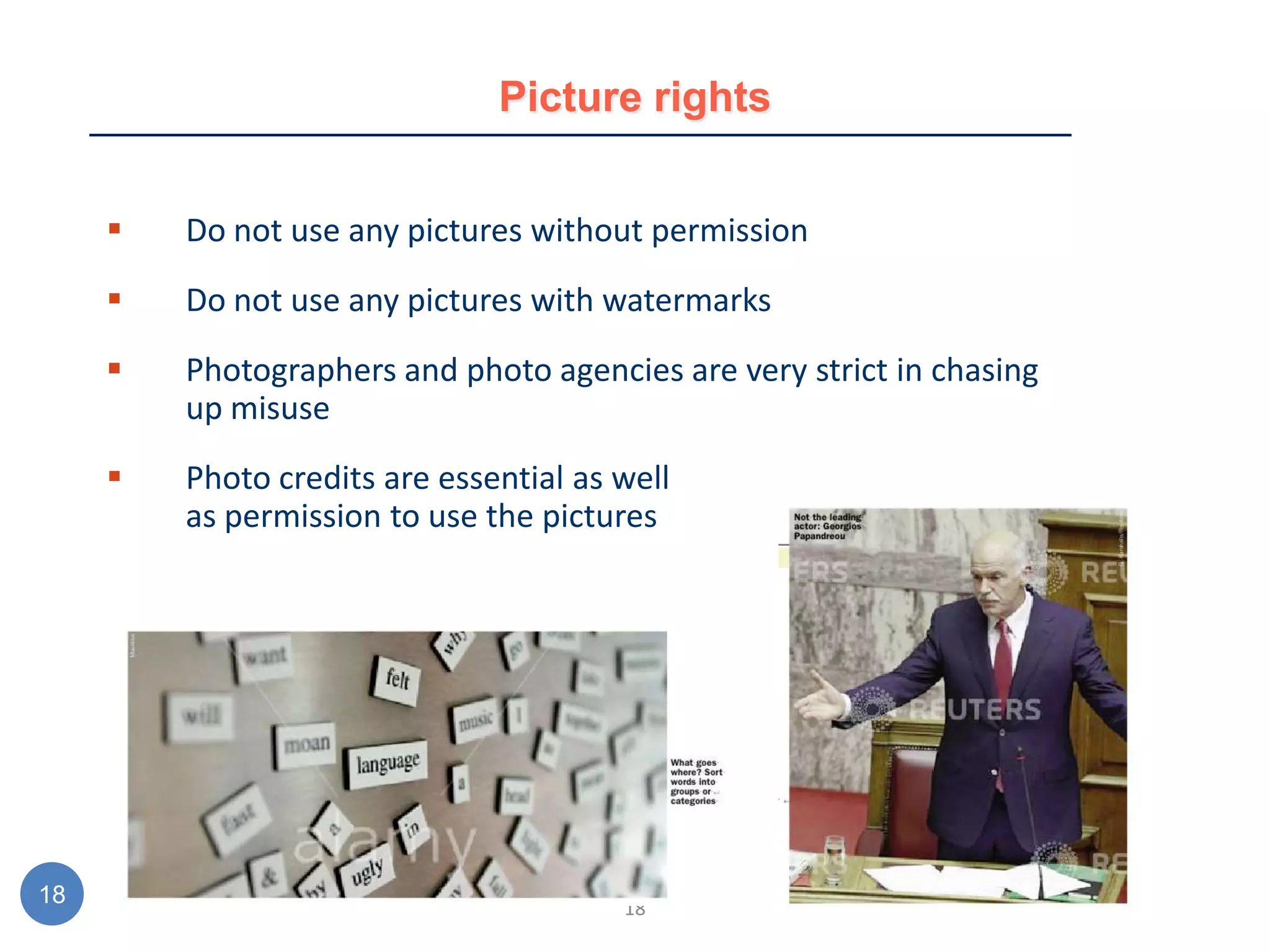
Picture rights


        Do not use any pictures without permission
        Do not use any pictures with watermarks
        Photographers and photo agencies are very strict in chasing
         up misuse
        Photo credits are essential as well
         as permission to use the pictures


18                                      18
What is allowed


     1. State school teachers may photocopy and use in the classroom:
         Up to 12% of a publication (max. 20 pages) may be
          photocopied for teaching purposes
         Always include the source:
          Business Spotlight, Issue 5/12, pages 12-16, www.business-
          spotlight.de

     2. Teachers or trainers at commercial language schools or company
        courses:
         may also photocopy, but for personal use only and not for
           distribution in the classroom.

     2. The content cannot be saved digitally and made public via emails
        or on websites. No digital distribution is allowed.

19                                      19
Copyright – What can we do?


Murdo MacPhail: A publisher’s perspective

• Murdo has worked for Cornelsen Publishing since 1997 and is currently
  responsible for EFL and the romance languages in the adult-education
  department.

Copyright - What can we do? (Part 1)

  • 1.
    A MELTA &IATEFL BESIG Workshop Copyright – What can we do? moderated by Helen Strong & The BESIG Online Team (BOT)
  • 2.
    Copyright – Whatcan we do? Matt Firth: A legal perspective • Teacher of Legal English at the Universities of St. Gallen and Liechtenstein and at the Management Centre, Innsbruck • EFL author • Secretary of the European Legal English Teachers’ Association
  • 3.
    Copyright – Whatcan we do? Key concepts • acknowledgment • permission • print distribution and digital distribution • fair use • profit and non-profit making use • de minimis
  • 4.
    Copyright – Whatcan we do? Acknowledgement Remember to credit your sources Lyon-Jones, Sue, Copyright, Plagiarism, and Digital Literacy (internet) Available from <http://www.teachingvillage.org/2012/04/10/copyright-plagiarism-and-digital- literacy-by-sue-lyon-jones/> Accessed September 2012
  • 5.
    Copyright – Whatcan we do? Permission Extracts from: Sanderson, Paul (2000) Using Newspapers in the Classroom Cambridge. Cambridge University Press The importance of using newspapers in the classroom Should I only use materials from today’s newspapers? Although it would seem preferable to use the news of the day in newspaper-based lessons, this is not always practical from the teacher’s point of view ... ... teachers have busy schedules, news can date quickly, and lessons take time to prepare NB You must ensure that you have the right to make multiple copies of the material or seek the necessary permission from the copyright holder
  • 6.
    Copyright – Whatcan we do? Fair use 1. The work that results from your use of the copyrighted materials needs to be transformative, i.e. substantially different from the original, and offer added value 1. The copyrighted work can’t be used in a way that is likely to deprive the original author of income, or any potential income they might earn from the copyrighted works From: Lyon-Jones, Sue Copyright, Plagiarism, and Digital
  • 7.
    Copyright – Whatcan we do? De minimis de minimis |dā ˈminiˈmēs| adjective too trivial or minor to merit consideration, esp. in law ORIGIN from Latin de minimis non curat lex ‘the law is not concerned with trivial matters. Oxford Dictionary of English
  • 8.
    Copyright – Whatcan we do? Marjorie Rosenberg: An ELT author and teacher’s perspective • Author of business English materials (CUP, Pearson, Cengage Learning) • Author of methodology book (Delta Publishing) • Co-author of text book series for Austrian schools • Contributor to Business Spotlight, ETP, ELT Mag
  • 9.
    Copyright – Whatcan we do? Cleve Miller: A digital publishing perspective • Over 20 years’ experience in business English and ESP, as a • teacher • teacher trainer • consultant • school owner • Founder of English360
  • 10.
    Copyright – Whatcan we do? Jeremy Day: An ESP teacher’s perspective • Series Editor of Cambridge English for ... • Author of business English and ESP teacher's books, including International Legal English and Dynamic Presentations. • Co-author of Success Upper Intermediate (Pearson) & Active Grammar 3 (Cambridge). • Currently English360 editorial team manager
  • 11.
    What the IPholders would like ‘no part of this publication may be copied without express permission …’ A common-sense compromise What the courts will enforce What some users would like ‘information wants to be free’
  • 12.
    Copyright – Whatcan we do? A common-sense approach • Put yourself in the IP holder’s shoes • Would they be delighted if they knew what you were doing? Would they be furious? • Don’t undermine their income stream • Don’t sell what’s not yours to sell • Always acknowledge (links, etc.) • Don’t support blatant breaches by others • Remember the bigger picture
  • 13.
    Copyright – Whatcan we do? Maja Sirola: A publisher’s perspective • Editor at Business Spotlight • EFL and Business English teacher in Croatia and Germany
  • 14.
  • 15.
    Business Spotlight International  New all-English edition launched in April 2012  Download the first issue free at: www.business-spotlight.com/events 15 15
  • 16.
    Spotlight Verlag’s positionon copyright  Don’t breach it!  Check the law: state education/schools or commercial institutions  If we become aware of any breach of copyright, we reserve the right to take legal action  We expect teachers to follow the law, but we also provide them with material 16 16
  • 17.
    Copyright in allour products 17 17
  • 18.
    Picture rights  Do not use any pictures without permission  Do not use any pictures with watermarks  Photographers and photo agencies are very strict in chasing up misuse  Photo credits are essential as well as permission to use the pictures 18 18
  • 19.
    What is allowed 1. State school teachers may photocopy and use in the classroom:  Up to 12% of a publication (max. 20 pages) may be photocopied for teaching purposes  Always include the source: Business Spotlight, Issue 5/12, pages 12-16, www.business- spotlight.de 2. Teachers or trainers at commercial language schools or company courses:  may also photocopy, but for personal use only and not for distribution in the classroom. 2. The content cannot be saved digitally and made public via emails or on websites. No digital distribution is allowed. 19 19
  • 20.
    Copyright – Whatcan we do? Murdo MacPhail: A publisher’s perspective • Murdo has worked for Cornelsen Publishing since 1997 and is currently responsible for EFL and the romance languages in the adult-education department.