A Twist on the Classic Mozart Effect:
Effect on Reading Comprehension and
Background Music Effects on Mathematical
Accuracy
Ashley Elise Maher
Colby-Sawyer College
Introduction
Listen to Mozart sonata (5 days)
 induce short-term spatial reasoning facilitation (paper folding task)
 music training of 3 year olds → long-term enhancement
nonverbal cognitive abilities
(Rauscher, Shaw, Levine, & Ky, 1996)
 Others did not find significance (Hui, 2006)
 Soft and calm music increased accuracy when completing math work
sheets (Hallam, Price, & Katsarou, 2002)
Hypotheses
 Hypothesis I: Listening to Mozart while completing a math worksheet
will increase accuracy
 Hypothesis II: Listening to Mozart before completing a reading
comprehension task will improve ability
Method
 Participants: 32 Students from a small liberal arts college in New
England (22 Female, 10 Male, Mage= 19.72 years, SDage= 1.170 years,
age range: 18-23 years)
 Convenient sample
 Random assignment to conditions
 Materials:
 Multiplication work sheet (100 problems)
 3 practice SAT reading comprehension excerpts and questions (8
questions total)
 Mozart’s Sonata for Two Pianos (in D Major, K. 448)
Method
 Procedure:
 3 minutes to work on Math work sheet (Silence or Mozart)
 Complete reading comprehension task in silence
 Design:
 Independent Sample t-test: Math accuracy
 Independent Sample t-test: Reading comprehension
Results
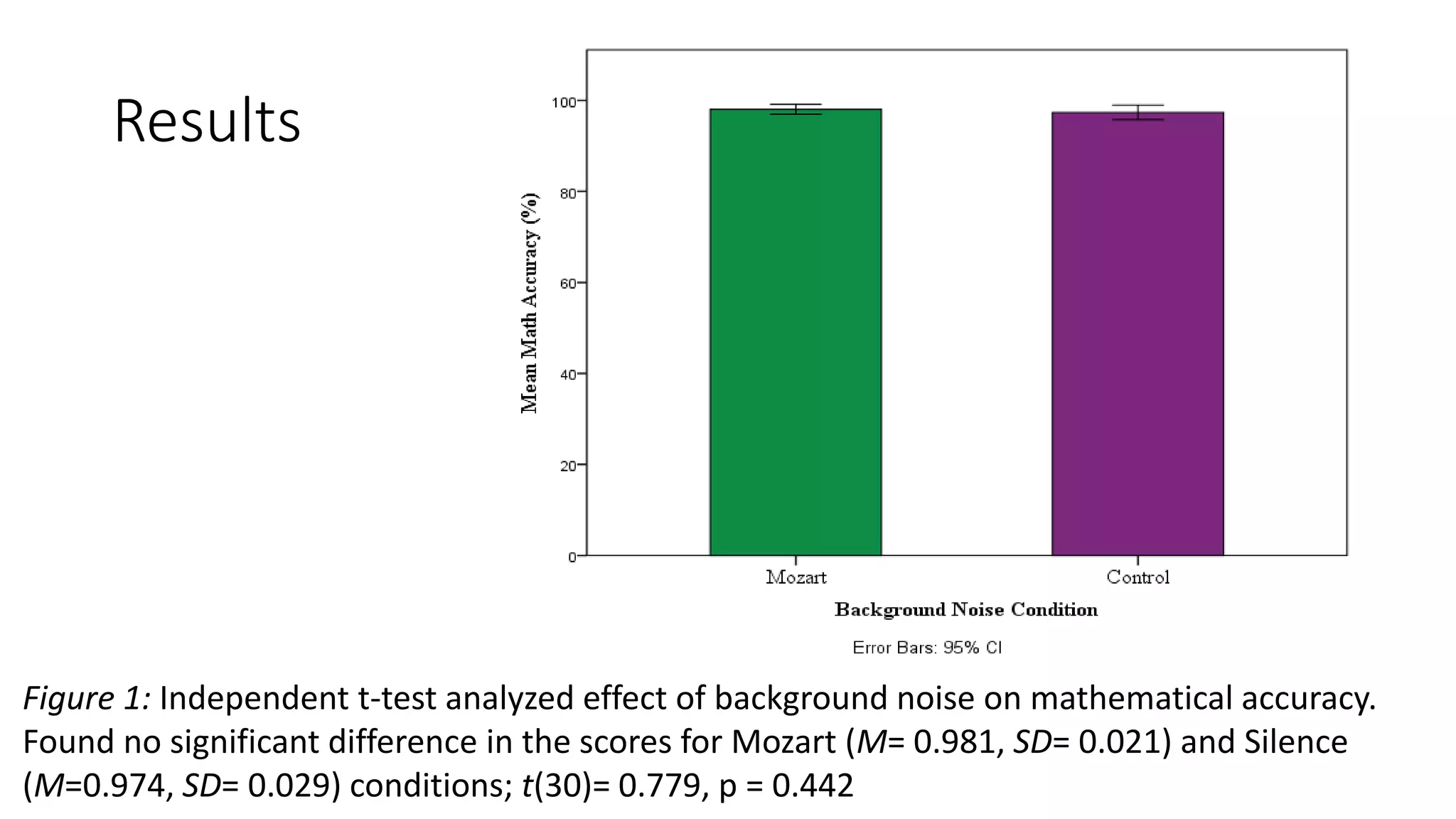
Figure 1: Independent t-test analyzed effect of background noise on mathematical accuracy.
Found no significant difference in the scores for Mozart (M= 0.981, SD= 0.021) and Silence
(M=0.974, SD= 0.029) conditions; t(30)= 0.779, p = 0.442
Results
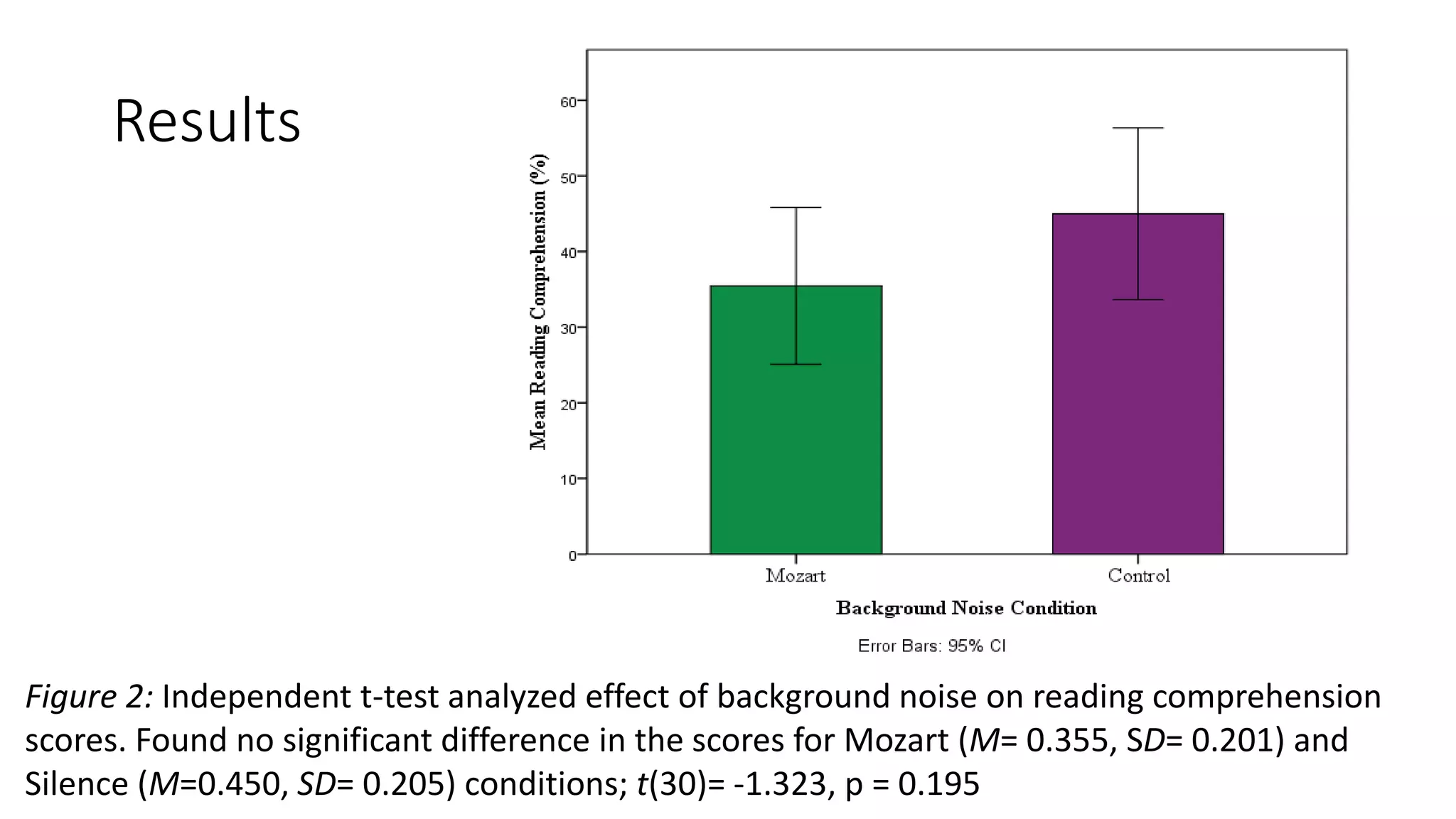
Figure 2: Independent t-test analyzed effect of background noise on reading comprehension
scores. Found no significant difference in the scores for Mozart (M= 0.355, SD= 0.201) and
Silence (M=0.450, SD= 0.205) conditions; t(30)= -1.323, p = 0.195
Discussion
Hypothesis I: Listening to Mozart while completing a math worksheet
will increase accuracy – Not Supported
Hypothesis II: Listening to Mozart before completing a reading
comprehension task will improve ability – Not Supported
Results were not significant (Hui, 2006)
Music condition preformed the same or worse than the Silent
condition (Oakes, & North, 2006)
Discussion
Limitations:
Homogeneous group
SAT questions too hard & math too easy – ceiling effect
 Strengths:
 Broadened spectrum for Mozart Effect
 Supported previous research (Hui, 2006)
Discussion
 Future Research
 More representative sample
 Exposure to Mozart over longer period of time
 Different age groups
References
Hallam, S., Price, J., & Katsarou, G. (2002). The effects of background music on
primary school pupils' task performance. Educational Studies, 28(2), 111-
122.
Hui, K. (2006). Mozart effect in preschool children? Early Child Development and
Care, 176(3-4), 411-419.
Rauscher, H. F., Shaw, L. G., Levine, J. L., & Ky, N. K. (1996) Music and spatial task
performance: A causal relationship [PDF document]. Retrieved from
http://files.eric.ed.gov/fulltext/ED390733.pdf. 1-25.
Oakes, S., & North, A. C. (2006). The impact of background musical tempo and
timbre congruity upon ad content recall and affective response. Applied
Cognitive Psychology, 20(4), 505-520.
Acknowledgements
Thank you to:
Capstone Advisor, Professor Garrioch
&
Professors of
Psychology, Religion, English, and Science

Paper Presentation (Final)

  • 1.
    A Twist onthe Classic Mozart Effect: Effect on Reading Comprehension and Background Music Effects on Mathematical Accuracy Ashley Elise Maher Colby-Sawyer College
  • 2.
    Introduction Listen to Mozartsonata (5 days)  induce short-term spatial reasoning facilitation (paper folding task)  music training of 3 year olds → long-term enhancement nonverbal cognitive abilities (Rauscher, Shaw, Levine, & Ky, 1996)  Others did not find significance (Hui, 2006)  Soft and calm music increased accuracy when completing math work sheets (Hallam, Price, & Katsarou, 2002)
  • 3.
    Hypotheses  Hypothesis I:Listening to Mozart while completing a math worksheet will increase accuracy  Hypothesis II: Listening to Mozart before completing a reading comprehension task will improve ability
  • 4.
    Method  Participants: 32Students from a small liberal arts college in New England (22 Female, 10 Male, Mage= 19.72 years, SDage= 1.170 years, age range: 18-23 years)  Convenient sample  Random assignment to conditions  Materials:  Multiplication work sheet (100 problems)  3 practice SAT reading comprehension excerpts and questions (8 questions total)  Mozart’s Sonata for Two Pianos (in D Major, K. 448)
  • 5.
    Method  Procedure:  3minutes to work on Math work sheet (Silence or Mozart)  Complete reading comprehension task in silence  Design:  Independent Sample t-test: Math accuracy  Independent Sample t-test: Reading comprehension
  • 6.
    Results Figure 1: Independentt-test analyzed effect of background noise on mathematical accuracy. Found no significant difference in the scores for Mozart (M= 0.981, SD= 0.021) and Silence (M=0.974, SD= 0.029) conditions; t(30)= 0.779, p = 0.442
  • 7.
    Results Figure 2: Independentt-test analyzed effect of background noise on reading comprehension scores. Found no significant difference in the scores for Mozart (M= 0.355, SD= 0.201) and Silence (M=0.450, SD= 0.205) conditions; t(30)= -1.323, p = 0.195
  • 8.
    Discussion Hypothesis I: Listeningto Mozart while completing a math worksheet will increase accuracy – Not Supported Hypothesis II: Listening to Mozart before completing a reading comprehension task will improve ability – Not Supported Results were not significant (Hui, 2006) Music condition preformed the same or worse than the Silent condition (Oakes, & North, 2006)
  • 9.
    Discussion Limitations: Homogeneous group SAT questionstoo hard & math too easy – ceiling effect  Strengths:  Broadened spectrum for Mozart Effect  Supported previous research (Hui, 2006)
  • 10.
    Discussion  Future Research More representative sample  Exposure to Mozart over longer period of time  Different age groups
  • 11.
    References Hallam, S., Price,J., & Katsarou, G. (2002). The effects of background music on primary school pupils' task performance. Educational Studies, 28(2), 111- 122. Hui, K. (2006). Mozart effect in preschool children? Early Child Development and Care, 176(3-4), 411-419. Rauscher, H. F., Shaw, L. G., Levine, J. L., & Ky, N. K. (1996) Music and spatial task performance: A causal relationship [PDF document]. Retrieved from http://files.eric.ed.gov/fulltext/ED390733.pdf. 1-25. Oakes, S., & North, A. C. (2006). The impact of background musical tempo and timbre congruity upon ad content recall and affective response. Applied Cognitive Psychology, 20(4), 505-520.
  • 12.
    Acknowledgements Thank you to: CapstoneAdvisor, Professor Garrioch & Professors of Psychology, Religion, English, and Science