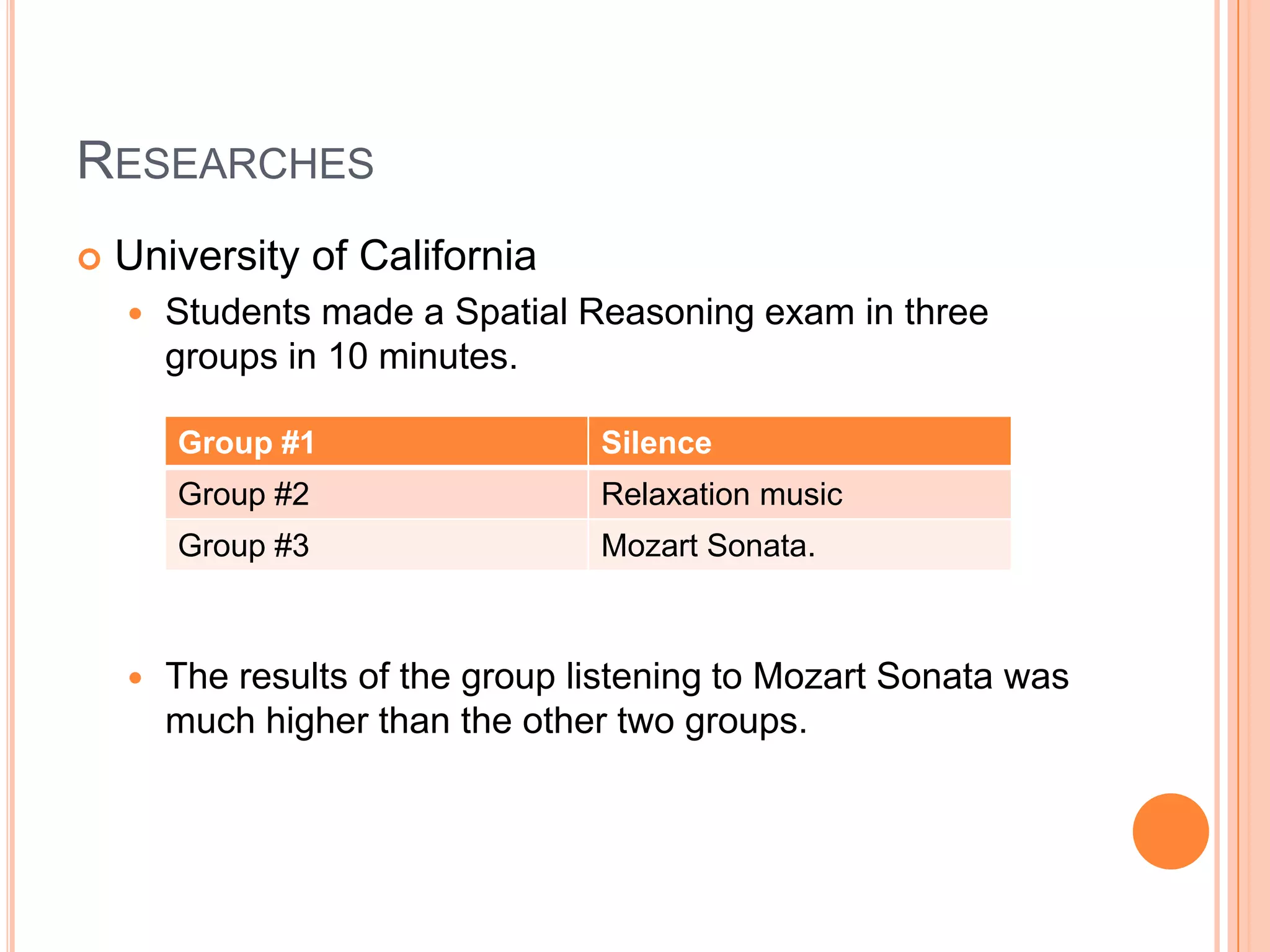
The Mozart effect hypothesizes that listening to Mozart's music may improve short-term spatial-temporal reasoning abilities. Early research at the University of California found students who listened to Mozart's sonata before a spatial reasoning exam performed better than students in silent or other music control groups. However, the effect is small and temporary, and does not necessarily mean classical music makes people smarter overall. Rather, it seems to produce a modest boost to specific spatial skills.