Palaearctic
region
Submitted by: Syed Usman Abdullah
Roll No: 2712 (148077)
Department: BS-Zoology
Semester: 6th (Evening)
Introduction
 The Palearctic or Palaearctic is one of
the eight biogeographic realms of the
Earth.
 It was first used in the 19th century,
and is still in use as the basis
for Zoogeographical region.
 The Palearctic is the largest of the
eight realms.
Extent:
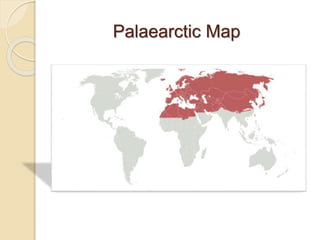
 It is the largest zoogeographical region
that includes;
◦ whole of Europe,
◦ northern part of Africa,
◦ northern China,
◦ U.S.S.R,
◦ Japan,
◦ Iran,
◦ Afghanistan and
◦ Baluchistan (western province of
Pakistan).
Palaearctic Map
Physical features
 Palaearctic region is bounded by sea to
the west, north, and east, and by the
Sahara and Himalayas to the south.
 The Palaearctic is therefore, in
continuous land connections with two of
its neigbours, the Ethiopian and
Oriental regions.
 From which it is separated by a desert
in the one case and a high mountain
range in the other.
 From its other neigbour, the nearctic, it
is cut off by sea.
Climate
 The climate is more or less
temperate.
 The region includes both wet forest
lands and dry open steppe lands, as
well as, large coniferous forests.
 Wide range of temperature, greater
fluctuation in the rainfall, greater
diversity of surface features are the
characteristics of the Palaearctic
region.
Zoological characteristics
Mammals:
 There are 28 families of land
mammals (excluding the numerous
bat families).
 This region does not have any large
spectacular mammals.
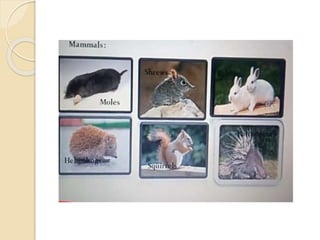
 There are moles, shrews, rabbits,
hedgehogs, porcupines, hyaenas,
camels, donkeys, sheeps, oxen,
deers, bears, cats and doges.
Unique families of mammals:
 The two families of mammals that are
unique to this region are both are
rodents, namely, and the
 Each family is represented by only one
genus.
 Spalax is a brownish yellow burrowing
rat with no tail.
 Selevinia is mainly remarkable
because it was discovered recently in
1938 in Kazhakstan.
Birds:
 There are 53 families of birds most of
which are migratory.
 All birds have wide distribution and are
shared with Nearctic, Oriental and
African regions.
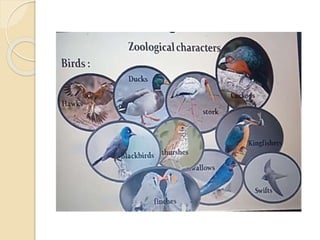
 Birds include hawks, ducks, stork,
cuckoos, kingfishers, swifts, swallows,
thrushes, blackbirds, finches, grebes,
loons etc.
 There are no parrots.
family of bird is
only restricted family of this region.
Reptiles:
 The reptilian fauna is characterized
by turtle, tortoises, few lizards and
snakes.
 There is an alligator in China.
 No family is confined to this region.
Amphibians:
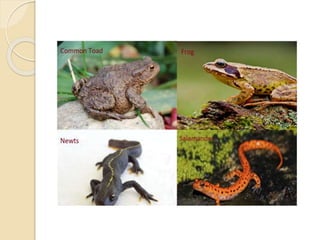
 Palaearctic is important from the point
of view that is has a large number of
tailed amphibians, the newts and
salamanders.
 Of the tailless amphibia, the common
toads and frogs are widespread.
 Few tree frogs of both the hylid and
polypedatid families.
Fishes:
 There are carps, salmon, pikes,
perches, eels and Petromyzon.
 Carp fish is the dominant family.
 There is no endemic fish family in
this region.
Thank You

Palaearctic region

  • 1.
    Palaearctic region Submitted by: SyedUsman Abdullah Roll No: 2712 (148077) Department: BS-Zoology Semester: 6th (Evening)
  • 2.
    Introduction  The Palearcticor Palaearctic is one of the eight biogeographic realms of the Earth.  It was first used in the 19th century, and is still in use as the basis for Zoogeographical region.  The Palearctic is the largest of the eight realms.
  • 3.
    Extent:  It isthe largest zoogeographical region that includes; ◦ whole of Europe, ◦ northern part of Africa, ◦ northern China, ◦ U.S.S.R, ◦ Japan, ◦ Iran, ◦ Afghanistan and ◦ Baluchistan (western province of Pakistan).
  • 4.
  • 5.
    Physical features  Palaearcticregion is bounded by sea to the west, north, and east, and by the Sahara and Himalayas to the south.  The Palaearctic is therefore, in continuous land connections with two of its neigbours, the Ethiopian and Oriental regions.  From which it is separated by a desert in the one case and a high mountain range in the other.  From its other neigbour, the nearctic, it is cut off by sea.
  • 6.
    Climate  The climateis more or less temperate.  The region includes both wet forest lands and dry open steppe lands, as well as, large coniferous forests.  Wide range of temperature, greater fluctuation in the rainfall, greater diversity of surface features are the characteristics of the Palaearctic region.
  • 7.
    Zoological characteristics Mammals:  Thereare 28 families of land mammals (excluding the numerous bat families).  This region does not have any large spectacular mammals.  There are moles, shrews, rabbits, hedgehogs, porcupines, hyaenas, camels, donkeys, sheeps, oxen, deers, bears, cats and doges.
  • 8.
    Unique families ofmammals:  The two families of mammals that are unique to this region are both are rodents, namely, and the  Each family is represented by only one genus.  Spalax is a brownish yellow burrowing rat with no tail.  Selevinia is mainly remarkable because it was discovered recently in 1938 in Kazhakstan.
  • 10.
    Birds:  There are53 families of birds most of which are migratory.  All birds have wide distribution and are shared with Nearctic, Oriental and African regions.  Birds include hawks, ducks, stork, cuckoos, kingfishers, swifts, swallows, thrushes, blackbirds, finches, grebes, loons etc.  There are no parrots. family of bird is only restricted family of this region.
  • 12.
    Reptiles:  The reptilianfauna is characterized by turtle, tortoises, few lizards and snakes.  There is an alligator in China.  No family is confined to this region.
  • 14.
    Amphibians:  Palaearctic isimportant from the point of view that is has a large number of tailed amphibians, the newts and salamanders.  Of the tailless amphibia, the common toads and frogs are widespread.  Few tree frogs of both the hylid and polypedatid families.
  • 16.
    Fishes:  There arecarps, salmon, pikes, perches, eels and Petromyzon.  Carp fish is the dominant family.  There is no endemic fish family in this region.
  • 18.