


{
Search
1. Summit your own site
2. Relevant keywords and tags
3. Semantic search-long tail keywords
4. UX ,mobile and Geolocation
5. Voice search and app indexing
6. Ultimate personal assistance
Evolution of search
 Keywords remain important
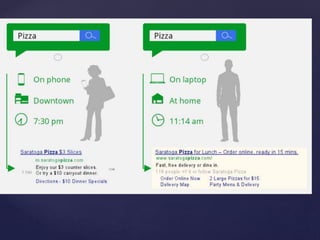
 Understand the searcher’s intent
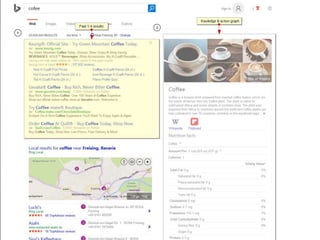
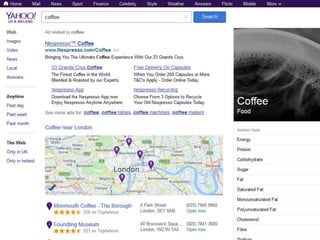
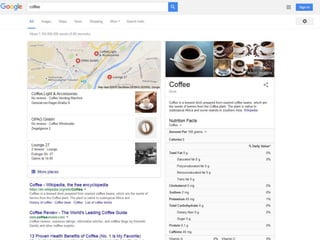
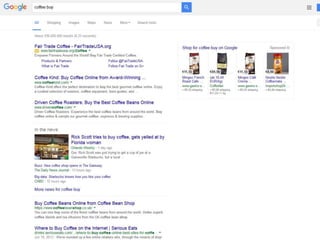
 For example, if someone typed in “coffee” do they mean:
 That they want to buy coffee beans?
 Find a local coffee shop?
 Buy or prepare a cup of coffee?
 Are they even talking about coffee or something entirely different like a
coffee making machine?
 Long-tail keywords:
 Search engines try guess because all it has to go on are the keywords
you enter into their engine.
 Semantic search will look at how those words relate to each other and
look for clues on how they were entered…location being crucial
Semantic search
vs
Time to start
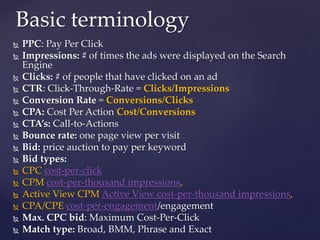
 PPC: Pay Per Click
 Impressions: # of times the ads were displayed on the Search
Engine
 Clicks: # of people that have clicked on an ad
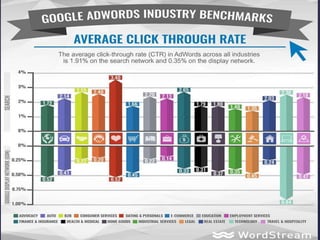
 CTR: Click-Through-Rate = Clicks/Impressions
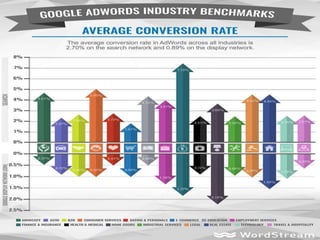
 Conversion Rate = Conversions/Clicks
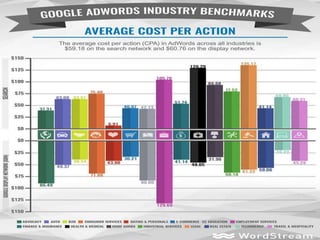
 CPA: Cost Per Action Cost/Conversions
 CTA’s: Call-to-Actions
 Bounce rate: one page view per visit
 Bid: price auction to pay per keyword
 Bid types:
 CPC cost-per-click
 CPM cost-per-thousand impressions,
 Active View CPM Active View cost-per-thousand impressions,
 CPA/CPE cost-per-engagement/engagement
 Max. CPC bid: Maximum Cost-Per-Click
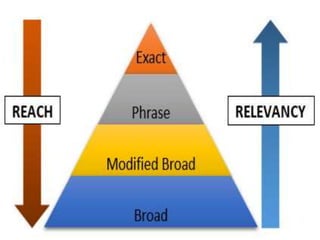
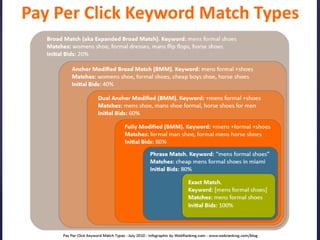
 Match type: Broad, BMM, Phrase and Exact
Basic terminology
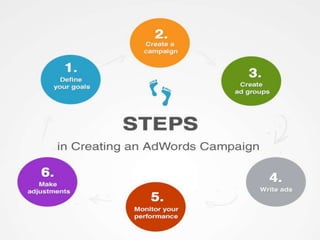
Set up your campaign
1. Who’s my target market?
2. What’s my offer?
3. What are my customers searching for?
4. What do I want out of my ad campaigns?
5. What do I want my customer to do?
6. How will I get my customer to take action?
7. What are my competitors doing?
8. What’s my budget?
9. What’s my time frame?
10. How am I going to measure my results?
10 questions you must ask
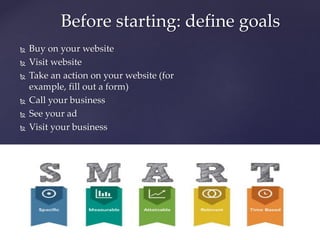
 Buy on your website
 Visit website
 Take an action on your website (for
example, fill out a form)
 Call your business
 See your ad
 Visit your business
Before starting: define goals
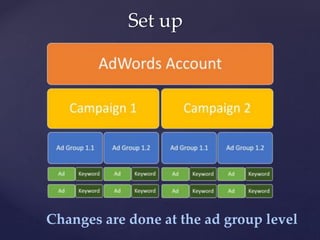
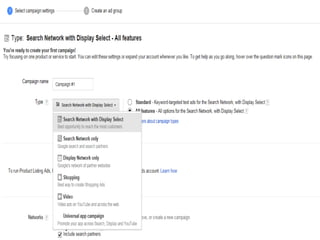
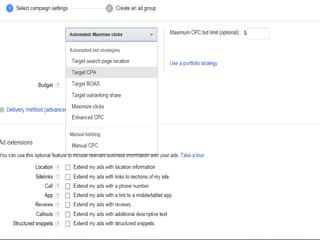
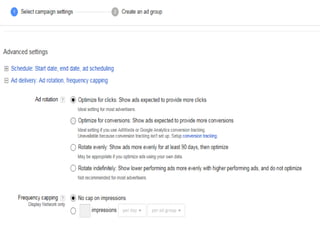
Set up
Changes are done at the ad group level
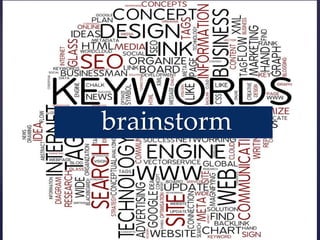
{ brainstorm
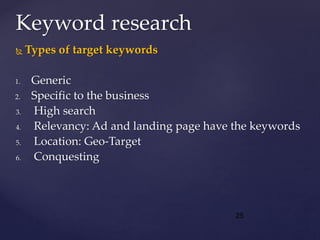
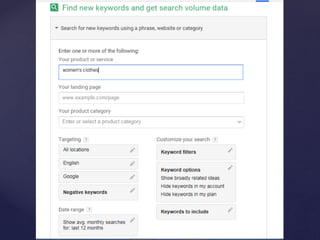
 Types of target keywords
1. Generic
2. Specific to the business
3. High search
4. Relevancy: Ad and landing page have the keywords
5. Location: Geo-Target
6. Conquesting
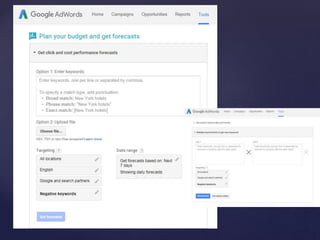
Keyword research
25
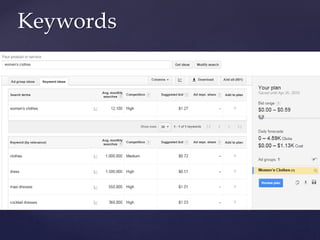
Keywords
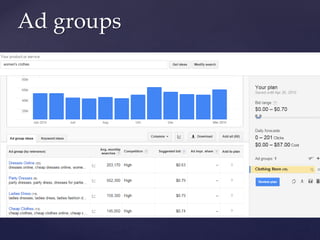
Ad groups
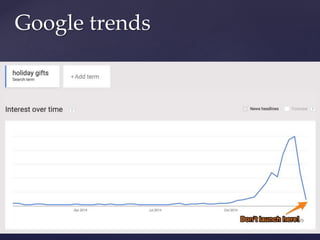
Google trends
Keywords match types
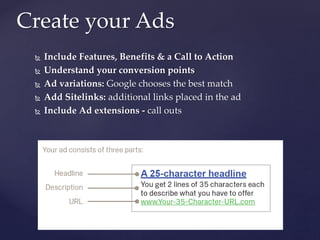
 Include Features, Benefits & a Call to Action
 Understand your conversion points
 Ad variations: Google chooses the best match
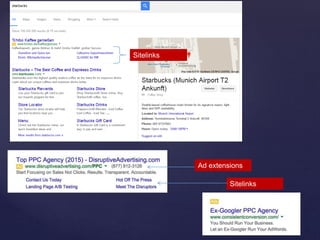
 Add Sitelinks: additional links placed in the ad
 Include Ad extensions - call outs
Create your Ads
Sitelinks
Ad extensions
Sitelinks
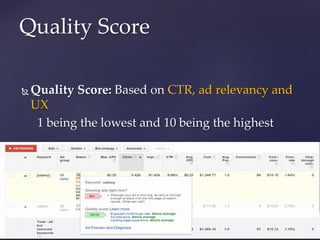
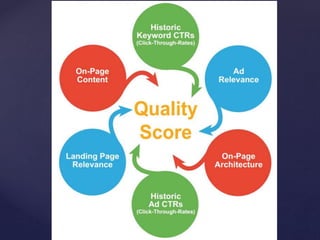
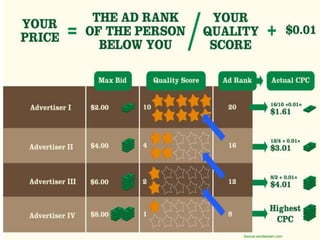
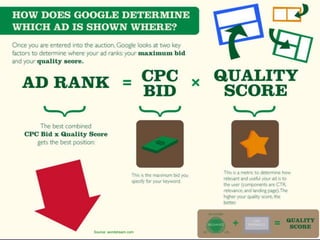
 Quality Score: Based on CTR, ad relevancy and
UX
1 being the lowest and 10 being the highest
 QS higher means higher ad position or lower
cost-per-click
Quality Score
Source:wordstream.com
Source: wordstream.com
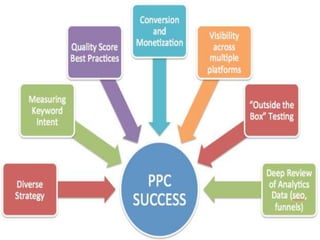
Best practices
Best practices
43
1. Increasing ad quality
2. Negative keywords
3. Enabling or improving your ad extensions
4. Optimize ad group level bid modifiers
5. Experiments
Tip: Bid modifier- bid on a country level, time or device
Tip: Use customer match- list of emails to create an
audience. You can also serve them unique ads for that
audience based of their behavior. Check visits, conversions,
bounce rate
Focus on ROI
Thanks!

Paid search meetup

  • 1.
  • 3.
    1. Summit yourown site 2. Relevant keywords and tags 3. Semantic search-long tail keywords 4. UX ,mobile and Geolocation 5. Voice search and app indexing 6. Ultimate personal assistance Evolution of search
  • 4.
     Keywords remainimportant  Understand the searcher’s intent  For example, if someone typed in “coffee” do they mean:  That they want to buy coffee beans?  Find a local coffee shop?  Buy or prepare a cup of coffee?  Are they even talking about coffee or something entirely different like a coffee making machine?  Long-tail keywords:  Search engines try guess because all it has to go on are the keywords you enter into their engine.  Semantic search will look at how those words relate to each other and look for clues on how they were entered…location being crucial Semantic search
  • 5.
  • 11.
  • 12.
     PPC: PayPer Click  Impressions: # of times the ads were displayed on the Search Engine  Clicks: # of people that have clicked on an ad  CTR: Click-Through-Rate = Clicks/Impressions  Conversion Rate = Conversions/Clicks  CPA: Cost Per Action Cost/Conversions  CTA’s: Call-to-Actions  Bounce rate: one page view per visit  Bid: price auction to pay per keyword  Bid types:  CPC cost-per-click  CPM cost-per-thousand impressions,  Active View CPM Active View cost-per-thousand impressions,  CPA/CPE cost-per-engagement/engagement  Max. CPC bid: Maximum Cost-Per-Click  Match type: Broad, BMM, Phrase and Exact Basic terminology
  • 17.
    Set up yourcampaign
  • 18.
    1. Who’s mytarget market? 2. What’s my offer? 3. What are my customers searching for? 4. What do I want out of my ad campaigns? 5. What do I want my customer to do? 6. How will I get my customer to take action? 7. What are my competitors doing? 8. What’s my budget? 9. What’s my time frame? 10. How am I going to measure my results? 10 questions you must ask
  • 19.
     Buy onyour website  Visit website  Take an action on your website (for example, fill out a form)  Call your business  See your ad  Visit your business Before starting: define goals
  • 20.
    Set up Changes aredone at the ad group level
  • 24.
  • 25.
     Types oftarget keywords 1. Generic 2. Specific to the business 3. High search 4. Relevancy: Ad and landing page have the keywords 5. Location: Geo-Target 6. Conquesting Keyword research 25
  • 28.
  • 29.
  • 30.
  • 31.
  • 34.
     Include Features,Benefits & a Call to Action  Understand your conversion points  Ad variations: Google chooses the best match  Add Sitelinks: additional links placed in the ad  Include Ad extensions - call outs Create your Ads
  • 35.
  • 37.
     Quality Score:Based on CTR, ad relevancy and UX 1 being the lowest and 10 being the highest  QS higher means higher ad position or lower cost-per-click Quality Score
  • 39.
  • 40.
  • 41.
  • 42.
  • 43.
    1. Increasing adquality 2. Negative keywords 3. Enabling or improving your ad extensions 4. Optimize ad group level bid modifiers 5. Experiments Tip: Bid modifier- bid on a country level, time or device Tip: Use customer match- list of emails to create an audience. You can also serve them unique ads for that audience based of their behavior. Check visits, conversions, bounce rate Focus on ROI
  • 44.