• Identify theclinical
picture shown.
• List 5 possible causes.
• List the principles of
management of the
most likely cause in our
environment
3.
Right after birtha swelling
appeared on the scalp of
this infant, which slightly
increased in size during
the first three days of life..
What is your diagnosis?
• List three differentials.
• How would you manage
this condition?
4.
• This isa 7-year old boy
who presented to CHOP
with these skin lesions.
• 1. What is your
diagnosis and state the
pathogen.
• List 3 complications of
the disease.
• Give 6 differentials of
fever and a skin rash.
5.
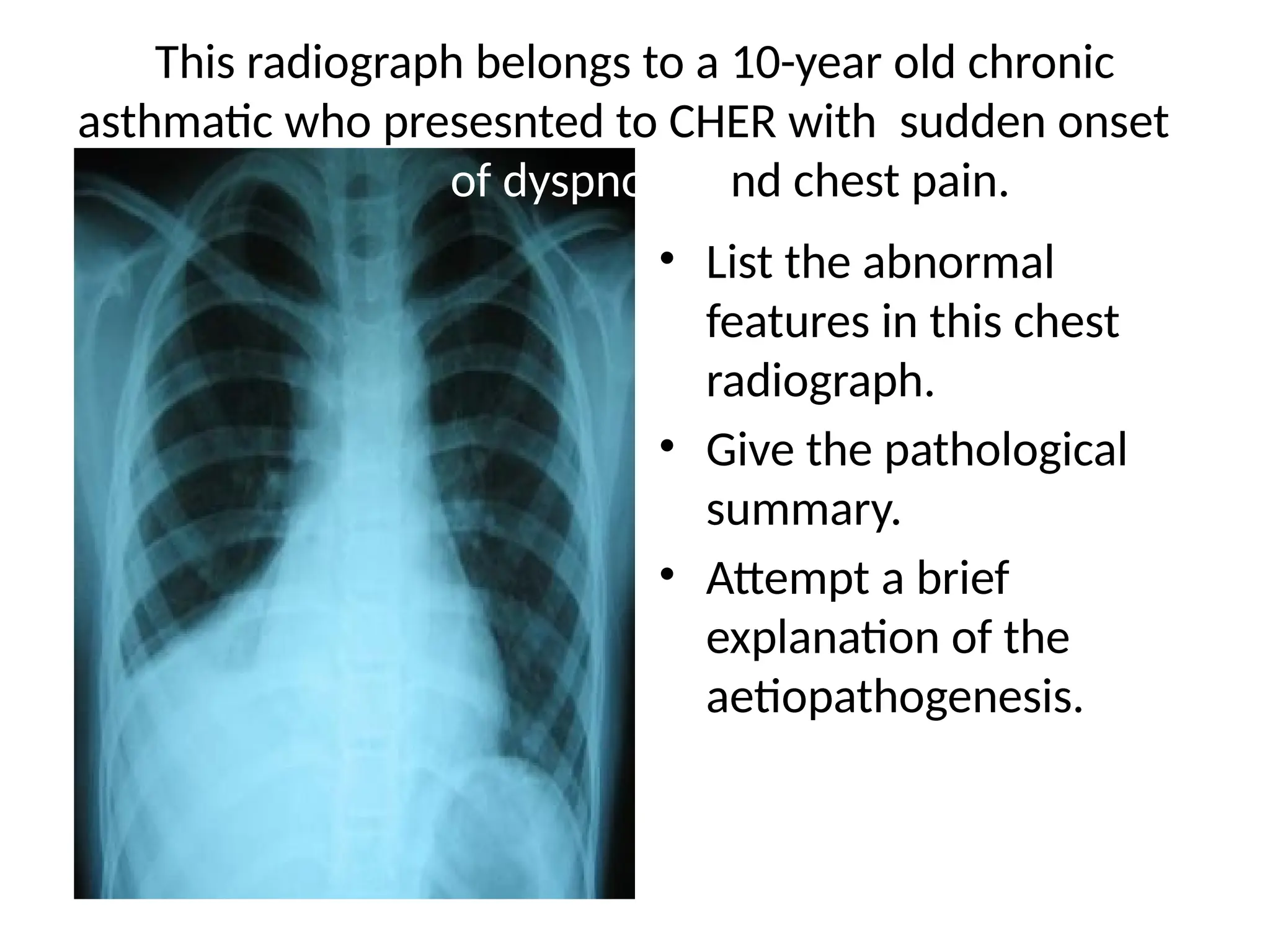
This radiograph belongsto a 10-year old chronic
asthmatic who presesnted to CHER with sudden onset
of dyspnoea and chest pain.
• List the abnormal
features in this chest
radiograph.
• Give the pathological
summary.
• Attempt a brief
explanation of the
aetiopathogenesis.
6.
• This isan x-ray of a 3
year old boy who
presented with fever
and abdominal pain of 3
days. What is the
diagnosis?
• List 5 possible causes
• What other signs do
you expect to find on
examination?
7.
What is the
abnormalityshown?
State the neonatal
condition that may
present this way.
List 5 risk factors for
the development of
this condition.
8.
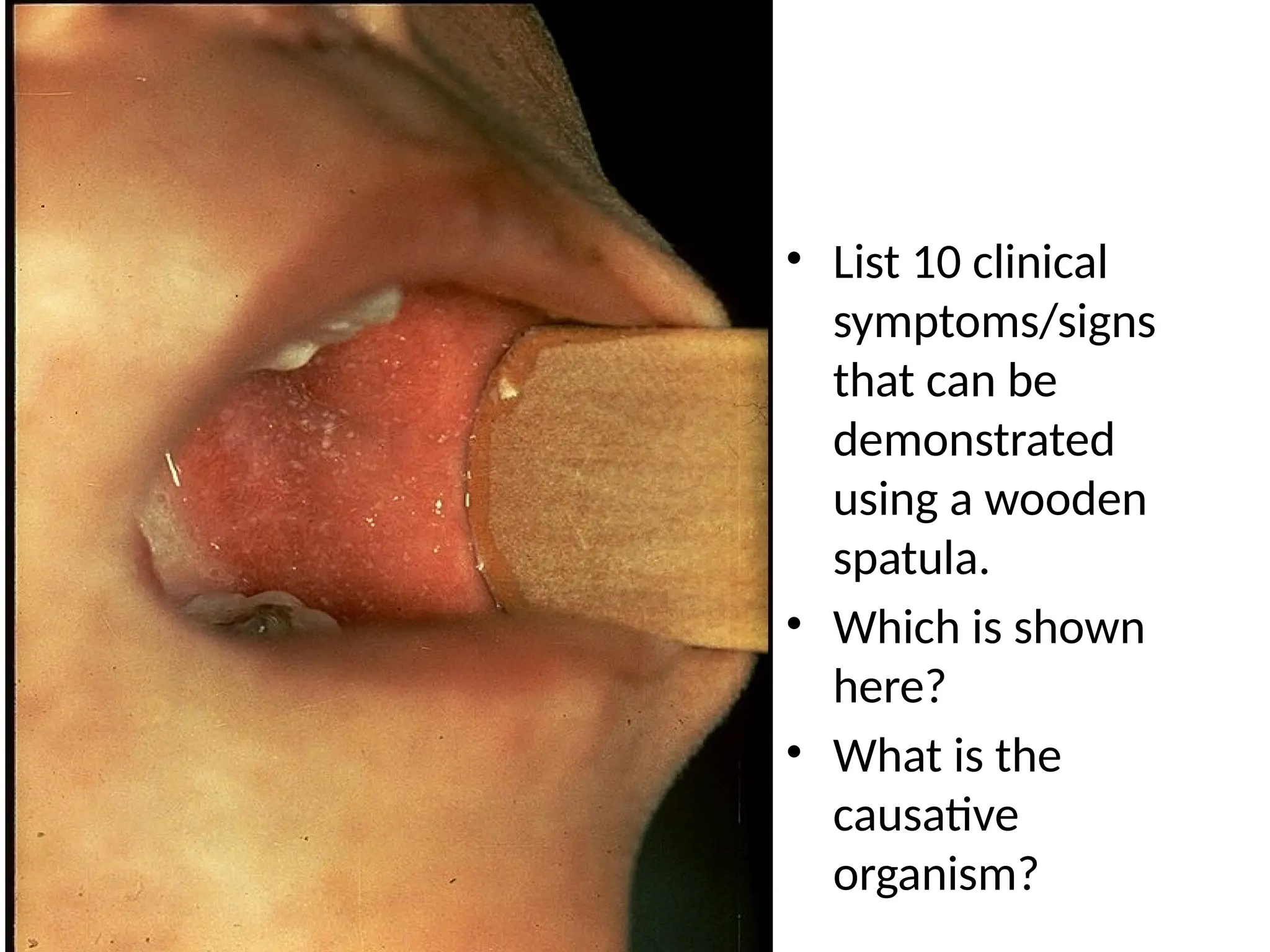
• List 10clinical
symptoms/signs
that can be
demonstrated
using a wooden
spatula.
• Which is shown
here?
• What is the
causative
organism?
9.
• An 8-yearold girl was
bitten by this dog on her
way to school and was
rushed to a nearby
drugstore for first-aid. 2
weeks after she was
brought to CHER due to
irrational behaviour and
muscle spasms.
• What is your diagnosis?
• Outline your
management plan.
• List 6differentials.
Pick any of your
differentials,
• Describe the typical
histological features.
• List the drugs used for
therapy.
• List 3 complications.
12.
• Identify thelesion
shown on this slide.
• What is its
aetiological agent?
• List the 4
types/classes.
• Where would you
classify this patient
in the WHO HIV-
Staging?
• This is a benign
lesion (True or False)
13.
• Give thediagnosis.
• State the organism.
• List 5 other diseases
in the same WHO
HIV-Staging as this
disease.
• How is it treated?
14.
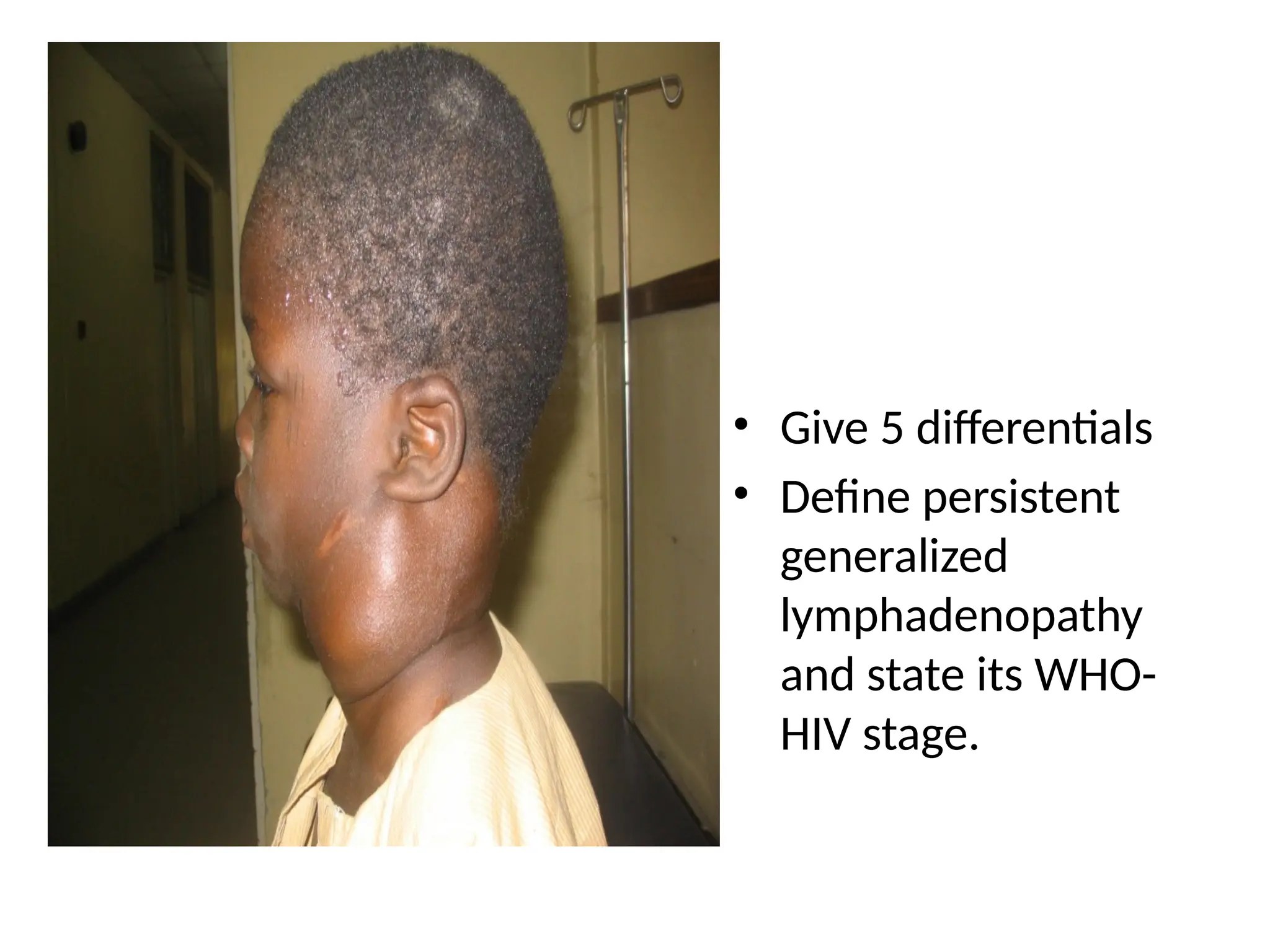
• Give 5differentials
• Define persistent
generalized
lymphadenopathy
and state its WHO-
HIV stage.
15.
• List 5possible
causes of this
clinical picture.
• List 10 problems
you would
anticipate in these
children.
16.
• Identify A,B and C.
• State the use(s) of A.
• List the components of B
• State the mechanism of action of
C and state the additional
instrument used to administer it
in young children.
17.
• Identify
• Listthe components and
state the use(s) of each.
• Give 5 laboratory
investigations that can
be requested with it.
• Which laboratory is
expected to perform
these tests?








![GgggggggggggggggggggMOCK_20241] final.pptx](https://cdn.slidesharecdn.com/ss_thumbnails/mock20241final-241217104451-02fa39ae-thumbnail.jpg?width=640&height=640&fit=bounds)


