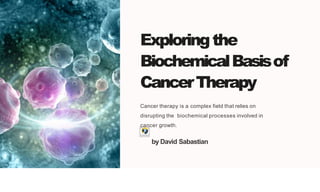
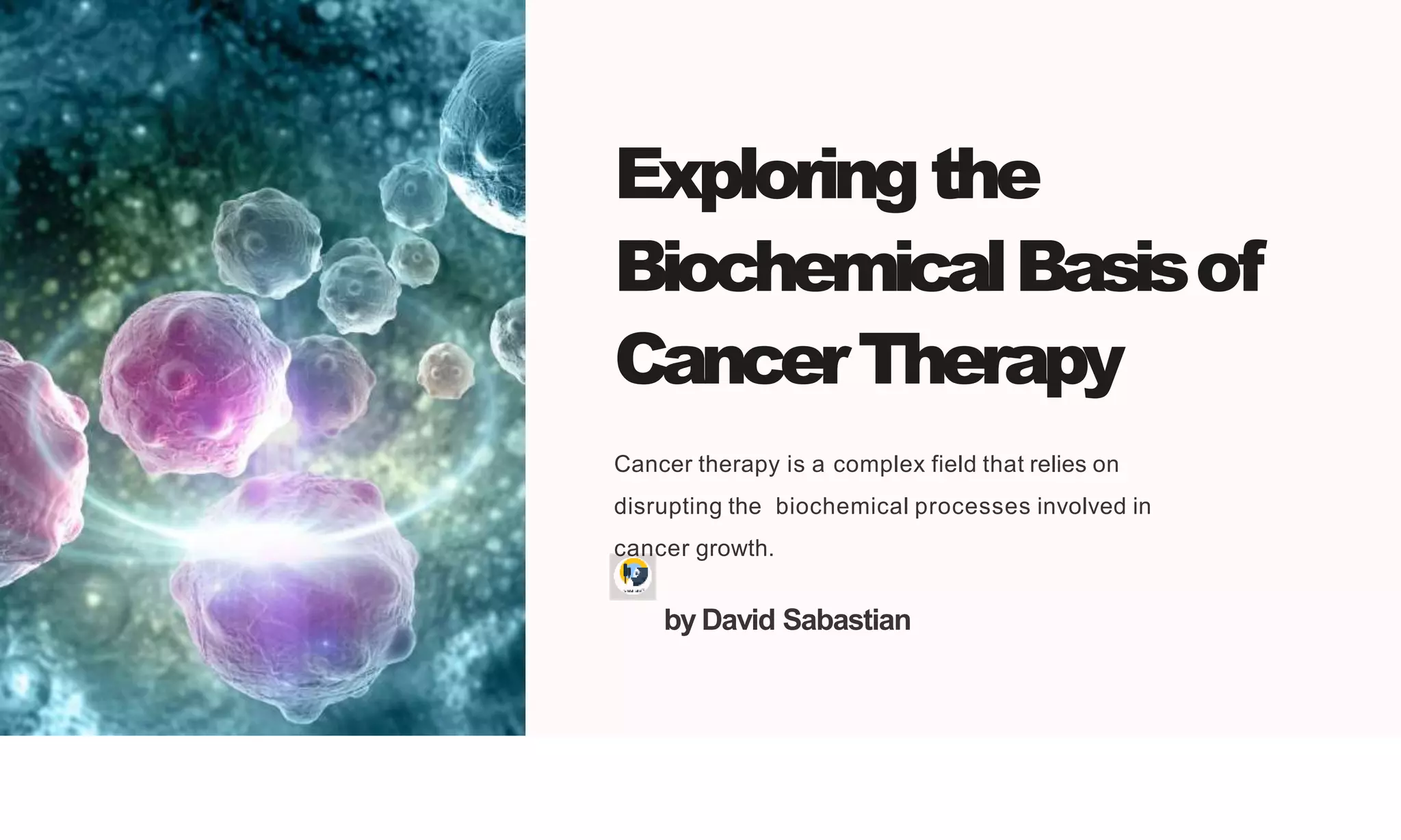
Exploringthe
BiochemicalBasisof
CancerTherapy
Cancer therapy is a complex field that relies on
disrupting the biochemical processes involved in
cancer growth.
by David Sabastian
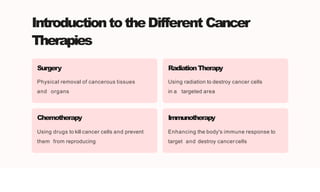
IntroductiontotheDifferent Cancer
Therapies
Surgery
Physical removal of cancerous tissues
and organs
RadiationTherapy
Using radiation to destroy cancer cells
in a targeted area
Chemotherapy
Using drugs to kill cancer cells and prevent
them from reproducing
Immunotherapy
Enhancing the body's immune response to
target and destroy cancercells
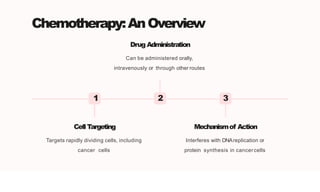
Chemotherapy:AnOverview
1
Cell Targeting
Targets rapidly dividing cells, including
cancer cells
2
Drug Administration
Can be administered orally,
intravenously or through other routes
3
Mechanismof Action
Interferes with DNAreplication or
protein synthesis in cancercells
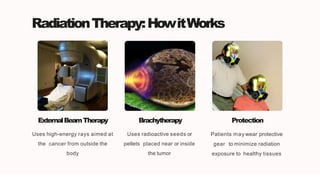
RadiationTherapy:HowitWorks
ExternalBeamTherapy
Uses high-energy rays aimed at
the cancer from outside the
body
Brachytherapy
Uses radioactive seeds or
pellets placed near or inside
the tumor
Protection
Patients may wear protective
gear to minimize radiation
exposure to healthy tissues
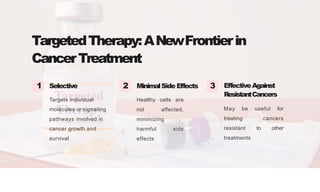
TargetedTherapy:ANewFrontierin
CancerTreatment
Selective
Targets individual
molecules or signaling
pathways involved in
cancer growth and
survival
MinimalSideEffects
Healthy cells are
not affected,
minimizing
harmful side
effects
1 2 3 EffectiveAgainst
ResistantCancers
May be useful for
treating cancers
resistant to other
treatments
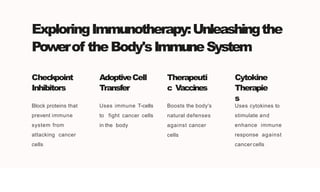
ExploringImmunotherapy:Unleashingthe
Powerof theBody'sImmuneSystem
Checkpoint
Inhibitors
Block proteins that
prevent immune
system from
attacking cancer
cells
AdoptiveCell
Transfer
Uses immune T-cells
to fight cancer cells
in the body
Therapeuti
c Vaccines
Boosts the body's
natural defenses
against cancer
cells
Cytokine
Therapie
s
Uses cytokines to
stimulate and
enhance immune
response against
cancer cells
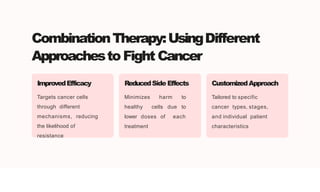
CombinationTherapy:UsingDifferent
Approachesto Fight Cancer
ImprovedEfficacy
Targets cancer cells
through different
mechanisms, reducing
the likelihood of
resistance
ReducedSide Effects
Minimizes harm to
healthy cells due to
lower doses of each
treatment
CustomizedApproach
Tailored to specific
cancer types, stages,
and individual patient
characteristics
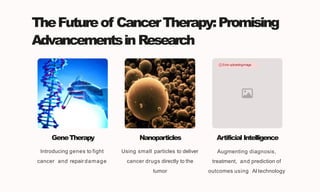
TheFutureof CancerTherapy:Promising
AdvancementsinResearch
GeneTherapy
Introducing genes to fight
cancer and repair damage
Nanoparticles
Using small particles to deliver
cancer drugs directly to the
tumor
Error uploadingimage.
Artificial Intelligence
Augmenting diagnosis,
treatment, and prediction of
outcomes using AI technology
ChallengesandOpportunitiesinCancer
Therapy
Challenges
Resistance totherapy
Side effects and
toxicity High
TreatmentCosts
Opportunities
Advancements in technology and
research
Personalized and targeted therapies
Improved patient outcomes and quality of
life
Conclusion:Exploringthe
BiochemicalBasisof
CancerTherapyTogether
Cancer therapy is a complex field, but with research and
development, there is hope for improved outcomes for
cancer patients worldwide.

p4.pptx