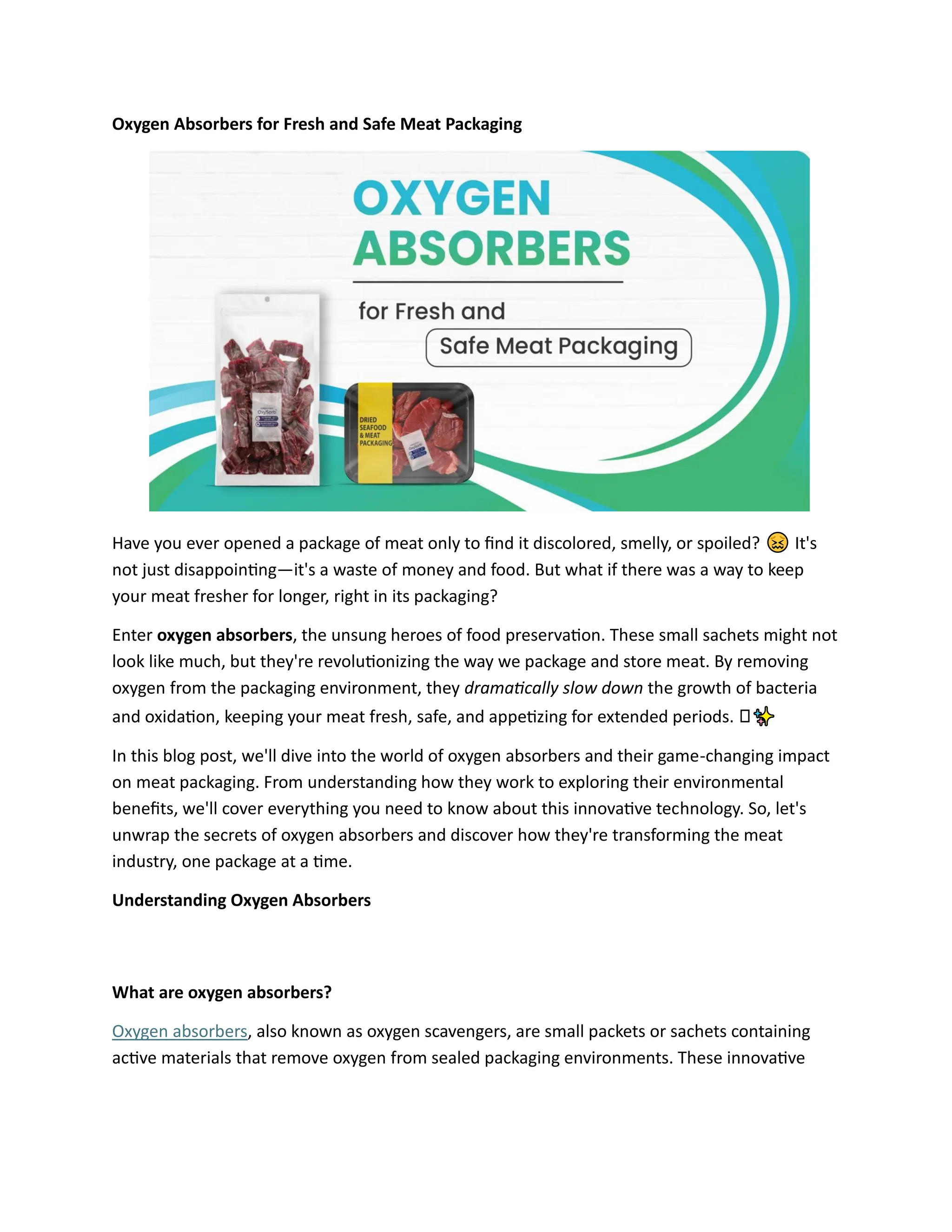
Oxygen Absorbers for Fresh and Safe Meat Packaging
Have you ever opened a package of meat only to find it discolored, smelly, or spoiled? It's
not just disappointing—it's a waste of money and food. But what if there was a way to keep
your meat fresher for longer, right in its packaging?
Enter oxygen absorbers, the unsung heroes of food preservation. These small sachets might not
look like much, but they're revolutionizing the way we package and store meat. By removing
oxygen from the packaging environment, they dramatically slow down the growth of bacteria
and oxidation, keeping your meat fresh, safe, and appetizing for extended periods. 🥩
In this blog post, we'll dive into the world of oxygen absorbers and their game-changing impact
on meat packaging. From understanding how they work to exploring their environmental
benefits, we'll cover everything you need to know about this innovative technology. So, let's
unwrap the secrets of oxygen absorbers and discover how they're transforming the meat
industry, one package at a time.
Understanding Oxygen Absorbers
What are oxygen absorbers?
Oxygen absorbers, also known as oxygen scavengers, are small packets or sachets containing
active materials that remove oxygen from sealed packaging environments. These innovative
bags play a crucial role in maintaining the quality and extending the shelf life of various
products, particularly in the food industry.
How do oxygen absorbers work?
Oxygen absorbers function through a chemical reaction that effectively removes oxygen from
the surrounding atmosphere. The primary active ingredient in most oxygen absorbers is iron
powder. When exposed to oxygen, the iron undergoes oxidation, forming iron oxide and
effectively "absorbing" the oxygen from the enclosed space.
Component Function
Iron powder Primary oxygen-absorbing agent
Salt Activates the iron powder
Moisture Facilitates the oxidation process
Benefits for meat packaging
Oxygen absorbers offer numerous advantages for meat packaging, making them an
indispensable bag in the food industry:
1. Extended shelf life: By removing oxygen, absorbers significantly slow down oxidation
processes, preserving meat quality for longer periods.
2. Improved food safety: Oxygen-free environments inhibit the growth of aerobic bacteria
and mold, reducing the risk of foodborne illnesses.
3. Maintained color and appearance: Oxygen absorbers help prevent discoloration, keeping
meat looking fresh and appealing to consumers.
4. Enhanced flavor retention: By minimizing oxidation, these packets help preserve the
natural flavors of the meat.
5. Reduced need for chemical preservatives: Oxygen absorbers provide a natural
alternative to artificial preservatives, aligning with consumer preferences for cleaner
labels.
Now that we understand the basics of oxygen absorbers and their benefits, let's explore how
they specifically enhance meat freshness in various packaging scenarios.
Enhancing Meat Freshness
Preventing oxidation and spoilage
Oxygen absorbers play a crucial role in preventing oxidation and spoilage in meat packaging. By
removing oxygen from the package, these innovative devices significantly slow down the growth
of aerobic bacteria and fungi, which are primary causes of meat spoilage. This process
effectively extends the shelf life of meat products while maintaining their quality.
Benefits of oxygen-free packaging:
• Inhibits bacterial growth
• Prevents rancidity in fats
• Reduces color changes
• Preserves nutritional value
Extending shelf life
One of the most significant advantages of using oxygen absorbers in meat packaging is the
substantial increase in shelf life. By creating an oxygen-free environment, these absorbers can
extend the freshness of meat products by up to 3-5 times compared to traditional packaging
methods.
Packaging Method Average Shelf Life
Traditional 3-5 days
With O2 Absorbers 10-15 days
Maintaining color and flavor
Oxygen absorbers are instrumental in preserving the natural color and flavor of meat products.
By preventing oxidation, they help maintain the bright red color of fresh meat, which is a key
indicator of quality for consumers. Additionally, the absence of oxygen helps preserve the
meat's natural flavors, ensuring a more enjoyable eating experience.
Reducing food waste
The extended shelf life and improved quality retention provided by oxygen absorbers contribute
significantly to reducing food waste. By keeping meat fresh for longer periods, consumers have
more time to use the product before it spoils, leading to less waste and more efficient use of
resources. This aligns with sustainable practices and helps address global food waste concerns.
Now that we've explored how oxygen absorbers enhance meat freshness, let's examine their
role in ensuring meat safety.
Ensuring Meat Safety
Inhibiting bacterial growth
Oxygen absorbers play a crucial role in inhibiting bacterial growth in meat packaging. By
reducing oxygen levels, these absorbers create an environment inhospitable to aerobic bacteria,
which are responsible for meat spoilage. Let's explore the effectiveness of oxygen absorbers in
different scenarios:
Packaging Type Oxygen Level Bacterial Growth Rate
Without O2 Absorber High (21%) Rapid
With O2 Absorber Very Low (<0.1%) Significantly Reduced
• Slows down oxidation processes
• Prevents rancidity and off-flavors
• Extends shelf life by up to 3 times
Minimizing pathogen risks
Oxygen absorbers are essential in minimizing pathogen risks in meat packaging. By creating an
anaerobic environment, they effectively suppress the growth of harmful microorganisms:
• Listeria monocytogenes
• Salmonella
• E. coli O157:H7
These pathogens require oxygen to thrive, and oxygen-free packaging significantly reduces their
ability to multiply and contaminate the meat.
Compliance with food safety regulations
Implementing oxygen absorbers in meat packaging helps businesses comply with stringent food
safety regulations. Key benefits include:
1. Meeting HACCP (Hazard Analysis and Critical Control Points) requirements
2. Adhering to FDA and USDA guidelines for safe meat storage
3. Ensuring traceability and quality control throughout the supply chain
By incorporating oxygen absorbers, meat processors can demonstrate their commitment to
food safety and maintain compliance with industry standards. This not only protects consumers
but also enhances the reputation of the brand in the competitive meat market.
Types of Oxygen Absorbers for Meat Packaging
Iron-based absorbers
Iron-based oxygen absorbers are the most commonly used type in meat packaging. These
absorbers work by oxidizing iron powder, effectively removing oxygen from the package. Here's
a comparison of iron-based absorbers with other types:
Feature Iron-based Enzyme-based Polymer-based
Efficiency High Moderate Moderate
Cost Low High Moderate
Activation Fast Slow Moderate
Capacity High Low Moderate
Benefits of iron-based absorbers for meat packaging:
• Rapid oxygen absorption
• Cost-effective solution
• High oxygen absorption capacity
• Safe for food contact
Enzyme-based systems
Enzyme-based oxygen absorbers utilize natural enzymes to remove oxygen from the package.
These systems are particularly suitable for certain types of meat products.
Key features of enzyme-based systems:
• Glucose oxidase and catalase enzymes
• Require moisture for activation
• Effective in low-temperature environments
Polymer-based solutions
Polymer-based oxygen absorbers incorporate oxygen-scavenging materials directly into the
packaging film. This innovative approach offers several advantages for meat packaging:
1. Seamless integration with existing packaging
2. Reduced risk of accidental ingestion
3. Potential for customization based on specific meat product needs
By understanding these different types of oxygen absorbers, meat packaging professionals can
choose the most suitable option for their specific products, ensuring optimal freshness and
safety. Next, we'll explore how to effectively implement these oxygen absorbers in packaging
processes.
Implementing Oxygen Absorbers in Packaging
Selecting the right absorber type
When implementing oxygen absorbers in meat packaging, selecting the right type is crucial.
Consider factors such as:
• Packaging size
• Meat type and weight
• Expected shelf life
Absorber Type Best for Advantages
Iron-based Large packages High capacity, cost-effective
Polymer-based Small packages Non-toxic, flexible
Enzyme-based Organic products Natural, eco-friendly
Determining optimal absorption capacity
To ensure effective oxygen removal:
1. Calculate the package's total air volume
2. Estimate oxygen content (typically 21% of air)
3. Choose an absorber with 125-150% of the calculated capacity
Integrating with packaging materials
Proper integration enhances effectiveness:
• Use high-barrier films to prevent oxygen re-entry
• Place absorbers strategically for maximum contact with air
• Ensure compatibility with packaging material
Cost-effectiveness considerations
Balance quality and budget:
• Compare long-term benefits vs. initial costs
• Consider reduced waste from extended shelf life
• Evaluate potential for premium pricing of longer-lasting products
Implementing oxygen absorbers effectively can significantly improve meat preservation,
ensuring both freshness and safety. By carefully selecting the right type, determining optimal
capacity, integrating properly with packaging materials, and considering cost-effectiveness,
meat producers can maximize the benefits of this technology. This approach not only enhances
product quality but also contributes to sustainability efforts by reducing food waste.
Environmental Impact and Sustainability
A. Reducing packaging waste
Oxygen absorbers play a crucial role in reducing packaging waste in the meat industry. By
extending the shelf life of meat products, these innovative devices help minimize food waste
and the need for excessive packaging materials. Here's how oxygen absorbers contribute to
waste reduction:
• Longer shelf life: Less spoilage means fewer products discarded
• Smaller packaging: Reduced need for bulky, protective packaging
• Lightweight: Minimal additional weight to packaging
Packaging Type Without Oxygen Absorbers With Oxygen Absorbers
Shelf Life Shorter Extended
Packaging Size Larger Compact
Material Usage Higher Lower
B. Eco-friendly absorber options
As sustainability becomes increasingly important, manufacturers are developing more eco-
friendly oxygen absorber options:
1. Biodegradable materials: Made from natural substances that break down easily
2. Plant-based absorbers: Derived from renewable resources
3. Reusable options: Designed for multiple uses, reducing overall waste
C. Recyclability and disposal concerns
While oxygen absorbers offer numerous benefits, their recyclability and disposal present
challenges:
• Mixed materials: Some absorbers contain multiple components, complicating recycling
• Contamination: Used absorbers may be contaminated with food residue
• Lack of awareness: Consumers may not know how to properly dispose of absorbers
To address these concerns, the industry is working on:
1. Developing single-material absorbers for easier recycling
2. Improving consumer education on proper disposal methods
3. Implementing take-back programs for used absorbers
Next, we'll explore the practical aspects of implementing oxygen absorbers in meat packaging
processes.
Oxygen absorbers play a vital role in revolutionizing meat packaging, offering significant benefits
in terms of freshness, safety, and sustainability. By removing oxygen from the packaging
environment, these innovative bags effectively extend shelf life, preserve color and texture, and
inhibit the growth of harmful bacteria. From iron-based sachets to polymer-based films, various
types of oxygen absorbers cater to different packaging needs and meat products.
Implementing oxygen absorbers in meat packaging not only enhances product quality but also
contributes to reducing food waste and environmental impact. As consumers and businesses
alike prioritize food safety and sustainability, adopting oxygen absorber technology in meat
packaging is a smart choice for the future of the food industry. By embracing this technology, we
can ensure fresher, safer meat products while taking a step towards a more sustainable food
supply chain.

Oxygen Absorbers for Fresh and Safe Meat Packaging.pdf

  • 1.
    Oxygen Absorbers forFresh and Safe Meat Packaging Have you ever opened a package of meat only to find it discolored, smelly, or spoiled? It's not just disappointing—it's a waste of money and food. But what if there was a way to keep your meat fresher for longer, right in its packaging? Enter oxygen absorbers, the unsung heroes of food preservation. These small sachets might not look like much, but they're revolutionizing the way we package and store meat. By removing oxygen from the packaging environment, they dramatically slow down the growth of bacteria and oxidation, keeping your meat fresh, safe, and appetizing for extended periods. 🥩 In this blog post, we'll dive into the world of oxygen absorbers and their game-changing impact on meat packaging. From understanding how they work to exploring their environmental benefits, we'll cover everything you need to know about this innovative technology. So, let's unwrap the secrets of oxygen absorbers and discover how they're transforming the meat industry, one package at a time. Understanding Oxygen Absorbers What are oxygen absorbers? Oxygen absorbers, also known as oxygen scavengers, are small packets or sachets containing active materials that remove oxygen from sealed packaging environments. These innovative
  • 2.
    bags play acrucial role in maintaining the quality and extending the shelf life of various products, particularly in the food industry. How do oxygen absorbers work? Oxygen absorbers function through a chemical reaction that effectively removes oxygen from the surrounding atmosphere. The primary active ingredient in most oxygen absorbers is iron powder. When exposed to oxygen, the iron undergoes oxidation, forming iron oxide and effectively "absorbing" the oxygen from the enclosed space. Component Function Iron powder Primary oxygen-absorbing agent Salt Activates the iron powder Moisture Facilitates the oxidation process Benefits for meat packaging
  • 3.
    Oxygen absorbers offernumerous advantages for meat packaging, making them an indispensable bag in the food industry: 1. Extended shelf life: By removing oxygen, absorbers significantly slow down oxidation processes, preserving meat quality for longer periods. 2. Improved food safety: Oxygen-free environments inhibit the growth of aerobic bacteria and mold, reducing the risk of foodborne illnesses. 3. Maintained color and appearance: Oxygen absorbers help prevent discoloration, keeping meat looking fresh and appealing to consumers. 4. Enhanced flavor retention: By minimizing oxidation, these packets help preserve the natural flavors of the meat. 5. Reduced need for chemical preservatives: Oxygen absorbers provide a natural alternative to artificial preservatives, aligning with consumer preferences for cleaner labels. Now that we understand the basics of oxygen absorbers and their benefits, let's explore how they specifically enhance meat freshness in various packaging scenarios. Enhancing Meat Freshness
  • 4.
    Preventing oxidation andspoilage Oxygen absorbers play a crucial role in preventing oxidation and spoilage in meat packaging. By removing oxygen from the package, these innovative devices significantly slow down the growth of aerobic bacteria and fungi, which are primary causes of meat spoilage. This process effectively extends the shelf life of meat products while maintaining their quality. Benefits of oxygen-free packaging: • Inhibits bacterial growth
  • 5.
    • Prevents rancidityin fats • Reduces color changes • Preserves nutritional value Extending shelf life One of the most significant advantages of using oxygen absorbers in meat packaging is the substantial increase in shelf life. By creating an oxygen-free environment, these absorbers can extend the freshness of meat products by up to 3-5 times compared to traditional packaging methods. Packaging Method Average Shelf Life Traditional 3-5 days With O2 Absorbers 10-15 days Maintaining color and flavor Oxygen absorbers are instrumental in preserving the natural color and flavor of meat products. By preventing oxidation, they help maintain the bright red color of fresh meat, which is a key indicator of quality for consumers. Additionally, the absence of oxygen helps preserve the meat's natural flavors, ensuring a more enjoyable eating experience. Reducing food waste The extended shelf life and improved quality retention provided by oxygen absorbers contribute significantly to reducing food waste. By keeping meat fresh for longer periods, consumers have more time to use the product before it spoils, leading to less waste and more efficient use of resources. This aligns with sustainable practices and helps address global food waste concerns. Now that we've explored how oxygen absorbers enhance meat freshness, let's examine their role in ensuring meat safety. Ensuring Meat Safety Inhibiting bacterial growth
  • 6.
    Oxygen absorbers playa crucial role in inhibiting bacterial growth in meat packaging. By reducing oxygen levels, these absorbers create an environment inhospitable to aerobic bacteria, which are responsible for meat spoilage. Let's explore the effectiveness of oxygen absorbers in different scenarios: Packaging Type Oxygen Level Bacterial Growth Rate Without O2 Absorber High (21%) Rapid With O2 Absorber Very Low (<0.1%) Significantly Reduced • Slows down oxidation processes • Prevents rancidity and off-flavors • Extends shelf life by up to 3 times Minimizing pathogen risks Oxygen absorbers are essential in minimizing pathogen risks in meat packaging. By creating an anaerobic environment, they effectively suppress the growth of harmful microorganisms: • Listeria monocytogenes • Salmonella • E. coli O157:H7 These pathogens require oxygen to thrive, and oxygen-free packaging significantly reduces their ability to multiply and contaminate the meat. Compliance with food safety regulations Implementing oxygen absorbers in meat packaging helps businesses comply with stringent food safety regulations. Key benefits include: 1. Meeting HACCP (Hazard Analysis and Critical Control Points) requirements 2. Adhering to FDA and USDA guidelines for safe meat storage 3. Ensuring traceability and quality control throughout the supply chain By incorporating oxygen absorbers, meat processors can demonstrate their commitment to food safety and maintain compliance with industry standards. This not only protects consumers but also enhances the reputation of the brand in the competitive meat market.
  • 7.
    Types of OxygenAbsorbers for Meat Packaging Iron-based absorbers Iron-based oxygen absorbers are the most commonly used type in meat packaging. These absorbers work by oxidizing iron powder, effectively removing oxygen from the package. Here's a comparison of iron-based absorbers with other types: Feature Iron-based Enzyme-based Polymer-based Efficiency High Moderate Moderate Cost Low High Moderate Activation Fast Slow Moderate Capacity High Low Moderate Benefits of iron-based absorbers for meat packaging: • Rapid oxygen absorption • Cost-effective solution • High oxygen absorption capacity • Safe for food contact Enzyme-based systems Enzyme-based oxygen absorbers utilize natural enzymes to remove oxygen from the package. These systems are particularly suitable for certain types of meat products. Key features of enzyme-based systems: • Glucose oxidase and catalase enzymes • Require moisture for activation • Effective in low-temperature environments Polymer-based solutions
  • 8.
    Polymer-based oxygen absorbersincorporate oxygen-scavenging materials directly into the packaging film. This innovative approach offers several advantages for meat packaging: 1. Seamless integration with existing packaging 2. Reduced risk of accidental ingestion 3. Potential for customization based on specific meat product needs By understanding these different types of oxygen absorbers, meat packaging professionals can choose the most suitable option for their specific products, ensuring optimal freshness and safety. Next, we'll explore how to effectively implement these oxygen absorbers in packaging processes. Implementing Oxygen Absorbers in Packaging Selecting the right absorber type When implementing oxygen absorbers in meat packaging, selecting the right type is crucial. Consider factors such as: • Packaging size • Meat type and weight • Expected shelf life Absorber Type Best for Advantages Iron-based Large packages High capacity, cost-effective Polymer-based Small packages Non-toxic, flexible Enzyme-based Organic products Natural, eco-friendly Determining optimal absorption capacity To ensure effective oxygen removal: 1. Calculate the package's total air volume 2. Estimate oxygen content (typically 21% of air)
  • 9.
    3. Choose anabsorber with 125-150% of the calculated capacity Integrating with packaging materials Proper integration enhances effectiveness: • Use high-barrier films to prevent oxygen re-entry • Place absorbers strategically for maximum contact with air • Ensure compatibility with packaging material Cost-effectiveness considerations Balance quality and budget: • Compare long-term benefits vs. initial costs • Consider reduced waste from extended shelf life • Evaluate potential for premium pricing of longer-lasting products Implementing oxygen absorbers effectively can significantly improve meat preservation, ensuring both freshness and safety. By carefully selecting the right type, determining optimal capacity, integrating properly with packaging materials, and considering cost-effectiveness, meat producers can maximize the benefits of this technology. This approach not only enhances product quality but also contributes to sustainability efforts by reducing food waste. Environmental Impact and Sustainability A. Reducing packaging waste Oxygen absorbers play a crucial role in reducing packaging waste in the meat industry. By extending the shelf life of meat products, these innovative devices help minimize food waste and the need for excessive packaging materials. Here's how oxygen absorbers contribute to waste reduction: • Longer shelf life: Less spoilage means fewer products discarded • Smaller packaging: Reduced need for bulky, protective packaging • Lightweight: Minimal additional weight to packaging
  • 10.
    Packaging Type WithoutOxygen Absorbers With Oxygen Absorbers Shelf Life Shorter Extended Packaging Size Larger Compact Material Usage Higher Lower B. Eco-friendly absorber options As sustainability becomes increasingly important, manufacturers are developing more eco- friendly oxygen absorber options: 1. Biodegradable materials: Made from natural substances that break down easily 2. Plant-based absorbers: Derived from renewable resources 3. Reusable options: Designed for multiple uses, reducing overall waste C. Recyclability and disposal concerns While oxygen absorbers offer numerous benefits, their recyclability and disposal present challenges: • Mixed materials: Some absorbers contain multiple components, complicating recycling • Contamination: Used absorbers may be contaminated with food residue • Lack of awareness: Consumers may not know how to properly dispose of absorbers To address these concerns, the industry is working on: 1. Developing single-material absorbers for easier recycling 2. Improving consumer education on proper disposal methods 3. Implementing take-back programs for used absorbers Next, we'll explore the practical aspects of implementing oxygen absorbers in meat packaging processes. Oxygen absorbers play a vital role in revolutionizing meat packaging, offering significant benefits in terms of freshness, safety, and sustainability. By removing oxygen from the packaging
  • 11.
    environment, these innovativebags effectively extend shelf life, preserve color and texture, and inhibit the growth of harmful bacteria. From iron-based sachets to polymer-based films, various types of oxygen absorbers cater to different packaging needs and meat products. Implementing oxygen absorbers in meat packaging not only enhances product quality but also contributes to reducing food waste and environmental impact. As consumers and businesses alike prioritize food safety and sustainability, adopting oxygen absorber technology in meat packaging is a smart choice for the future of the food industry. By embracing this technology, we can ensure fresher, safer meat products while taking a step towards a more sustainable food supply chain.