Inventory Management
Mohamed Thariq Munaz
• Enterprise Structure
• Inventory
• Receipts
SCOPE
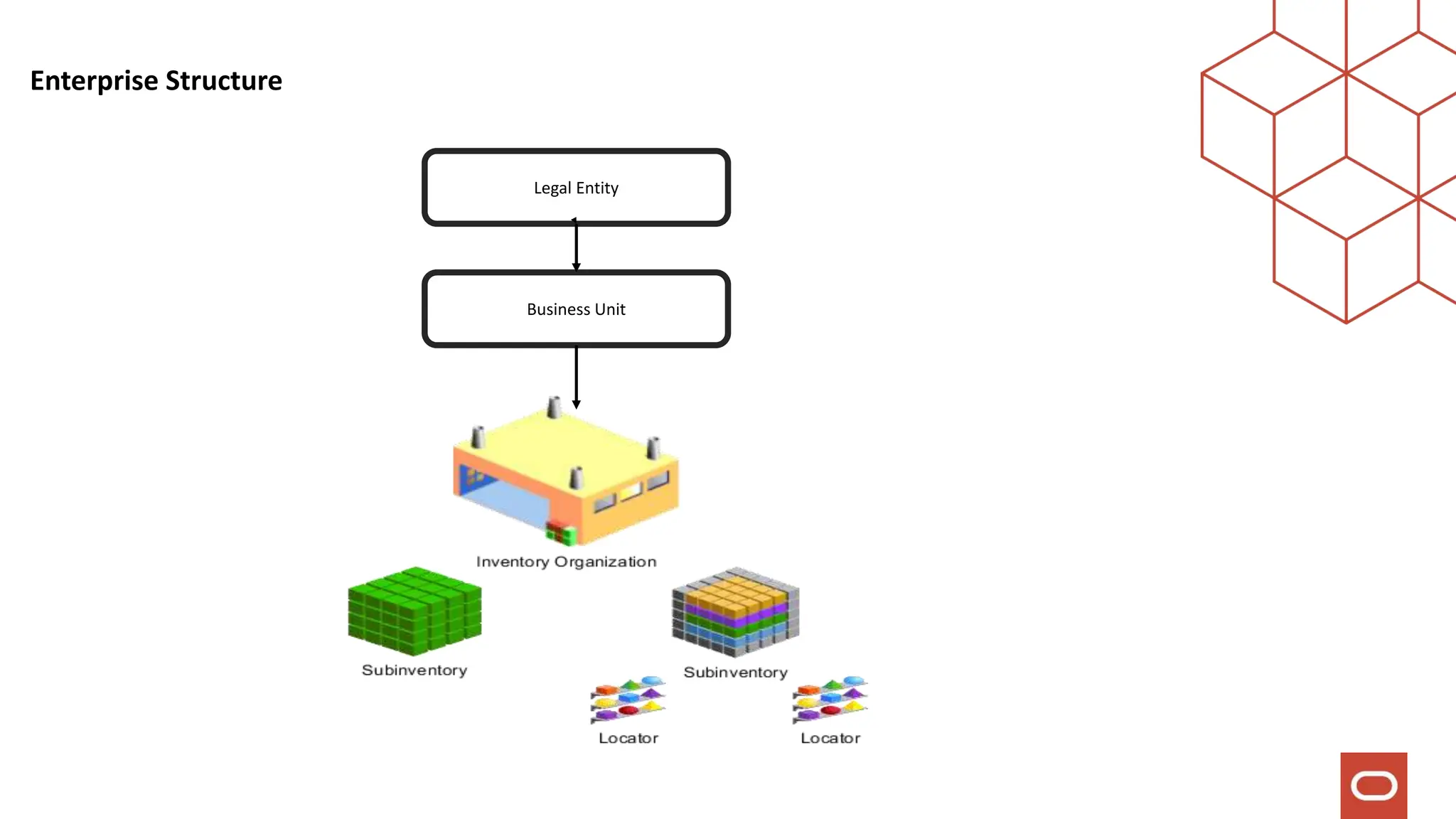
Enterprise Structure
Legal Entity
Business Unit
Miscellaneous Transaction
The Create Miscellaneous Transaction page provides you with an efficient way to manage items
that don't require documentation support. When you use miscellaneous transactions as part of
your stockroom procedures, you need an easy way to determine which sub inventories and
locators contain item on-hand and available quantity.
Examples:
• Issue items to individuals, departments, or projects
• Receive items that were acquired without purchase orders
• Enter adjustments and corrections to system quantities outside of performing cycle counting
or physical inventory counting, due to theft, vandalism, loss, shelf-life expiration, or inaccurate
record keeping
Sub Inventory Transfer
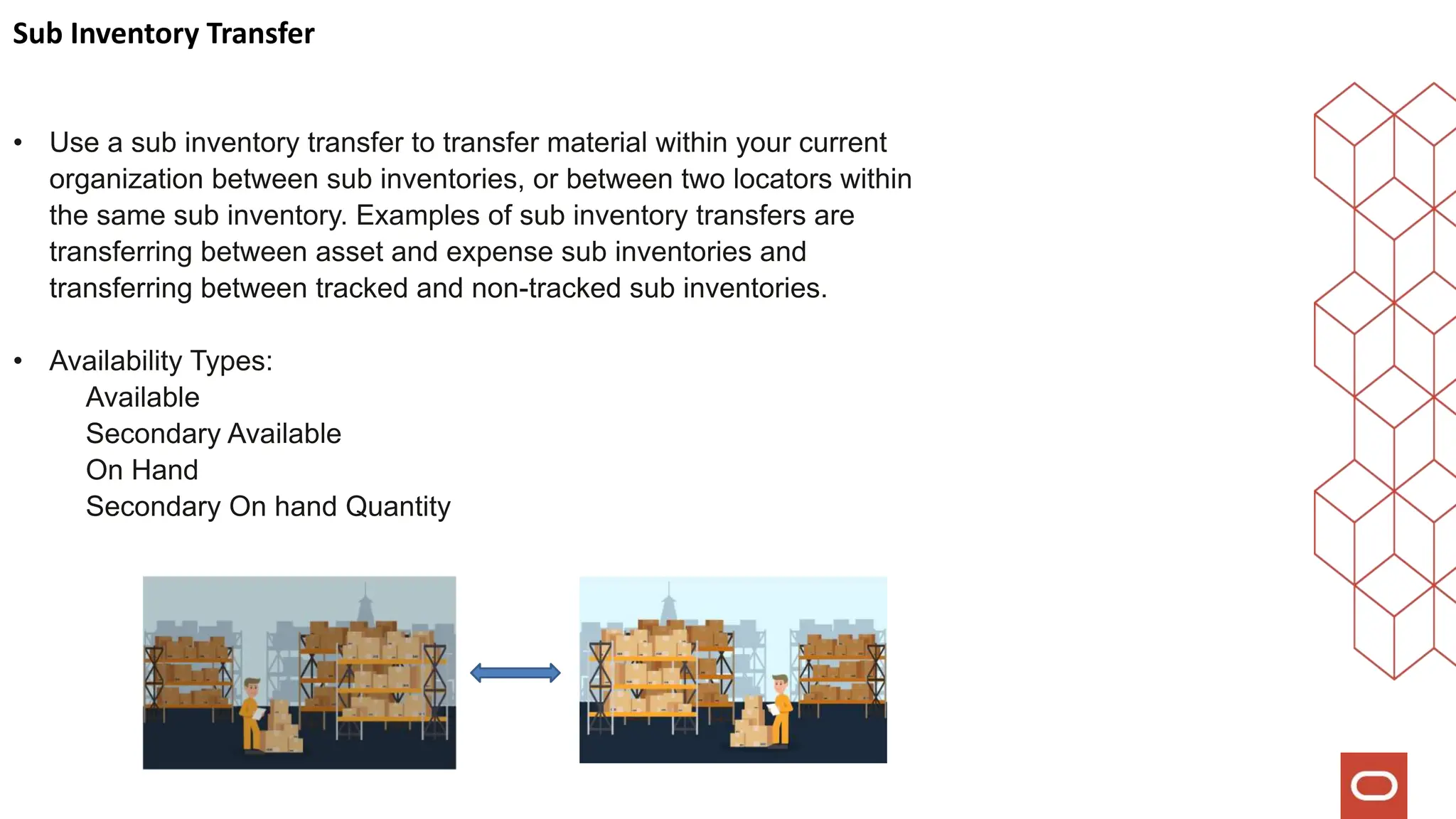
• Use a sub inventory transfer to transfer material within your current
organization between sub inventories, or between two locators within
the same sub inventory. Examples of sub inventory transfers are
transferring between asset and expense sub inventories and
transferring between tracked and non-tracked sub inventories.
• Availability Types:
Available
Secondary Available
On Hand
Secondary On hand Quantity
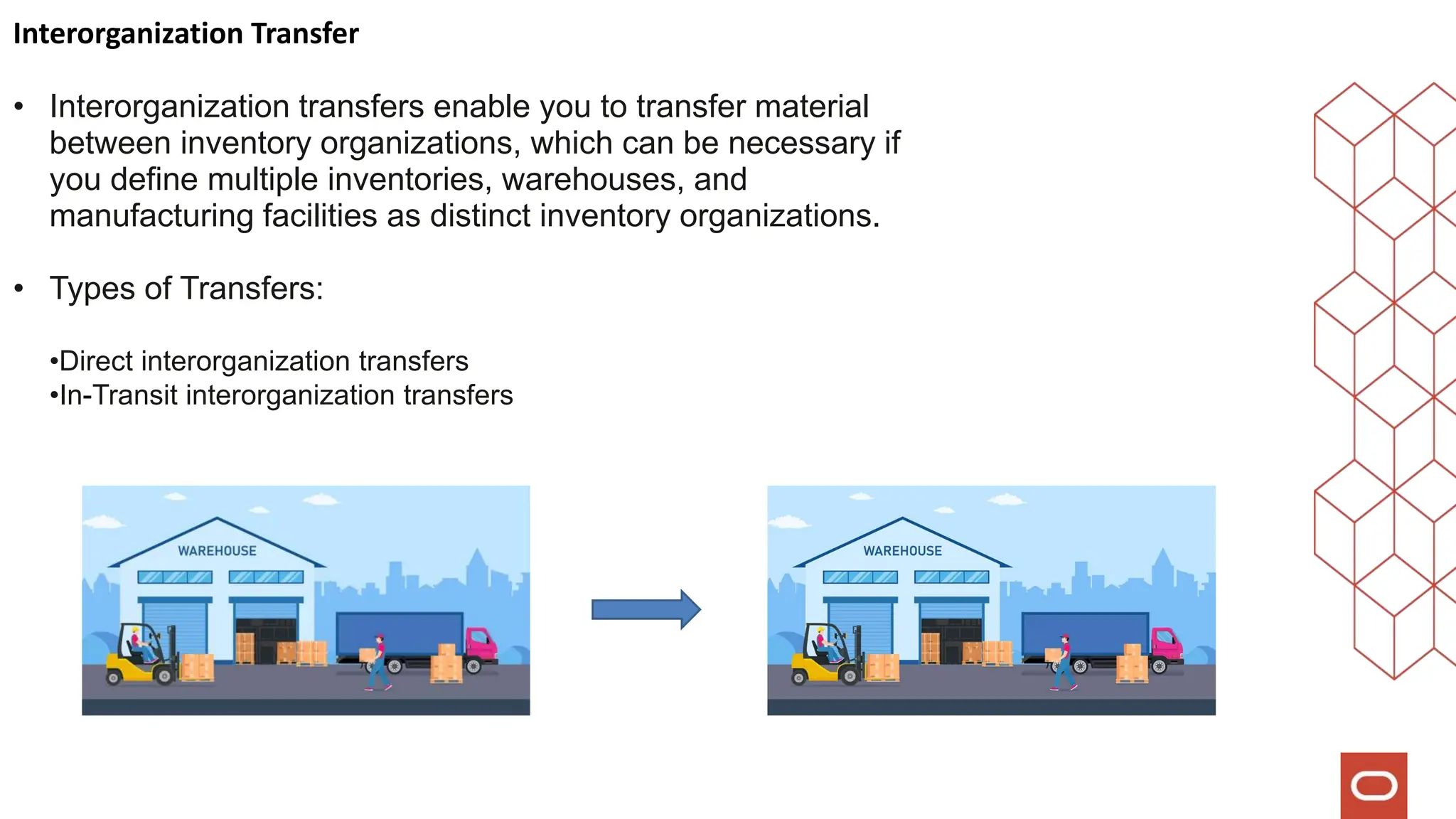
Interorganization Transfer
• Interorganization transfers enable you to transfer material
between inventory organizations, which can be necessary if
you define multiple inventories, warehouses, and
manufacturing facilities as distinct inventory organizations.
• Types of Transfers:
•Direct interorganization transfers
•In-Transit interorganization transfers
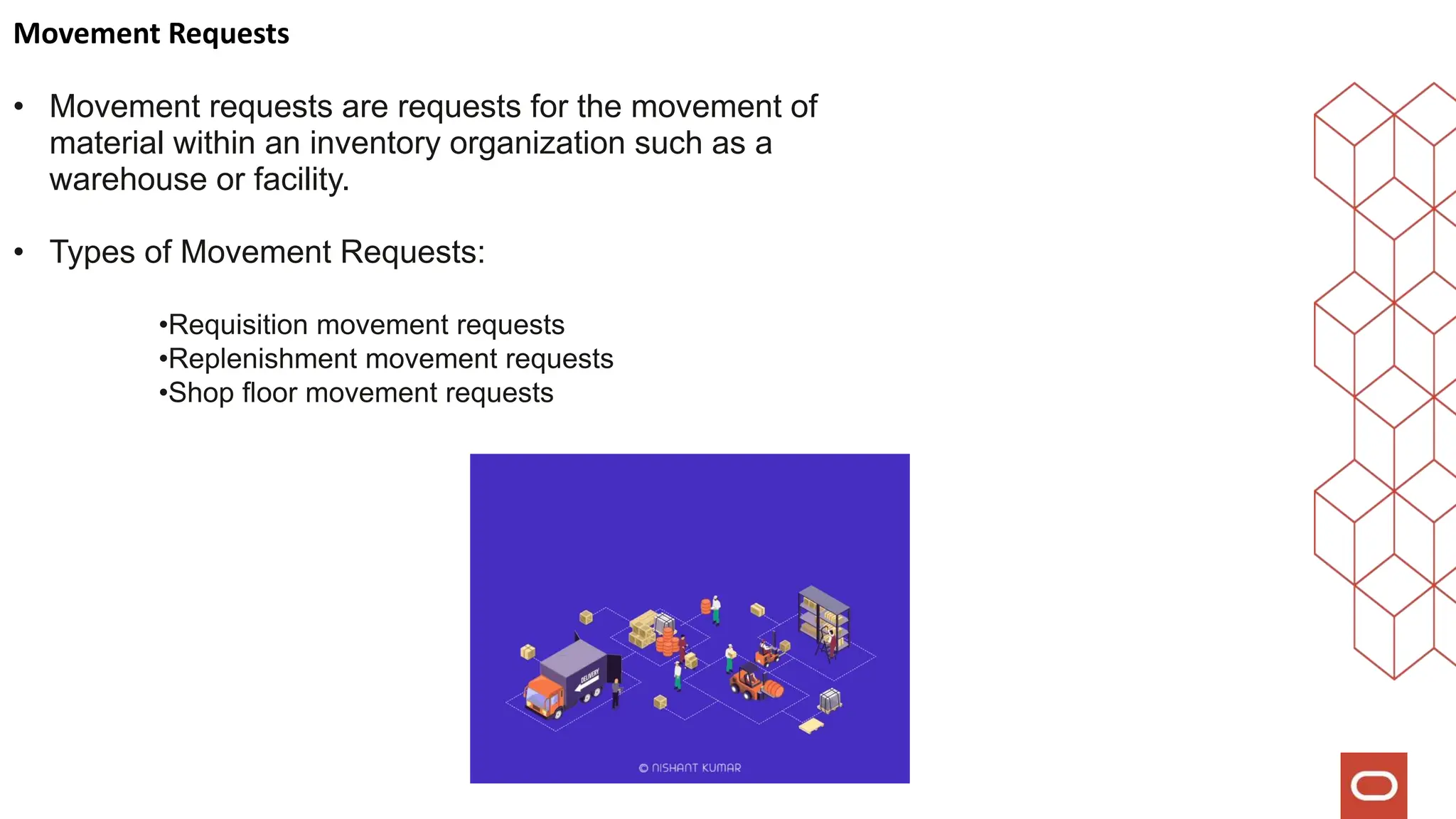
Movement Requests
• Movement requests are requests for the movement of
material within an inventory organization such as a
warehouse or facility.
• Types of Movement Requests:
•Requisition movement requests
•Replenishment movement requests
•Shop floor movement requests
Transfer Orders
• Transfer orders represent demand and supply in a single document.
Transfer orders support interorganization, intraorganization, and
intercompany transfers
Actions performed on Transfer orders:
•Pick, ship, receive, put away, and return against a transfer order document
•View shipments and receipts associated with the transfer order
Receipts
• Receive Expected Shipments
• Inspect Receipts
• Put Away
• Correct Receipts
• Return receipts
Thank you!
Any Questions?

Overview to the Oracle Inventory Managment

  • 1.
  • 2.
    • Enterprise Structure •Inventory • Receipts SCOPE
  • 3.
  • 4.
    Miscellaneous Transaction The CreateMiscellaneous Transaction page provides you with an efficient way to manage items that don't require documentation support. When you use miscellaneous transactions as part of your stockroom procedures, you need an easy way to determine which sub inventories and locators contain item on-hand and available quantity. Examples: • Issue items to individuals, departments, or projects • Receive items that were acquired without purchase orders • Enter adjustments and corrections to system quantities outside of performing cycle counting or physical inventory counting, due to theft, vandalism, loss, shelf-life expiration, or inaccurate record keeping
  • 5.
    Sub Inventory Transfer •Use a sub inventory transfer to transfer material within your current organization between sub inventories, or between two locators within the same sub inventory. Examples of sub inventory transfers are transferring between asset and expense sub inventories and transferring between tracked and non-tracked sub inventories. • Availability Types: Available Secondary Available On Hand Secondary On hand Quantity
  • 6.
    Interorganization Transfer • Interorganizationtransfers enable you to transfer material between inventory organizations, which can be necessary if you define multiple inventories, warehouses, and manufacturing facilities as distinct inventory organizations. • Types of Transfers: •Direct interorganization transfers •In-Transit interorganization transfers
  • 7.
    Movement Requests • Movementrequests are requests for the movement of material within an inventory organization such as a warehouse or facility. • Types of Movement Requests: •Requisition movement requests •Replenishment movement requests •Shop floor movement requests
  • 8.
    Transfer Orders • Transferorders represent demand and supply in a single document. Transfer orders support interorganization, intraorganization, and intercompany transfers Actions performed on Transfer orders: •Pick, ship, receive, put away, and return against a transfer order document •View shipments and receipts associated with the transfer order
  • 9.
    Receipts • Receive ExpectedShipments • Inspect Receipts • Put Away • Correct Receipts • Return receipts
  • 10.

Editor's Notes

  • #2 Inventory Management functionality lets you manage warehouse activities such as replenishing inventory, counting stock (both cycle count and physical inventory), moving material within the warehouse, and issuing goods to manufacturing. Consigned inventory capabilities are supported as well.
  • #7 In-transit interorganization transfers move items directly from the source organization to in-transit inventory. You usually transfer material to in-transit inventory when transportation time is significant.
  • #8 Replenishment movement requests are requests that are generated by min-max planning to replenish material when a minimum quantity for a specific item is reached. Shop floor movement requests are requests to perform replenishment for components needed for manufacturing and maintenance work orders. Shop floor movement requests move materials either to WIP supply locations or directly to the work order from the warehouse locations.
  • #9 Replenishment movement requests are requests that are generated by min-max planning to replenish material when a minimum quantity for a specific item is reached. Shop floor movement requests are requests to perform replenishment for components needed for manufacturing and maintenance work orders. Shop floor movement requests move materials either to WIP supply locations or directly to the work order from the warehouse locations.
  • #10 Replenishment movement requests are requests that are generated by min-max planning to replenish material when a minimum quantity for a specific item is reached. Shop floor movement requests are requests to perform replenishment for components needed for manufacturing and maintenance work orders. Shop floor movement requests move materials either to WIP supply locations or directly to the work order from the warehouse locations.