Supply Chain Management
Lecture 1
Announcements
• Workshop on applying for scholarships
– Jan 19, 10:00am-1:00pm, KOBL 360
– Jan 28, 12:00pm-2:00pm, KOBL 360
• Signup sheet outside Trep Café
– Jan 13, 8:00am-1:00pm
– Jan 14, 8:00am-1:00pm
What is Supply Chain
Management?
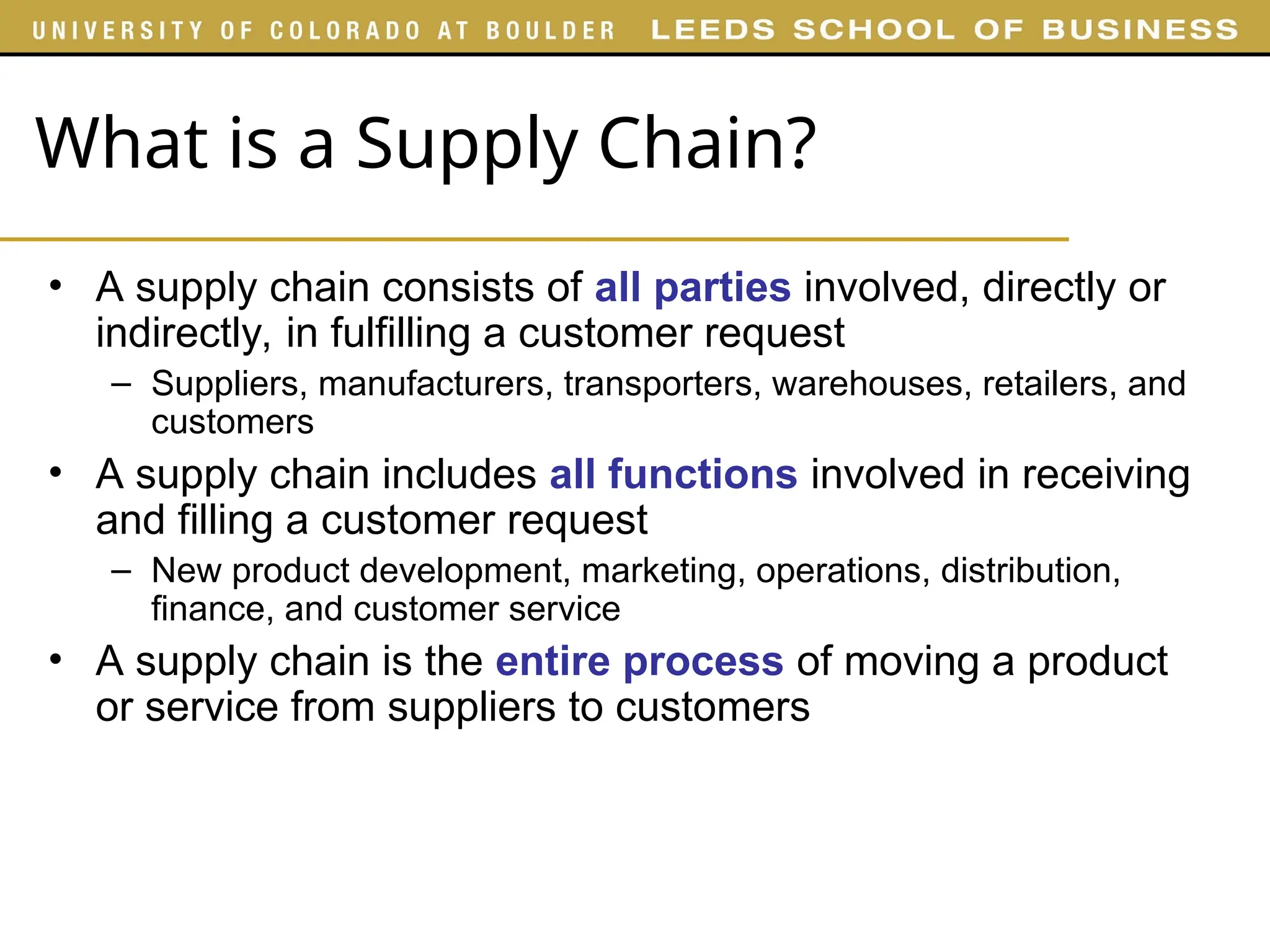
What is a Supply Chain?
• A supply chain consists of all parties involved, directly or
indirectly, in fulfilling a customer request
– Suppliers, manufacturers, transporters, warehouses, retailers, and
customers
• A supply chain includes all functions involved in receiving
and filling a customer request
– New product development, marketing, operations, distribution,
finance, and customer service
• A supply chain is the entire process of moving a product
or service from suppliers to customers
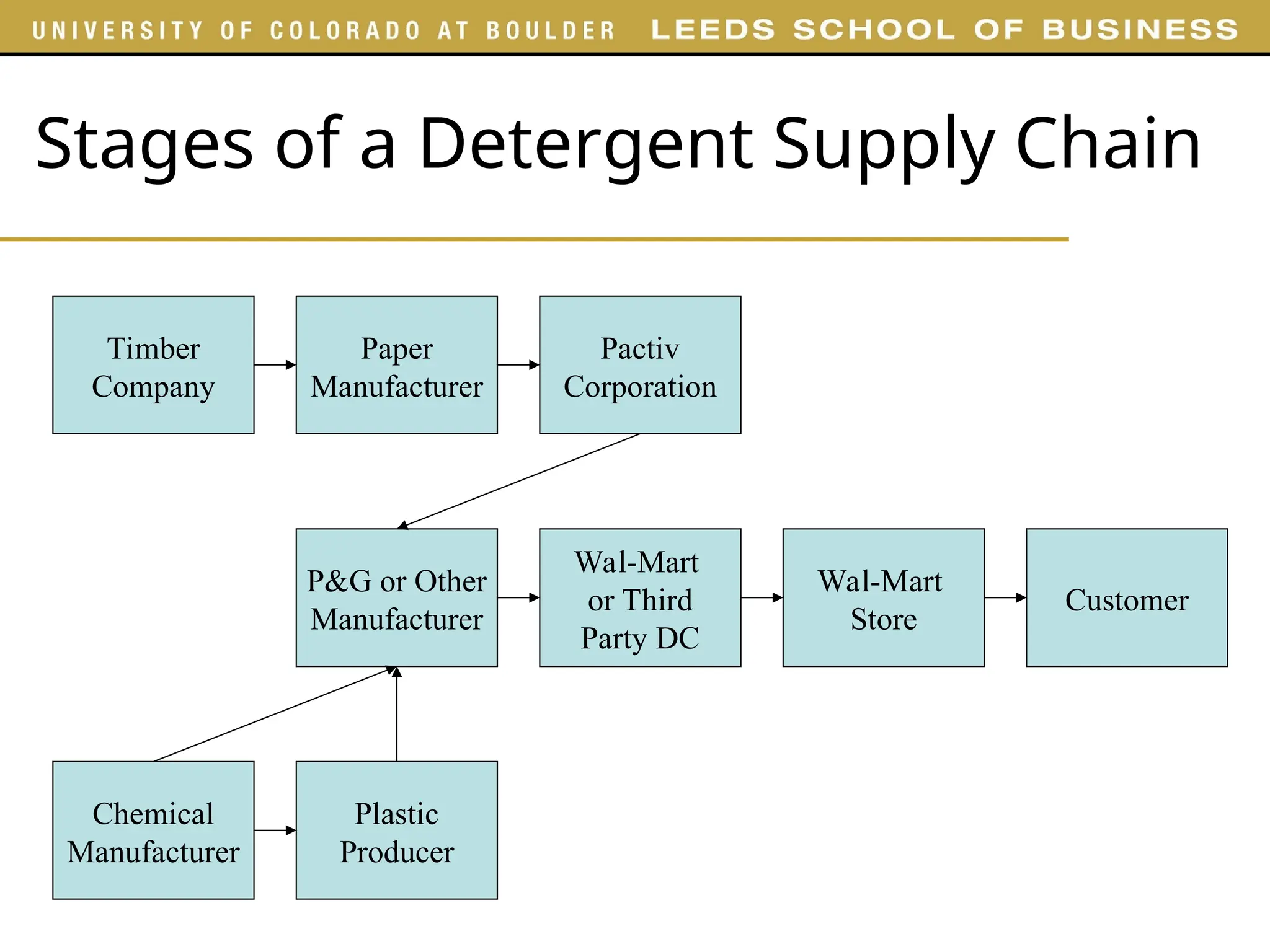
Stages of a Detergent Supply Chain
Customer
Wal-Mart
Store
Wal-Mart
or Third
Party DC
P&G or Other
Manufacturer
Pactiv
Corporation
Paper
Manufacturer
Timber
Company
Plastic
Producer
Chemical
Manufacturer
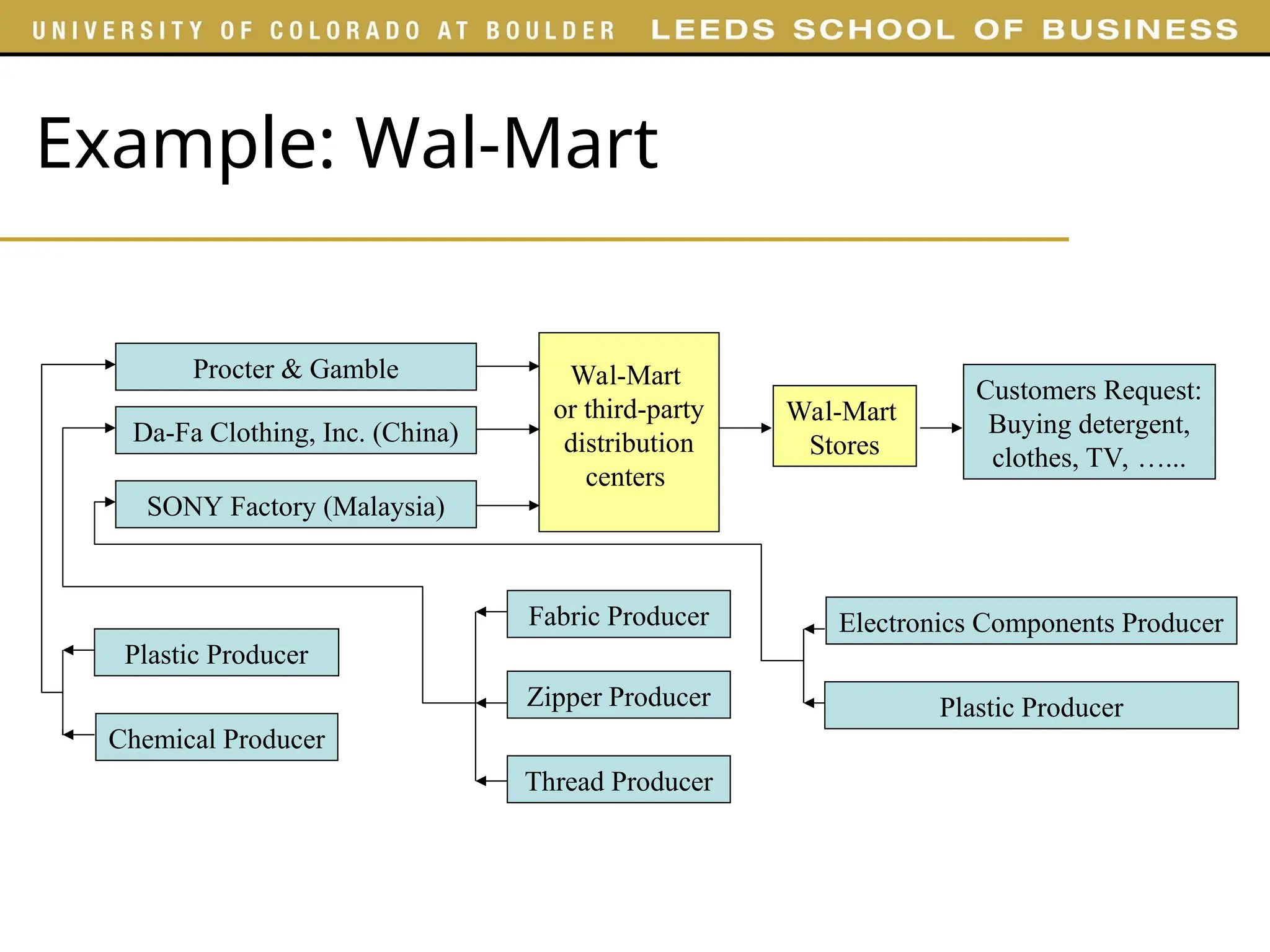
Example: Wal-Mart
Customers Request:
Buying detergent,
clothes, TV, …...
Wal-Mart
Stores
Wal-Mart
or third-party
distribution
centers
Procter & Gamble
Plastic Producer
Fabric Producer
Da-Fa Clothing, Inc. (China)
SONY Factory (Malaysia)
Electronics Components Producer
Chemical Producer
Zipper Producer
Thread Producer
Plastic Producer
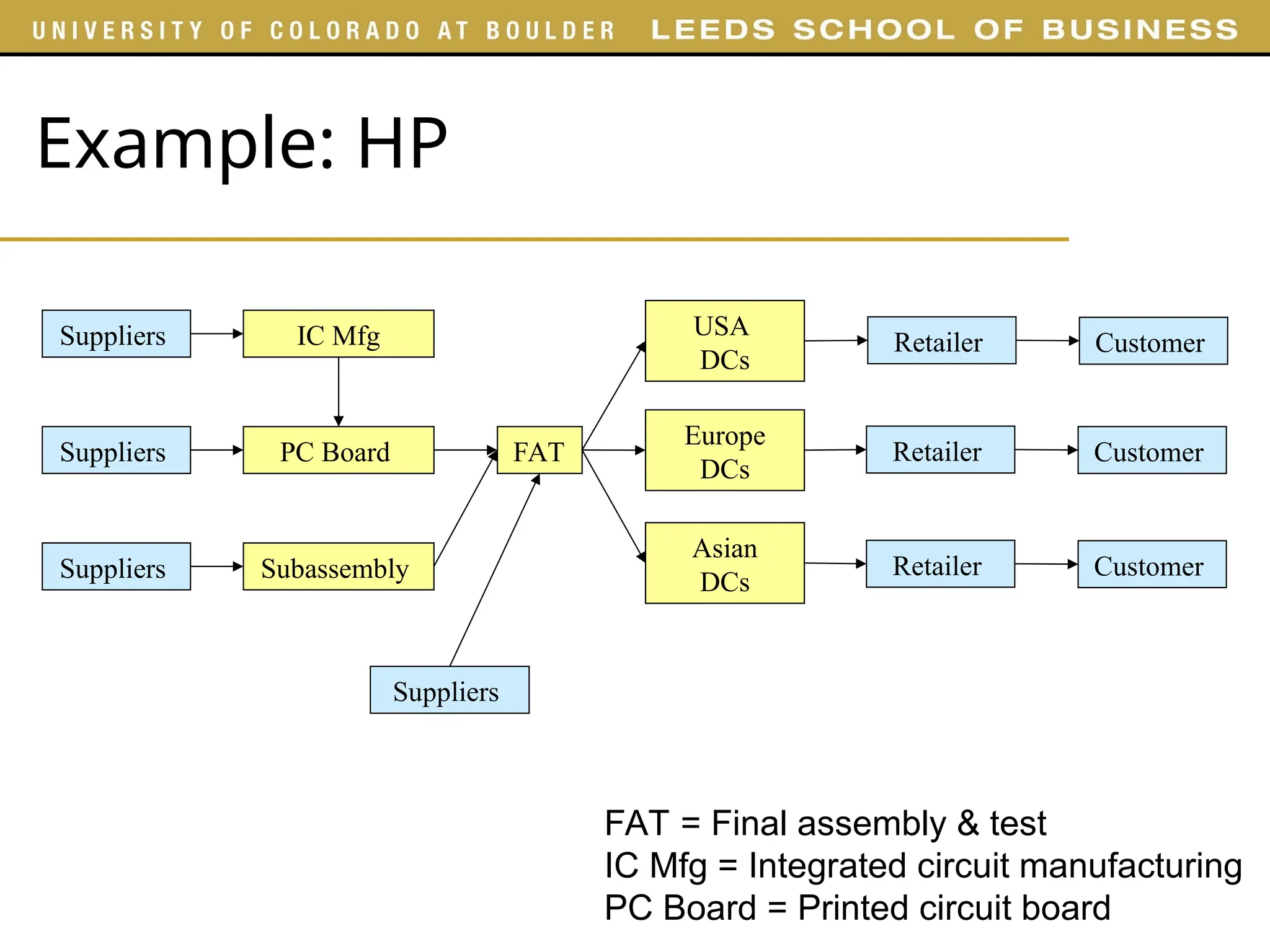
Example: HP
Subassembly
Suppliers
FAT
USA
DCs
Europe
DCs
Asian
DCs
Suppliers
FAT = Final assembly & test
IC Mfg = Integrated circuit manufacturing
PC Board = Printed circuit board
Suppliers
Suppliers PC Board
IC Mfg Retailer Customer
Retailer Customer
Retailer Customer
Example: Dell
Customers order
computers on
Dell’s website
Dell
Assembly
Plant
Monitors by SONY (Mexico)
Keyboards by Acer (Taiwan)
CPU by Intel (USA)
Other components
Dell is significantly revamping its entire supply
chain strategy and, in large measure, abandoning
its make-to-order model [April, 2008]
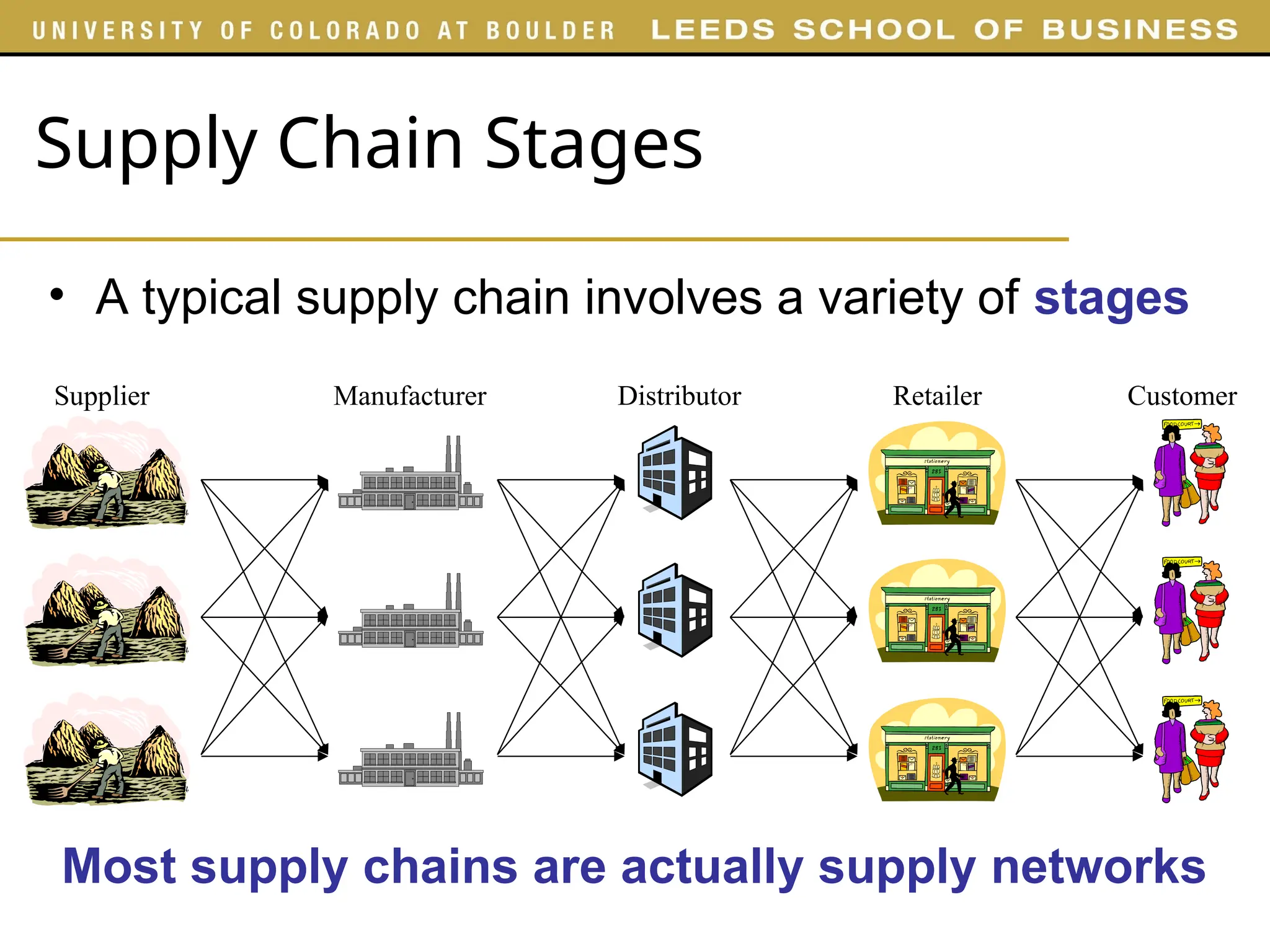
Supply Chain Stages
• A typical supply chain involves a variety of stages
Manufacturer Distributor Retailer Customer
Supplier
Most supply chains are actually supply networks
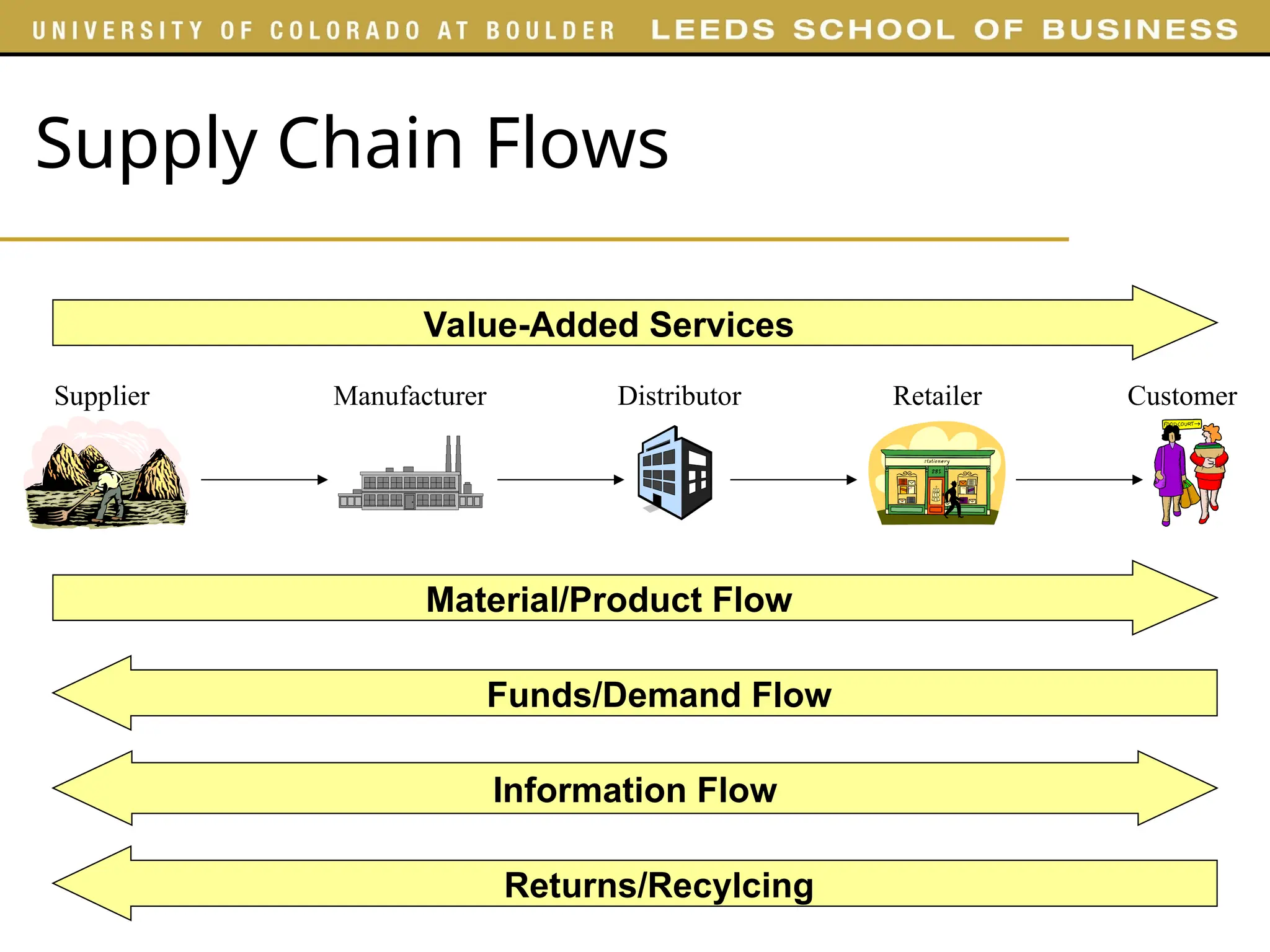
Supply Chain Flows
Manufacturer Distributor Retailer Customer
Supplier
Value-Added Services
Material/Product Flow
Funds/Demand Flow
Information Flow
Returns/Recylcing
What is a Supply Chain?
• A supply chain consists of all parties involved, directly or
indirectly, in fulfilling a customer request
– Suppliers, manufacturers, transporters, warehouses, retailers, and
customers
• A supply chain includes all functions involved in receiving
and filling a customer request
– New product development, marketing, operations, distribution,
finance, and customer service
• A supply chain is the entire process of moving a product
or service from suppliers to customers
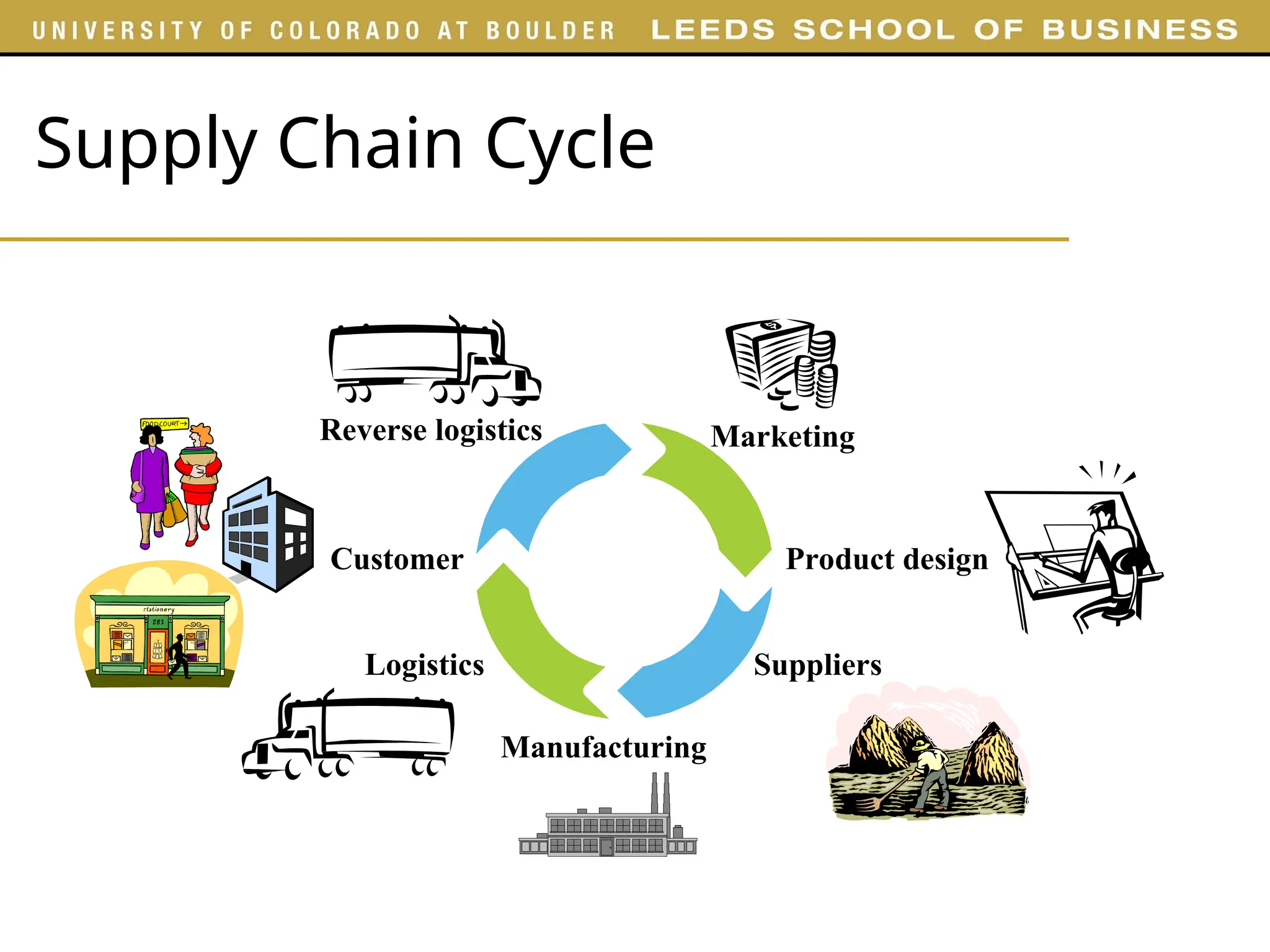
Supply Chain Cycle
Marketing
Product design
Suppliers
Manufacturing
Logistics
Customer
Reverse logistics
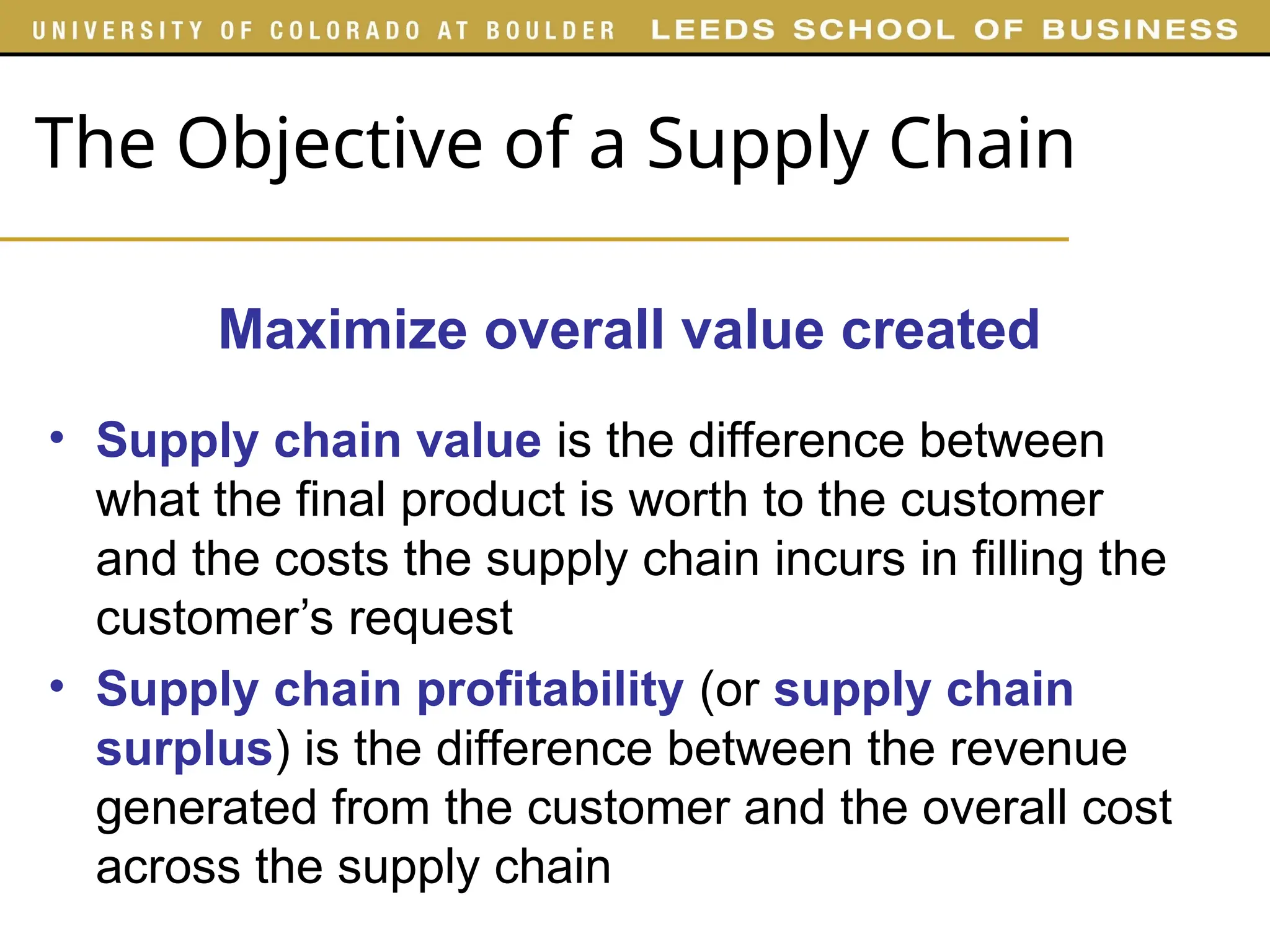
The Objective of a Supply Chain
• Supply chain value is the difference between
what the final product is worth to the customer
and the costs the supply chain incurs in filling the
customer’s request
• Supply chain profitability (or supply chain
surplus) is the difference between the revenue
generated from the customer and the overall cost
across the supply chain
Maximize overall value created
The Objective of a Supply Chain
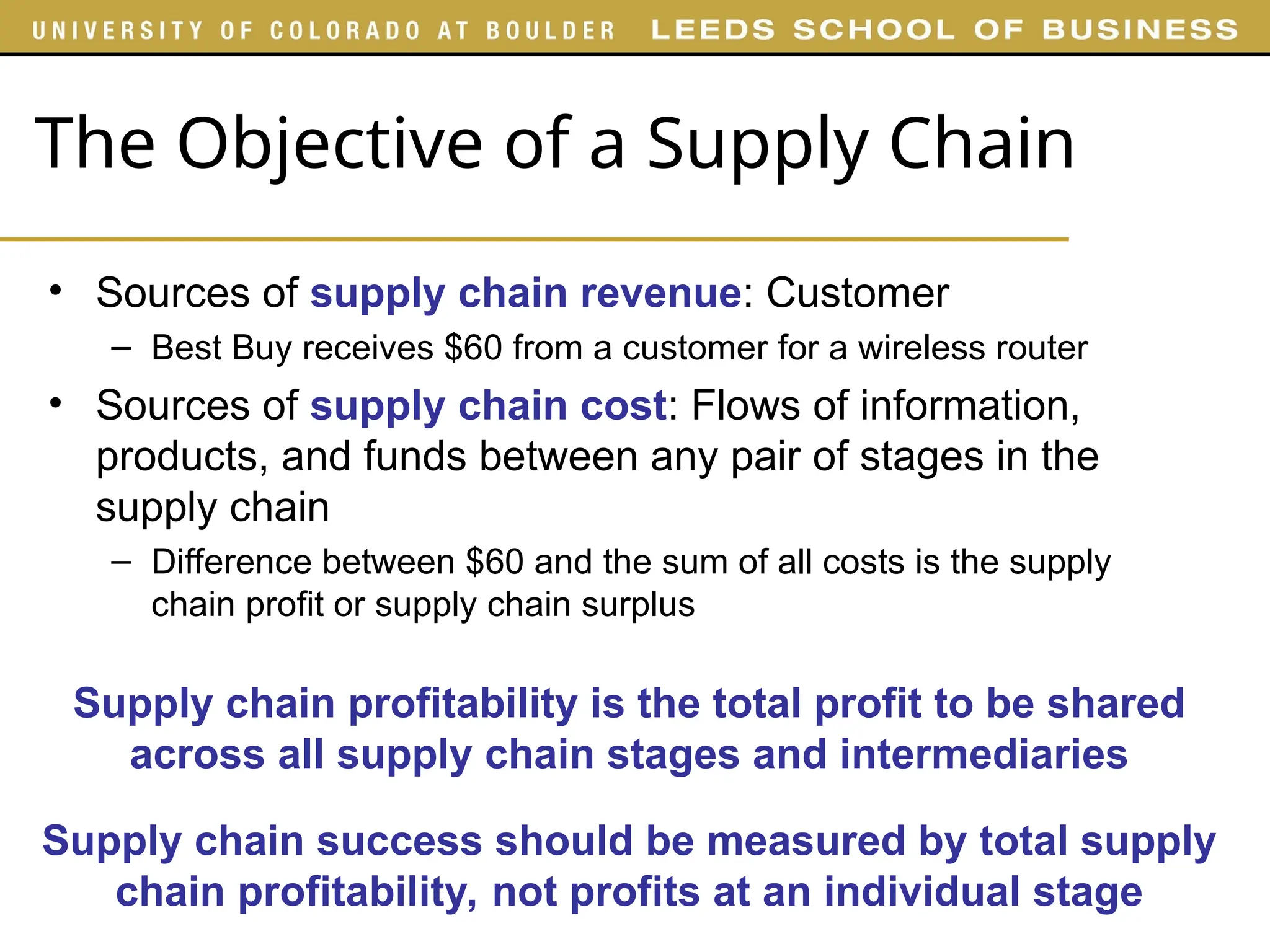
• Sources of supply chain revenue: Customer
– Best Buy receives $60 from a customer for a wireless router
• Sources of supply chain cost: Flows of information,
products, and funds between any pair of stages in the
supply chain
– Difference between $60 and the sum of all costs is the supply
chain profit or supply chain surplus
Supply chain profitability is the total profit to be shared
across all supply chain stages and intermediaries
Supply chain success should be measured by total supply
chain profitability, not profits at an individual stage
The Importance of Supply Chain
Decisions
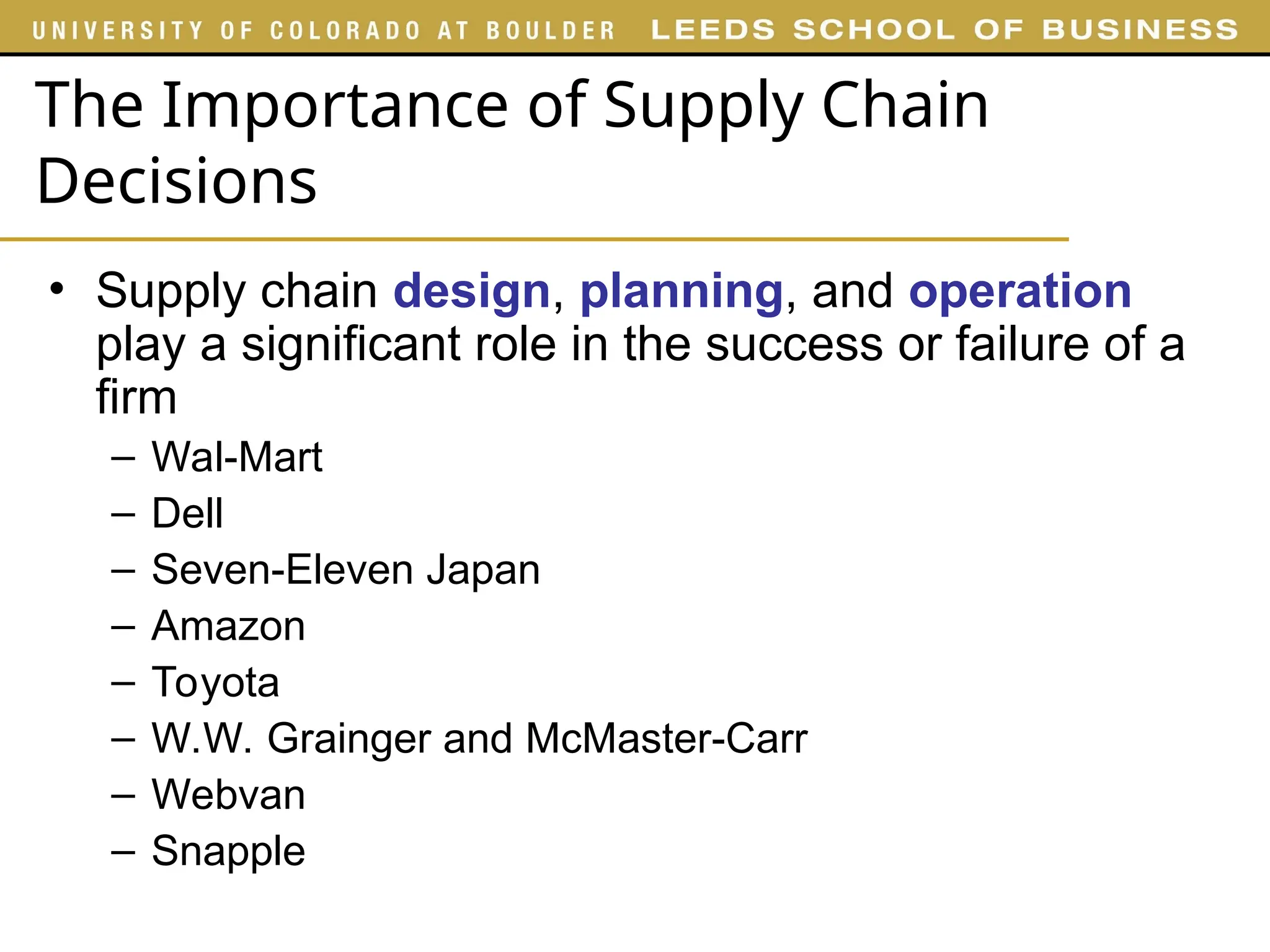
• Supply chain design, planning, and operation
play a significant role in the success or failure of a
firm
– Wal-Mart
– Dell
– Seven-Eleven Japan
– Amazon
– Toyota
– W.W. Grainger and McMaster-Carr
– Webvan
– Snapple
Overview
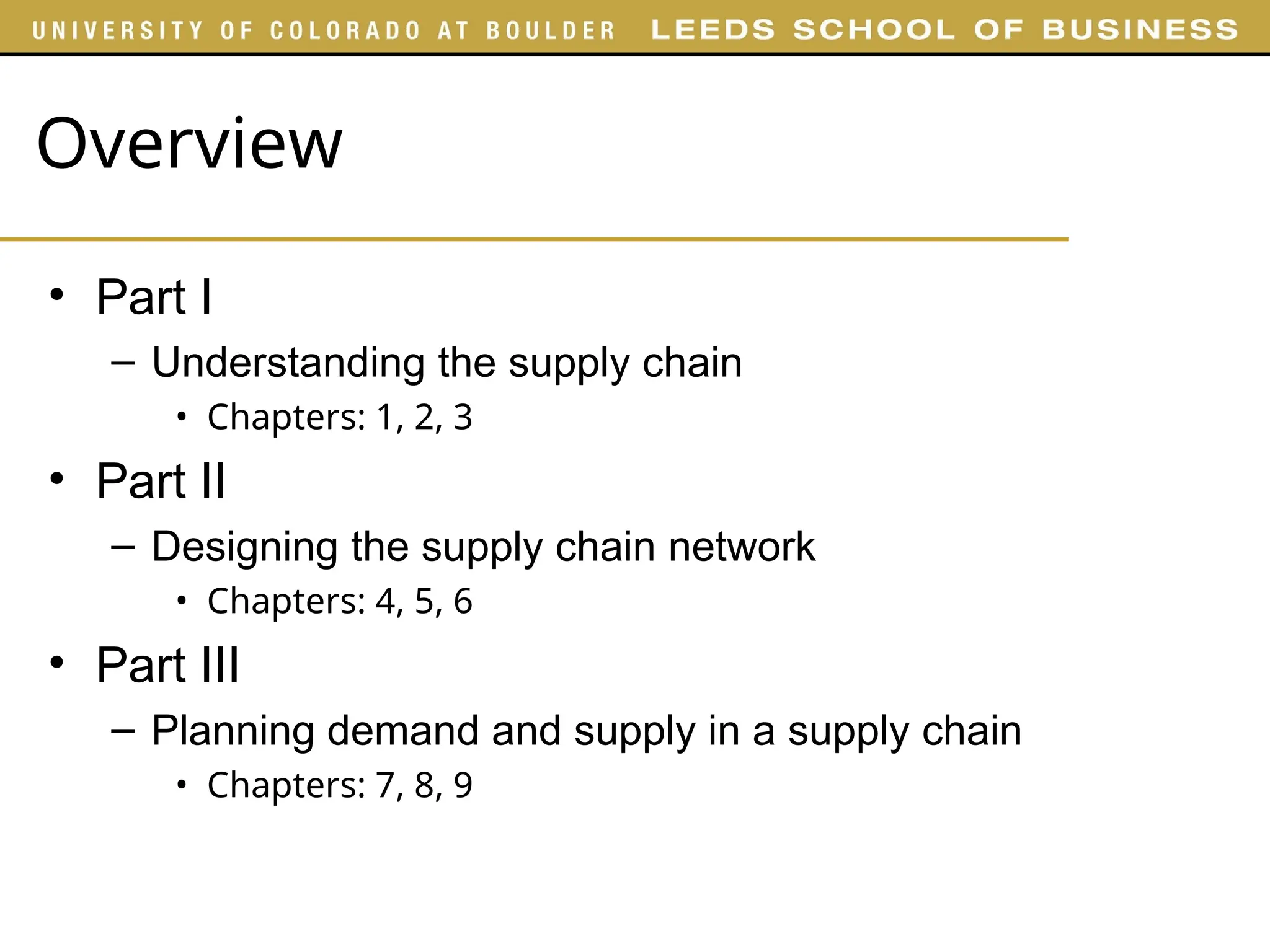
• Part I
– Understanding the supply chain
• Chapters: 1, 2, 3
• Part II
– Designing the supply chain network
• Chapters: 4, 5, 6
• Part III
– Planning demand and supply in a supply chain
• Chapters: 7, 8, 9
Overview
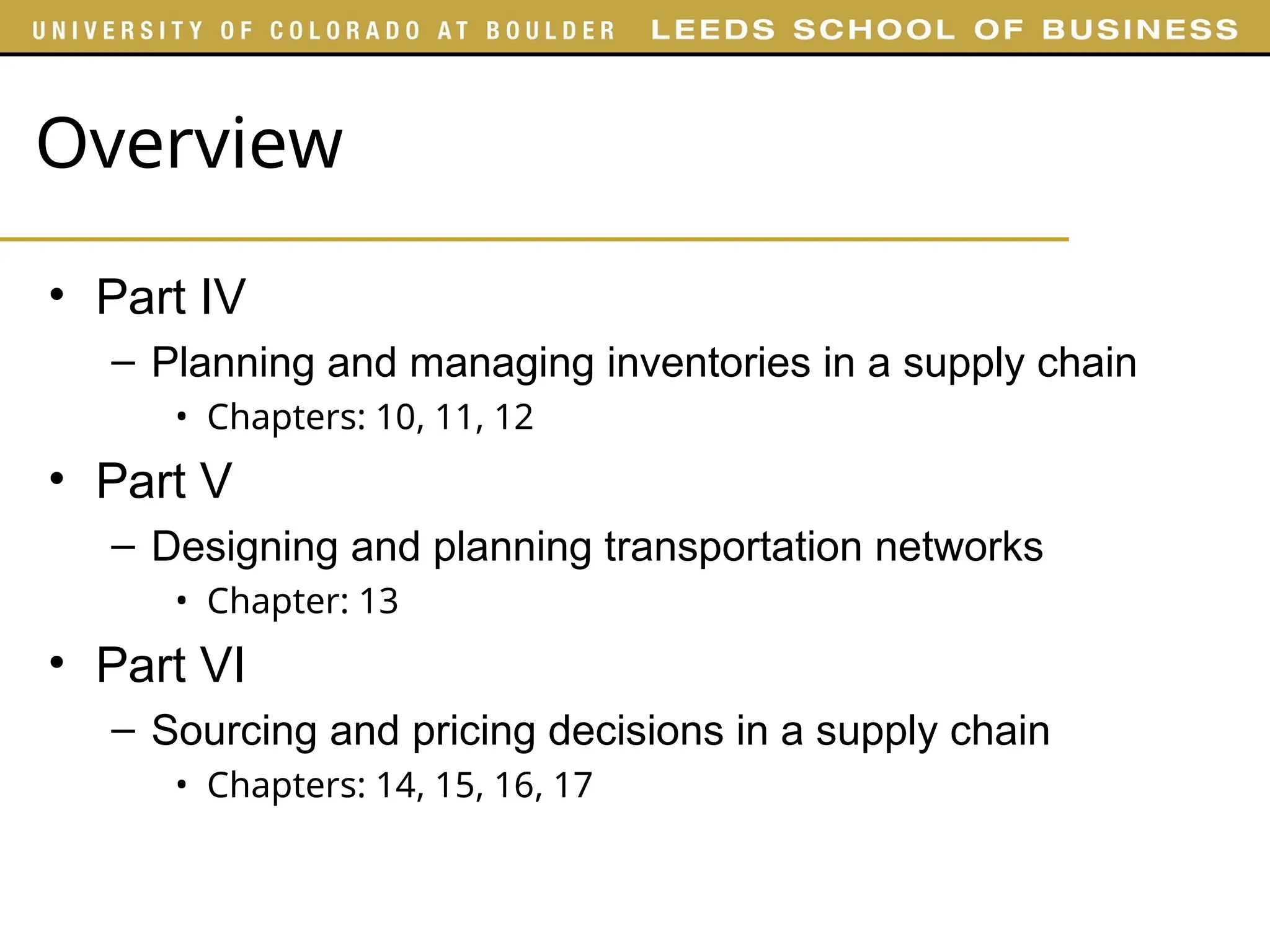
• Part IV
– Planning and managing inventories in a supply chain
• Chapters: 10, 11, 12
• Part V
– Designing and planning transportation networks
• Chapter: 13
• Part VI
– Sourcing and pricing decisions in a supply chain
• Chapters: 14, 15, 16, 17

overview of supply chain process and systematise

  • 1.
  • 2.
    Announcements • Workshop onapplying for scholarships – Jan 19, 10:00am-1:00pm, KOBL 360 – Jan 28, 12:00pm-2:00pm, KOBL 360 • Signup sheet outside Trep Café – Jan 13, 8:00am-1:00pm – Jan 14, 8:00am-1:00pm
  • 3.
    What is SupplyChain Management?
  • 4.
    What is aSupply Chain? • A supply chain consists of all parties involved, directly or indirectly, in fulfilling a customer request – Suppliers, manufacturers, transporters, warehouses, retailers, and customers • A supply chain includes all functions involved in receiving and filling a customer request – New product development, marketing, operations, distribution, finance, and customer service • A supply chain is the entire process of moving a product or service from suppliers to customers
  • 5.
    Stages of aDetergent Supply Chain Customer Wal-Mart Store Wal-Mart or Third Party DC P&G or Other Manufacturer Pactiv Corporation Paper Manufacturer Timber Company Plastic Producer Chemical Manufacturer
  • 6.
    Example: Wal-Mart Customers Request: Buyingdetergent, clothes, TV, …... Wal-Mart Stores Wal-Mart or third-party distribution centers Procter & Gamble Plastic Producer Fabric Producer Da-Fa Clothing, Inc. (China) SONY Factory (Malaysia) Electronics Components Producer Chemical Producer Zipper Producer Thread Producer Plastic Producer
  • 7.
    Example: HP Subassembly Suppliers FAT USA DCs Europe DCs Asian DCs Suppliers FAT =Final assembly & test IC Mfg = Integrated circuit manufacturing PC Board = Printed circuit board Suppliers Suppliers PC Board IC Mfg Retailer Customer Retailer Customer Retailer Customer
  • 8.
    Example: Dell Customers order computerson Dell’s website Dell Assembly Plant Monitors by SONY (Mexico) Keyboards by Acer (Taiwan) CPU by Intel (USA) Other components Dell is significantly revamping its entire supply chain strategy and, in large measure, abandoning its make-to-order model [April, 2008]
  • 9.
    Supply Chain Stages •A typical supply chain involves a variety of stages Manufacturer Distributor Retailer Customer Supplier Most supply chains are actually supply networks
  • 10.
    Supply Chain Flows ManufacturerDistributor Retailer Customer Supplier Value-Added Services Material/Product Flow Funds/Demand Flow Information Flow Returns/Recylcing
  • 11.
    What is aSupply Chain? • A supply chain consists of all parties involved, directly or indirectly, in fulfilling a customer request – Suppliers, manufacturers, transporters, warehouses, retailers, and customers • A supply chain includes all functions involved in receiving and filling a customer request – New product development, marketing, operations, distribution, finance, and customer service • A supply chain is the entire process of moving a product or service from suppliers to customers
  • 12.
    Supply Chain Cycle Marketing Productdesign Suppliers Manufacturing Logistics Customer Reverse logistics
  • 13.
    The Objective ofa Supply Chain • Supply chain value is the difference between what the final product is worth to the customer and the costs the supply chain incurs in filling the customer’s request • Supply chain profitability (or supply chain surplus) is the difference between the revenue generated from the customer and the overall cost across the supply chain Maximize overall value created
  • 14.
    The Objective ofa Supply Chain • Sources of supply chain revenue: Customer – Best Buy receives $60 from a customer for a wireless router • Sources of supply chain cost: Flows of information, products, and funds between any pair of stages in the supply chain – Difference between $60 and the sum of all costs is the supply chain profit or supply chain surplus Supply chain profitability is the total profit to be shared across all supply chain stages and intermediaries Supply chain success should be measured by total supply chain profitability, not profits at an individual stage
  • 15.
    The Importance ofSupply Chain Decisions • Supply chain design, planning, and operation play a significant role in the success or failure of a firm – Wal-Mart – Dell – Seven-Eleven Japan – Amazon – Toyota – W.W. Grainger and McMaster-Carr – Webvan – Snapple
  • 16.
    Overview • Part I –Understanding the supply chain • Chapters: 1, 2, 3 • Part II – Designing the supply chain network • Chapters: 4, 5, 6 • Part III – Planning demand and supply in a supply chain • Chapters: 7, 8, 9
  • 17.
    Overview • Part IV –Planning and managing inventories in a supply chain • Chapters: 10, 11, 12 • Part V – Designing and planning transportation networks • Chapter: 13 • Part VI – Sourcing and pricing decisions in a supply chain • Chapters: 14, 15, 16, 17

Editor's Notes

  • #5 Supply chain involves everybody, from the customer all the way to the last supplier The P&G manufacturing plant receives raw material from a variety of suppliers, who may themselves have been supplied by lower-tier suppliers
  • #8 Dell’s direct sales supply chain
  • #9 The term supply chain may imply that only one player is involved at each stage. A manufacturer may receive material from several suppliers and the supply to several distributors, who may supply several retailers. Thus, most supply chains are actually networks
  • #12 What is a logical point to start? Prior to anything being produced it is of the company’s best interest to predict the level of demand (Marketing). By conducting research and forecast demand. Once markets have been identified and demand has been established Specifications are decided (Product design) Raw materials (Suppliers) Supplied for production (Manufacturing) Transport (Logistics) Distribution centers, warehouses, retailers, customers (Customers) Returns and recycling (Reverse logistics) Data and feedback on products
  • #13 For most commercial supply chains, value will be strongly correlated with supply chain profitability
  • #15 W.W. Grainger and McMaster-Carr - Maintenance Repair and Operations (MRO) products Webvan - Online grocery store Snapple - Bottled drinks