Our values, our choices
Agis D. Tsouros
Director, Division Policy and Governance for Health and Well-being
Implementation is about choices and capacity
• Political choices about the kind of society we want and the coherent
policy responses for better health for all
• Strategic choices about interventions that are aimed at upstream
actions and maximum impact
• Organizational choices about creating capacity to sustain adequate
resources, mechanisms and fora for intersectoral work.
Goals to strive for
• Giving every child the best start in life
• Promoting health literacy throughout society and
institutions
• Developing welfare policies and health protection measures
to protect people, especially those in vulnerable
circumstances
Pragmatic and well-presented
messages about the gains of joint
action with other sectors can overcome
scepticism and political inertia
7 reasons why I feel I should act as a minister of health on the
social determinants of health (SDH)
1. I feel it is my responsibility to exercise leadership for better health all across sectors and levels of governments.
2. I feel that the compelling evidence on the SDH has strengthened considerably my ability to make a strong case for
health to other sectors.
3. I am aware that the health sector alone cannot deliver optimal health outcomes and address the challenges to and
opportunities for health of our times.
4. I feel all sectors should act on the impact their policies have on health and be held accountable.
5. I feel that working together around common societal goals, to which different sectors and partners can contribute is
the way forward.
6. I am aware that I can make a difference in this domain if I invest in developing capacity in my Ministry for effective
and sustainable intersectoral work.
7. I am convinced Health 2020 gives me the political legitimacy to advocate and strive for change. There is also
considerable experience in the Region from which to learn and draw inspiration.
Issues that matter
• Understanding the evidence, being clear about the gains and the costs of action and inaction
• Understanding the language of other sectors
• Learning from different approaches and entry points
• Defining common goals and targets – what matters is how we go about achieving them
• Different approaches of intersectoral action can coexist and be mutually beneficial
– use meaningful working definitions that make sense in the country context
• Action on the social determinants of health without the active involvement of local governments
can never be optimal or effective
• Promoting consensus across political parties
WHO supports
• Increasingly seeking and creating opportunities to engage with the education
and social sectors in countries
• Promoting learning about the recommendations of the social determinants
studies and sharing of knowledge and experiences from countries
• Developing tools and briefs for reaching out to other sectors
• Supporting policy and strategy development
• Advising on establishing sustainable mechanisms for intersectoral work
• Promoting partnerships with key agencies
• Exploring fora for dialogue and joint action at the European level
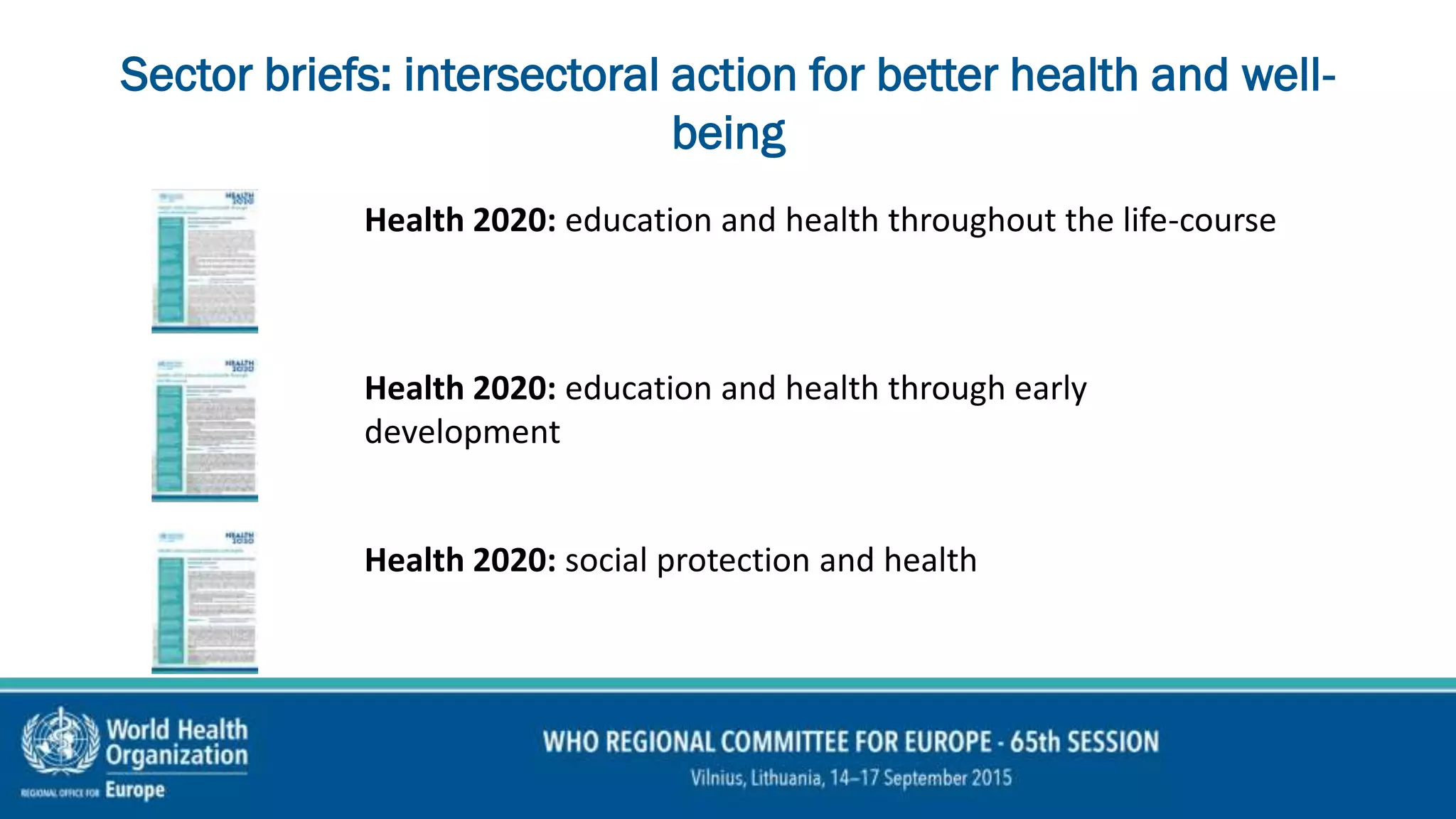
Sector briefs: intersectoral action for better health and well-
being
Health 2020: social protection and health
Health 2020: education and health throughout the life-course
Health 2020: education and health through early
development
Thank you

Our values, our choices

  • 1.
    Our values, ourchoices Agis D. Tsouros Director, Division Policy and Governance for Health and Well-being
  • 2.
    Implementation is aboutchoices and capacity • Political choices about the kind of society we want and the coherent policy responses for better health for all • Strategic choices about interventions that are aimed at upstream actions and maximum impact • Organizational choices about creating capacity to sustain adequate resources, mechanisms and fora for intersectoral work.
  • 3.
    Goals to strivefor • Giving every child the best start in life • Promoting health literacy throughout society and institutions • Developing welfare policies and health protection measures to protect people, especially those in vulnerable circumstances
  • 4.
    Pragmatic and well-presented messagesabout the gains of joint action with other sectors can overcome scepticism and political inertia
  • 5.
    7 reasons whyI feel I should act as a minister of health on the social determinants of health (SDH) 1. I feel it is my responsibility to exercise leadership for better health all across sectors and levels of governments. 2. I feel that the compelling evidence on the SDH has strengthened considerably my ability to make a strong case for health to other sectors. 3. I am aware that the health sector alone cannot deliver optimal health outcomes and address the challenges to and opportunities for health of our times. 4. I feel all sectors should act on the impact their policies have on health and be held accountable. 5. I feel that working together around common societal goals, to which different sectors and partners can contribute is the way forward. 6. I am aware that I can make a difference in this domain if I invest in developing capacity in my Ministry for effective and sustainable intersectoral work. 7. I am convinced Health 2020 gives me the political legitimacy to advocate and strive for change. There is also considerable experience in the Region from which to learn and draw inspiration.
  • 6.
    Issues that matter •Understanding the evidence, being clear about the gains and the costs of action and inaction • Understanding the language of other sectors • Learning from different approaches and entry points • Defining common goals and targets – what matters is how we go about achieving them • Different approaches of intersectoral action can coexist and be mutually beneficial – use meaningful working definitions that make sense in the country context • Action on the social determinants of health without the active involvement of local governments can never be optimal or effective • Promoting consensus across political parties
  • 7.
    WHO supports • Increasinglyseeking and creating opportunities to engage with the education and social sectors in countries • Promoting learning about the recommendations of the social determinants studies and sharing of knowledge and experiences from countries • Developing tools and briefs for reaching out to other sectors • Supporting policy and strategy development • Advising on establishing sustainable mechanisms for intersectoral work • Promoting partnerships with key agencies • Exploring fora for dialogue and joint action at the European level
  • 8.
    Sector briefs: intersectoralaction for better health and well- being Health 2020: social protection and health Health 2020: education and health throughout the life-course Health 2020: education and health through early development
  • 9.