1

Osteoporosis and fractures
An orthopaedic perspective

By
A.Arputha Selvaraj APMP –IIM Calcutta
2

Why is the Orthopaedic Surgeons Initiative needed?
• Fragility fractures are a large and growing health issue
– 1 in 2 women and 1 in 4 men over 50 yrs of age will suffer a fracture in
their remaining lifetime

• A prior fracture increases the risk of a new fracture 2- to 5-fold
• Yet few fracture patients receive evaluation and treatment of
osteoporosis, the underlying cause of most fragility fractures
– Calls for action to improve the evaluation and treatment of fracture
patients have been published around the World1,2

1.
2.

Eastell et al. QJM 2001; 94:575-59
Bouxsein et al. J Am Acad Ortho Surg. 2004; 12:385-95
Orthopaedic surgeons have a unique
opportunity
• Fragility fracture is often the first indication a patient has
osteoporosis
• Orthopaedic surgeons are often the first and may be the
only physician seen by fracture patients
• The orthopaedist can serve a pivotal role in optimizing
treatment, not only of the fracture, but also of the
underlying disease

1.
2.

Eastell et al. QJM 2001; 94:575-59
Bouxsein et al. J Am Acad Ortho Surg. 2004; 12:385-95

3
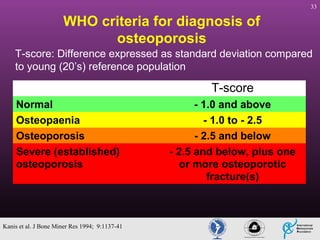
4

Multinational Survey of
Osteoporotic Fracture Management
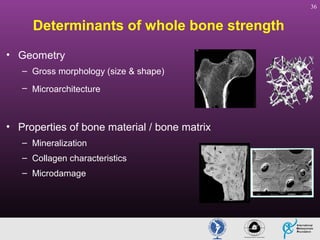
Survey of 3422 orthopaedic surgeons from 6 countries
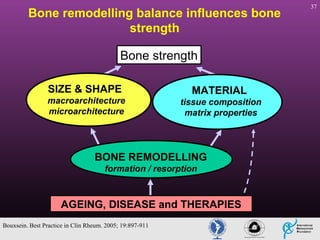
•

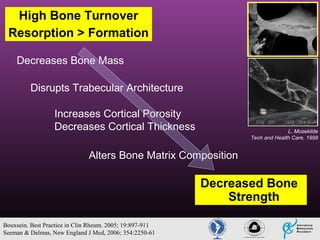
90% do not routinely measure bone density following the first fracture

•

75% are lacking appropriate knowledge about osteoporosis

Dreinhöfer et al. Osteoporos Int 2005; 16:S44-S54
5

Goals of the Orthopaedic Surgeons Initiative
• Improve awareness of the scope and magnitude of fragility
fractures as a global public health concern
• Improve understanding of osteoporosis and recognition that
it is the underlying cause of most fragility fractures
• Motivate orthopaedic surgeons to take an active role in
optimizing care of the fragility fracture patient with the
ultimate goal of preventing future fractures
6

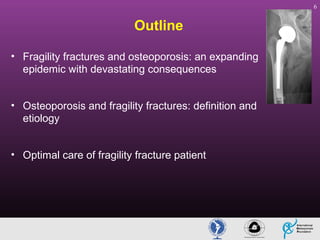
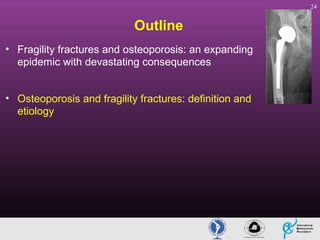
Outline
• Fragility fractures and osteoporosis: an expanding
epidemic with devastating consequences
• Osteoporosis and fragility fractures: definition and
etiology
• Optimal care of fragility fracture patient
7

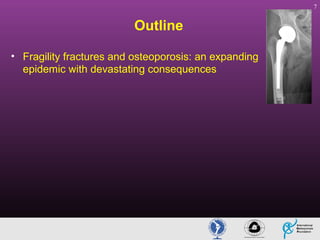
Outline
• Fragility fractures and osteoporosis: an expanding
epidemic with devastating consequences
8

Osteoporosis and fragility
fractures:
An expanding epidemic
9

Fragility fractures are common

• 1 in 2 women and 1 in 5 men over age 50 will suffer a
fracture in their remaining life time1
• 55% of persons over age 50 are at increased risk of
fracture due to low bone mass
• At age 50, a woman’s lifetime risk of fracture exceeds
combined risk of breast, ovarian & uterine cancer
• At age 50, a man’s lifetime risk of fracture exceeds risk of
prostate cancer

1.

Johnell et al. Osteoporos Int. 2005; 16: S3-7
10

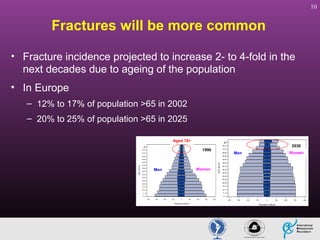
Fractures will be more common
• Fracture incidence projected to increase 2- to 4-fold in the
next decades due to ageing of the population
• In Europe
– 12% to 17% of population >65 in 2002
– 20% to 25% of population >65 in 2025
Aged 70+
1990

Men

Women

2030
Men

Women
1950 2050

05 23

006

004

873

926

247

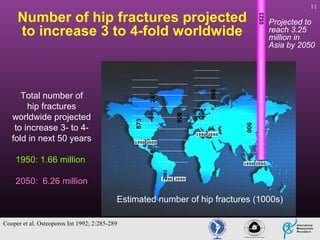
Total number of
hip fractures
worldwide projected
to increase 3- to 4fold in next 50 years

Projected to
reach 3.25
million in
Asia by 2050

866

Number of hip fractures projected
to increase 3 to 4-fold worldwide

11

1950 2050

1950: 1.66 million
001

1950 2050

2050: 6.26 million

1950 2050

Estimated number of hip fractures (1000s)
Cooper et al. Osteoporos Int 1992; 2:285-289
12

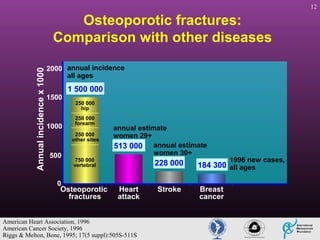
Annual incidence x 1000

Osteoporotic fractures:
Comparison with other diseases
2000 annual incidence
all ages
1500

1000

1 500 000
250 000
hip
250 000
forearm
250 000
other sites

500

0

annual estimate
women 29+
513 000 annual estimate
women 30+

750 000
vertebral

Osteoporotic
fractures

228 000
Heart
attack

American Heart Association, 1996
American Cancer Society, 1996
Riggs & Melton, Bone, 1995; 17(5 suppl):505S-511S

Stroke

1996 new cases,

184 300 all ages
Breast
cancer
13

Osteoporosis and fragility
fractures:
Morbidity, mortality and costs
14

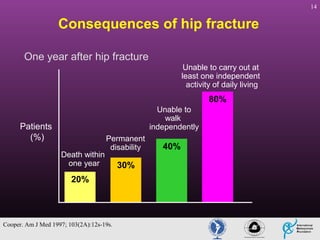
Consequences of hip fracture
One year after hip fracture
Unable to carry out at
least one independent
activity of daily living

80%
Unable to
walk
independently

Patients
(%)
Death within
one year

Permanent
disability

20%

Cooper. Am J Med 1997; 103(2A):12s-19s.

30%

40%
15

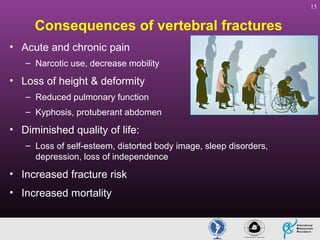
Consequences of vertebral fractures
• Acute and chronic pain
– Narcotic use, decrease mobility

• Loss of height & deformity
– Reduced pulmonary function
– Kyphosis, protuberant abdomen

• Diminished quality of life:
– Loss of self-esteem, distorted body image, sleep disorders,
depression, loss of independence

• Increased fracture risk
• Increased mortality
16

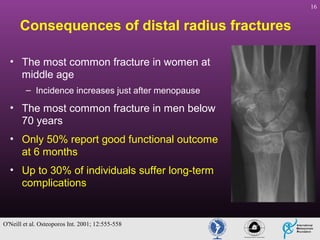
Consequences of distal radius fractures
• The most common fracture in women at
middle age
– Incidence increases just after menopause

• The most common fracture in men below
70 years
• Only 50% report good functional outcome
at 6 months
• Up to 30% of individuals suffer long-term
complications

O'Neill et al. Osteoporos Int. 2001; 12:555-558
17

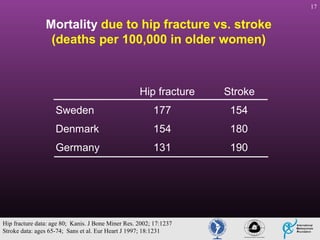
Mortality due to hip fracture vs. stroke
(deaths per 100,000 in older women)

Hip fracture

Stroke

Sweden

177

154

Denmark

154

180

Germany

131

190

Hip fracture data: age 80; Kanis. J Bone Miner Res. 2002; 17:1237
Stroke data: ages 65-74; Sans et al. Eur Heart J 1997; 18:1231
18

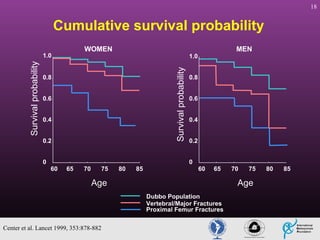
Cumulative survival probability
WOMEN

1.0

Survival probability

Survival probability

1.0
0.8
0.6
0.4
0.2
0

60

65

70

75

MEN

80

85

0.8
0.6
0.4
0.2
0

60

65

Age

75

Age
Dubbo Population
Vertebral/Major Fractures
Proximal Femur Fractures

Center et al. Lancet 1999, 353:878-882

70

80

85
19

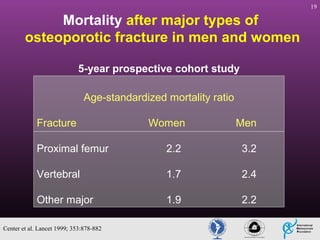
Mortality after major types of
osteoporotic fracture in men and women
5-year prospective cohort study
Age-standardized mortality ratio
Fracture

Women

Men

Proximal femur

2.2

3.2

Vertebral

1.7

2.4

Other major

1.9

2.2

Center et al. Lancet 1999; 353:878-882
20

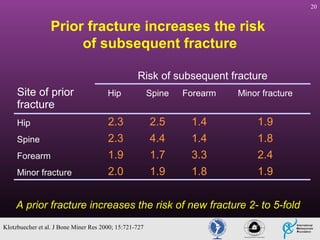
Prior fracture increases the risk
of subsequent fracture
Risk of subsequent fracture

Site of prior
fracture

Hip

Spine

Forearm

Minor fracture

Hip

2.3
2.3
1.9
2.0

2.5
4.4
1.7
1.9

1.4
1.4
3.3
1.8

1.9
1.8
2.4
1.9

Spine
Forearm
Minor fracture

A prior fracture increases the risk of new fracture 2- to 5-fold
Klotzbuecher et al. J Bone Miner Res 2000; 15:721-727
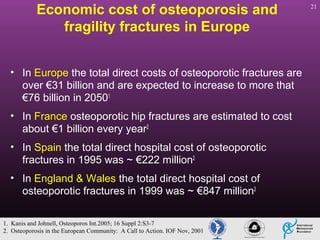
Economic cost of osteoporosis and
fragility fractures in Europe
• In Europe the total direct costs of osteoporotic fractures are
over €31 billion and are expected to increase to more that
€76 billion in 20501
• In France osteoporotic hip fractures are estimated to cost
about €1 billion every year2
• In Spain the total direct hospital cost of osteoporotic
fractures in 1995 was ~ €222 million2
• In England & Wales the total direct hospital cost of
osteoporotic fractures in 1999 was ~ €847 million2
1. Kanis and Johnell, Osteoporos Int.2005; 16 Suppl 2:S3-7
2. Osteoporosis in the European Community: A Call to Action. IOF Nov, 2001

21
22

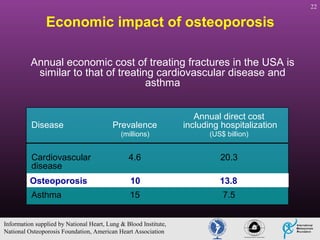
Economic impact of osteoporosis
Annual economic cost of treating fractures in the USA is
similar to that of treating cardiovascular disease and
asthma

Prevalence

Annual direct cost
including hospitalization

(millions)

(US$ billion)

Cardiovascular
disease

4.6

20.3

Osteoporosis

10

13.8

Asthma

15

7.5

Disease

Information supplied by National Heart, Lung & Blood Institute,
National Osteoporosis Foundation, American Heart Association
23

Fragility fractures are common and have
severe consequences
Fragility fractures lead to major morbidity, decreased quality of life
and increased mortality
– 10-25% excess mortality
– 50% unable to walk independently after hip fracture
– 50% show substantial decline from prior level of function (many lose
ability to live independently)
– Increased depression, chronic pain, disability
– Increased risk of subsequent fracture
24

Outline
• Fragility fractures and osteoporosis: an expanding
epidemic with devastating consequences
• Osteoporosis and fragility fractures: definition and
etiology
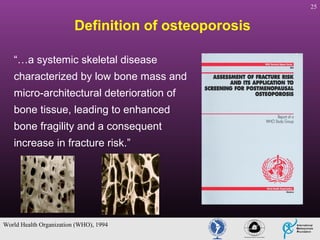
25

Definition of osteoporosis
“…a systemic skeletal disease
characterized by low bone mass and
micro-architectural deterioration of
bone tissue, leading to enhanced
bone fragility and a consequent
increase in fracture risk.”

World Health Organization (WHO), 1994
26

Major risk factors for fractures
• Prior fragility fracture
• Increased age
• Low bone mineral density
• Low body weight
• Family history of osteoporotic fracture
• Glucocorticoid use
• Smoking
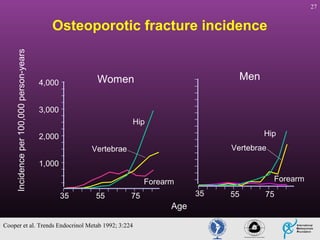
27

Incidence per 100,000 person-years

Osteoporotic fracture incidence

Men

Women

4,000
3,000

Hip
Hip

2,000

Vertebrae

Vertebrae
1,000

Forearm

Forearm
35

55

35

75

Age
Cooper et al. Trends Endocrinol Metab 1992; 3:224

55

75
28

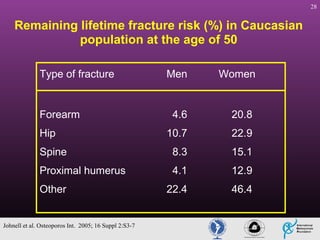
Remaining lifetime fracture risk (%) in Caucasian
population at the age of 50
Type of fracture

Men

Women

4.6

20.8

10.7

22.9

Spine

8.3

15.1

Proximal humerus

4.1

12.9

22.4

46.4

Forearm
Hip

Other

Johnell et al. Osteoporos Int. 2005; 16 Suppl 2:S3-7
29

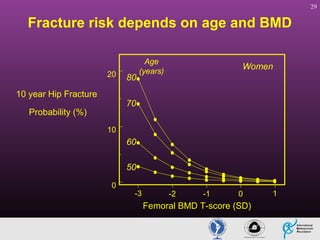
Fracture risk depends on age and BMD

20

10 year Hip Fracture

80

Age
(years)

Women

70

Probability (%)
10

60
50
0

-3

-2

-1

0

Femoral BMD T-score (SD)

1
30

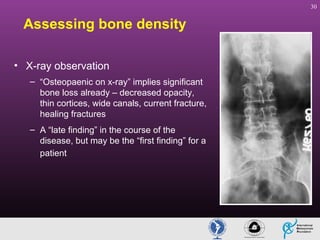
Assessing bone density
• X-ray observation
– “Osteopaenic on x-ray” implies significant
bone loss already – decreased opacity,
thin cortices, wide canals, current fracture,
healing fractures
– A “late finding” in the course of the
disease, but may be the “first finding” for a
patient
31

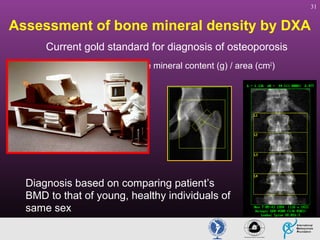
Assessment of bone mineral density by DXA
Current gold standard for diagnosis of osteoporosis
BMD (g/cm2) = Bone mineral content (g) / area (cm2)

Diagnosis based on comparing patient’s
BMD to that of young, healthy individuals of
same sex
32

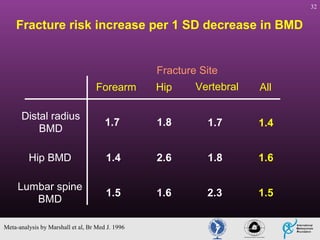
Fracture risk increase per 1 SD decrease in BMD

Fracture Site
Forearm

Hip

Vertebral

All

Distal radius
BMD

1.7

1.8

1.7

1.4

Hip BMD

1.4

2.6

1.8

1.6

Lumbar spine
BMD

1.5

1.6

2.3

1.5

Meta-analysis by Marshall et al, Br Med J. 1996
33

WHO criteria for diagnosis of
osteoporosis
T-score: Difference expressed as standard deviation compared
to young (20’s) reference population

T-score
Normal
Osteopaenia
Osteoporosis
Severe (established)
osteoporosis

Kanis et al. J Bone Miner Res 1994; 9:1137-41

- 1.0 and above
- 1.0 to - 2.5
- 2.5 and below
- 2.5 and below, plus one
or more osteoporotic
fracture(s)
34

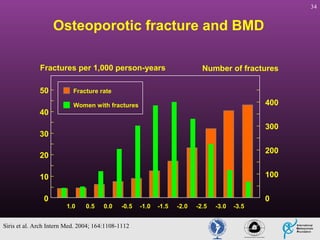
Osteoporotic fracture and BMD
Fractures per 1,000 person-years
50
40

Number of fractures

Fracture rate

400

Women with fractures

300

30

200

20

100

10
0

1.0

0.5

0.0

-0.5

Siris et al. Arch Intern Med. 2004; 164:1108-1112

-1.0

-1.5

-2.0

-2.5

-3.0

-3.5

0
35

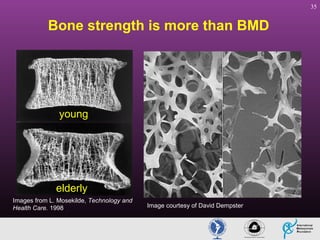
Bone strength is more than BMD

young

elderly
Images from L. Mosekilde, Technology and
Health Care. 1998

Image courtesy of David Dempster
36

Determinants of whole bone strength
• Geometry
– Gross morphology (size & shape)
– Microarchitecture

• Properties of bone material / bone matrix
– Mineralization
– Collagen characteristics
– Microdamage
Bone remodelling balance influences bone
strength
Bone strength
SIZE & SHAPE
macroarchitecture
microarchitecture

MATERIAL
tissue composition
matrix properties

BONE REMODELLING
formation / resorption

AGEING, DISEASE and THERAPIES
Bouxsein. Best Practice in Clin Rheum. 2005; 19:897-911

37
38

High Bone Turnover
Resorption > Formation
Decreases Bone Mass
Disrupts Trabecular Architecture
Increases Cortical Porosity
Decreases Cortical Thickness

L. Mosekilde
Tech and Health Care, 1998

Alters Bone Matrix Composition

Decreased Bone
Strength
Bouxsein. Best Practice in Clin Rheum. 2005; 19:897-911
Seeman & Delmas, New England J Med, 2006; 354:2250-61
39

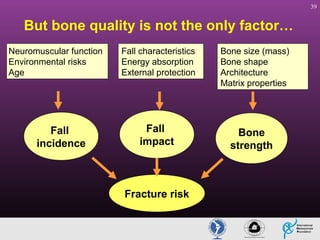
But bone quality is not the only factor…
Neuromuscular function
Environmental risks
Age

Fall
incidence

Fall characteristics
Energy absorption
External protection

Fall
impact

Fracture risk

Bone size (mass)
Bone shape
Architecture
Matrix properties

Bone
strength
40

Outline
• Fragility fractures and osteoporosis: an expanding
epidemic with devastating consequences
• Osteoporosis and fragility fractures: definition and
etiology
• Optimal care of fragility fracture patient
– Critical opportunity for orthopaedists
41

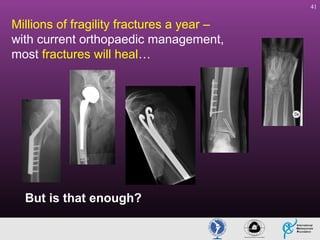
Millions of fragility fractures a year –
with current orthopaedic management,
most fractures will heal…

But is that enough?
42

Alarming facts
• Awareness and knowledge about osteoporosis is low
among fracture patients
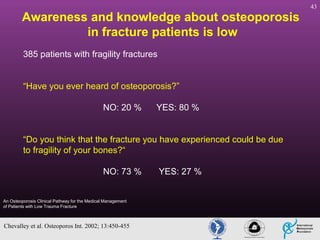
Awareness and knowledge about osteoporosis
in fracture patients is low
385 patients with fragility fractures
“Have you ever heard of osteoporosis?”
NO: 20 %

YES: 80 %

“Do you think that the fracture you have experienced could be due
to fragility of your bones?“
NO: 73 %

An Osteoporosis Clinical Pathway for the Medical Management
of Patients with Low Trauma Fracture

Chevalley et al. Osteoporos Int. 2002; 13:450-455

YES: 27 %

43
44

Alarming facts
• Awareness and knowledge about osteoporosis is low
among fracture patients
• Despite availability of therapies proven to reduce fracture
risk, even in patients who have already suffered a fracture,
diagnosis and treatment of osteoporosis among fragility
fracture patients remains low
45

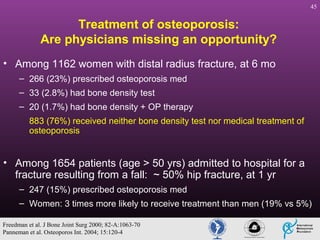
Treatment of osteoporosis:
Are physicians missing an opportunity?
• Among 1162 women with distal radius fracture, at 6 mo
– 266 (23%) prescribed osteoporosis med
– 33 (2.8%) had bone density test
– 20 (1.7%) had bone density + OP therapy
883 (76%) received neither bone density test nor medical treatment of
osteoporosis

• Among 1654 patients (age > 50 yrs) admitted to hospital for a
fracture resulting from a fall: ~ 50% hip fracture, at 1 yr
– 247 (15%) prescribed osteoporosis med
– Women: 3 times more likely to receive treatment than men (19% vs 5%)
Freedman et al. J Bone Joint Surg 2000; 82-A:1063-70
Panneman et al. Osteoporos Int. 2004; 15:120-4
46

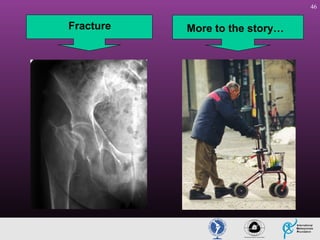
Fracture

More to the story…
47

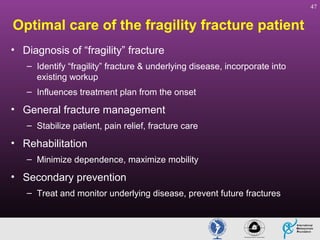
Optimal care of the fragility fracture patient
• Diagnosis of “fragility” fracture
– Identify “fragility” fracture & underlying disease, incorporate into
existing workup
– Influences treatment plan from the onset

• General fracture management
– Stabilize patient, pain relief, fracture care

• Rehabilitation
– Minimize dependence, maximize mobility

• Secondary prevention
– Treat and monitor underlying disease, prevent future fractures
48

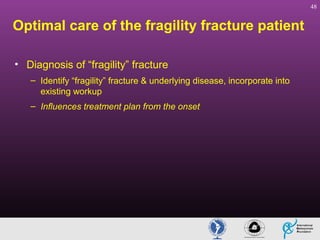
Optimal care of the fragility fracture patient
• Diagnosis of “fragility” fracture
– Identify “fragility” fracture & underlying disease, incorporate into
existing workup
– Influences treatment plan from the onset
49

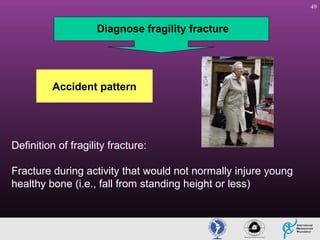
Diagnose fragility fracture

Accident pattern

Definition of fragility fracture:
Fracture during activity that would not normally injure young
healthy bone (i.e., fall from standing height or less)
50

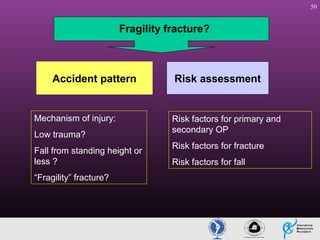
Fragility fracture?

Accident pattern

Mechanism of injury:
Low trauma?
Fall from standing height or
less ?
“Fragility” fracture?

Risk assessment

Risk factors for primary and
secondary OP
Risk factors for fracture
Risk factors for fall
51

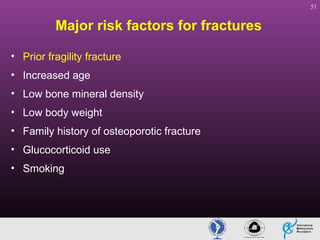
Major risk factors for fractures
• Prior fragility fracture
• Increased age
• Low bone mineral density
• Low body weight
• Family history of osteoporotic fracture
• Glucocorticoid use
• Smoking
52

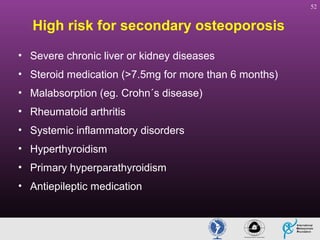
High risk for secondary osteoporosis
• Severe chronic liver or kidney diseases
• Steroid medication (>7.5mg for more than 6 months)
• Malabsorption (eg. Crohn´s disease)
• Rheumatoid arthritis
• Systemic inflammatory disorders
• Hyperthyroidism
• Primary hyperparathyroidism
• Antiepileptic medication
53

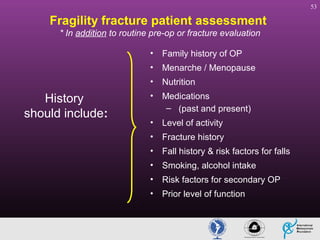
Fragility fracture patient assessment
* In addition to routine pre-op or fracture evaluation
•
•

Menarche / Menopause

•

History
should include:

Family history of OP
Nutrition

•

Medications
– (past and present)

•

Level of activity

•

Fracture history

•

Fall history & risk factors for falls

•

Smoking, alcohol intake

•

Risk factors for secondary OP

•

Prior level of function
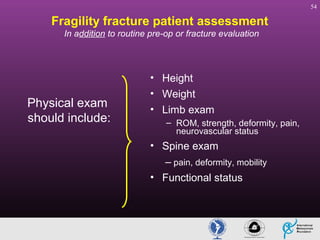
54

Fragility fracture patient assessment
In addition to routine pre-op or fracture evaluation

Physical exam
should include:

• Height
• Weight
• Limb exam
– ROM, strength, deformity, pain,
neurovascular status

• Spine exam
– pain, deformity, mobility
• Functional status
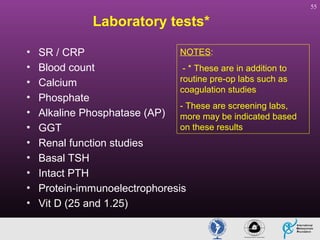
55

Laboratory tests*
•
•
•
•
•
•
•
•
•
•
•

NOTES:
SR / CRP
Blood count
- * These are in addition to
routine pre-op labs such as
Calcium
coagulation studies
Phosphate
- These are screening labs,
Alkaline Phosphatase (AP) more may be indicated based
on these results
GGT
Renal function studies
Basal TSH
Intact PTH
Protein-immunoelectrophoresis
Vit D (25 and 1.25)
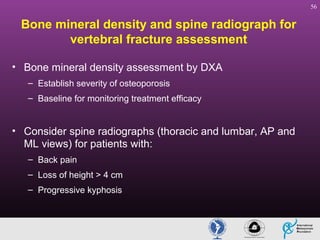
56

Bone mineral density and spine radiograph for
vertebral fracture assessment
• Bone mineral density assessment by DXA
– Establish severity of osteoporosis
– Baseline for monitoring treatment efficacy

• Consider spine radiographs (thoracic and lumbar, AP and
ML views) for patients with:
– Back pain
– Loss of height > 4 cm
– Progressive kyphosis
57

Optimal care of the fragility fracture patient
• Diagnosis of “fragility” fracture
– Identify “fragility” fracture & underlying disease, incorporate into
existing workup
– Influences treatment plan from the onset

• General fracture management
– Stabilize patient, pain relief, fracture care
58

Complexity of elderly patients
• Mean age hip fracture
= 80 yrs
• Comorbidities
(median ASA 3)

• Impaired metabolic
response to injury
– Hyponatraemia

• Management problems

– Murmurs

– Consent

– Renal - dialysis

– Theatre scheduling

– COPD - home O2

– Discharge planning

– Diabetes
– Delirium / dementia
– Pseudo-obstruction
– Alcohol abuse

• Polypharmacy
– Warfarin
– Plavix
– Neurotropics
59

Technical challenges of fracture fixation in
osteoporotic bone
• Impaired ability of osteoporotic bone to hold screws or
support implants
• Crushing of cancellous bone with subsequent voids after
fracture reduction

These factors can lead to a higher risk of failure at the
implant-bone interface before healing achieved
60

Special considerations in fixation
of fragility fractures
• Arthroplasty / Hemiarthroplasty
– Also allows early mobilization, may be less painful
• Implants designed for osteoporotic bone
– Fixed angle locking plates
– Hydroxyapatite-coated screws

• Use of IM nail instead of onlay devices
(plates and screws) for diaphyseal fractures
• Void filling with cement or bone graft
61

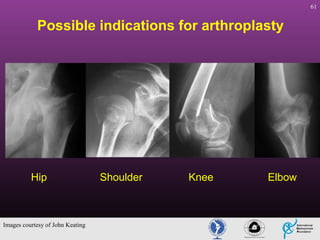
Possible indications for arthroplasty

Hip

Images courtesy of John Keating

Shoulder

Knee

Elbow
62

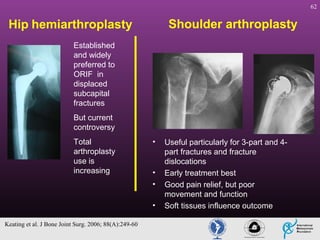
Shoulder arthroplasty

Hip hemiarthroplasty
Established
and widely
preferred to
ORIF in
displaced
subcapital
fractures
But current
controversy
Total
arthroplasty
use is
increasing

•

•
•
•

Keating et al. J Bone Joint Surg. 2006; 88(A):249-60

Useful particularly for 3-part and 4part fractures and fracture
dislocations
Early treatment best
Good pain relief, but poor
movement and function
Soft tissues influence outcome
63

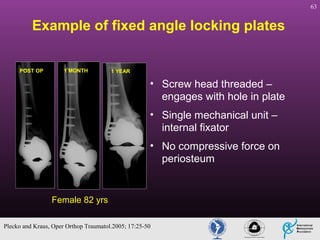
Example of fixed angle locking plates
POST OP

1 MONTH

1 YEAR

• Screw head threaded –
engages with hole in plate
• Single mechanical unit –
internal fixator
• No compressive force on
periosteum

Female 82 yrs
Plecko and Kraus, Oper Orthop Traumatol.2005; 17:25-50
64

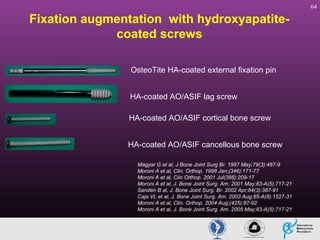
Fixation augmentation with hydroxyapatitecoated screws
OsteoTite HA-coated external fixation pin
HA-coated AO/ASIF lag screw
HA-coated AO/ASIF cortical bone screw
HA-coated AO/ASIF cancellous bone screw
Magyar G et al, J Bone Joint Surg Br. 1997 May;79(3):487-9
Moroni A et al, Clin. Orthop. 1998 Jan;(346):171-77
Moroni A et al, Clin Orthop. 2001 Jul(388):209-17
Moroni A et al, J. Bone Joint Surg. Am. 2001 May;83-A(5):717-21
Sandèn B al, J. Bone Joint Surg. Br. 2002 Apr;84(3):387-91
Caja VL et al, J. Bone Joint Surg. Am. 2003 Aug;85-A(8):1527-31
Moroni A et al, Clin. Orthop. 2004 Aug;(425):87-92
Moroni A et al, J. Bone Joint Surg. Am. 2005 May;83-A(5):717-21
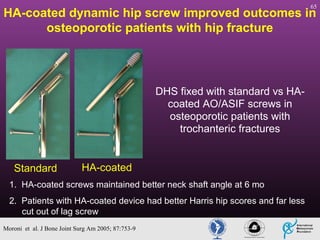
65

HA-coated dynamic hip screw improved outcomes in
osteoporotic patients with hip fracture

DHS fixed with standard vs HAcoated AO/ASIF screws in
osteoporotic patients with
trochanteric fractures

Standard

HA-coated

1. HA-coated screws maintained better neck shaft angle at 6 mo
2. Patients with HA-coated device had better Harris hip scores and far less
cut out of lag screw
Moroni et al. J Bone Joint Surg Am 2005; 87:753-9
66

Optimal care of the fragility fracture patient
• Diagnosis of “fragility” fracture
– Identify “fragility” fracture & underlying disease, incorporate into
existing workup
– Influences treatment plan from the onset

• General fracture management
– Stabilize patient, pain relief, fracture care

• Rehabilitation
– Minimize dependence, maximize mobility
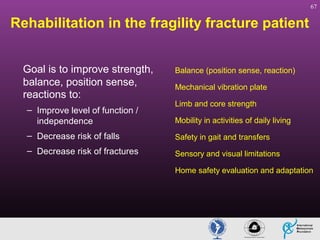
67

Rehabilitation in the fragility fracture patient
Goal is to improve strength,
balance, position sense,
reactions to:
– Improve level of function /
independence

Balance (position sense, reaction)
Mechanical vibration plate
Limb and core strength
Mobility in activities of daily living

– Decrease risk of falls

Safety in gait and transfers

– Decrease risk of fractures

Sensory and visual limitations
Home safety evaluation and adaptation
68

Rehabilitation of fragility fracture patient
Fall prevention
Guideline for the prevention of falls in older persons
American Geriatrics Society, British Geriatrics Society, American Academy of Orthopaedic
Surgeons Panel on Falls Prevention. J Am Geriatr Soc (2001) 49: 664-672

Interventions for preventing falls in elderly people (Review)
LD Gillespie et al, Cochrane Database Syst Rev (2003)

A multidisciplinary, multifactorial intervention program
reduces postoperative falls and injuries after femoral neck fracture
M. Stenvall et al, Osteoporosis International (2007) 18: 167-75
69

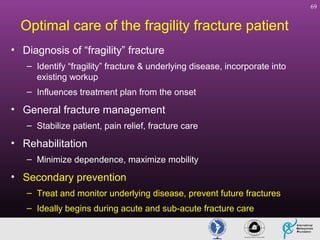
Optimal care of the fragility fracture patient
• Diagnosis of “fragility” fracture
– Identify “fragility” fracture & underlying disease, incorporate into
existing workup
– Influences treatment plan from the onset

• General fracture management
– Stabilize patient, pain relief, fracture care

• Rehabilitation
– Minimize dependence, maximize mobility

• Secondary prevention
– Treat and monitor underlying disease, prevent future fractures
– Ideally begins during acute and sub-acute fracture care
70

Secondary prevention basics
• Further evaluation of underlying disease
– Bone mineral density
– Rule out secondary causes of osteoporosis
– Initiate osteoporosis therapy, as indicated
– Fall prevention

• Inform patient and primary MD doctor of probable fragility
fracture and osteoporosis
• Ensure patient has follow-up care with PT and physician
treating osteoporosis (if not orthopaedist)
71

Interventions to reduce future fracture risk
• Basics
– Nutrition, exercise, fall prevention strategies
– Modify risk factors as able (smoking, excess alcohol)
– Treat co-morbidities (i.e., endocrine disorder?)

• Pharmacological agents
72

Interventions: General recommendations
• Regular physical activity
– Maintaining safe ambulatory status, indep ADLs
– Daily limb and core home exercise routine

• Sufficient intake of calcium and vitamin D
– daily 1000-1500 mg calcium, 400-800 IU vitamin D
– by foods or foods and supplements combined

• Adequate nutrition
• Avoid cigarettes, excess alcohol
73

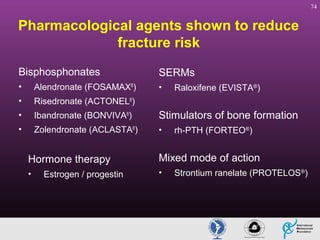
Pharmacological agents for treatment of
osteoporosis
Effective therapies are widely available and
can reduce vertebral, hip and other fractures
by 30% to 65%,
even in patients who have already suffered a
fracture
74

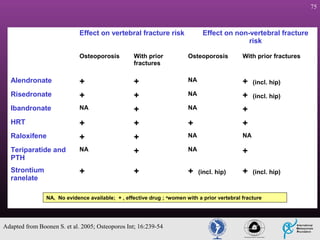
Pharmacological agents shown to reduce
fracture risk
Bisphosphonates

SERMs

•

Alendronate (FOSAMAX®)

•

Risedronate (ACTONEL®)

•

Ibandronate (BONVIVA®)

Stimulators of bone formation

•

Zolendronate (ACLASTA®)

•

Hormone therapy
•

Estrogen / progestin

•

Raloxifene (EVISTA®)

rh-PTH (FORTEO®)

Mixed mode of action
•

Strontium ranelate (PROTELOS®)
75

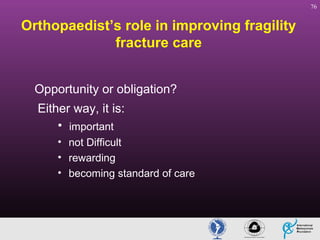
Effect on vertebral fracture risk

Effect on non-vertebral fracture
risk

Osteoporosis

With prior
fractures

Osteoporosis

With prior fractures

Alendronate

+

+

NA

+

(incl. hip)

Risedronate

+

+

NA

+

(incl. hip)

Ibandronate

NA

+

NA

+

HRT

+

+

+

+

Raloxifene

+

+

NA

NA

Teriparatide and
PTH

NA

+

NA

+

Strontium
ranelate

+

+

+

(incl. hip)

+

(incl. hip)

NA, No evidence available; + , effective drug ; awomen with a prior vertebral fracture

Adapted from Boonen S. et al. 2005; Osteoporos Int; 16:239-54
76

Orthopaedist’s role in improving fragility
fracture care
Opportunity or obligation?
Either way, it is:
• important
• not Difficult
• rewarding
• becoming standard of care
77

The orthopaedist’s responsibilities in
fragility fracture care
• Identify the orthopaedic patient with a possible fragility
fracture
• Inform the patient about the need for an osteoporosis
evaluation
• Investigate whether osteoporosis is an underlying cause of
the fracture
• Ensure that appropriate intervention is initiated
• Educate the patient and the family
• Coordinate care with other treating physicians
Bouxsein et al. J Am Acad Orthop Surg, 2004; 12:385-95
78

Summary and conclusions
• Fractures are common. Fractures will be more common
• Osteoporotic fractures are associated with increased
morbidity & mortality
• A fracture is among the strongest risk factors for future
fracture. Refracture rate is high
• Majority of patients with fragility fractures are not evaluated
or treated for osteoporosis
• Effective treatments are available
• Orthopaedic surgeons are usually the treating physician and
can take an active role in optimizing care of the fragility
fracture patient
79

Online resources
•
•
•
•
•
•

www.iofbonehealth.org
www.fractures.com
www.boneandjointdecade.org
www.aaos.org/osteoporosis/
www.niams.nih.gov/bone
www.nof.org
80

Thank you

http://internationalsjobs.wix.com/internationalsjobs

Osteoporosis & Fractures - a view

  • 1.
    1 Osteoporosis and fractures Anorthopaedic perspective By A.Arputha Selvaraj APMP –IIM Calcutta
  • 2.
    2 Why is theOrthopaedic Surgeons Initiative needed? • Fragility fractures are a large and growing health issue – 1 in 2 women and 1 in 4 men over 50 yrs of age will suffer a fracture in their remaining lifetime • A prior fracture increases the risk of a new fracture 2- to 5-fold • Yet few fracture patients receive evaluation and treatment of osteoporosis, the underlying cause of most fragility fractures – Calls for action to improve the evaluation and treatment of fracture patients have been published around the World1,2 1. 2. Eastell et al. QJM 2001; 94:575-59 Bouxsein et al. J Am Acad Ortho Surg. 2004; 12:385-95
  • 3.
    Orthopaedic surgeons havea unique opportunity • Fragility fracture is often the first indication a patient has osteoporosis • Orthopaedic surgeons are often the first and may be the only physician seen by fracture patients • The orthopaedist can serve a pivotal role in optimizing treatment, not only of the fracture, but also of the underlying disease 1. 2. Eastell et al. QJM 2001; 94:575-59 Bouxsein et al. J Am Acad Ortho Surg. 2004; 12:385-95 3
  • 4.
    4 Multinational Survey of OsteoporoticFracture Management Survey of 3422 orthopaedic surgeons from 6 countries • 90% do not routinely measure bone density following the first fracture • 75% are lacking appropriate knowledge about osteoporosis Dreinhöfer et al. Osteoporos Int 2005; 16:S44-S54
  • 5.
    5 Goals of theOrthopaedic Surgeons Initiative • Improve awareness of the scope and magnitude of fragility fractures as a global public health concern • Improve understanding of osteoporosis and recognition that it is the underlying cause of most fragility fractures • Motivate orthopaedic surgeons to take an active role in optimizing care of the fragility fracture patient with the ultimate goal of preventing future fractures
  • 6.
    6 Outline • Fragility fracturesand osteoporosis: an expanding epidemic with devastating consequences • Osteoporosis and fragility fractures: definition and etiology • Optimal care of fragility fracture patient
  • 7.
    7 Outline • Fragility fracturesand osteoporosis: an expanding epidemic with devastating consequences
  • 8.
  • 9.
    9 Fragility fractures arecommon • 1 in 2 women and 1 in 5 men over age 50 will suffer a fracture in their remaining life time1 • 55% of persons over age 50 are at increased risk of fracture due to low bone mass • At age 50, a woman’s lifetime risk of fracture exceeds combined risk of breast, ovarian & uterine cancer • At age 50, a man’s lifetime risk of fracture exceeds risk of prostate cancer 1. Johnell et al. Osteoporos Int. 2005; 16: S3-7
  • 10.
    10 Fractures will bemore common • Fracture incidence projected to increase 2- to 4-fold in the next decades due to ageing of the population • In Europe – 12% to 17% of population >65 in 2002 – 20% to 25% of population >65 in 2025 Aged 70+ 1990 Men Women 2030 Men Women
  • 11.
    1950 2050 05 23 006 004 873 926 247 Totalnumber of hip fractures worldwide projected to increase 3- to 4fold in next 50 years Projected to reach 3.25 million in Asia by 2050 866 Number of hip fractures projected to increase 3 to 4-fold worldwide 11 1950 2050 1950: 1.66 million 001 1950 2050 2050: 6.26 million 1950 2050 Estimated number of hip fractures (1000s) Cooper et al. Osteoporos Int 1992; 2:285-289
  • 12.
    12 Annual incidence x1000 Osteoporotic fractures: Comparison with other diseases 2000 annual incidence all ages 1500 1000 1 500 000 250 000 hip 250 000 forearm 250 000 other sites 500 0 annual estimate women 29+ 513 000 annual estimate women 30+ 750 000 vertebral Osteoporotic fractures 228 000 Heart attack American Heart Association, 1996 American Cancer Society, 1996 Riggs & Melton, Bone, 1995; 17(5 suppl):505S-511S Stroke 1996 new cases, 184 300 all ages Breast cancer
  • 13.
  • 14.
    14 Consequences of hipfracture One year after hip fracture Unable to carry out at least one independent activity of daily living 80% Unable to walk independently Patients (%) Death within one year Permanent disability 20% Cooper. Am J Med 1997; 103(2A):12s-19s. 30% 40%
  • 15.
    15 Consequences of vertebralfractures • Acute and chronic pain – Narcotic use, decrease mobility • Loss of height & deformity – Reduced pulmonary function – Kyphosis, protuberant abdomen • Diminished quality of life: – Loss of self-esteem, distorted body image, sleep disorders, depression, loss of independence • Increased fracture risk • Increased mortality
  • 16.
    16 Consequences of distalradius fractures • The most common fracture in women at middle age – Incidence increases just after menopause • The most common fracture in men below 70 years • Only 50% report good functional outcome at 6 months • Up to 30% of individuals suffer long-term complications O'Neill et al. Osteoporos Int. 2001; 12:555-558
  • 17.
    17 Mortality due tohip fracture vs. stroke (deaths per 100,000 in older women) Hip fracture Stroke Sweden 177 154 Denmark 154 180 Germany 131 190 Hip fracture data: age 80; Kanis. J Bone Miner Res. 2002; 17:1237 Stroke data: ages 65-74; Sans et al. Eur Heart J 1997; 18:1231
  • 18.
    18 Cumulative survival probability WOMEN 1.0 Survivalprobability Survival probability 1.0 0.8 0.6 0.4 0.2 0 60 65 70 75 MEN 80 85 0.8 0.6 0.4 0.2 0 60 65 Age 75 Age Dubbo Population Vertebral/Major Fractures Proximal Femur Fractures Center et al. Lancet 1999, 353:878-882 70 80 85
  • 19.
    19 Mortality after majortypes of osteoporotic fracture in men and women 5-year prospective cohort study Age-standardized mortality ratio Fracture Women Men Proximal femur 2.2 3.2 Vertebral 1.7 2.4 Other major 1.9 2.2 Center et al. Lancet 1999; 353:878-882
  • 20.
    20 Prior fracture increasesthe risk of subsequent fracture Risk of subsequent fracture Site of prior fracture Hip Spine Forearm Minor fracture Hip 2.3 2.3 1.9 2.0 2.5 4.4 1.7 1.9 1.4 1.4 3.3 1.8 1.9 1.8 2.4 1.9 Spine Forearm Minor fracture A prior fracture increases the risk of new fracture 2- to 5-fold Klotzbuecher et al. J Bone Miner Res 2000; 15:721-727
  • 21.
    Economic cost ofosteoporosis and fragility fractures in Europe • In Europe the total direct costs of osteoporotic fractures are over €31 billion and are expected to increase to more that €76 billion in 20501 • In France osteoporotic hip fractures are estimated to cost about €1 billion every year2 • In Spain the total direct hospital cost of osteoporotic fractures in 1995 was ~ €222 million2 • In England & Wales the total direct hospital cost of osteoporotic fractures in 1999 was ~ €847 million2 1. Kanis and Johnell, Osteoporos Int.2005; 16 Suppl 2:S3-7 2. Osteoporosis in the European Community: A Call to Action. IOF Nov, 2001 21
  • 22.
    22 Economic impact ofosteoporosis Annual economic cost of treating fractures in the USA is similar to that of treating cardiovascular disease and asthma Prevalence Annual direct cost including hospitalization (millions) (US$ billion) Cardiovascular disease 4.6 20.3 Osteoporosis 10 13.8 Asthma 15 7.5 Disease Information supplied by National Heart, Lung & Blood Institute, National Osteoporosis Foundation, American Heart Association
  • 23.
    23 Fragility fractures arecommon and have severe consequences Fragility fractures lead to major morbidity, decreased quality of life and increased mortality – 10-25% excess mortality – 50% unable to walk independently after hip fracture – 50% show substantial decline from prior level of function (many lose ability to live independently) – Increased depression, chronic pain, disability – Increased risk of subsequent fracture
  • 24.
    24 Outline • Fragility fracturesand osteoporosis: an expanding epidemic with devastating consequences • Osteoporosis and fragility fractures: definition and etiology
  • 25.
    25 Definition of osteoporosis “…asystemic skeletal disease characterized by low bone mass and micro-architectural deterioration of bone tissue, leading to enhanced bone fragility and a consequent increase in fracture risk.” World Health Organization (WHO), 1994
  • 26.
    26 Major risk factorsfor fractures • Prior fragility fracture • Increased age • Low bone mineral density • Low body weight • Family history of osteoporotic fracture • Glucocorticoid use • Smoking
  • 27.
    27 Incidence per 100,000person-years Osteoporotic fracture incidence Men Women 4,000 3,000 Hip Hip 2,000 Vertebrae Vertebrae 1,000 Forearm Forearm 35 55 35 75 Age Cooper et al. Trends Endocrinol Metab 1992; 3:224 55 75
  • 28.
    28 Remaining lifetime fracturerisk (%) in Caucasian population at the age of 50 Type of fracture Men Women 4.6 20.8 10.7 22.9 Spine 8.3 15.1 Proximal humerus 4.1 12.9 22.4 46.4 Forearm Hip Other Johnell et al. Osteoporos Int. 2005; 16 Suppl 2:S3-7
  • 29.
    29 Fracture risk dependson age and BMD 20 10 year Hip Fracture 80 Age (years) Women 70 Probability (%) 10 60 50 0 -3 -2 -1 0 Femoral BMD T-score (SD) 1
  • 30.
    30 Assessing bone density •X-ray observation – “Osteopaenic on x-ray” implies significant bone loss already – decreased opacity, thin cortices, wide canals, current fracture, healing fractures – A “late finding” in the course of the disease, but may be the “first finding” for a patient
  • 31.
    31 Assessment of bonemineral density by DXA Current gold standard for diagnosis of osteoporosis BMD (g/cm2) = Bone mineral content (g) / area (cm2) Diagnosis based on comparing patient’s BMD to that of young, healthy individuals of same sex
  • 32.
    32 Fracture risk increaseper 1 SD decrease in BMD Fracture Site Forearm Hip Vertebral All Distal radius BMD 1.7 1.8 1.7 1.4 Hip BMD 1.4 2.6 1.8 1.6 Lumbar spine BMD 1.5 1.6 2.3 1.5 Meta-analysis by Marshall et al, Br Med J. 1996
  • 33.
    33 WHO criteria fordiagnosis of osteoporosis T-score: Difference expressed as standard deviation compared to young (20’s) reference population T-score Normal Osteopaenia Osteoporosis Severe (established) osteoporosis Kanis et al. J Bone Miner Res 1994; 9:1137-41 - 1.0 and above - 1.0 to - 2.5 - 2.5 and below - 2.5 and below, plus one or more osteoporotic fracture(s)
  • 34.
    34 Osteoporotic fracture andBMD Fractures per 1,000 person-years 50 40 Number of fractures Fracture rate 400 Women with fractures 300 30 200 20 100 10 0 1.0 0.5 0.0 -0.5 Siris et al. Arch Intern Med. 2004; 164:1108-1112 -1.0 -1.5 -2.0 -2.5 -3.0 -3.5 0
  • 35.
    35 Bone strength ismore than BMD young elderly Images from L. Mosekilde, Technology and Health Care. 1998 Image courtesy of David Dempster
  • 36.
    36 Determinants of wholebone strength • Geometry – Gross morphology (size & shape) – Microarchitecture • Properties of bone material / bone matrix – Mineralization – Collagen characteristics – Microdamage
  • 37.
    Bone remodelling balanceinfluences bone strength Bone strength SIZE & SHAPE macroarchitecture microarchitecture MATERIAL tissue composition matrix properties BONE REMODELLING formation / resorption AGEING, DISEASE and THERAPIES Bouxsein. Best Practice in Clin Rheum. 2005; 19:897-911 37
  • 38.
    38 High Bone Turnover Resorption> Formation Decreases Bone Mass Disrupts Trabecular Architecture Increases Cortical Porosity Decreases Cortical Thickness L. Mosekilde Tech and Health Care, 1998 Alters Bone Matrix Composition Decreased Bone Strength Bouxsein. Best Practice in Clin Rheum. 2005; 19:897-911 Seeman & Delmas, New England J Med, 2006; 354:2250-61
  • 39.
    39 But bone qualityis not the only factor… Neuromuscular function Environmental risks Age Fall incidence Fall characteristics Energy absorption External protection Fall impact Fracture risk Bone size (mass) Bone shape Architecture Matrix properties Bone strength
  • 40.
    40 Outline • Fragility fracturesand osteoporosis: an expanding epidemic with devastating consequences • Osteoporosis and fragility fractures: definition and etiology • Optimal care of fragility fracture patient – Critical opportunity for orthopaedists
  • 41.
    41 Millions of fragilityfractures a year – with current orthopaedic management, most fractures will heal… But is that enough?
  • 42.
    42 Alarming facts • Awarenessand knowledge about osteoporosis is low among fracture patients
  • 43.
    Awareness and knowledgeabout osteoporosis in fracture patients is low 385 patients with fragility fractures “Have you ever heard of osteoporosis?” NO: 20 % YES: 80 % “Do you think that the fracture you have experienced could be due to fragility of your bones?“ NO: 73 % An Osteoporosis Clinical Pathway for the Medical Management of Patients with Low Trauma Fracture Chevalley et al. Osteoporos Int. 2002; 13:450-455 YES: 27 % 43
  • 44.
    44 Alarming facts • Awarenessand knowledge about osteoporosis is low among fracture patients • Despite availability of therapies proven to reduce fracture risk, even in patients who have already suffered a fracture, diagnosis and treatment of osteoporosis among fragility fracture patients remains low
  • 45.
    45 Treatment of osteoporosis: Arephysicians missing an opportunity? • Among 1162 women with distal radius fracture, at 6 mo – 266 (23%) prescribed osteoporosis med – 33 (2.8%) had bone density test – 20 (1.7%) had bone density + OP therapy 883 (76%) received neither bone density test nor medical treatment of osteoporosis • Among 1654 patients (age > 50 yrs) admitted to hospital for a fracture resulting from a fall: ~ 50% hip fracture, at 1 yr – 247 (15%) prescribed osteoporosis med – Women: 3 times more likely to receive treatment than men (19% vs 5%) Freedman et al. J Bone Joint Surg 2000; 82-A:1063-70 Panneman et al. Osteoporos Int. 2004; 15:120-4
  • 46.
  • 47.
    47 Optimal care ofthe fragility fracture patient • Diagnosis of “fragility” fracture – Identify “fragility” fracture & underlying disease, incorporate into existing workup – Influences treatment plan from the onset • General fracture management – Stabilize patient, pain relief, fracture care • Rehabilitation – Minimize dependence, maximize mobility • Secondary prevention – Treat and monitor underlying disease, prevent future fractures
  • 48.
    48 Optimal care ofthe fragility fracture patient • Diagnosis of “fragility” fracture – Identify “fragility” fracture & underlying disease, incorporate into existing workup – Influences treatment plan from the onset
  • 49.
    49 Diagnose fragility fracture Accidentpattern Definition of fragility fracture: Fracture during activity that would not normally injure young healthy bone (i.e., fall from standing height or less)
  • 50.
    50 Fragility fracture? Accident pattern Mechanismof injury: Low trauma? Fall from standing height or less ? “Fragility” fracture? Risk assessment Risk factors for primary and secondary OP Risk factors for fracture Risk factors for fall
  • 51.
    51 Major risk factorsfor fractures • Prior fragility fracture • Increased age • Low bone mineral density • Low body weight • Family history of osteoporotic fracture • Glucocorticoid use • Smoking
  • 52.
    52 High risk forsecondary osteoporosis • Severe chronic liver or kidney diseases • Steroid medication (>7.5mg for more than 6 months) • Malabsorption (eg. Crohn´s disease) • Rheumatoid arthritis • Systemic inflammatory disorders • Hyperthyroidism • Primary hyperparathyroidism • Antiepileptic medication
  • 53.
    53 Fragility fracture patientassessment * In addition to routine pre-op or fracture evaluation • • Menarche / Menopause • History should include: Family history of OP Nutrition • Medications – (past and present) • Level of activity • Fracture history • Fall history & risk factors for falls • Smoking, alcohol intake • Risk factors for secondary OP • Prior level of function
  • 54.
    54 Fragility fracture patientassessment In addition to routine pre-op or fracture evaluation Physical exam should include: • Height • Weight • Limb exam – ROM, strength, deformity, pain, neurovascular status • Spine exam – pain, deformity, mobility • Functional status
  • 55.
    55 Laboratory tests* • • • • • • • • • • • NOTES: SR /CRP Blood count - * These are in addition to routine pre-op labs such as Calcium coagulation studies Phosphate - These are screening labs, Alkaline Phosphatase (AP) more may be indicated based on these results GGT Renal function studies Basal TSH Intact PTH Protein-immunoelectrophoresis Vit D (25 and 1.25)
  • 56.
    56 Bone mineral densityand spine radiograph for vertebral fracture assessment • Bone mineral density assessment by DXA – Establish severity of osteoporosis – Baseline for monitoring treatment efficacy • Consider spine radiographs (thoracic and lumbar, AP and ML views) for patients with: – Back pain – Loss of height > 4 cm – Progressive kyphosis
  • 57.
    57 Optimal care ofthe fragility fracture patient • Diagnosis of “fragility” fracture – Identify “fragility” fracture & underlying disease, incorporate into existing workup – Influences treatment plan from the onset • General fracture management – Stabilize patient, pain relief, fracture care
  • 58.
    58 Complexity of elderlypatients • Mean age hip fracture = 80 yrs • Comorbidities (median ASA 3) • Impaired metabolic response to injury – Hyponatraemia • Management problems – Murmurs – Consent – Renal - dialysis – Theatre scheduling – COPD - home O2 – Discharge planning – Diabetes – Delirium / dementia – Pseudo-obstruction – Alcohol abuse • Polypharmacy – Warfarin – Plavix – Neurotropics
  • 59.
    59 Technical challenges offracture fixation in osteoporotic bone • Impaired ability of osteoporotic bone to hold screws or support implants • Crushing of cancellous bone with subsequent voids after fracture reduction These factors can lead to a higher risk of failure at the implant-bone interface before healing achieved
  • 60.
    60 Special considerations infixation of fragility fractures • Arthroplasty / Hemiarthroplasty – Also allows early mobilization, may be less painful • Implants designed for osteoporotic bone – Fixed angle locking plates – Hydroxyapatite-coated screws • Use of IM nail instead of onlay devices (plates and screws) for diaphyseal fractures • Void filling with cement or bone graft
  • 61.
    61 Possible indications forarthroplasty Hip Images courtesy of John Keating Shoulder Knee Elbow
  • 62.
    62 Shoulder arthroplasty Hip hemiarthroplasty Established andwidely preferred to ORIF in displaced subcapital fractures But current controversy Total arthroplasty use is increasing • • • • Keating et al. J Bone Joint Surg. 2006; 88(A):249-60 Useful particularly for 3-part and 4part fractures and fracture dislocations Early treatment best Good pain relief, but poor movement and function Soft tissues influence outcome
  • 63.
    63 Example of fixedangle locking plates POST OP 1 MONTH 1 YEAR • Screw head threaded – engages with hole in plate • Single mechanical unit – internal fixator • No compressive force on periosteum Female 82 yrs Plecko and Kraus, Oper Orthop Traumatol.2005; 17:25-50
  • 64.
    64 Fixation augmentation withhydroxyapatitecoated screws OsteoTite HA-coated external fixation pin HA-coated AO/ASIF lag screw HA-coated AO/ASIF cortical bone screw HA-coated AO/ASIF cancellous bone screw Magyar G et al, J Bone Joint Surg Br. 1997 May;79(3):487-9 Moroni A et al, Clin. Orthop. 1998 Jan;(346):171-77 Moroni A et al, Clin Orthop. 2001 Jul(388):209-17 Moroni A et al, J. Bone Joint Surg. Am. 2001 May;83-A(5):717-21 Sandèn B al, J. Bone Joint Surg. Br. 2002 Apr;84(3):387-91 Caja VL et al, J. Bone Joint Surg. Am. 2003 Aug;85-A(8):1527-31 Moroni A et al, Clin. Orthop. 2004 Aug;(425):87-92 Moroni A et al, J. Bone Joint Surg. Am. 2005 May;83-A(5):717-21
  • 65.
    65 HA-coated dynamic hipscrew improved outcomes in osteoporotic patients with hip fracture DHS fixed with standard vs HAcoated AO/ASIF screws in osteoporotic patients with trochanteric fractures Standard HA-coated 1. HA-coated screws maintained better neck shaft angle at 6 mo 2. Patients with HA-coated device had better Harris hip scores and far less cut out of lag screw Moroni et al. J Bone Joint Surg Am 2005; 87:753-9
  • 66.
    66 Optimal care ofthe fragility fracture patient • Diagnosis of “fragility” fracture – Identify “fragility” fracture & underlying disease, incorporate into existing workup – Influences treatment plan from the onset • General fracture management – Stabilize patient, pain relief, fracture care • Rehabilitation – Minimize dependence, maximize mobility
  • 67.
    67 Rehabilitation in thefragility fracture patient Goal is to improve strength, balance, position sense, reactions to: – Improve level of function / independence Balance (position sense, reaction) Mechanical vibration plate Limb and core strength Mobility in activities of daily living – Decrease risk of falls Safety in gait and transfers – Decrease risk of fractures Sensory and visual limitations Home safety evaluation and adaptation
  • 68.
    68 Rehabilitation of fragilityfracture patient Fall prevention Guideline for the prevention of falls in older persons American Geriatrics Society, British Geriatrics Society, American Academy of Orthopaedic Surgeons Panel on Falls Prevention. J Am Geriatr Soc (2001) 49: 664-672 Interventions for preventing falls in elderly people (Review) LD Gillespie et al, Cochrane Database Syst Rev (2003) A multidisciplinary, multifactorial intervention program reduces postoperative falls and injuries after femoral neck fracture M. Stenvall et al, Osteoporosis International (2007) 18: 167-75
  • 69.
    69 Optimal care ofthe fragility fracture patient • Diagnosis of “fragility” fracture – Identify “fragility” fracture & underlying disease, incorporate into existing workup – Influences treatment plan from the onset • General fracture management – Stabilize patient, pain relief, fracture care • Rehabilitation – Minimize dependence, maximize mobility • Secondary prevention – Treat and monitor underlying disease, prevent future fractures – Ideally begins during acute and sub-acute fracture care
  • 70.
    70 Secondary prevention basics •Further evaluation of underlying disease – Bone mineral density – Rule out secondary causes of osteoporosis – Initiate osteoporosis therapy, as indicated – Fall prevention • Inform patient and primary MD doctor of probable fragility fracture and osteoporosis • Ensure patient has follow-up care with PT and physician treating osteoporosis (if not orthopaedist)
  • 71.
    71 Interventions to reducefuture fracture risk • Basics – Nutrition, exercise, fall prevention strategies – Modify risk factors as able (smoking, excess alcohol) – Treat co-morbidities (i.e., endocrine disorder?) • Pharmacological agents
  • 72.
    72 Interventions: General recommendations •Regular physical activity – Maintaining safe ambulatory status, indep ADLs – Daily limb and core home exercise routine • Sufficient intake of calcium and vitamin D – daily 1000-1500 mg calcium, 400-800 IU vitamin D – by foods or foods and supplements combined • Adequate nutrition • Avoid cigarettes, excess alcohol
  • 73.
    73 Pharmacological agents fortreatment of osteoporosis Effective therapies are widely available and can reduce vertebral, hip and other fractures by 30% to 65%, even in patients who have already suffered a fracture
  • 74.
    74 Pharmacological agents shownto reduce fracture risk Bisphosphonates SERMs • Alendronate (FOSAMAX®) • Risedronate (ACTONEL®) • Ibandronate (BONVIVA®) Stimulators of bone formation • Zolendronate (ACLASTA®) • Hormone therapy • Estrogen / progestin • Raloxifene (EVISTA®) rh-PTH (FORTEO®) Mixed mode of action • Strontium ranelate (PROTELOS®)
  • 75.
    75 Effect on vertebralfracture risk Effect on non-vertebral fracture risk Osteoporosis With prior fractures Osteoporosis With prior fractures Alendronate + + NA + (incl. hip) Risedronate + + NA + (incl. hip) Ibandronate NA + NA + HRT + + + + Raloxifene + + NA NA Teriparatide and PTH NA + NA + Strontium ranelate + + + (incl. hip) + (incl. hip) NA, No evidence available; + , effective drug ; awomen with a prior vertebral fracture Adapted from Boonen S. et al. 2005; Osteoporos Int; 16:239-54
  • 76.
    76 Orthopaedist’s role inimproving fragility fracture care Opportunity or obligation? Either way, it is: • important • not Difficult • rewarding • becoming standard of care
  • 77.
    77 The orthopaedist’s responsibilitiesin fragility fracture care • Identify the orthopaedic patient with a possible fragility fracture • Inform the patient about the need for an osteoporosis evaluation • Investigate whether osteoporosis is an underlying cause of the fracture • Ensure that appropriate intervention is initiated • Educate the patient and the family • Coordinate care with other treating physicians Bouxsein et al. J Am Acad Orthop Surg, 2004; 12:385-95
  • 78.
    78 Summary and conclusions •Fractures are common. Fractures will be more common • Osteoporotic fractures are associated with increased morbidity & mortality • A fracture is among the strongest risk factors for future fracture. Refracture rate is high • Majority of patients with fragility fractures are not evaluated or treated for osteoporosis • Effective treatments are available • Orthopaedic surgeons are usually the treating physician and can take an active role in optimizing care of the fragility fracture patient
  • 79.
  • 80.

Editor's Notes

  • #13 Based on incidence – the fracture group is larger than several other common conditions. Possible to discuss - Why not higher priority? Why we need to be advocates for the old and very old – those with the majority of fractures.
  • #15 Morbidity is high after all types of fracture.
  • #16 Most spine fractures are asymptomatic as has just been demonstrated. However, those that are symptomatic may produce significant morbidity – mostly due to chronic pain. Certainly, there is diminished quality of life in both symptomatic and asymptomatic fractures.
  • #17 The figure shows the incidence of common fractures in a middle aged population of 11 000 women and 22 000 men followed between the ages of 11 and 19 years. Note the steep increase in distal radius fractures for women and the stable curve for men that still shows that distal radius fractures are the most common fractures in middle aged men.
  • #20 Mortality rate after major fractures. This shows the 5-year mortality afte major types of fractures. It also indicates the higher mortality in men after fracture. Men hip hip fracture have more comorbidities and are sicker at the time fracture (has been shown in a number of studies).
  • #21 Prior fracture and risk of future fracture, highlighting the particularly high risk associated with an initial vertebral fracture.
  • #23 Osteoporosis should have a higher priority in the health care system based on the costs. A comparison of cost with other diseases. Cardiovascular disease have the highest costs.
  • #26 First of all, we need to agree that osteoporosis is a common problem that requires our attention. In a 1994 WHO report , osteoporosis was defined as “… a systemic skeletal disease characterized by low bone mass and micro-architectural deterioration of bone tissue, leading to enhanced bone fragility and a consequent increase in fracture risk.” It needs to be borne in mind that osteoporosis often remains unrecognized until a fracture occurs. This is also the rationale for the important role that is played by orthopaedic surgeons in the diagnosis of osteoporosis, as these patients often first present in the emergency room of an orthopaedic department.
  • #28 This slide shows the incidence rates for the three most common osteoporotic fractures in the UK. The rates in other developed countries are similar. Note that the rates for these three fractures are negligible in people under the age of 50. Hip fractures increase exponentially with age. Vertebral fractures increase linearly with age. Forearm fractures increase linearly with age in women but have a fairly constant incidence in men. In women, the rates of forearm fracture increase in their 50s, vertebral fracture in their 60s, and hip fracture in their 70s. In men, they increase 5-10 years later than in women.
  • #29 Lifetime risk of fractures, including forearm, hip, spine and proximal humerus.
  • #30 At a given T-score, for example T-score minus 3; the risk of fracture is vastly greater in an 80 year old women than in a 60 year old women. Discuss for example bone quality and risk of falling.
  • #35 Illustrating that fracture rate and BMD are strongly associated but not completely overlapping.
  • #40 It isn’t only about the bone! A fracture is the result of several combined factors. BOX 1: Fall risk: this mostly relates to advanced age as the person’s neuromuscular function deteriorates. This makes it difficult for a person to counteract a slip or an instability. In addition, different comorbidities may affect the ability to walk or stand, such as Parkinson’s Disease and stroke or general fatigue and dementia. BOX 2: The type of fall and the energy behind it play a role in the resulting type of fracture. For example, a fall on an outstretched hand is likely to result in a distal radius fracture. The pattern of falling changes with age. Additionally, elderly people prone to fracture are often thin without additional cushioning around the hip. BOX 3: Of these factors, bone quality really has no distinct definition or measurement, but consists, for example, of changes in elasticity that come with age. Hence the incomplete overlap between fracture and bone mass as is discussed later.
  • #42 Each year millions of persons suffer fragility fractures around the globe. Most of these fractures require medical attention at departments of orthopaedics. They are also managed in to allow for functional recovery using common principals for fracture treatment. Good orthopaedic management is therefore of outmost importance for the outcome both in a perspective of the patient and for society. However, even if we do our best in treating the fracture, we have to ask ourselves – can we do more? And by this we need to address the question of avoiding futur fractures in this high risk population. Mary, should this say millions?