What is a Deep Bite?
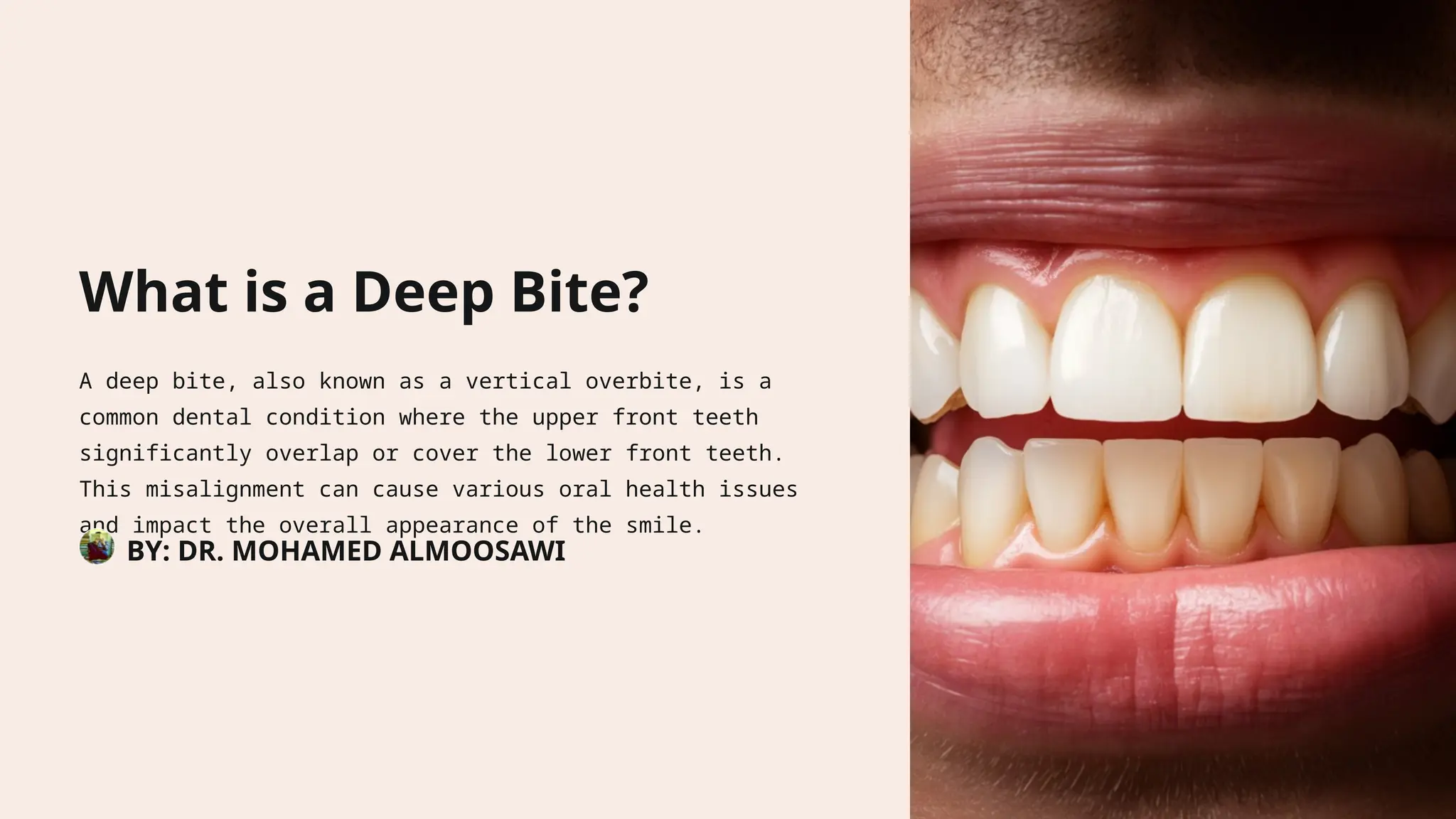
A deep bite, also known as a vertical overbite, is a
common dental condition where the upper front teeth
significantly overlap or cover the lower front teeth.
This misalignment can cause various oral health issues
and impact the overall appearance of the smile.
BY: DR. MOHAMED ALMOOSAWI
Dental Anatomy and Occlusion
Tooth Anatomy
The human dentition consists
of different types of teeth,
each with a unique shape and
function. Incisors, canines,
premolars, and molars all play
a crucial role in biting,
tearing, and chewing food
effectively.
Tooth Structure
Teeth are composed of several
layers, including enamel,
dentin, cementum, and pulp.
Understanding the intricate
anatomy of each tooth helps us
better appreciate the complex
nature of the oral cavity.
Occlusion
Proper occlusion, or the way
the upper and lower teeth fit
together, is essential for
effective chewing, speaking,
and maintaining a harmonious
bite. Malocclusions can lead
to various dental and facial
problems.
Causes of Deep Bite
Genetics and Heredity
Deep bite is often an inherited trait,
passed down from parents to their children.
Certain facial structure and jaw growth
patterns can predispose individuals to
developing a deep overbite.
Tooth Eruption Patterns
Improper timing or positioning of tooth
eruption, especially the front teeth, can
lead to a deep bite. This may be due to
crowding, early or late loss of baby teeth,
or developmental issues.
Facial Muscle Imbalances
Strong masticatory muscles or an overactive
tongue can push the lower jaw back, causing
the upper teeth to overlap excessively with
the lower teeth, resulting in a deep bite.
Oral Habits
Persistent thumb-sucking, tongue thrusting,
or lip biting can contribute to the
development of a deep bite by altering the
natural growth and positioning of the teeth
and jaws.
Genetics and Heredity
1 Genetic Factors
Deep bite is often
influenced by genetic
factors passed down through
family lineages. Certain
gene variations can
predispose individuals to
developing a deep overbite
or other malocclusions.
2 Hereditary Patterns
Research has shown that
deep bite tendencies can
run in families, with
children often inheriting
similar jaw and tooth
alignment from their
parents or grandparents.
3 Epigenetic Influences
While genetics play a role,
environmental factors like
diet, oral habits, and
facial muscle development
can also impact the
expression of deep bite
characteristics over time.
4 Multifactorial Etiology
The development of a deep
bite is typically the
result of a complex
interplay between genetic
predispositions and
environmental influences
throughout a person's
growth and development.
Tooth Eruption Patterns
The eruption of primary (baby)
teeth typically begins around
6-12 months of age and
continues until the child is
around 2-3 years old. The
order and timing of tooth
eruption can vary, but
generally the lower front
teeth erupt first, followed by
the upper front teeth.
As a child grows, the primary
teeth are gradually replaced
by permanent (adult) teeth.
This process of tooth eruption
and shedding of primary teeth
usually occurs between the
ages of 6-12 years old.
Improper timing or order of
this transition can contribute
to a deep bite.
The final set of teeth to
emerge are the wisdom teeth,
also known as third molars.
These typically erupt in the
late teens or early 20s.
Improperly erupted wisdom
teeth can exert pressure on
the other teeth, potentially
leading to a deepened bite.
Facial Muscle Imbalances
Orofacial Muscle Dysbalance
Imbalances in the strength and coordination of
the facial and tongue muscles can contribute
to the development of a deep bite. Overactive
masticatory muscles, such as the masseter and
temporalis, can drive the mandible upward,
while weaker lip and tongue muscles fail to
provide adequate counterforce.
Altered Muscle Tone
Variations in muscle tone, either due to
genetics or acquired habits, can also lead to
a deep bite. Patients with hyperactive
elevator muscles and hypotonic depressor
muscles are more prone to developing an
excessive overbite. This muscle imbalance can
influence mandibular growth and tooth eruption
patterns.
Tongue and Oral Habits
Thumb Sucking
One of the most common oral habits
is thumb sucking. This involuntary
behavior can develop early in
childhood and, if persistent, can
lead to a deep overbite by
altering the natural growth and
positioning of the teeth and jaws.
Tongue Thrusting
Tongue thrusting, where the tongue
protrudes between the teeth during
swallowing or speech, can also
contribute to the development of a
deep bite. This habit can cause
the front teeth to flare out and
the lower teeth to be pushed back,
creating an improper bite
relationship.
Clenching and Grinding
Bruxism, or the habit of clenching
and grinding the teeth, is another
common oral behavior that can
exacerbate a deep bite. The
excessive force applied to the
teeth can lead to wear, chipping,
and even temporomandibular joint
(TMJ) issues.
The Consequences of Deep Bite
A deep bite, where the upper front teeth significantly overlap the
lower teeth, can lead to a range of esthetic and functional issues.
Understanding these consequences is crucial for effective diagnosis
and treatment planning.
Esthetic Concerns
A deep bite can create an unattractive, overbite appearance, which
can negatively impact a person's self-confidence and social
interactions. The excessive overlap of the front teeth may also
lead to excessive gum display when smiling, further detracting from
the overall facial esthetics.
Functional Problems
Beyond the esthetic concerns, a deep bite can cause significant
functional issues. Difficulty chewing and biting into food, as well
as speech impediments, are common. The excessive wear on the front
teeth may also lead to increased sensitivity and increased risk of
dental trauma.
Esthetic Concerns with Deep Bite
Appearance and Confidence
A deep bite can lead to an
overbite that causes the upper
front teeth to cover too much
of the lower teeth, resulting
in a "gummy" or unattractive
smile. This can affect one's
self-esteem and confidence in
social and professional
settings.
Facial Esthetics
The increased vertical overlap
between the upper and lower
teeth in a deep bite can make
the lower jaw appear recessed
or "weak". This can create an
imbalanced facial profile that
detracts from overall facial
harmony and attractiveness.
Lip Competence
With a deep bite, the lower
lip may not be able to
properly close or rest against
the upper teeth, leading to an
"open bite" appearance and
potential speech difficulties.
This can further compromise
the esthetic appeal of the
smile and facial features.
Functional Problems
1 Difficulty Chewing
Deep bite can cause
misalignment of the teeth,
making it challenging to
properly chew and grind
food. This can lead to
inefficient digestion and
discomfort during
mealtimes.
2 Compromised Bite Force
The imbalanced vertical
overlap of the teeth in a
deep bite reduces the
overall biting force,
making it harder to tear
and break down food
effectively.
3 Jaw Joint Strain
The misalignment of the
bite can put undue stress
on the temporomandibular
joint (TMJ), leading to
pain, clicking, and
limited range of motion in
the jaw.
4 Speech Difficulties
The altered positioning of
the teeth and jaws in a
deep bite can interfere
with proper articulation,
causing speech
difficulties and
challenges with certain
sounds.
Speech and Chewing Difficulties
Impaired Speech
A deep overbite can cause
the upper front teeth to
protrude excessively,
leading to difficulties in
proper speech production.
Sounds that require proper
placement of the tongue and
lips, such as "s", "th",
and "f" may become
distorted or difficult to
enunciate clearly.
Chewing Challenges
With a deep bite, the upper
and lower teeth may not
align properly during
chewing, causing
difficulties in efficiently
grinding and breaking down
food. This can lead to
incomplete mastication,
which may impact digestion
and overall nutritional
intake.
Strain on Muscles
The abnormal positioning of
the jaws due to a deep bite
can put strain on the
facial muscles involved in
speech and chewing. Over
time, this can lead to
muscle fatigue, pain, and
decreased function, further
exacerbating the issues
with speech and
mastication.
Temporomandibular Joint Issues
Joint Dysfunction
A deep bite can lead
to abnormal stresses
and wear on the
temporomandibular
joint (TMJ), the
hinge that connects
the lower jaw to the
skull. This can cause
TMJ dysfunction,
leading to pain,
clicking, or popping
noises in the joint.
Muscle Tension
Deep bites are often
accompanied by
hyperactive facial
muscles, particularly
the masseter and
temporalis muscles,
which can contribute
to TMJ pain and
headaches. This
muscle tension can
also impact jaw
mobility and
function.
Tooth Grinding
People with deep
bites are more prone
to unconscious tooth
grinding or
clenching, known as
bruxism. This can
lead to accelerated
tooth wear, jaw
soreness, and further
TMJ problems over
time.
Interventions
Addressing the deep
bite through
orthodontic
treatment, occlusal
adjustments, or even
surgical correction
can help alleviate
TMJ issues and their
associated symptoms.
Splint therapy and
muscle relaxation
techniques may also
provide relief.
Dental Wear and Trauma
Dental Wear
Excessive grinding or
clenching of the teeth,
known as bruxism, can lead
to significant dental wear
over time. This can cause
flattening of the tooth
surfaces, exposing the
underlying dentin and
increasing sensitivity.
Enamel Erosion
A deep overbite can also
contribute to enamel
erosion, particularly on the
upper front teeth. Frequent
exposure to acidic foods and
beverages can further
exacerbate this issue,
leading to premature tooth
wear.
Traumatic Occlusion
The excessive vertical overlap in a deep bite can cause
concentrated forces on the lower front teeth, leading to
chipping, cracking, or even tooth loss. This can compromise
the overall integrity and function of the dentition.
Diagnosing Deep Bite
Accurately diagnosing a deep bite malocclusion requires
a comprehensive clinical examination and the use of
various diagnostic tools. Careful evaluation of the
patient's dental and facial anatomy, along with an
assessment of their occlusion and functional patterns,
is crucial for developing an effective treatment plan.
Clinical Examination
1
Facial Evaluation
Observe facial profile and symmetry
2
Intraoral Inspection
Assess tooth alignment and occlusion
3
Function Assessment
Evaluate bite force and chewing patterns
A thorough clinical examination is crucial for diagnosing and managing deep bite cases. This
involves evaluating the patient's facial profile, observing the alignment and positioning of the
teeth, and assessing their overall oral function and bite dynamics. By carefully examining these
key areas, the clinician can gain valuable insights into the underlying causes and develop an
effective treatment plan.
Radiographic Assessment
1
Intraoral X-rays
Evaluate tooth positioning and occlusal relationships
2
Panoramic X-rays
Assess overall dental and jaw structures
3
Cephalometric Analysis
Measure skeletal and dental parameters
Comprehensive radiographic assessment is a crucial step in diagnosing and managing deep bite
malocclusion. Intraoral x-rays provide detailed information about individual tooth positions and
occlusal relationships. Panoramic x-rays offer a broad view of the entire dentition, jaw structures,
and temporomandibular joint. Cephalometric analysis using lateral x-rays allows for precise
measurement of skeletal and dental parameters to identify the underlying causes of the deep bite.
Photographic Documentation
1 Clinical Photography
High-quality clinical photographs are essential for thoroughly
documenting a patient's orthodontic deep bite condition. These
images capture the patient's dentition, facial features, and
occlusion from various angles to aid in diagnosis and treatment
planning.
2 Standardized Protocols
Adhering to standardized photographic protocols ensures
consistency and accuracy in image capture. This includes specific
head positioning, camera settings, and lighting conditions to
produce clear, unobstructed views of the teeth and surrounding
structures.
3 Diagnostic Perspectives
Photographs are taken from frontal, lateral, and occlusal views
to provide a comprehensive visual assessment of the patient's
deep bite. These perspectives allow the clinician to evaluate
tooth position, overbite, overjet, and other key occlusal
relationships.
Treatment Planning for Deep
Bite
Developing an effective treatment plan for patients with deep bite
malocclusion requires a comprehensive evaluation and consideration
of various factors. The goal is to address the underlying causes,
restore proper dental function, and achieve an esthetic, stable
outcome.
Diagnostic Evaluation
A thorough clinical examination, including dental impressions,
radiographic imaging, and 3D scans, is essential to assess the
severity of the deep bite, identify any associated dental or
skeletal anomalies, and determine the most appropriate treatment
approach.
Treatment Considerations
The treatment plan may involve a combination of interceptive
measures, such as habit correction, growth modification, and
orthodontic treatment, followed by restorative or surgical
interventions to achieve the desired occlusal relationship and
facial esthetics.
Interceptive Measures
Early Intervention
Interceptive
orthodontic measures
aim to address deep
bite issues during
the early stages of
dental development,
often in young
children. The goal is
to guide the growth
and positioning of
the jaws and teeth to
prevent more severe
malocclusions from
developing.
Habit Correction
One common
interceptive approach
is to address any
harmful oral habits,
such as thumb-sucking
or tongue-thrusting,
that can contribute
to a deep overbite.
Specialized
appliances or
behavior modification
techniques may be
used to help the
child break these
habits.
Growth
Modification
In some cases,
orthodontists may use
functional appliances
or other growth
modification devices
to encourage the
lower jaw to develop
more fully and catch
up to the upper jaw.
This can help improve
the bite relationship
and reduce the depth
of the overbite.
Timing is Key
The most effective
interceptive
treatments take place
during the critical
growth and
development stages,
usually between the
ages of 6-12. Early
intervention can
significantly improve
outcomes and reduce
the need for more
complex orthodontic
treatment later on.
Habit Correction
Addressing Nail Biting
Nail biting is a common oral habit
that can contribute to deep bite
development. Through behavior
modification techniques like
applying bitter-tasting polish,
wearing rubber bands, and positive
reinforcement, orthodontists help
patients consciously break this
habit and prevent further dental
complications.
Correcting Tongue Thrusting
Tongue thrusting, where the tongue
protrudes between the front teeth
during swallowing or speech, can
push the teeth forward and lead to
an exaggerated overbite.
Orthodontists utilize appliances,
exercises, and habit-breaking
strategies to retrain the tongue's
resting and swallowing patterns.
Stopping Thumb Sucking
Thumb sucking is another common
childhood habit that can
drastically impact dental
development. Orthodontists work
with patients and parents to
identify and address the root
causes, using positive
reinforcement, thumb guards, or
other deterrents to help the child
break this habit.
Growth Modification
1 Interceptive
Orthodontics
Early intervention can
help guide the growth and
development of the jaws,
promoting proper
alignment of the teeth
and preventing the
deepening of the bite.
Appliances like
functional jaw
orthopaedics or
dentofacial orthopedics
can be used to influence
jaw growth during crucial
2 Myofunctional Therapy
Exercises and habit-
breaking techniques can
help retrain the muscles
of the lips, tongue, and
jaws to establish proper
resting posture and
swallowing patterns. This
can complement
orthodontic treatment and
address underlying causes
of deep bite, like tongue
thrusting or lip
incompetence.
3 Timing is Key
The optimal timing for
growth modification
depends on the individual
patient's stage of
development. Early
treatment during the
transitional dentition or
mixed dentition phase is
often most effective for
influencing jaw growth
and preventing the
deepening of the
overbite.
Orthodontic Treatment for Deep Bite
Orthodontic Appliances
Orthodontic treatment for deep bite often involves the use of fixed appliances
like braces or clear aligners to gradually move the teeth into proper alignment
and improve the bite.
Growth Modification
In growing patients, interceptive treatment may focus on modifying the growth of
the jaws through the use of functional appliances or headgear to create more
space and improve the bite.
Surgical Correction
In severe cases of deep bite, orthodontic treatment may be combined with
orthognathic surgery to reposition the jaws and achieve a stable, functional
bite.
Restorative Considerations
1 Multidisciplinary Approach
Deep bite cases often require a
collaborative effort between
orthodontists, prosthodontists, and other
dental specialists to develop a
comprehensive treatment plan that
addresses both functional and esthetic
concerns.
2 Pre-Orthodontic Restorations
In some cases, strategic placement of
restorations like crowns or veneers may be
necessary to correct tooth size
discrepancies or alter the occlusal plane
prior to orthodontic treatment.
3 Intra-Orthodontic Restorations
During active orthodontic treatment,
temporary restorations or composite
buildups may be used to protect worn or
damaged teeth and improve overall function
and appearance.
4 Post-Orthodontic Restorations
After achieving the desired orthodontic
outcome, final restorative treatments like
crowns, veneers, or fixed partial dentures
may be required to stabilize the bite,
enhance esthetics, and ensure long-term
stability.
Surgical Correction of Deep Bite
Orthodontic Surgery
In severe cases of deep bite where orthodontic treatment alone is
insufficient, surgical intervention may be necessary to correct the
underlying skeletal discrepancy.
Jaw Surgery
Orthognathic surgery, such as mandibular advancement or maxillary impaction,
can reposition the jaws and achieve a proper bite alignment.
Tooth Extraction
In some cases, strategic tooth extraction may be combined with orthodontic
treatment to create space and improve the overall bite.
Retention and Stability
Retainer Devices
Maintaining the results of
orthodontic treatment is crucial.
Retainers are custom-made devices
that hold teeth in their new,
corrected positions after braces are
removed. They come in various forms,
including clear plastic aligners and
discreet wire designs, ensuring a
comfortable and aesthetically
pleasing fit.
Patient Compliance
Consistent wear of retainers is key
to long-term stability. Patients must
understand the importance of wearing
their retainers as directed,
typically full-time in the initial
months and then transitioning to
nightly wear. Diligence and
commitment from the patient are
essential for maintaining the
beautiful, functional results
achieved through orthodontic
Periodic Monitoring
Regular check-ups with the
orthodontist are necessary to ensure
the stability of the treatment
results. The orthodontist will assess
the fit and condition of the
retainers, monitor any changes in the
patient's bite, and make adjustments
as needed to maintain the optimal
alignment of the teeth.
Long-term Management of
Deep Bite
Lifetime Retention
Maintaining the corrected
deep bite position is
crucial, as the underlying
jaw and muscle imbalances can
persist even after
orthodontic treatment.
Lifetime use of retainers,
both removable and fixed, is
often necessary to prevent
relapse.
Periodic Monitoring
Regular dental checkups and
occlusal assessments are
important to detect any
changes or issues that may
arise over time. This allows
for early intervention and
adjustments to the retention
plan as needed.
Adaptive Modifications
As a patient's growth and dental needs change throughout their
lifetime, the retention and management approach may need to be
adapted. This could involve adjusting retainers, considering
restorative work, or even revisiting orthodontic treatment.
Multidisciplinary Approach to Deep Bite Treatment
Collaboration Across
Specialties
Treating a deep bite
often requires a
collaborative effort
among various dental
professionals.
Orthodontists, oral
surgeons,
periodontists, and
prosthodontists may
work together to
address the complex
structural, functional,
and esthetic aspects of
this condition.
Coordinated
Treatment Planning
A multidisciplinary
team can develop a
comprehensive treatment
plan tailored to the
patient's specific
needs. This may involve
a combination of
orthodontic,
restorative, and
surgical interventions
to achieve the desired
outcome.
Holistic Patient Care
By taking a holistic
approach, the dental
team can address the
patient's overall oral
health, function, and
appearance. This
ensures that the
treatment not only
corrects the deep bite
but also improves the
patient's overall
quality of life.
Continuous
Communication
Effective communication
among the dental
specialists is crucial
throughout the
treatment process.
Regular consultations
and information sharing
help ensure a seamless
and coordinated
approach, leading to
better outcomes for the
patient.
Case Studies and Examples
Orthodontic deep bite cases often present unique
challenges, but can be effectively treated through a
multidisciplinary approach. Let's explore two
illustrative examples:
1. Sarah, a 15-year-old with a severe deep overbite
and tooth grinding habits. Her treatment involved
a combination of habit correction, orthodontic
appliances, and restorative work to achieve a
functional and esthetic result.
2. Mark, a 35-year-old with a deep bite and
temporomandibular joint (TMJ) issues. His
treatment plan included joint stabilization,
orthodontic correction, and targeted occlusal
adjustment to relieve his symptoms and prevent
further damage.
Patient Perspectives
Improved Self-
Confidence
Patients who have
undergone successful
orthodontic treatment
for deep bite often
report feeling more
confident and
satisfied with their
appearance. The
correction of
overbite and enhanced
facial aesthetics can
have a positive
impact on their self-
esteem and social
interactions.
Increased
Functionality
Patients express
relief in being able
to chew, speak, and
breathe more
comfortably after
their deep bite has
been addressed. They
appreciate the
improved
functionality and
quality of life that
comes with proper
occlusion and jaw
alignment.
Comprehensive Care
Patients value the
multidisciplinary
approach taken by
their orthodontist,
dentist, and other
healthcare providers.
They feel that the
collaborative effort
ensures a holistic
treatment plan that
addresses both the
aesthetic and
functional aspects of
their deep bite
condition.
Long-Term
Satisfaction
Many patients report
lasting satisfaction
with the results of
their deep bite
treatment, including
stable occlusion,
reduced dental wear,
and improved TMJ
health. They
appreciate the long-
term benefits and are
willing to comply
with retention
protocols to maintain
their new smile.
Conclusion and Key
Takeaways
In conclusion, deep bite is a complex orthodontic
condition that requires a comprehensive understanding of
dental anatomy, growth patterns, and functional
dynamics. Addressing deep bite effectively requires a
multidisciplinary approach encompassing prevention,
early intervention, and personalized treatment
strategies.
The key takeaways are the importance of early diagnosis,
the role of habit correction and growth modification,
the significance of orthodontic treatment planning, and
the value of long-term management and retention. By
prioritizing patient-centered care and leveraging the
latest advancements in dental technology, clinicians can
achieve optimal functional and esthetic outcomes for
individuals with deep bite malocclusions.

ORTHODONTIC What-is-a-Deep-Bite .pptx

  • 1.
    What is aDeep Bite? A deep bite, also known as a vertical overbite, is a common dental condition where the upper front teeth significantly overlap or cover the lower front teeth. This misalignment can cause various oral health issues and impact the overall appearance of the smile. BY: DR. MOHAMED ALMOOSAWI
  • 2.
    Dental Anatomy andOcclusion Tooth Anatomy The human dentition consists of different types of teeth, each with a unique shape and function. Incisors, canines, premolars, and molars all play a crucial role in biting, tearing, and chewing food effectively. Tooth Structure Teeth are composed of several layers, including enamel, dentin, cementum, and pulp. Understanding the intricate anatomy of each tooth helps us better appreciate the complex nature of the oral cavity. Occlusion Proper occlusion, or the way the upper and lower teeth fit together, is essential for effective chewing, speaking, and maintaining a harmonious bite. Malocclusions can lead to various dental and facial problems.
  • 3.
    Causes of DeepBite Genetics and Heredity Deep bite is often an inherited trait, passed down from parents to their children. Certain facial structure and jaw growth patterns can predispose individuals to developing a deep overbite. Tooth Eruption Patterns Improper timing or positioning of tooth eruption, especially the front teeth, can lead to a deep bite. This may be due to crowding, early or late loss of baby teeth, or developmental issues. Facial Muscle Imbalances Strong masticatory muscles or an overactive tongue can push the lower jaw back, causing the upper teeth to overlap excessively with the lower teeth, resulting in a deep bite. Oral Habits Persistent thumb-sucking, tongue thrusting, or lip biting can contribute to the development of a deep bite by altering the natural growth and positioning of the teeth and jaws.
  • 4.
    Genetics and Heredity 1Genetic Factors Deep bite is often influenced by genetic factors passed down through family lineages. Certain gene variations can predispose individuals to developing a deep overbite or other malocclusions. 2 Hereditary Patterns Research has shown that deep bite tendencies can run in families, with children often inheriting similar jaw and tooth alignment from their parents or grandparents. 3 Epigenetic Influences While genetics play a role, environmental factors like diet, oral habits, and facial muscle development can also impact the expression of deep bite characteristics over time. 4 Multifactorial Etiology The development of a deep bite is typically the result of a complex interplay between genetic predispositions and environmental influences throughout a person's growth and development.
  • 5.
    Tooth Eruption Patterns Theeruption of primary (baby) teeth typically begins around 6-12 months of age and continues until the child is around 2-3 years old. The order and timing of tooth eruption can vary, but generally the lower front teeth erupt first, followed by the upper front teeth. As a child grows, the primary teeth are gradually replaced by permanent (adult) teeth. This process of tooth eruption and shedding of primary teeth usually occurs between the ages of 6-12 years old. Improper timing or order of this transition can contribute to a deep bite. The final set of teeth to emerge are the wisdom teeth, also known as third molars. These typically erupt in the late teens or early 20s. Improperly erupted wisdom teeth can exert pressure on the other teeth, potentially leading to a deepened bite.
  • 6.
    Facial Muscle Imbalances OrofacialMuscle Dysbalance Imbalances in the strength and coordination of the facial and tongue muscles can contribute to the development of a deep bite. Overactive masticatory muscles, such as the masseter and temporalis, can drive the mandible upward, while weaker lip and tongue muscles fail to provide adequate counterforce. Altered Muscle Tone Variations in muscle tone, either due to genetics or acquired habits, can also lead to a deep bite. Patients with hyperactive elevator muscles and hypotonic depressor muscles are more prone to developing an excessive overbite. This muscle imbalance can influence mandibular growth and tooth eruption patterns.
  • 7.
    Tongue and OralHabits Thumb Sucking One of the most common oral habits is thumb sucking. This involuntary behavior can develop early in childhood and, if persistent, can lead to a deep overbite by altering the natural growth and positioning of the teeth and jaws. Tongue Thrusting Tongue thrusting, where the tongue protrudes between the teeth during swallowing or speech, can also contribute to the development of a deep bite. This habit can cause the front teeth to flare out and the lower teeth to be pushed back, creating an improper bite relationship. Clenching and Grinding Bruxism, or the habit of clenching and grinding the teeth, is another common oral behavior that can exacerbate a deep bite. The excessive force applied to the teeth can lead to wear, chipping, and even temporomandibular joint (TMJ) issues.
  • 8.
    The Consequences ofDeep Bite A deep bite, where the upper front teeth significantly overlap the lower teeth, can lead to a range of esthetic and functional issues. Understanding these consequences is crucial for effective diagnosis and treatment planning. Esthetic Concerns A deep bite can create an unattractive, overbite appearance, which can negatively impact a person's self-confidence and social interactions. The excessive overlap of the front teeth may also lead to excessive gum display when smiling, further detracting from the overall facial esthetics. Functional Problems Beyond the esthetic concerns, a deep bite can cause significant functional issues. Difficulty chewing and biting into food, as well as speech impediments, are common. The excessive wear on the front teeth may also lead to increased sensitivity and increased risk of dental trauma.
  • 9.
    Esthetic Concerns withDeep Bite Appearance and Confidence A deep bite can lead to an overbite that causes the upper front teeth to cover too much of the lower teeth, resulting in a "gummy" or unattractive smile. This can affect one's self-esteem and confidence in social and professional settings. Facial Esthetics The increased vertical overlap between the upper and lower teeth in a deep bite can make the lower jaw appear recessed or "weak". This can create an imbalanced facial profile that detracts from overall facial harmony and attractiveness. Lip Competence With a deep bite, the lower lip may not be able to properly close or rest against the upper teeth, leading to an "open bite" appearance and potential speech difficulties. This can further compromise the esthetic appeal of the smile and facial features.
  • 10.
    Functional Problems 1 DifficultyChewing Deep bite can cause misalignment of the teeth, making it challenging to properly chew and grind food. This can lead to inefficient digestion and discomfort during mealtimes. 2 Compromised Bite Force The imbalanced vertical overlap of the teeth in a deep bite reduces the overall biting force, making it harder to tear and break down food effectively. 3 Jaw Joint Strain The misalignment of the bite can put undue stress on the temporomandibular joint (TMJ), leading to pain, clicking, and limited range of motion in the jaw. 4 Speech Difficulties The altered positioning of the teeth and jaws in a deep bite can interfere with proper articulation, causing speech difficulties and challenges with certain sounds.
  • 11.
    Speech and ChewingDifficulties Impaired Speech A deep overbite can cause the upper front teeth to protrude excessively, leading to difficulties in proper speech production. Sounds that require proper placement of the tongue and lips, such as "s", "th", and "f" may become distorted or difficult to enunciate clearly. Chewing Challenges With a deep bite, the upper and lower teeth may not align properly during chewing, causing difficulties in efficiently grinding and breaking down food. This can lead to incomplete mastication, which may impact digestion and overall nutritional intake. Strain on Muscles The abnormal positioning of the jaws due to a deep bite can put strain on the facial muscles involved in speech and chewing. Over time, this can lead to muscle fatigue, pain, and decreased function, further exacerbating the issues with speech and mastication.
  • 12.
    Temporomandibular Joint Issues JointDysfunction A deep bite can lead to abnormal stresses and wear on the temporomandibular joint (TMJ), the hinge that connects the lower jaw to the skull. This can cause TMJ dysfunction, leading to pain, clicking, or popping noises in the joint. Muscle Tension Deep bites are often accompanied by hyperactive facial muscles, particularly the masseter and temporalis muscles, which can contribute to TMJ pain and headaches. This muscle tension can also impact jaw mobility and function. Tooth Grinding People with deep bites are more prone to unconscious tooth grinding or clenching, known as bruxism. This can lead to accelerated tooth wear, jaw soreness, and further TMJ problems over time. Interventions Addressing the deep bite through orthodontic treatment, occlusal adjustments, or even surgical correction can help alleviate TMJ issues and their associated symptoms. Splint therapy and muscle relaxation techniques may also provide relief.
  • 13.
    Dental Wear andTrauma Dental Wear Excessive grinding or clenching of the teeth, known as bruxism, can lead to significant dental wear over time. This can cause flattening of the tooth surfaces, exposing the underlying dentin and increasing sensitivity. Enamel Erosion A deep overbite can also contribute to enamel erosion, particularly on the upper front teeth. Frequent exposure to acidic foods and beverages can further exacerbate this issue, leading to premature tooth wear. Traumatic Occlusion The excessive vertical overlap in a deep bite can cause concentrated forces on the lower front teeth, leading to chipping, cracking, or even tooth loss. This can compromise the overall integrity and function of the dentition.
  • 14.
    Diagnosing Deep Bite Accuratelydiagnosing a deep bite malocclusion requires a comprehensive clinical examination and the use of various diagnostic tools. Careful evaluation of the patient's dental and facial anatomy, along with an assessment of their occlusion and functional patterns, is crucial for developing an effective treatment plan.
  • 15.
    Clinical Examination 1 Facial Evaluation Observefacial profile and symmetry 2 Intraoral Inspection Assess tooth alignment and occlusion 3 Function Assessment Evaluate bite force and chewing patterns A thorough clinical examination is crucial for diagnosing and managing deep bite cases. This involves evaluating the patient's facial profile, observing the alignment and positioning of the teeth, and assessing their overall oral function and bite dynamics. By carefully examining these key areas, the clinician can gain valuable insights into the underlying causes and develop an effective treatment plan.
  • 16.
    Radiographic Assessment 1 Intraoral X-rays Evaluatetooth positioning and occlusal relationships 2 Panoramic X-rays Assess overall dental and jaw structures 3 Cephalometric Analysis Measure skeletal and dental parameters Comprehensive radiographic assessment is a crucial step in diagnosing and managing deep bite malocclusion. Intraoral x-rays provide detailed information about individual tooth positions and occlusal relationships. Panoramic x-rays offer a broad view of the entire dentition, jaw structures, and temporomandibular joint. Cephalometric analysis using lateral x-rays allows for precise measurement of skeletal and dental parameters to identify the underlying causes of the deep bite.
  • 17.
    Photographic Documentation 1 ClinicalPhotography High-quality clinical photographs are essential for thoroughly documenting a patient's orthodontic deep bite condition. These images capture the patient's dentition, facial features, and occlusion from various angles to aid in diagnosis and treatment planning. 2 Standardized Protocols Adhering to standardized photographic protocols ensures consistency and accuracy in image capture. This includes specific head positioning, camera settings, and lighting conditions to produce clear, unobstructed views of the teeth and surrounding structures. 3 Diagnostic Perspectives Photographs are taken from frontal, lateral, and occlusal views to provide a comprehensive visual assessment of the patient's deep bite. These perspectives allow the clinician to evaluate tooth position, overbite, overjet, and other key occlusal relationships.
  • 18.
    Treatment Planning forDeep Bite Developing an effective treatment plan for patients with deep bite malocclusion requires a comprehensive evaluation and consideration of various factors. The goal is to address the underlying causes, restore proper dental function, and achieve an esthetic, stable outcome. Diagnostic Evaluation A thorough clinical examination, including dental impressions, radiographic imaging, and 3D scans, is essential to assess the severity of the deep bite, identify any associated dental or skeletal anomalies, and determine the most appropriate treatment approach. Treatment Considerations The treatment plan may involve a combination of interceptive measures, such as habit correction, growth modification, and orthodontic treatment, followed by restorative or surgical interventions to achieve the desired occlusal relationship and facial esthetics.
  • 19.
    Interceptive Measures Early Intervention Interceptive orthodonticmeasures aim to address deep bite issues during the early stages of dental development, often in young children. The goal is to guide the growth and positioning of the jaws and teeth to prevent more severe malocclusions from developing. Habit Correction One common interceptive approach is to address any harmful oral habits, such as thumb-sucking or tongue-thrusting, that can contribute to a deep overbite. Specialized appliances or behavior modification techniques may be used to help the child break these habits. Growth Modification In some cases, orthodontists may use functional appliances or other growth modification devices to encourage the lower jaw to develop more fully and catch up to the upper jaw. This can help improve the bite relationship and reduce the depth of the overbite. Timing is Key The most effective interceptive treatments take place during the critical growth and development stages, usually between the ages of 6-12. Early intervention can significantly improve outcomes and reduce the need for more complex orthodontic treatment later on.
  • 20.
    Habit Correction Addressing NailBiting Nail biting is a common oral habit that can contribute to deep bite development. Through behavior modification techniques like applying bitter-tasting polish, wearing rubber bands, and positive reinforcement, orthodontists help patients consciously break this habit and prevent further dental complications. Correcting Tongue Thrusting Tongue thrusting, where the tongue protrudes between the front teeth during swallowing or speech, can push the teeth forward and lead to an exaggerated overbite. Orthodontists utilize appliances, exercises, and habit-breaking strategies to retrain the tongue's resting and swallowing patterns. Stopping Thumb Sucking Thumb sucking is another common childhood habit that can drastically impact dental development. Orthodontists work with patients and parents to identify and address the root causes, using positive reinforcement, thumb guards, or other deterrents to help the child break this habit.
  • 21.
    Growth Modification 1 Interceptive Orthodontics Earlyintervention can help guide the growth and development of the jaws, promoting proper alignment of the teeth and preventing the deepening of the bite. Appliances like functional jaw orthopaedics or dentofacial orthopedics can be used to influence jaw growth during crucial 2 Myofunctional Therapy Exercises and habit- breaking techniques can help retrain the muscles of the lips, tongue, and jaws to establish proper resting posture and swallowing patterns. This can complement orthodontic treatment and address underlying causes of deep bite, like tongue thrusting or lip incompetence. 3 Timing is Key The optimal timing for growth modification depends on the individual patient's stage of development. Early treatment during the transitional dentition or mixed dentition phase is often most effective for influencing jaw growth and preventing the deepening of the overbite.
  • 22.
    Orthodontic Treatment forDeep Bite Orthodontic Appliances Orthodontic treatment for deep bite often involves the use of fixed appliances like braces or clear aligners to gradually move the teeth into proper alignment and improve the bite. Growth Modification In growing patients, interceptive treatment may focus on modifying the growth of the jaws through the use of functional appliances or headgear to create more space and improve the bite. Surgical Correction In severe cases of deep bite, orthodontic treatment may be combined with orthognathic surgery to reposition the jaws and achieve a stable, functional bite.
  • 23.
    Restorative Considerations 1 MultidisciplinaryApproach Deep bite cases often require a collaborative effort between orthodontists, prosthodontists, and other dental specialists to develop a comprehensive treatment plan that addresses both functional and esthetic concerns. 2 Pre-Orthodontic Restorations In some cases, strategic placement of restorations like crowns or veneers may be necessary to correct tooth size discrepancies or alter the occlusal plane prior to orthodontic treatment. 3 Intra-Orthodontic Restorations During active orthodontic treatment, temporary restorations or composite buildups may be used to protect worn or damaged teeth and improve overall function and appearance. 4 Post-Orthodontic Restorations After achieving the desired orthodontic outcome, final restorative treatments like crowns, veneers, or fixed partial dentures may be required to stabilize the bite, enhance esthetics, and ensure long-term stability.
  • 24.
    Surgical Correction ofDeep Bite Orthodontic Surgery In severe cases of deep bite where orthodontic treatment alone is insufficient, surgical intervention may be necessary to correct the underlying skeletal discrepancy. Jaw Surgery Orthognathic surgery, such as mandibular advancement or maxillary impaction, can reposition the jaws and achieve a proper bite alignment. Tooth Extraction In some cases, strategic tooth extraction may be combined with orthodontic treatment to create space and improve the overall bite.
  • 25.
    Retention and Stability RetainerDevices Maintaining the results of orthodontic treatment is crucial. Retainers are custom-made devices that hold teeth in their new, corrected positions after braces are removed. They come in various forms, including clear plastic aligners and discreet wire designs, ensuring a comfortable and aesthetically pleasing fit. Patient Compliance Consistent wear of retainers is key to long-term stability. Patients must understand the importance of wearing their retainers as directed, typically full-time in the initial months and then transitioning to nightly wear. Diligence and commitment from the patient are essential for maintaining the beautiful, functional results achieved through orthodontic Periodic Monitoring Regular check-ups with the orthodontist are necessary to ensure the stability of the treatment results. The orthodontist will assess the fit and condition of the retainers, monitor any changes in the patient's bite, and make adjustments as needed to maintain the optimal alignment of the teeth.
  • 26.
    Long-term Management of DeepBite Lifetime Retention Maintaining the corrected deep bite position is crucial, as the underlying jaw and muscle imbalances can persist even after orthodontic treatment. Lifetime use of retainers, both removable and fixed, is often necessary to prevent relapse. Periodic Monitoring Regular dental checkups and occlusal assessments are important to detect any changes or issues that may arise over time. This allows for early intervention and adjustments to the retention plan as needed. Adaptive Modifications As a patient's growth and dental needs change throughout their lifetime, the retention and management approach may need to be adapted. This could involve adjusting retainers, considering restorative work, or even revisiting orthodontic treatment.
  • 27.
    Multidisciplinary Approach toDeep Bite Treatment Collaboration Across Specialties Treating a deep bite often requires a collaborative effort among various dental professionals. Orthodontists, oral surgeons, periodontists, and prosthodontists may work together to address the complex structural, functional, and esthetic aspects of this condition. Coordinated Treatment Planning A multidisciplinary team can develop a comprehensive treatment plan tailored to the patient's specific needs. This may involve a combination of orthodontic, restorative, and surgical interventions to achieve the desired outcome. Holistic Patient Care By taking a holistic approach, the dental team can address the patient's overall oral health, function, and appearance. This ensures that the treatment not only corrects the deep bite but also improves the patient's overall quality of life. Continuous Communication Effective communication among the dental specialists is crucial throughout the treatment process. Regular consultations and information sharing help ensure a seamless and coordinated approach, leading to better outcomes for the patient.
  • 28.
    Case Studies andExamples Orthodontic deep bite cases often present unique challenges, but can be effectively treated through a multidisciplinary approach. Let's explore two illustrative examples: 1. Sarah, a 15-year-old with a severe deep overbite and tooth grinding habits. Her treatment involved a combination of habit correction, orthodontic appliances, and restorative work to achieve a functional and esthetic result. 2. Mark, a 35-year-old with a deep bite and temporomandibular joint (TMJ) issues. His treatment plan included joint stabilization, orthodontic correction, and targeted occlusal adjustment to relieve his symptoms and prevent further damage.
  • 29.
    Patient Perspectives Improved Self- Confidence Patientswho have undergone successful orthodontic treatment for deep bite often report feeling more confident and satisfied with their appearance. The correction of overbite and enhanced facial aesthetics can have a positive impact on their self- esteem and social interactions. Increased Functionality Patients express relief in being able to chew, speak, and breathe more comfortably after their deep bite has been addressed. They appreciate the improved functionality and quality of life that comes with proper occlusion and jaw alignment. Comprehensive Care Patients value the multidisciplinary approach taken by their orthodontist, dentist, and other healthcare providers. They feel that the collaborative effort ensures a holistic treatment plan that addresses both the aesthetic and functional aspects of their deep bite condition. Long-Term Satisfaction Many patients report lasting satisfaction with the results of their deep bite treatment, including stable occlusion, reduced dental wear, and improved TMJ health. They appreciate the long- term benefits and are willing to comply with retention protocols to maintain their new smile.
  • 30.
    Conclusion and Key Takeaways Inconclusion, deep bite is a complex orthodontic condition that requires a comprehensive understanding of dental anatomy, growth patterns, and functional dynamics. Addressing deep bite effectively requires a multidisciplinary approach encompassing prevention, early intervention, and personalized treatment strategies. The key takeaways are the importance of early diagnosis, the role of habit correction and growth modification, the significance of orthodontic treatment planning, and the value of long-term management and retention. By prioritizing patient-centered care and leveraging the latest advancements in dental technology, clinicians can achieve optimal functional and esthetic outcomes for individuals with deep bite malocclusions.