Open Bite: Causes,
Consequences, and
Corrective Treatments
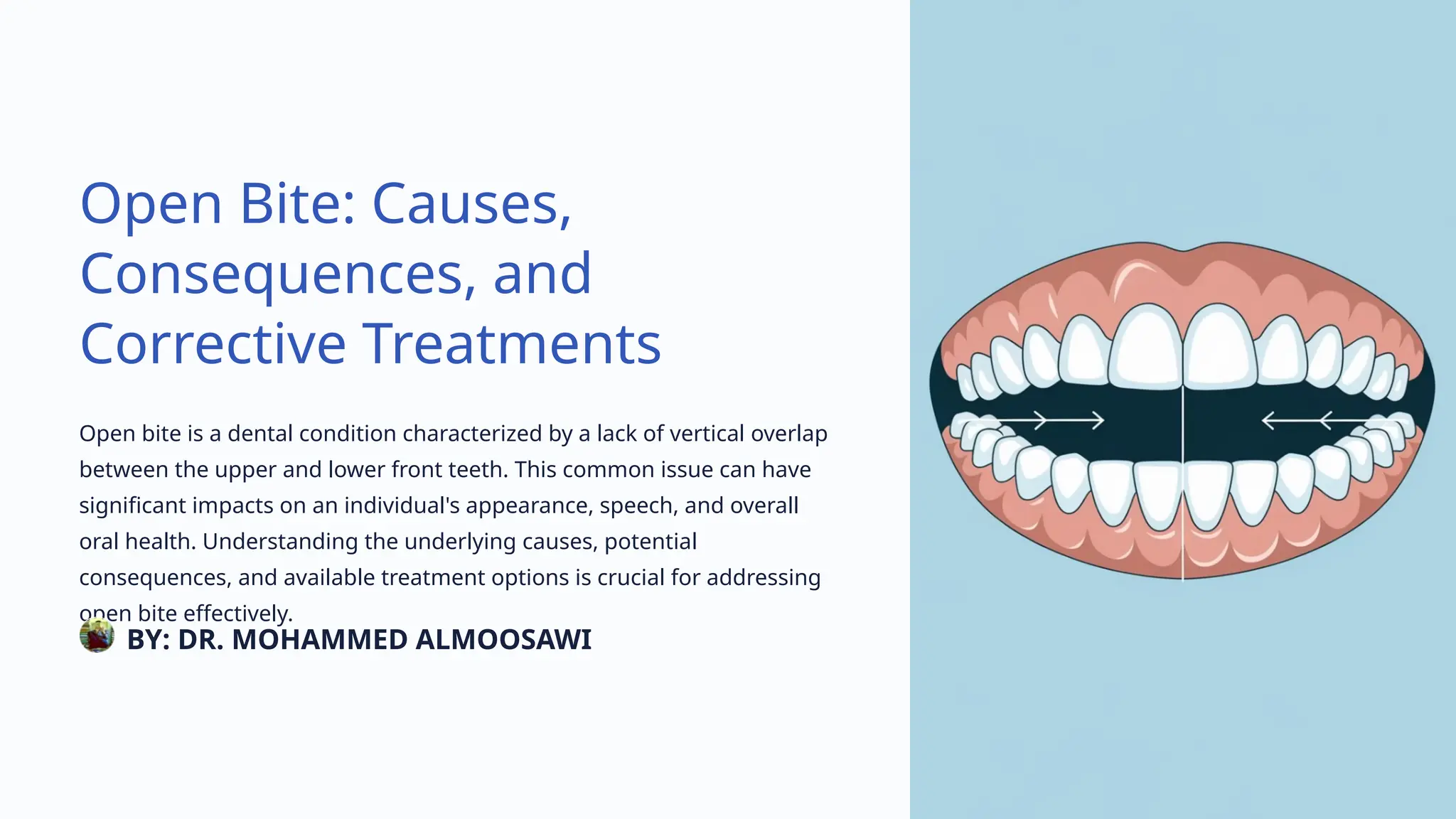
Open bite is a dental condition characterized by a lack of vertical overlap
between the upper and lower front teeth. This common issue can have
significant impacts on an individual's appearance, speech, and overall
oral health. Understanding the underlying causes, potential
consequences, and available treatment options is crucial for addressing
open bite effectively.
BY: DR. MOHAMMED ALMOOSAWI
What is an Open Bite?
Definition
An open bite is a type of dental
malocclusion where the upper and
lower front teeth do not meet or
overlap when the mouth is closed.
This results in a visible gap or space
between the upper and lower
teeth, even when the jaw is fully
closed.
Affected Teeth
Open bites typically involve the
anterior (front) teeth, but can also
affect the posterior (back) teeth.
The lack of vertical overlap between
the upper and lower teeth is the
defining feature of an open bite.
Appearance
When viewed from the side, an
open bite creates a noticeable gap
or space between the upper and
lower front teeth. This gap can
range from a few millimeters to a
more significant distance,
depending on the severity of the
condition.
Prevalence of Open Bite
Open bite, a condition where the upper and lower front teeth fail to meet, is a relatively common orthodontic issue. Studies show that open bite affects approximately 3-17% of the general population, with higher prevalence rates in
certain regions and ethnic groups. The condition is more prevalent in children and adolescents, often persisting into adulthood if left untreated.
Causes of Open Bite
Genetics and Skeletal
Factors
Certain inherited traits and
skeletal abnormalities can
predispose individuals to
developing an open bite.
This includes a
disproportionately small
lower jaw, a narrow palate,
or a vertical growth
pattern of the jaws.
Habits: Thumb
Sucking, Tongue
Thrusting
Persistent oral habits like
thumb sucking or tongue
thrusting can exert
pressure on the teeth and
jaws, causing them to
grow in an improper
alignment and leading to
an open bite. These habits
are often seen in young
children.
Airway Issues and
Breathing Disorders
Difficulties with breathing,
such as nasal obstruction
or sleep apnea, can
contribute to an open bite
by altering the normal
growth and development
of the jaws and facial
structures.
Other Factors
Additional causes of open
bite can include premature
loss of baby teeth, large
overbite, dental trauma,
and certain medical
conditions that affect
muscle function or bone
growth.
Genetics and Skeletal Factors
Genetic Influences
Certain genetic factors can predispose
individuals to the development of an
open bite. Variations in jaw size, tooth
position, and facial structure may be
inherited, leading to an imbalance in
the vertical alignment of the upper and
lower jaws.
Skeletal Abnormalities
Skeletal factors, such as a short lower
jaw, a large overbite, or a vertical
growth pattern, can also contribute to
the formation of an open bite. These
structural differences in the facial
bones and their relationship to each
other can disrupt the normal closure of
the bite.
Vertical Dimension Imbalance
An open bite can also result from a
vertical dimension imbalance, where
the upper and lower jaws do not align
properly in the vertical plane. This can
lead to insufficient tooth overlap and
the characteristic open space between
the upper and lower front teeth.
Habits: Thumb Sucking, Tongue Thrusting
Thumb Sucking
Thumb sucking is a common childhood
habit that can lead to an open bite if it
persists past the age of 3-4 years. The
sucking motion applies constant
pressure on the front teeth, preventing
them from erupting properly and
causing them to flare outward.
Tongue Thrusting
Tongue thrusting is another habitual
behavior that can contribute to open
bite development. Excessive forward
pressure from the tongue against the
front teeth disrupts their natural
eruption and alignment, leading to an
anterior open bite over time.
Breaking the Habit
Early intervention and habit-breaking
techniques, such as using specialized
appliances or myofunctional therapy,
are crucial to prevent these habits from
causing permanent orthodontic issues.
Consistent effort and monitoring by
both parents and dental professionals
are key to successful habit correction.
Airway Issues and Breathing Disorders
1 Nasal Airway Obstruction
Open bites can be associated with
nasal airway obstruction, which can
lead to chronic mouth breathing and
exacerbate the skeletal and dental
issues. Conditions like deviated
septum, allergies, and nasal polyps
can restrict airflow through the nose.
2 Sleep-Disordered Breathing
Open bite patients have a higher risk
of developing sleep apnea and other
sleep-disordered breathing issues.
These conditions can disrupt sleep
quality, causing daytime fatigue and
impaired cognitive function.
3 Tongue Posture and Airway
Improper tongue posture and habits
like tongue thrusting can contribute
to an open bite and also compromise
the airway, leading to breathing
problems. Addressing these
functional issues is crucial for
comprehensive treatment.
Consequences of Untreated Open
Bite
1 Difficulty Chewing and
Swallowing
An untreated open bite can make it
challenging to properly chew and
swallow food, leading to nutritional
deficiencies and digestive issues.
2 Speech and Articulation
Problems
The abnormal bite alignment can
cause difficulties with speech
production and clarity, impacting
an individual's ability to
communicate effectively.
3 Temporomandibular Joint
(TMJ) Disorders
An open bite can put excessive
strain on the temporomandibular
joint, leading to painful conditions
like TMJ disorder and chronic
headaches.
4 Cosmetic and Self-Esteem
Concerns
The noticeable appearance of an
open bite can negatively impact an
individual's confidence and self-
esteem, especially during critical
developmental years.
Difficulty Chewing and Swallowing
Chewing Challenges
An open bite can make it difficult to
effectively chew and grind food,
leading to issues with proper
mastication. This can result in
insufficient breakdown of food,
making it harder to swallow and
potentially causing digestive
problems.
Swallowing Complications
The altered jaw alignment in an
open bite can also interfere with
the normal swallowing process.
Patients may experience difficulty
initiating the swallow reflex or feel
that food is getting "stuck" in their
throat, causing discomfort and
choking hazards.
Nutritional Concerns
The combination of chewing and
swallowing difficulties can lead to a
restricted diet, as patients may
avoid certain hard, crunchy, or solid
foods. This can result in nutritional
deficiencies and an imbalanced
diet, potentially impacting overall
health and well-being.
Speech and Articulation Problems
Impaired Speech
An open bite can interfere
with proper tongue
placement and lip closure,
leading to difficulties in
producing clear speech
sounds. Patients may
struggle with pronouncing
certain consonants or
maintaining proper
volume and intonation.
Articulation
Challenges
The misalignment of the
teeth and jaws in an open
bite can prevent the
tongue, lips, and other oral
structures from coming
together effectively. This
can result in slurred,
distorted, or unclear
articulation, making it hard
for the individual to be
understood.
Lisping and Sibilance
Patients with an open bite
often develop a lisp,
especially when
pronouncing sibilant
sounds like "s" and "z".
This is due to the inability
of the tongue to make
proper contact with the
teeth or palate during
speech.
Airflow and
Resonance Issues
The altered oral anatomy
in open bite can affect the
way air flows through the
mouth and nasal cavity,
leading to changes in vocal
resonance and volume.
This can result in a "nasal"
or "muffled" quality to the
patient's speech.
Temporomandibular Joint (TMJ)
Disorders
Jaw Joint Pain
An open bite can lead to temporomandibular joint (TMJ) disorders, causing pain and discomfort in the
jaw joint and surrounding muscles. Patients may experience clicking, popping, or grinding sounds
when opening and closing the mouth.
Headaches and Migraines
The strain on the TMJ can cause frequent headaches, migraines, and overall facial pain. This is due to
the interconnected nature of the jaw joint, facial muscles, and the trigeminal nerve system.
Tooth Grinding and Clenching
Patients with open bite malocclusion often develop the habit of unconsciously grinding or clenching
their teeth, known as bruxism. This can further exacerbate TMJ problems and lead to tooth wear and
damage.
Cosmetic and Self-Esteem Concerns
Improved Appearance
An open bite can significantly impact the
appearance of one's smile, leading to
self-consciousness and lower self-
esteem. Correcting the bite helps
restore a balanced, aesthetically
pleasing smile that can boost confidence
and improve overall facial harmony.
Negative Self-Perception
Individuals with an open bite often feel
insecure about the appearance of their
teeth and may avoid smiling or speaking
in social situations. This can negatively
impact their self-image and lead to
difficulties in personal and professional
relationships.
Boosted Confidence
Successful treatment of an open bite can
dramatically improve a person's self-
confidence and social interactions. With
a more aesthetically pleasing smile,
individuals are more likely to feel
comfortable expressing themselves and
engaging with others without self-
consciousness.
Diagnosing Open Bite
1
Clinical Examination
Assess tooth eruption, overbite, and vertical dimension
2
X-Ray Imaging
Analyze skeletal and dental structures with cephalometric analysis
3
Comprehensive Evaluation
Consider patient history, oral habits, and functional issues
Accurately diagnosing open bite requires a multifaceted approach. The clinician begins with a thorough clinical examination,
evaluating the patient's tooth eruption, overbite, and vertical dimension. Complementary radiographic imaging, particularly
cephalometric analysis, provides critical insights into the underlying skeletal and dental structures. Finally, a comprehensive
assessment considers the patient's history, oral habits, and any functional problems, allowing the clinician to develop a tailored
treatment plan.
Clinical Examination and X-Rays
1 Comprehensive Oral Examination
A thorough clinical examination is essential to
diagnose and assess the severity of an open bite. The
dentist will visually inspect the oral cavity, evaluate
tooth alignment, and observe the patient's bite and
chewing patterns.
2 Radiographic Assessment
X-rays, such as panoramic and cephalometric
radiographs, provide valuable insights into the
underlying skeletal and dental structures. These
images help identify the specific causes of the open
bite, whether they are skeletal, dental, or a
combination of both.
3 Cephalometric Analysis
Cephalometric analysis, which involves specialized X-
rays of the head and neck, allows dentists to measure
the relationship between the jaws, teeth, and facial
bones. This analysis is crucial for developing an
appropriate treatment plan.
4 Assessing Vertical Dimension
Evaluating the patient's vertical facial dimensions,
such as the distance between the nose and chin,
helps determine the severity of the open bite and
guide treatment options, including the potential need
for orthodontic or surgical interventions.
Cephalometric Analysis
Comprehensive
Evaluation
Cephalometric analysis is a
crucial diagnostic tool in
orthodontics, providing a
comprehensive evaluation
of the skeletal and dental
relationships. It involves a
series of precise
measurements and
angular assessments
taken from standardized
lateral skull X-rays.
Growth and
Development
This analysis allows
orthodontists to assess the
patient's craniofacial
growth and development
patterns, identify any
skeletal discrepancies, and
determine the best course
of treatment for correcting
an open bite.
Treatment Planning
By analyzing the
cephalometric radiograph,
orthodontists can develop
a personalized treatment
plan, which may involve
the use of braces, aligners,
or even surgical
interventions to achieve
the desired tooth and jaw
alignment.
Ongoing Monitoring
Cephalometric analysis is
not just a one-time
assessment; it is an
ongoing process that
allows the orthodontist to
monitor the patient's
progress and make any
necessary adjustments to
the treatment plan.
Assessing Vertical Dimension
Cephalometric Analysis
Detailed X-ray analysis of the skull and facial structures to precisely measure the
vertical dimension and identify any discrepancies.
Intraoral Examination
Thorough assessment of the patient's bite, tooth eruption patterns, and occlusal
relationships to determine vertical dimension.
Facial Measurements
Precise measurements of the patient's facial features, including the distance between
the nose and chin, to evaluate the vertical dimension.
Non-Surgical Treatments for
Open Bite
1 Orthodontic Appliances
Braces and clear aligners are common non-surgical treatments for
open bite. These appliances gradually move the teeth into the correct
position, often in conjunction with other orthodontic techniques.
2 Functional Appliances
Jaw repositioning devices, such as bite plates or headgear, can help
guide the upper and lower jaws into proper alignment, allowing the
teeth to close fully.
3 Myofunctional Therapy
Exercises and techniques to retrain the muscles of the lips, tongue, and
face can help correct improper swallowing and tongue thrusting habits
that contribute to open bite.
Orthodontic Appliances: Braces,
Aligners
Traditional Braces
Metal or ceramic braces are the
most common orthodontic
appliance for treating open bite.
They use a system of brackets,
wires, and rubber bands to
gradually move teeth into the
correct position over time.
Clear Aligners
Invisible aligners, such as
Invisalign, are a popular
alternative to traditional braces.
These clear, custom-fitted trays are
nearly undetectable and can be
removed for eating and cleaning,
making them a discreet and
convenient option.
Functional Appliances
Devices like bite plates, tongue cribs, and jaw repositioning appliances can
be used in conjunction with braces or aligners to address the underlying
skeletal issues that contribute to open bite.
Functional Appliances and Jaw Repositioning
Functional Appliances
Functional appliances are removable
orthodontic devices that gently guide
the jaw into a more optimal position,
encouraging proper growth and
development. These customized
appliances can be effective in treating
open bites by repositioning the jaws and
aligning the teeth.
Surgical Jaw Repositioning
In more severe cases of open bite,
orthodontic treatment may be combined
with orthognathic surgery, also known
as jaw repositioning. This surgical
procedure involves moving the jaws into
their correct alignment, allowing for
proper closure and restoring normal
bite function.
Combination Approach
Often, a combination of functional
appliances and jaw repositioning
surgery is the most effective treatment
for open bite. This interdisciplinary
approach allows for comprehensive
correction of the underlying skeletal and
dental issues, leading to long-term
stability and improved oral function.
Habits Modification and Myofunctional Therapy
Habit Modification
Breaking long-standing oral habits
like thumb sucking or tongue
thrusting can be challenging but
essential for treating open bite.
Behavior modification techniques,
including positive reinforcement
and habit-tracking, can help
patients develop self-awareness
and replace unhealthy habits with
more constructive ones.
Myofunctional Therapy
Myofunctional therapy focuses on
retraining the muscles of the
mouth, lips, and tongue to improve
their function and position.
Exercises, neuromuscular re-
education, and other techniques
can strengthen the muscles, correct
improper swallowing patterns, and
promote proper tongue positioning
- all of which can help close an
open bite.
Interdisciplinary Approach
Treating open bite often requires a
collaborative effort between
orthodontists, dentists, speech
therapists, and myofunctional
therapists. This interdisciplinary
approach ensures a comprehensive
treatment plan that addresses both
the structural and functional
aspects of the condition for lasting
results.
Surgical Treatments for Open Bite
Orthognathic Surgery
For severe and persistent open bites, orthognathic surgery may be recommended to realign the jaws and
reposition the teeth. This involves moving the upper and/or lower jaw to correct the vertical discrepancy and
achieve proper bite alignment.
Genioplasty
In some cases, a chin repositioning procedure known as genioplasty may be performed to address an
excessively short or receded chin that contributes to the open bite. This can improve the overall facial balance
and profile.
Staged Procedures
Complex open bite cases may require a combination of orthodontic treatment and staged surgical procedures
to achieve the desired results. This allows for a more gradual and controlled approach to correcting the vertical
and horizontal skeletal discrepancies.
Orthognathic Surgery: Jaw
Realignment
Corrective Surgery
For severe cases of open bite, orthognathic surgery may be recommended to realign the jaws
and reposition the teeth and facial structures.
Comprehensive Evaluation
Thorough diagnostic imaging, including X-rays and 3D scans, is crucial to precisely plan the
surgical approach and desired outcomes.
Hospitalization
Orthognathic surgery is typically performed in a hospital setting under general anesthesia,
with a recovery period of several days to weeks.
Genioplasty: Chin Repositioning
Pre-Operative Evaluation
Genioplasty, or chin repositioning
surgery, is a common procedure to
address issues like a recessed or
protruding chin. The surgeon will
carefully assess the patient's facial
structure, bite alignment, and desired
aesthetic outcome during the initial
consultation.
Surgical Technique
During the genioplasty surgery, the
surgeon makes an incision beneath the
chin to access the chin bone. They then
carefully move the chin bone to the
desired position and secure it with
plates and screws to improve the facial
profile.
Post-Operative Results
After the genioplasty procedure,
patients can expect to see a more
harmonious, balanced facial appearance
with a stronger, more defined chin. This
can boost self-confidence and improve
overall facial aesthetics.
Complications and Risks of Open Bite Surgery
Surgical Risks
Open bite surgery, like any major oral procedure, carries
inherent risks. Patients may experience bleeding, infection,
and nerve damage during the operation. Anesthesia
complications and adverse reactions are also possible
concerns that require careful monitoring by the surgical
team.
Long-Term Complications
Even after a successful surgery, patients may face long-
term complications. Inadequate bone healing, jaw joint
(TMJ) problems, and persistent numbness or tingling in the
lips and chin area are all potential issues that require
diligent monitoring and follow-up care.
Recovery and Post-Operative Care
1 Comprehensive Aftercare
Plan
Patients undergoing open bite
surgery will receive a detailed
aftercare plan from their oral
surgeon, including specific
instructions for wound care, pain
management, and activity
restrictions during the recovery
period.
2 Careful Monitoring
Close monitoring by the surgical
team is crucial to identify and
address any complications, such as
swelling, bleeding, or infection, in
the days and weeks following the
procedure.
3 Gradual Rehabilitation
Patients will typically progress
through a series of physical therapy
exercises and dietary modifications
to help restore normal jaw function
and facilitate proper healing.
4 Retention Devices
Patients may need to wear
specialized retainers or braces for an
extended period after surgery to
maintain the corrected bite
alignment and prevent relapse.
Maintaining Results: Retention Strategies
1 Retainer Wear
Consistent wear of retainers, both removable and
fixed, is crucial to maintain the corrected position of
teeth after orthodontic treatment for an open bite.
Patients must be diligent in wearing their retainers as
directed by the orthodontist.
2 Myofunctional Therapy
Continued exercises and habit modification through
myofunctional therapy can help reinforce proper
tongue posture and swallowing patterns to prevent
the recurrence of an open bite.
3 Regular Checkups
Periodic follow-up appointments with the
orthodontist are essential to monitor the stability of
the treatment results and make any necessary
adjustments to the retainer or ongoing therapy.
4 Lifelong Commitment
Maintaining a healthy, closed bite may require a
lifelong commitment to wearing retainers and
continuing myofunctional exercises, as the tendency
for an open bite to relapse can persist even after
active treatment.
Preventing Open Bite Development
1
Early Intervention
Identify and address habits early
2
Pediatric Dentistry
Regular checkups and monitoring
3
Habit Modification
Break thumb sucking, tongue thrusting
Preventing open bite development is crucial, as it can lead to significant functional and aesthetic issues if left untreated. The key is to
intervene early, before harmful habits become ingrained. Regular visits to a pediatric dentist can help identify potential problems and
implement strategies to discourage thumb sucking, tongue thrusting, and other behaviors that contribute to open bite formation.
By catching open bite risks early and working proactively with patients and families, dentists can guide children towards proper jaw
development and occlusion, setting them up for a lifetime of healthy, functional bites.
Early Interceptive Treatment
Early Screening
Identifying open bite risk factors early,
such as thumb sucking or tongue
thrusting habits, allows for timely
intervention and prevention.
Interceptive Orthodontics
Specialized orthodontic appliances can
guide jaw growth and development,
correcting open bite issues before they
become severe.
Patient Education
Educating parents and children on
proper oral habits, such as avoiding
thumb sucking, can help stop the
progression of open bite problems.
Role of Pediatric Dentistry
Early Intervention
Pediatric dentists play a crucial
role in the prevention and early
detection of open bite
development. They monitor a
child's dental and facial growth,
identifying any potential issues
as early as possible.
Habit Correction
Pediatric dentists are skilled in
helping children break harmful
oral habits, such as thumb
sucking or tongue thrusting,
which are common
contributors to open bite
formation.
Interceptive Treatment
Through the use of specialized appliances and therapies, pediatric
dentists can often intercept and correct open bite issues before they
become more severe, minimizing the need for complex orthodontic or
surgical interventions later in life.
Interdisciplinary Approach
Coordinated Care
Treating open bite often requires an
interdisciplinary approach, with
orthodontists, pediatric dentists, oral
surgeons, and speech therapists
working closely together to develop a
comprehensive treatment plan tailored
to the patient's unique needs.
Customized Treatments
By combining their expertise, the
interdisciplinary team can identify the
underlying causes of the open bite and
implement a sequence of targeted
interventions, such as orthodontic
appliances, habit correction, and even
surgical procedures if necessary.
Comprehensive Rehabilitation
The team approach also enables
ongoing monitoring and adjustment of
the treatment plan, ensuring the
patient receives the necessary support
for speech, chewing, and overall oral
function throughout the rehabilitation
process.
Optimizing Open Bite
Outcomes
Achieving successful treatment of open bite requires a multifaceted
approach. From early intervention to long-term retention strategies,
each step must be carefully planned and executed to deliver the best
possible results for patients.
Key Takeaways
Comprehensive
Understanding
This presentation provides
a detailed overview of
open bite, covering its
causes, consequences, and
various treatment options,
both non-surgical and
surgical.
Multidisciplinary
Approach
Effective management of
open bite often requires an
interdisciplinary
collaboration between
orthodontists, oral
surgeons, and other
healthcare professionals.
Personalized
Treatment
The treatment plan should
be tailored to the
individual patient's needs,
taking into account factors
such as age, severity of the
open bite, and personal
preferences.
Importance of Early
Intervention
Early identification and
treatment of open bite can
help prevent the
development of more
severe complications and
improve long-term
outcomes.

Orthodontic Open-Bite-Causes-Consequences-and-Corrective-Treatments.pptx

  • 1.
    Open Bite: Causes, Consequences,and Corrective Treatments Open bite is a dental condition characterized by a lack of vertical overlap between the upper and lower front teeth. This common issue can have significant impacts on an individual's appearance, speech, and overall oral health. Understanding the underlying causes, potential consequences, and available treatment options is crucial for addressing open bite effectively. BY: DR. MOHAMMED ALMOOSAWI
  • 2.
    What is anOpen Bite? Definition An open bite is a type of dental malocclusion where the upper and lower front teeth do not meet or overlap when the mouth is closed. This results in a visible gap or space between the upper and lower teeth, even when the jaw is fully closed. Affected Teeth Open bites typically involve the anterior (front) teeth, but can also affect the posterior (back) teeth. The lack of vertical overlap between the upper and lower teeth is the defining feature of an open bite. Appearance When viewed from the side, an open bite creates a noticeable gap or space between the upper and lower front teeth. This gap can range from a few millimeters to a more significant distance, depending on the severity of the condition.
  • 3.
    Prevalence of OpenBite Open bite, a condition where the upper and lower front teeth fail to meet, is a relatively common orthodontic issue. Studies show that open bite affects approximately 3-17% of the general population, with higher prevalence rates in certain regions and ethnic groups. The condition is more prevalent in children and adolescents, often persisting into adulthood if left untreated.
  • 4.
    Causes of OpenBite Genetics and Skeletal Factors Certain inherited traits and skeletal abnormalities can predispose individuals to developing an open bite. This includes a disproportionately small lower jaw, a narrow palate, or a vertical growth pattern of the jaws. Habits: Thumb Sucking, Tongue Thrusting Persistent oral habits like thumb sucking or tongue thrusting can exert pressure on the teeth and jaws, causing them to grow in an improper alignment and leading to an open bite. These habits are often seen in young children. Airway Issues and Breathing Disorders Difficulties with breathing, such as nasal obstruction or sleep apnea, can contribute to an open bite by altering the normal growth and development of the jaws and facial structures. Other Factors Additional causes of open bite can include premature loss of baby teeth, large overbite, dental trauma, and certain medical conditions that affect muscle function or bone growth.
  • 5.
    Genetics and SkeletalFactors Genetic Influences Certain genetic factors can predispose individuals to the development of an open bite. Variations in jaw size, tooth position, and facial structure may be inherited, leading to an imbalance in the vertical alignment of the upper and lower jaws. Skeletal Abnormalities Skeletal factors, such as a short lower jaw, a large overbite, or a vertical growth pattern, can also contribute to the formation of an open bite. These structural differences in the facial bones and their relationship to each other can disrupt the normal closure of the bite. Vertical Dimension Imbalance An open bite can also result from a vertical dimension imbalance, where the upper and lower jaws do not align properly in the vertical plane. This can lead to insufficient tooth overlap and the characteristic open space between the upper and lower front teeth.
  • 6.
    Habits: Thumb Sucking,Tongue Thrusting Thumb Sucking Thumb sucking is a common childhood habit that can lead to an open bite if it persists past the age of 3-4 years. The sucking motion applies constant pressure on the front teeth, preventing them from erupting properly and causing them to flare outward. Tongue Thrusting Tongue thrusting is another habitual behavior that can contribute to open bite development. Excessive forward pressure from the tongue against the front teeth disrupts their natural eruption and alignment, leading to an anterior open bite over time. Breaking the Habit Early intervention and habit-breaking techniques, such as using specialized appliances or myofunctional therapy, are crucial to prevent these habits from causing permanent orthodontic issues. Consistent effort and monitoring by both parents and dental professionals are key to successful habit correction.
  • 7.
    Airway Issues andBreathing Disorders 1 Nasal Airway Obstruction Open bites can be associated with nasal airway obstruction, which can lead to chronic mouth breathing and exacerbate the skeletal and dental issues. Conditions like deviated septum, allergies, and nasal polyps can restrict airflow through the nose. 2 Sleep-Disordered Breathing Open bite patients have a higher risk of developing sleep apnea and other sleep-disordered breathing issues. These conditions can disrupt sleep quality, causing daytime fatigue and impaired cognitive function. 3 Tongue Posture and Airway Improper tongue posture and habits like tongue thrusting can contribute to an open bite and also compromise the airway, leading to breathing problems. Addressing these functional issues is crucial for comprehensive treatment.
  • 8.
    Consequences of UntreatedOpen Bite 1 Difficulty Chewing and Swallowing An untreated open bite can make it challenging to properly chew and swallow food, leading to nutritional deficiencies and digestive issues. 2 Speech and Articulation Problems The abnormal bite alignment can cause difficulties with speech production and clarity, impacting an individual's ability to communicate effectively. 3 Temporomandibular Joint (TMJ) Disorders An open bite can put excessive strain on the temporomandibular joint, leading to painful conditions like TMJ disorder and chronic headaches. 4 Cosmetic and Self-Esteem Concerns The noticeable appearance of an open bite can negatively impact an individual's confidence and self- esteem, especially during critical developmental years.
  • 9.
    Difficulty Chewing andSwallowing Chewing Challenges An open bite can make it difficult to effectively chew and grind food, leading to issues with proper mastication. This can result in insufficient breakdown of food, making it harder to swallow and potentially causing digestive problems. Swallowing Complications The altered jaw alignment in an open bite can also interfere with the normal swallowing process. Patients may experience difficulty initiating the swallow reflex or feel that food is getting "stuck" in their throat, causing discomfort and choking hazards. Nutritional Concerns The combination of chewing and swallowing difficulties can lead to a restricted diet, as patients may avoid certain hard, crunchy, or solid foods. This can result in nutritional deficiencies and an imbalanced diet, potentially impacting overall health and well-being.
  • 10.
    Speech and ArticulationProblems Impaired Speech An open bite can interfere with proper tongue placement and lip closure, leading to difficulties in producing clear speech sounds. Patients may struggle with pronouncing certain consonants or maintaining proper volume and intonation. Articulation Challenges The misalignment of the teeth and jaws in an open bite can prevent the tongue, lips, and other oral structures from coming together effectively. This can result in slurred, distorted, or unclear articulation, making it hard for the individual to be understood. Lisping and Sibilance Patients with an open bite often develop a lisp, especially when pronouncing sibilant sounds like "s" and "z". This is due to the inability of the tongue to make proper contact with the teeth or palate during speech. Airflow and Resonance Issues The altered oral anatomy in open bite can affect the way air flows through the mouth and nasal cavity, leading to changes in vocal resonance and volume. This can result in a "nasal" or "muffled" quality to the patient's speech.
  • 11.
    Temporomandibular Joint (TMJ) Disorders JawJoint Pain An open bite can lead to temporomandibular joint (TMJ) disorders, causing pain and discomfort in the jaw joint and surrounding muscles. Patients may experience clicking, popping, or grinding sounds when opening and closing the mouth. Headaches and Migraines The strain on the TMJ can cause frequent headaches, migraines, and overall facial pain. This is due to the interconnected nature of the jaw joint, facial muscles, and the trigeminal nerve system. Tooth Grinding and Clenching Patients with open bite malocclusion often develop the habit of unconsciously grinding or clenching their teeth, known as bruxism. This can further exacerbate TMJ problems and lead to tooth wear and damage.
  • 12.
    Cosmetic and Self-EsteemConcerns Improved Appearance An open bite can significantly impact the appearance of one's smile, leading to self-consciousness and lower self- esteem. Correcting the bite helps restore a balanced, aesthetically pleasing smile that can boost confidence and improve overall facial harmony. Negative Self-Perception Individuals with an open bite often feel insecure about the appearance of their teeth and may avoid smiling or speaking in social situations. This can negatively impact their self-image and lead to difficulties in personal and professional relationships. Boosted Confidence Successful treatment of an open bite can dramatically improve a person's self- confidence and social interactions. With a more aesthetically pleasing smile, individuals are more likely to feel comfortable expressing themselves and engaging with others without self- consciousness.
  • 13.
    Diagnosing Open Bite 1 ClinicalExamination Assess tooth eruption, overbite, and vertical dimension 2 X-Ray Imaging Analyze skeletal and dental structures with cephalometric analysis 3 Comprehensive Evaluation Consider patient history, oral habits, and functional issues Accurately diagnosing open bite requires a multifaceted approach. The clinician begins with a thorough clinical examination, evaluating the patient's tooth eruption, overbite, and vertical dimension. Complementary radiographic imaging, particularly cephalometric analysis, provides critical insights into the underlying skeletal and dental structures. Finally, a comprehensive assessment considers the patient's history, oral habits, and any functional problems, allowing the clinician to develop a tailored treatment plan.
  • 14.
    Clinical Examination andX-Rays 1 Comprehensive Oral Examination A thorough clinical examination is essential to diagnose and assess the severity of an open bite. The dentist will visually inspect the oral cavity, evaluate tooth alignment, and observe the patient's bite and chewing patterns. 2 Radiographic Assessment X-rays, such as panoramic and cephalometric radiographs, provide valuable insights into the underlying skeletal and dental structures. These images help identify the specific causes of the open bite, whether they are skeletal, dental, or a combination of both. 3 Cephalometric Analysis Cephalometric analysis, which involves specialized X- rays of the head and neck, allows dentists to measure the relationship between the jaws, teeth, and facial bones. This analysis is crucial for developing an appropriate treatment plan. 4 Assessing Vertical Dimension Evaluating the patient's vertical facial dimensions, such as the distance between the nose and chin, helps determine the severity of the open bite and guide treatment options, including the potential need for orthodontic or surgical interventions.
  • 15.
    Cephalometric Analysis Comprehensive Evaluation Cephalometric analysisis a crucial diagnostic tool in orthodontics, providing a comprehensive evaluation of the skeletal and dental relationships. It involves a series of precise measurements and angular assessments taken from standardized lateral skull X-rays. Growth and Development This analysis allows orthodontists to assess the patient's craniofacial growth and development patterns, identify any skeletal discrepancies, and determine the best course of treatment for correcting an open bite. Treatment Planning By analyzing the cephalometric radiograph, orthodontists can develop a personalized treatment plan, which may involve the use of braces, aligners, or even surgical interventions to achieve the desired tooth and jaw alignment. Ongoing Monitoring Cephalometric analysis is not just a one-time assessment; it is an ongoing process that allows the orthodontist to monitor the patient's progress and make any necessary adjustments to the treatment plan.
  • 16.
    Assessing Vertical Dimension CephalometricAnalysis Detailed X-ray analysis of the skull and facial structures to precisely measure the vertical dimension and identify any discrepancies. Intraoral Examination Thorough assessment of the patient's bite, tooth eruption patterns, and occlusal relationships to determine vertical dimension. Facial Measurements Precise measurements of the patient's facial features, including the distance between the nose and chin, to evaluate the vertical dimension.
  • 17.
    Non-Surgical Treatments for OpenBite 1 Orthodontic Appliances Braces and clear aligners are common non-surgical treatments for open bite. These appliances gradually move the teeth into the correct position, often in conjunction with other orthodontic techniques. 2 Functional Appliances Jaw repositioning devices, such as bite plates or headgear, can help guide the upper and lower jaws into proper alignment, allowing the teeth to close fully. 3 Myofunctional Therapy Exercises and techniques to retrain the muscles of the lips, tongue, and face can help correct improper swallowing and tongue thrusting habits that contribute to open bite.
  • 18.
    Orthodontic Appliances: Braces, Aligners TraditionalBraces Metal or ceramic braces are the most common orthodontic appliance for treating open bite. They use a system of brackets, wires, and rubber bands to gradually move teeth into the correct position over time. Clear Aligners Invisible aligners, such as Invisalign, are a popular alternative to traditional braces. These clear, custom-fitted trays are nearly undetectable and can be removed for eating and cleaning, making them a discreet and convenient option. Functional Appliances Devices like bite plates, tongue cribs, and jaw repositioning appliances can be used in conjunction with braces or aligners to address the underlying skeletal issues that contribute to open bite.
  • 19.
    Functional Appliances andJaw Repositioning Functional Appliances Functional appliances are removable orthodontic devices that gently guide the jaw into a more optimal position, encouraging proper growth and development. These customized appliances can be effective in treating open bites by repositioning the jaws and aligning the teeth. Surgical Jaw Repositioning In more severe cases of open bite, orthodontic treatment may be combined with orthognathic surgery, also known as jaw repositioning. This surgical procedure involves moving the jaws into their correct alignment, allowing for proper closure and restoring normal bite function. Combination Approach Often, a combination of functional appliances and jaw repositioning surgery is the most effective treatment for open bite. This interdisciplinary approach allows for comprehensive correction of the underlying skeletal and dental issues, leading to long-term stability and improved oral function.
  • 20.
    Habits Modification andMyofunctional Therapy Habit Modification Breaking long-standing oral habits like thumb sucking or tongue thrusting can be challenging but essential for treating open bite. Behavior modification techniques, including positive reinforcement and habit-tracking, can help patients develop self-awareness and replace unhealthy habits with more constructive ones. Myofunctional Therapy Myofunctional therapy focuses on retraining the muscles of the mouth, lips, and tongue to improve their function and position. Exercises, neuromuscular re- education, and other techniques can strengthen the muscles, correct improper swallowing patterns, and promote proper tongue positioning - all of which can help close an open bite. Interdisciplinary Approach Treating open bite often requires a collaborative effort between orthodontists, dentists, speech therapists, and myofunctional therapists. This interdisciplinary approach ensures a comprehensive treatment plan that addresses both the structural and functional aspects of the condition for lasting results.
  • 21.
    Surgical Treatments forOpen Bite Orthognathic Surgery For severe and persistent open bites, orthognathic surgery may be recommended to realign the jaws and reposition the teeth. This involves moving the upper and/or lower jaw to correct the vertical discrepancy and achieve proper bite alignment. Genioplasty In some cases, a chin repositioning procedure known as genioplasty may be performed to address an excessively short or receded chin that contributes to the open bite. This can improve the overall facial balance and profile. Staged Procedures Complex open bite cases may require a combination of orthodontic treatment and staged surgical procedures to achieve the desired results. This allows for a more gradual and controlled approach to correcting the vertical and horizontal skeletal discrepancies.
  • 22.
    Orthognathic Surgery: Jaw Realignment CorrectiveSurgery For severe cases of open bite, orthognathic surgery may be recommended to realign the jaws and reposition the teeth and facial structures. Comprehensive Evaluation Thorough diagnostic imaging, including X-rays and 3D scans, is crucial to precisely plan the surgical approach and desired outcomes. Hospitalization Orthognathic surgery is typically performed in a hospital setting under general anesthesia, with a recovery period of several days to weeks.
  • 23.
    Genioplasty: Chin Repositioning Pre-OperativeEvaluation Genioplasty, or chin repositioning surgery, is a common procedure to address issues like a recessed or protruding chin. The surgeon will carefully assess the patient's facial structure, bite alignment, and desired aesthetic outcome during the initial consultation. Surgical Technique During the genioplasty surgery, the surgeon makes an incision beneath the chin to access the chin bone. They then carefully move the chin bone to the desired position and secure it with plates and screws to improve the facial profile. Post-Operative Results After the genioplasty procedure, patients can expect to see a more harmonious, balanced facial appearance with a stronger, more defined chin. This can boost self-confidence and improve overall facial aesthetics.
  • 24.
    Complications and Risksof Open Bite Surgery Surgical Risks Open bite surgery, like any major oral procedure, carries inherent risks. Patients may experience bleeding, infection, and nerve damage during the operation. Anesthesia complications and adverse reactions are also possible concerns that require careful monitoring by the surgical team. Long-Term Complications Even after a successful surgery, patients may face long- term complications. Inadequate bone healing, jaw joint (TMJ) problems, and persistent numbness or tingling in the lips and chin area are all potential issues that require diligent monitoring and follow-up care.
  • 25.
    Recovery and Post-OperativeCare 1 Comprehensive Aftercare Plan Patients undergoing open bite surgery will receive a detailed aftercare plan from their oral surgeon, including specific instructions for wound care, pain management, and activity restrictions during the recovery period. 2 Careful Monitoring Close monitoring by the surgical team is crucial to identify and address any complications, such as swelling, bleeding, or infection, in the days and weeks following the procedure. 3 Gradual Rehabilitation Patients will typically progress through a series of physical therapy exercises and dietary modifications to help restore normal jaw function and facilitate proper healing. 4 Retention Devices Patients may need to wear specialized retainers or braces for an extended period after surgery to maintain the corrected bite alignment and prevent relapse.
  • 26.
    Maintaining Results: RetentionStrategies 1 Retainer Wear Consistent wear of retainers, both removable and fixed, is crucial to maintain the corrected position of teeth after orthodontic treatment for an open bite. Patients must be diligent in wearing their retainers as directed by the orthodontist. 2 Myofunctional Therapy Continued exercises and habit modification through myofunctional therapy can help reinforce proper tongue posture and swallowing patterns to prevent the recurrence of an open bite. 3 Regular Checkups Periodic follow-up appointments with the orthodontist are essential to monitor the stability of the treatment results and make any necessary adjustments to the retainer or ongoing therapy. 4 Lifelong Commitment Maintaining a healthy, closed bite may require a lifelong commitment to wearing retainers and continuing myofunctional exercises, as the tendency for an open bite to relapse can persist even after active treatment.
  • 27.
    Preventing Open BiteDevelopment 1 Early Intervention Identify and address habits early 2 Pediatric Dentistry Regular checkups and monitoring 3 Habit Modification Break thumb sucking, tongue thrusting Preventing open bite development is crucial, as it can lead to significant functional and aesthetic issues if left untreated. The key is to intervene early, before harmful habits become ingrained. Regular visits to a pediatric dentist can help identify potential problems and implement strategies to discourage thumb sucking, tongue thrusting, and other behaviors that contribute to open bite formation. By catching open bite risks early and working proactively with patients and families, dentists can guide children towards proper jaw development and occlusion, setting them up for a lifetime of healthy, functional bites.
  • 28.
    Early Interceptive Treatment EarlyScreening Identifying open bite risk factors early, such as thumb sucking or tongue thrusting habits, allows for timely intervention and prevention. Interceptive Orthodontics Specialized orthodontic appliances can guide jaw growth and development, correcting open bite issues before they become severe. Patient Education Educating parents and children on proper oral habits, such as avoiding thumb sucking, can help stop the progression of open bite problems.
  • 29.
    Role of PediatricDentistry Early Intervention Pediatric dentists play a crucial role in the prevention and early detection of open bite development. They monitor a child's dental and facial growth, identifying any potential issues as early as possible. Habit Correction Pediatric dentists are skilled in helping children break harmful oral habits, such as thumb sucking or tongue thrusting, which are common contributors to open bite formation. Interceptive Treatment Through the use of specialized appliances and therapies, pediatric dentists can often intercept and correct open bite issues before they become more severe, minimizing the need for complex orthodontic or surgical interventions later in life.
  • 30.
    Interdisciplinary Approach Coordinated Care Treatingopen bite often requires an interdisciplinary approach, with orthodontists, pediatric dentists, oral surgeons, and speech therapists working closely together to develop a comprehensive treatment plan tailored to the patient's unique needs. Customized Treatments By combining their expertise, the interdisciplinary team can identify the underlying causes of the open bite and implement a sequence of targeted interventions, such as orthodontic appliances, habit correction, and even surgical procedures if necessary. Comprehensive Rehabilitation The team approach also enables ongoing monitoring and adjustment of the treatment plan, ensuring the patient receives the necessary support for speech, chewing, and overall oral function throughout the rehabilitation process.
  • 31.
    Optimizing Open Bite Outcomes Achievingsuccessful treatment of open bite requires a multifaceted approach. From early intervention to long-term retention strategies, each step must be carefully planned and executed to deliver the best possible results for patients.
  • 32.
    Key Takeaways Comprehensive Understanding This presentationprovides a detailed overview of open bite, covering its causes, consequences, and various treatment options, both non-surgical and surgical. Multidisciplinary Approach Effective management of open bite often requires an interdisciplinary collaboration between orthodontists, oral surgeons, and other healthcare professionals. Personalized Treatment The treatment plan should be tailored to the individual patient's needs, taking into account factors such as age, severity of the open bite, and personal preferences. Importance of Early Intervention Early identification and treatment of open bite can help prevent the development of more severe complications and improve long-term outcomes.