Improving
Communicatio
n
Techniques for Better Interpersonal Skills
Introduction
This presentation explores essential techniques to enhance
interpersonal communication, focusing on active listening, body
language, and persuasion. We'll delve into effective strategies,
common barriers, and the significance of non-verbal cues in
everyday interactions.
Active Listening
01
Overview of Active
Listening
Active listening is a communication technique that involves fully concentrating, understanding,
responding, and remembering what is being said. It contrasts with passive hearing, where the listener
may not fully engage with the speaker. This skill fosters effective communication and builds trust in
personal and professional relationships.
Techniques for Effective
Listening
Effective listening requires several techniques such as maintaining eye contact, providing feedback, using
appropriate body language, and avoiding distractions. Additionally, paraphrasing what the speaker said
helps confirm understanding and encourages open dialogue. Using open-ended questions can further
clarify and deepen the conversation.
Barriers to
Active Listening
Several common barriers can impede active listening, including preconceived
notions, environmental distractions, and emotional responses. Addressing
these barriers involves self-awareness and the conscious effort to minimize
distractions while focusing on the communicator. Techniques like mindfulness
can help improve listening skills by promoting present-moment awareness.
Body Language
02
Importance of
Non-Verbal
Communication
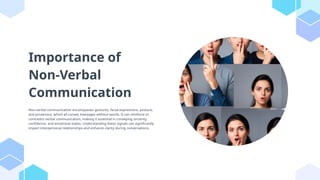
Non-verbal communication encompasses gestures, facial expressions, posture,
and proxemics, which all convey messages without words. It can reinforce or
contradict verbal communication, making it essential in conveying sincerity,
confidence, and emotional states. Understanding these signals can significantly
impact interpersonal relationships and enhance clarity during conversations.
Understanding Body
Language Cues
Body language cues range from posture and gestures to eye contact and facial expressions. Recognizing
these cues helps decode the speaker's true feelings and intentions. For example, crossed arms may
suggest defensiveness, while open posture indicates receptiveness. This knowledge allows individuals to
respond better and adjust their communication style accordingly.
Improving Body
Language Skills
Enhancing body language skills involves practice and self-awareness. Individuals can improve their non-
verbal communication by maintaining good eye contact, adopting an open posture, and being conscious of
their facial expressions. Regularly recording practice sessions or seeking feedback from peers can also help
identify areas for improvement and ensure consistency between verbal and non-verbal messages.
Persuasion
03
Principles of Persuasion
The principles of persuasion include techniques such as reciprocity, commitment, social proof, authority,
liking, and scarcity. Understanding these principles can enhance an individual's ability to influence others
positively. For example, people are more likely to comply with requests when they feel a sense of obligation
or see others doing the same, demonstrating the power of social proof in persuasive communication.
Techniques to Persuade
Others
Successful persuasion involves several techniques, such as storytelling, appealing to emotions, using data
and statistics, and establishing credibility. Crafting messages that resonate with the audience's values and
needs is crucial. Additionally, developing rapport and finding common ground can make persuasion efforts
more effective by fostering trust between the communicator and the audience.
Ethics of
Persuasion
Ethical persuasion requires integrity and respect for the audience. It involves being
honest about intentions and avoiding manipulation or deceit. Practitioners should
aim to inform and benefit the audience rather than simply achieve personal goals.
Establishing ethical standards in persuasive communication helps build long-term
relationships and ensures that trust is maintained across interactions.
Conclusions
In summary, enhancing interpersonal communication through active
listening, body language, and persuasive techniques leads to more effective
interactions. Being aware of non-verbal cues and practicing ethical persuasion
can improve relationships and foster a collaborative environment. Continuous
improvement in these areas is essential for personal and professional growth.
CREDITS: This presentation template was created by Slidesgo, and
includes icons by Flaticon, and infographics & images by Freepik
Thank you!
Do you have any questions?

OriginPro 2025 Crack + License Key (2025)

  • 1.
  • 2.
    Introduction This presentation exploresessential techniques to enhance interpersonal communication, focusing on active listening, body language, and persuasion. We'll delve into effective strategies, common barriers, and the significance of non-verbal cues in everyday interactions.
  • 3.
  • 4.
    Overview of Active Listening Activelistening is a communication technique that involves fully concentrating, understanding, responding, and remembering what is being said. It contrasts with passive hearing, where the listener may not fully engage with the speaker. This skill fosters effective communication and builds trust in personal and professional relationships.
  • 5.
    Techniques for Effective Listening Effectivelistening requires several techniques such as maintaining eye contact, providing feedback, using appropriate body language, and avoiding distractions. Additionally, paraphrasing what the speaker said helps confirm understanding and encourages open dialogue. Using open-ended questions can further clarify and deepen the conversation.
  • 6.
    Barriers to Active Listening Severalcommon barriers can impede active listening, including preconceived notions, environmental distractions, and emotional responses. Addressing these barriers involves self-awareness and the conscious effort to minimize distractions while focusing on the communicator. Techniques like mindfulness can help improve listening skills by promoting present-moment awareness.
  • 7.
  • 8.
    Importance of Non-Verbal Communication Non-verbal communicationencompasses gestures, facial expressions, posture, and proxemics, which all convey messages without words. It can reinforce or contradict verbal communication, making it essential in conveying sincerity, confidence, and emotional states. Understanding these signals can significantly impact interpersonal relationships and enhance clarity during conversations.
  • 9.
    Understanding Body Language Cues Bodylanguage cues range from posture and gestures to eye contact and facial expressions. Recognizing these cues helps decode the speaker's true feelings and intentions. For example, crossed arms may suggest defensiveness, while open posture indicates receptiveness. This knowledge allows individuals to respond better and adjust their communication style accordingly.
  • 10.
    Improving Body Language Skills Enhancingbody language skills involves practice and self-awareness. Individuals can improve their non- verbal communication by maintaining good eye contact, adopting an open posture, and being conscious of their facial expressions. Regularly recording practice sessions or seeking feedback from peers can also help identify areas for improvement and ensure consistency between verbal and non-verbal messages.
  • 11.
  • 12.
    Principles of Persuasion Theprinciples of persuasion include techniques such as reciprocity, commitment, social proof, authority, liking, and scarcity. Understanding these principles can enhance an individual's ability to influence others positively. For example, people are more likely to comply with requests when they feel a sense of obligation or see others doing the same, demonstrating the power of social proof in persuasive communication.
  • 13.
    Techniques to Persuade Others Successfulpersuasion involves several techniques, such as storytelling, appealing to emotions, using data and statistics, and establishing credibility. Crafting messages that resonate with the audience's values and needs is crucial. Additionally, developing rapport and finding common ground can make persuasion efforts more effective by fostering trust between the communicator and the audience.
  • 14.
    Ethics of Persuasion Ethical persuasionrequires integrity and respect for the audience. It involves being honest about intentions and avoiding manipulation or deceit. Practitioners should aim to inform and benefit the audience rather than simply achieve personal goals. Establishing ethical standards in persuasive communication helps build long-term relationships and ensures that trust is maintained across interactions.
  • 15.
    Conclusions In summary, enhancinginterpersonal communication through active listening, body language, and persuasive techniques leads to more effective interactions. Being aware of non-verbal cues and practicing ethical persuasion can improve relationships and foster a collaborative environment. Continuous improvement in these areas is essential for personal and professional growth.
  • 16.
    CREDITS: This presentationtemplate was created by Slidesgo, and includes icons by Flaticon, and infographics & images by Freepik Thank you! Do you have any questions?