Improving Interpersonal
Communication
Explore techniques to enhance active listening and body language skills.
2XXX
Introduction
Effective interpersonal communication is vital in personal and professional
contexts. This presentation focuses on essential techniques such as active
listening and body language that can significantly improve communication
outcomes.
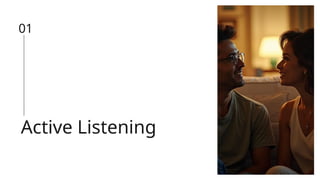
Active Listening
01
Importance of active listening
Active listening is crucial for fostering understanding and building trust in
relationships. It demonstrates respect and value for the speaker, leading to
more meaningful and productive interactions. By actively engaging with
the speaker, one can ensure clarity and prevent misunderstandings.
Techniques for effective listening
Effective listening involves several techniques: maintaining eye contact,
providing feedback, and refraining from interrupting. By summarizing
what has been said and asking clarifying questions, listeners can show
their engagement and understanding, which encourages open dialogue.
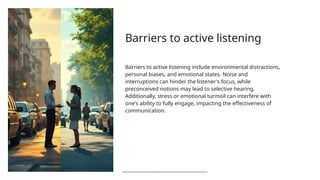
Barriers to active listening
Barriers to active listening include environmental distractions,
personal biases, and emotional states. Noise and
interruptions can hinder the listener's focus, while
preconceived notions may lead to selective hearing.
Additionally, stress or emotional turmoil can interfere with
one's ability to fully engage, impacting the effectiveness of
communication.
Body
Language
02
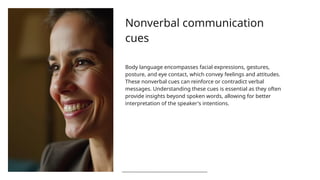
Nonverbal communication
cues
Body language encompasses facial expressions, gestures,
posture, and eye contact, which convey feelings and attitudes.
These nonverbal cues can reinforce or contradict verbal
messages. Understanding these cues is essential as they often
provide insights beyond spoken words, allowing for better
interpretation of the speaker's intentions.
Interpreting body language
Interpreting body language involves recognizing patterns and context. For
instance, crossed arms may indicate defensiveness, while open posture
suggests receptiveness. However, it's important to consider cultural
differences and individual variations. Accurate interpretation requires
attentiveness and awareness of the surrounding context.
Aligning body language with verbal messages
For effective communication, it is essential to align body language with
verbal messages. Inconsistencies can lead to confusion and mistrust.
Practicing congruence between what is said and how it is expressed
nonverbally builds credibility and strengthens communication. This
alignment helps convey sincerity and fosters positive interactions.
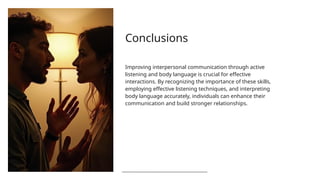
Conclusions
Improving interpersonal communication through active
listening and body language is crucial for effective
interactions. By recognizing the importance of these skills,
employing effective listening techniques, and interpreting
body language accurately, individuals can enhance their
communication and build stronger relationships.
CREDITS: This presentation template
was created by Slidesgo, and includes
icons, and infographics & images by
Freepik
Thank you!
Do you have any questions?
+91 620 421 838

Clear Talk: Smart Communication Skills Now

  • 1.
    Improving Interpersonal Communication Explore techniquesto enhance active listening and body language skills. 2XXX
  • 2.
    Introduction Effective interpersonal communicationis vital in personal and professional contexts. This presentation focuses on essential techniques such as active listening and body language that can significantly improve communication outcomes.
  • 3.
  • 4.
    Importance of activelistening Active listening is crucial for fostering understanding and building trust in relationships. It demonstrates respect and value for the speaker, leading to more meaningful and productive interactions. By actively engaging with the speaker, one can ensure clarity and prevent misunderstandings.
  • 5.
    Techniques for effectivelistening Effective listening involves several techniques: maintaining eye contact, providing feedback, and refraining from interrupting. By summarizing what has been said and asking clarifying questions, listeners can show their engagement and understanding, which encourages open dialogue.
  • 6.
    Barriers to activelistening Barriers to active listening include environmental distractions, personal biases, and emotional states. Noise and interruptions can hinder the listener's focus, while preconceived notions may lead to selective hearing. Additionally, stress or emotional turmoil can interfere with one's ability to fully engage, impacting the effectiveness of communication.
  • 7.
  • 8.
    Nonverbal communication cues Body languageencompasses facial expressions, gestures, posture, and eye contact, which convey feelings and attitudes. These nonverbal cues can reinforce or contradict verbal messages. Understanding these cues is essential as they often provide insights beyond spoken words, allowing for better interpretation of the speaker's intentions.
  • 9.
    Interpreting body language Interpretingbody language involves recognizing patterns and context. For instance, crossed arms may indicate defensiveness, while open posture suggests receptiveness. However, it's important to consider cultural differences and individual variations. Accurate interpretation requires attentiveness and awareness of the surrounding context.
  • 10.
    Aligning body languagewith verbal messages For effective communication, it is essential to align body language with verbal messages. Inconsistencies can lead to confusion and mistrust. Practicing congruence between what is said and how it is expressed nonverbally builds credibility and strengthens communication. This alignment helps convey sincerity and fosters positive interactions.
  • 11.
    Conclusions Improving interpersonal communicationthrough active listening and body language is crucial for effective interactions. By recognizing the importance of these skills, employing effective listening techniques, and interpreting body language accurately, individuals can enhance their communication and build stronger relationships.
  • 12.
    CREDITS: This presentationtemplate was created by Slidesgo, and includes icons, and infographics & images by Freepik Thank you! Do you have any questions? +91 620 421 838