141.2 Directing
Effects
14.1.3 Cause of
Activation, and
Deactivation of the
BenzeneRing
Thepositiontaken by the second substituent (i.e. orientation)
the group already present:
(a) The hydroxyl group (and also the —OCH3
group) directsthenew
tuent to the ortho and para positions and is said to be ortho,
ing.
(b) The nitro group, on the other hand directs the new substituent
tothe f
positionand is said to be meta directing.
(a) A substituentcan activate the benzene ring by donatingelectron
and,therefore,addingnegativecharge to the ring.
(b) A substituentcan deactivate the benzene ring bv
density.
(c) The donationand withdrawl of electron density resultsfrom
effects and resonance.
S'ubstltutcd and / P.pnz
Inductive
ien and
sat
A
(a) Toluene All alkyl groups. g. thc rrjcthyJ jn tr,!.erp
election denqty in thc aromauc tint jn the ground sta'e h
donation by Inductic c[fea making the rIng rca'-'i
trophillc attack (Schcrnc 144),
electron density IS donated to the
ring by the inductive effect
3 making the ring more reactive
electrophilic attack
Toluene (methylbenzene)
alkylbenzene
Scheme 14.4
(b) Nitrobenzene. Nitro group is one of the strongest of the deactivators. Oae
may position the electronsany way in the nitro group, the nitrogen a•.cn
has always a formalpositivecharge(Scheme14.5).The electron density
from the aromatic ring is, therefore, mthdrawn. The benzene of
nitrobenzeneas a consequenceis deactivated.
the nitro group withdraws
electron density from
the
N02 aromatic ring
O.
nitrobenzene Nitrobenzene
aromatic ring is jesselectron-rich
than benzene,so it is deactivated
toward reactions with electrophiles
Scheme 14.5
The first step in the electrophilicaromatic substitution mechanism oh•s
the formation of an arenium ion, i.e. a carbocauon intermediate. Once the
electrophjlehas attacked (Scheme 14.6,only para attack is the elec-
tron releasinggroupstabilizestheresultingintermediatecarbocatton. The tran-
sition state theory states that more stable the Inteunedrate, the more rapidly It
will be found.The moststablecarbocatlonis the one to which a substituent(s)
donateselectrons,The least stable carbocationis the one from which the sub-
stituent withdrawsthe electrons.
390 Textbookof Organic Chemistry
S electron-withdrawing
Subs/i/uen/
Standard Least stable Most stable
carbocation carbocation
electrophile
Scheme 14.6
14.1.5 Activationand Several substituents can participate in resonance and as a result,add
Deactivation
ofBenzene density to the benzene ring. Thus, the ring is activated to further
Ring by Resonance A group can also remove electron density by resonance to deactivate
the
activators(-NH2, -NHR, -OH, -O-R), weak activatorsalkyl,
strongdeactivators(-N02, -COOH, -NR3, -COOR, -COIR,-sojH,
weak deactivators (—F, —Cl, —Br, —I).
(a) In phenol (Scheme 14.7)the electronegative oxygen atomtendsto
draw electrons inductively, however, the resonance effect is
strongerthan inductive effect. Consequently the lone electronpairon
oxygen atom delocalizes into the aromatic It-system adding
charge to the ring. Similar structures can be written when thegroup
present in the ring is —NH2
or —OR(In all these cases the atom
joined
directlyto the ring has one or more lone pairs of electrons).
Scheme 14.7
(b) In benzoicacid (Scheme 14.8), one has an electron attractingatom,
I.e.
oxygen and a double bond in conjugation with the benzenering.This
causesthe electron displacementaway from the ring and towards
the
Scheme 14.8
Ond Ripe
group. Conseqtrmntly
the ieqonance
the ring. resonance (an be wr'ften for
(Scheme14.9),
-o o O o o
Scheme 14.9
In summary, the relative order of carbocationstability and the relative elec-
tron concentration on the aromatic ring are the two ways to guide the activation
and deactivation of the ring. The groups which donate or release electron
density to the aromatic ring activate it for further substitution. On the other
hand, the groups which withdraw electrons from the aromatic ring deactivate It
for further substitution.
Problem 14.1: Alkylgroups are activatingsubstituents. The initialproductof Friedel-
Crafts alkylation is much more reactive than the starting material, thus multiple
alkylationsmay be difficultto avoid. How can one solve this problem?
Answer 14.1: By carrying out a Friedel-Craftsacylationfollowedby Clemmensen
reduction of the ketone. The acyl benzene formed initiallyhas a carbonyl group bonded
to the aromatic ring (Scheme 14.10), i.e. RCO- is an deactivating group. Once
introduced it deactivates the ring for further substitution.
o
R—c—a
AJC13
acylbenzene
Scheme 14.10
(a deactivating group)
14.2 ORIENTATIONIN ELECTROPHILICAROMATIC
SUBSTITUTION
Thedeactivatinggroups (-N02, -CF3, -NR3,-COOH, -COR, .S03H, -CEN)
whether operating by induction or resonance,direct the incoming electro-
philes to the meta position, while activatinggroups (—NH2,
--NHR,NR., —OH,
—OR,
alkyl, phenyl) direct to theortho and para positions. Halogen substi-
tuents(—Br,
-C], —I,F) although deactivating,direct ortho and para are an
exception.
Problem 14.2: Why compared to toluene,(trifluoromethyl)
benzene is less reactive to

orientation and reactivity of benzene substituitents

  • 1.
    141.2 Directing Effects 14.1.3 Causeof Activation, and Deactivation of the BenzeneRing Thepositiontaken by the second substituent (i.e. orientation) the group already present: (a) The hydroxyl group (and also the —OCH3 group) directsthenew tuent to the ortho and para positions and is said to be ortho, ing. (b) The nitro group, on the other hand directs the new substituent tothe f positionand is said to be meta directing. (a) A substituentcan activate the benzene ring by donatingelectron and,therefore,addingnegativecharge to the ring. (b) A substituentcan deactivate the benzene ring bv density. (c) The donationand withdrawl of electron density resultsfrom effects and resonance.
  • 2.
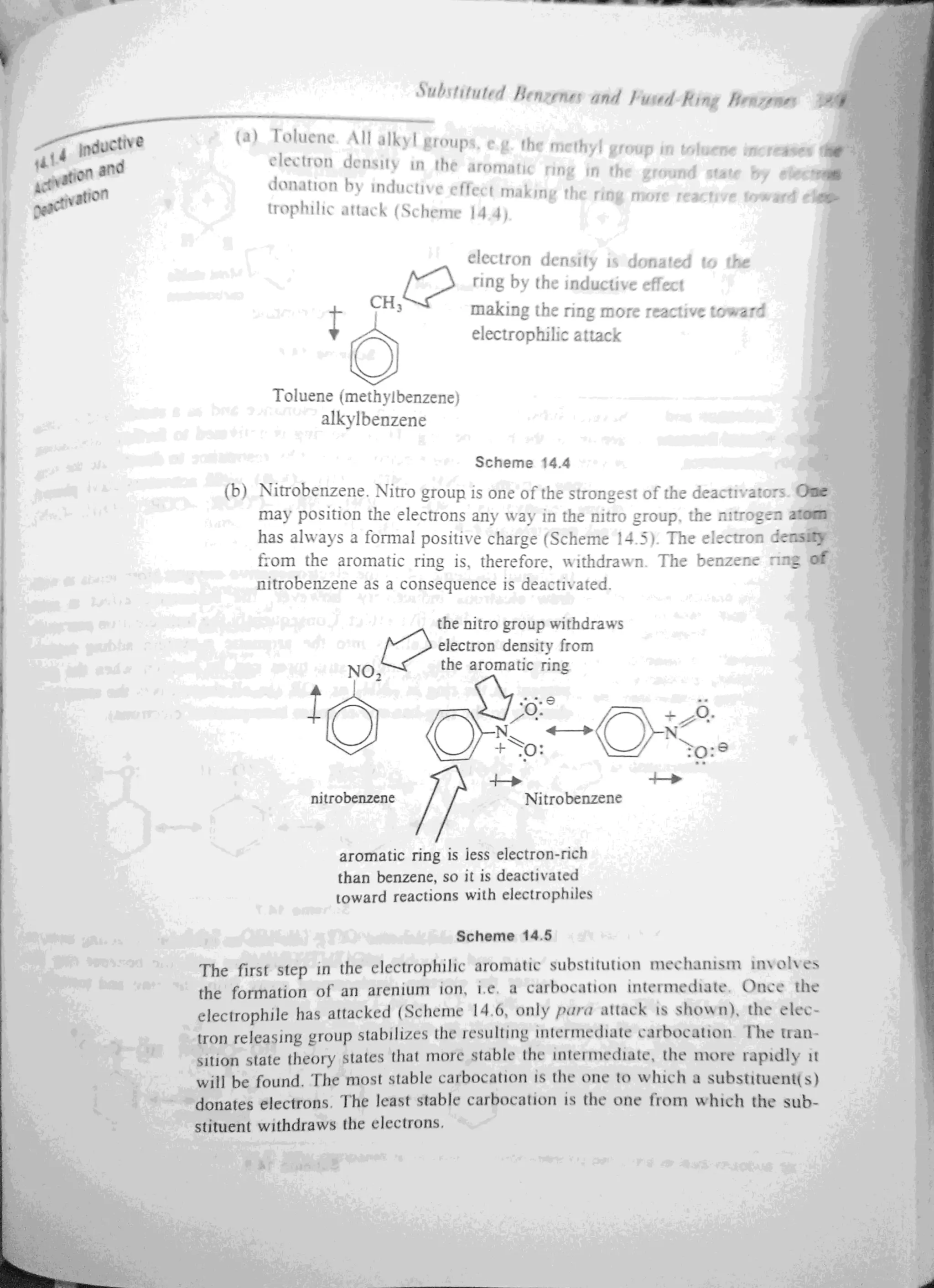
    S'ubstltutcd and /P.pnz Inductive ien and sat A (a) Toluene All alkyl groups. g. thc rrjcthyJ jn tr,!.erp election denqty in thc aromauc tint jn the ground sta'e h donation by Inductic c[fea making the rIng rca'-'i trophillc attack (Schcrnc 144), electron density IS donated to the ring by the inductive effect 3 making the ring more reactive electrophilic attack Toluene (methylbenzene) alkylbenzene Scheme 14.4 (b) Nitrobenzene. Nitro group is one of the strongest of the deactivators. Oae may position the electronsany way in the nitro group, the nitrogen a•.cn has always a formalpositivecharge(Scheme14.5).The electron density from the aromatic ring is, therefore, mthdrawn. The benzene of nitrobenzeneas a consequenceis deactivated. the nitro group withdraws electron density from the N02 aromatic ring O. nitrobenzene Nitrobenzene aromatic ring is jesselectron-rich than benzene,so it is deactivated toward reactions with electrophiles Scheme 14.5 The first step in the electrophilicaromatic substitution mechanism oh•s the formation of an arenium ion, i.e. a carbocauon intermediate. Once the electrophjlehas attacked (Scheme 14.6,only para attack is the elec- tron releasinggroupstabilizestheresultingintermediatecarbocatton. The tran- sition state theory states that more stable the Inteunedrate, the more rapidly It will be found.The moststablecarbocatlonis the one to which a substituent(s) donateselectrons,The least stable carbocationis the one from which the sub- stituent withdrawsthe electrons.
  • 3.
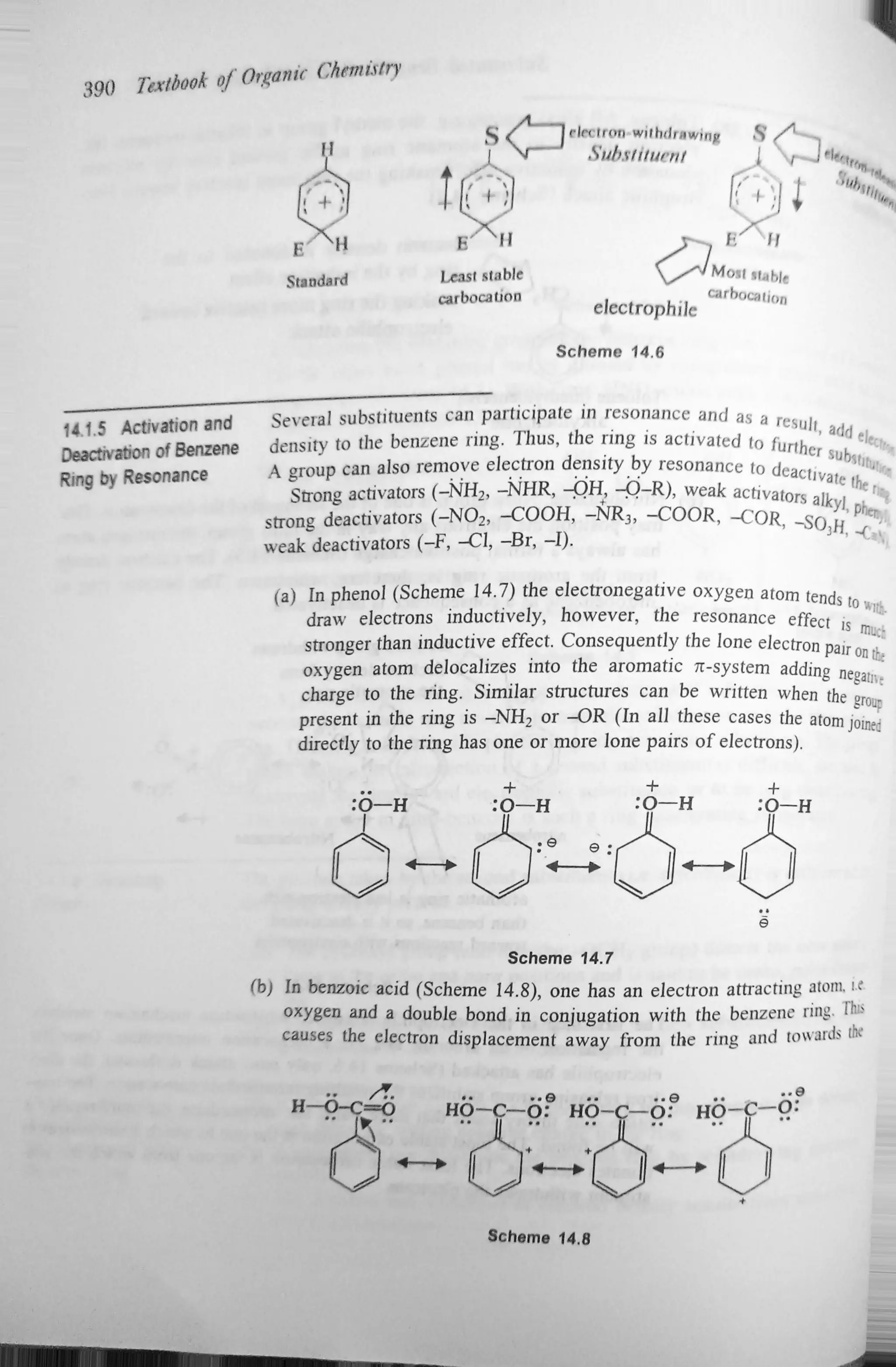
    390 Textbookof OrganicChemistry S electron-withdrawing Subs/i/uen/ Standard Least stable Most stable carbocation carbocation electrophile Scheme 14.6 14.1.5 Activationand Several substituents can participate in resonance and as a result,add Deactivation ofBenzene density to the benzene ring. Thus, the ring is activated to further Ring by Resonance A group can also remove electron density by resonance to deactivate the activators(-NH2, -NHR, -OH, -O-R), weak activatorsalkyl, strongdeactivators(-N02, -COOH, -NR3, -COOR, -COIR,-sojH, weak deactivators (—F, —Cl, —Br, —I). (a) In phenol (Scheme 14.7)the electronegative oxygen atomtendsto draw electrons inductively, however, the resonance effect is strongerthan inductive effect. Consequently the lone electronpairon oxygen atom delocalizes into the aromatic It-system adding charge to the ring. Similar structures can be written when thegroup present in the ring is —NH2 or —OR(In all these cases the atom joined directlyto the ring has one or more lone pairs of electrons). Scheme 14.7 (b) In benzoicacid (Scheme 14.8), one has an electron attractingatom, I.e. oxygen and a double bond in conjugation with the benzenering.This causesthe electron displacementaway from the ring and towards the Scheme 14.8
  • 4.
    Ond Ripe group. Conseqtrmntly theieqonance the ring. resonance (an be wr'ften for (Scheme14.9), -o o O o o Scheme 14.9 In summary, the relative order of carbocationstability and the relative elec- tron concentration on the aromatic ring are the two ways to guide the activation and deactivation of the ring. The groups which donate or release electron density to the aromatic ring activate it for further substitution. On the other hand, the groups which withdraw electrons from the aromatic ring deactivate It for further substitution. Problem 14.1: Alkylgroups are activatingsubstituents. The initialproductof Friedel- Crafts alkylation is much more reactive than the starting material, thus multiple alkylationsmay be difficultto avoid. How can one solve this problem? Answer 14.1: By carrying out a Friedel-Craftsacylationfollowedby Clemmensen reduction of the ketone. The acyl benzene formed initiallyhas a carbonyl group bonded to the aromatic ring (Scheme 14.10), i.e. RCO- is an deactivating group. Once introduced it deactivates the ring for further substitution. o R—c—a AJC13 acylbenzene Scheme 14.10 (a deactivating group) 14.2 ORIENTATIONIN ELECTROPHILICAROMATIC SUBSTITUTION Thedeactivatinggroups (-N02, -CF3, -NR3,-COOH, -COR, .S03H, -CEN) whether operating by induction or resonance,direct the incoming electro- philes to the meta position, while activatinggroups (—NH2, --NHR,NR., —OH, —OR, alkyl, phenyl) direct to theortho and para positions. Halogen substi- tuents(—Br, -C], —I,F) although deactivating,direct ortho and para are an exception. Problem 14.2: Why compared to toluene,(trifluoromethyl) benzene is less reactive to