Organs in the Circulatory
System
Prepared by:
Maeg John P. Carreon, LPT
Science Instructor
Saint Peter Academy of Alegria Incorporated
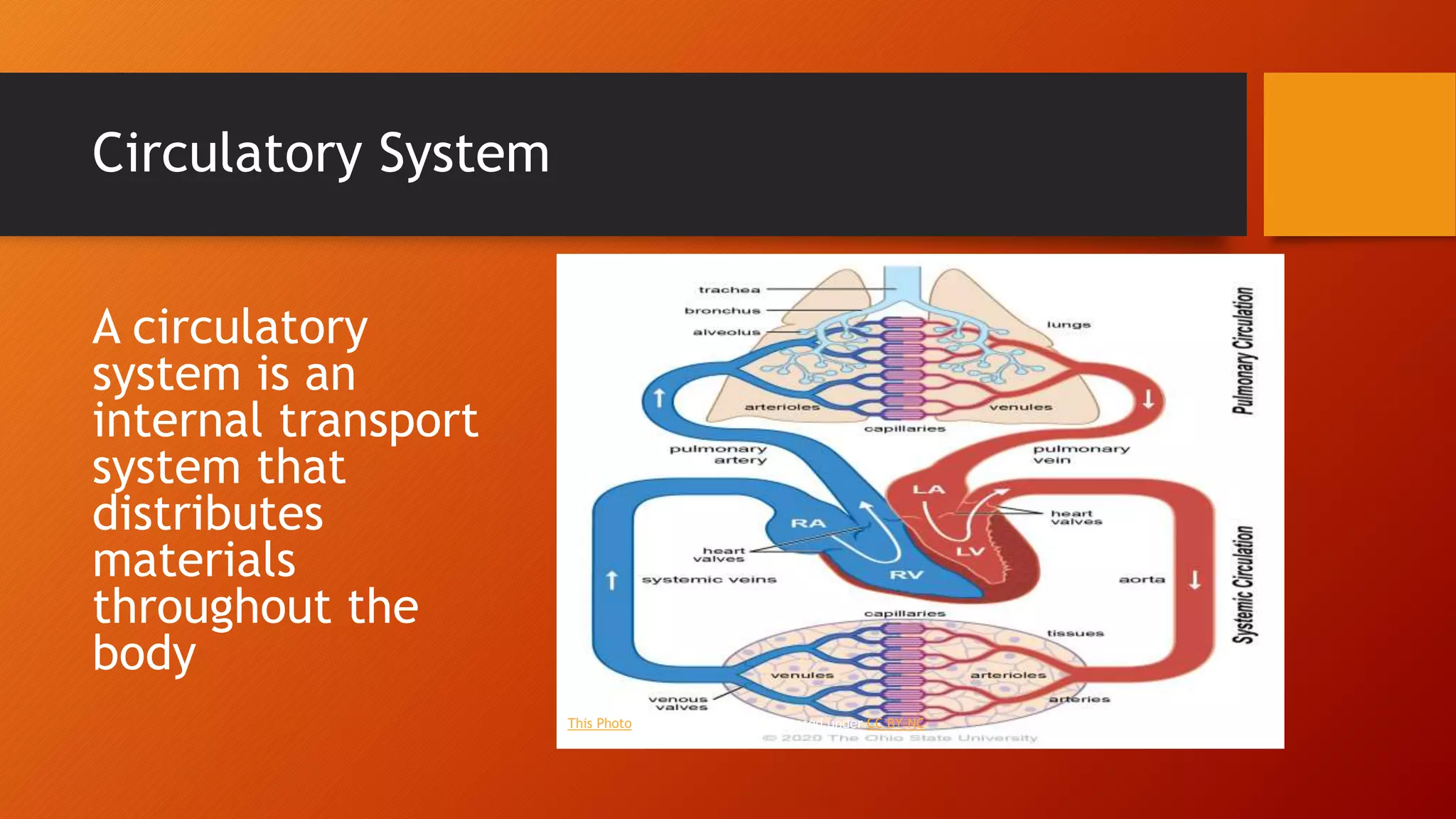
Circulatory System
A circulatory
system is an
internal transport
system that
distributes
materials
throughout the
body
This Photo by Unknown Author is licensed under CC BY-NC
A circulatory system consists of at
least one heart, the fluids that the
heart pumps, and the cavities or
vessels through which the fluids are
pumped.
Blood is the transport medium
contained within the blood vessels
Hemolymph is a mixture of blood
and interstitial fluid.
The Interstitial Fluid fills between
spaces between cells and allow
exchange of substances between
cells
This Photo by Unknown Author is licensed under CC BY-SA-NC
Most living things require
gasses – either in a form of
oxygen and carbon dioxide to
survive. Aside from gases,
nutrients and metabolic wastes
are also transported into and
from cells, respectively
Not all organisms need a
Circulatory System, some organisms
like Paramecium can easily
transport materials from their cell
to their surroundings since every
part of the cell lies very close to
plasma membrane.
This Photo by Unknown Author is
licensed under CC BY-SA
Open and Closed Circulatory System
The type of Circulatory System
depends on the organization of the
heart and Vessels and on the kind of
circulating fluids.
Anthropods have an Open
Circulatory System. Their heart
pumps blood through large vessels
into tissue spaces, mixing with
interstitial fluid. The hemolymph
reenters the heart through openings
called ostia.
Annelids and All vertebrates have
closed circulatory system. Their
heart pumps blood through system
of blood vessels
This Photo by Unknown Author is licensed under CC BY-SA-NC
Cardiovascular System
The closed circulatory system of vertebrates is also known
as Cardiovascular System.
The term cardiovascular comes from the Greek Word
kardia for heart and Latin word vasculum or vessel.
The main parts of the Cardiovascular system are the
heart, blood and blood vessels
Heart
The heart is composed largely of
cardiac muscle tissue. It has two
to four chambers depending on
the type of vertebrae. The human
heart has 4 chambers separated
by an internal wall known as the
septum
The two chambers at the top half
the heart are the Atria – the right
and left atrium. They receive
blood returning to their heart.
Below each atrium are the right
and left ventricles. They pump
blood away from the heart
Blood
Blood is the fluid or
transport medium that
carries gasses, nutrients,
and metabolic wastes.
The blood is also consists
of a viscious liquid known
as plasma. This makes
the blood thicker and
makes it flow slower than
water.
Blood Vessels
The circulatory system includes three types of blood vessels – the arteries,
capillaries, and veins.
They serves as networks or paths for the transport of blood to all parts of the
body
Arteries
The arteries carry blood
away from the heart.
They have a thick wall
with three layers. They
are thicker than the veins
since blood exerts
pressure on the artery
walls as it is pumped out
of the heart. The Aorta is
the largest artery in the
body.
Capillaries
Arterioles branch into
thinner vessels know
ans capillaries. These
vessels allow
exchange of nutrients,
gases and wastes
between the blood
and body cells. They
act as the bridge
between the arteries
and cells.
Veins
Veins collect the blood from
the capillaries. Veins have
thinner walls compared to
arteries but larger in
diameter. As the blood
returns to the heart, less
force and pressure is
necessary to make the the
blood move.
Larger veins also have
valves to prevent the
backward flow of blood.
References:
Bajo, Z., Pineda, L., Ramirez, R. P., & Taduran, R. C. (2017).
Moving Ahead in Science and Technology 9. FNB Educational
Incorporated.
9 Artery vs vein structure diagram Images, Stock Photos & Vectors. (n.d.). Shutterstock.
Retrieved August 21, 2022, from https://www.shutterstock.com/search/artery-vs-vein-
structure-diagram

Organs in the Circulatory System - Science 9.pptx

  • 1.
    Organs in theCirculatory System Prepared by: Maeg John P. Carreon, LPT Science Instructor Saint Peter Academy of Alegria Incorporated
  • 2.
    Circulatory System A circulatory systemis an internal transport system that distributes materials throughout the body This Photo by Unknown Author is licensed under CC BY-NC
  • 3.
    A circulatory systemconsists of at least one heart, the fluids that the heart pumps, and the cavities or vessels through which the fluids are pumped. Blood is the transport medium contained within the blood vessels Hemolymph is a mixture of blood and interstitial fluid. The Interstitial Fluid fills between spaces between cells and allow exchange of substances between cells This Photo by Unknown Author is licensed under CC BY-SA-NC
  • 4.
    Most living thingsrequire gasses – either in a form of oxygen and carbon dioxide to survive. Aside from gases, nutrients and metabolic wastes are also transported into and from cells, respectively Not all organisms need a Circulatory System, some organisms like Paramecium can easily transport materials from their cell to their surroundings since every part of the cell lies very close to plasma membrane. This Photo by Unknown Author is licensed under CC BY-SA
  • 5.
    Open and ClosedCirculatory System The type of Circulatory System depends on the organization of the heart and Vessels and on the kind of circulating fluids. Anthropods have an Open Circulatory System. Their heart pumps blood through large vessels into tissue spaces, mixing with interstitial fluid. The hemolymph reenters the heart through openings called ostia. Annelids and All vertebrates have closed circulatory system. Their heart pumps blood through system of blood vessels This Photo by Unknown Author is licensed under CC BY-SA-NC
  • 6.
    Cardiovascular System The closedcirculatory system of vertebrates is also known as Cardiovascular System. The term cardiovascular comes from the Greek Word kardia for heart and Latin word vasculum or vessel. The main parts of the Cardiovascular system are the heart, blood and blood vessels
  • 7.
    Heart The heart iscomposed largely of cardiac muscle tissue. It has two to four chambers depending on the type of vertebrae. The human heart has 4 chambers separated by an internal wall known as the septum The two chambers at the top half the heart are the Atria – the right and left atrium. They receive blood returning to their heart. Below each atrium are the right and left ventricles. They pump blood away from the heart
  • 8.
    Blood Blood is thefluid or transport medium that carries gasses, nutrients, and metabolic wastes. The blood is also consists of a viscious liquid known as plasma. This makes the blood thicker and makes it flow slower than water.
  • 9.
    Blood Vessels The circulatorysystem includes three types of blood vessels – the arteries, capillaries, and veins. They serves as networks or paths for the transport of blood to all parts of the body
  • 10.
    Arteries The arteries carryblood away from the heart. They have a thick wall with three layers. They are thicker than the veins since blood exerts pressure on the artery walls as it is pumped out of the heart. The Aorta is the largest artery in the body.
  • 11.
    Capillaries Arterioles branch into thinnervessels know ans capillaries. These vessels allow exchange of nutrients, gases and wastes between the blood and body cells. They act as the bridge between the arteries and cells.
  • 12.
    Veins Veins collect theblood from the capillaries. Veins have thinner walls compared to arteries but larger in diameter. As the blood returns to the heart, less force and pressure is necessary to make the the blood move. Larger veins also have valves to prevent the backward flow of blood.
  • 13.
    References: Bajo, Z., Pineda,L., Ramirez, R. P., & Taduran, R. C. (2017). Moving Ahead in Science and Technology 9. FNB Educational Incorporated. 9 Artery vs vein structure diagram Images, Stock Photos & Vectors. (n.d.). Shutterstock. Retrieved August 21, 2022, from https://www.shutterstock.com/search/artery-vs-vein- structure-diagram