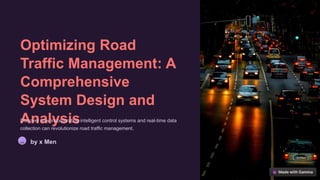
Optimizing Road
Traffic Management: A
Comprehensive
System Design and
Analysis
Discover how incorporating intelligent control systems and real-time data
collection can revolutionize road traffic management.
xM by x Men
Introduction
Understand the challenges faced in urban road traffic management and
the need for comprehensive solutions to improve efficiency and reduce
congestion.
Research Objectives
1 Data Collection
Develop a methodology for real-time data collection to gain insights into
traffic patterns and vehicular behavior.
2 Traffic Flow Modeling
Create accurate traffic flow models to analyze bottlenecks and optimize
route planning.
3 Intelligent Control System
Design an intelligent control system to dynamically regulate traffic signals
based on real-time data.
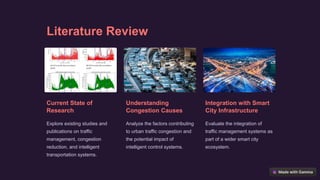
Literature Review
Current State of
Research
Explore existing studies and
publications on traffic
management, congestion
reduction, and intelligent
transportation systems.
Understanding
Congestion Causes
Analyze the factors contributing
to urban traffic congestion and
the potential impact of
intelligent control systems.
Integration with Smart
City Infrastructure
Evaluate the integration of
traffic management systems as
part of a wider smart city
ecosystem.
Methodology
1 Real-Time Data
Collection
Utilize sensor networks
and connected vehicles
to gather data on traffic
flow, speed, and
congestion levels.
2 Traffic Flow
Modeling
Apply advanced
algorithms and machine
learning techniques to
build accurate traffic flow
models from collected
data.
3 Intelligent Control
System
Development
Develop a scalable and
adaptable intelligent
control system
architecture for efficient
traffic signal
management.
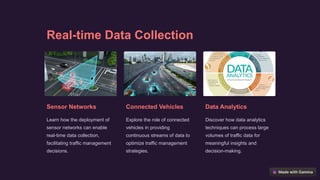
Real-time Data Collection
Sensor Networks
Learn how the deployment of
sensor networks can enable
real-time data collection,
facilitating traffic management
decisions.
Connected Vehicles
Explore the role of connected
vehicles in providing
continuous streams of data to
optimize traffic management
strategies.
Data Analytics
Discover how data analytics
techniques can process large
volumes of traffic data for
meaningful insights and
decision-making.
Traffic Flow Modelling
Dynamic Traffic Assignment
Model the assignment of vehicles to traffic networks considering dynamic factors such
as congestion, accidents, and road works.
Behavioral Modeling
Understand driver behavior and its impact on traffic flow to create more realistic traffic
flow models.
Scenario Analysis
Simulate various scenarios and evaluate the effectiveness of proposed traffic flow
optimization strategies.
Intelligent Control System
1 Real-Time Data Integration
Explore how integrating real-time traffic
data with the control system enables
adaptive signal control algorithms.
2
Machine Learning Algorithms
Discover how machine learning
algorithms can dynamically optimize
traffic signal timings to improve flow
efficiency.
3 Connected Infrastructure
Investigate the benefits of integrating
traffic signal control with other smart
city infrastructure, such as public
transportation systems.
Environmental Impact Assessment
Evaluate the potential environmental impacts of the intelligent traffic control system and propose
sustainable measures to mitigate negative effects.
Evaluation and Validation
Discuss the methods used to evaluate the effectiveness of the proposed system and validate its benefits
in real-world deployment.
Policy Recommendations
1 Policy Framework
Suggest policy changes
and regulatory
frameworks to support
the implementation and
adoption of intelligent
traffic control systems.
2 Public Education
Highlight the importance
of public awareness
campaigns in promoting
safer and more efficient
traffic management
practices.
3 Collaborative
Governance
Emphasize the need for
multi-stakeholder
collaboration in shaping
traffic management
policies and decision-
making processes.
Conclusion
Summarize the key findings and emphasize the potential of intelligent
traffic management systems in transforming urban transportation.
Future Work
Highlight future research directions, including the application of emerging technologies such as
autonomous vehicles and smart infrastructure.
Question and Discussion
Engage the audience and encourage questions and discussions to further
explore the topic and address specific concerns or insights.
Thank You
Express gratitude to the audience for their attention and participation,
acknowledging the importance of collaboration in finding innovative
solutions.

Optimizing-Road-Traffic-Management-A-Comprehensive-System-Design-and-Analysis (1).pptx

  • 1.
    Optimizing Road Traffic Management:A Comprehensive System Design and Analysis Discover how incorporating intelligent control systems and real-time data collection can revolutionize road traffic management. xM by x Men
  • 2.
    Introduction Understand the challengesfaced in urban road traffic management and the need for comprehensive solutions to improve efficiency and reduce congestion.
  • 3.
    Research Objectives 1 DataCollection Develop a methodology for real-time data collection to gain insights into traffic patterns and vehicular behavior. 2 Traffic Flow Modeling Create accurate traffic flow models to analyze bottlenecks and optimize route planning. 3 Intelligent Control System Design an intelligent control system to dynamically regulate traffic signals based on real-time data.
  • 4.
    Literature Review Current Stateof Research Explore existing studies and publications on traffic management, congestion reduction, and intelligent transportation systems. Understanding Congestion Causes Analyze the factors contributing to urban traffic congestion and the potential impact of intelligent control systems. Integration with Smart City Infrastructure Evaluate the integration of traffic management systems as part of a wider smart city ecosystem.
  • 5.
    Methodology 1 Real-Time Data Collection Utilizesensor networks and connected vehicles to gather data on traffic flow, speed, and congestion levels. 2 Traffic Flow Modeling Apply advanced algorithms and machine learning techniques to build accurate traffic flow models from collected data. 3 Intelligent Control System Development Develop a scalable and adaptable intelligent control system architecture for efficient traffic signal management.
  • 6.
    Real-time Data Collection SensorNetworks Learn how the deployment of sensor networks can enable real-time data collection, facilitating traffic management decisions. Connected Vehicles Explore the role of connected vehicles in providing continuous streams of data to optimize traffic management strategies. Data Analytics Discover how data analytics techniques can process large volumes of traffic data for meaningful insights and decision-making.
  • 7.
    Traffic Flow Modelling DynamicTraffic Assignment Model the assignment of vehicles to traffic networks considering dynamic factors such as congestion, accidents, and road works. Behavioral Modeling Understand driver behavior and its impact on traffic flow to create more realistic traffic flow models. Scenario Analysis Simulate various scenarios and evaluate the effectiveness of proposed traffic flow optimization strategies.
  • 8.
    Intelligent Control System 1Real-Time Data Integration Explore how integrating real-time traffic data with the control system enables adaptive signal control algorithms. 2 Machine Learning Algorithms Discover how machine learning algorithms can dynamically optimize traffic signal timings to improve flow efficiency. 3 Connected Infrastructure Investigate the benefits of integrating traffic signal control with other smart city infrastructure, such as public transportation systems.
  • 9.
    Environmental Impact Assessment Evaluatethe potential environmental impacts of the intelligent traffic control system and propose sustainable measures to mitigate negative effects.
  • 10.
    Evaluation and Validation Discussthe methods used to evaluate the effectiveness of the proposed system and validate its benefits in real-world deployment.
  • 11.
    Policy Recommendations 1 PolicyFramework Suggest policy changes and regulatory frameworks to support the implementation and adoption of intelligent traffic control systems. 2 Public Education Highlight the importance of public awareness campaigns in promoting safer and more efficient traffic management practices. 3 Collaborative Governance Emphasize the need for multi-stakeholder collaboration in shaping traffic management policies and decision- making processes.
  • 12.
    Conclusion Summarize the keyfindings and emphasize the potential of intelligent traffic management systems in transforming urban transportation.
  • 13.
    Future Work Highlight futureresearch directions, including the application of emerging technologies such as autonomous vehicles and smart infrastructure.
  • 14.
    Question and Discussion Engagethe audience and encourage questions and discussions to further explore the topic and address specific concerns or insights.
  • 15.
    Thank You Express gratitudeto the audience for their attention and participation, acknowledging the importance of collaboration in finding innovative solutions.