v
v
Optimal integration of net
Zero Energy Buildings in the
Scandinavian energy system
71TH SEMI-ANNUAL ETSAP MEETING
Maryland, USA 10.07.2017
Pernille Seljom (pernille.seljom@ife.no),
Karen Byskov Lindberg (kli@nve.no) &
Asgeir Tomasgard (asgeir.tomasgard@ntnu.no)
v
v
• net Zero Energy Building (ZEB)
• Low energy demand and renewable energy generation
• Energy generation = energy demand
• PV is a suitable energy generation technology
• EU’s Energy Performance of Buildings Directive (EPBD)
• All new buildings shall be nearly ZEB from 2020
• The definition of a “nearly” and Primary Energy factors are member specific
• Scandinavia; Denmark, Norway & Sweden
• Solar irradiation is high in summer when electricity demand is low
• ZEBs with PV require electricity trade with the electricity grid
10/07/2017
Motivation
2
v
v
• If all new and rehabilitated buildings are ZEB with PV
• How will this change the cost-optimal development of energy system
towards 2050 ?
• What is the optimal heat design in buildings ?
• Is it possible to integrate substantial PV production in Scandinavia ?
• What is the future role of the flexible hydropower ?
10/07/2017
Research questions
3
v
v
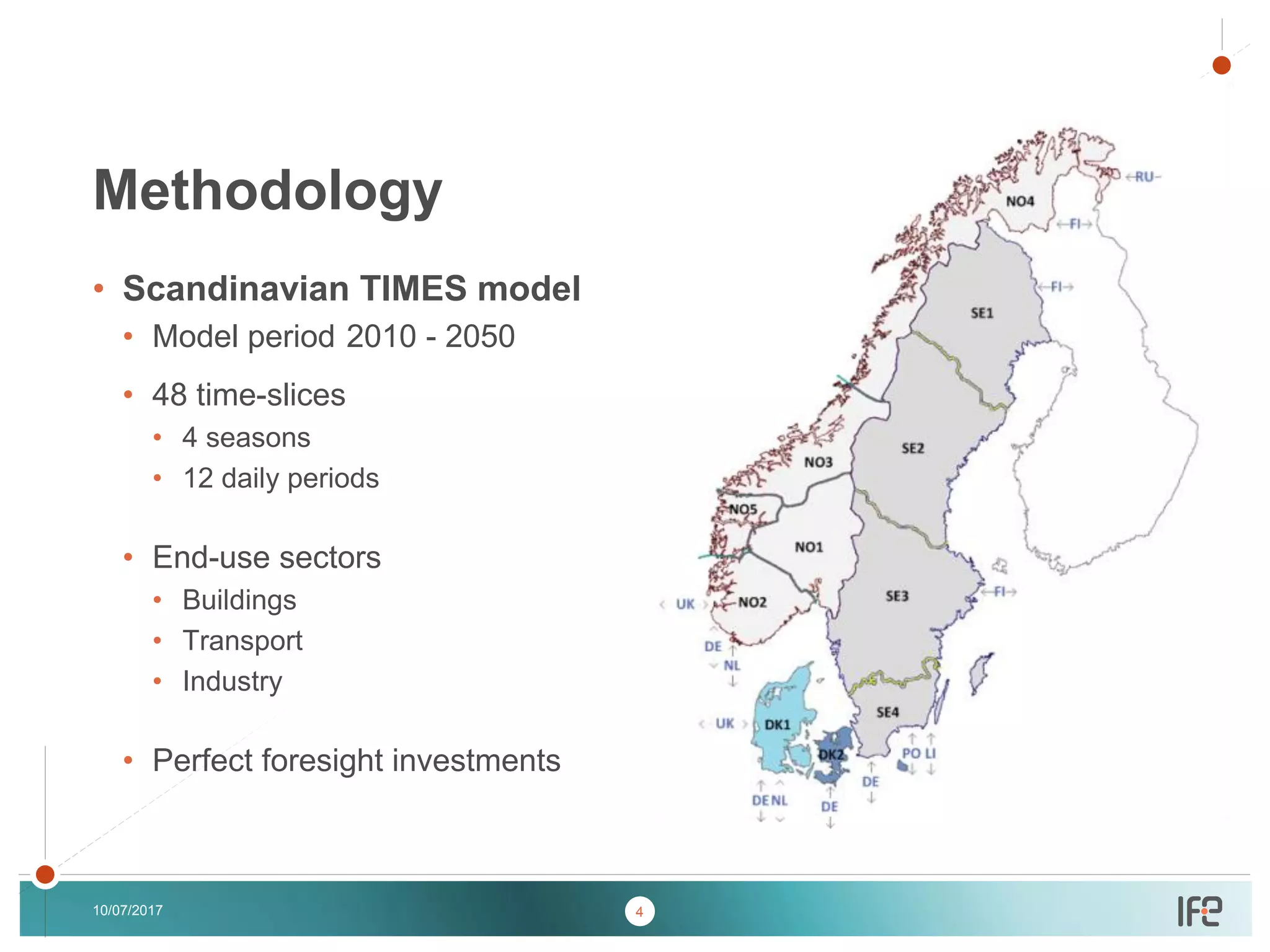
• Scandinavian TIMES model
• Model period 2010 - 2050
• 48 time-slices
• 4 seasons
• 12 daily periods
• End-use sectors
• Buildings
• Transport
• Industry
• Perfect foresight investments
10/07/2017
Methodology
4
v
v
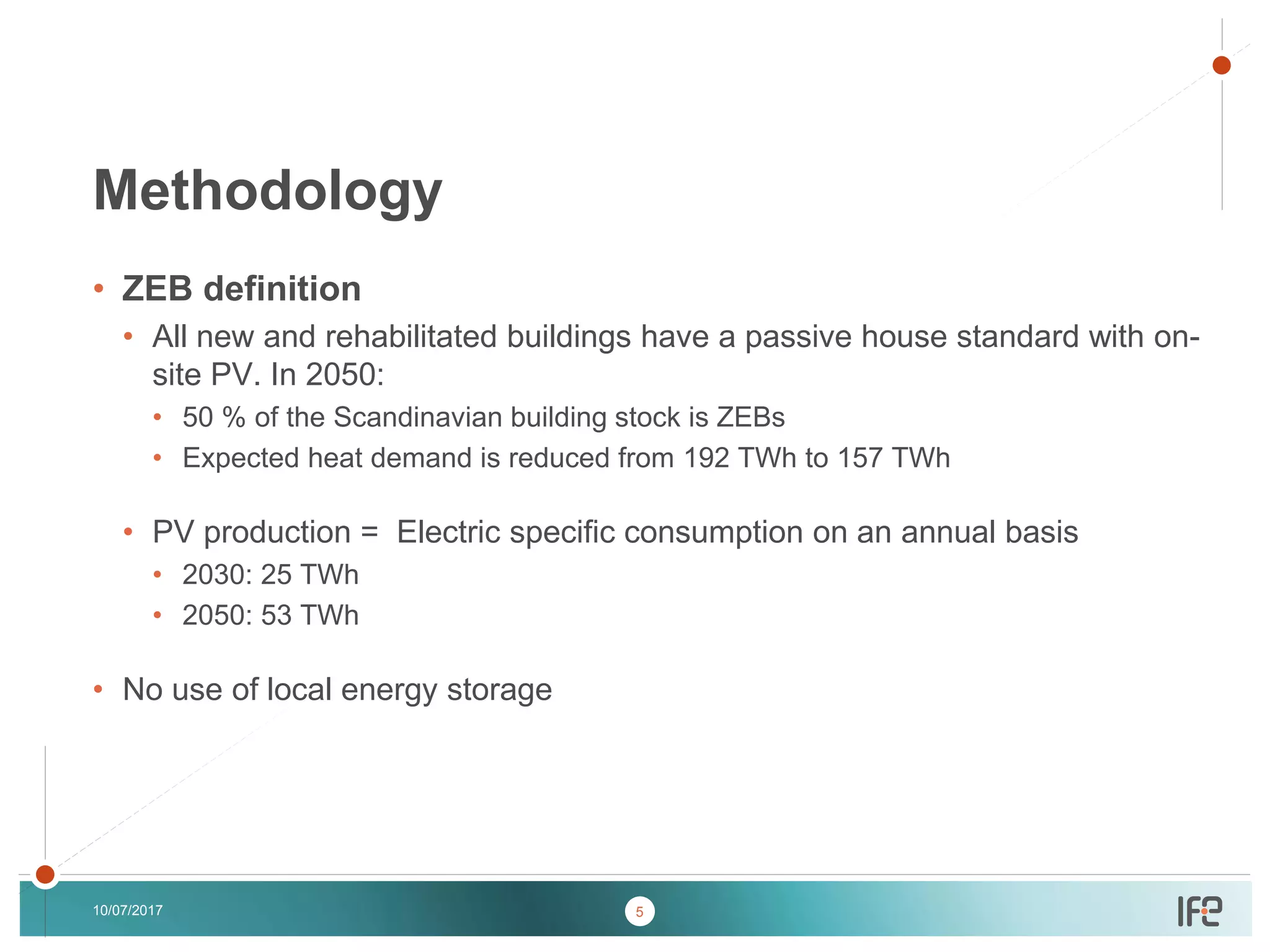
• ZEB definition
• All new and rehabilitated buildings have a passive house standard with on-
site PV. In 2050:
• 50 % of the Scandinavian building stock is ZEBs
• Expected heat demand is reduced from 192 TWh to 157 TWh
• PV production = Electric specific consumption on an annual basis
• 2030: 25 TWh
• 2050: 53 TWh
• No use of local energy storage
10/07/2017
Methodology
5
v
v
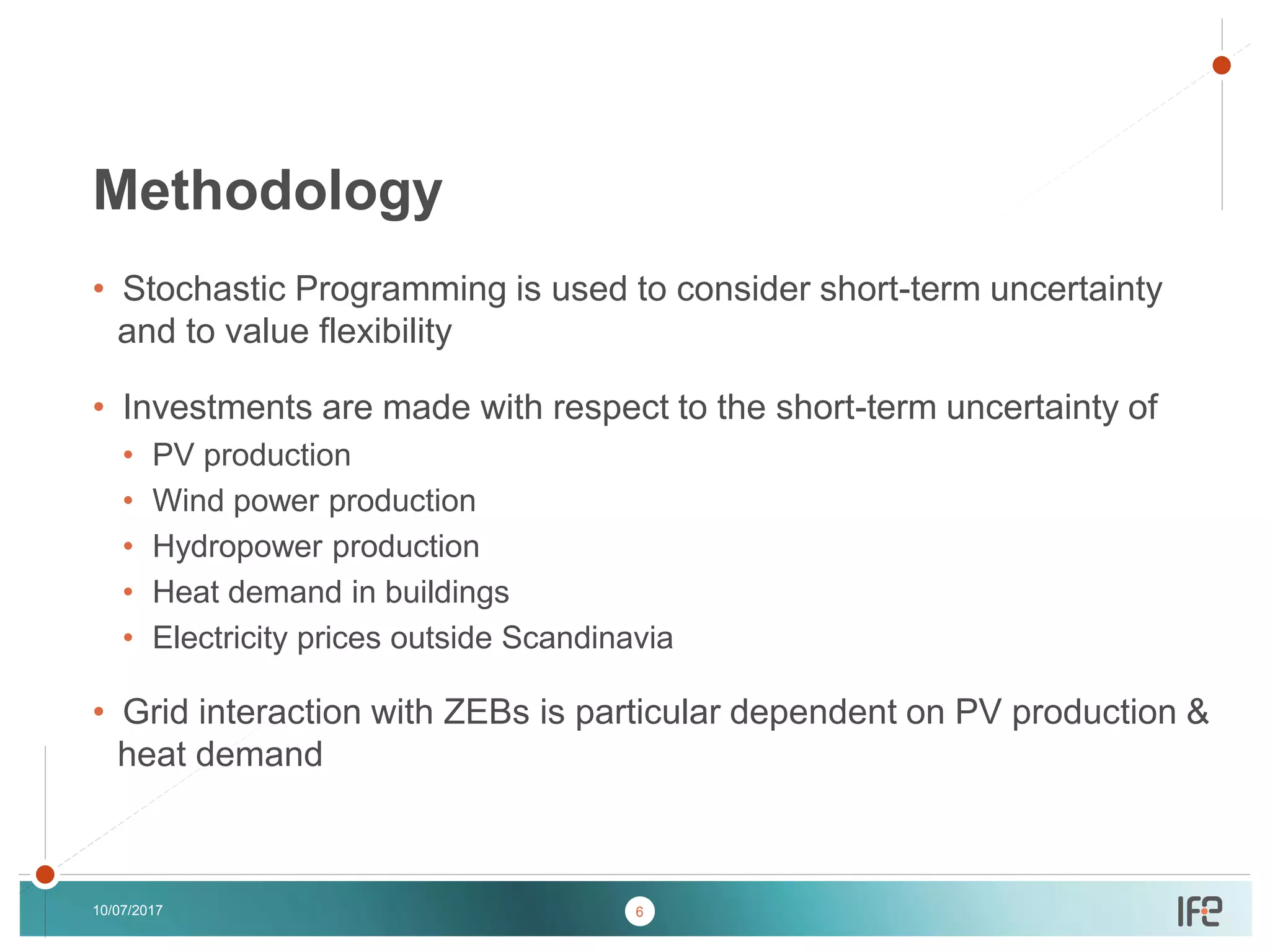
• Stochastic Programming is used to consider short-term uncertainty
and to value flexibility
• Investments are made with respect to the short-term uncertainty of
• PV production
• Wind power production
• Hydropower production
• Heat demand in buildings
• Electricity prices outside Scandinavia
• Grid interaction with ZEBs is particular dependent on PV production &
heat demand
10/07/2017
Methodology
6
v
v
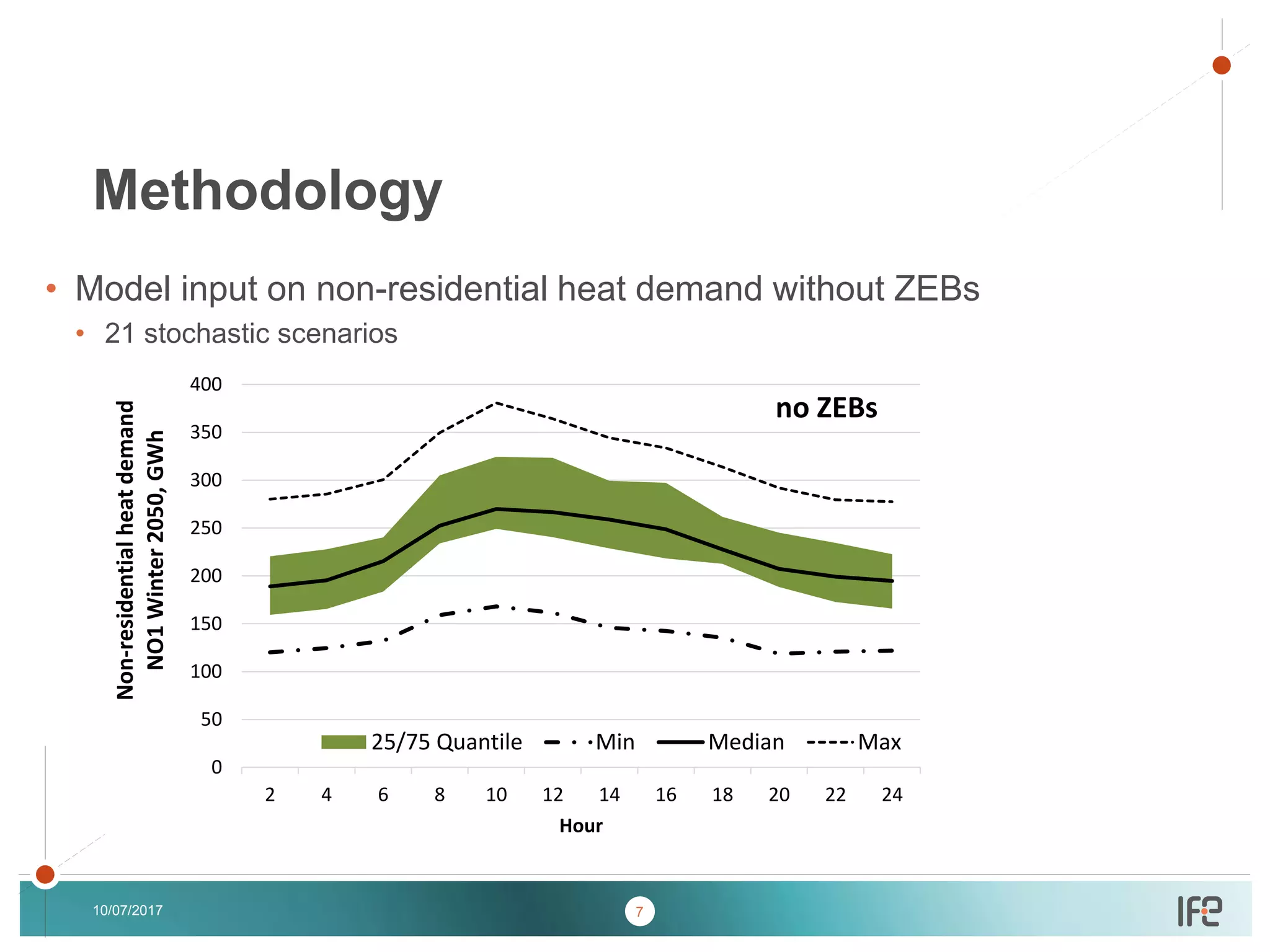
• Model input on non-residential heat demand without ZEBs
• 21 stochastic scenarios
10/07/2017
Methodology
0
50
100
150
200
250
300
350
400
2 4 6 8 10 12 14 16 18 20 22 24
Non-residentialheatdemand
NO1Winter2050,GWh
Hour
no ZEBs
25/75 Quantile Min Median Max
7
v
v
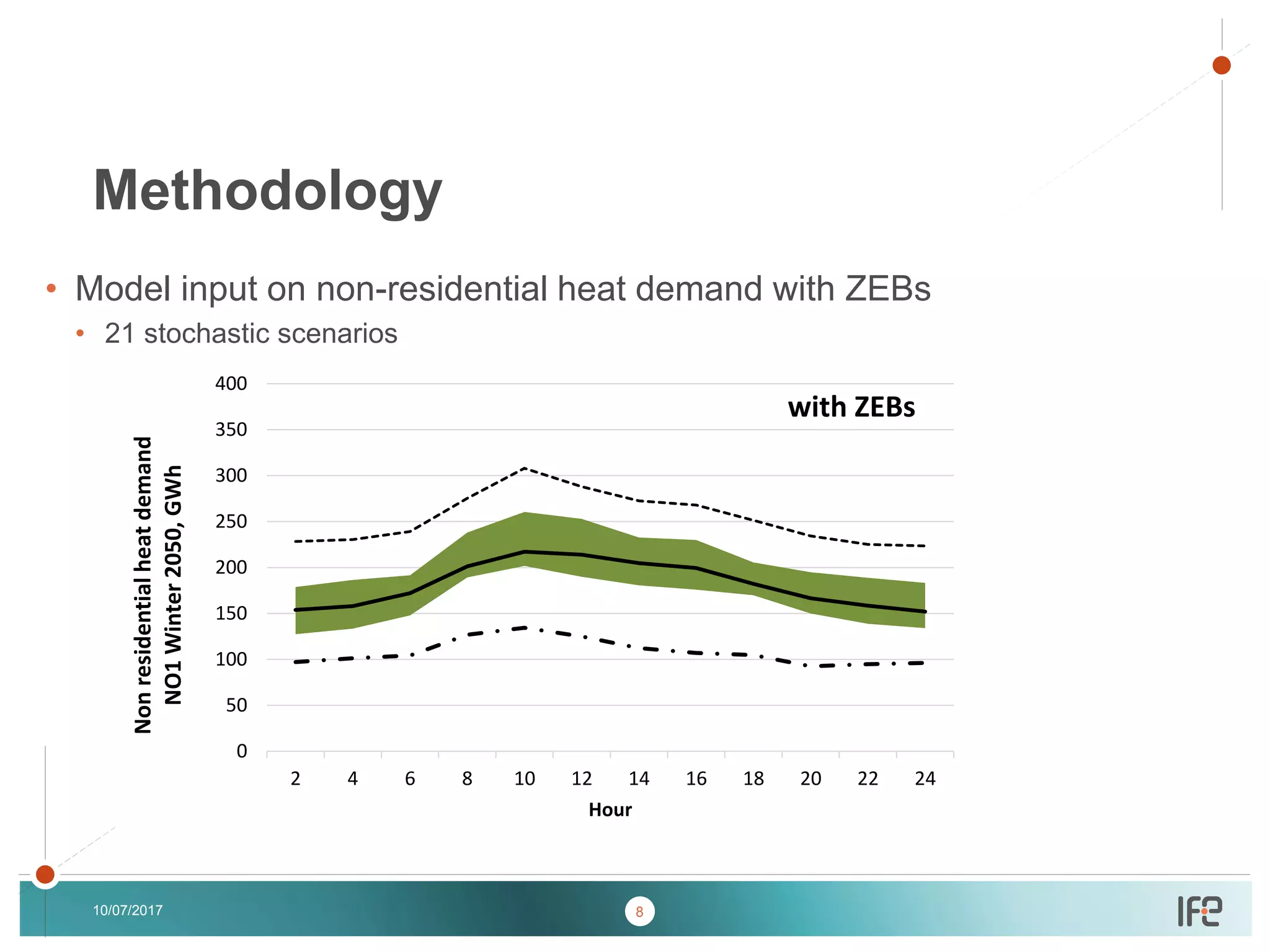
• Model input on non-residential heat demand with ZEBs
• 21 stochastic scenarios
10/07/2017
Methodology
8
0
50
100
150
200
250
300
350
400
2 4 6 8 10 12 14 16 18 20 22 24
Nonresidentialheatdemand
NO1Winter2050,GWh
Hour
with ZEBs
v
v
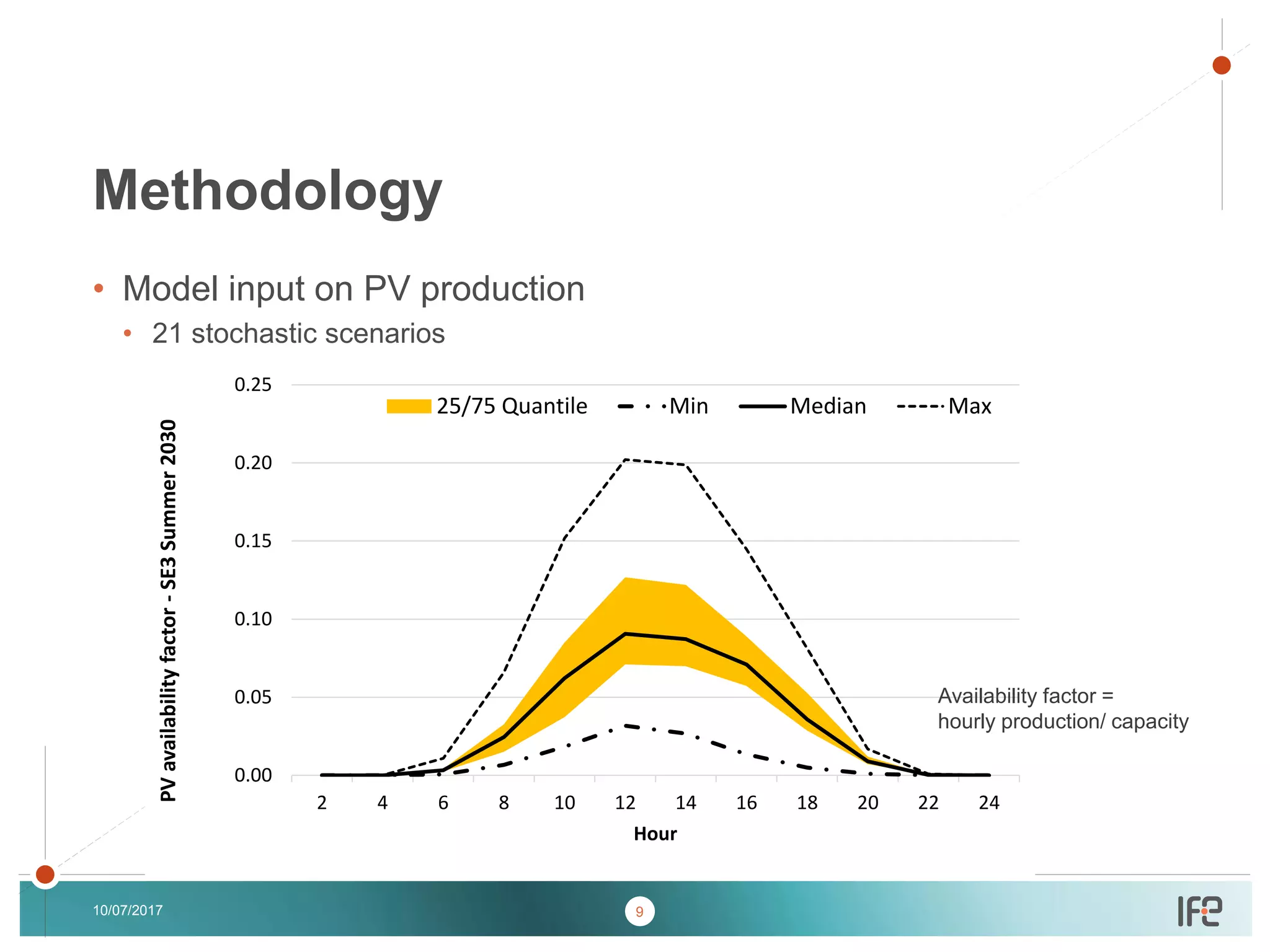
• Model input on PV production
• 21 stochastic scenarios
10/07/2017
Methodology
0.00
0.05
0.10
0.15
0.20
0.25
2 4 6 8 10 12 14 16 18 20 22 24
PVavailabilityfactor-SE3Summer2030
Hour
25/75 Quantile Min Median Max
Availability factor =
hourly production/ capacity
9
v
v
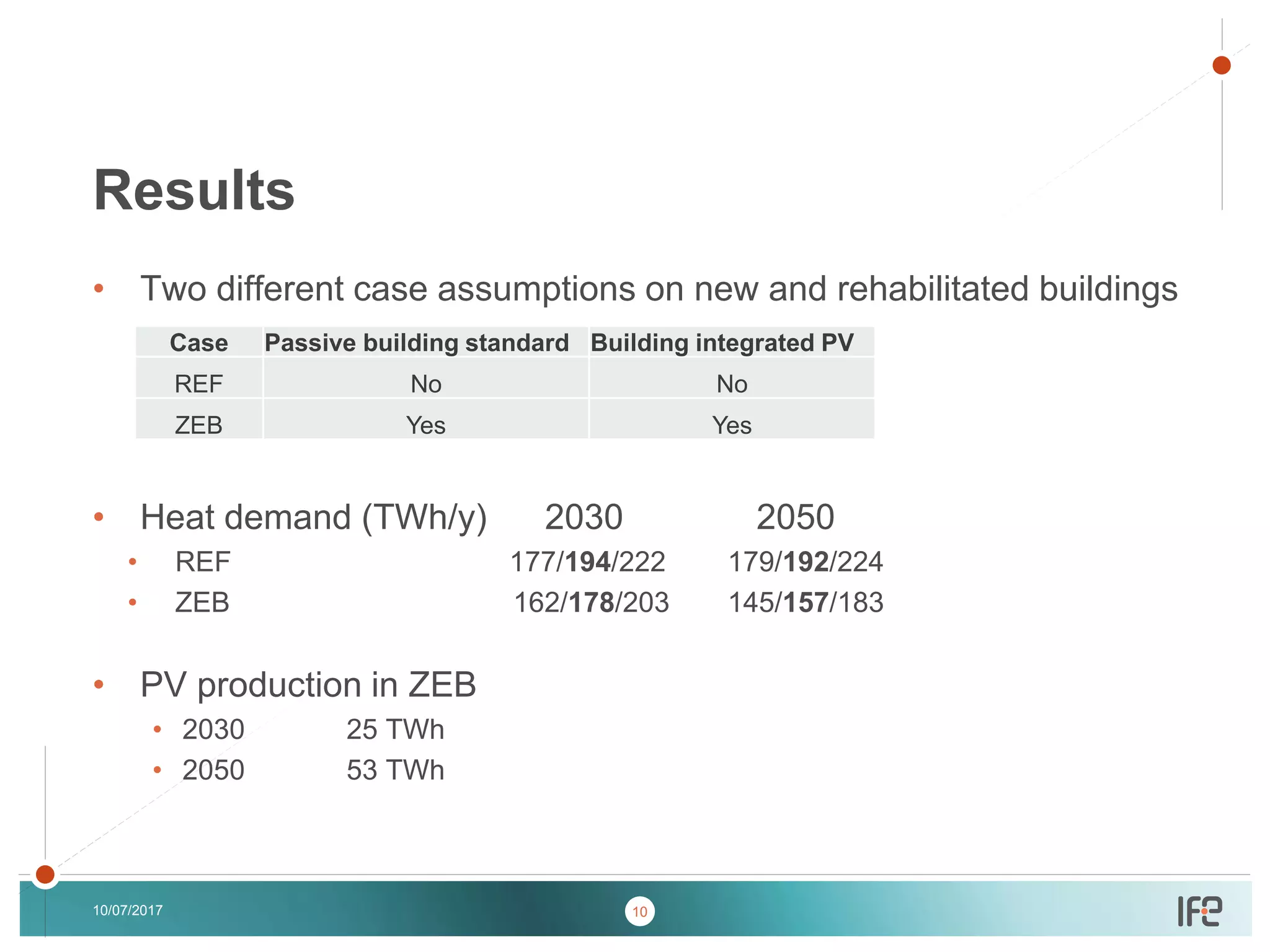
• Two different case assumptions on new and rehabilitated buildings
• Heat demand (TWh/y) 2030 2050
• REF 177/194/222 179/192/224
• ZEB 162/178/203 145/157/183
• PV production in ZEB
• 2030 25 TWh
• 2050 53 TWh
10/07/2017
Results
Case Passive building standard Building integrated PV
REF No No
ZEB Yes Yes
10
v
v
10/07/2017 11
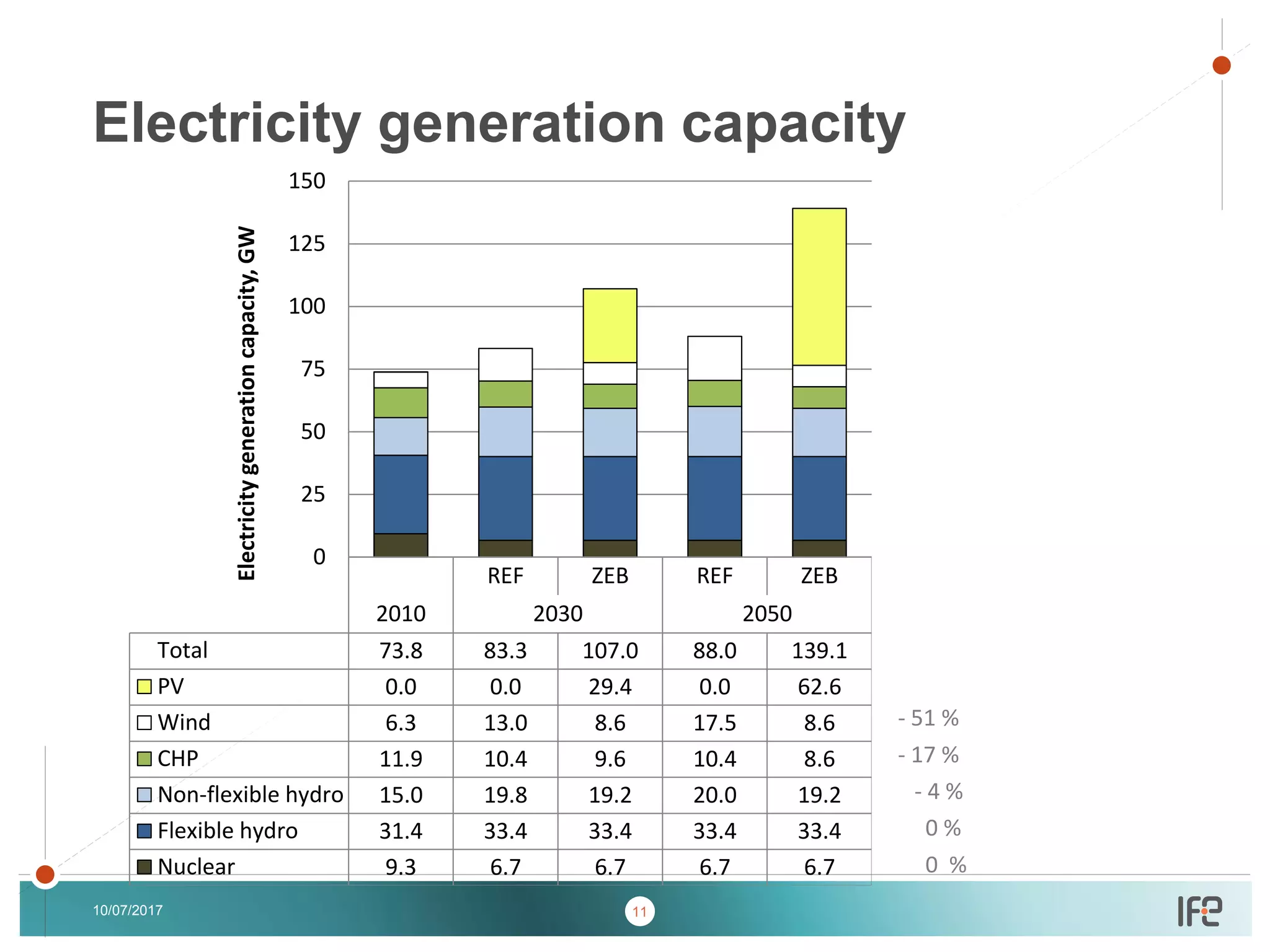
Electricity generation capacity
- 51 %
- 17 %
- 4 %
0 %
0 %
REF ZEB REF ZEB
2010 2030 2050
Total 73.8 83.3 107.0 88.0 139.1
PV 0.0 0.0 29.4 0.0 62.6
Wind 6.3 13.0 8.6 17.5 8.6
CHP 11.9 10.4 9.6 10.4 8.6
Non-flexible hydro 15.0 19.8 19.2 20.0 19.2
Flexible hydro 31.4 33.4 33.4 33.4 33.4
Nuclear 9.3 6.7 6.7 6.7 6.7
0
25
50
75
100
125
150
Electricitygenerationcapacity,GW
v
v
10/07/2017 12
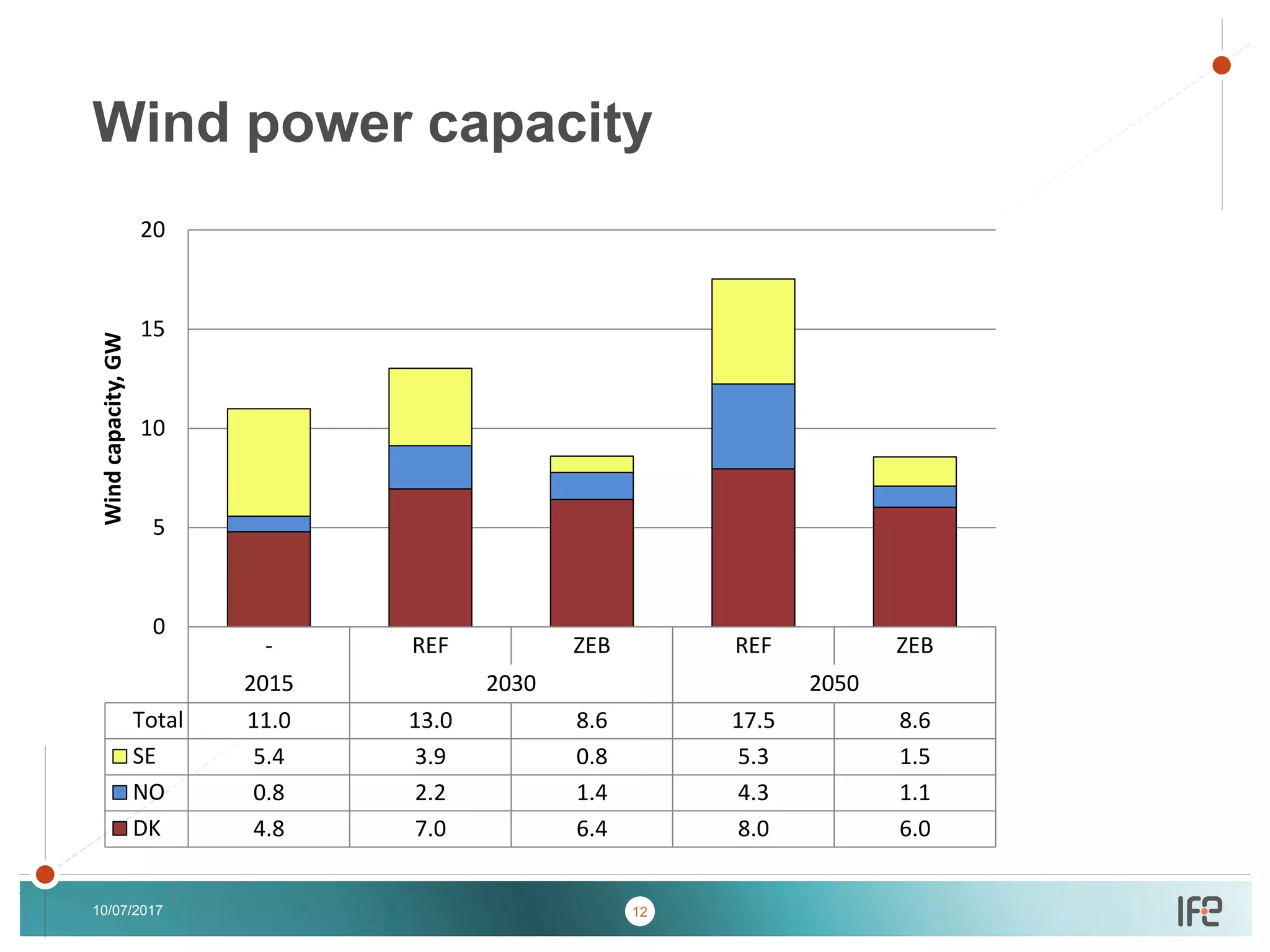
Wind power capacity
- REF ZEB REF ZEB
2015 2030 2050
Total 11.0 13.0 8.6 17.5 8.6
SE 5.4 3.9 0.8 5.3 1.5
NO 0.8 2.2 1.4 4.3 1.1
DK 4.8 7.0 6.4 8.0 6.0
0
5
10
15
20
Windcapacity,GW
v
v
10/07/2017
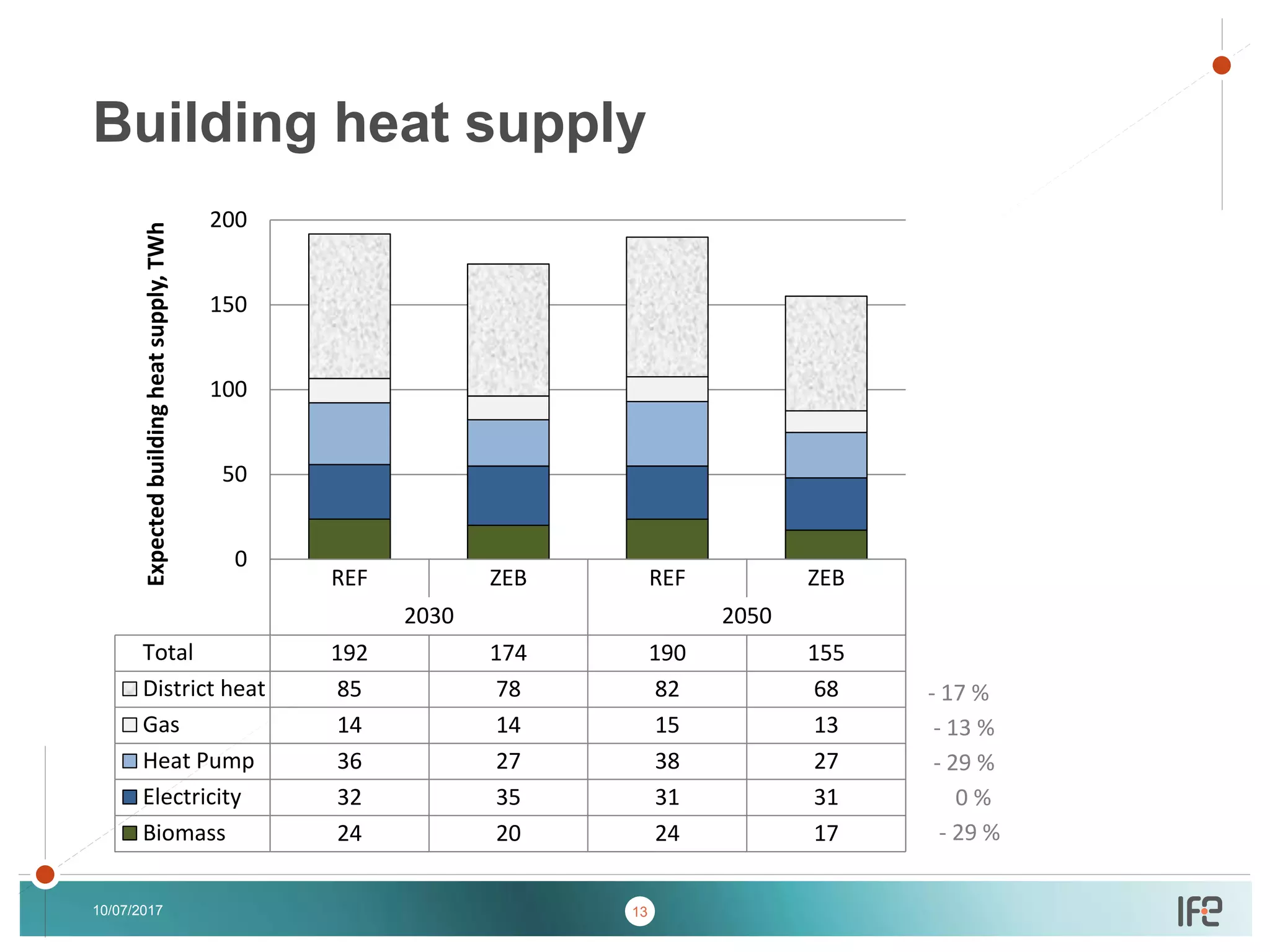
Building heat supply
13
REF ZEB REF ZEB
2030 2050
Total 192 174 190 155
District heat 85 78 82 68
Gas 14 14 15 13
Heat Pump 36 27 38 27
Electricity 32 35 31 31
Biomass 24 20 24 17
0
50
100
150
200
Expectedbuildingheatsupply,TWh
- 17 %
- 13 %
- 29 %
0 %
- 29 %
v
v
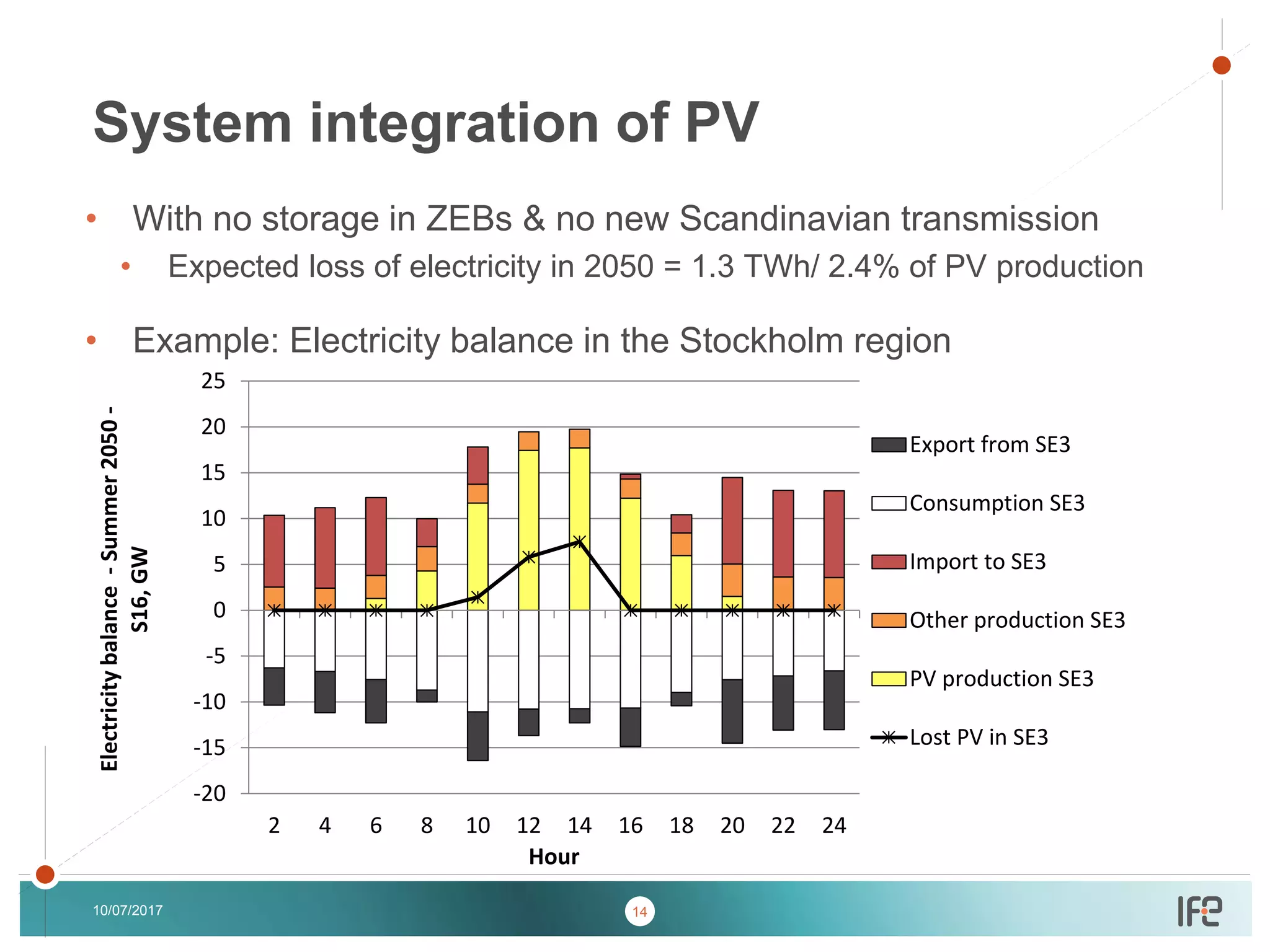
• With no storage in ZEBs & no new Scandinavian transmission
• Expected loss of electricity in 2050 = 1.3 TWh/ 2.4% of PV production
• Example: Electricity balance in the Stockholm region
10/07/2017
System integration of PV
14
-20
-15
-10
-5
0
5
10
15
20
25
2 4 6 8 10 12 14 16 18 20 22 24
Electricitybalance-Summer2050-
S16,GW
Hour
Export from SE3
Consumption SE3
Import to SE3
Other production SE3
PV production SE3
Lost PV in SE3
v
v
10/07/2017 15
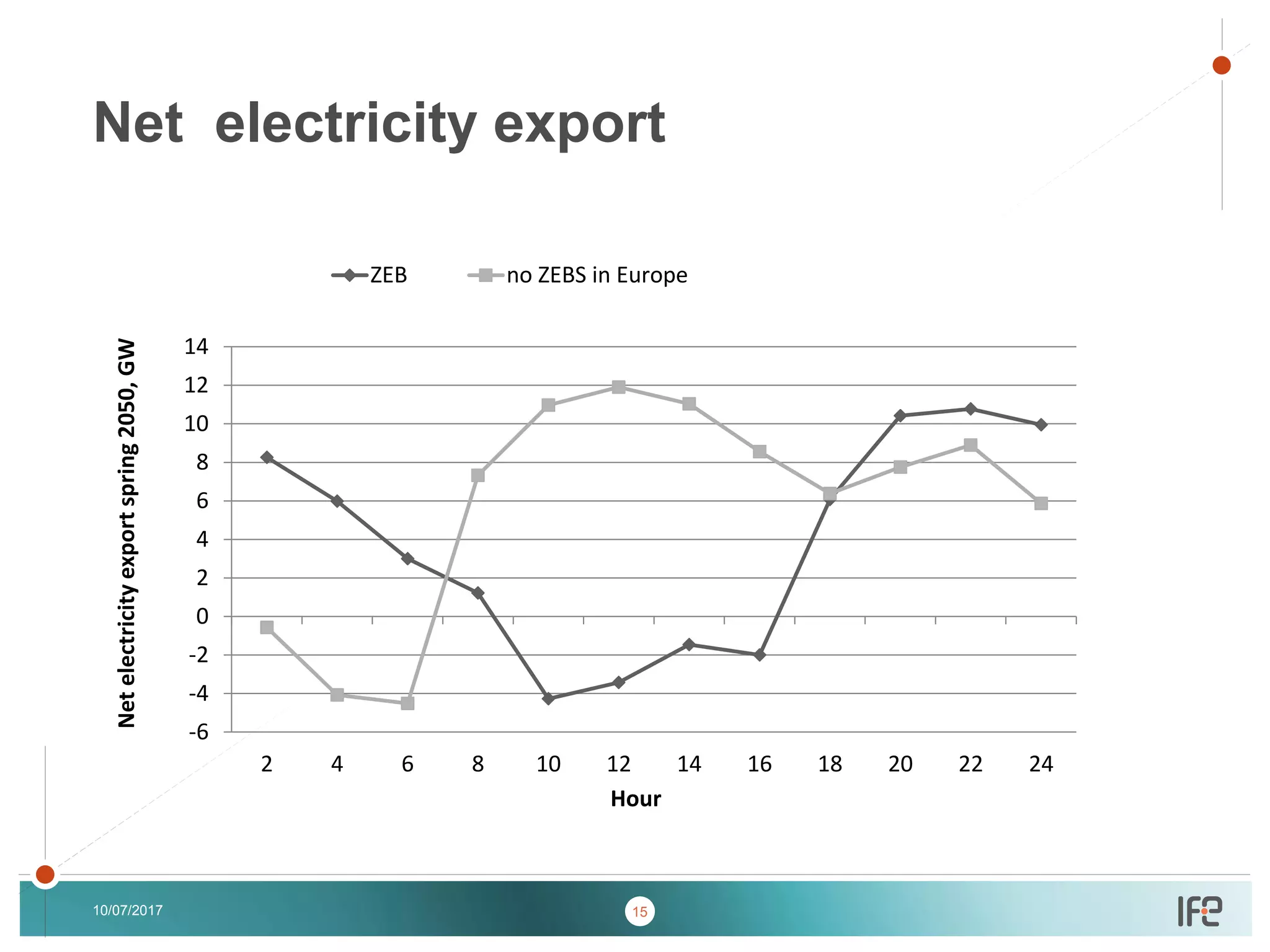
Net electricity export
-6
-4
-2
0
2
4
6
8
10
12
14
2 4 6 8 10 12 14 16 18 20 22 24
Netelectricityexportspring2050,GW
Hour
ZEB no ZEBS in Europe
v
v
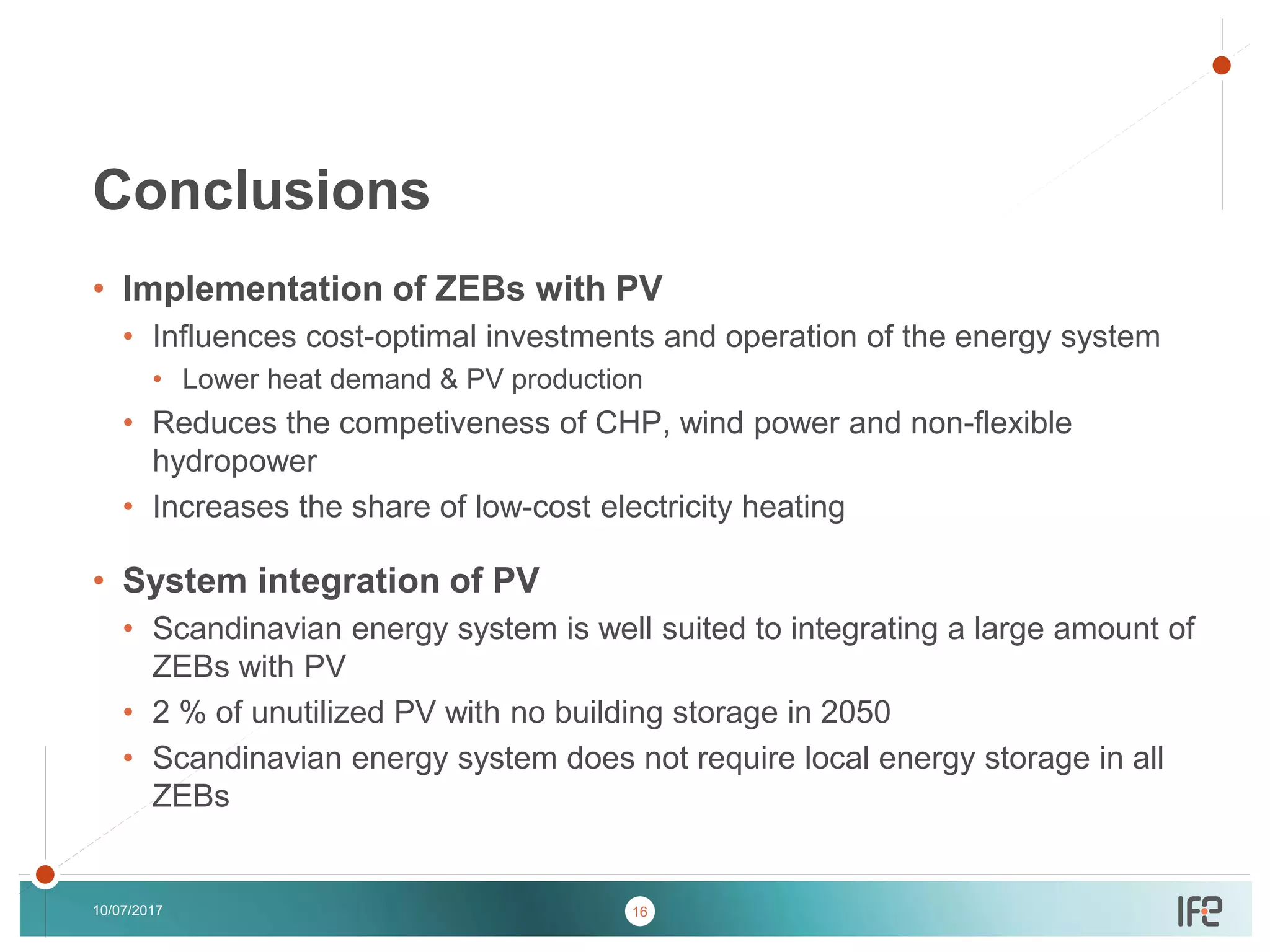
• Implementation of ZEBs with PV
• Influences cost-optimal investments and operation of the energy system
• Lower heat demand & PV production
• Reduces the competiveness of CHP, wind power and non-flexible
hydropower
• Increases the share of low-cost electricity heating
• System integration of PV
• Scandinavian energy system is well suited to integrating a large amount of
ZEBs with PV
• 2 % of unutilized PV with no building storage in 2050
• Scandinavian energy system does not require local energy storage in all
ZEBs
10/07/2017
Conclusions
16
v
v
Thank you for the attention
pernille.seljom@ife.no
10/07/2017
Acknowledgements to:
For more details:
Seljom, P., Lindberg, K.B., Tomasgard, A., Doorman, G., Sartori, I., 2017.
The impact of Zero Energy Buildings on the Scandinavian energy system.
Energy 118, 284-296.
17

Optimal integration of net Zero Energy Buildings in the Scandinavian energy system

  • 1.
    v v Optimal integration ofnet Zero Energy Buildings in the Scandinavian energy system 71TH SEMI-ANNUAL ETSAP MEETING Maryland, USA 10.07.2017 Pernille Seljom (pernille.seljom@ife.no), Karen Byskov Lindberg (kli@nve.no) & Asgeir Tomasgard (asgeir.tomasgard@ntnu.no)
  • 2.
    v v • net ZeroEnergy Building (ZEB) • Low energy demand and renewable energy generation • Energy generation = energy demand • PV is a suitable energy generation technology • EU’s Energy Performance of Buildings Directive (EPBD) • All new buildings shall be nearly ZEB from 2020 • The definition of a “nearly” and Primary Energy factors are member specific • Scandinavia; Denmark, Norway & Sweden • Solar irradiation is high in summer when electricity demand is low • ZEBs with PV require electricity trade with the electricity grid 10/07/2017 Motivation 2
  • 3.
    v v • If allnew and rehabilitated buildings are ZEB with PV • How will this change the cost-optimal development of energy system towards 2050 ? • What is the optimal heat design in buildings ? • Is it possible to integrate substantial PV production in Scandinavia ? • What is the future role of the flexible hydropower ? 10/07/2017 Research questions 3
  • 4.
    v v • Scandinavian TIMESmodel • Model period 2010 - 2050 • 48 time-slices • 4 seasons • 12 daily periods • End-use sectors • Buildings • Transport • Industry • Perfect foresight investments 10/07/2017 Methodology 4
  • 5.
    v v • ZEB definition •All new and rehabilitated buildings have a passive house standard with on- site PV. In 2050: • 50 % of the Scandinavian building stock is ZEBs • Expected heat demand is reduced from 192 TWh to 157 TWh • PV production = Electric specific consumption on an annual basis • 2030: 25 TWh • 2050: 53 TWh • No use of local energy storage 10/07/2017 Methodology 5
  • 6.
    v v • Stochastic Programmingis used to consider short-term uncertainty and to value flexibility • Investments are made with respect to the short-term uncertainty of • PV production • Wind power production • Hydropower production • Heat demand in buildings • Electricity prices outside Scandinavia • Grid interaction with ZEBs is particular dependent on PV production & heat demand 10/07/2017 Methodology 6
  • 7.
    v v • Model inputon non-residential heat demand without ZEBs • 21 stochastic scenarios 10/07/2017 Methodology 0 50 100 150 200 250 300 350 400 2 4 6 8 10 12 14 16 18 20 22 24 Non-residentialheatdemand NO1Winter2050,GWh Hour no ZEBs 25/75 Quantile Min Median Max 7
  • 8.
    v v • Model inputon non-residential heat demand with ZEBs • 21 stochastic scenarios 10/07/2017 Methodology 8 0 50 100 150 200 250 300 350 400 2 4 6 8 10 12 14 16 18 20 22 24 Nonresidentialheatdemand NO1Winter2050,GWh Hour with ZEBs
  • 9.
    v v • Model inputon PV production • 21 stochastic scenarios 10/07/2017 Methodology 0.00 0.05 0.10 0.15 0.20 0.25 2 4 6 8 10 12 14 16 18 20 22 24 PVavailabilityfactor-SE3Summer2030 Hour 25/75 Quantile Min Median Max Availability factor = hourly production/ capacity 9
  • 10.
    v v • Two differentcase assumptions on new and rehabilitated buildings • Heat demand (TWh/y) 2030 2050 • REF 177/194/222 179/192/224 • ZEB 162/178/203 145/157/183 • PV production in ZEB • 2030 25 TWh • 2050 53 TWh 10/07/2017 Results Case Passive building standard Building integrated PV REF No No ZEB Yes Yes 10
  • 11.
    v v 10/07/2017 11 Electricity generationcapacity - 51 % - 17 % - 4 % 0 % 0 % REF ZEB REF ZEB 2010 2030 2050 Total 73.8 83.3 107.0 88.0 139.1 PV 0.0 0.0 29.4 0.0 62.6 Wind 6.3 13.0 8.6 17.5 8.6 CHP 11.9 10.4 9.6 10.4 8.6 Non-flexible hydro 15.0 19.8 19.2 20.0 19.2 Flexible hydro 31.4 33.4 33.4 33.4 33.4 Nuclear 9.3 6.7 6.7 6.7 6.7 0 25 50 75 100 125 150 Electricitygenerationcapacity,GW
  • 12.
    v v 10/07/2017 12 Wind powercapacity - REF ZEB REF ZEB 2015 2030 2050 Total 11.0 13.0 8.6 17.5 8.6 SE 5.4 3.9 0.8 5.3 1.5 NO 0.8 2.2 1.4 4.3 1.1 DK 4.8 7.0 6.4 8.0 6.0 0 5 10 15 20 Windcapacity,GW
  • 13.
    v v 10/07/2017 Building heat supply 13 REFZEB REF ZEB 2030 2050 Total 192 174 190 155 District heat 85 78 82 68 Gas 14 14 15 13 Heat Pump 36 27 38 27 Electricity 32 35 31 31 Biomass 24 20 24 17 0 50 100 150 200 Expectedbuildingheatsupply,TWh - 17 % - 13 % - 29 % 0 % - 29 %
  • 14.
    v v • With nostorage in ZEBs & no new Scandinavian transmission • Expected loss of electricity in 2050 = 1.3 TWh/ 2.4% of PV production • Example: Electricity balance in the Stockholm region 10/07/2017 System integration of PV 14 -20 -15 -10 -5 0 5 10 15 20 25 2 4 6 8 10 12 14 16 18 20 22 24 Electricitybalance-Summer2050- S16,GW Hour Export from SE3 Consumption SE3 Import to SE3 Other production SE3 PV production SE3 Lost PV in SE3
  • 15.
    v v 10/07/2017 15 Net electricityexport -6 -4 -2 0 2 4 6 8 10 12 14 2 4 6 8 10 12 14 16 18 20 22 24 Netelectricityexportspring2050,GW Hour ZEB no ZEBS in Europe
  • 16.
    v v • Implementation ofZEBs with PV • Influences cost-optimal investments and operation of the energy system • Lower heat demand & PV production • Reduces the competiveness of CHP, wind power and non-flexible hydropower • Increases the share of low-cost electricity heating • System integration of PV • Scandinavian energy system is well suited to integrating a large amount of ZEBs with PV • 2 % of unutilized PV with no building storage in 2050 • Scandinavian energy system does not require local energy storage in all ZEBs 10/07/2017 Conclusions 16
  • 17.
    v v Thank you forthe attention pernille.seljom@ife.no 10/07/2017 Acknowledgements to: For more details: Seljom, P., Lindberg, K.B., Tomasgard, A., Doorman, G., Sartori, I., 2017. The impact of Zero Energy Buildings on the Scandinavian energy system. Energy 118, 284-296. 17