Connect online. Stay informed by liking:
www.facebook.com/USArmyOPSEC
Critical Information
Service members, government employees and family members should always be mindful
about the information they share. Even though this information may not be secret, a lot of it
is considered "critical information", which is information dealing with specific facts about
military capabilities, activities, limitations, and intentions (CALI). If an adversary knew this
detailed information, our mission and personnel safety could be jeopardized.
Examples of critical information include:
• Detailed information about the mission of assigned units
• Details on locations and times of unit deployments
• Personnel transactions that occur in large numbers (Example: pay information,
powers of attorney, wills and deployment information)
• References to trends in unit morale or personnel problems
• Details concerning security procedures
This information may seem insignificant. However, to a trained adversary, they are small
pieces of a puzzle that highlight what a military unit is doing and planning.
Connect online. Stay informed by liking:
www.facebook.com/USArmyOPSEC
Protecting Critical Information
When it comes to protecting critical information, there are several things individuals can
do. They include editing emails for operations security before sending them, using
encryption emails to protect sensitive information and shredding and using burn bags to
destroy notes and documents with Social Security numbers, personal records, home
addresses and reports that reflect our strengths, assets and future operations.
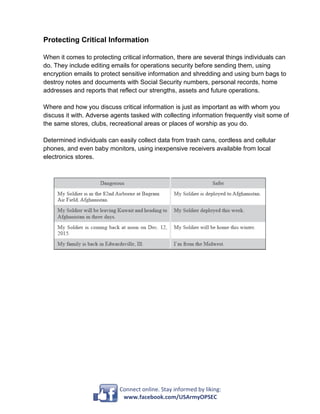
Where and how you discuss critical information is just as important as with whom you
discuss it with. Adverse agents tasked with collecting information frequently visit some of
the same stores, clubs, recreational areas or places of worship as you do.
Determined individuals can easily collect data from trash cans, cordless and cellular
phones, and even baby monitors, using inexpensive receivers available from local
electronics stores.

OPSEC Critical Information

  • 1.
    Connect online. Stayinformed by liking: www.facebook.com/USArmyOPSEC Critical Information Service members, government employees and family members should always be mindful about the information they share. Even though this information may not be secret, a lot of it is considered "critical information", which is information dealing with specific facts about military capabilities, activities, limitations, and intentions (CALI). If an adversary knew this detailed information, our mission and personnel safety could be jeopardized. Examples of critical information include: • Detailed information about the mission of assigned units • Details on locations and times of unit deployments • Personnel transactions that occur in large numbers (Example: pay information, powers of attorney, wills and deployment information) • References to trends in unit morale or personnel problems • Details concerning security procedures This information may seem insignificant. However, to a trained adversary, they are small pieces of a puzzle that highlight what a military unit is doing and planning.
  • 2.
    Connect online. Stayinformed by liking: www.facebook.com/USArmyOPSEC Protecting Critical Information When it comes to protecting critical information, there are several things individuals can do. They include editing emails for operations security before sending them, using encryption emails to protect sensitive information and shredding and using burn bags to destroy notes and documents with Social Security numbers, personal records, home addresses and reports that reflect our strengths, assets and future operations. Where and how you discuss critical information is just as important as with whom you discuss it with. Adverse agents tasked with collecting information frequently visit some of the same stores, clubs, recreational areas or places of worship as you do. Determined individuals can easily collect data from trash cans, cordless and cellular phones, and even baby monitors, using inexpensive receivers available from local electronics stores.