Operators in Oracle SQL
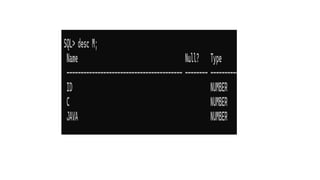
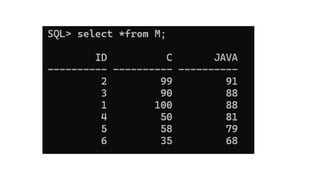
1. Arithmetic
2. Comparison
3. Logical
4. Bitwise
5. other operations
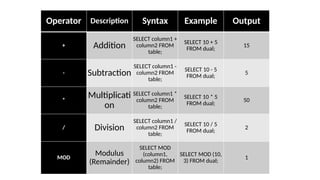
Operator Description Syntax Example Output
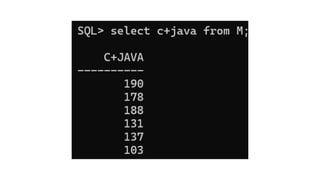
+ Addition
SELECT column1 +
column2 FROM
table;
SELECT 10 + 5
FROM dual;
15
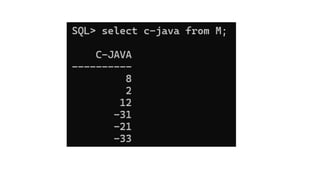
- Subtraction
SELECT column1 -
column2 FROM
table;
SELECT 10 - 5
FROM dual;
5
*
Multiplicati
on
SELECT column1 *
column2 FROM
table;
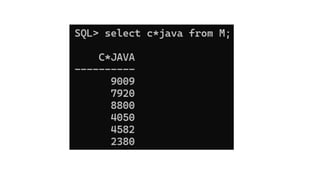
SELECT 10 * 5
FROM dual;
50
/ Division
SELECT column1 /
column2 FROM
table;
SELECT 10 / 5
FROM dual;
2
MOD
Modulus
(Remainder)
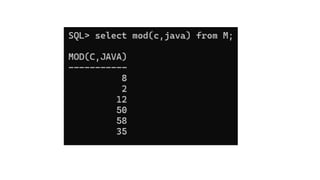
SELECT MOD
(column1,
column2) FROM
table;
SELECT MOD (10,
3) FROM dual;
1
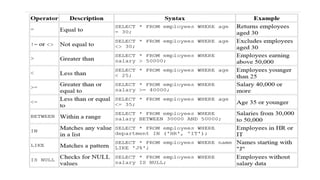
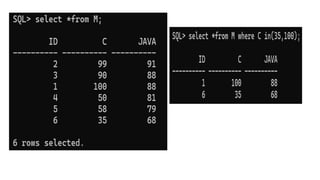
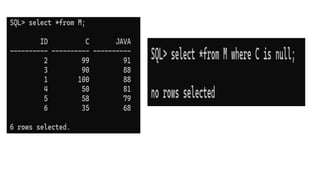
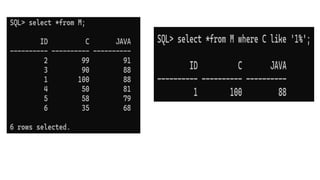
Comparison Operators
Logical Operators
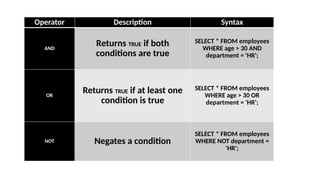
Used to combine multiple conditions.
Operator Description Syntax
AND
Returns TRUE if both
conditions are true
SELECT * FROM employees
WHERE age > 30 AND
department = 'HR';
OR
Returns TRUE if at least one
condition is true
SELECT * FROM employees
WHERE age > 30 OR
department = 'HR';
NOT Negates a condition
SELECT * FROM employees
WHERE NOT department =
'HR';
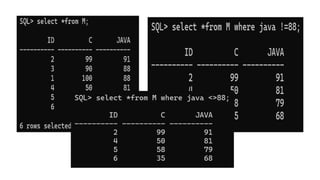
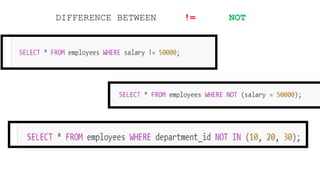
DIFFERENCE BETWEEN != NOT
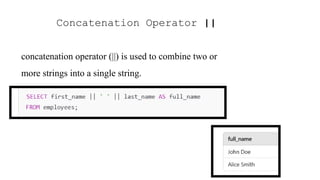
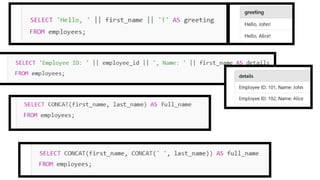
Concatenation Operator ||
concatenation operator (||) is used to combine two or
more strings into a single string.
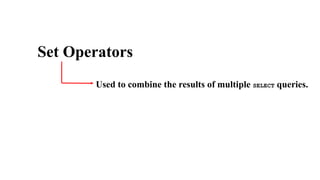
Set Operators
Used to combine the results of multiple SELECT queries.
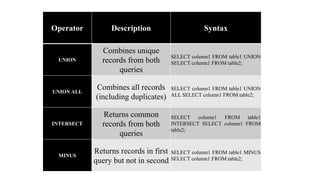
Operator Description Syntax
UNION
Combines unique
records from both
queries
SELECT column1 FROM table1 UNION
SELECT column1 FROM table2;
UNION ALL
Combines all records
(including duplicates)
SELECT column1 FROM table1 UNION
ALL SELECT column1 FROM table2;
INTERSECT
Returns common
records from both
queries
SELECT column1 FROM table1
INTERSECT SELECT column1 FROM
table2;
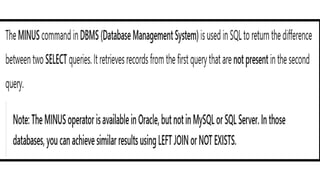
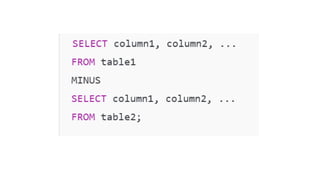
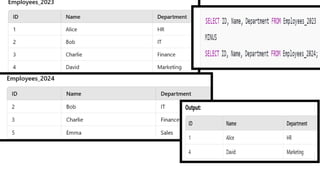
MINUS
Returns records in first
query but not in second
SELECT column1 FROM table1 MINUS
SELECT column1 FROM table2;
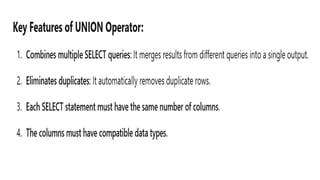
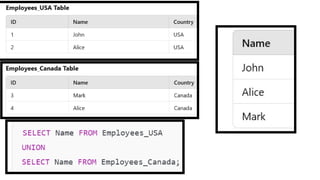
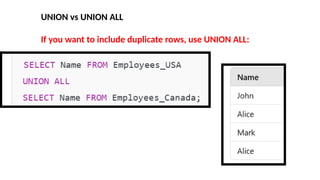
UNION vs UNION ALL
If you want to include duplicate rows, use UNION ALL:
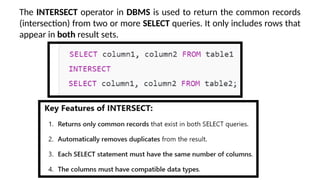
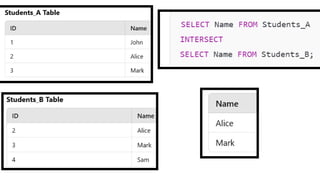
The INTERSECT operator in DBMS is used to return the common records
(intersection) from two or more SELECT queries. It only includes rows that
appear in both result sets.
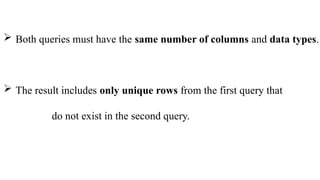
 Both queries must have the same number of columns and data types.
 The result includes only unique rows from the first query that
do not exist in the second query.
Bitwise Operators
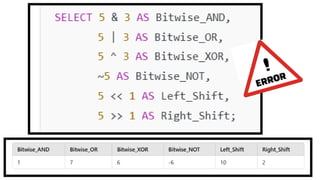
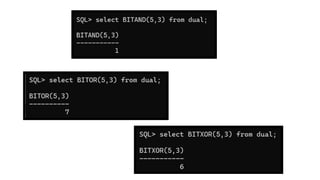
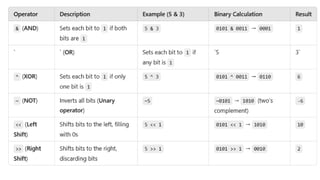
Bitwise operators perform operations at the binary level.
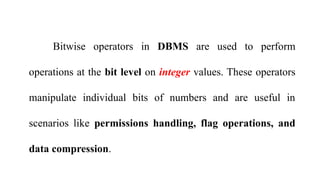
Bitwise operators in DBMS are used to perform
operations at the bit level on integer values. These operators
manipulate individual bits of numbers and are useful in
scenarios like permissions handling, flag operations, and
data compression.
OPerators.pptx Best topics dbms.   Good one

OPerators.pptx Best topics dbms. Good one

  • 3.
    Operators in OracleSQL 1. Arithmetic 2. Comparison 3. Logical 4. Bitwise 5. other operations
  • 4.
    Operator Description SyntaxExample Output + Addition SELECT column1 + column2 FROM table; SELECT 10 + 5 FROM dual; 15 - Subtraction SELECT column1 - column2 FROM table; SELECT 10 - 5 FROM dual; 5 * Multiplicati on SELECT column1 * column2 FROM table; SELECT 10 * 5 FROM dual; 50 / Division SELECT column1 / column2 FROM table; SELECT 10 / 5 FROM dual; 2 MOD Modulus (Remainder) SELECT MOD (column1, column2) FROM table; SELECT MOD (10, 3) FROM dual; 1
  • 12.
  • 20.
    Logical Operators Used tocombine multiple conditions.
  • 21.
    Operator Description Syntax AND ReturnsTRUE if both conditions are true SELECT * FROM employees WHERE age > 30 AND department = 'HR'; OR Returns TRUE if at least one condition is true SELECT * FROM employees WHERE age > 30 OR department = 'HR'; NOT Negates a condition SELECT * FROM employees WHERE NOT department = 'HR';
  • 22.
  • 23.
    Concatenation Operator || concatenationoperator (||) is used to combine two or more strings into a single string.
  • 25.
    Set Operators Used tocombine the results of multiple SELECT queries.
  • 26.
    Operator Description Syntax UNION Combinesunique records from both queries SELECT column1 FROM table1 UNION SELECT column1 FROM table2; UNION ALL Combines all records (including duplicates) SELECT column1 FROM table1 UNION ALL SELECT column1 FROM table2; INTERSECT Returns common records from both queries SELECT column1 FROM table1 INTERSECT SELECT column1 FROM table2; MINUS Returns records in first query but not in second SELECT column1 FROM table1 MINUS SELECT column1 FROM table2;
  • 29.
    UNION vs UNIONALL If you want to include duplicate rows, use UNION ALL:
  • 30.
    The INTERSECT operatorin DBMS is used to return the common records (intersection) from two or more SELECT queries. It only includes rows that appear in both result sets.
  • 34.
     Both queriesmust have the same number of columns and data types.  The result includes only unique rows from the first query that do not exist in the second query.
  • 36.
    Bitwise Operators Bitwise operatorsperform operations at the binary level.
  • 37.
    Bitwise operators inDBMS are used to perform operations at the bit level on integer values. These operators manipulate individual bits of numbers and are useful in scenarios like permissions handling, flag operations, and data compression.