ODE ON MELANCHOLY
                  STANZA 1
     NO, NO GO NOT TO LETHE, NEITHER TWIST
WOLF BANE TIGHT ROOTED, FOR ITS POISONOUS WINE,
    NOR SUFFER THE PALE FOREHEAD TO BE KISSED
   BY NIGHTSHADE,RUBBY GRAPE OF PROSPER PINE;
TITLE OF THE POEM
ODE MEANS TO ADDRESS OR TALK TO AND THE GENERAL INTERPRETATION
    OF MELANCHOLY IS SADNESS. IN FACT MELANCHOLY IS A HIGHLY
   PSYCHOLOGICAL AND PHILOSOPHICAL STATE OF MIND IN AHICH AN
             INDIVIDUAL TAKES PLEASURE OUT OF PAIN.
EXPLANATION
THE POEM OPENS ABRUPTLY WE UNDERSTAND WHAT KEATS IS TALKING ABOUT AND
 TO WHOM BY HIS STYLE. KEATS WARNS THE SAD AND MELANCHOLY PEOPLE IN A
                          VERY BEAUTIFUL STYLE.
                             AS HE SAYS THAT
                           “NO, NO GO TO LETHE”
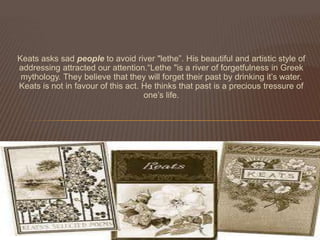
Keats asks sad people to avoid river "lethe”. His beautiful and artistic style of
addressing attracted our attention.“Lethe "is a river of forgetfulness in Greek
 mythology. They believe that they will forget their past by drinking it’s water.
Keats is not in favour of this act. He thinks that past is a precious tressure of
                                    one’s life.
Being weak and hesitant human beings we do not want to recall such
bitter memories. We do conscious effort to forget those painful events of
       past. We consider them as an obstacle in our way to success and
                                                             happiness.
                 AS A SCHOLAR SAYS
  “LITTLE AND MIXTURE, EVENTS OF PAST DEVELOP OUE
                         PERSONALITY”
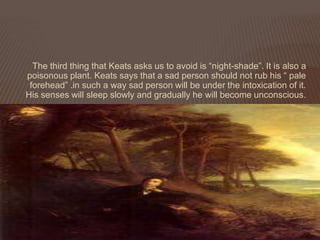
The third thing that Keats asks us to avoid is “night-shade”. It is also a
poisonous plant. Keats says that a sad person should not rub his “ pale
 forehead” .in such a way sad person will be under the intoxication of it.
His senses will sleep slowly and gradually he will become unconscious.
Here Keats seems to be a young Shakespeare of literature who says
                                                                that,

“COWARD DIES MANY TIMES BEFORE HIS DEATH BRAVE DIES
                    BUT ONCE IN HIS LIFE”
As a scholar says that,
  “IF AN EGG IS BROKEN DUE TO OUTSIDE FORCE. INSIDE LIFE
ENDS; IF IT’S BROKEN FROM INSIDE LIFE BEGINS, GREAT THINGS
                ALWAYS BEGINS FROM INSIDE”
Ode

Ode

  • 2.
    ODE ON MELANCHOLY STANZA 1 NO, NO GO NOT TO LETHE, NEITHER TWIST WOLF BANE TIGHT ROOTED, FOR ITS POISONOUS WINE, NOR SUFFER THE PALE FOREHEAD TO BE KISSED BY NIGHTSHADE,RUBBY GRAPE OF PROSPER PINE;
  • 3.
    TITLE OF THEPOEM ODE MEANS TO ADDRESS OR TALK TO AND THE GENERAL INTERPRETATION OF MELANCHOLY IS SADNESS. IN FACT MELANCHOLY IS A HIGHLY PSYCHOLOGICAL AND PHILOSOPHICAL STATE OF MIND IN AHICH AN INDIVIDUAL TAKES PLEASURE OUT OF PAIN.
  • 5.
    EXPLANATION THE POEM OPENSABRUPTLY WE UNDERSTAND WHAT KEATS IS TALKING ABOUT AND TO WHOM BY HIS STYLE. KEATS WARNS THE SAD AND MELANCHOLY PEOPLE IN A VERY BEAUTIFUL STYLE. AS HE SAYS THAT “NO, NO GO TO LETHE”
  • 6.
    Keats asks sadpeople to avoid river "lethe”. His beautiful and artistic style of addressing attracted our attention.“Lethe "is a river of forgetfulness in Greek mythology. They believe that they will forget their past by drinking it’s water. Keats is not in favour of this act. He thinks that past is a precious tressure of one’s life.
  • 7.
    Being weak andhesitant human beings we do not want to recall such bitter memories. We do conscious effort to forget those painful events of past. We consider them as an obstacle in our way to success and happiness. AS A SCHOLAR SAYS “LITTLE AND MIXTURE, EVENTS OF PAST DEVELOP OUE PERSONALITY”
  • 8.
    The third thingthat Keats asks us to avoid is “night-shade”. It is also a poisonous plant. Keats says that a sad person should not rub his “ pale forehead” .in such a way sad person will be under the intoxication of it. His senses will sleep slowly and gradually he will become unconscious.
  • 9.
    Here Keats seemsto be a young Shakespeare of literature who says that, “COWARD DIES MANY TIMES BEFORE HIS DEATH BRAVE DIES BUT ONCE IN HIS LIFE”
  • 10.
    As a scholarsays that, “IF AN EGG IS BROKEN DUE TO OUTSIDE FORCE. INSIDE LIFE ENDS; IF IT’S BROKEN FROM INSIDE LIFE BEGINS, GREAT THINGS ALWAYS BEGINS FROM INSIDE”