Obstructive Sleep Apnea
Obstructive sleep apnea is a potentially serious sleep disorder. It causes breathing to
constantly stop and start during sleep. There are several types of sleep apnea, but the most
common is obstructive sleep apnea. This type of apnea occurs when your throat muscles
intermittently relax and block your airway during sleep. The most common sign of obstructive
sleep apnea is snoring and many treatments for obstructive sleep apnea are available. One
treatment involves using a device that keeps your airway open while you sleep. Another option
is a mouthpiece to thrust your jaw forward during sleep. In more severe cases, surgery may be
an option too.
Symptoms
The most common obstructive sleep apnea symptoms are:
●Daytime sleepiness or fatigue
●Dry mouth or sore throat when you wake up
●Headaches in the morning
●Night sweats
●Restlessness during sleep
●Snoring
●Waking up suddenly and feeling like you're gasping or choking
●Trouble getting up in the mornings
Symptoms in children may not be as obvious. They may include:
●Bedwetting
●Choking or drooling
●Sweating a lot at night
●Learning and behavior disorders
●Problems at school
●Sluggishness or sleepiness
●Snoring
●Teeth grinding
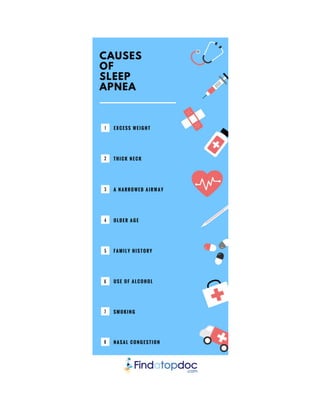
Causes
Various factors can contribute to the blocking or collapse of the airway:
Muscular changes: When people sleep, the muscles that keep the airway open relax, along with
the tongue, causing the airway to narrow. Usually, this relaxation does not prevent the flow of
air in and out of the lungs, but in sleep apnea, it can.
Physical obstructions: Additional thickened tissue or excessive fat stores around the airway can
restrict the airflow, and any air that squeezes past can cause the loud snoring typically
associated with OSA.
Brain function: In central sleep apnea (CSA), the neurological controls for breathing are faulty,
causing the control and rhythm of breathing to malfunction. CSA is usually associated with an
underlying medical condition, such as a stroke or heart failure, recent ascent to high altitude, or
the use of pain relief medication.
Risk factors
Anyone can develop obstructive sleep apnea. However, certain factors put you at increased risk
such as:
●Excess weight. Around half the people with obstructive sleep apnea are overweight. Fat
deposits around the upper airway may obstruct breathing.
●Narrowed airway. You may inherit naturally narrow airways. Or, your tonsils or adenoids may
become enlarged, which can block your airway.
●High blood pressure (hypertension). Obstructive sleep apnea is common in people with
hypertension.
●Chronic nasal congestion. Obstructive sleep apnea occurs twice as often in those who have
consistent nasal congestion at night, regardless of the cause.
●Smoking. People who smoke are more likely to have obstructive sleep apnea.
●Diabetes. Obstructive sleep apnea may be more common in people with diabetes.
●Sex. In general, men are twice as likely as women to have obstructive sleep apnea.
Diagnosis
Your doctor will give you a checkup and ask about your sleep habits. He may also want to ask
people who live with you about your night habits.You may also need to spend a night in a sleep
lab or have a sleep study done at your house. You’ll wear monitors to measure things such as:
●Air flow
●Blood oxygen levels
●Breathing patterns
●Electrical activity of the brain
●Eye movements
●Heart rate
Treatment
Lifestyle changes
For milder cases of obstructive sleep apnea, your doctor may recommend lifestyle changes such
as:
●Lose weight if you're overweight.
●Exercise regularly.
●Drink alcohol moderately, if at all, and don't drink several hours before bedtime.
●Quit smoking.
●Don't sleep on your back.
Oral devices
For some people with mild sleep apnea, dental appliances that prevent the tongue from
blocking the throat or advance the lower jaw forward can be made. These devices may help
keep the airway open during sleep.
It's not always possible to prevent OSA, but making certain lifestyle changes may reduce
your risk of developing the condition.

Obstructive sleep apnea

  • 2.
    Obstructive Sleep Apnea Obstructivesleep apnea is a potentially serious sleep disorder. It causes breathing to constantly stop and start during sleep. There are several types of sleep apnea, but the most common is obstructive sleep apnea. This type of apnea occurs when your throat muscles intermittently relax and block your airway during sleep. The most common sign of obstructive sleep apnea is snoring and many treatments for obstructive sleep apnea are available. One treatment involves using a device that keeps your airway open while you sleep. Another option is a mouthpiece to thrust your jaw forward during sleep. In more severe cases, surgery may be an option too. Symptoms The most common obstructive sleep apnea symptoms are: ●Daytime sleepiness or fatigue ●Dry mouth or sore throat when you wake up ●Headaches in the morning ●Night sweats ●Restlessness during sleep ●Snoring ●Waking up suddenly and feeling like you're gasping or choking ●Trouble getting up in the mornings Symptoms in children may not be as obvious. They may include: ●Bedwetting ●Choking or drooling
  • 3.
    ●Sweating a lotat night ●Learning and behavior disorders ●Problems at school ●Sluggishness or sleepiness ●Snoring ●Teeth grinding Causes Various factors can contribute to the blocking or collapse of the airway: Muscular changes: When people sleep, the muscles that keep the airway open relax, along with the tongue, causing the airway to narrow. Usually, this relaxation does not prevent the flow of air in and out of the lungs, but in sleep apnea, it can. Physical obstructions: Additional thickened tissue or excessive fat stores around the airway can restrict the airflow, and any air that squeezes past can cause the loud snoring typically associated with OSA. Brain function: In central sleep apnea (CSA), the neurological controls for breathing are faulty, causing the control and rhythm of breathing to malfunction. CSA is usually associated with an underlying medical condition, such as a stroke or heart failure, recent ascent to high altitude, or the use of pain relief medication. Risk factors Anyone can develop obstructive sleep apnea. However, certain factors put you at increased risk such as: ●Excess weight. Around half the people with obstructive sleep apnea are overweight. Fat deposits around the upper airway may obstruct breathing.
  • 4.
    ●Narrowed airway. Youmay inherit naturally narrow airways. Or, your tonsils or adenoids may become enlarged, which can block your airway. ●High blood pressure (hypertension). Obstructive sleep apnea is common in people with hypertension. ●Chronic nasal congestion. Obstructive sleep apnea occurs twice as often in those who have consistent nasal congestion at night, regardless of the cause. ●Smoking. People who smoke are more likely to have obstructive sleep apnea. ●Diabetes. Obstructive sleep apnea may be more common in people with diabetes. ●Sex. In general, men are twice as likely as women to have obstructive sleep apnea. Diagnosis Your doctor will give you a checkup and ask about your sleep habits. He may also want to ask people who live with you about your night habits.You may also need to spend a night in a sleep lab or have a sleep study done at your house. You’ll wear monitors to measure things such as: ●Air flow ●Blood oxygen levels ●Breathing patterns ●Electrical activity of the brain ●Eye movements ●Heart rate Treatment Lifestyle changes
  • 5.
    For milder casesof obstructive sleep apnea, your doctor may recommend lifestyle changes such as: ●Lose weight if you're overweight. ●Exercise regularly. ●Drink alcohol moderately, if at all, and don't drink several hours before bedtime. ●Quit smoking. ●Don't sleep on your back. Oral devices For some people with mild sleep apnea, dental appliances that prevent the tongue from blocking the throat or advance the lower jaw forward can be made. These devices may help keep the airway open during sleep. It's not always possible to prevent OSA, but making certain lifestyle changes may reduce your risk of developing the condition.