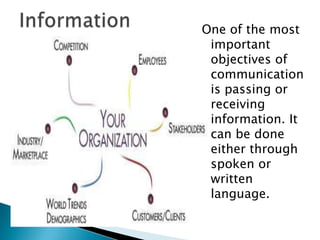
One of the most
important
objectives of
communication
is passing or
receiving
information. It
can be done
either through
spoken or
written
language.
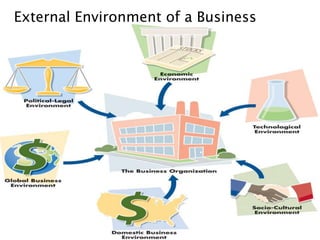
External Environment of a Business
◦External information
 Information about its products
 Information about the availability of
credit
 Information about the Government
rules and regulations
 Information about the advertising
media
 Information about the latest
developments in the fields of
science and technology
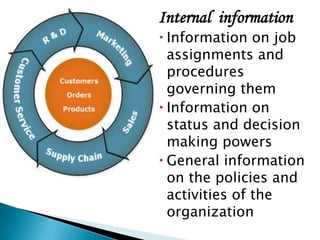
◦Internal information
 Information on job
assignments and
procedures
governing them
 Information on
status and decision
making powers
 General information
on the policies and
activities of the
organization
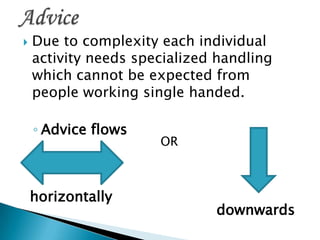
 Due to complexity each individual
activity needs specialized handling
which cannot be expected from
people working single handed.
◦ Advice flows
horizontally
OR
downwards
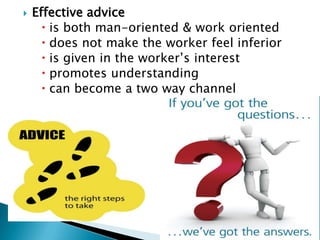
 Effective advice
 is both man-oriented & work oriented
 does not make the worker feel inferior
 is given in the worker’s interest
 promotes understanding
 can become a two way channel
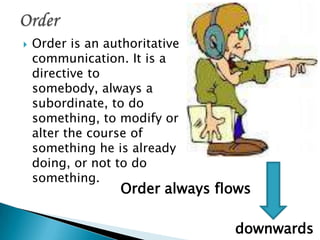
 Order is an authoritative
communication. It is a
directive to
somebody, always a
subordinate, to do
something, to modify or
alter the course of
something he is already
doing, or not to do
something.
downwards
Order always flows
◦ Types of order
 Written and oral orders
 General and specific orders
 Procedural and operational
 Mandatory and discretionary
orders
◦ Characteristics of an effective order
 It must be clear and complete
 Its execution should be possible
 It should be given in a politely
◦ Instruction
 Instruction is a
particular type of
order in which the
subordinate is not
only ordered to do a
job but is also given
guidance on how to
do it.
 All instructions are
implied orders, but
all orders cannot be
instructions.
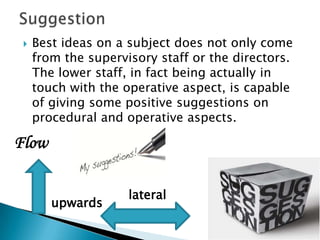
 Best ideas on a subject does not only come
from the supervisory staff or the directors.
The lower staff, in fact being actually in
touch with the operative aspect, is capable
of giving some positive suggestions on
procedural and operative aspects.
Flow
upwards
lateral
 It may be defined as an effort ‘to influence
attitudes, feelings, or beliefs of others, or to
influence actions based on those
attitudes, feelings or beliefs.’
Process of persuasion
Analyzing the
situation
Preparing the
receiver
Delivering the
message
Prompting action
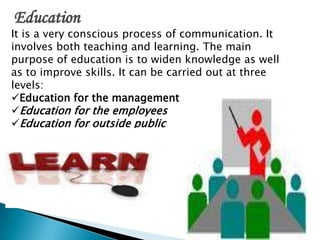
It is a very conscious process of communication. It
involves both teaching and learning. The main
purpose of education is to widen knowledge as well
as to improve skills. It can be carried out at three
levels:
Education for the management
Education for the employees
Education for outside public
Education
Warning is a forceful means of communication, for
it demands immediate action.
If employees do not abide by the norms of the
organization, or violate the rules or regulations, it
may become necessary to warn them.
Warnings can be general or specific
Specific warning should be administered in private
and after thorough investigation
The aim of warning should be organisation’s
betterment
Warning
Morale stands for mental
health. High morale and
efficient performance go
hand in hand. It acts as a
kind of lubricant among
people, binds them with a
sense of togetherness and
impels them to work in
cooperation with one
another in the best
interest of their
organization.
Raising Morale
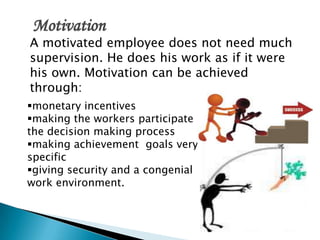
A motivated employee does not need much
supervision. He does his work as if it were
his own. Motivation can be achieved
through:
Motivation
monetary incentives
making the workers participate in
the decision making process
making achievement goals very
specific
giving security and a congenial
work environment.

Objectives of communication1

  • 2.
    One of themost important objectives of communication is passing or receiving information. It can be done either through spoken or written language.
  • 3.
  • 4.
    ◦External information  Informationabout its products  Information about the availability of credit  Information about the Government rules and regulations  Information about the advertising media  Information about the latest developments in the fields of science and technology
  • 5.
    ◦Internal information  Informationon job assignments and procedures governing them  Information on status and decision making powers  General information on the policies and activities of the organization
  • 6.
     Due tocomplexity each individual activity needs specialized handling which cannot be expected from people working single handed. ◦ Advice flows horizontally OR downwards
  • 7.
     Effective advice is both man-oriented & work oriented  does not make the worker feel inferior  is given in the worker’s interest  promotes understanding  can become a two way channel
  • 8.
     Order isan authoritative communication. It is a directive to somebody, always a subordinate, to do something, to modify or alter the course of something he is already doing, or not to do something. downwards Order always flows
  • 9.
    ◦ Types oforder  Written and oral orders  General and specific orders  Procedural and operational  Mandatory and discretionary orders ◦ Characteristics of an effective order  It must be clear and complete  Its execution should be possible  It should be given in a politely
  • 10.
    ◦ Instruction  Instructionis a particular type of order in which the subordinate is not only ordered to do a job but is also given guidance on how to do it.  All instructions are implied orders, but all orders cannot be instructions.
  • 11.
     Best ideason a subject does not only come from the supervisory staff or the directors. The lower staff, in fact being actually in touch with the operative aspect, is capable of giving some positive suggestions on procedural and operative aspects. Flow upwards lateral
  • 12.
     It maybe defined as an effort ‘to influence attitudes, feelings, or beliefs of others, or to influence actions based on those attitudes, feelings or beliefs.’ Process of persuasion Analyzing the situation Preparing the receiver Delivering the message Prompting action
  • 13.
    It is avery conscious process of communication. It involves both teaching and learning. The main purpose of education is to widen knowledge as well as to improve skills. It can be carried out at three levels: Education for the management Education for the employees Education for outside public Education
  • 14.
    Warning is aforceful means of communication, for it demands immediate action. If employees do not abide by the norms of the organization, or violate the rules or regulations, it may become necessary to warn them. Warnings can be general or specific Specific warning should be administered in private and after thorough investigation The aim of warning should be organisation’s betterment Warning
  • 15.
    Morale stands formental health. High morale and efficient performance go hand in hand. It acts as a kind of lubricant among people, binds them with a sense of togetherness and impels them to work in cooperation with one another in the best interest of their organization. Raising Morale
  • 16.
    A motivated employeedoes not need much supervision. He does his work as if it were his own. Motivation can be achieved through: Motivation monetary incentives making the workers participate in the decision making process making achievement goals very specific giving security and a congenial work environment.