OBAT SSP
Introduction
• Obat yang bekerja pada SSP termasuk golongan obat yang digunakan
luas :
• Neorologi dan psikiatri
• Mengurangi nyeri
• Menekan mual
• Dll
• Hampir semua obat SSP bekerja pada reseptor yang mempengaruhi
transmisi sinyal
Organization of The CNS
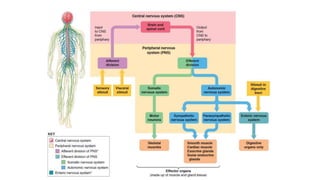
• SSP terdiri dari otak dan sumsum tulang
belakang yang berfungsi untuk integrase
informasi sensoris, dan menghasilkan
output motorik dan fungsi lain 
berinteraksi dengan lingkungan dan
kelangsungan hidup.
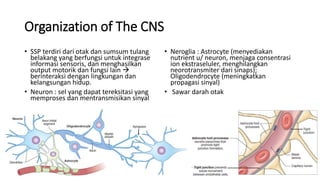
• Neuron : sel yang dapat tereksitasi yang
memproses dan mentransmisikan sinyal
• Neroglia : Astrocyte (menyediakan
nutrient u/ neuron, menjaga consentrasi
ion ekstraseluler, menghilangkan
neorotransmiter dari sinaps);
Oligodendrocyte (meningkatkan
propagasi sinyal)
• Sawar darah otak
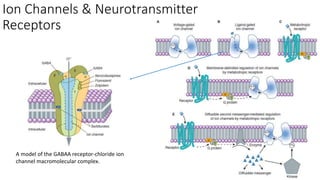
Ion Channels & Neurotransmitter
Receptors
A model of the GABAA receptor-chloride ion
channel macromolecular complex.
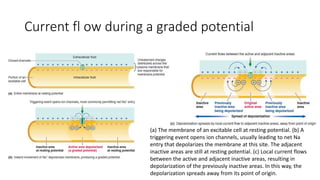
Current fl ow during a graded potential
(a) The membrane of an excitable cell at resting potential. (b) A
triggering event opens ion channels, usually leading to net Na
entry that depolarizes the membrane at this site. The adjacent
inactive areas are still at resting potential. (c) Local current flows
between the active and adjacent inactive areas, resulting in
depolarization of the previously inactive areas. In this way, the
depolarization spreads away from its point of origin.
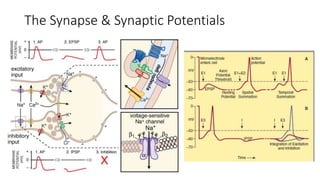
The Synapse & Synaptic Potentials
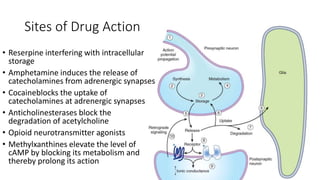
Sites of Drug Action
• Reserpine interfering with intracellular
storage
• Amphetamine induces the release of
catecholamines from adrenergic synapses
• Cocaineblocks the uptake of
catecholamines at adrenergic synapses
• Anticholinesterases block the
degradation of acetylcholine
• Opioid neurotransmitter agonists
• Methylxanthines elevate the level of
cAMP by blocking its metabolism and
thereby prolong its action
Central Neurotransmitters
• Amino Acid Neurotransmitters
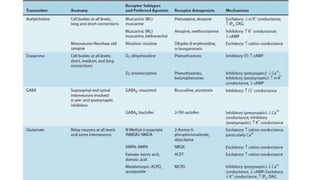
• Glutamate
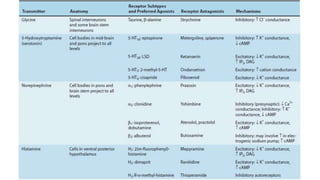
• GABA and Glycine
• Acetylcholine
• Monoamine Neurotransmitters
• Dopamine
• Norepinephrine
• 5-Hydroxytryptamine
• Histamine
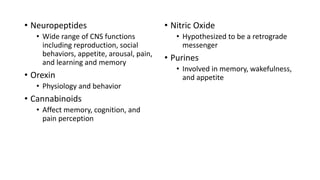
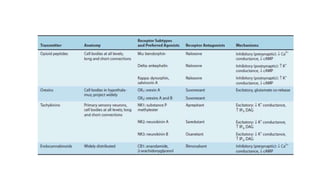
• Neuropeptides
• Orexin
• Other Signaling Substances
• Endocannabinoids
• Nitric Oxide
• Purines
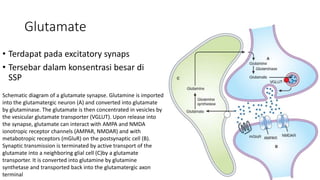
Glutamate
• Terdapat pada excitatory synaps
• Tersebar dalam konsentrasi besar di
SSP
Schematic diagram of a glutamate synapse. Glutamine is imported
into the glutamatergic neuron (A) and converted into glutamate
by glutaminase. The glutamate is then concentrated in vesicles by
the vesicular glutamate transporter (VGLUT). Upon release into
the synapse, glutamate can interact with AMPA and NMDA
ionotropic receptor channels (AMPAR, NMDAR) and with
metabotropic receptors (mGluR) on the postsynaptic cell (B).
Synaptic transmission is terminated by active transport of the
glutamate into a neighboring glial cell (C)by a glutamate
transporter. It is converted into glutamine by glutamine
synthetase and transported back into the glutamatergic axon
terminal
• GABA and Glycine
• Both GABA and glycine are inhibitory
neurotransmitters, which are typically
released from local interneurons
• GABA are present throughout the
CNS, including the spinal cord
• Acetylcholine
• Inhibition of the neuron by activating
the M2 subtype of receptor;
excitation that in some cases is
mediated by M1 receptors.
• play an important role in cognitive
functions, especially memory.
Presenile dementia of the Alzheimer
type is reportedly associated with a
profound loss of cholinergic neurons.
• Dopamine
• Generally exerts a slow inhibitory
action on CNS neurons
• Used as antiparkinsonism (levodopa)
• 5-hydroxytryptamine (5-HT,
serotonin)
• perception, mood, anxiety, pain,
sleep, appetite, temperature,
neuroendocrine control, and
aggression.
• Histamine
• gairah, perhatian, makan, perilaku,
dan memori
• Neuropeptides
• Wide range of CNS functions
including reproduction, social
behaviors, appetite, arousal, pain,
and learning and memory
• Orexin
• Physiology and behavior
• Cannabinoids
• Affect memory, cognition, and
pain perception
• Nitric Oxide
• Hypothesized to be a retrograde
messenger
• Purines
• Involved in memory, wakefulness,
and appetite
Obat ssp
Obat ssp
Obat ssp

Obat ssp

  • 1.
  • 2.
    Introduction • Obat yangbekerja pada SSP termasuk golongan obat yang digunakan luas : • Neorologi dan psikiatri • Mengurangi nyeri • Menekan mual • Dll • Hampir semua obat SSP bekerja pada reseptor yang mempengaruhi transmisi sinyal
  • 4.
    Organization of TheCNS • SSP terdiri dari otak dan sumsum tulang belakang yang berfungsi untuk integrase informasi sensoris, dan menghasilkan output motorik dan fungsi lain  berinteraksi dengan lingkungan dan kelangsungan hidup. • Neuron : sel yang dapat tereksitasi yang memproses dan mentransmisikan sinyal • Neroglia : Astrocyte (menyediakan nutrient u/ neuron, menjaga consentrasi ion ekstraseluler, menghilangkan neorotransmiter dari sinaps); Oligodendrocyte (meningkatkan propagasi sinyal) • Sawar darah otak
  • 5.
    Ion Channels &Neurotransmitter Receptors A model of the GABAA receptor-chloride ion channel macromolecular complex.
  • 7.
    Current fl owduring a graded potential (a) The membrane of an excitable cell at resting potential. (b) A triggering event opens ion channels, usually leading to net Na entry that depolarizes the membrane at this site. The adjacent inactive areas are still at resting potential. (c) Local current flows between the active and adjacent inactive areas, resulting in depolarization of the previously inactive areas. In this way, the depolarization spreads away from its point of origin.
  • 8.
    The Synapse &Synaptic Potentials
  • 9.
    Sites of DrugAction • Reserpine interfering with intracellular storage • Amphetamine induces the release of catecholamines from adrenergic synapses • Cocaineblocks the uptake of catecholamines at adrenergic synapses • Anticholinesterases block the degradation of acetylcholine • Opioid neurotransmitter agonists • Methylxanthines elevate the level of cAMP by blocking its metabolism and thereby prolong its action
  • 10.
    Central Neurotransmitters • AminoAcid Neurotransmitters • Glutamate • GABA and Glycine • Acetylcholine • Monoamine Neurotransmitters • Dopamine • Norepinephrine • 5-Hydroxytryptamine • Histamine • Neuropeptides • Orexin • Other Signaling Substances • Endocannabinoids • Nitric Oxide • Purines
  • 11.
    Glutamate • Terdapat padaexcitatory synaps • Tersebar dalam konsentrasi besar di SSP Schematic diagram of a glutamate synapse. Glutamine is imported into the glutamatergic neuron (A) and converted into glutamate by glutaminase. The glutamate is then concentrated in vesicles by the vesicular glutamate transporter (VGLUT). Upon release into the synapse, glutamate can interact with AMPA and NMDA ionotropic receptor channels (AMPAR, NMDAR) and with metabotropic receptors (mGluR) on the postsynaptic cell (B). Synaptic transmission is terminated by active transport of the glutamate into a neighboring glial cell (C)by a glutamate transporter. It is converted into glutamine by glutamine synthetase and transported back into the glutamatergic axon terminal
  • 12.
    • GABA andGlycine • Both GABA and glycine are inhibitory neurotransmitters, which are typically released from local interneurons • GABA are present throughout the CNS, including the spinal cord • Acetylcholine • Inhibition of the neuron by activating the M2 subtype of receptor; excitation that in some cases is mediated by M1 receptors. • play an important role in cognitive functions, especially memory. Presenile dementia of the Alzheimer type is reportedly associated with a profound loss of cholinergic neurons. • Dopamine • Generally exerts a slow inhibitory action on CNS neurons • Used as antiparkinsonism (levodopa) • 5-hydroxytryptamine (5-HT, serotonin) • perception, mood, anxiety, pain, sleep, appetite, temperature, neuroendocrine control, and aggression. • Histamine • gairah, perhatian, makan, perilaku, dan memori
  • 13.
    • Neuropeptides • Widerange of CNS functions including reproduction, social behaviors, appetite, arousal, pain, and learning and memory • Orexin • Physiology and behavior • Cannabinoids • Affect memory, cognition, and pain perception • Nitric Oxide • Hypothesized to be a retrograde messenger • Purines • Involved in memory, wakefulness, and appetite