You will be able to:
 Comprehend the harmful impact of workplace
substance abuse.
 Understand the requirements of the law and
company policy.
 Identify ways in which alcohol and drugs impair
job performance.
 Recognize signs of substance abuse.
 Take action to deal with abuse problems.
 Scope, cost, and control of workplace substance abuse.
 Effects of alcohol and drugs on job performance.
 How to recognize a substance abuse problem.
 What to do about a co-worker’s problem.
 How to get help for a drug or alcohol problem.
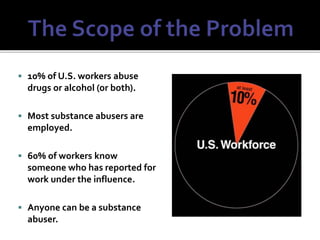
 10% of U.S. workers abuse
drugs or alcohol (or both).
 Most substance abusers are
employed.
 60% of workers know
someone who has reported for
work under the influence.
 Anyone can be a substance
abuser.
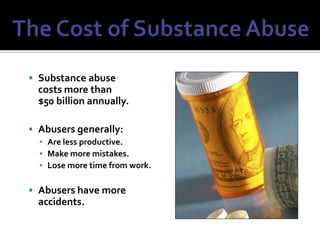
 Substance abuse
costs more than
$50 billion annually.
 Abusers generally:
▪ Are less productive.
▪ Make more mistakes.
▪ Lose more time from work.
 Abusers have more
accidents.
 40% of industrial fatalities are linked to
substance abuse.
 47% of all occupational accidents can be
attributed to substance abuse.
 Substance abuse often leads to theft and crime
in the workplace.
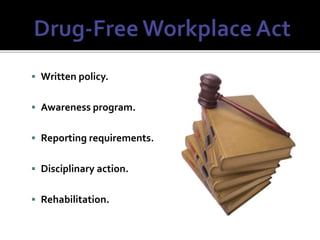
 Written policy.
 Awareness program.
 Reporting requirements.
 Disciplinary action.
 Rehabilitation.
 Protection against recognized hazards.
 Substance abuse is such a recognized hazard.
 Prohibits the possession, use, or sale of drugs or
alcohol on company property.
 Forbids working under the influence.
 Provides assistance to employees who want
help for an abuse problem.
 Imposes discipline on those who violate rules
and refuse help.
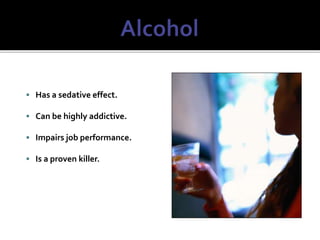
 Has a sedative effect.
 Can be highly addictive.
 Impairs job performance.
 Is a proven killer.
 Most frequently used
drug in the workplace
 Is a relaxant
 Impairs performance
 Effects can last for
hours
 Causes a brief intense high.
 Can be highly addictive.
 Seriously impairs
performance.
 Increases potential for
accidents and crime.
 Can destroy a person’s life.
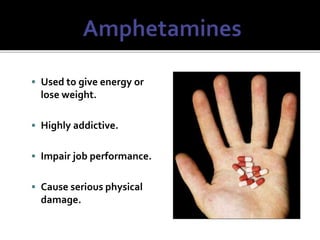
 Used to give energy or
lose weight.
 Highly addictive.
 Impair job performance.
 Cause serious physical
damage.
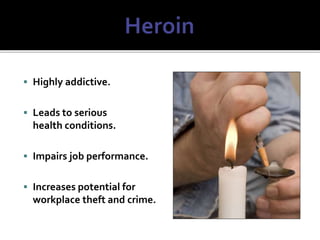
 Highly addictive.
 Leads to serious
health conditions.
 Impairs job performance.
 Increases potential for
workplace theft and crime.
 Distort users’ perception of reality.
 Cause bizarre and sometimes violent behavior.
 Impair job performance.
 Can cause irreversible physical and mental
problems.
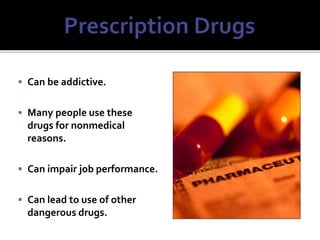
 Can be addictive.
 Many people use these
drugs for nonmedical
reasons.
 Can impair job performance.
 Can lead to use of other
dangerous drugs.
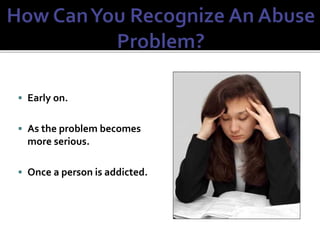
 Early on.
 As the problem becomes
more serious.
 Once a person is addicted.
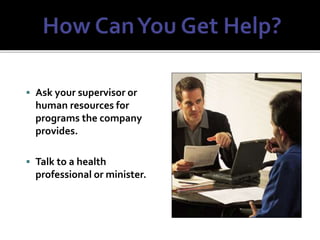
 Ask your supervisor or
human resources for
programs the company
provides.
 Talk to a health
professional or minister.
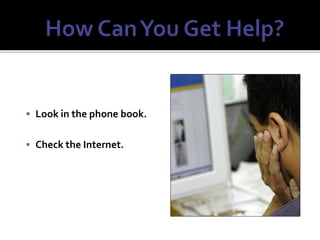
 Look in the phone book.
 Check the Internet.
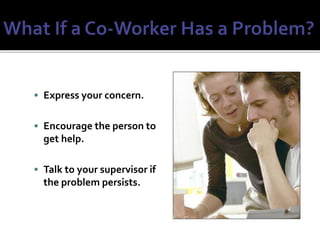
 Express your concern.
 Encourage the person to
get help.
 Talk to your supervisor if
the problem persists.
 Substance abuse threatens the productivity,
safety, and security of the company and
employees.
 Working under the influence of alcohol or drugs
seriously impairs a person’s ability to perform
the job well and safely.
 Never ignore a substance abuse problem—take
prompt action to solve it.
obat dan napza.ppt

obat dan napza.ppt

  • 2.
    You will beable to:  Comprehend the harmful impact of workplace substance abuse.  Understand the requirements of the law and company policy.  Identify ways in which alcohol and drugs impair job performance.  Recognize signs of substance abuse.  Take action to deal with abuse problems.
  • 3.
     Scope, cost,and control of workplace substance abuse.  Effects of alcohol and drugs on job performance.  How to recognize a substance abuse problem.  What to do about a co-worker’s problem.  How to get help for a drug or alcohol problem.
  • 4.
     10% ofU.S. workers abuse drugs or alcohol (or both).  Most substance abusers are employed.  60% of workers know someone who has reported for work under the influence.  Anyone can be a substance abuser.
  • 5.
     Substance abuse costsmore than $50 billion annually.  Abusers generally: ▪ Are less productive. ▪ Make more mistakes. ▪ Lose more time from work.  Abusers have more accidents.
  • 6.
     40% ofindustrial fatalities are linked to substance abuse.  47% of all occupational accidents can be attributed to substance abuse.  Substance abuse often leads to theft and crime in the workplace.
  • 7.
     Written policy. Awareness program.  Reporting requirements.  Disciplinary action.  Rehabilitation.
  • 8.
     Protection againstrecognized hazards.  Substance abuse is such a recognized hazard.
  • 9.
     Prohibits thepossession, use, or sale of drugs or alcohol on company property.  Forbids working under the influence.  Provides assistance to employees who want help for an abuse problem.  Imposes discipline on those who violate rules and refuse help.
  • 10.
     Has asedative effect.  Can be highly addictive.  Impairs job performance.  Is a proven killer.
  • 11.
     Most frequentlyused drug in the workplace  Is a relaxant  Impairs performance  Effects can last for hours
  • 12.
     Causes abrief intense high.  Can be highly addictive.  Seriously impairs performance.  Increases potential for accidents and crime.  Can destroy a person’s life.
  • 13.
     Used togive energy or lose weight.  Highly addictive.  Impair job performance.  Cause serious physical damage.
  • 14.
     Highly addictive. Leads to serious health conditions.  Impairs job performance.  Increases potential for workplace theft and crime.
  • 15.
     Distort users’perception of reality.  Cause bizarre and sometimes violent behavior.  Impair job performance.  Can cause irreversible physical and mental problems.
  • 16.
     Can beaddictive.  Many people use these drugs for nonmedical reasons.  Can impair job performance.  Can lead to use of other dangerous drugs.
  • 17.
     Early on. As the problem becomes more serious.  Once a person is addicted.
  • 18.
     Ask yoursupervisor or human resources for programs the company provides.  Talk to a health professional or minister.
  • 19.
     Look inthe phone book.  Check the Internet.
  • 20.
     Express yourconcern.  Encourage the person to get help.  Talk to your supervisor if the problem persists.
  • 21.
     Substance abusethreatens the productivity, safety, and security of the company and employees.  Working under the influence of alcohol or drugs seriously impairs a person’s ability to perform the job well and safely.  Never ignore a substance abuse problem—take prompt action to solve it.