ORIGINAL PAPER
Core-Shell Nanowire Junctionless Accumalation Mode Field-Effect
Transistor (CSN-JAM-FET) for High Frequency
Applications - Analytical Study
Sonam Rewari1
Received: 9 September 2020 /Accepted: 28 September 2020
# Springer Nature B.V. 2020
Abstract
Here, an analytical model has been proposed for Core-Shell-Nanowire-Junctionless-Accumulation-Mode- Field-Effect
Transistor (CSN-JAM-FET) for High Frequency Applications. CSN-JAM-FET has been contrasted with Nanowire-
Junctionless- Accumulation- Mode- Field-Effect Transistor (NJAM-FET) under the similar device conditions by keeping the
threshold voltage same for both. It is so found that CSN-JAM-FET shows much higher drain current (Ids), transconductance (gm),
output conductance (gd), Ion/Ioff ratio, Subthreshold Slope (SS) and cut off frequency (fT) because of the inherent property of core
shell architecture to elevate the gate domination over the channel. The analytical results have also been modelled for CSN-JAM-
FET by finding a result of the Two-Dimensional Poisson equation in accordance with the boundary conditions. The analytical
results are much in coherence with the results obtained from the simulator.
Keywords Core-Shell . Junctionless Accumulation Mode . Nanowire . Analog
1 Introduction
An incredible change is observed in the semiconductor commerce
and the evolution still remains never ending and the device length
is being constantly reduced for Ultra Large Scale Integrations
(ULSI) [1]. Even in sub-0.1 μm many SCEs, which deeply the
overall scalability of the device, such as increment in the sub-
threshold slope (SS), which demands consideration [2]. Potential
of silicon technologies beyond 100 nm regime has been well
indicated by modeling and simulation [3–5]. To combat the ef-
fects of SCEs, many variants of device designs have been recom-
mended and deeply studied by the researchers. The Gate All
Around (GAA)/ Nano.
Wire (NW) structures had been the most encouraging de-
vice structure for MOSFETs beyond 10 nm regime [6–11].
Nonetheless, the NW device structures require to be stacked
into arrays to excerpt an agreeable drive current, so that the
chip area is exhausted appreciably opposing the benefits of
scaling. The exploration of FET structures for an improvised
output drive current from the three-dimensional topologies,
has led to the coinage of silicon Nano-Tube (NT) with core
gate structure. Nanotube / Core-Shell architecture is being
investigated these days which combats the SCE’s of GAA/
Nanowire MOSFETs [12–18]. This superior gate control also
administers exquisite amnesty towards the SCEs and a com-
petent volume inversion, leading to high drive currents in
addition to the impressive employment of the real-estate [14,
15, 19].This architecture provides a superlative gate control as
compared to all its counterpart NW device architectures
[12–17]. Technically, lately proposed Junctionless (JL)
MOSFETs have massively doped channel, matching both
the type and the concentration magnitude of the drain and
the source. It thus becomes a uniformly doped resistor [20].
It performance has further been improved by Junctionless
Accumulation Mode (JAM) FET [21, 22]. Truancy of doping
gradient across the channel, source and drain, waives off the
impurities diffusion and hence the dilemma of the sharp dop-
ing profile creation. Thus combining the advocated perks of
Junctionless (JL) and Nanotube (NT) structures, which in-
cludes benign scaling in the short channel regime, comfortable
fabrication (since no sharp doping gradient required), close to
ideal subthreshold slope (SS) and elevated mobility of the
carriers as the conduction path now is at the center (as opposed
* Sonam Rewari
rewarisonam@gmail.com
1
ECE Department, Delhi Technological University,
New Delhi 110042, India
https://doi.org/10.1007/s12633-020-00744-3
/ Published online: 10 October 2020
Silicon (2021) 13:4371–4379
to the surface potential), which offers less scattering. We here
in this paper, compare the performance of Core-Shell-
Nanowire-Junctionless-Accumulation-Mode- Field-Effect
Transistor (CSN-JAM-FET) with the conventional
Nanowire-Junctionless-Accumulation-Mode- Field-Effect
Transistor (NJAM-FET).
The manuscript is structured in such a way that II section
talks about the device structure, along with the model, and its
calibration. In section III enlists the analytical model proposed
and section IV gives the various performance measures of
CSN-JAM-FET is plotted and presented along with the other
analytical results. Section V concludes the results discussed.
The said device professes and demonstrates preferably admi-
rable performance characteristics.
2 Device Design and Simulation
Core-Shell Nanowire Junctionless Accumulation Mode Field-
Effect Transistor (CSN-JAM-FET) Three-Dimensional structure
is pictured in Fig. 1a 2-D correctional glimpse of CSN-JAM-
FET is delineated in Fig. 1b. Structurally, the channel forms
the base, over which the silicon dioxide has been grown, topped
with metal gates with tweakable work-functions [8]. Each metal
has a varied work-function. Table 1 enlists the Device
Specifications. ATLAS-3D device-simulator has been exploited
to carry out numerical simulations [23]. The installation of dif-
ferent work-functions for metal, leads to two gates, i.e., Outer
gate and Inner gate, both with two metal implants each.
Silvaco ATLAS 3-D device-simulator [23] has been de-
ployed to realize the device-simulations. The simulation
models exploited to realize our simulations along with their
descriptions have been tabulated in Table 1.
3 Analytical Model
Mathematical interpretations for Subthreshold-Current (Isub) and
potential has been realized by solving Two-Dimensional
Poisson’s equation in cylindrical-coordinates applying appropri-
ate boundary-conditions, deploying the super-position technique
[24] to realize expressions for surface potential as well as Isub.
Under the cylindrical coordinate system. The Two-Dimensional
Poisson’s equation can be asserted as:
Table 1 Simulation Models used for Simulations
Simulation Model Description
Mobility-Model Lombardi-CVT-Model→Appropriate for non-planar structures along
with inversion region modelling.
Recombination Model SRH (Schottky – Read – Hall) Model → Appropriate for inculcating carrier lifetimes
Auger-Model→ Appropriate to inculcate High-Current-Densities with
Impact-Ionization.
Concentration Dependent Model Appropriate to inculcate SRH-Recombination with their lifetimes.
Energy Transport Model Drift-Diffusion-Model → Appropriate for numerical-techniques.
Statistics Boltzmann-Model → Appropriate to consider the Carrier-Statistics.
Fig. 1 a 3-D Design of CSN-JAM-FET (b) 2-D Design of CSN-JAM-
FET
4372 Silicon (2021) 13:4371–4379
1
r
∂
∂r
Φ r; z
ð Þ þ
∂
∂r2
Φ r; z
ð Þ þ
∂
∂z2
Φ r; z
ð Þ ¼ −
qND
εsi
ð1Þ
with, ND ➔consistent doping concentration and Φ(r, z) ➔ poten-
tial distribution across the silicon-film. By deploying superposi-
tion-technique, the conclusive solution of potential can be
disintegrated into: 1. 1-D long-channel solution (V(r)) and 2.
Two-Dimensional short-channel solution (U(r,z)) i.e.
Φ r; z
ð Þ ¼ V r
ð Þ þ U r; z
ð Þ ð2Þ
Now, Eq. (1) can be rewritten as:
1
r
∂
∂r
V r
ð Þ
ð Þ þ
∂2
∂r2
V r
ð Þ ¼
−qND
∈si
ð3Þ
and
1
r
∂
∂r
U r; z
ð Þ
ð Þ þ
∂2
∂r2
U r; z
ð Þ þ
∂2
∂z2
U r; z
ð Þ ¼ 0 ð4Þ
Boundary-conditions exploited for solution of 2-D poten-
tial Φ(r, z) are given as follows:
Fig. 3 Contour plot for Electron Concentration with Vds = 1.0 V and
Vgs = 0.1 V for (a) JAM- FET (b) CSN-JAM- FET
Fig. 4 Band Energy in CSN-JAM- FET
Fig. 2 a Potential Contour plot with Vds = 1.0 V and Vgs = 0.1 V for
JAM- FET. b Potential Contour plot with Vds = 1.0 V and Vgs = 0.1 V
for CSN-JAM- FET
4373
Silicon (2021) 13:4371–4379
(i). Φ t; z
ð Þ ¼ Φos z
ð Þ ð5Þ
(ii). Φ t−tsi; z
ð Þ ¼ Φis z
ð Þ ð6Þ
(iii). ∂Φ r; z
ð Þ
∂r


r¼teff
¼ −Δ Vgs−Φ0s z
ð Þ
 
ð7Þ
(iv). ∂Φ r; z
ð Þ
∂r


r¼teff −tsi
¼ −Δ Vgs−Φis z
ð Þ
 
ð8Þ
(v). Φ r; L
ð Þ ¼ Vbi ð9Þ
(vi). Φ r; L
ð Þ ¼ Vbi þ Vds ð10Þ
Cox ¼
2εox
tm þ ttoxeff
 
ln 1 þ
2toxeff
tm þ ttoxeff
 
! ð11Þ
Φos(z)➔consistent outer-surface potential, Φis(z)➔consistent
inner-surface potential,tSiO2 is the thickness of silicon-oxide lay-
er, εox is the dielectric-permittivity of oxide, Δis ratio of the oxide
capacitance to the silicon permittivity with.
Δ ¼ Cox
=εsi
ð12Þ
The conclusive solution of Eq. (3) can now be realized as a
parabolic approximation:
V r
ð Þ ¼ P0 þ P1r þ P2r2
ð13Þ
whereP0 ¼ Vgseff −P1 t þ 1
Δ
 
−P2 t2
þ 2t
Δ
 
,P1 ¼ −δ teff −tsi
2
 
P2 ¼ δ

2
,δ ¼ −qNd
εsi
,Vgseff ¼ Vgs−Vfb þ
qN f
Cox
, Vgs → applied
gate-to-source voltage, Vfb = ϕm − (χSi − qϕf) → flat band
voltage, χSi →electron affinity of silicon, qϕf→ channel fer-
mi-potential.
Fig. 6 Ion/Ioff Ratio Fig. 8 Variation of Ids with Vds
Fig. 7 Variation in gm with Vgs
Fig. 5 Variation of Ids with Vgs
4374 Silicon (2021) 13:4371–4379
The conclusive solution of Eq. (4) can be obtained as:
U r; z
ð Þ ¼ ∑
∞
n¼1
J0 αnr
ð Þ Mnexp αnz
ð Þ þ Nnexp −αnz
ð Þ
ð Þ ð14Þ
with J0 and J1 → bessel functions of order 0 and 1 respectively,
Mn and Nn →constants calculated using boundary-conditions (9)
and (10) and are given in Appendix, αn → eigen values of:
J1
teff
αn
 
¼
Cox
αnεsi
J0
teff
αn
 
ð15Þ
The conclusive expression can be interpreted as:
Φ r; z
ð Þ ¼ V r
ð Þ þ ∑
∞
n¼1
J0 αnr
ð Þ Mnexp αnz
ð Þ þ Nnexp −αnz
ð Þ
ð Þ ð16Þ
Isub [25] is given as:-
ð17Þ
with, Boltzmann’s constant, k = 1.38 × 10⁻²³
J/K, T = 300 K,
intrinsic-carrier-density, ηi = 1.45 × 10¹⁰
cm−3
, electron mobil-
ity, μ = 1300cm2
/Vs,αn ¼ 1

ηn
.
4 Results and Interpretation
Figure 2 delineates the potential contour plots for (a) JAM-
FET (b) CSN-JAM- FET with Vgs = 0.1 V and Vds = 1.0 V. It
can well be inferred from the Fig. that potential in CSN-JAM-
FET rises, attributed to the Core Shell structure.
Figure 3 delineates the Electron Concentration con-
tour plots for a) JAM-FET MOSFET b) CSN-JAM-
FET for Vgs = 0.1 V and Vds = 1.0 V. As is evident
from the Fig., electron concentration in the channel
hikes owing to the structural bifold core shell structure,
which abbreviates the impact ionization effect and the
tube structure concludes to hiked field (fringing)-capac-
itance and thus superior concentration of electrons.
Figure 4 delineates the variation in band-energy corre-
sponding to the position along the length of the channel. As
Fig. 10 UPG v/s Channel Length. MTPG v/s Channel Length
Fig. 9 Variation of gd with Vds
4375
Silicon (2021) 13:4371–4379
is clearly evident from the Fig., there is a curtailment in the
electron-tunneling across the conduction and valence band
owing to the tube structure, the magnitude of band energy
builds up amidst the channel.
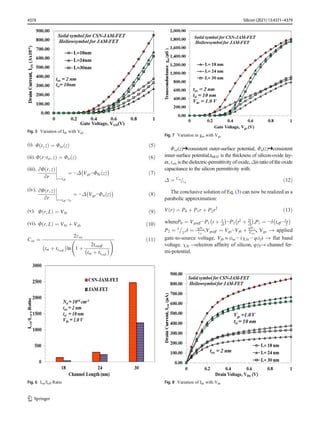
Figure 5 shows the drift in Ids with Vgs for CSN-JAM- FET
and NW-JAM- FET for different channel lengths. Figure 5.
administers that CSN-JAM- FET poses higher Ids over JAM-
FET. This higher change in the drain current owes to the core
shell nanotube FET structure which has two gates. This po-
tential elevates the lateral electric field [26, 27] and also the
gate transport efficiency, thereby enhancing the drain current.
Figure 6 pictures Ratio of ION/IOFF for the contemplated
device designs under channel lengths. Efficiently working as
a switch becomes an essential requisite for a device to be used
for digital applications, thereby making the switching speed a
crucial benchmark It can be expressed [28] as:
ION
IOFF
¼
Ids ON
ð Þat Vgs¼1:0V
Ids OFF
ð Þat Vgs¼0:0V
ð18Þ
As seen from the Fig. 8, the shift in ION/IOFF Ratio is higher
in CSN-JAM- FET over JAM- FET because of superior con-
trol along the channel. Implied from Fig. 7, DMJN-TFET,
solicits grander ION/IOFF ratio because of sharpened adminis-
tration on the channel, crediting tube structure and Dual-Metal
device design. Thus, CSN-JAM- FET(proposed device)
Fig 12 Variation of DIBL with Channel Length
Fig 11 SS v/s Channel Length
Fig 13 Variation of Cgg v/s Vgs with different Channel Length
Fig 14 Variation of fT v/s Vgs with different Channel Length
4376 Silicon (2021) 13:4371–4379
qualifies as the most desirable structure for digital fields’ ap-
plications, by virtue of its elevated switching speed.
Figure 7 delineates Transconductance (gm) proportionate to
Vgs for all the designs compared, to entail that CSN-JAM-
FET for different channel lengths. It is the first order deriva-
tive of drain current w.r.t gate voltage. CSN-JAM- FET has
the most suited gm profile as contrasted with the other devices,
owing to the benefits of the architecture that it inherits.
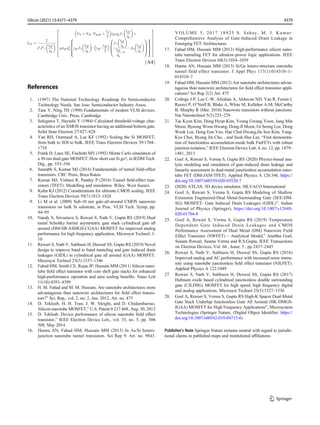
Figure 8 pictures the Ids characteristics corresponding to
Vds for all the compared designs being contemplated. As ev-
ident from the Fig., CSN-JAM- FET exhibits grander profile
by virtue of its structure. This higher change in the drain cur-
rent owes to the core shell nanotube FET structure which has
two gates. This potential elevates the lateral electric field and
also the gate transport efficiency, thereby enhancing the drain
current and biomolecule detection.
Figure 9 delineates the Output Conductance (gd) for all the
devices being compared. It is the first order derivative of drain
current w.r.t gate voltage. It can be inferred that CSN-JAM-
FET exposes profiles in much closer agreement with the ideal
profile.
Figure 10 delineates change in Unilateral Power Gain (in
dB) for that CSN-JAM- FET and NW-JAM- FET correspond-
ing to Vgs. By virtue of the tube structure, a higher electric
field is established in addition to the increased capacitance,
which leads to higher electron velocity and thus superior sat-
uration velocity and so the movement of electrons is expedited
as the gate bias is applied. It can thus be implied that CSN-
JAM- FET displays higher UPG.
Figure 11 delineates MTPG (Maximum-Transducer
Power-Gain) for CSN-JAM- FET and NW-JAM- FET under
different channel lengths. It can be interpreted that CSN-JAM-
FET has a superior gain. MTPG can be annotated as a power-
gain which could be attained for driving the load with indis-
tinguishable inputs. Existence of two gates, internal and exter-
nal, induces superior electric-field and electron-velocity which
respectively elevates the capacitance directly.
Figure 11 delineates SS (Subthreshold Slope) for all the
compared device designs. This also reckons up the switching
capacity of the device with ideal value of 60 mV/decade. As
inferred, SS for CSN-JAM- FET is in close agreement with
the ideal values.
Fig. 15 Potential for Different tsi
Fig. 18 Isub for different silicon film thickness
Fig. 17 Potential for Different Channel Lengths
Fig. 16 Potential for Different oxide thickness (tox)
4377
Silicon (2021) 13:4371–4379
Figure 12 parades Drain Induced Barrier Lowering
(DIBL) for CSN-JAM- FET and JAM-FET. It is an
index of measuring the Short Channel Effect (SCE). It
should be low so as to reduce SCE. It can be clearly
seen from Fig. 12. that for CSE-JAM-FET DIBL is
lower than JAM-FET under different channel lengths
owing to the cylindrical surrounding gates which en-
hance the short channel immunity.
Figure 13 delineates the combined gate-capacitance (Cgg)
which can be formalized as the summation of the Cgs (gate-to-
source-capacitance) and Cgd (gate-to-drain-capacitance), cor-
responding to Vgs, for the contemplated device under different
channel lengths. CSN-JAM- FETexhibits the most close-to-
ideal characteristics (crediting to its structural design).
Figure 14 pictures the Cut-off Frequency (fT) v with Vgs for
all the device designs. The fT for CSN-JAM- FET is well
superior to the other contemplated devices thus making it
the feasible device for analog applications.
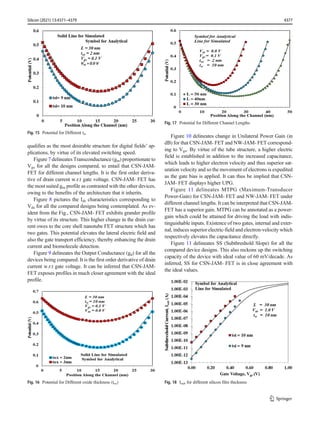
Figure 15 delineates drift in the potential with the change in
the position along the channel for diverse silicon film thick-
ness (tsi).
When tsi reduces the potential gets lowered owing to the
less number of charge carriers that will be present in the sili-
con film.
Figure 16 delineates drift in the potential with the change in
the position along the channel for distinctive tox. When tox
reduces the potential gets lowered owing to the reduction in
the effective electric field that will be present in the channel.
Figure 17 shows the aberration in the potential with the
change in the position along the channel for different channel
lengths (L). When L reduces the channel-potential shifts up
due to the curtailment of electron-charge domination in the
channel which instigates the potential to permutate in the di-
rection of source.
Figure 18.illustrates the drift in Subthreshold current (Isub)
with Vgs for various silicon film thickness (tsi). With a surge in
tsi Isub curtail due to enhanced gate domination over the chan-
nel Fig. 19. illustrates the drift in Subthreshold current (Isub)
with Vgs for various oxide thickness (tox). With an increase in
the oxide thickness the Isub reduces due to surged gate dom-
ination over the channel. It can be noted that as tox surges Isub
increases as there is a curtailment in the depletion of electrons
owing to the aberration in the electric field .
5 Conclusion
An analytical model has been proposed and verified for Core-
Shell- Nanowire- Junctionless –Accumulation- Mode -Field-
Effect Transistor (CSN-JAM-FET) for High Frequency
Applications. CSN-JAM-FET has been contrasted with
Nanowire- Junctionless -Accumulation -Mode -Field-Effect
Transistor (NJAM-FET) under the similar device conditions
by keeping the threshold voltage same for both. It is so found
that CSN-JAM-FET shows much higher Ids, gm, gd, Ion/Ioff
ratio, SS and fT because of the inherent property of core shell
architecture to elevate the gate domination over the channel.
The analytical results have also been modelled for CSN-JAM-
FET by finding a result of the Two-Dimensional Poisson
Poisson equation in accordance with the boundary conditions.
The analytical results are much in coherence with the results
obtained from the simulator. .
Acknowledgments Author is highly thankful to Prof. R.S.Gupta, ECE
Dept., Maharaja Agrasen Institute of Technology, Delhi for providing the
access to ATLAS 3D Silvaco Device Simulator.
Appendix
Mn ¼
L2n−L1nexp −
L
ηn
 
2sinh
L
ηn
  ; ðA1Þ
Nn ¼
L1nexp
L
ηn
 
−L2n
2sinh
L
ηn
  ðA2Þ
L1n ¼
2
t2 J2
1
teff
ηn
 
Vbi−Vgseff þ
tsi
2

teff ηn J1
teff
ηn
 
þ
℘teff η2
n teff J2
teff
ηn
 
− teff −
teff
2
 J1
teff
ηn
 
teff
ηn
−1
−J0
teff
ηn
 
0
B
B
@
1
C
C
A
8


:
9


=


;
2
6
6
6
6
6
6
4
3
7
7
7
7
7
7
5
ðA3Þ
Fig. 19 Isub for different oxide thickness
4378 Silicon (2021) 13:4371–4379
L2n ¼
2
t2 J2
1
teff
ηn
 
Vbi þ Vds−Vgseff þ
tsi
2

teff ηn J1
teff
ηn
 
þ
℘teff η2
n teff J2
teff
ηn
 
− teff −
teff
2
 J1
teff
ηn
 
teff
ηn
−1
−J0
teff
ηn
 
0
B
B
@
1
C
C
A
8


:
9


=


;
2
6
6
6
6
6
6
4
3
7
7
7
7
7
7
5
ðA4Þ
References
1. (1997) The National Technology Roadmap for Semiconductor
Technology Needs. San Jose: Semiconductor Industry Assoc.
2. Taur Y, Ning TH (1998) Fundamentals of modern VLSI devices.
Cambridge Univ. Press, Cambridge
3. Sekigawa T, Hayashi Y (1984) Calculated threshold-voltage char-
acteristics of an XMOS transistor having an additional bottom gate.
Solid State Electron 27:827–828
4. Yan RH, Ourmazd A, Lee KF (1992) Scaling the Si MOSFET:
from bulk to SOI to bulk. IEEE Trans Electron Devices 39:1704–
1710
5. Frank D, Laux SE, Fischetti MV (1992) Monte Carlo simulation of
a 30 nm dual-gate MOSFET: How short can Si go?, in IEDM Tech.
Dig., pp. 553–556
6. Saurabh S, Kumar MJ (2016) Fundamentals of tunnel field-effect
transistors. CRC Press, Boca Raton
7. Kumar MJ, Vishnoi R, Pandey P (2016) Tunnel field-effect tran-
sistors (TFET): Modelling and simulation. Wiley, West Sussex
8. Kuhn KJ (2012) Considerations for ultimate CMOS scaling. IEEE
Trans Electron Devices 59(7):1813–1828
9. Li M et al. (2009) Sub-10 nm gate-all-around CMOS nanowire
transistors on bulk Si substrate, in Proc. VLSI Tech. Symp, pp.
94–95
10. Nandy S, Srivastava S, Rewari S, Nath V, Gupta RS (2019) Dual
metal Schottky barrier asymmetric gate stack cylindrical gate all
around (DM-SB-ASMGS-CGAA) MOSFET for improved analog
performance for high frequency application. Microsyst Technol, 1-
10
11. Rewari S, Nath V, Subhasis H, Deswal SS, Gupta RS (2019) Novel
design to improve band to band tunneling and gate induced drain
leakages (GIDL) in cylindrical gate all around (GAA) MOSFET.
Microsyst Technol 25(5):1537–1546
12. Fahad HM, Smith CE, Rojas JP, Hussain MM (2011) Silicon nano-
tube field effect transistor with core shell gate stacks for enhanced
high-performance operation and area scaling benefits. Nano Lett
11(10):4393–4399
13. H. M. Fahad and M. M. Hussain, Are nanotube architectures more
advantageous than nanowire architectures for field effect transis-
tors?” Sci. Rep., vol. 2, no. 2, Jun. 2012, Art. no. 475
14. D. Tekleab, H. H. Tran, J. W. Sleight, and D. Chidambarrao,
Silicon nanotube MOSFET,” U.S. Patent 0 217 468, Aug. 30, 2012
15. D. Tekleab, Device performance of silicon nanotube field effect
transistor,” IEEE Electron Device Lett., vol. 35, no. 5, pp. 506
508, May 2014
16. Hanna AN, Fahad HM, Hussain MM (2015) In As/Si hetero-
junction nanotube tunnel transistors. Sci Rep 9: Art. no. 9843.
VOLUME 5, 2017 18925 S. Sahay, M. J. Kumar:
Comprehensive Analysis of Gate-Induced Drain Leakage in
Emerging FET Architectures
17. Fahad HM, Hussain MM (2013) High-performance silicon nano-
tube tunneling FET for ultralow-power logic applications. IEEE
Trans Electron Devices 60(3):1034–1039
18. Hanna AN, Hussain MM (2015) Si/Ge hetero-structure nanotube
tunnel field effect transistor. J Appl Phys 117(1):014310–1–
014310–7
19. Fahad HM, Hussain MM (2012) Are nanotube architectures advan-
tageous than nanowire architectures for field effect transistor appli-
cations? Sci Rep 2(2) Art. 475
20. Colinge J-P, Lee C-W, Afzalian A, Akhavan ND, Yan R, Ferain I,
Razavi P, O’Neill B, Blake A, White M, Kelleher A-M, McCarthy
B, Murphy R (Mar. 2010) Nanowire transistors without junctions.
Nat Nanotechnol 5(3):225–229
21. Tae Kyun Kim, Dong Hyun Kim, Young Gwang Yoon, Jung Min
Moon, Byeong Woon Hwang, Dong-Il Moon, Gi Seong Lee, Dong
Wook Lee, Dong Eun Yoo, Hae Chul Hwang,Jin Soo Kim, Yang-
Kyu Choi, Byung Jin Cho, , and Seok-Hee Lee, “First demonstra-
tion of Junctionless accumulation-mode bulk FinFETs with robust
junction isolation,” IEEE Electron Device Lett, 4, no. 12, pp. 1479–
1481, 2013
22. Goel A, Rewari S, Verma S, Gupta RS (2020) Physics-based ana-
lytic modeling and simulation of gate-induced drain leakage and
linearity assessment in dual-metal junctionless accumulation nano-
tube FET (DM-JAM-TFET). Applied Physics A 126:346. https://
doi.org/10.1007/s00339-020-03520-7
23. (2020) ATLAS: 3D device simulator, SILVACO International
24. Goel A, Rewari S, Verma S, Gupta RS Modeling of Shallow
Extension Engineered-Dual Metal-Surrounding Gate (SEE-DM-
SG) MOSFET- Gate Induced Drain Leakages (GIDL)”, Indian
Journal of Physics (Springer), https://doi.org/10.1007/s12648-
020-01704-8
25. Goel A, Rewari S, Verma S, Gupta RS (2019) Temperature
Dependent Gate Induced Drain Leakages and CMOS
Performance Assessment of Dual Metal (DM) Nanowire Field
Effect Transistor (NWFET) – Analytical Model,” Anubha Goel,
Sonam Rewari, Seema Verma and R.S.Gupta, IEEE Transactions
on Electron Devices, Vol. 66 , Issue: 5 , pp 2437–2445
26. Rewari S, Nath V, Subhasis H, Deswal SS, Gupta RS (2016)
Improved analog and AC performance with increased noise immu-
nity using nanotube junctionless field effect transistor (NJLFET).
Applied Physics A 122:1049
27. Rewari S, Nath V, Subhasis H, Deswal SS, Gupta RS (2017)
Hafnium oxide based cylindrical junctionless double surrounding
gate (CJLDSG) MOSFET for high speed, high frequency digital
and analog applications. Microsyst Technol 25(5):1527–1536
28. Goel A, Rewari S, Verma S, Gupta RS High-K Spacer Dual-Metal
Gate Stack Underlap Junctionless Gate All Around (HK-DMGS-
JGAA) MOSFET for High Frequency Applications”, Microsystem
Technologies (Springer Nature, (Digital Object Identifier: https://
doi.org/10.1007/s00542-019-04715-6)
Publisher’s Note Springer Nature remains neutral with regard to jurisdic-
tional claims in published maps and institutional affiliations.
4379
Silicon (2021) 13:4371–4379

NWCore shell FET for high frequency applications

  • 1.
    ORIGINAL PAPER Core-Shell NanowireJunctionless Accumalation Mode Field-Effect Transistor (CSN-JAM-FET) for High Frequency Applications - Analytical Study Sonam Rewari1 Received: 9 September 2020 /Accepted: 28 September 2020 # Springer Nature B.V. 2020 Abstract Here, an analytical model has been proposed for Core-Shell-Nanowire-Junctionless-Accumulation-Mode- Field-Effect Transistor (CSN-JAM-FET) for High Frequency Applications. CSN-JAM-FET has been contrasted with Nanowire- Junctionless- Accumulation- Mode- Field-Effect Transistor (NJAM-FET) under the similar device conditions by keeping the threshold voltage same for both. It is so found that CSN-JAM-FET shows much higher drain current (Ids), transconductance (gm), output conductance (gd), Ion/Ioff ratio, Subthreshold Slope (SS) and cut off frequency (fT) because of the inherent property of core shell architecture to elevate the gate domination over the channel. The analytical results have also been modelled for CSN-JAM- FET by finding a result of the Two-Dimensional Poisson equation in accordance with the boundary conditions. The analytical results are much in coherence with the results obtained from the simulator. Keywords Core-Shell . Junctionless Accumulation Mode . Nanowire . Analog 1 Introduction An incredible change is observed in the semiconductor commerce and the evolution still remains never ending and the device length is being constantly reduced for Ultra Large Scale Integrations (ULSI) [1]. Even in sub-0.1 μm many SCEs, which deeply the overall scalability of the device, such as increment in the sub- threshold slope (SS), which demands consideration [2]. Potential of silicon technologies beyond 100 nm regime has been well indicated by modeling and simulation [3–5]. To combat the ef- fects of SCEs, many variants of device designs have been recom- mended and deeply studied by the researchers. The Gate All Around (GAA)/ Nano. Wire (NW) structures had been the most encouraging de- vice structure for MOSFETs beyond 10 nm regime [6–11]. Nonetheless, the NW device structures require to be stacked into arrays to excerpt an agreeable drive current, so that the chip area is exhausted appreciably opposing the benefits of scaling. The exploration of FET structures for an improvised output drive current from the three-dimensional topologies, has led to the coinage of silicon Nano-Tube (NT) with core gate structure. Nanotube / Core-Shell architecture is being investigated these days which combats the SCE’s of GAA/ Nanowire MOSFETs [12–18]. This superior gate control also administers exquisite amnesty towards the SCEs and a com- petent volume inversion, leading to high drive currents in addition to the impressive employment of the real-estate [14, 15, 19].This architecture provides a superlative gate control as compared to all its counterpart NW device architectures [12–17]. Technically, lately proposed Junctionless (JL) MOSFETs have massively doped channel, matching both the type and the concentration magnitude of the drain and the source. It thus becomes a uniformly doped resistor [20]. It performance has further been improved by Junctionless Accumulation Mode (JAM) FET [21, 22]. Truancy of doping gradient across the channel, source and drain, waives off the impurities diffusion and hence the dilemma of the sharp dop- ing profile creation. Thus combining the advocated perks of Junctionless (JL) and Nanotube (NT) structures, which in- cludes benign scaling in the short channel regime, comfortable fabrication (since no sharp doping gradient required), close to ideal subthreshold slope (SS) and elevated mobility of the carriers as the conduction path now is at the center (as opposed * Sonam Rewari rewarisonam@gmail.com 1 ECE Department, Delhi Technological University, New Delhi 110042, India https://doi.org/10.1007/s12633-020-00744-3 / Published online: 10 October 2020 Silicon (2021) 13:4371–4379
  • 2.
    to the surfacepotential), which offers less scattering. We here in this paper, compare the performance of Core-Shell- Nanowire-Junctionless-Accumulation-Mode- Field-Effect Transistor (CSN-JAM-FET) with the conventional Nanowire-Junctionless-Accumulation-Mode- Field-Effect Transistor (NJAM-FET). The manuscript is structured in such a way that II section talks about the device structure, along with the model, and its calibration. In section III enlists the analytical model proposed and section IV gives the various performance measures of CSN-JAM-FET is plotted and presented along with the other analytical results. Section V concludes the results discussed. The said device professes and demonstrates preferably admi- rable performance characteristics. 2 Device Design and Simulation Core-Shell Nanowire Junctionless Accumulation Mode Field- Effect Transistor (CSN-JAM-FET) Three-Dimensional structure is pictured in Fig. 1a 2-D correctional glimpse of CSN-JAM- FET is delineated in Fig. 1b. Structurally, the channel forms the base, over which the silicon dioxide has been grown, topped with metal gates with tweakable work-functions [8]. Each metal has a varied work-function. Table 1 enlists the Device Specifications. ATLAS-3D device-simulator has been exploited to carry out numerical simulations [23]. The installation of dif- ferent work-functions for metal, leads to two gates, i.e., Outer gate and Inner gate, both with two metal implants each. Silvaco ATLAS 3-D device-simulator [23] has been de- ployed to realize the device-simulations. The simulation models exploited to realize our simulations along with their descriptions have been tabulated in Table 1. 3 Analytical Model Mathematical interpretations for Subthreshold-Current (Isub) and potential has been realized by solving Two-Dimensional Poisson’s equation in cylindrical-coordinates applying appropri- ate boundary-conditions, deploying the super-position technique [24] to realize expressions for surface potential as well as Isub. Under the cylindrical coordinate system. The Two-Dimensional Poisson’s equation can be asserted as: Table 1 Simulation Models used for Simulations Simulation Model Description Mobility-Model Lombardi-CVT-Model→Appropriate for non-planar structures along with inversion region modelling. Recombination Model SRH (Schottky – Read – Hall) Model → Appropriate for inculcating carrier lifetimes Auger-Model→ Appropriate to inculcate High-Current-Densities with Impact-Ionization. Concentration Dependent Model Appropriate to inculcate SRH-Recombination with their lifetimes. Energy Transport Model Drift-Diffusion-Model → Appropriate for numerical-techniques. Statistics Boltzmann-Model → Appropriate to consider the Carrier-Statistics. Fig. 1 a 3-D Design of CSN-JAM-FET (b) 2-D Design of CSN-JAM- FET 4372 Silicon (2021) 13:4371–4379
  • 3.
    1 r ∂ ∂r Φ r; z ðÞ þ ∂ ∂r2 Φ r; z ð Þ þ ∂ ∂z2 Φ r; z ð Þ ¼ − qND εsi ð1Þ with, ND ➔consistent doping concentration and Φ(r, z) ➔ poten- tial distribution across the silicon-film. By deploying superposi- tion-technique, the conclusive solution of potential can be disintegrated into: 1. 1-D long-channel solution (V(r)) and 2. Two-Dimensional short-channel solution (U(r,z)) i.e. Φ r; z ð Þ ¼ V r ð Þ þ U r; z ð Þ ð2Þ Now, Eq. (1) can be rewritten as: 1 r ∂ ∂r V r ð Þ ð Þ þ ∂2 ∂r2 V r ð Þ ¼ −qND ∈si ð3Þ and 1 r ∂ ∂r U r; z ð Þ ð Þ þ ∂2 ∂r2 U r; z ð Þ þ ∂2 ∂z2 U r; z ð Þ ¼ 0 ð4Þ Boundary-conditions exploited for solution of 2-D poten- tial Φ(r, z) are given as follows: Fig. 3 Contour plot for Electron Concentration with Vds = 1.0 V and Vgs = 0.1 V for (a) JAM- FET (b) CSN-JAM- FET Fig. 4 Band Energy in CSN-JAM- FET Fig. 2 a Potential Contour plot with Vds = 1.0 V and Vgs = 0.1 V for JAM- FET. b Potential Contour plot with Vds = 1.0 V and Vgs = 0.1 V for CSN-JAM- FET 4373 Silicon (2021) 13:4371–4379
  • 4.
    (i). Φ t;z ð Þ ¼ Φos z ð Þ ð5Þ (ii). Φ t−tsi; z ð Þ ¼ Φis z ð Þ ð6Þ (iii). ∂Φ r; z ð Þ ∂r r¼teff ¼ −Δ Vgs−Φ0s z ð Þ ð7Þ (iv). ∂Φ r; z ð Þ ∂r r¼teff −tsi ¼ −Δ Vgs−Φis z ð Þ ð8Þ (v). Φ r; L ð Þ ¼ Vbi ð9Þ (vi). Φ r; L ð Þ ¼ Vbi þ Vds ð10Þ Cox ¼ 2εox tm þ ttoxeff ln 1 þ 2toxeff tm þ ttoxeff ! ð11Þ Φos(z)➔consistent outer-surface potential, Φis(z)➔consistent inner-surface potential,tSiO2 is the thickness of silicon-oxide lay- er, εox is the dielectric-permittivity of oxide, Δis ratio of the oxide capacitance to the silicon permittivity with. Δ ¼ Cox =εsi ð12Þ The conclusive solution of Eq. (3) can now be realized as a parabolic approximation: V r ð Þ ¼ P0 þ P1r þ P2r2 ð13Þ whereP0 ¼ Vgseff −P1 t þ 1 Δ −P2 t2 þ 2t Δ ,P1 ¼ −δ teff −tsi 2 P2 ¼ δ 2 ,δ ¼ −qNd εsi ,Vgseff ¼ Vgs−Vfb þ qN f Cox , Vgs → applied gate-to-source voltage, Vfb = ϕm − (χSi − qϕf) → flat band voltage, χSi →electron affinity of silicon, qϕf→ channel fer- mi-potential. Fig. 6 Ion/Ioff Ratio Fig. 8 Variation of Ids with Vds Fig. 7 Variation in gm with Vgs Fig. 5 Variation of Ids with Vgs 4374 Silicon (2021) 13:4371–4379
  • 5.
    The conclusive solutionof Eq. (4) can be obtained as: U r; z ð Þ ¼ ∑ ∞ n¼1 J0 αnr ð Þ Mnexp αnz ð Þ þ Nnexp −αnz ð Þ ð Þ ð14Þ with J0 and J1 → bessel functions of order 0 and 1 respectively, Mn and Nn →constants calculated using boundary-conditions (9) and (10) and are given in Appendix, αn → eigen values of: J1 teff αn ¼ Cox αnεsi J0 teff αn ð15Þ The conclusive expression can be interpreted as: Φ r; z ð Þ ¼ V r ð Þ þ ∑ ∞ n¼1 J0 αnr ð Þ Mnexp αnz ð Þ þ Nnexp −αnz ð Þ ð Þ ð16Þ Isub [25] is given as:- ð17Þ with, Boltzmann’s constant, k = 1.38 × 10⁻²³ J/K, T = 300 K, intrinsic-carrier-density, ηi = 1.45 × 1010 cm−3 , electron mobil- ity, μ = 1300cm2 /Vs,αn ¼ 1 ηn . 4 Results and Interpretation Figure 2 delineates the potential contour plots for (a) JAM- FET (b) CSN-JAM- FET with Vgs = 0.1 V and Vds = 1.0 V. It can well be inferred from the Fig. that potential in CSN-JAM- FET rises, attributed to the Core Shell structure. Figure 3 delineates the Electron Concentration con- tour plots for a) JAM-FET MOSFET b) CSN-JAM- FET for Vgs = 0.1 V and Vds = 1.0 V. As is evident from the Fig., electron concentration in the channel hikes owing to the structural bifold core shell structure, which abbreviates the impact ionization effect and the tube structure concludes to hiked field (fringing)-capac- itance and thus superior concentration of electrons. Figure 4 delineates the variation in band-energy corre- sponding to the position along the length of the channel. As Fig. 10 UPG v/s Channel Length. MTPG v/s Channel Length Fig. 9 Variation of gd with Vds 4375 Silicon (2021) 13:4371–4379
  • 6.
    is clearly evidentfrom the Fig., there is a curtailment in the electron-tunneling across the conduction and valence band owing to the tube structure, the magnitude of band energy builds up amidst the channel. Figure 5 shows the drift in Ids with Vgs for CSN-JAM- FET and NW-JAM- FET for different channel lengths. Figure 5. administers that CSN-JAM- FET poses higher Ids over JAM- FET. This higher change in the drain current owes to the core shell nanotube FET structure which has two gates. This po- tential elevates the lateral electric field [26, 27] and also the gate transport efficiency, thereby enhancing the drain current. Figure 6 pictures Ratio of ION/IOFF for the contemplated device designs under channel lengths. Efficiently working as a switch becomes an essential requisite for a device to be used for digital applications, thereby making the switching speed a crucial benchmark It can be expressed [28] as: ION IOFF ¼ Ids ON ð Þat Vgs¼1:0V Ids OFF ð Þat Vgs¼0:0V ð18Þ As seen from the Fig. 8, the shift in ION/IOFF Ratio is higher in CSN-JAM- FET over JAM- FET because of superior con- trol along the channel. Implied from Fig. 7, DMJN-TFET, solicits grander ION/IOFF ratio because of sharpened adminis- tration on the channel, crediting tube structure and Dual-Metal device design. Thus, CSN-JAM- FET(proposed device) Fig 12 Variation of DIBL with Channel Length Fig 11 SS v/s Channel Length Fig 13 Variation of Cgg v/s Vgs with different Channel Length Fig 14 Variation of fT v/s Vgs with different Channel Length 4376 Silicon (2021) 13:4371–4379
  • 7.
    qualifies as themost desirable structure for digital fields’ ap- plications, by virtue of its elevated switching speed. Figure 7 delineates Transconductance (gm) proportionate to Vgs for all the designs compared, to entail that CSN-JAM- FET for different channel lengths. It is the first order deriva- tive of drain current w.r.t gate voltage. CSN-JAM- FET has the most suited gm profile as contrasted with the other devices, owing to the benefits of the architecture that it inherits. Figure 8 pictures the Ids characteristics corresponding to Vds for all the compared designs being contemplated. As ev- ident from the Fig., CSN-JAM- FET exhibits grander profile by virtue of its structure. This higher change in the drain cur- rent owes to the core shell nanotube FET structure which has two gates. This potential elevates the lateral electric field and also the gate transport efficiency, thereby enhancing the drain current and biomolecule detection. Figure 9 delineates the Output Conductance (gd) for all the devices being compared. It is the first order derivative of drain current w.r.t gate voltage. It can be inferred that CSN-JAM- FET exposes profiles in much closer agreement with the ideal profile. Figure 10 delineates change in Unilateral Power Gain (in dB) for that CSN-JAM- FET and NW-JAM- FET correspond- ing to Vgs. By virtue of the tube structure, a higher electric field is established in addition to the increased capacitance, which leads to higher electron velocity and thus superior sat- uration velocity and so the movement of electrons is expedited as the gate bias is applied. It can thus be implied that CSN- JAM- FET displays higher UPG. Figure 11 delineates MTPG (Maximum-Transducer Power-Gain) for CSN-JAM- FET and NW-JAM- FET under different channel lengths. It can be interpreted that CSN-JAM- FET has a superior gain. MTPG can be annotated as a power- gain which could be attained for driving the load with indis- tinguishable inputs. Existence of two gates, internal and exter- nal, induces superior electric-field and electron-velocity which respectively elevates the capacitance directly. Figure 11 delineates SS (Subthreshold Slope) for all the compared device designs. This also reckons up the switching capacity of the device with ideal value of 60 mV/decade. As inferred, SS for CSN-JAM- FET is in close agreement with the ideal values. Fig. 15 Potential for Different tsi Fig. 18 Isub for different silicon film thickness Fig. 17 Potential for Different Channel Lengths Fig. 16 Potential for Different oxide thickness (tox) 4377 Silicon (2021) 13:4371–4379
  • 8.
    Figure 12 paradesDrain Induced Barrier Lowering (DIBL) for CSN-JAM- FET and JAM-FET. It is an index of measuring the Short Channel Effect (SCE). It should be low so as to reduce SCE. It can be clearly seen from Fig. 12. that for CSE-JAM-FET DIBL is lower than JAM-FET under different channel lengths owing to the cylindrical surrounding gates which en- hance the short channel immunity. Figure 13 delineates the combined gate-capacitance (Cgg) which can be formalized as the summation of the Cgs (gate-to- source-capacitance) and Cgd (gate-to-drain-capacitance), cor- responding to Vgs, for the contemplated device under different channel lengths. CSN-JAM- FETexhibits the most close-to- ideal characteristics (crediting to its structural design). Figure 14 pictures the Cut-off Frequency (fT) v with Vgs for all the device designs. The fT for CSN-JAM- FET is well superior to the other contemplated devices thus making it the feasible device for analog applications. Figure 15 delineates drift in the potential with the change in the position along the channel for diverse silicon film thick- ness (tsi). When tsi reduces the potential gets lowered owing to the less number of charge carriers that will be present in the sili- con film. Figure 16 delineates drift in the potential with the change in the position along the channel for distinctive tox. When tox reduces the potential gets lowered owing to the reduction in the effective electric field that will be present in the channel. Figure 17 shows the aberration in the potential with the change in the position along the channel for different channel lengths (L). When L reduces the channel-potential shifts up due to the curtailment of electron-charge domination in the channel which instigates the potential to permutate in the di- rection of source. Figure 18.illustrates the drift in Subthreshold current (Isub) with Vgs for various silicon film thickness (tsi). With a surge in tsi Isub curtail due to enhanced gate domination over the chan- nel Fig. 19. illustrates the drift in Subthreshold current (Isub) with Vgs for various oxide thickness (tox). With an increase in the oxide thickness the Isub reduces due to surged gate dom- ination over the channel. It can be noted that as tox surges Isub increases as there is a curtailment in the depletion of electrons owing to the aberration in the electric field . 5 Conclusion An analytical model has been proposed and verified for Core- Shell- Nanowire- Junctionless –Accumulation- Mode -Field- Effect Transistor (CSN-JAM-FET) for High Frequency Applications. CSN-JAM-FET has been contrasted with Nanowire- Junctionless -Accumulation -Mode -Field-Effect Transistor (NJAM-FET) under the similar device conditions by keeping the threshold voltage same for both. It is so found that CSN-JAM-FET shows much higher Ids, gm, gd, Ion/Ioff ratio, SS and fT because of the inherent property of core shell architecture to elevate the gate domination over the channel. The analytical results have also been modelled for CSN-JAM- FET by finding a result of the Two-Dimensional Poisson Poisson equation in accordance with the boundary conditions. The analytical results are much in coherence with the results obtained from the simulator. . Acknowledgments Author is highly thankful to Prof. R.S.Gupta, ECE Dept., Maharaja Agrasen Institute of Technology, Delhi for providing the access to ATLAS 3D Silvaco Device Simulator. Appendix Mn ¼ L2n−L1nexp − L ηn 2sinh L ηn ; ðA1Þ Nn ¼ L1nexp L ηn −L2n 2sinh L ηn ðA2Þ L1n ¼ 2 t2 J2 1 teff ηn Vbi−Vgseff þ tsi 2 teff ηn J1 teff ηn þ ℘teff η2 n teff J2 teff ηn − teff − teff 2 J1 teff ηn teff ηn −1 −J0 teff ηn 0 B B @ 1 C C A 8 : 9 = ; 2 6 6 6 6 6 6 4 3 7 7 7 7 7 7 5 ðA3Þ Fig. 19 Isub for different oxide thickness 4378 Silicon (2021) 13:4371–4379
  • 9.
    L2n ¼ 2 t2 J2 1 teff ηn Vbi þ Vds−Vgseff þ tsi 2 teff ηn J1 teff ηn þ ℘teff η2 n teff J2 teff ηn − teff − teff 2 J1 teff ηn teff ηn −1 −J0 teff ηn 0 B B @ 1 C C A 8 : 9 = ; 2 6 6 6 6 6 6 4 3 7 7 7 7 7 7 5 ðA4Þ References 1. (1997) The National Technology Roadmap for Semiconductor Technology Needs. San Jose: Semiconductor Industry Assoc. 2. Taur Y, Ning TH (1998) Fundamentals of modern VLSI devices. Cambridge Univ. Press, Cambridge 3. Sekigawa T, Hayashi Y (1984) Calculated threshold-voltage char- acteristics of an XMOS transistor having an additional bottom gate. Solid State Electron 27:827–828 4. Yan RH, Ourmazd A, Lee KF (1992) Scaling the Si MOSFET: from bulk to SOI to bulk. IEEE Trans Electron Devices 39:1704– 1710 5. Frank D, Laux SE, Fischetti MV (1992) Monte Carlo simulation of a 30 nm dual-gate MOSFET: How short can Si go?, in IEDM Tech. Dig., pp. 553–556 6. Saurabh S, Kumar MJ (2016) Fundamentals of tunnel field-effect transistors. CRC Press, Boca Raton 7. Kumar MJ, Vishnoi R, Pandey P (2016) Tunnel field-effect tran- sistors (TFET): Modelling and simulation. Wiley, West Sussex 8. Kuhn KJ (2012) Considerations for ultimate CMOS scaling. IEEE Trans Electron Devices 59(7):1813–1828 9. Li M et al. (2009) Sub-10 nm gate-all-around CMOS nanowire transistors on bulk Si substrate, in Proc. VLSI Tech. Symp, pp. 94–95 10. Nandy S, Srivastava S, Rewari S, Nath V, Gupta RS (2019) Dual metal Schottky barrier asymmetric gate stack cylindrical gate all around (DM-SB-ASMGS-CGAA) MOSFET for improved analog performance for high frequency application. Microsyst Technol, 1- 10 11. Rewari S, Nath V, Subhasis H, Deswal SS, Gupta RS (2019) Novel design to improve band to band tunneling and gate induced drain leakages (GIDL) in cylindrical gate all around (GAA) MOSFET. Microsyst Technol 25(5):1537–1546 12. Fahad HM, Smith CE, Rojas JP, Hussain MM (2011) Silicon nano- tube field effect transistor with core shell gate stacks for enhanced high-performance operation and area scaling benefits. Nano Lett 11(10):4393–4399 13. H. M. Fahad and M. M. Hussain, Are nanotube architectures more advantageous than nanowire architectures for field effect transis- tors?” Sci. Rep., vol. 2, no. 2, Jun. 2012, Art. no. 475 14. D. Tekleab, H. H. Tran, J. W. Sleight, and D. Chidambarrao, Silicon nanotube MOSFET,” U.S. Patent 0 217 468, Aug. 30, 2012 15. D. Tekleab, Device performance of silicon nanotube field effect transistor,” IEEE Electron Device Lett., vol. 35, no. 5, pp. 506 508, May 2014 16. Hanna AN, Fahad HM, Hussain MM (2015) In As/Si hetero- junction nanotube tunnel transistors. Sci Rep 9: Art. no. 9843. VOLUME 5, 2017 18925 S. Sahay, M. J. Kumar: Comprehensive Analysis of Gate-Induced Drain Leakage in Emerging FET Architectures 17. Fahad HM, Hussain MM (2013) High-performance silicon nano- tube tunneling FET for ultralow-power logic applications. IEEE Trans Electron Devices 60(3):1034–1039 18. Hanna AN, Hussain MM (2015) Si/Ge hetero-structure nanotube tunnel field effect transistor. J Appl Phys 117(1):014310–1– 014310–7 19. Fahad HM, Hussain MM (2012) Are nanotube architectures advan- tageous than nanowire architectures for field effect transistor appli- cations? Sci Rep 2(2) Art. 475 20. Colinge J-P, Lee C-W, Afzalian A, Akhavan ND, Yan R, Ferain I, Razavi P, O’Neill B, Blake A, White M, Kelleher A-M, McCarthy B, Murphy R (Mar. 2010) Nanowire transistors without junctions. Nat Nanotechnol 5(3):225–229 21. Tae Kyun Kim, Dong Hyun Kim, Young Gwang Yoon, Jung Min Moon, Byeong Woon Hwang, Dong-Il Moon, Gi Seong Lee, Dong Wook Lee, Dong Eun Yoo, Hae Chul Hwang,Jin Soo Kim, Yang- Kyu Choi, Byung Jin Cho, , and Seok-Hee Lee, “First demonstra- tion of Junctionless accumulation-mode bulk FinFETs with robust junction isolation,” IEEE Electron Device Lett, 4, no. 12, pp. 1479– 1481, 2013 22. Goel A, Rewari S, Verma S, Gupta RS (2020) Physics-based ana- lytic modeling and simulation of gate-induced drain leakage and linearity assessment in dual-metal junctionless accumulation nano- tube FET (DM-JAM-TFET). Applied Physics A 126:346. https:// doi.org/10.1007/s00339-020-03520-7 23. (2020) ATLAS: 3D device simulator, SILVACO International 24. Goel A, Rewari S, Verma S, Gupta RS Modeling of Shallow Extension Engineered-Dual Metal-Surrounding Gate (SEE-DM- SG) MOSFET- Gate Induced Drain Leakages (GIDL)”, Indian Journal of Physics (Springer), https://doi.org/10.1007/s12648- 020-01704-8 25. Goel A, Rewari S, Verma S, Gupta RS (2019) Temperature Dependent Gate Induced Drain Leakages and CMOS Performance Assessment of Dual Metal (DM) Nanowire Field Effect Transistor (NWFET) – Analytical Model,” Anubha Goel, Sonam Rewari, Seema Verma and R.S.Gupta, IEEE Transactions on Electron Devices, Vol. 66 , Issue: 5 , pp 2437–2445 26. Rewari S, Nath V, Subhasis H, Deswal SS, Gupta RS (2016) Improved analog and AC performance with increased noise immu- nity using nanotube junctionless field effect transistor (NJLFET). Applied Physics A 122:1049 27. Rewari S, Nath V, Subhasis H, Deswal SS, Gupta RS (2017) Hafnium oxide based cylindrical junctionless double surrounding gate (CJLDSG) MOSFET for high speed, high frequency digital and analog applications. Microsyst Technol 25(5):1527–1536 28. Goel A, Rewari S, Verma S, Gupta RS High-K Spacer Dual-Metal Gate Stack Underlap Junctionless Gate All Around (HK-DMGS- JGAA) MOSFET for High Frequency Applications”, Microsystem Technologies (Springer Nature, (Digital Object Identifier: https:// doi.org/10.1007/s00542-019-04715-6) Publisher’s Note Springer Nature remains neutral with regard to jurisdic- tional claims in published maps and institutional affiliations. 4379 Silicon (2021) 13:4371–4379