Nutrition intervention
programs
Nutrition interventions strategies
 Shorter routes:-
Providing health and nutrition education
Micronutrient fortification and
supplementation
 Can improve child nutrition fast - in
two to five years
Short routes to better nutrition
 Micronutrient supplements
 Micronutrient fortification
Nutrition interventions strategies
 Long term:-
 Higher incomes and better food
security
Long routes to better nutrition
 Primary health services such as
 Family planning and
 Infectious disease control
 Safe water and sanitation
Long routes to better nutrition
 Policies on marketing breast milk
substitutes
 Food and agricultural policies to increase
supply of safe and healthy food, or of
healthier foods
Long routes…
 Food industry development and market
incentives (disincentives) for developing
healthy (unhealthy) food.
 Fruit and vegetable production
Essential Nutrition Actions
 What?
 When?
 Where?
… when should we intervene?
 Majority of growth faltering occurs during
first year of life.
 Many babies are born malnourished due to
poor maternal nutrition before & during
pregnancy.
Where should we intervene?
 Focus on:
 Infant & young child feeding,
especially 0-24 months
 Nutrition of girls & women
What to Integrate?
7 action areas
7 action areas
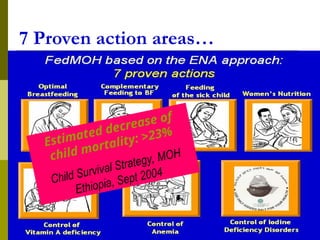
7 Proven action areas…
Estimated decrease of
child mortality: >23%
Child Survival Strategy, MOH
Ethiopia, Sept 2004
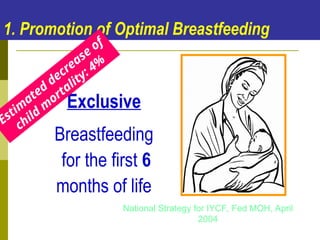
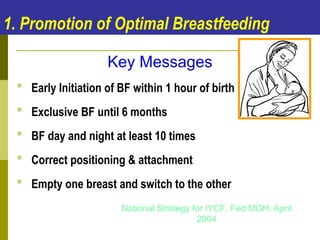
1. Promotion of Optimal Breastfeeding
Exclusive
Breastfeeding
for the first 6
months of life
National Strategy for IYCF, Fed MOH, April
2004
Estim
ated
decrease
of
child
m
ortality: 4%
1. Promotion of Optimal Breastfeeding
 Early Initiation of BF within 1 hour of birth
 Exclusive BF until 6 months
 BF day and night at least 10 times
 Correct positioning & attachment
 Empty one breast and switch to the other
Key Messages
National Strategy for IYCF, Fed MOH, April
2004
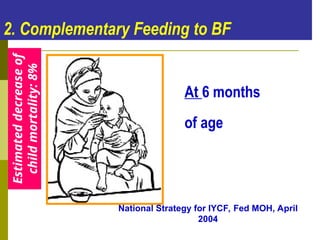
2. Complementary Feeding to BF
At 6 months
of age
National Strategy for IYCF, Fed MOH, April
2004
Estimated
decrease
of
child
mortality:
8%
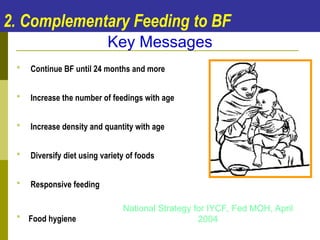
2. Complementary Feeding to BF
 Continue BF until 24 months and more
 Increase the number of feedings with age
 Increase density and quantity with age
 Diversify diet using variety of foods
 Responsive feeding
 Food hygiene
Key Messages
National Strategy for IYCF, Fed MOH, April
2004
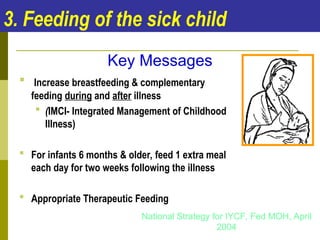
3. Feeding of the sick child
 Increase breastfeeding & complementary
feeding during and after illness
 (IMCI- Integrated Management of Childhood
Illness)
 For infants 6 months & older, feed 1 extra meal
each day for two weeks following the illness
 Appropriate Therapeutic Feeding
Key Messages
National Strategy for IYCF, Fed MOH, April
2004
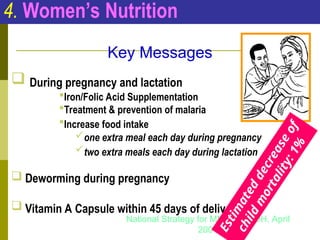
4. Women’s Nutrition
 During pregnancy and lactation
Iron/Folic Acid Supplementation
Treatment & prevention of malaria
Increase food intake
one extra meal each day during pregnancy
two extra meals each day during lactation
 Deworming during pregnancy
 Vitamin A Capsule within 45 days of delivery
Key Messages
National Strategy for MN, Fed MOH, April
2004
E
s
t
i
m
a
t
e
d
d
e
c
r
e
a
s
e
o
f
c
h
i
l
d
m
o
r
t
a
l
i
t
y
:
1
%
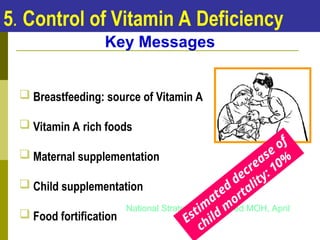
5. Control of Vitamin A Deficiency
 Breastfeeding: source of Vitamin A
 Vitamin A rich foods
 Maternal supplementation
 Child supplementation
 Food fortification
Key Messages
National Strategy for MN, Fed MOH, April
2004
Estim
ated
decrease
of
child
m
ortality: 10%
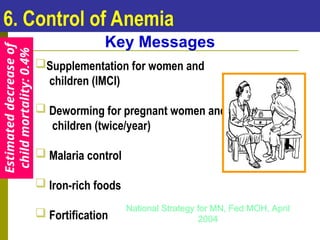
6. Control of Anemia
Supplementation for women and
children (IMCI)
 Deworming for pregnant women and
children (twice/year)
 Malaria control
 Iron-rich foods
 Fortification
Key Messages
National Strategy for MN, Fed MOH, April
2004
Estimated
decrease
of
child
mortality:
0.4%
7. Control of Iodine Deficiency Disorders
 Access & consumption
by all families
of iodized salt
Key Messages
National Strategy for MN, Fed MOH, April
2004
Where to Integrate?
• 7 Proven Behaviors
• 6 Critical Contact
Points
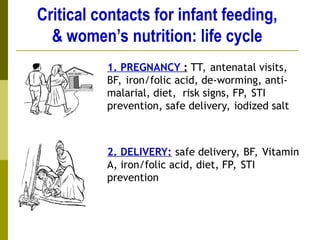
2. DELIVERY: safe delivery, BF, Vitamin
A, iron/folic acid, diet, FP, STI
prevention
1. PREGNANCY : TT, antenatal visits,
BF, iron/folic acid, de-worming, anti-
malarial, diet, risk signs, FP, STI
prevention, safe delivery, iodized salt
Critical contacts for infant feeding,
& women’s nutrition: life cycle
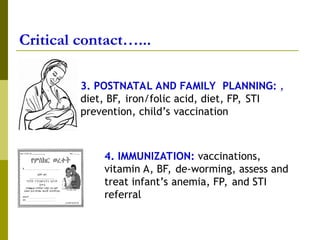
Critical contact…...
a
3. POSTNATAL AND FAMILY PLANNING: ,
diet, BF, iron/folic acid, diet, FP, STI
prevention, child’s vaccination
4. IMMUNIZATION: vaccinations,
vitamin A, BF, de-worming, assess and
treat infant’s anemia, FP, and STI
referral
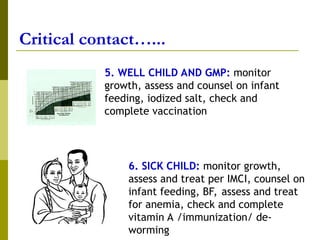
Critical contact…...
5. WELL CHILD AND GMP: monitor
growth, assess and counsel on infant
feeding, iodized salt, check and
complete vaccination
6. SICK CHILD: monitor growth,
assess and treat per IMCI, counsel on
infant feeding, BF, assess and treat
for anemia, check and complete
vitamin A /immunization/ de-
worming
Nutrition intervention programs.......ppt

  • 1.
  • 2.
    Nutrition interventions strategies Shorter routes:- Providing health and nutrition education Micronutrient fortification and supplementation  Can improve child nutrition fast - in two to five years
  • 3.
    Short routes tobetter nutrition  Micronutrient supplements  Micronutrient fortification
  • 4.
    Nutrition interventions strategies Long term:-  Higher incomes and better food security
  • 5.
    Long routes tobetter nutrition  Primary health services such as  Family planning and  Infectious disease control  Safe water and sanitation
  • 6.
    Long routes tobetter nutrition  Policies on marketing breast milk substitutes  Food and agricultural policies to increase supply of safe and healthy food, or of healthier foods
  • 7.
    Long routes…  Foodindustry development and market incentives (disincentives) for developing healthy (unhealthy) food.  Fruit and vegetable production
  • 8.
    Essential Nutrition Actions What?  When?  Where?
  • 9.
    … when shouldwe intervene?  Majority of growth faltering occurs during first year of life.  Many babies are born malnourished due to poor maternal nutrition before & during pregnancy.
  • 10.
    Where should weintervene?  Focus on:  Infant & young child feeding, especially 0-24 months  Nutrition of girls & women
  • 11.
    What to Integrate? 7action areas 7 action areas
  • 12.
    7 Proven actionareas… Estimated decrease of child mortality: >23% Child Survival Strategy, MOH Ethiopia, Sept 2004
  • 13.
    1. Promotion ofOptimal Breastfeeding Exclusive Breastfeeding for the first 6 months of life National Strategy for IYCF, Fed MOH, April 2004 Estim ated decrease of child m ortality: 4%
  • 14.
    1. Promotion ofOptimal Breastfeeding  Early Initiation of BF within 1 hour of birth  Exclusive BF until 6 months  BF day and night at least 10 times  Correct positioning & attachment  Empty one breast and switch to the other Key Messages National Strategy for IYCF, Fed MOH, April 2004
  • 15.
    2. Complementary Feedingto BF At 6 months of age National Strategy for IYCF, Fed MOH, April 2004 Estimated decrease of child mortality: 8%
  • 16.
    2. Complementary Feedingto BF  Continue BF until 24 months and more  Increase the number of feedings with age  Increase density and quantity with age  Diversify diet using variety of foods  Responsive feeding  Food hygiene Key Messages National Strategy for IYCF, Fed MOH, April 2004
  • 17.
    3. Feeding ofthe sick child  Increase breastfeeding & complementary feeding during and after illness  (IMCI- Integrated Management of Childhood Illness)  For infants 6 months & older, feed 1 extra meal each day for two weeks following the illness  Appropriate Therapeutic Feeding Key Messages National Strategy for IYCF, Fed MOH, April 2004
  • 18.
    4. Women’s Nutrition During pregnancy and lactation Iron/Folic Acid Supplementation Treatment & prevention of malaria Increase food intake one extra meal each day during pregnancy two extra meals each day during lactation  Deworming during pregnancy  Vitamin A Capsule within 45 days of delivery Key Messages National Strategy for MN, Fed MOH, April 2004 E s t i m a t e d d e c r e a s e o f c h i l d m o r t a l i t y : 1 %
  • 19.
    5. Control ofVitamin A Deficiency  Breastfeeding: source of Vitamin A  Vitamin A rich foods  Maternal supplementation  Child supplementation  Food fortification Key Messages National Strategy for MN, Fed MOH, April 2004 Estim ated decrease of child m ortality: 10%
  • 20.
    6. Control ofAnemia Supplementation for women and children (IMCI)  Deworming for pregnant women and children (twice/year)  Malaria control  Iron-rich foods  Fortification Key Messages National Strategy for MN, Fed MOH, April 2004 Estimated decrease of child mortality: 0.4%
  • 21.
    7. Control ofIodine Deficiency Disorders  Access & consumption by all families of iodized salt Key Messages National Strategy for MN, Fed MOH, April 2004
  • 22.
    Where to Integrate? •7 Proven Behaviors • 6 Critical Contact Points
  • 23.
    2. DELIVERY: safedelivery, BF, Vitamin A, iron/folic acid, diet, FP, STI prevention 1. PREGNANCY : TT, antenatal visits, BF, iron/folic acid, de-worming, anti- malarial, diet, risk signs, FP, STI prevention, safe delivery, iodized salt Critical contacts for infant feeding, & women’s nutrition: life cycle
  • 24.
    Critical contact…... a 3. POSTNATALAND FAMILY PLANNING: , diet, BF, iron/folic acid, diet, FP, STI prevention, child’s vaccination 4. IMMUNIZATION: vaccinations, vitamin A, BF, de-worming, assess and treat infant’s anemia, FP, and STI referral
  • 25.
    Critical contact…... 5. WELLCHILD AND GMP: monitor growth, assess and counsel on infant feeding, iodized salt, check and complete vaccination 6. SICK CHILD: monitor growth, assess and treat per IMCI, counsel on infant feeding, BF, assess and treat for anemia, check and complete vitamin A /immunization/ de- worming