AN.Ajay ,M.Jeena Mariya,
Bsc.Nursing-3rd Years,
Sri Lakshmi Nayanara College of
Nursing,
Puducherry,
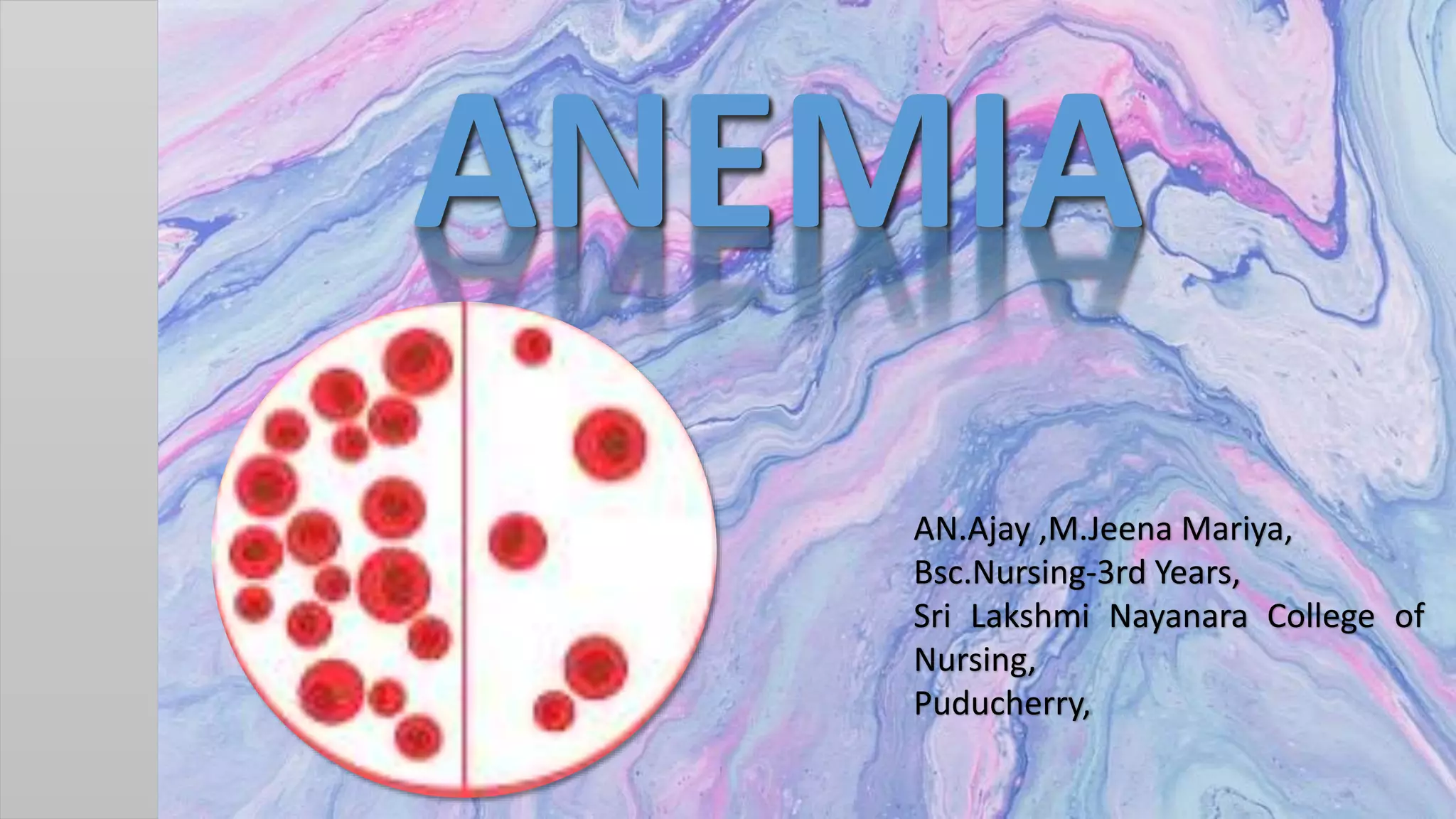
ANEMIA
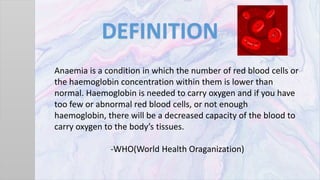
Anaemia is a condition in which the number of red blood cells or
the haemoglobin concentration within them is lower than
normal. Haemoglobin is needed to carry oxygen and if you have
too few or abnormal red blood cells, or not enough
haemoglobin, there will be a decreased capacity of the blood to
carry oxygen to the body’s tissues.
-WHO(World Health Oraganization)
DEFINITION
PHYSIOLOGY OF BLOOD
Blood is a constantly circulating fluid providing the body with
nutrition, oxygen, andwaste removal. Blood is mostly liquid,
with numerous cells and proteins suspendedin it, making blood
"thicker" than pure water. The average person has about 5
liters(more than a gallon) of blood. A liquid called plasma makes
up about half of the content of blood. Plasma containsproteins
that help blood to clot, transport substances through the blood
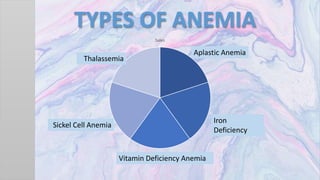
TYPES OF ANEMIA
Sales
1st Qtr 2nd Qtr 3rd Qtr 4th Qtr 5thQtr
Aplastic Anemia
Iron
Deficiency
Sickel Cell Anemia
Thalassemia
Vitamin Deficiency Anemia
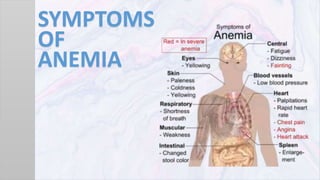
SYMPTOMS
OF
ANEMIA
DIAGNOSIS
• Complete blood count (CBC)
• RBC(Red Blood Cell Count)
• Haemoglobon Level
• (BT)Bleeding Time
• (CT)Clotting Time
• MCH(Mean Cell Hameglobin)
• MCV (mean cell Volume)
• MCHC conceration
• RDW(Red Cell Distrubtion Width)
• WBC(White Blood Cell)
• Platelet Count
Nursing Interventions
1. Assist the client in developing a schedule for daily activity and
rest. Stress the importance of frequent rest periods.
2. Educate energy-conservation techniques
3. Instruct the client about medications that may stimulate RBC
production in the bone marrow.
4. Provide supplemental oxygen therapy as needed.
5. Anticipate the need for the transfusion of packed RBCs
6. Encourage the client to engage in physical exercise as tolerated.
Nursing Interventions
7. Provide information about alternative forms of activities that
relieve fatigue, such as acupressure and yoga.
8. Provide the client with nutrition adequate for their needs.
9. Refer the client and family to an occupational therapist
HEALTH EDUCATION
• Eat iron-rich foods such as meat, chicken, fish, eggs, dried beans
and fortified grains. The form of iron in meat products, called
heme, is more easily absorbed than the iron in vegetables. If you
are anemic and you ordinarily eat meat, increasing the amount
of meat you consume is the easiest way to increase the iron
your body receives
• Eat foods high in folic acid, such as dried beans, dark green leafy
vegetables, wheat germ and orange juice.
HEALTH EDUCATION
• Eat foods high in vitamin C, such as citrus fruits and fresh, raw
vegetables.
• Cooking with cast iron pots can add up to 80 percent more iron
to your food.
• Take your prenatal multivitamin and mineral pill which contains
extra folate.
BIBLIOGRAPHY
• https://www.ucsfhealth.org/education/anemia-and-
pregnancy#:~:text=Preventing%20Anemia&text=Eat%20foods%
20high%20in%20folic,more%20iron%20to%20your%20food.
• https://www.who.int/health-topics/anaemia
• https://nurseslabs.com/anemia-nursing-care-
plans/#:~:text=The%20nursing%20care%20planning%20goals,th
e%20prescribed%20treatment%20regimen%2C%20and
• https://www.mayoclinic.org/diseases-
conditions/anemia/diagnosis-treatment/drc-20351366
THANK YOU

Anemia.pptx

  • 1.
    AN.Ajay ,M.Jeena Mariya, Bsc.Nursing-3rdYears, Sri Lakshmi Nayanara College of Nursing, Puducherry, ANEMIA
  • 2.
    Anaemia is acondition in which the number of red blood cells or the haemoglobin concentration within them is lower than normal. Haemoglobin is needed to carry oxygen and if you have too few or abnormal red blood cells, or not enough haemoglobin, there will be a decreased capacity of the blood to carry oxygen to the body’s tissues. -WHO(World Health Oraganization) DEFINITION
  • 3.
    PHYSIOLOGY OF BLOOD Bloodis a constantly circulating fluid providing the body with nutrition, oxygen, andwaste removal. Blood is mostly liquid, with numerous cells and proteins suspendedin it, making blood "thicker" than pure water. The average person has about 5 liters(more than a gallon) of blood. A liquid called plasma makes up about half of the content of blood. Plasma containsproteins that help blood to clot, transport substances through the blood
  • 4.
    TYPES OF ANEMIA Sales 1stQtr 2nd Qtr 3rd Qtr 4th Qtr 5thQtr Aplastic Anemia Iron Deficiency Sickel Cell Anemia Thalassemia Vitamin Deficiency Anemia
  • 5.
  • 6.
    DIAGNOSIS • Complete bloodcount (CBC) • RBC(Red Blood Cell Count) • Haemoglobon Level • (BT)Bleeding Time • (CT)Clotting Time • MCH(Mean Cell Hameglobin) • MCV (mean cell Volume) • MCHC conceration • RDW(Red Cell Distrubtion Width) • WBC(White Blood Cell) • Platelet Count
  • 7.
    Nursing Interventions 1. Assistthe client in developing a schedule for daily activity and rest. Stress the importance of frequent rest periods. 2. Educate energy-conservation techniques 3. Instruct the client about medications that may stimulate RBC production in the bone marrow. 4. Provide supplemental oxygen therapy as needed. 5. Anticipate the need for the transfusion of packed RBCs 6. Encourage the client to engage in physical exercise as tolerated.
  • 8.
    Nursing Interventions 7. Provideinformation about alternative forms of activities that relieve fatigue, such as acupressure and yoga. 8. Provide the client with nutrition adequate for their needs. 9. Refer the client and family to an occupational therapist
  • 9.
    HEALTH EDUCATION • Eatiron-rich foods such as meat, chicken, fish, eggs, dried beans and fortified grains. The form of iron in meat products, called heme, is more easily absorbed than the iron in vegetables. If you are anemic and you ordinarily eat meat, increasing the amount of meat you consume is the easiest way to increase the iron your body receives • Eat foods high in folic acid, such as dried beans, dark green leafy vegetables, wheat germ and orange juice.
  • 10.
    HEALTH EDUCATION • Eatfoods high in vitamin C, such as citrus fruits and fresh, raw vegetables. • Cooking with cast iron pots can add up to 80 percent more iron to your food. • Take your prenatal multivitamin and mineral pill which contains extra folate.
  • 11.
    BIBLIOGRAPHY • https://www.ucsfhealth.org/education/anemia-and- pregnancy#:~:text=Preventing%20Anemia&text=Eat%20foods% 20high%20in%20folic,more%20iron%20to%20your%20food. • https://www.who.int/health-topics/anaemia •https://nurseslabs.com/anemia-nursing-care- plans/#:~:text=The%20nursing%20care%20planning%20goals,th e%20prescribed%20treatment%20regimen%2C%20and • https://www.mayoclinic.org/diseases- conditions/anemia/diagnosis-treatment/drc-20351366
  • 12.