Downloaded 62 times

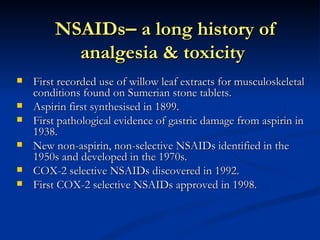
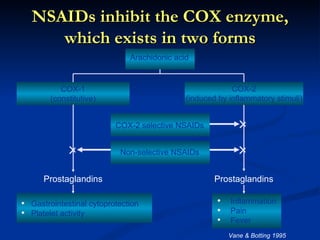
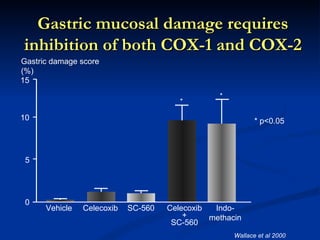
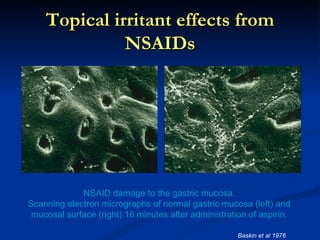
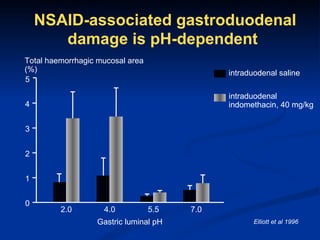
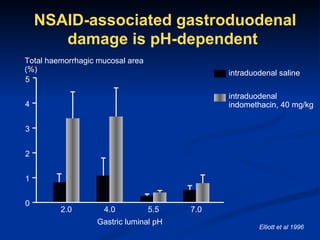
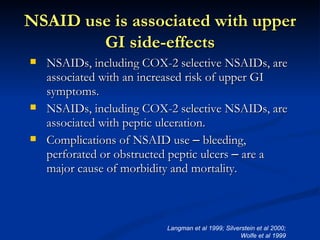
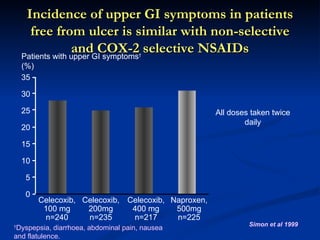
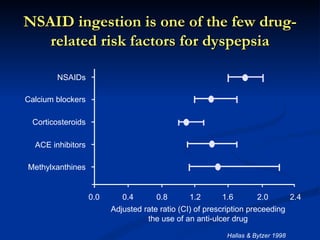
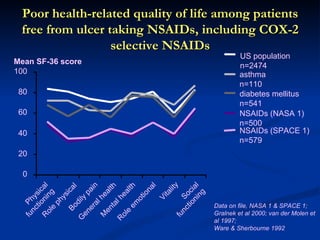
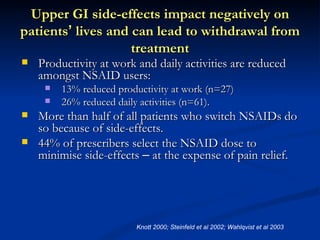
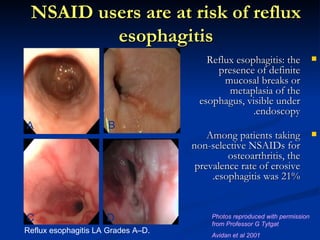
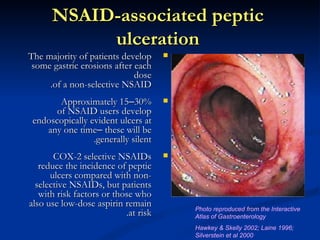
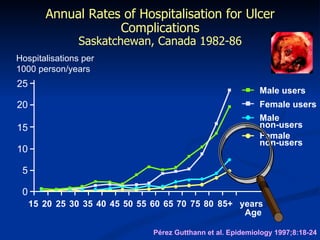
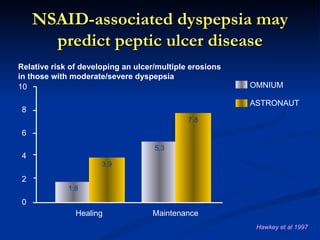
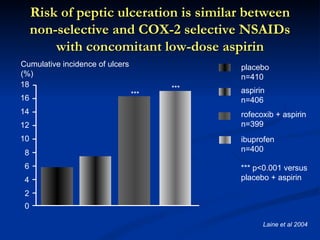
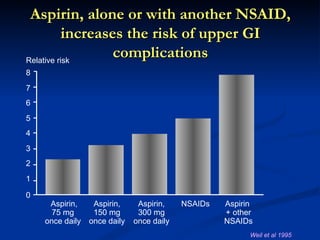
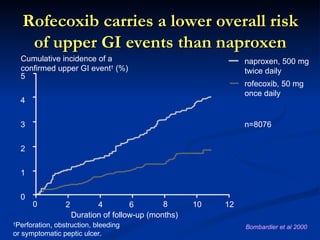
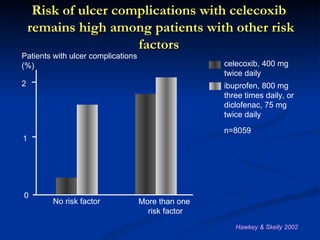
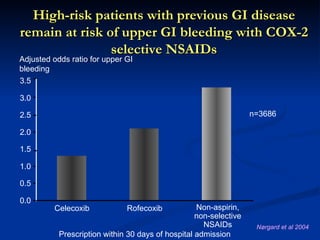

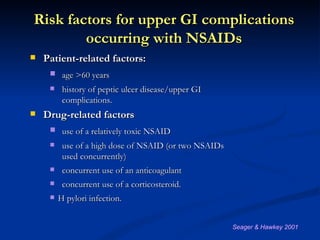
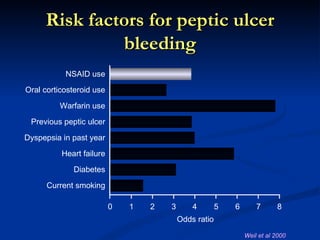

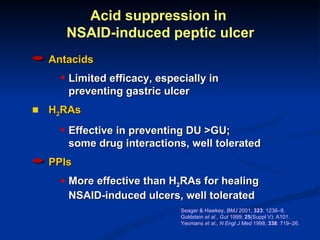
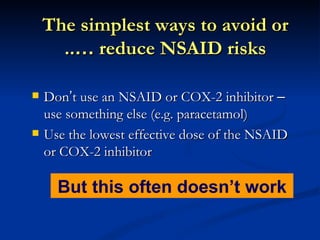
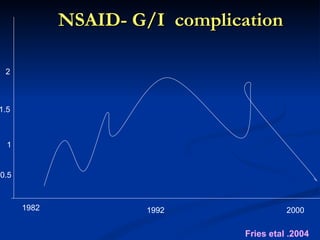
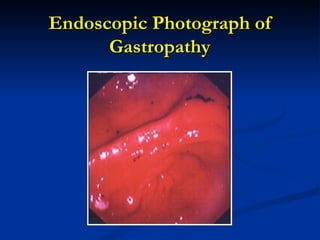
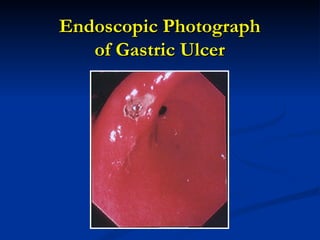
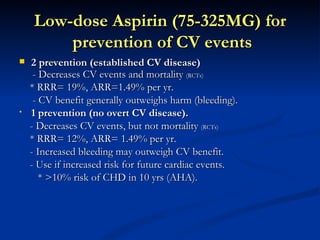
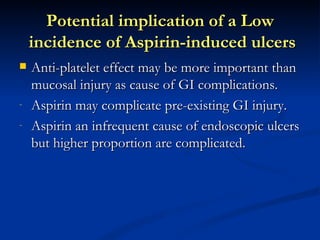
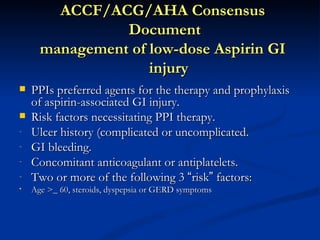
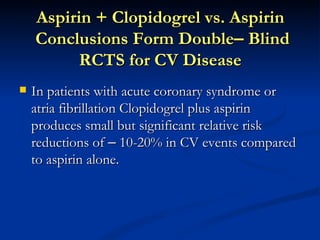
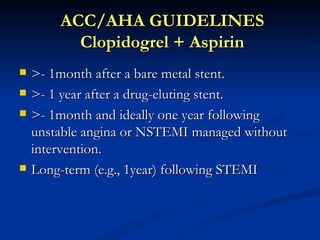
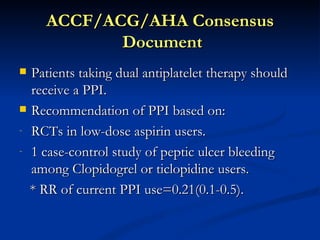
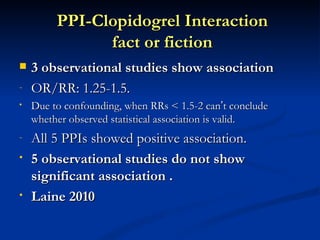
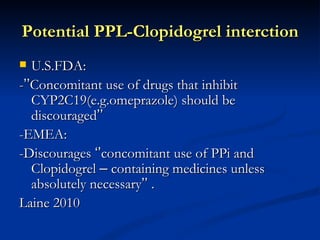
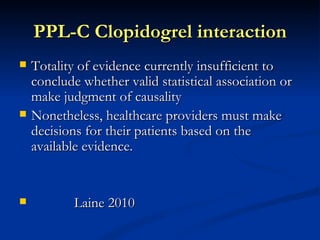

The document discusses the risks of upper gastrointestinal adverse effects from NSAID use. It summarizes that: 1) NSAIDs can cause gastric mucosal damage through inhibition of both COX-1 and COX-2 enzymes and their topical irritant effects. 2) NSAID-associated gastroduodenal damage is dependent on gastric luminal pH, with more damage occurring at lower pH levels. 3) NSAID use is associated with increased risks of upper GI symptoms like dyspepsia, peptic ulcers, and complications from ulcers like bleeding. COX-2 selective NSAIDs still carry risks, especially in high-risk patients. 4) Upper GI side effects from


