NSAID’s , ICON G
Reidwaan Ally
Pharm.D.
Background
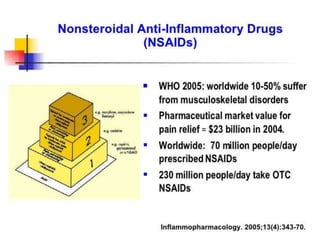
• Non-steroidal anti-inflammatory drugs (NSAIDs) are used by over 30 million people daily across the globe.
• The use of NSAIDs has become widespread due to the availability of these agents both as prescription
and as over-the-counter (OTC) medicines.
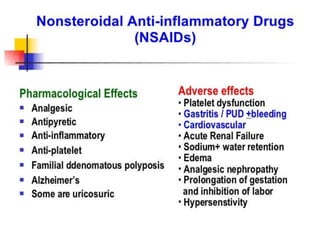
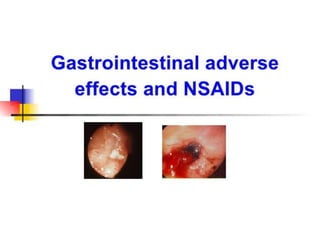
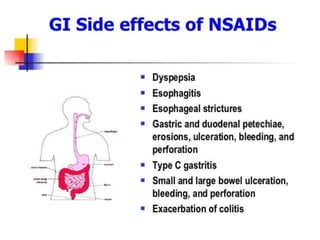
• The most common side effects of NSAIDs are gastrointestinal (GI) complications, which include gastritis,
ulcers, perforation, and enteropathy.
Need & objectives of this consensus meeting
Need:
• Several international and regional guidelines have been developed to manage NSAID-induced GI complications.
• However, none specifically focus on management of NIG highlighting the need for a comprehensive clinical guideline to
guide PCPs in the management of NIG, particularly in resource-limited regions of the world.
Objectives:
• To identify the advances in disease management and the opportunities for prevention and management of NIG in nine
nations.
• Attempt to develop definitive clinical practice guidelines for the management of patients with NIG based on the existing
literature, real-world evidence, and evidence-based practice.
Panel
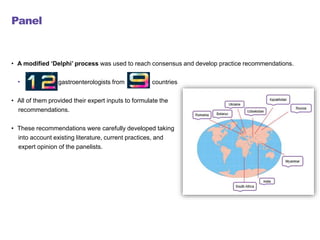
• A modified ‘Delphi’ process was used to reach consensus and develop practice recommendations.
• gastroenterologists from countries
• All of them provided their expert inputs to formulate the
recommendations.
• These recommendations were carefully developed taking
into account existing literature, current practices, and
expert opinion of the panelists.
Country
International Consensus on Guiding Recommendations
for Management of Patients with Non-steroidal Anti-
inflammatory Drugs Induced Gastropathy- ICON-G
Richard Hunt, Leonid B Lazebnik, Yury C Marakhouski, Mircea Manuc, Ramesh GN, Khin S Aye, Dmitry S Bordin,
Natalia V Bakulina, Baurzhan S Iskakov, Abror A Khamraev, Yurii M Stepanov, Reidwaan Ally, Amit Garg
Euroasian J Hepatogastroenterol, 2018;8(2):148-160
Published online 2019 Feb 1. doi: 10.5005/jp-journals-10018-1281
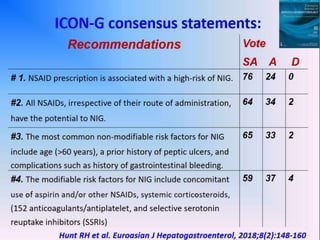
8
9
10
11
12
13
14
15
16
17
18
19
20
21
22
23
24
25
26
27
28
29
30
31
32
33
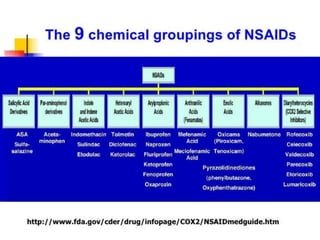
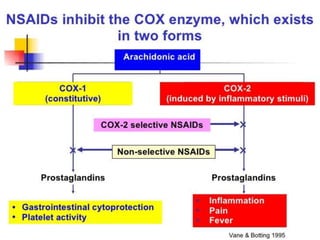
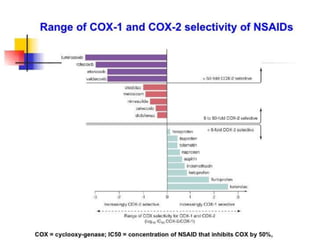
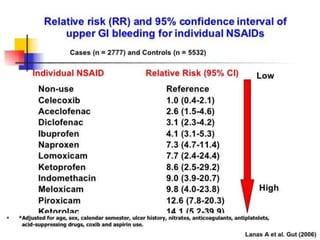
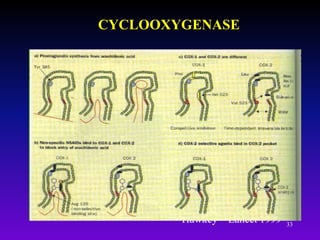
CYCLOOXYGENASE
Hawkey – Lancet 1999
34
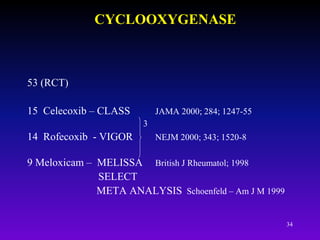
CYCLOOXYGENASE
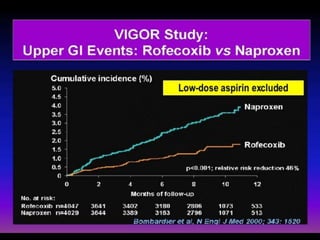
53 (RCT)
15 Celecoxib – CLASS JAMA 2000; 284; 1247-55
3
14 Rofecoxib - VIGOR NEJM 2000; 343; 1520-8
9 Meloxicam – MELISSA British J Rheumatol; 1998
SELECT
META ANALYSIS Schoenfeld – Am J M 1999
35
36
37
38
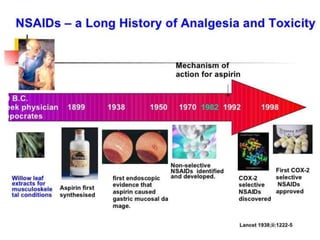
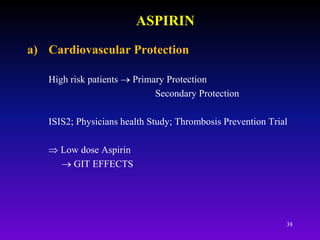
ASPIRIN
a) Cardiovascular Protection
High risk patients  Primary Protection
Secondary Protection
ISIS2; Physicians health Study; Thrombosis Prevention Trial
 Low dose Aspirin
 GIT EFFECTS
39
ASPIRIN
b) Anticancer
Cox 2 expression – Tumor promoter
C Williams – J Clin Inv 2000
- Colon – Oshima – Cell 2001
- Oesophagus – Xie – Gastroenterology 2001
- Stomach – Gridley – J Nat Cancer 1993
- Lung – Schreinemachers – Epidemiology 1994
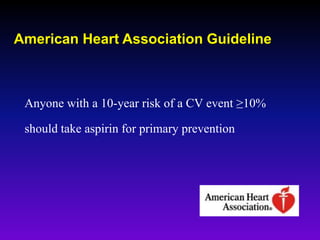
Anyone with a 10-year risk of a CV event ≥10%
should take aspirin for primary prevention
American Heart Association Guideline
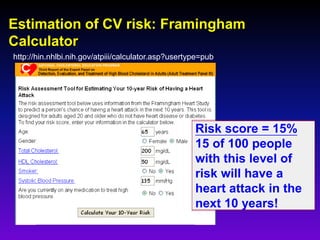
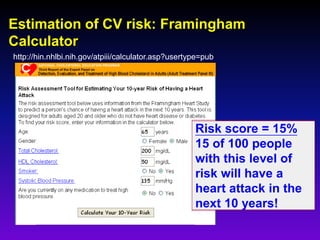
Estimation of CV risk: Framingham
Calculator
http://hin.nhlbi.nih.gov/atpiii/calculator.asp?usertype=pub
55
Risk score = 15%
15 of 100 people
with this level of
risk will have a
heart attack in the
next 10 years!
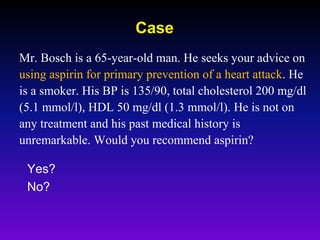
Mr. Bosch is a 65-year-old man. He seeks your advice on
using aspirin for primary prevention of a heart attack. He
is a smoker. His BP is 135/90, total cholesterol 200 mg/dl
(5.1 mmol/l), HDL 50 mg/dl (1.3 mmol/l). He is not on
any treatment and his past medical history is
unremarkable. Would you recommend aspirin?
Yes?
No?
Case
0
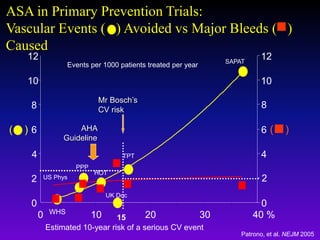
ASA in Primary Prevention Trials:
Vascular Events ( ) Avoided vs Major Bleeds ( )
Caused
Estimated 10-year risk of a serious CV event
0
2
4
6
8
10
12
10 20 30 40 %
( )
0
2
4
6
8
10
12
( )
UK Doc
US Phys
PPP
HOT
SAPAT
TPT
WHS
Patrono, et al. NEJM 2005
Events per 1000 patients treated per year
15
Mr Bosch’s
CV risk
AHA
Guideline
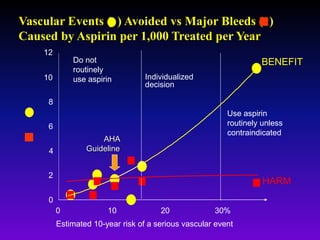
Vascular Events ( ) Avoided vs Major Bleeds ( )
Caused by Aspirin per 1,000 Treated per Year
0
2
4
6
8
10
12
0 10 20 30%
Do not
routinely
use aspirin Individualized
decision
Use aspirin
routinely unless
contraindicated
BENEFIT
HARM
Estimated 10-year risk of a serious vascular event
AHA
Guideline
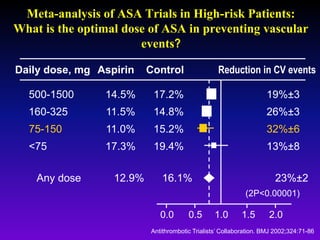
Daily dose, mg Aspirin Control Reduction in CV events
1.00.50.0 1.5 2.0
Meta-analysis of ASA Trials in High-risk Patients:
What is the optimal dose of ASA in preventing vascular
events?
Antithrombotic Trialists’ Collaboration. BMJ 2002;324:71-86
500-1500 14.5% 17.2% 19%±3
160-325 11.5% 14.8% 26%±3
75-150 11.0% 15.2% 32%±6
<75 17.3% 19.4% 13%±8
Any dose 12.9% 16.1% 23%±2
(2P<0.00001)
46
47
48
49
50
51
52
53
54
55
56
57
58
59
60
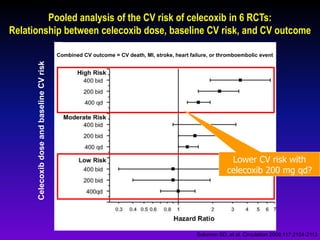
Solomon SD, et al. Circulation 2008;117:2104-2113
Pooled analysis of the CV risk of celecoxib in 6 RCTs:
Relationship between celecoxib dose, baseline CV risk, and CV outcome
CelecoxibdoseandbaselineCVrisk
Combined CV outcome = CV death, MI, stroke, heart failure, or thromboembolic event
Lower CV risk with
celecoxib 200 mg qd?
62
63
64
65
66
67
68
69
70
71
72
73
74
75
76
77
78
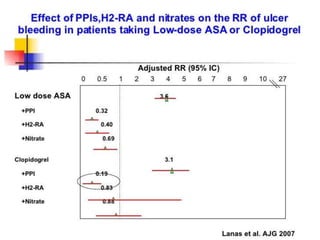
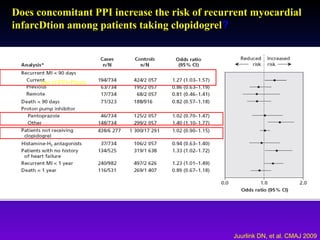
use of PPI+Plavix
Juurlink DN, et al. CMAJ 2009
Does concomitant PPI increase the risk of recurrent myocardial
infarcDtion among patients taking clopidogrel?
80
81
82
Combined Medical & Surgical Endoscopy Unit
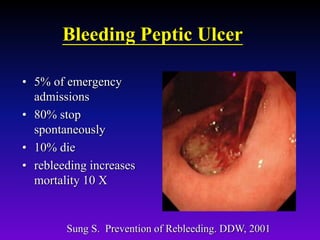
Bleeding Peptic Ulcer
• 5% of emergency
admissions
• 80% stop
spontaneously
• 10% die
• rebleeding increases
mortality 10 X
Sung S. Prevention of Rebleeding. DDW, 2001
85
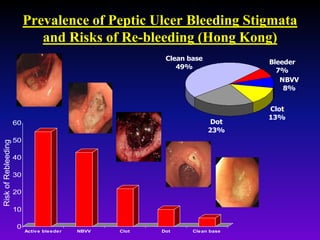
Dot
23%
Clot
13%
Bleeder
7%
NBVV
8%
Clean base
49%
Prevalence of Peptic Ulcer Bleeding Stigmata
and Risks of Re-bleeding (Hong Kong)
0
10
20
30
40
50
60
Active bleeder NBVV Clot Dot Clean base
RiskofRebleeding
87
88
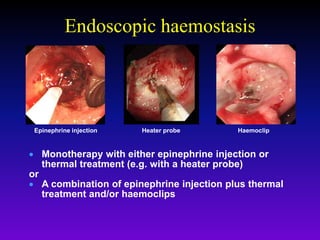
Endoscopic haemostasis
 Monotherapy with either epinephrine injection or
thermal treatment (e.g. with a heater probe)
or
 A combination of epinephrine injection plus thermal
treatment and/or haemoclips
Epinephrine injection HaemoclipHeater probe
90
91
92
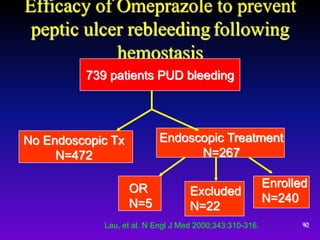
Efficacy of Omeprazole to prevent
peptic ulcer rebleeding following
hemostasis
Lau, et al. N Engl J Med 2000;343:310-316.
739 patients PUD bleeding
No Endoscopic Tx
N=472
Endoscopic Treatment
N=267
OR
N=5
Excluded
N=22
Enrolled
N=240
93
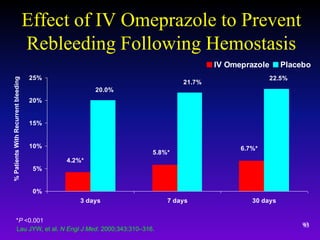
6.7%*
5.8%*
4.2%*
22.5%
21.7%
20.0%
0%
5%
10%
15%
20%
25%
3 days 7 days 30 days
IV Omeprazole Placebo
*P <0.001
Lau JYW, et al. N Engl J Med. 2000;343:310–316.
Effect of IV Omeprazole to Prevent
Rebleeding Following Hemostasis
%PatientsWithRecurrentbleeding
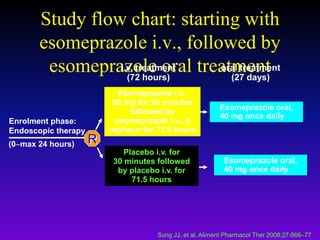
Study flow chart: starting with
esomeprazole i.v., followed by
esomeprazole oral treatment
Sung JJ, et al. Aliment Pharmacol Ther 2008;27:666–77
oral treatment
(27 days)
i.v. treatment
(72 hours)
(0max 24 hours)
Esomeprazole i.v.,
80 mg for 30 minutes
followed by
esomeprazole i.v., 8
mg/hour for 71.5 hours
Placebo i.v. for
30 minutes followed
by placebo i.v. for
71.5 hours
Esomeprazole oral,
40 mg once daily
R
Esomeprazole oral,
40 mg once daily
Enrolment phase:
Endoscopic therapy
95
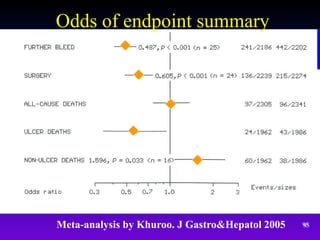
Odds of endpoint summary
Meta-analysis by Khuroo. J Gastro&Hepatol 2005
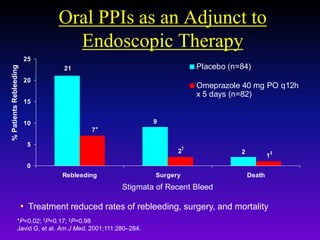
2
9
21
1
2
7
0
5
10
15
20
25
Rebleeding Surgery Death
Stigmata of Recent Bleed
Placebo (n=84)
Omeprazole 40 mg PO q12h
x 5 days (n=82)
Oral PPIs as an Adjunct to
Endoscopic Therapy
*P=0.02; †P=0.17; ‡P=0.98
Javid G, et al. Am J Med. 2001;111:280–284.
*
†
‡
%PatientsRebleeding
• Treatment reduced rates of rebleeding, surgery, and mortality
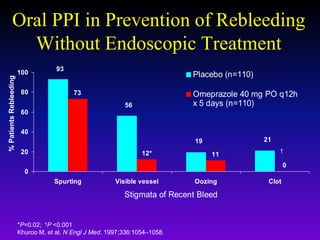
73
11
0
19
93
56
21
12*
0
20
40
60
80
100
Spurting Visible vessel Oozing Clot
Stigmata of Recent Bleed
Placebo (n=110)
Omeprazole 40 mg PO q12h
x 5 days (n=110)
Oral PPI in Prevention of Rebleeding
Without Endoscopic Treatment
*P=0.02; †P <0.001
Khuroo M, et al. N Engl J Med. 1997;336:1054–1058.
%PatientsRebleeding
†
98
99
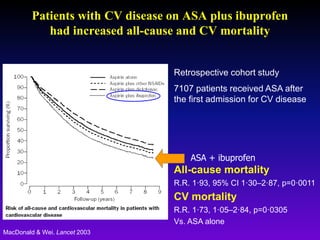
Patients with CV disease on ASA plus ibuprofen
had increased all-cause and CV mortality
Retrospective cohort study
7107 patients received ASA after
the first admission for CV disease
All-cause mortality
R.R. 1·93, 95% CI 1·30–2·87, p=0·0011
CV mortality
R.R. 1·73, 1·05–2·84, p=0·0305
Vs. ASA alone
MacDonald & Wei. Lancet 2003
ASA + ibuprofen
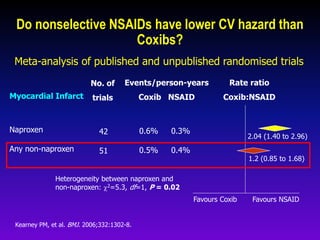
Myocardial Infarct
Naproxen
Any non-naproxen
No. of
trials
Events/person-years
Coxib NSAID
0.6% 0.3%
0.5% 0.4%
1.2 (0.85 to 1.68)
2.04 (1.40 to 2.96)
Favours Coxib Favours NSAID
Rate ratio
Coxib:NSAID
Heterogeneity between naproxen and
non-naproxen: 2=5.3, df=1, P = 0.02
Kearney PM, et al. BMJ. 2006;332:1302-8.
Meta-analysis of published and unpublished randomised trials
42
51
Do nonselective NSAIDs have lower CV hazard than
Coxibs?
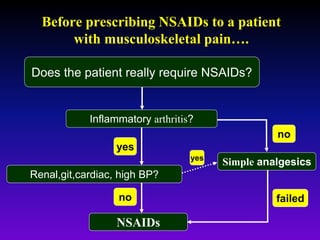
no
Before prescribing NSAIDs to a patient
with musculoskeletal pain….
Does the patient really require NSAIDs?
Inflammatory arthritis?
NSAIDs
yes
no
Simple analgesics
failed
Renal,git,cardiac, high BP?
yes
103
104
105
106
107
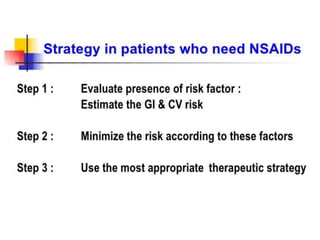
Estimation of CV risk: Framingham
Calculator
http://hin.nhlbi.nih.gov/atpiii/calculator.asp?usertype=pub
55
Risk score = 15%
15 of 100 people
with this level of
risk will have a
heart attack in the
next 10 years!
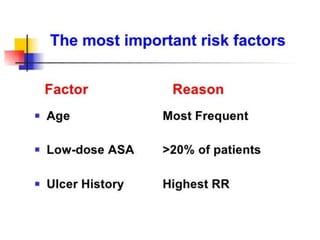
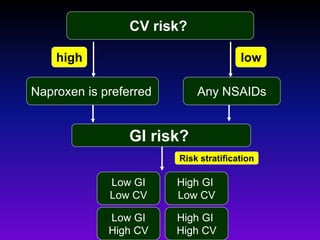
GI risk?
Naproxen is preferred
high
Any NSAIDs
low
CV risk?
Low GI
Low CV
High GI
Low CV
Low GI
High CV
High GI
High CV
Risk stratification
Low GI
Low CV
Low GI
High CV
High GI
Low CV
High GI
High CV
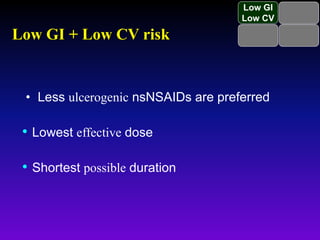
• Less ulcerogenic nsNSAIDs are preferred
• Lowest effective dose
• Shortest possible duration
Low GI + Low CV risk
Low GI
Low CV
Low GI
High CV
Low GI
High CV
High GI
High CV
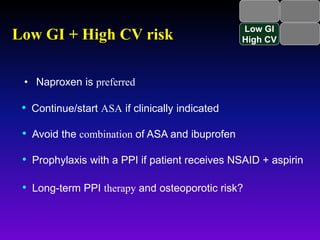
• Naproxen is preferred
• Avoid the combination of ASA and ibuprofen
• Continue/start ASA if clinically indicated
Low GI + High CV risk
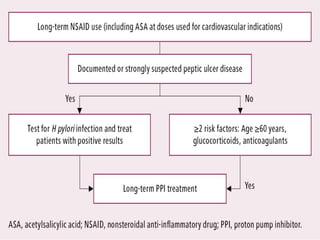
• Prophylaxis with a PPI if patient receives NSAID + aspirin
• Long-term PPI therapy and osteoporotic risk?
Low GI
Low CV
High GI
Low CV
High GI
Low CV
High GI
High CV
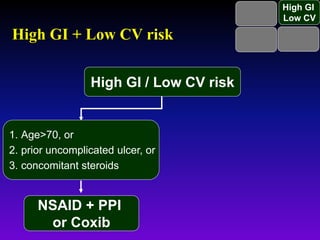
High GI / Low CV risk
1. Age>70, or
2. prior uncomplicated ulcer, or
3. concomitant steroids
NSAID + PPI
or Coxib
High GI + Low CV risk
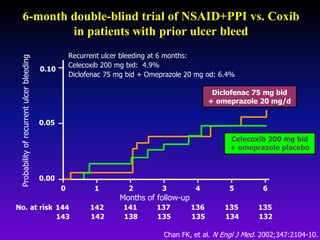
6-month double-blind trial of NSAID+PPI vs. Coxib
in patients with prior ulcer bleed
132134135135138142143
0.05
0.00
0 1 2 3 4 5 6
Celecoxib 200 mg bid
+ omeprazole placebo
Diclofenac 75 mg bid
+ omeprazole 20 mg/d
No. at risk 135135136137141142144
Recurrent ulcer bleeding at 6 months:
Celecoxib 200 mg bid: 4.9%
Diclofenac 75 mg bid + Omeprazole 20 mg od: 6.4%
0.10
Probabilityofrecurrentulcerbleeding
Months of follow-up
Chan FK, et al. N Engl J Med. 2002;347:2104-10.
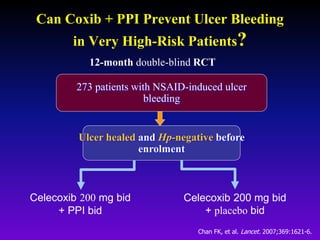
Ulcer healed and Hp-negative before
enrolment
273 patients with NSAID-induced ulcer
bleeding
Celecoxib 200 mg bid
+ PPI bid
Celecoxib 200 mg bid
+ placebo bid
12-month double-blind RCT
Can Coxib + PPI Prevent Ulcer Bleeding
in Very High-Risk Patients?
Chan FK, et al. Lancet. 2007;369:1621-6.
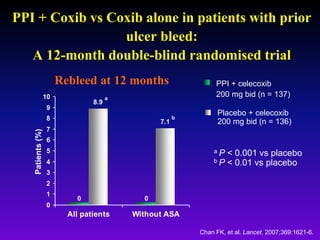
PPI + Coxib vs Coxib alone in patients with prior
ulcer bleed:
A 12-month double-blind randomised trial
0 0
8.9
7.1
0
1
2
3
4
5
6
7
8
9
10
All patients Without ASA
Chan FK, et al. Lancet. 2007;369:1621-6.
PPI + celecoxib
200 mg bid (n = 137)
Placebo + celecoxib
200 mg bid (n = 136)
Rebleed at 12 months
Patients(%)
a P < 0.001 vs placebo
b P < 0.01 vs placebo
b
a
Low GI
Low CV
High GI
Low CV
High GI
Low CV
High GI
High CV
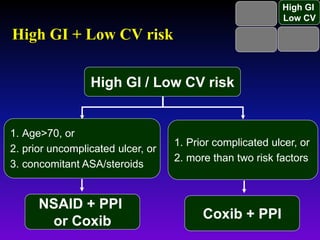
1. Prior complicated ulcer, or
2. more than two risk factors
Coxib + PPI
High GI + Low CV risk
1. Age>70, or
2. prior uncomplicated ulcer, or
3. concomitant ASA/steroids
NSAID + PPI
or Coxib
High GI / Low CV risk
Low GI
Low CV
High GI
Low CV
Low GI
High CV
High GI
High CV
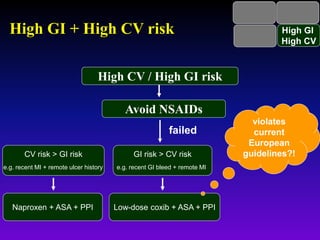
High CV / High GI risk
Naproxen + ASA + PPI
CV risk > GI risk
e.g. recent MI + remote ulcer history
Avoid NSAIDs
GI risk > CV risk
e.g. recent GI bleed + remote MI
Low-dose coxib + ASA + PPI
failed
High GI + High CV risk
violates
current
European
guidelines?!
Low GI
Low CV
High GI
Low CV
Low GI
High CV
High GI
High CV
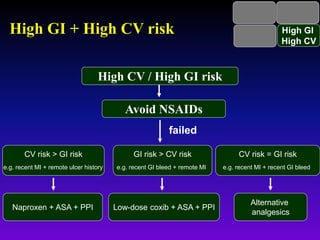
High CV / High GI risk
Naproxen + ASA + PPI
CV risk > GI risk
e.g. recent MI + remote ulcer history
Avoid NSAIDs
GI risk > CV risk
e.g. recent GI bleed + remote MI
Low-dose coxib + ASA + PPI
failed
High GI + High CV risk
CV risk = GI risk
e.g. recent MI + recent GI bleed
Alternative
analgesics
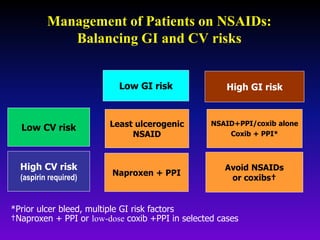
NSAID+PPI/coxib alone
Coxib + PPI*
Management of Patients on NSAIDs:
Balancing GI and CV risks
High CV risk
(aspirin required)
Low CV risk
Avoid NSAIDs
or coxibs†
Least ulcerogenic
NSAID
High GI riskLow GI risk
*Prior ulcer bleed, multiple GI risk factors
†Naproxen + PPI or low-dose coxib +PPI in selected cases
Naproxen + PPI
120
THANK YOU
121

NSAIDs and ICON-G

  • 1.
    NSAID’s , ICONG Reidwaan Ally
  • 2.
  • 4.
    Background • Non-steroidal anti-inflammatorydrugs (NSAIDs) are used by over 30 million people daily across the globe. • The use of NSAIDs has become widespread due to the availability of these agents both as prescription and as over-the-counter (OTC) medicines. • The most common side effects of NSAIDs are gastrointestinal (GI) complications, which include gastritis, ulcers, perforation, and enteropathy.
  • 5.
    Need & objectivesof this consensus meeting Need: • Several international and regional guidelines have been developed to manage NSAID-induced GI complications. • However, none specifically focus on management of NIG highlighting the need for a comprehensive clinical guideline to guide PCPs in the management of NIG, particularly in resource-limited regions of the world. Objectives: • To identify the advances in disease management and the opportunities for prevention and management of NIG in nine nations. • Attempt to develop definitive clinical practice guidelines for the management of patients with NIG based on the existing literature, real-world evidence, and evidence-based practice.
  • 6.
    Panel • A modified‘Delphi’ process was used to reach consensus and develop practice recommendations. • gastroenterologists from countries • All of them provided their expert inputs to formulate the recommendations. • These recommendations were carefully developed taking into account existing literature, current practices, and expert opinion of the panelists.

  • 7.
    Country International Consensus onGuiding Recommendations for Management of Patients with Non-steroidal Anti- inflammatory Drugs Induced Gastropathy- ICON-G Richard Hunt, Leonid B Lazebnik, Yury C Marakhouski, Mircea Manuc, Ramesh GN, Khin S Aye, Dmitry S Bordin, Natalia V Bakulina, Baurzhan S Iskakov, Abror A Khamraev, Yurii M Stepanov, Reidwaan Ally, Amit Garg Euroasian J Hepatogastroenterol, 2018;8(2):148-160 Published online 2019 Feb 1. doi: 10.5005/jp-journals-10018-1281
  • 8.
  • 9.
  • 10.
  • 11.
  • 12.
  • 13.
  • 14.
  • 15.
  • 16.
  • 17.
  • 18.
  • 19.
  • 20.
  • 21.
  • 22.
  • 23.
  • 24.
  • 25.
  • 26.
  • 27.
  • 28.
  • 29.
  • 30.
  • 31.
  • 32.
  • 33.
  • 34.
    34 CYCLOOXYGENASE 53 (RCT) 15 Celecoxib– CLASS JAMA 2000; 284; 1247-55 3 14 Rofecoxib - VIGOR NEJM 2000; 343; 1520-8 9 Meloxicam – MELISSA British J Rheumatol; 1998 SELECT META ANALYSIS Schoenfeld – Am J M 1999
  • 35.
  • 36.
  • 37.
  • 38.
    38 ASPIRIN a) Cardiovascular Protection Highrisk patients  Primary Protection Secondary Protection ISIS2; Physicians health Study; Thrombosis Prevention Trial  Low dose Aspirin  GIT EFFECTS
  • 39.
    39 ASPIRIN b) Anticancer Cox 2expression – Tumor promoter C Williams – J Clin Inv 2000 - Colon – Oshima – Cell 2001 - Oesophagus – Xie – Gastroenterology 2001 - Stomach – Gridley – J Nat Cancer 1993 - Lung – Schreinemachers – Epidemiology 1994
  • 40.
    Anyone with a10-year risk of a CV event ≥10% should take aspirin for primary prevention American Heart Association Guideline
  • 41.
    Estimation of CVrisk: Framingham Calculator http://hin.nhlbi.nih.gov/atpiii/calculator.asp?usertype=pub 55 Risk score = 15% 15 of 100 people with this level of risk will have a heart attack in the next 10 years!
  • 42.
    Mr. Bosch isa 65-year-old man. He seeks your advice on using aspirin for primary prevention of a heart attack. He is a smoker. His BP is 135/90, total cholesterol 200 mg/dl (5.1 mmol/l), HDL 50 mg/dl (1.3 mmol/l). He is not on any treatment and his past medical history is unremarkable. Would you recommend aspirin? Yes? No? Case
  • 43.
    0 ASA in PrimaryPrevention Trials: Vascular Events ( ) Avoided vs Major Bleeds ( ) Caused Estimated 10-year risk of a serious CV event 0 2 4 6 8 10 12 10 20 30 40 % ( ) 0 2 4 6 8 10 12 ( ) UK Doc US Phys PPP HOT SAPAT TPT WHS Patrono, et al. NEJM 2005 Events per 1000 patients treated per year 15 Mr Bosch’s CV risk AHA Guideline
  • 44.
    Vascular Events () Avoided vs Major Bleeds ( ) Caused by Aspirin per 1,000 Treated per Year 0 2 4 6 8 10 12 0 10 20 30% Do not routinely use aspirin Individualized decision Use aspirin routinely unless contraindicated BENEFIT HARM Estimated 10-year risk of a serious vascular event AHA Guideline
  • 45.
    Daily dose, mgAspirin Control Reduction in CV events 1.00.50.0 1.5 2.0 Meta-analysis of ASA Trials in High-risk Patients: What is the optimal dose of ASA in preventing vascular events? Antithrombotic Trialists’ Collaboration. BMJ 2002;324:71-86 500-1500 14.5% 17.2% 19%±3 160-325 11.5% 14.8% 26%±3 75-150 11.0% 15.2% 32%±6 <75 17.3% 19.4% 13%±8 Any dose 12.9% 16.1% 23%±2 (2P<0.00001)
  • 46.
  • 47.
  • 48.
  • 49.
  • 50.
  • 51.
  • 52.
  • 53.
  • 54.
  • 55.
  • 56.
  • 57.
  • 58.
  • 59.
  • 60.
  • 61.
    Solomon SD, etal. Circulation 2008;117:2104-2113 Pooled analysis of the CV risk of celecoxib in 6 RCTs: Relationship between celecoxib dose, baseline CV risk, and CV outcome CelecoxibdoseandbaselineCVrisk Combined CV outcome = CV death, MI, stroke, heart failure, or thromboembolic event Lower CV risk with celecoxib 200 mg qd?
  • 62.
  • 63.
  • 64.
  • 65.
  • 66.
  • 67.
  • 68.
  • 69.
  • 70.
  • 71.
  • 72.
  • 73.
  • 74.
  • 75.
  • 76.
  • 77.
  • 78.
  • 79.
    use of PPI+Plavix JuurlinkDN, et al. CMAJ 2009 Does concomitant PPI increase the risk of recurrent myocardial infarcDtion among patients taking clopidogrel?
  • 80.
  • 81.
  • 82.
  • 83.
    Combined Medical &Surgical Endoscopy Unit
  • 84.
    Bleeding Peptic Ulcer •5% of emergency admissions • 80% stop spontaneously • 10% die • rebleeding increases mortality 10 X Sung S. Prevention of Rebleeding. DDW, 2001
  • 85.
  • 86.
    Dot 23% Clot 13% Bleeder 7% NBVV 8% Clean base 49% Prevalence ofPeptic Ulcer Bleeding Stigmata and Risks of Re-bleeding (Hong Kong) 0 10 20 30 40 50 60 Active bleeder NBVV Clot Dot Clean base RiskofRebleeding
  • 87.
  • 88.
  • 89.
    Endoscopic haemostasis  Monotherapywith either epinephrine injection or thermal treatment (e.g. with a heater probe) or  A combination of epinephrine injection plus thermal treatment and/or haemoclips Epinephrine injection HaemoclipHeater probe
  • 90.
  • 91.
  • 92.
    92 Efficacy of Omeprazoleto prevent peptic ulcer rebleeding following hemostasis Lau, et al. N Engl J Med 2000;343:310-316. 739 patients PUD bleeding No Endoscopic Tx N=472 Endoscopic Treatment N=267 OR N=5 Excluded N=22 Enrolled N=240
  • 93.
    93 6.7%* 5.8%* 4.2%* 22.5% 21.7% 20.0% 0% 5% 10% 15% 20% 25% 3 days 7days 30 days IV Omeprazole Placebo *P <0.001 Lau JYW, et al. N Engl J Med. 2000;343:310–316. Effect of IV Omeprazole to Prevent Rebleeding Following Hemostasis %PatientsWithRecurrentbleeding
  • 94.
    Study flow chart:starting with esomeprazole i.v., followed by esomeprazole oral treatment Sung JJ, et al. Aliment Pharmacol Ther 2008;27:666–77 oral treatment (27 days) i.v. treatment (72 hours) (0max 24 hours) Esomeprazole i.v., 80 mg for 30 minutes followed by esomeprazole i.v., 8 mg/hour for 71.5 hours Placebo i.v. for 30 minutes followed by placebo i.v. for 71.5 hours Esomeprazole oral, 40 mg once daily R Esomeprazole oral, 40 mg once daily Enrolment phase: Endoscopic therapy
  • 95.
    95 Odds of endpointsummary Meta-analysis by Khuroo. J Gastro&Hepatol 2005
  • 96.
    2 9 21 1 2 7 0 5 10 15 20 25 Rebleeding Surgery Death Stigmataof Recent Bleed Placebo (n=84) Omeprazole 40 mg PO q12h x 5 days (n=82) Oral PPIs as an Adjunct to Endoscopic Therapy *P=0.02; †P=0.17; ‡P=0.98 Javid G, et al. Am J Med. 2001;111:280–284. * † ‡ %PatientsRebleeding • Treatment reduced rates of rebleeding, surgery, and mortality
  • 97.
    73 11 0 19 93 56 21 12* 0 20 40 60 80 100 Spurting Visible vesselOozing Clot Stigmata of Recent Bleed Placebo (n=110) Omeprazole 40 mg PO q12h x 5 days (n=110) Oral PPI in Prevention of Rebleeding Without Endoscopic Treatment *P=0.02; †P <0.001 Khuroo M, et al. N Engl J Med. 1997;336:1054–1058. %PatientsRebleeding †
  • 98.
  • 99.
  • 100.
    Patients with CVdisease on ASA plus ibuprofen had increased all-cause and CV mortality Retrospective cohort study 7107 patients received ASA after the first admission for CV disease All-cause mortality R.R. 1·93, 95% CI 1·30–2·87, p=0·0011 CV mortality R.R. 1·73, 1·05–2·84, p=0·0305 Vs. ASA alone MacDonald & Wei. Lancet 2003 ASA + ibuprofen
  • 101.
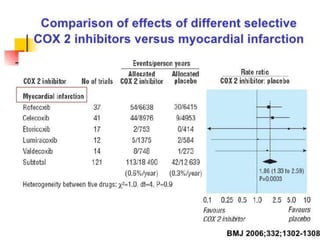
    Myocardial Infarct Naproxen Any non-naproxen No.of trials Events/person-years Coxib NSAID 0.6% 0.3% 0.5% 0.4% 1.2 (0.85 to 1.68) 2.04 (1.40 to 2.96) Favours Coxib Favours NSAID Rate ratio Coxib:NSAID Heterogeneity between naproxen and non-naproxen: 2=5.3, df=1, P = 0.02 Kearney PM, et al. BMJ. 2006;332:1302-8. Meta-analysis of published and unpublished randomised trials 42 51 Do nonselective NSAIDs have lower CV hazard than Coxibs?
  • 102.
    no Before prescribing NSAIDsto a patient with musculoskeletal pain…. Does the patient really require NSAIDs? Inflammatory arthritis? NSAIDs yes no Simple analgesics failed Renal,git,cardiac, high BP? yes
  • 103.
  • 104.
  • 105.
  • 106.
  • 107.
  • 108.
    Estimation of CVrisk: Framingham Calculator http://hin.nhlbi.nih.gov/atpiii/calculator.asp?usertype=pub 55 Risk score = 15% 15 of 100 people with this level of risk will have a heart attack in the next 10 years!
  • 109.
    GI risk? Naproxen ispreferred high Any NSAIDs low CV risk? Low GI Low CV High GI Low CV Low GI High CV High GI High CV Risk stratification
  • 110.
    Low GI Low CV LowGI High CV High GI Low CV High GI High CV • Less ulcerogenic nsNSAIDs are preferred • Lowest effective dose • Shortest possible duration Low GI + Low CV risk
  • 111.
    Low GI Low CV LowGI High CV Low GI High CV High GI High CV • Naproxen is preferred • Avoid the combination of ASA and ibuprofen • Continue/start ASA if clinically indicated Low GI + High CV risk • Prophylaxis with a PPI if patient receives NSAID + aspirin • Long-term PPI therapy and osteoporotic risk?
  • 112.
    Low GI Low CV HighGI Low CV High GI Low CV High GI High CV High GI / Low CV risk 1. Age>70, or 2. prior uncomplicated ulcer, or 3. concomitant steroids NSAID + PPI or Coxib High GI + Low CV risk
  • 113.
    6-month double-blind trialof NSAID+PPI vs. Coxib in patients with prior ulcer bleed 132134135135138142143 0.05 0.00 0 1 2 3 4 5 6 Celecoxib 200 mg bid + omeprazole placebo Diclofenac 75 mg bid + omeprazole 20 mg/d No. at risk 135135136137141142144 Recurrent ulcer bleeding at 6 months: Celecoxib 200 mg bid: 4.9% Diclofenac 75 mg bid + Omeprazole 20 mg od: 6.4% 0.10 Probabilityofrecurrentulcerbleeding Months of follow-up Chan FK, et al. N Engl J Med. 2002;347:2104-10.
  • 114.
    Ulcer healed andHp-negative before enrolment 273 patients with NSAID-induced ulcer bleeding Celecoxib 200 mg bid + PPI bid Celecoxib 200 mg bid + placebo bid 12-month double-blind RCT Can Coxib + PPI Prevent Ulcer Bleeding in Very High-Risk Patients? Chan FK, et al. Lancet. 2007;369:1621-6.
  • 115.
    PPI + Coxibvs Coxib alone in patients with prior ulcer bleed: A 12-month double-blind randomised trial 0 0 8.9 7.1 0 1 2 3 4 5 6 7 8 9 10 All patients Without ASA Chan FK, et al. Lancet. 2007;369:1621-6. PPI + celecoxib 200 mg bid (n = 137) Placebo + celecoxib 200 mg bid (n = 136) Rebleed at 12 months Patients(%) a P < 0.001 vs placebo b P < 0.01 vs placebo b a
  • 116.
    Low GI Low CV HighGI Low CV High GI Low CV High GI High CV 1. Prior complicated ulcer, or 2. more than two risk factors Coxib + PPI High GI + Low CV risk 1. Age>70, or 2. prior uncomplicated ulcer, or 3. concomitant ASA/steroids NSAID + PPI or Coxib High GI / Low CV risk
  • 117.
    Low GI Low CV HighGI Low CV Low GI High CV High GI High CV High CV / High GI risk Naproxen + ASA + PPI CV risk > GI risk e.g. recent MI + remote ulcer history Avoid NSAIDs GI risk > CV risk e.g. recent GI bleed + remote MI Low-dose coxib + ASA + PPI failed High GI + High CV risk violates current European guidelines?!
  • 118.
    Low GI Low CV HighGI Low CV Low GI High CV High GI High CV High CV / High GI risk Naproxen + ASA + PPI CV risk > GI risk e.g. recent MI + remote ulcer history Avoid NSAIDs GI risk > CV risk e.g. recent GI bleed + remote MI Low-dose coxib + ASA + PPI failed High GI + High CV risk CV risk = GI risk e.g. recent MI + recent GI bleed Alternative analgesics
  • 119.
    NSAID+PPI/coxib alone Coxib +PPI* Management of Patients on NSAIDs: Balancing GI and CV risks High CV risk (aspirin required) Low CV risk Avoid NSAIDs or coxibs† Least ulcerogenic NSAID High GI riskLow GI risk *Prior ulcer bleed, multiple GI risk factors †Naproxen + PPI or low-dose coxib +PPI in selected cases Naproxen + PPI
  • 120.
  • 121.