A project of the Center for Science Education at EDC Inc,
Funded by the National Science Foundation NSF # 0917576
Minneapolis Kids Science Club Training
Minneapolis, Minnesota
February 25th, 2010
Copyright 2008 Education Development Center, Inc.
What is NPASS2?
• Taking NPASS to Scale (NPASS2) is a three-year NSF
Informal Science Education project, based at Education
Development Centers (EDC Inc) in Newton, Mass.
• NPASS2 follows the first NPASS project and the Explore-It
and Design-It curriculum development projects.
• The goal of NPASS2 is to create a scalable model of OST
science programming that regularly engages children in
meaningful science exploration and which piques their
interest and confidence in pursuing study and career
options in the [science] fields
Copyright 2008 Education Development Center, Inc.
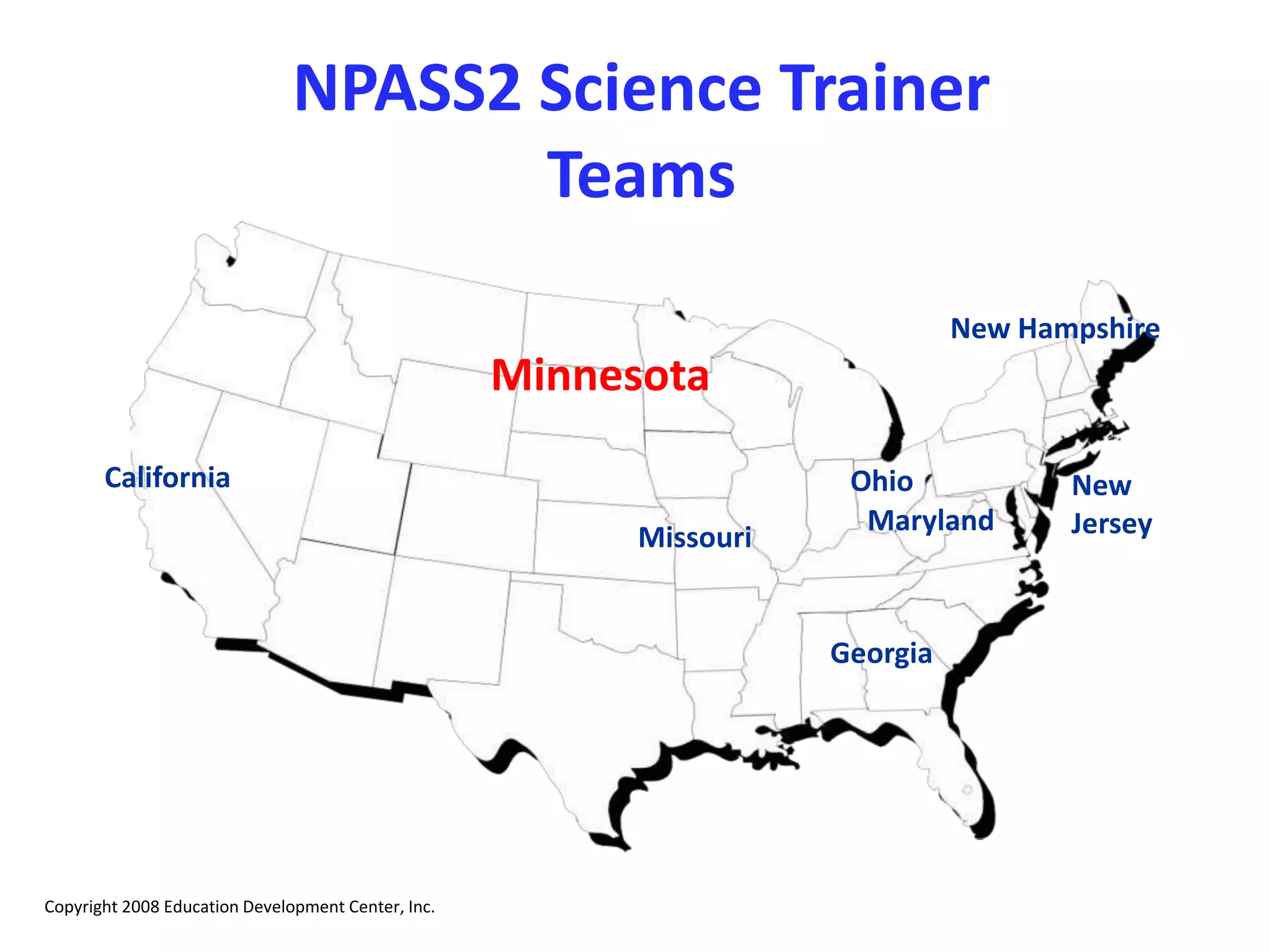
NPASS2 Science Trainer
Teams
New Hampshire
Ohio
Georgia
Missouri
Minnesota
Maryland
New
Jersey
California
Copyright 2008 Education Development Center, Inc.
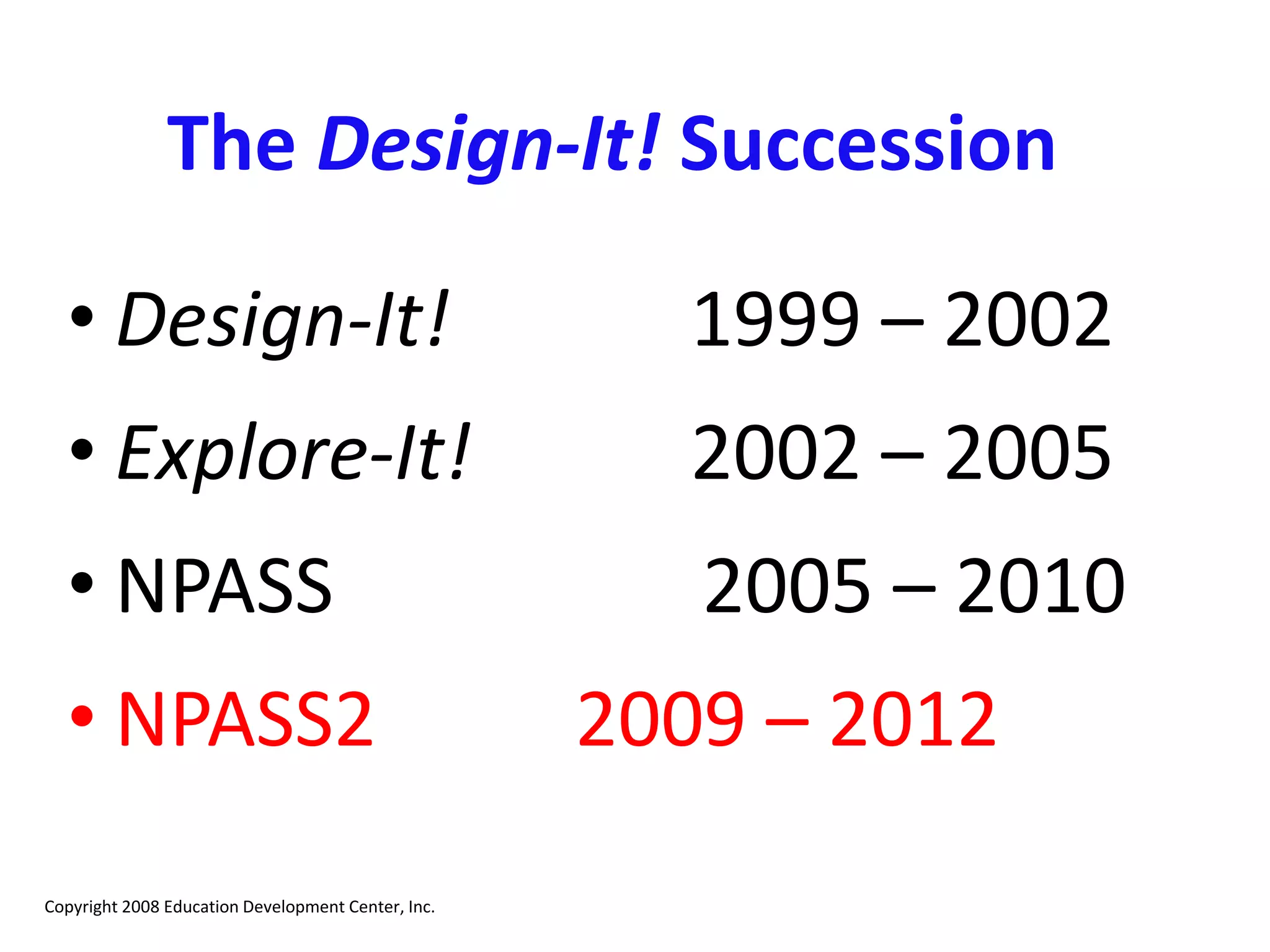
The Design-It! Succession
• Design-It! 1999 – 2002
• Explore-It! 2002 – 2005
• NPASS 2005 – 2010
• NPASS2 2009 – 2012
Copyright 2008 Education Development Center, Inc.
Why is it important?
• In the Ball and Tracks program, children will be
designing roller coasters using foam tubing and
other simple materials.
• All of the children will test each of their designs
and make changes based on the results. In the
process, we hope they will learn valuable
engineering and science skills that will be useful
to them in school and in other areas of their lives.
• The goal is to help them gain a better interest in
science.
Copyright 2008 Education Development Center, Inc.
What are we doing?
Balls and tracks
Simple engineering to create a complex
mind
Challenge #1
Ski Jump
 Make your marble JUMP/FLY into the can/cup
 What is the farthest your marble can jump/fly
(first bounce?)
Roles
• Builder
• Materials
• “Spy”
• Presenter
Copyright 2008 Education Development Center, Inc.
MATERIALS
• 1 x 6’ Foam tube
• Marbles
• Can/Cup
• Tape (not too much)
• Tape measure
Discussion Questions
Construction Questions
• How did you stop the track from
wobbling?
• How did you aim the marble for the
can?
• What makes the marble go
faster/slower?
• What will happen if you make the
track steeper?
• Where is the best place to start the
marble rolling?
Design Questions
• What shape should the final section
of track be for the longest jump?
• What features of the track might be
making the marble slow down/speed
up?
• What is the connection between the
speed of the marble (take off) and
how far it goes?
• How steep should the steepest part
of the track be?
Challenge #2:
Hills and Valleys
 Design a Track with as many hills as you can
make.
 How many hills can you have?
 Can a high hill follow a low one?
MATERIALS
• 2 x 6’ Foam tubes
• Marbles
• Tape (not too much)
• Tape measure
Copyright 2008 Education Development Center, Inc.
Roles
• Builder
• Materials
• “Spy”
• Presenter
Discussion Questions
Construction Questions
• How did you get the pipes to stick
together?
• Did you have a problem with
wobbling? How did you solve that?
• How did you hold the track in place
at the top of a hill or the bottom of a
valley?
Design Questions
• Where do you release the marble?
What happens when you release it
higher/lower?
• How high is the highest hill you can
have?
• What’s the best shape for a hill (e.g.
steeper on one side than the other)?
• Can you have a high hill after a low
hill?
• Is there a limit to how many hills you
can have?
• How high did the marble climb?
Challenge #3: Loops and Spirals
 Make your Roller Coaster as EXCITING
as you can with as many loops and
twists as you can make.
MATERIALS
• 3 x 6’ Foam tubes
• Marbles
• Tape (not too much)
• Tape measure
Copyright 2008 Education Development Center, Inc.
Roles
• Builder
• Materials
• “Spy”
• Presenter
Discussion Questions
Loops
• What shape of loop works best–
circle, oval, ect?
• Does it matter if the loop is exactly
upright (vertical)?
• Where do you release the marble?
• How steep should the track be
leading into the loop?
• What is the best speed for a marble
going into a loop (really fast, fast,
medium, slow)? Why?
Spirals
• What shape of spiral works best-
stretched out (spiral staircase) or
compressed (a flat spiral)?
• What size spiral works best (large,
medium, small)?
• What keeps the marble on the track,
even when the track is tipped over on
its side?
• What is the best speed for the
marble going around the spiral?
• What is the best shape for the run-up
to the spiral?
Talk: Activity Details
Leading the activity
• Ask questions, don’t give answers
– Design questions, construction questions
– Encourage group collaboration/teamwork
Leading discussion
• One final “What Works” chart
• No handling of materials
• Make them think about what they are doing and share
ideas
Importance of discussion
• Pacing
• Break away from play to form discussion circles
• Makes time for idea sharing
Copyright 2008 Education Development Center, Inc.
Teaching Competencies for OST
Science
• Preparation
• Materials Management
• Introduction: Setting the Context
• Pacing – working the floor
• Engaging with the Children
• Modeling Process Skills
• Leading Discussions
• Closure
Copyright 2008 Education Development Center, Inc.
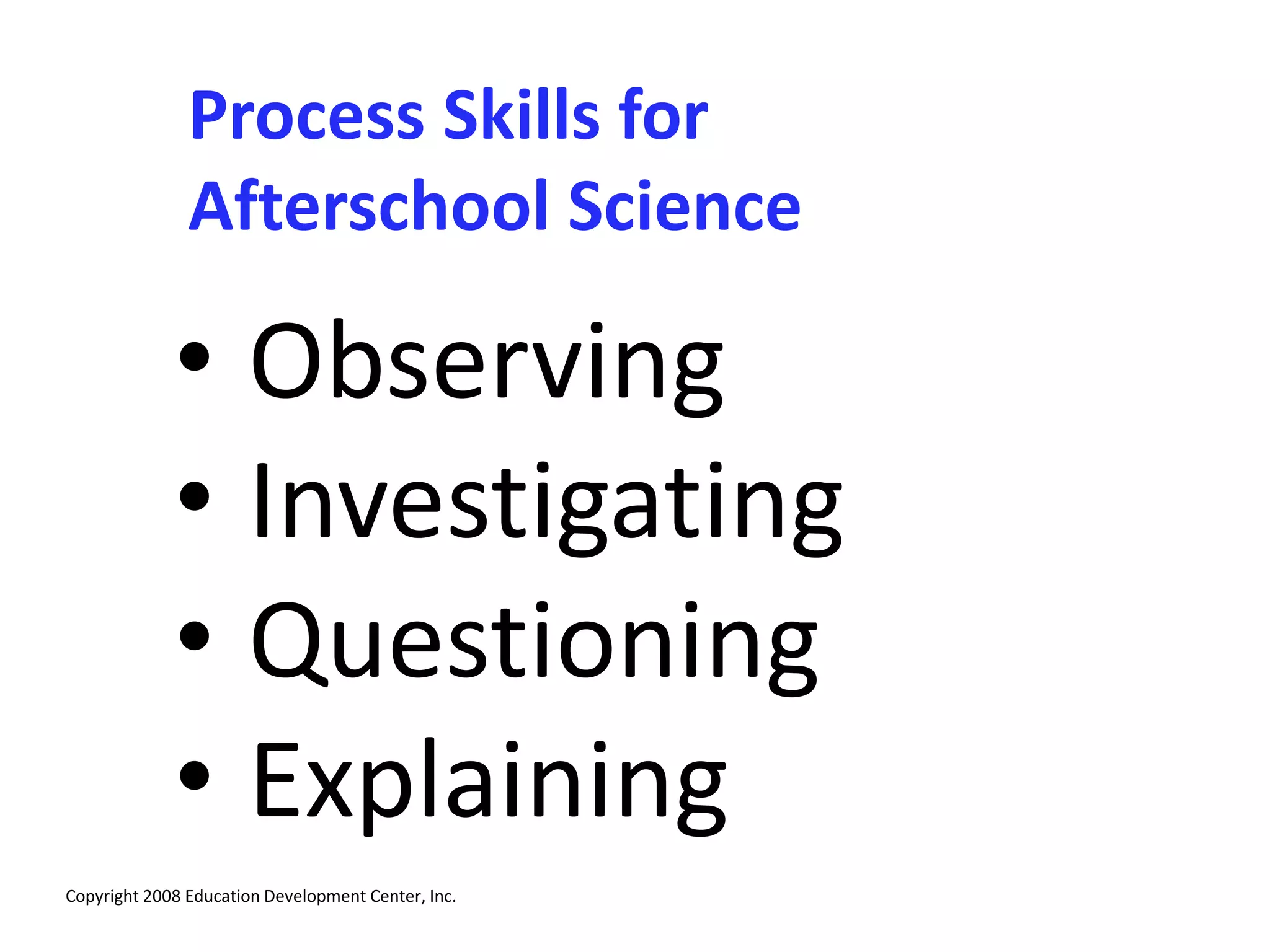
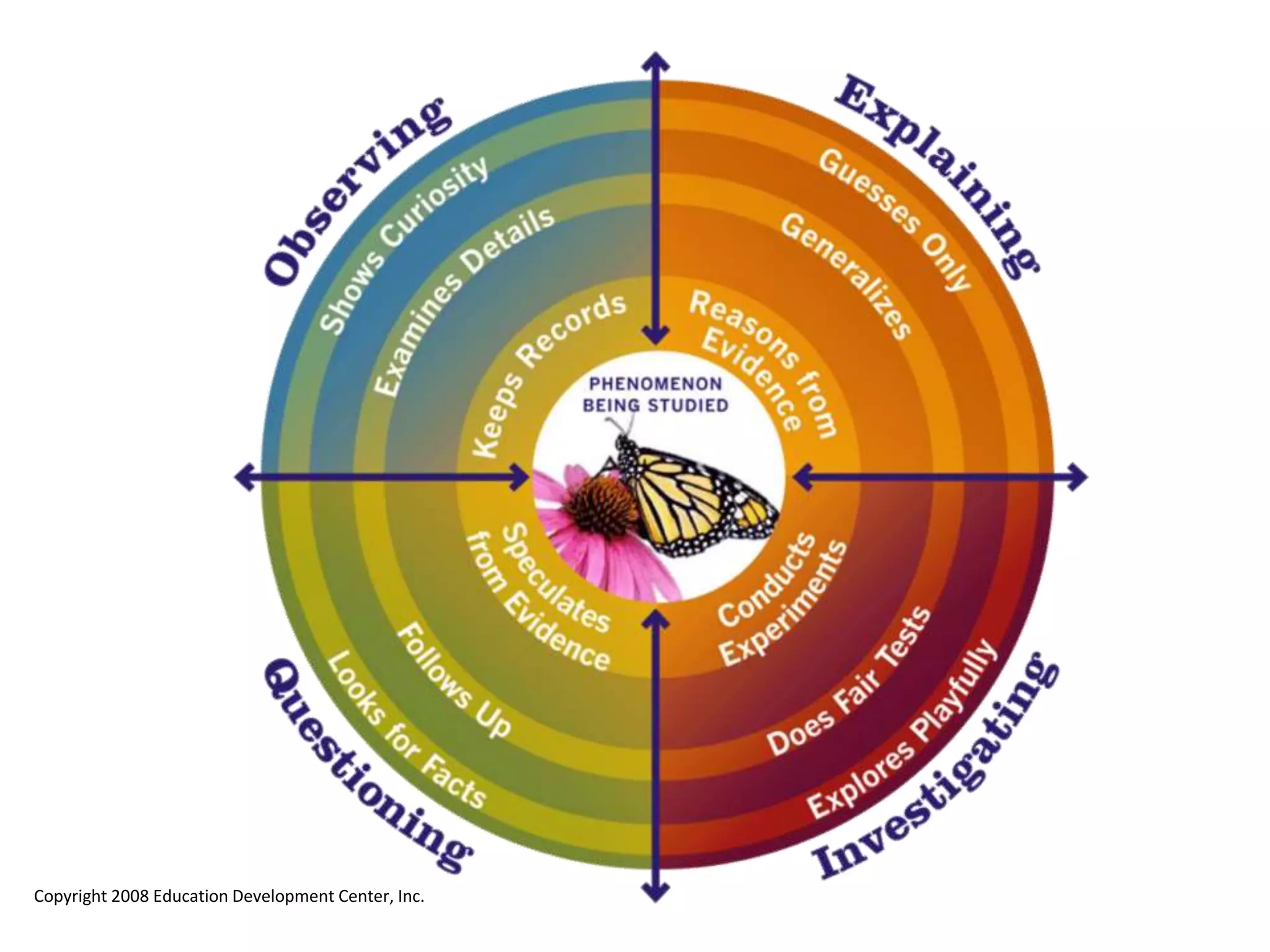
Process Skills for
Afterschool Science
• Observing
• Investigating
• Questioning
• Explaining
Copyright 2008 Education Development Center, Inc.
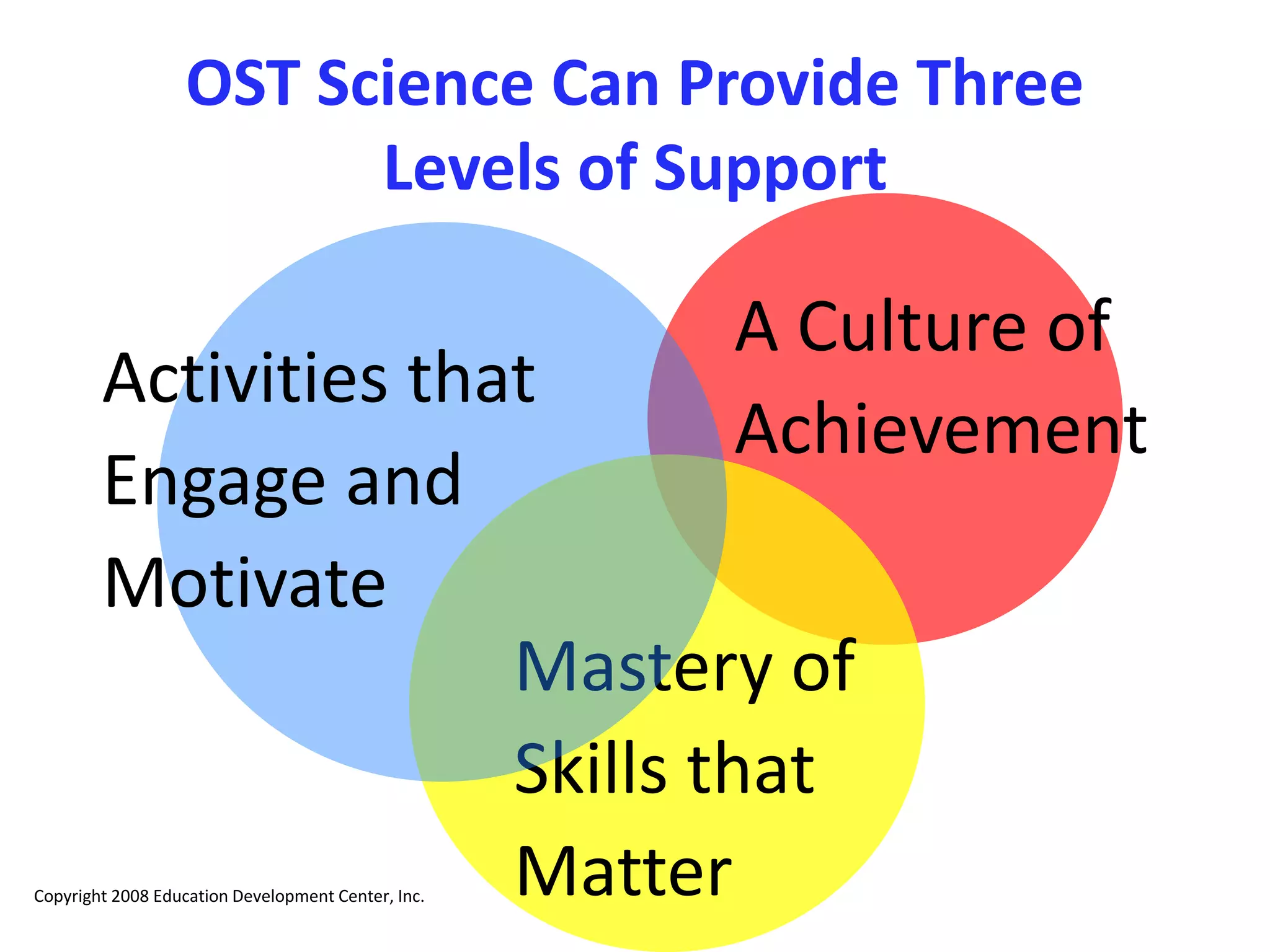
OST Science Can Provide Three
Levels of Support
A Culture of
Achievement
Mastery of
Skills that
Matter
Activities that
Engage and
Motivate
Copyright 2008 Education Development Center, Inc.
Questions?
Website: http://npass2.edc.org/

Npass2 Presentation

  • 1.
    A project ofthe Center for Science Education at EDC Inc, Funded by the National Science Foundation NSF # 0917576 Minneapolis Kids Science Club Training Minneapolis, Minnesota February 25th, 2010 Copyright 2008 Education Development Center, Inc.
  • 2.
    What is NPASS2? •Taking NPASS to Scale (NPASS2) is a three-year NSF Informal Science Education project, based at Education Development Centers (EDC Inc) in Newton, Mass. • NPASS2 follows the first NPASS project and the Explore-It and Design-It curriculum development projects. • The goal of NPASS2 is to create a scalable model of OST science programming that regularly engages children in meaningful science exploration and which piques their interest and confidence in pursuing study and career options in the [science] fields Copyright 2008 Education Development Center, Inc.
  • 3.
    NPASS2 Science Trainer Teams NewHampshire Ohio Georgia Missouri Minnesota Maryland New Jersey California Copyright 2008 Education Development Center, Inc.
  • 4.
    The Design-It! Succession •Design-It! 1999 – 2002 • Explore-It! 2002 – 2005 • NPASS 2005 – 2010 • NPASS2 2009 – 2012 Copyright 2008 Education Development Center, Inc.
  • 5.
    Why is itimportant? • In the Ball and Tracks program, children will be designing roller coasters using foam tubing and other simple materials. • All of the children will test each of their designs and make changes based on the results. In the process, we hope they will learn valuable engineering and science skills that will be useful to them in school and in other areas of their lives. • The goal is to help them gain a better interest in science. Copyright 2008 Education Development Center, Inc.
  • 6.
    What are wedoing? Balls and tracks Simple engineering to create a complex mind
  • 7.
    Challenge #1 Ski Jump Make your marble JUMP/FLY into the can/cup  What is the farthest your marble can jump/fly (first bounce?) Roles • Builder • Materials • “Spy” • Presenter Copyright 2008 Education Development Center, Inc. MATERIALS • 1 x 6’ Foam tube • Marbles • Can/Cup • Tape (not too much) • Tape measure
  • 8.
    Discussion Questions Construction Questions •How did you stop the track from wobbling? • How did you aim the marble for the can? • What makes the marble go faster/slower? • What will happen if you make the track steeper? • Where is the best place to start the marble rolling? Design Questions • What shape should the final section of track be for the longest jump? • What features of the track might be making the marble slow down/speed up? • What is the connection between the speed of the marble (take off) and how far it goes? • How steep should the steepest part of the track be?
  • 9.
    Challenge #2: Hills andValleys  Design a Track with as many hills as you can make.  How many hills can you have?  Can a high hill follow a low one? MATERIALS • 2 x 6’ Foam tubes • Marbles • Tape (not too much) • Tape measure Copyright 2008 Education Development Center, Inc. Roles • Builder • Materials • “Spy” • Presenter
  • 10.
    Discussion Questions Construction Questions •How did you get the pipes to stick together? • Did you have a problem with wobbling? How did you solve that? • How did you hold the track in place at the top of a hill or the bottom of a valley? Design Questions • Where do you release the marble? What happens when you release it higher/lower? • How high is the highest hill you can have? • What’s the best shape for a hill (e.g. steeper on one side than the other)? • Can you have a high hill after a low hill? • Is there a limit to how many hills you can have? • How high did the marble climb?
  • 11.
    Challenge #3: Loopsand Spirals  Make your Roller Coaster as EXCITING as you can with as many loops and twists as you can make. MATERIALS • 3 x 6’ Foam tubes • Marbles • Tape (not too much) • Tape measure Copyright 2008 Education Development Center, Inc. Roles • Builder • Materials • “Spy” • Presenter
  • 12.
    Discussion Questions Loops • Whatshape of loop works best– circle, oval, ect? • Does it matter if the loop is exactly upright (vertical)? • Where do you release the marble? • How steep should the track be leading into the loop? • What is the best speed for a marble going into a loop (really fast, fast, medium, slow)? Why? Spirals • What shape of spiral works best- stretched out (spiral staircase) or compressed (a flat spiral)? • What size spiral works best (large, medium, small)? • What keeps the marble on the track, even when the track is tipped over on its side? • What is the best speed for the marble going around the spiral? • What is the best shape for the run-up to the spiral?
  • 13.
    Talk: Activity Details Leadingthe activity • Ask questions, don’t give answers – Design questions, construction questions – Encourage group collaboration/teamwork Leading discussion • One final “What Works” chart • No handling of materials • Make them think about what they are doing and share ideas Importance of discussion • Pacing • Break away from play to form discussion circles • Makes time for idea sharing Copyright 2008 Education Development Center, Inc.
  • 14.
    Teaching Competencies forOST Science • Preparation • Materials Management • Introduction: Setting the Context • Pacing – working the floor • Engaging with the Children • Modeling Process Skills • Leading Discussions • Closure Copyright 2008 Education Development Center, Inc.
  • 15.
    Process Skills for AfterschoolScience • Observing • Investigating • Questioning • Explaining Copyright 2008 Education Development Center, Inc.
  • 16.
    Copyright 2008 EducationDevelopment Center, Inc.
  • 17.
    OST Science CanProvide Three Levels of Support A Culture of Achievement Mastery of Skills that Matter Activities that Engage and Motivate Copyright 2008 Education Development Center, Inc.
  • 18.